Introduction
Hoodlum offers expert film fixer services in Bangladesh, supporting international productions across one of South Asia’s most visually diverse and cinematically compelling destinations.
Bangladesh is a country of extraordinary contrast — the intense urban energy of Dhaka, the world’s largest mangrove forest in the Sundarbans, the longest natural sea beach in the world at Cox’s Bazar, the lush tea garden landscapes of Sylhet, the river delta environments that cover much of the country, and the historic Mughal architecture of Sonargaon and Lalbagh Fort.
For documentaries, feature films, commercial campaigns, travel programming and factual entertainment, Bangladesh offers a visual range that is significantly underused by international productions relative to its quality and accessibility.
Bangladesh is an ATA Carnet country with an established film permit process. It offers a 15% reality TV rebate on qualifying production costs, and English is widely understood in urban professional environments. Hoodlum provides in-country expertise, permit coordination, local crew and the logistical support that makes production in Bangladesh practical and efficient.
Bangladesh Film Production Guide for International Crews
Bangladesh is a South Asian filming destination that rewards productions with a specific creative brief — urban density and energy in Dhaka, mangrove wilderness in the Sundarbans, coastal scale at Cox’s Bazar, tea garden landscapes in Sylhet, and river delta environments unlike anything else in the region.
The country is served by Hazrat Shahjalal International Airport in Dhaka and Chittagong’s Shah Amanat International Airport for regional access. Road infrastructure connects to all main production areas, though journey times in and around Dhaka require careful logistics planning given the city’s traffic conditions.
A successful Bangladesh production requires early preparation. Visa and invitation letters, film permit and crew accreditation, CAAB drone approvals, ATA Carnet customs clearance and location-specific permissions should all be confirmed before crew travel.
Hoodlum manages those parallel processes so the crew arrives with everything in place.
Why Film Production Works Well in Bangladesh
Bangladesh works for productions that need South Asian urban energy, mangrove and delta natural environments, historic Mughal architecture, coastal scale and a visual texture that is genuinely distinct from neighbouring India and other South Asian destinations.
Strong production use cases include:
- Documentary and factual programming
- Travel and adventure content
- Nature and conservation productions — Sundarbans, Bengal tiger, river delta
- Commercial and advertising campaigns
- Feature film and television drama
- Reality and competition formats
- Heritage and cultural documentary work
- Monsoon and weather-driven visual storytelling
- Still photography and branded content
The combination of Dhaka’s street intensity, the Sundarbans’ ecological significance and the scale of Cox’s Bazar beach gives productions three completely distinct visual registers within a single country.
Bangladesh also offers a 15% reality TV rebate and an additional 5% cultural heritage rebate — making it one of the more financially incentivised South Asian filming destinations for qualifying productions.
Best Time of Year to Film
Bangladesh has four distinct seasons, each offering different production conditions.
Winter (December–February) is the optimal filming window — mild temperatures of 12–20°C, dry conditions and clear skies across all location types.
Autumn (October–November) offers comfortable temperatures of 15–25°C and clear skies — a strong secondary window particularly for outdoor and landscape work.
Summer (March–May) brings warm temperatures of 20–35°C with occasional storms — suitable for dramatic weather sequences or productions that need the pre-monsoon heat aesthetic.
Monsoon (June–September) brings heavy rainfall and lush green landscapes — extraordinary for dramatic water sequences, river content, Sundarbans atmosphere and productions that specifically need the monsoon visual environment. Logistics require more careful planning during this period.
Productions should also plan for:
- Eid-ul-Fitr and Eid-ul-Adha — major public holidays when logistics slow significantly
- Pohela Boishakh (Bengali New Year) — vibrant visual opportunity with large crowds
- Dhaka traffic conditions affecting multi-location shoot day timings year-round
- Sundarbans permit windows and tiger reserve access conditions
- Cox’s Bazar seasonal tourism volumes affecting beach crowd management
Visa and Entry Requirements for Crew
International film crews require a visa before arrival in Bangladesh. Hoodlum provides the invitation letter from a local contact or production company that is a required component of most visa applications.
Required documentation:
- Valid passport — minimum six months validity
- Passport-sized photographs
- Invitation letter from local contact or production company (provided by Hoodlum)
- Detailed project itinerary and synopsis
Processing time: Seven to ten working days.
Productions should start visa applications early and provide Hoodlum with complete crew information — names, nationalities, passport details and roles — so invitation letters can be prepared and distributed before individual applications are submitted.
Work authorisation for paid professional filming should be confirmed separately from standard tourist or business visa entry for each crew member’s nationality.
International Crew Accreditation
International crew members must obtain accreditation as part of the film permit process. Accreditation lists all crew members on the permit application and confirms their professional status for the production.
Required documentation:
- Production company profile
- Detailed equipment list with serial numbers
- Full crew list with names, nationalities and roles
- Passport copies for all crew members
Processing time: Approximately two weeks.
Estimated cost: Approximately USD 75 — included within the overall film permit cost.
Accreditation should run in parallel with the visa process, not sequentially after it. Hoodlum coordinates documentation preparation so both processes progress simultaneously.
Film Permits and Production Approval
Film permits in Bangladesh are managed through the relevant authorities, with Hoodlum coordinating the application process on behalf of international productions.
Required documentation:
- Production company profile
- Project synopsis
- Script or storyboard where relevant
- Location list
- Crew list with accreditation
- Equipment list with serial numbers
- Insurance documentation
- Drone details, if applicable
Productions involving the Sundarbans, Cox’s Bazar beach, heritage sites including Lalbagh Fort and Ahsan Manzil, and conservation or protected natural areas require additional approvals from the relevant managing authority beyond the standard film permit.
All intended locations — particularly sensitive heritage sites, national parks and protected environments — should be flagged in the permit application from the outset.
Hoodlum helps productions prepare permit documentation that reflects the full production footprint across all Bangladesh filming locations so approvals cover everything the shoot needs.
Key Filming Locations and What Access Requires
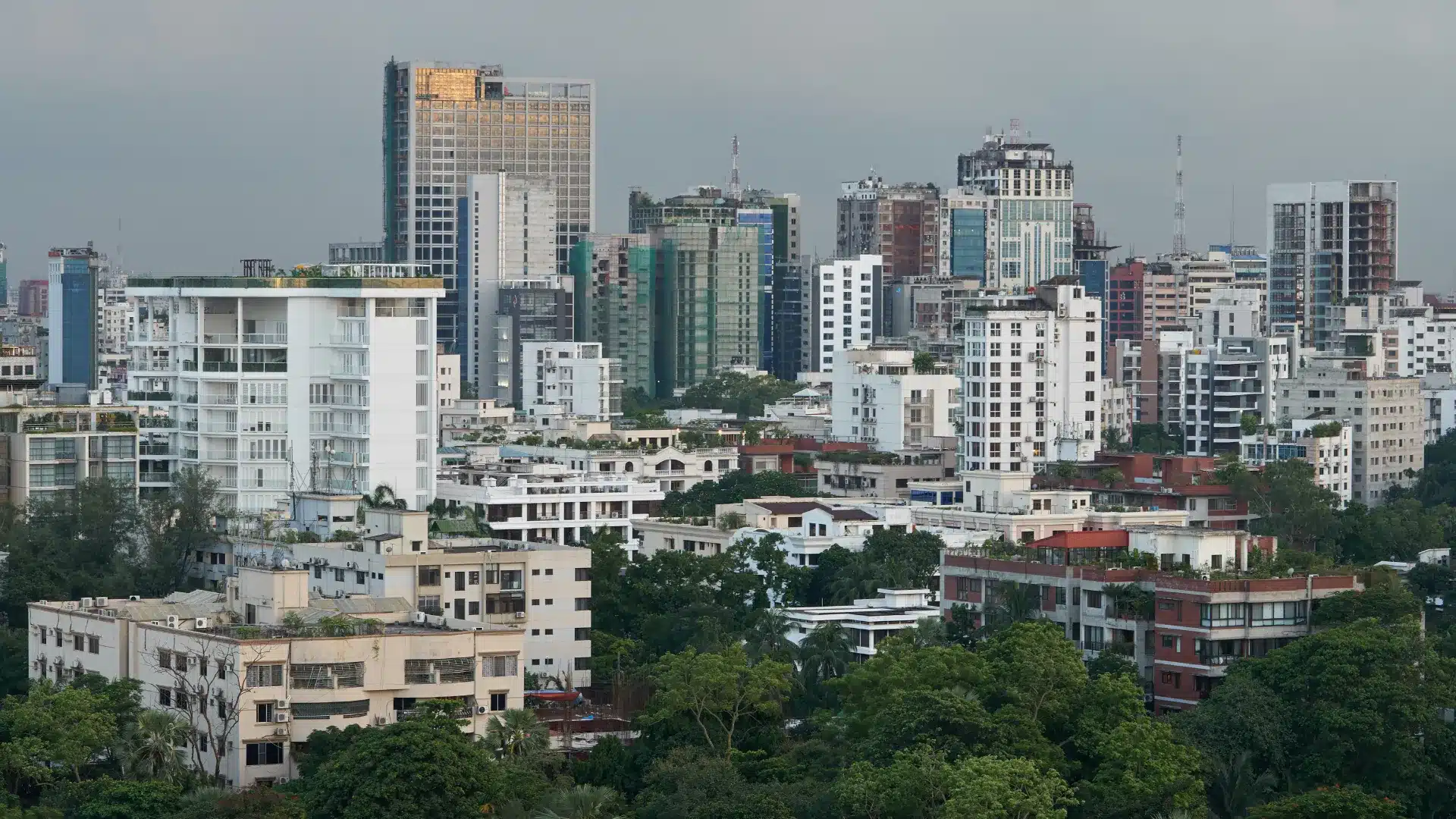
Dhaka filming locations — the capital offers intense urban streetscapes, Mughal architectural heritage, river ghats, markets and the colonial architecture of Ahsan Manzil and Lalbagh Fort. Heritage site filming requires advance coordination with the relevant managing authority. Street filming in busy central areas requires permit approval and logistics planning around Dhaka’s traffic conditions.
Sundarbans filming location — the world’s largest mangrove forest, a UNESCO World Heritage Site and home to the Bengal tiger, spanning the coastal regions of Bangladesh and India. Production access requires advance booking of forest department permits, boat logistics coordination, conservation compliance and a safety plan appropriate for a wildlife environment. Allow extended lead time.
Cox’s Bazar filming location — the world’s longest natural sea beach at 120 kilometres, in the southeastern coastal district. Filming access requires Film Commission approval and beach authority coordination. Crowd management is important during peak tourism seasons.
Sylhet tea gardens filming — the rolling tea plantation landscape of Sylhet in northeast Bangladesh, one of the most visually distinctive environments in the country. Private estate access requires individual agreements with tea garden owners or management companies.
Sonargaon — a historic city near Dhaka, the ancient capital of Bengal, with a Folk Art Museum, old bazaar and traditional architecture. Archaeological site filming requires advance heritage authority coordination.
Chittagong — Bangladesh’s main port city and second largest urban centre, with coastal scenery, industrial port environments and access to the Chittagong Hill Tracts. The Hill Tracts region requires special permits for access.
Drone Filming Requirements
Drone operations in Bangladesh are regulated by the Civil Aviation Authority of Bangladesh (CAAB). CAAB approval is required before any drone operation begins.
Drones over 250 grams must be registered. A pilot licence is required for commercial drone operations. Operators must be between 18 and 65 years of age.
Required documentation for local drone permit:
- Drone registration form and certificate
- Proof of ownership
- Drone specifications and serial number
- Passport copy
- Address proof
- Permit application form
- Flight plan with location details
- Location permit
- Proof of liability insurance
- Payment receipt
Drone importation requires:
- Import Registration Certificate (IRC)
- Business Registration Certificate
- Tax Identification Number (TIN)
- VAT Registration Certificate
- Commercial invoice and bill of lading
- Packing list and certificate of origin
- Product manual and technical specifications
- Clearance from Bangladesh Telecommunication Regulatory Commission (BTRC) and CAAB
Issuing authority: Civil Aviation Authority of Bangladesh (CAAB).
Processing time: Seven to fifteen working days.
Productions planning drone work in the Sundarbans, near Dhaka’s restricted airspace, or above conservation-sensitive environments should allow additional time and confirm specific restrictions before travel. The importation requirements are substantial — drone documentation preparation should begin well before departure.
Equipment Customs Clearance
Bangladesh is an ATA Carnet country. Professional filming equipment can be imported under the standard ATA Carnet system.
Required documentation:
- ATA Carnet covering all filming equipment
- Customs Declaration Form (CDF)
Issuing authority: Bangladesh Customs Authority.
Processing time: One to three working days.
Estimated cost: 0–25% of equipment value for standard import; 0–5% for confirmed temporary import arrangements.
The Carnet documentation must match exactly what arrives. All items — cameras, lenses, drones, batteries, lighting, grip, sound equipment and specialist gear — should be listed with serial numbers and values before departure.
Productions should note that drone importation has separate and more complex requirements beyond the standard Carnet process — BTRC and CAAB clearance are required in addition to customs documentation.
Safety and Security for Productions
Bangladesh is a workable filming environment for international productions with appropriate preparation and local support. Standard production security precautions are recommended.
Key safety and security considerations include:
- Work with experienced local fixers throughout — local knowledge is essential for logistics, communication and problem-solving
- Plan Dhaka traffic conditions into all location day timings — journey times can be significantly longer than distances suggest
- Secure equipment in locked hotel facilities or supervised vehicles between shoot days
- Build monsoon weather contingency for June to September shoots
- Plan Sundarbans safety arrangements carefully — boat logistics, wildlife protocols and communication in a remote environment
- Be aware of major public holiday periods — Eid, Pohela Boishakh — when logistics slow significantly
- Ensure production insurance covers all activities and locations in Bangladesh
- Confirm medical access and emergency response planning for remote and Sundarbans locations
- Follow all Chittagong Hill Tracts special permit requirements for access to that region
Film Incentives — Bangladesh Rebate Programme
Bangladesh offers a 15% rebate on total production costs for reality TV shows, up to a maximum of BDT 30 lakh (approximately USD 36,000).
An additional 5% cultural heritage rebate is available for productions that specifically showcase Bangladeshi culture and heritage.
These are among the more significant production incentive structures in South Asia for qualifying formats and should be factored into destination comparison for relevant production types.
Before budgeting either rebate, confirm:
- Whether the project type qualifies under current programme rules
- The current BDT cap and its USD equivalent at time of production
- Which expenditures are classified as qualifying production costs
- Which authority administers and approves claims
- Whether approval must be in place before spend begins
- Whether local crew and supplier engagement is required for qualification
- Payment timelines for disbursement after completion
Hoodlum assists with incentive application, eligibility assessment, documentation preparation and compliance with local regulations.
How the Main Approvals Fit Together
Visa and invitation letter, film permit and crew accreditation, CAAB drone approval, BTRC clearance for drone importation, ATA Carnet customs clearance and location-specific permissions are all separate processes. None covers the others.
A complete production plan connects:
- Crew visas with Hoodlum invitation letters
- Film permit and crew accreditation — running in parallel with visas
- Sundarbans forest department permits, where applicable
- Heritage site permissions for Lalbagh Fort, Ahsan Manzil, Sonargaon
- CAAB drone approval and BTRC importation clearance
- ATA Carnet customs clearance
- Private location agreements across all shoot environments
- Reality TV and cultural heritage rebate registration before spend begins
- Safety planning for Dhaka traffic, Sundarbans logistics and monsoon weather
Hoodlum coordinates all of these as one integrated pre-production workflow.
When Bangladesh Is the Right Choice
Bangladesh is the right choice when a production needs South Asian visual depth, mangrove and delta natural environments, coastal scale, Mughal heritage, monsoon atmosphere or the specific 15% reality TV rebate structure.
It is especially suitable for:
- Nature and conservation documentaries — Sundarbans, Bengal tiger, river delta
- Reality and competition formats qualifying for the rebate
- Travel and adventure programming
- Cultural and heritage documentary work
- Feature film and television drama with South Asian settings
- Commercial campaigns needing an authentic, non-generic South Asian backdrop
- Monsoon and dramatic weather visual storytelling
- Still photography and branded content
It may be less suitable for productions that need very large studio infrastructure, significant metropolitan commercial facilities or locations requiring complete crowd exclusion in busy urban environments.
Common Mistakes to Avoid
Avoid:
- Starting visa and accreditation too late — both take two weeks minimum
- Treating drone approval as part of the standard film permit — CAAB and BTRC are separate authorities
- Underestimating Dhaka traffic when planning multi-location shoot days
- Attempting Sundarbans access without advance forest department permit and safety planning
- Ignoring major public holiday periods — Eid and Pohela Boishakh significantly affect logistics
- Arriving with Carnet documentation that does not match actual equipment
- Forgetting that drone importation requires BTRC clearance in addition to customs
- Leaving reality TV rebate registration until after the shoot
- Working without a local fixer who knows authority relationships and regional logistics
- Planning Cox’s Bazar beach shoots without crowd and tourism season assessment
How Hoodlum Supports Local Production
Support may include:
- Local fixer coordination across Dhaka and all regional locations
- Visa invitation letters for all international crew
- Film permit and crew accreditation coordination
- Sundarbans forest department permit and safety logistics
- Cox’s Bazar beach authority coordination
- Sylhet tea garden estate access
- Heritage site permissions — Lalbagh Fort, Ahsan Manzil, Sonargaon
- CAAB drone permit and BTRC importation clearance coordination
- ATA Carnet customs clearance preparation
- Local crew and talent sourcing
- Transportation and vetted vehicle hire
- Accommodation sourcing across Bangladesh
- Reality TV and cultural heritage rebate registration and documentation
- Safety and risk management planning
- Monsoon weather contingency planning
- On-the-ground production management
FAQ Section
Do international crews need a visa to film in Bangladesh? Yes. A visa is required before arrival. Hoodlum provides the invitation letter required as part of the application. Processing takes seven to ten working days. Provide Hoodlum with complete crew passport details as early as possible.
How long should productions allow for film permits? Allow a minimum of four to six weeks before the shoot start date for visa, accreditation and permit processes to run in parallel. Accreditation takes approximately two weeks. Sundarbans and heritage site permits require additional lead time.
Can productions use drones in Bangladesh? Yes, but CAAB approval is required before any operation. Drones over 250 grams must be registered. A pilot licence is required for commercial operations. Drone importation requires BTRC and CAAB clearance in addition to customs documentation. Allow seven to fifteen working days.
Is Bangladesh a Carnet country? Yes — Bangladesh is an ATA Carnet country. Standard customs clearance takes one to three working days. Cost: 0–5% of equipment value for temporary import. Note that drone importation requires additional BTRC and CAAB clearance beyond the standard Carnet process.
Does Bangladesh offer a film rebate? Yes. A 15% reality TV rebate on total production costs is available up to BDT 30 lakh (approximately USD 36,000). An additional 5% cultural heritage rebate applies to productions showcasing Bangladeshi culture and heritage. Confirm current eligibility with Hoodlum before budgeting.
What makes the Sundarbans a distinctive filming location? The Sundarbans is the world’s largest mangrove forest and a UNESCO World Heritage Site. It is home to the Bengal tiger and extraordinary biodiversity. Access requires forest department permits, boat logistics coordination, wildlife safety protocols and compliance with conservation regulations. Allow extended lead time and engage Hoodlum for full logistics planning.
What documents are typically needed? Visa with Hoodlum invitation letter, film permit including synopsis, location list, crew list and equipment list, CAAB drone permit where applicable, ATA Carnet, location-specific permissions for heritage sites and the Sundarbans, and insurance documentation.
Authority Links
Everything You Need to Know About Filming in Bangladesh
Filming in Bangladesh rewards productions that plan carefully and engage a local fixer from the outset.
The country’s visual range is extraordinary — Dhaka filming locations deliver South Asian urban intensity unlike any other city in the region, the Sundarbans filming location offers a UNESCO mangrove wilderness with Bengal tigers that is irreplaceable for nature and conservation productions, Cox’s Bazar filming location gives productions 120 kilometres of uninterrupted natural sea beach, and the Sylhet tea gardens filming environment provides a landscape aesthetic of rolling green plantation hills found almost nowhere else in South Asia.
Understanding the approval process — visa and accreditation running in parallel, CAAB drone approval separate from the film permit, Sundarbans forest department permits requiring extended lead time, and rebate registration before spend begins — is what separates productions that arrive ready to work from ones that spend the first days resolving paperwork.
The Bangladesh film permit and accreditation process
The Bangladesh film permit and crew accreditation are managed together, with accreditation listing all crew members on the permit application. The combined process takes approximately two weeks from complete document submission.
Required documentation includes the production company profile, equipment list with serial numbers, crew list and passport copies. Accreditation costs approximately USD 75 and is included within the overall permit cost.
Permit applications should include all intended locations from the outset — particularly any Sundarbans access, heritage site filming at Lalbagh Fort or Ahsan Manzil, Cox’s Bazar beach authority requirements, and Sylhet tea garden estate access. Adding locations after permit approval creates delays.
Hoodlum coordinates the full permit and accreditation process, ensuring documentation is complete and accurate before submission.
Filming visa Bangladesh — the invitation letter requirement
The filming visa Bangladesh process requires an invitation letter from a local contact or production company. Hoodlum provides this letter as part of the standard production setup.
Processing takes seven to ten working days. Productions should send Hoodlum the complete crew list — names, nationalities, passport details and roles — as early as possible so that letters are ready before visa applications are submitted.
Work authorisation for paid professional filming should be confirmed separately from tourist or business entry for each crew member’s nationality. Mixed-nationality crews should have each person’s requirements checked individually.
Dhaka filming locations — urban intensity and Mughal heritage
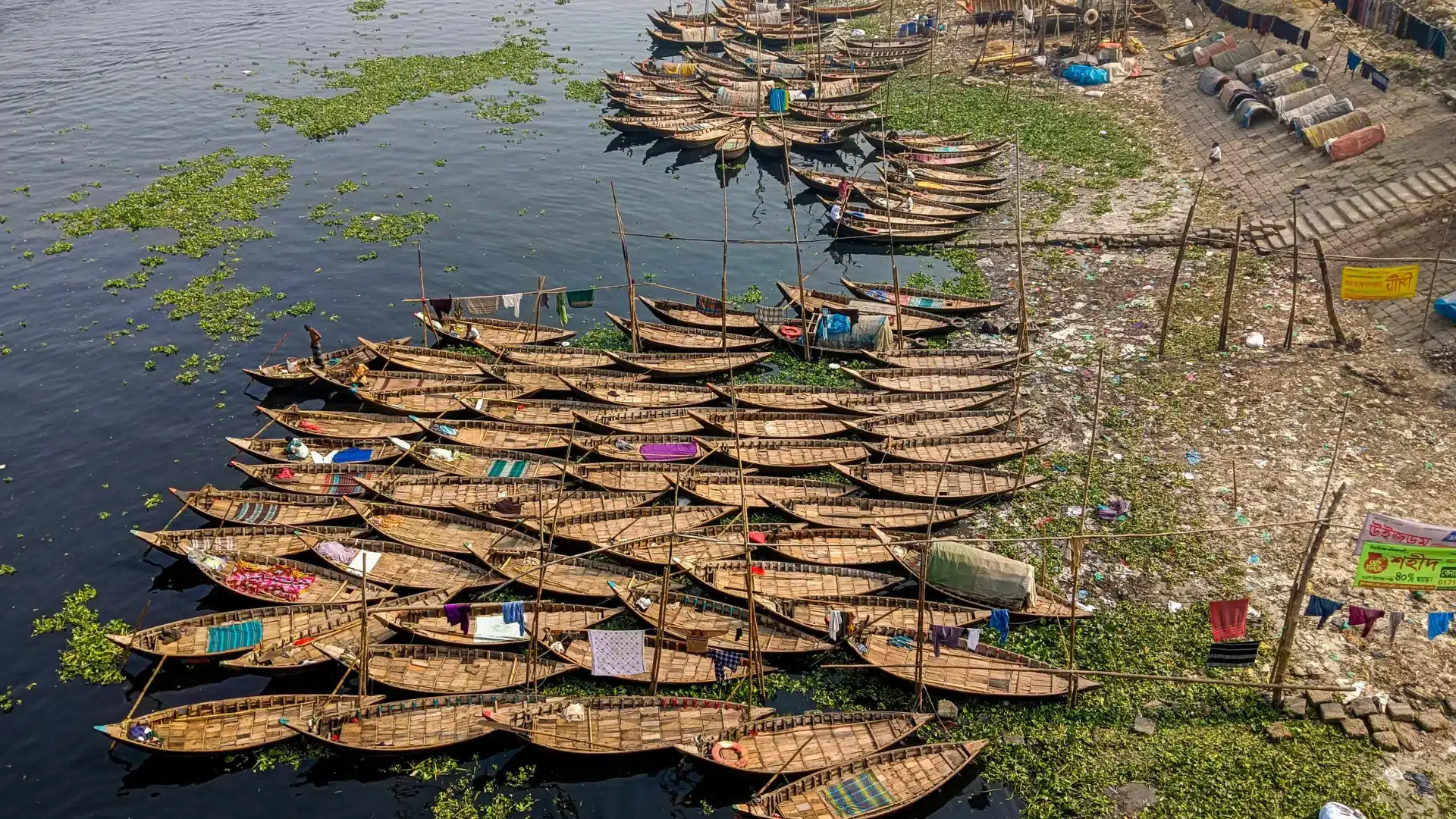
Dhaka filming locations range from the historic Mughal-era Lalbagh Fort and the colonial pink palace of Ahsan Manzil to the dense urban streetscapes of old Dhaka, the river ghats along the Buriganga, and the markets, rickshaws and street life of one of the world’s most densely populated cities.
Heritage site filming at Lalbagh Fort and Ahsan Manzil requires advance coordination with the relevant heritage management authorities. Street filming in busy central areas needs permit approval and careful logistics planning.
Dhaka traffic is one of the most significant production logistics factors in the country. Journey times between locations can be far longer than distances suggest. Multi-location shoot days require substantial buffer time built into the schedule. Hoodlum’s local team plans location day logistics around real Dhaka traffic conditions rather than map distances.
Sundarbans filming location — the world’s largest mangrove forest
The Sundarbans filming location is the most significant natural production environment in Bangladesh and one of the most distinctive in all of South Asia.
A UNESCO World Heritage Site spanning the coastal delta of Bangladesh and India, the Sundarbans is the world’s largest mangrove forest and home to the Bengal tiger, saltwater crocodile, Irrawaddy dolphin and an extraordinary biodiversity. For nature documentaries, conservation programming and productions needing an authentic and ecologically significant natural environment, there is no equivalent within the region.
Production access requires forest department permit booking — which has specific access windows and limited capacity — boat logistics coordination, wildlife safety protocols, communication planning for a remote environment, and compliance with all conservation regulations. No independent access is possible.
Allow extended lead time — significantly more than for standard Bangladesh locations. Hoodlum manages the full Sundarbans logistics package including permits, boat hire, guide coordination and safety planning.
Cox’s Bazar filming location and Sylhet tea gardens filming
The Cox’s Bazar filming location gives productions access to the world’s longest natural sea beach — 120 kilometres of uninterrupted coastline in the southeastern corner of Bangladesh. For scale, coastal drama and a beach environment of genuine geographic significance, it is unmatched in South Asia.
Filming access requires Film Commission approval and beach authority coordination. Crowd management is important during peak domestic tourism seasons. Hoodlum coordinates Cox’s Bazar access and helps productions identify the specific beach sections that best serve their creative brief.
The Sylhet tea gardens filming environment in northeast Bangladesh provides a rolling plantation landscape of extraordinary visual quality. Production access requires individual agreements with tea garden owners or management companies. Hoodlum’s regional contacts simplify the estate access process.
CAAB drone permit Bangladesh — what productions need to know
The CAAB drone permit Bangladesh process runs entirely separately from the film permit. Receiving the film permit does not authorise drone operations.
CAAB approval requires drone registration, pilot licence documentation, flight plan, location permit and insurance proof. Processing takes seven to fifteen working days.
Drone importation is substantially more complex — requiring BTRC clearance, CAAB safety clearance, Import Registration Certificate, TIN, VAT Registration and a full commercial import documentation package. Productions should not arrive with drones without having confirmed both CAAB operational approval and BTRC importation clearance well before departure.
Run CAAB and BTRC processes in parallel with Film Commission accreditation — not after it.
Bangladesh customs clearance ATA Carnet — what the Carnet status means
Bangladesh customs clearance for standard filming equipment is straightforward thanks to Bangladesh’s ATA Carnet membership. Processing takes one to three working days at a cost of 0–5% of equipment value for confirmed temporary import.
The Carnet documentation must match exactly what arrives. Finalise the equipment list before the Carnet is issued.
Note that drone importation is not covered by the standard Carnet process alone — BTRC and CAAB clearance are required in addition to customs documentation. Treat drone importation as a separate logistics stream from general equipment clearance.
Bangladesh film rebate — the reality TV and cultural heritage incentives
The Bangladesh film rebate structure offers two distinct incentives that are among the more significant in South Asia for qualifying productions.
The 15% reality TV rebate applies to qualifying reality TV production costs up to a maximum of BDT 30 lakh (approximately USD 36,000). The additional 5% cultural heritage rebate applies to productions that specifically showcase Bangladeshi culture and heritage.
Together they can make Bangladesh a financially competitive choice for qualifying reality formats — and the cultural heritage rebate gives documentary and factual productions showcasing Bangladesh an additional financial argument.
Rebate registration must happen before production spend begins. Confirm current eligibility criteria, qualifying expenditure categories, minimum thresholds and payment timelines with Hoodlum before budgeting either incentive.
Bangladesh location scouting — planning across a diverse geography
Bangladesh location scouting requires a fixer with genuine regional knowledge across a geographically diverse country.
The Sundarbans coastal delta, the Sylhet hill region, the Cox’s Bazar coastal district, the Chittagong Hill Tracts, the river network of the central delta and the urban environments of Dhaka and Chittagong each have distinct access conditions, logistics profiles and permit requirements.
Hoodlum’s Bangladesh location scouting covers the full national geography — assessing each location against the creative brief, the permit requirements, the logistics realities and the production timeline before recommendations are made.
What a Bangladesh film fixer actually does
A Bangladesh film fixer provides Hoodlum invitation letters for all international crew visa applications, coordinates film permit and accreditation documentation, manages CAAB drone approval and BTRC importation clearance in parallel with the permit, books Sundarbans forest department permits and coordinates boat and safety logistics, manages Cox’s Bazar beach authority coordination, arranges Sylhet tea garden estate access, coordinates heritage site permissions for Lalbagh Fort and Ahsan Manzil, prepares ATA Carnet documentation for Bangladesh customs clearance, registers the production for the reality TV or cultural heritage rebate, and plans all location day logistics around Dhaka’s traffic realities.
Film production Bangladesh works most efficiently when Hoodlum is engaged four to six weeks before the shoot start date. That window allows visa, accreditation, CAAB drone and Sundarbans permits to run in parallel rather than sequentially.
Hoodlum provides full production support for international crews across all Bangladesh filming locations — from early research and Bangladesh location scouting through permit coordination, Sundarbans access, drone planning, customs clearance, rebate registration and on-the-ground production management. For enquiries, visit hoodlum.tv/contact-us.
Bangladesh in a South Asia film production guide context
For productions building a South Asia film production guide — comparing Bangladesh with India, Sri Lanka, Nepal and Pakistan — Bangladesh occupies a specific position.
It is the only South Asian country that combines Sundarbans mangrove wilderness of global UNESCO significance, a 120-kilometre natural sea beach at Cox’s Bazar, Mughal architectural heritage, a monsoon delta environment unlike anything in neighbouring countries, and a specific reality TV rebate structure that makes it financially competitive for qualifying formats.
Productions that have filmed in India will find Bangladesh a visually and culturally distinct complement — the Bengali cultural register, the river delta geography, the Sundarbans ecology and the specific urban character of Dhaka are all genuinely different from anything available across the border.
The practical groundwork is always the same: get invitation letters to Hoodlum early, run visa and accreditation in parallel, start CAAB and BTRC drone processes immediately, initiate Sundarbans permit booking as early as possible, finalise the ATA Carnet equipment list before departure, register for the rebate before spend begins, and engage a local fixer with genuine knowledge of Bangladesh location scouting across the full national geography before the schedule is locked.