

















Introduction
Hoodlum offers expert film fixer services in Cambodia, supporting international productions across one of Southeast Asia’s most visually extraordinary and logistically accessible filming destinations.
Cambodia is a country of remarkable contrast — the thousand-year-old temple complexes of Angkor rising from the jungle outside Siem Reap, the French colonial and modern waterfront of Phnom Penh at the confluence of the Mekong and Tonlé Sap rivers, the coastal environments of Sihanoukville and the southern islands, the bamboo forests and river landscapes of Battambang, and the rice paddy plains and mountain ranges of the rural provinces.
Angkor Wat is the world’s largest religious monument and one of the most requested filming locations in Asia. But Cambodia’s production value extends far beyond Angkor — the country offers a combination of ancient heritage, natural environments, urban energy and a cost-effective production infrastructure that makes it a strong choice for feature films, commercial campaigns, documentaries, travel programming, music videos and branded content.
Cambodia is not an ATA Carnet country. Film permits and accreditation are processed together through the relevant authorities. Drone operations at Phnom Penh, Siem Reap and Angkor are regulated by the State Secretariat of Civil Aviation. Productions that plan properly will find Cambodia one of the most accessible and rewarding filming destinations in the region.
Cambodia Film Production Guide for International Crews
Cambodia is a Southeast Asian filming destination that works for a wide range of production types. The country is served by Phnom Penh International Airport and Siem Reap International Airport, with well-maintained highway connections between the main cities. The distance between Phnom Penh and Siem Reap is approximately 315 kilometres — around five to six hours by road or one hour by air.
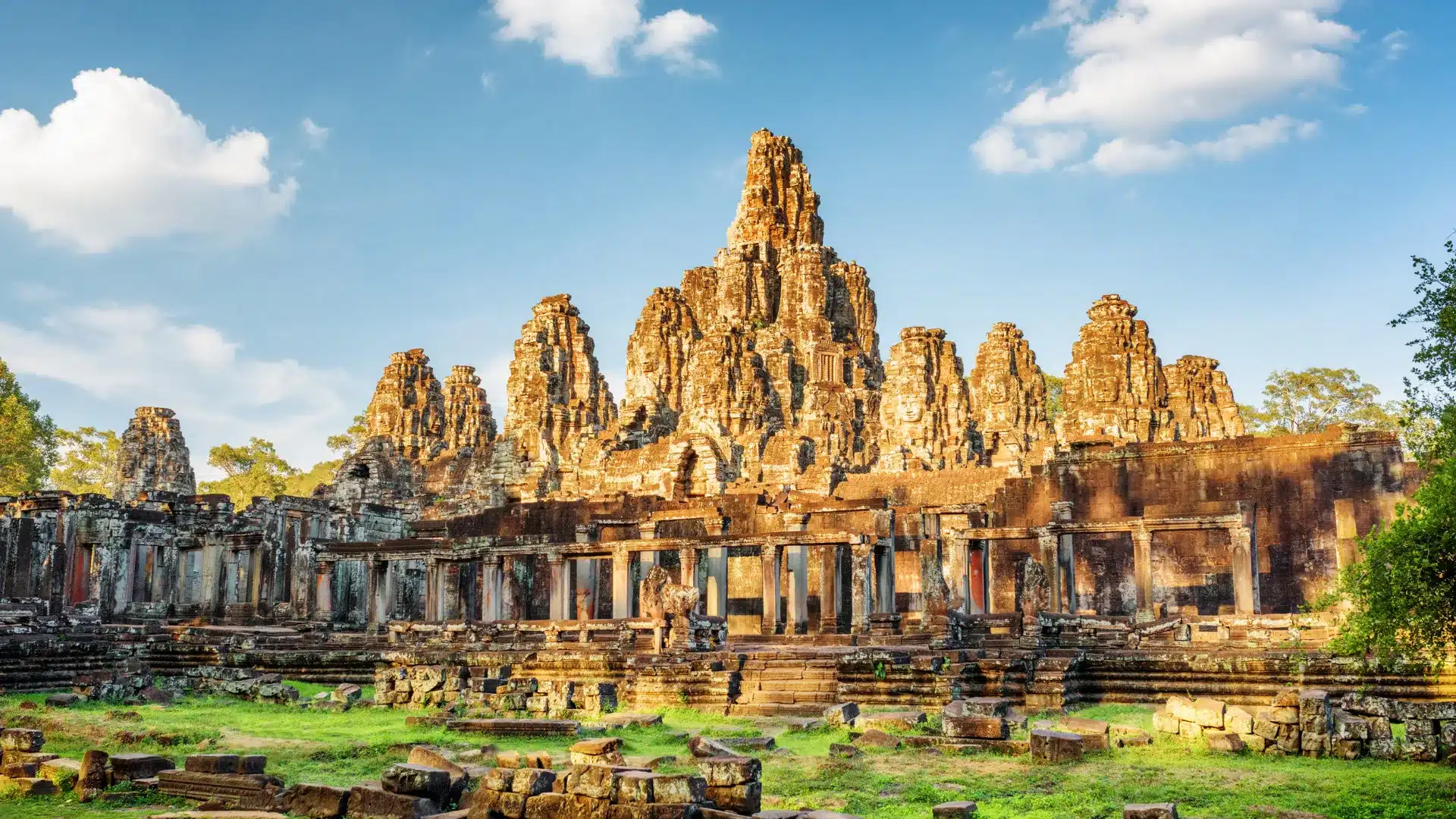
The main production environments include Phnom Penh and its colonial architecture, riverfront boulevard, Royal Palace, Wat Phnom and urban streetscapes. Siem Reap and the Angkor Archaeological Park — a UNESCO World Heritage Site encompassing over 400 square kilometres of temple complexes including Angkor Wat, Bayon, Ta Prohm and Preah Khan. Battambang’s French colonial town centre, bamboo railway and river landscape. Sihanoukville and the southern coast for beach and coastal work. The Mekong river corridor through Kampong Cham and the northeast provinces for rural and river environments.
A successful Cambodia production requires early preparation. E-visa arrangements, film permit and accreditation (processed together), SSCA drone approval, customs clearance under a non-Carnet temporary importation process, and Angkor Archaeological Park-specific permissions should all be confirmed before crew travel.
Hoodlum helps productions manage those parallel processes so the crew arrives with everything in place.
Why Film Production Works Well in Cambodia
Cambodia works for productions that need a combination of ancient temple environments, colonial architecture, tropical nature, river and coastal settings, vibrant urban life and a cost-effective production base with English-capable logistics support.
Strong production use cases include:
- Feature film and television drama
- Commercial and advertising campaigns
- Documentary and cultural programming
- Travel and adventure content
- Music videos
- Nature and wildlife productions
- Heritage and archaeological documentary work
- Humanitarian and development sector documentary
- Reality and competition formats
- Still photography and branded content
- Luxury and lifestyle campaigns in the Angkor and colonial heritage environments
Angkor Wat and the surrounding temple complexes give productions an instantly recognisable and globally significant heritage filming environment that is available at competitive cost compared to many other UNESCO filming destinations worldwide.
Cambodia’s USD-based economy and established tourism infrastructure make logistics, accommodation, catering and equipment rental significantly more accessible than in many other developing country filming environments.
English is widely spoken in the tourism, hospitality and production sectors of Phnom Penh and Siem Reap, which simplifies day-to-day logistics considerably.
Best Time of Year to Film
The dry season from November to April offers the most reliable filming conditions — clear skies, lower humidity and minimal rainfall across all location types including temples, urban environments, beaches and river locations.
February is typically the driest month. December and January offer the most pleasant temperatures for outdoor crew work.
The wet season runs May to October. Heavy monsoon rainfall, particularly in September and October, can significantly disrupt outdoor filming, drone operations, temple access and road movement in rural areas.
Productions should plan for:
- Sunrise and early morning temple access at Angkor — the most visually extraordinary window and the most logistically competitive
- Peak tourist season November to February — high visitor volumes at Angkor, Phnom Penh and Sihanoukville affecting crowd management
- Khmer New Year in April — a major public holiday period affecting logistics, supplier availability and location access
- Water Festival in November — extraordinary visual opportunity but significant crowd management complexity in Phnom Penh
- Monsoon season contingency for May to October shoots
- Rural road conditions during and after monsoon
Visa and Entry Requirements for Crew
Cambodia operates an electronic visa (e-visa) system for most nationalities. Film crews must obtain a valid e-visa before arrival.
Required documentation:
- Valid passport — minimum six months validity
- Passport-sized photographs
- Hotel booking confirmation
- Medical certificate, where required
- E-visa application form
Visa application: https://evisa.gov.kh
Processing time: One to two weeks.
Estimated cost: USD 36 e-visa application fee.
Work authorisation for paid professional filming should be confirmed separately from standard tourist or business visa entry for each crew member’s nationality. Productions should allow adequate time for e-visa processing ahead of travel.
International Crew Accreditation and Film Permit
In Cambodia, international crew accreditation is part of the film permit process — both are submitted together rather than as separate applications. Crew members must be listed on the permit application.
Required documentation:
- Production company profile
- Script detailing Cambodian filming locations
- Passport scans and photographs of all crew members
- Visa scans for all crew members
- Equipment list with serial numbers
Processing time: Approximately two weeks.
Estimated cost: USD 75 for the combined permit and accreditation, though fees may vary depending on production type and scope.
Productions should submit complete documentation in the first application. Incomplete submissions extend the timeline. Hoodlum prepares the full permit and accreditation package to ensure the application is complete from the outset.
Film Permits and Angkor Archaeological Park Access
Film permits cover general filming activity across Cambodia. Productions filming within the Angkor Archaeological Park — which includes Angkor Wat, Bayon, Ta Prohm, Preah Khan, Banteay Srei and the broader Angkor complex — require specific additional permissions from the APSARA Authority, which manages the Angkor World Heritage Site.
APSARA Authority approval is separate from and in addition to the general film permit. Productions should treat Angkor access as an independent approval stream.
Angkor park entry fees apply to all crew on each day of filming within the park. Commercial filming fees may apply additionally. Specific restrictions govern filming hours within the park, proximity to structures, lighting equipment, equipment placement and crew behaviour around the monuments.
The most iconic Angkor Wat sunrise sequence — viewed from the reflection pools in front of the western entrance — is the single most requested filming moment in Cambodia. It requires advance coordination, early arrival and careful crowd management given the volume of tourists present at sunrise.
Ta Prohm — the “jungle temple” where tree roots engulf ancient stonework — is one of the most distinctive filming locations in Asia and a specific production asset with its own access conditions.
Hoodlum manages APSARA Authority coordination and Angkor logistics as part of the standard Cambodia production package.
Filming Locations and What Access Requires
Angkor Wat and Angkor Archaeological Park, Siem Reap — the world’s largest religious monument and one of the most filmed heritage environments in Asia. Requires general film permit, APSARA Authority approval and daily park entry fees. Specific restrictions on equipment, lighting and proximity to structures. Allow additional lead time for APSARA coordination.
Ta Prohm, Angkor — the temple where banyan and silk cotton trees have grown through the ancient stonework, creating one of the most visually distinctive environments in Cambodia. Within Angkor park. APSARA Authority approval required.
Royal Palace and Silver Pagoda, Phnom Penh — the official residence of the King of Cambodia and one of Phnom Penh’s most significant architectural landmarks. Exterior filming from public areas is generally possible with film permit. Interior access requires specific authority coordination.
Phnom Penh Riverfront — the Sisowath Quay waterfront boulevard along the Tonlé Sap and Mekong rivers, with colonial architecture, street markets and the city’s most accessible public filming environment. Film permit and local authority coordination.
Wat Phnom, Phnom Penh — the hilltop temple that gives Phnom Penh its name. Active religious site. Dress codes and behavioural protocols apply.
Battambang — Cambodia’s second city, with French colonial architecture, bamboo railway, circus arts culture and a calmer, less tourist-dominated filming environment than Phnom Penh or Siem Reap. Film permit and local authority coordination.
Sihanoukville and the Southern Coast — coastal and beach filming environments on the Gulf of Thailand. Film permit and local authority coordination. The southern islands — Koh Rong, Koh Rong Samloem — offer more pristine coastal environments with boat access logistics required.
Tonlé Sap Lake — the largest freshwater lake in Southeast Asia and a UNESCO Biosphere Reserve, with floating villages and extraordinary water environments. Conservation area considerations apply.
Drone Filming Requirements
Drone operations in Cambodia are regulated by the State Secretariat of Civil Aviation (SSCA). Permits are specifically required for flights in Phnom Penh, Siem Reap and Angkor Wat.
Required documentation:
- Company letterhead with operation details
- Drone make and serial number
- Drone operator licence and credentials
Processing time: Variable — confirm current timelines with Hoodlum before committing drone days to the schedule.
Estimated cost: USD 100 permit fee.
Drone operations above Angkor Wat and the Angkor Archaeological Park are subject to specific APSARA Authority restrictions in addition to SSCA permit requirements. Both must be confirmed before any aerial work over the temple complex is scheduled.
Productions should not assume that a general drone permit covers unrestricted operations above Angkor. The cultural heritage sensitivity of the site and the UNESCO World Heritage designation create specific operational restrictions that must be confirmed location by location.
Hoodlum coordinates SSCA and APSARA Authority drone requirements in parallel so aerial days at Angkor and other locations are protected within the schedule.
Equipment Customs Clearance
Cambodia does not use the ATA Carnet system. Professional filming equipment must be imported under alternative temporary customs procedures — a detailed equipment list and equipment value declaration are required.
Required documentation:
- Detailed equipment list with serial numbers
- Equipment value declaration
Processing time: Approximately five working days.
The absence of a Carnet system means that equipment clearance in Cambodia requires careful preparation. Every item — cameras, lenses, drones, batteries, lighting, grip, sound equipment and specialist gear — should be listed clearly with serial numbers and values before departure.
Productions should not arrive with incomplete equipment lists. Missing serial numbers, absent values or vague item descriptions are the most common causes of customs delays and extended processing at Phnom Penh and Siem Reap airports.
Hoodlum helps productions prepare complete customs documentation in advance so clearance on arrival supports rather than delays the schedule.
Safety and Security for Productions
Cambodia is generally safe for international film productions. The main security considerations for productions are standard urban precautions rather than serious threat environments.
Key safety and security considerations include:
- Hire local security for high-value equipment management and public location shoots
- Be aware of petty theft — pickpocketing in crowded markets, tourist hotspots and public transport areas
- Exercise additional caution in border regions and some rural areas
- Use local police support when appropriate for larger public location shoots
- Plan rural road travel carefully during and after monsoon season — road conditions can deteriorate significantly
- Be aware of unexploded ordnance risk in some rural areas, particularly in the northwest and northeast provinces — never deviate from established roads and paths without local guide confirmation
- Follow all dress codes and behavioural protocols at temples and active religious sites
- Protect equipment from tropical humidity year-round
- Ensure production insurance covers all activities and locations in Cambodia
Film Incentives and Production Benefits
Cambodia does not currently operate a published national film rebate programme. Productions should confirm the current incentive landscape directly with the relevant Cambodian authorities and with Hoodlum before building any financial incentive into the budget.
The primary financial advantage of Cambodia as a production destination is cost-effectiveness across crew, locations, accommodation, catering and logistics rather than a formal rebate structure. For productions with significant in-country spend, Cambodia’s cost base compares very favourably with neighbouring Thailand, Malaysia and Indonesia.
How the Main Approvals Fit Together
E-visa, film permit and crew accreditation (combined process), APSARA Authority Angkor approval, SSCA drone permit, customs temporary importation and private location agreements are all separate processes.
A complete production plan connects:
- E-visa for all crew — one to two weeks, initiated first
- Film permit and crew accreditation — combined application, approximately two weeks
- APSARA Authority Angkor Archaeological Park approval — initiated in parallel
- SSCA drone permit for Phnom Penh, Siem Reap and Angkor locations
- APSARA Authority drone confirmation for Angkor-specific aerial work
- Customs temporary importation with complete equipment list — five working days
- Private location agreements for all private property shoot days
- Tonlé Sap and conservation area permissions where applicable
- Safety and logistics planning for rural and border province locations
Hoodlum manages all of these as one coordinated pre-production workflow.
When Cambodia Is the Right Choice
Cambodia is the right choice when a production needs ancient temple environments of global significance, Southeast Asian colonial architecture, tropical nature and river environments, a vibrant and accessible capital city, and a cost-effective production base with strong English-language logistics support.
It is especially suitable for:
- Feature films and television drama requiring Southeast Asian heritage or jungle temple settings
- Commercial campaigns needing Angkor’s visual prestige
- Documentary and cultural programming on Cambodian history and heritage
- Travel and adventure programming
- Music videos
- Nature and conservation productions — Tonlé Sap, Cardamom Mountains
- Humanitarian and development sector documentary work
- Still photography and branded content
- Reality and competition formats
It may be less suitable for productions that need very large studio infrastructure, very heavy freight logistics or complete crowd exclusion at the most visited Angkor sites during peak season.
Common Mistakes to Avoid
Avoid:
- Treating Angkor Wat access as covered by the general film permit — APSARA Authority approval is a separate process
- Assuming drone permits cover Angkor aerial work without specific APSARA confirmation
- Arriving with an incomplete equipment list — Cambodia is not a Carnet country and customs requires detailed documentation
- Underestimating tourist volumes at Angkor during peak season November to February
- Planning sunrise Angkor sequences without advance crowd management logistics
- Leaving film permit and accreditation submission to the week before travel
- Ignoring monsoon season weather contingency for May to October shoots
- Underestimating rural road conditions during and after monsoon
- Working in rural border and northwest provinces without local guide confirmation regarding unexploded ordnance
- Working without a local fixer who knows APSARA Authority relationships and Angkor-specific access conditions
How Hoodlum Supports Local Production
Support may include:
- Local fixer coordination across Phnom Penh, Siem Reap, Battambang, Sihanoukville and regional locations
- Film permit and crew accreditation combined application management
- APSARA Authority Angkor Archaeological Park coordination
- E-visa support and documentation
- Location research and RECCE across all Cambodia filming environments
- SSCA drone permit coordination
- APSARA Authority drone confirmation for Angkor aerial work
- Customs temporary importation documentation preparation
- Local crew and talent sourcing
- Equipment rental coordination
- Transportation and vehicle hire
- Boat logistics for island, Tonlé Sap and river locations
- Accommodation sourcing across all cities
- Safety and risk management planning
- Monsoon weather contingency planning
- On-the-ground production management
FAQ Section
Do international film crews need a visa to film in Cambodia? Yes. An e-visa must be obtained before arrival. Apply at https://evisa.gov.kh. Processing takes one to two weeks. Cost: USD 36. Work authorisation for paid professional filming should be confirmed separately from standard tourist entry for each crew member’s nationality.
How is the film permit and crew accreditation process structured? In Cambodia, crew accreditation is part of the film permit process — both are submitted together in a combined application. Processing takes approximately two weeks. Cost: USD 75. Crew must be listed on the permit. Submit production company profile, script, passport scans, visa scans and equipment list with serial numbers.
Can productions film at Angkor Wat? Yes, but Angkor Wat and the broader Angkor Archaeological Park require specific APSARA Authority approval in addition to the general film permit. Both are separate processes. Angkor park entry fees apply per crew member per day. Commercial filming fees may apply additionally. Specific restrictions on equipment, lighting and proximity to structures apply throughout the site.
Can productions use drones in Cambodia? Yes. The State Secretariat of Civil Aviation (SSCA) regulates drones and requires permits for operations in Phnom Penh, Siem Reap and Angkor Wat. Permit fee: USD 100. Drone work above Angkor requires both SSCA and APSARA Authority confirmation. Processing time varies — confirm with Hoodlum before committing drone days to the schedule.
Is Cambodia a Carnet country? No — Cambodia does not use the ATA Carnet system. A detailed equipment list with serial numbers and an equipment value declaration are required for temporary importation. Customs processing takes approximately five working days. Incomplete equipment lists are the most common cause of delays.
What is the best time of year to film in Cambodia? November to April — the dry season. February is the driest month. December and January offer the most comfortable temperatures for outdoor crew work. Avoid September and October which bring the heaviest monsoon rainfall. May to October requires weather contingency planning.
What documents are typically needed? E-visa, combined film permit and accreditation application including production profile, script, passport scans, visa scans and equipment list with serial numbers, APSARA Authority Angkor approval where applicable, SSCA drone permit, customs temporary importation documentation, and location-specific permissions for private and sensitive sites.
Authority Links
- Cambodia e-Visa Portal
- State Secretariat of Civil Aviation — Cambodia (SSCA)
- APSARA Authority — Angkor World Heritage Site
- Hoodlum Film Fixers — Contact
Everything You Need to Know About Filming in Cambodia
Filming in Cambodia centres on one foundational fact: Angkor Wat is the world’s largest religious monument and one of the most filmed heritage environments in Asia — and accessing it for professional production requires an approval process that is entirely separate from the general film permit.
Understanding that, and building both approval streams into the pre-production plan from the outset, is the single most important thing an international production can do before a Cambodia shoot.
Beyond Angkor, Cambodia’s production value extends through Phnom Penh’s colonial riverfront, Battambang’s quieter heritage environment, the southern coastal islands, the Tonlé Sap lake system and the rural provincial landscapes. This section consolidates the practical information for productions planning to work across that full range.
The Cambodia film permit — combined accreditation process
The Cambodia film permit and international crew accreditation are processed together in a single combined application. There is no separate standalone accreditation process.
The application requires a production company profile, script detailing the Cambodian filming locations, passport scans and photographs of all crew members, visa scans and an equipment list with serial numbers. Processing takes approximately two weeks from a complete submission. The combined fee is USD 75, though this may vary.
Productions should submit the complete documentation package in the first application. Missing crew details, absent equipment serial numbers or incomplete visa scans are the most common causes of resubmission and delay.
The general film permit covers general filming activity in Cambodia. It does not cover Angkor Archaeological Park filming, which requires separate APSARA Authority approval.
Filming visa Cambodia — the e-visa process
The filming visa Cambodia process is efficient by regional standards. Most nationalities can obtain a Cambodia e-visa through the official portal at evisa.gov.kh. Processing takes one to two weeks and costs USD 36.
The e-visa covers entry. Work authorisation for paid professional filming should be confirmed separately from standard tourist entry for each crew member’s nationality. Productions should confirm requirements by nationality early in pre-production rather than assuming all crew can enter on standard tourist e-visa terms.
Angkor Wat filming permit — the APSARA Authority process
The Angkor Wat filming permit process runs through the APSARA Authority, which manages the Angkor World Heritage Site under its UNESCO designation. This is an entirely separate approval from the general film permit. One does not cover the other.
APSARA Authority approval is required for all professional filming within the Angkor Archaeological Park — Angkor Wat, Bayon, Ta Prohm, Preah Khan, Banteay Srei and all other temple complexes within the park boundary.
Angkor park entry fees apply per crew member per day of filming within the park. Commercial filming fees may apply additionally. Specific restrictions govern filming hours within the park, proximity to structures, equipment placement, lighting use and crew behaviour around the monuments. These restrictions are enforced and should be understood before the production plan is finalised.
Ta Prohm — where ancient tree roots grow through and over the temple stonework — is one of the most distinctive filming locations in Asia and has appeared in major feature films, advertising campaigns and documentary productions. It is within the Angkor park boundary and requires APSARA Authority approval as part of the standard Angkor access process.
The sunrise at Angkor Wat — reflected in the pools in front of the western causeway — is the most requested single filming moment in Cambodia. It requires early arrival, advance coordination of positions within the public access area, and careful management of the significant tourist volume that arrives for the same event.
Hoodlum coordinates APSARA Authority approval as a parallel process alongside the general film permit, ensuring both are confirmed before Angkor location days are committed to the schedule.
Drone permit Cambodia — SSCA and APSARA dual requirements at Angkor
The drone permit Cambodia process is regulated by the State Secretariat of Civil Aviation (SSCA). Permits are required for drone operations in Phnom Penh, Siem Reap and Angkor Wat specifically.
The SSCA permit covers general drone operations. For aerial work within the Angkor Archaeological Park, APSARA Authority confirmation is also required in addition to the SSCA permit. Two separate approvals are needed for any Angkor drone sequences.
Productions should not commit Angkor aerial days to the schedule based on SSCA approval alone. APSARA Authority drone confirmation must be obtained separately and specifically for each location within the park where aerial work is planned.
The SSCA permit fee is USD 100. Processing time varies — confirm current timelines with Hoodlum before the aerial schedule is locked.
Hoodlum runs SSCA and APSARA Authority drone applications in parallel with the general permit process so aerial days at Angkor and other locations are protected within the schedule.
Cambodia customs clearance — non-Carnet requirements
Cambodia is not an ATA Carnet country. This is the most significant practical customs fact for international productions arriving with professional filming equipment.
Without Carnet membership, professional filming equipment must be imported under Cambodia’s alternative temporary customs procedures, which require a detailed equipment list with serial numbers and an equipment value declaration. Processing takes approximately five working days.
The absence of a Carnet system makes documentation quality more important than in Carnet countries. Every item — cameras, lenses, drones, batteries, lighting, grip, sound equipment, monitors, cables and specialist gear — must be listed clearly with serial numbers and values. Vague item descriptions, missing serial numbers and absent values are the most common causes of Cambodia customs delays and extended processing at Phnom Penh and Siem Reap airports.
Productions should prepare the complete equipment list as early as possible in pre-production and have it reviewed by Hoodlum before freight is packed. Allow the full five working days in logistics planning from equipment arrival to on-set availability.
Phnom Penh filming locations — the capital’s range
Phnom Penh filming locations offer a combination of French colonial architecture, modern riverfront development, ancient royal heritage and vibrant urban streetscapes that gives productions a visual range within a single city rare in Southeast Asia.
The Sisowath Quay riverfront boulevard runs along the Tonlé Sap River and is the most accessible and most filmed public space in the capital. The Royal Palace and Silver Pagoda provide architectural grandeur with specific access permissions required. Wat Phnom on its hilltop in the centre of the city is an active Buddhist temple — dress codes and behavioural protocols apply. The Russian Market, Central Market and the colonial district of Daun Penh each offer distinct visual environments within the city.
Productions working in Phnom Penh should allow for the city’s significant traffic conditions when planning multi-location shoot days. Journey times can be substantially longer than distances suggest during peak hours.
Siem Reap filming location — beyond Angkor
The Siem Reap filming location picture extends well beyond the Angkor Archaeological Park. The town itself has a French colonial street grid, the Old Market, a night market, the Pub Street entertainment district, the Siem Reap River and a ring of surrounding countryside with traditional villages, rice paddy landscapes and rural temple environments accessible within short drives of the centre.
Siem Reap is the most developed tourism infrastructure hub in Cambodia outside Phnom Penh, which makes logistics — accommodation, equipment rental, catering, transport and local crew — significantly more straightforward than in provincial locations.
Productions based in Siem Reap for Angkor access will find it a comfortable and well-serviced production base for the duration of their temple filming programme.
Sihanoukville filming location and the southern coast
The Sihanoukville filming location and the southern Cambodian coastline offer beach and coastal environments on the Gulf of Thailand that serve travel, lifestyle, commercial and documentary productions needing a tropical coastal register distinct from the heritage environments of Angkor and Phnom Penh.
The development character of Sihanoukville town itself has changed significantly in recent years — productions seeking pristine coastal environments should consider the nearby islands. Koh Rong and Koh Rong Samloem in particular offer white sand beaches, clear water and relative seclusion, accessible by boat from the Sihanoukville ferry terminal.
Boat logistics and accommodation planning for island-based filming should be confirmed well in advance. Island access depends on weather and sea conditions, which should be factored into schedule contingency.
What a Cambodia film fixer actually does
A Cambodia film fixer submits the combined film permit and crew accreditation application with complete documentation, runs APSARA Authority Angkor approval in parallel as a separate process, coordinates SSCA drone permits and APSARA Authority drone confirmation for Angkor aerial work, prepares customs temporary importation documentation with complete equipment serial numbers and values, manages Angkor park logistics including entry fees and sunrise coordination, handles Phnom Penh riverfront and Royal Palace access, manages Battambang and provincial location scouting, and plans the logistics of multi-city shoots across Phnom Penh, Siem Reap, Battambang and the south.
Film production Cambodia works most efficiently when Hoodlum is engaged three to four weeks before the first filming day at minimum — giving the permit, APSARA and customs processes their full processing timelines while running in parallel.
Hoodlum provides full production support for international crews across all Cambodia filming locations — from early research and Cambodia location scouting through permit and APSARA coordination, drone planning, customs preparation and on-the-ground production management across the country. For enquiries, visit hoodlum.tv/contact-us.
Cambodia in a Southeast Asia film production guide context
For productions building a Southeast Asia film production guide — comparing Cambodia with Thailand, Vietnam, Bali, Malaysia and Myanmar — Cambodia holds a specific and important position.
It is the only Southeast Asian country with the Angkor Archaeological Park — a UNESCO World Heritage Site of global significance whose temple complexes have no equivalent in the region for scale, atmospheric quality and cinematic prestige. The combination of Angkor, Phnom Penh’s colonial and royal heritage, the Tonlé Sap lake system and the southern coast gives Cambodia a visual range that competes with any single-country destination in Southeast Asia.
The cost base is among the most competitive in the region. The customs non-Carnet situation requires careful preparation but is entirely manageable. The absence of a formal rebate programme means the financial case is built on production cost efficiency rather than incentive return.
The practical groundwork is always the same: submit the combined permit and accreditation application with complete documentation three to four weeks before filming, treat APSARA Authority Angkor approval as a completely separate and parallel process, confirm both SSCA and APSARA Authority approval before committing Angkor drone days, prepare a complete equipment list with serial numbers before departure, plan sunrise Angkor sequences with advance crowd management logistics, build monsoon contingency for May to October shoots, and engage a local fixer with genuine APSARA Authority relationships and knowledge of Angkor’s specific access conditions.