For film crews, it’s recommended to have security on hand for crowd control and safeguarding equipment during shoots, especially in busy public areas.

Taipei
Taichung, Tainan
Mandarin Chinese
New Taiwan Dollar (NTD)
Sub-Tropical
Start Visa Application here: https://www.roc-taiwan.org/capetown_en/post/125.html
All international film crews must be accredited through a licensed Taiwanese partner company. This local partner manages the full accreditation process, including obtaining the necessary filming permits and ensuring compliance with all Taiwanese regulations. The partner company submits the required crew and project documentation to the relevant authorities on behalf of the foreign production.
In short, the Taiwanese partner company acts as the official liaison, handling all legal filings, insurance requirements, and accreditation to streamline the process for international productions filming in Taiwan.
Permits for filming are issued by various governmental agencies depending on the location and nature of the shoot. Additionally, permits must be filed with the local police department where filming will take place.
For private locations, negotiations with the property owner are required to secure agreements for filming.
Fees for private locations range from $100 to $3,600, depending on the site and terms agreed upon.
Permits for drone usage are issued by the Taiwan Civil Aviation Administration.
Drone permits typically take 3 weeks to process.
USD 300–600, depending on the scope of the location and drone type
Yes, Taiwan has an ATA Carnet
Taiwan customs department (at the airport)
Taiwan is regarded as one of the safest countries in the world, often ranking in the top three globally for safety.
For film crews, it’s recommended to have security on hand for crowd control and safeguarding equipment during shoots, especially in busy public areas.
Taiwan offers attractive incentives for international productions through cash rebates and co-funding programs administered by BAMID (Bureau of Audiovisual and Music Industry Development) and TAICCA (Taiwan Creative Content Agency).
Cash Rebate:
Co-Funding (TICP):
Application:
Note:
These incentive programs are subject to change throughout the year, and only selected productions are approved. Approval depends on available government funding, project eligibility, and cultural alignment with Taiwan’s film development goals.
Taiwan
Taoyuan

Fill in our client brief and we’ll get back to you with everything you need to start filming in this region.

















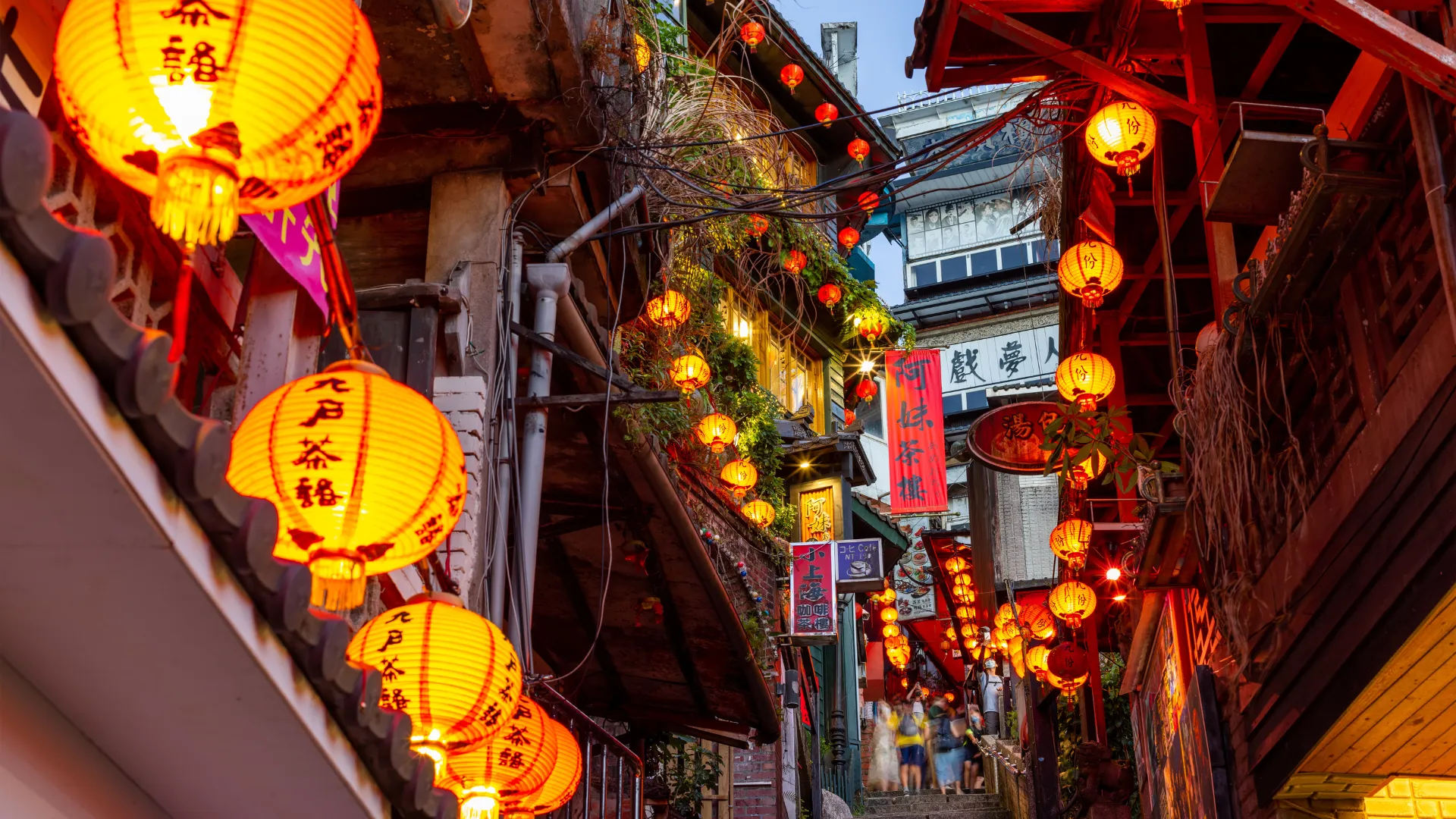
Taiwan stands at the intersection of culture, technology, and nature. Its cities glow…
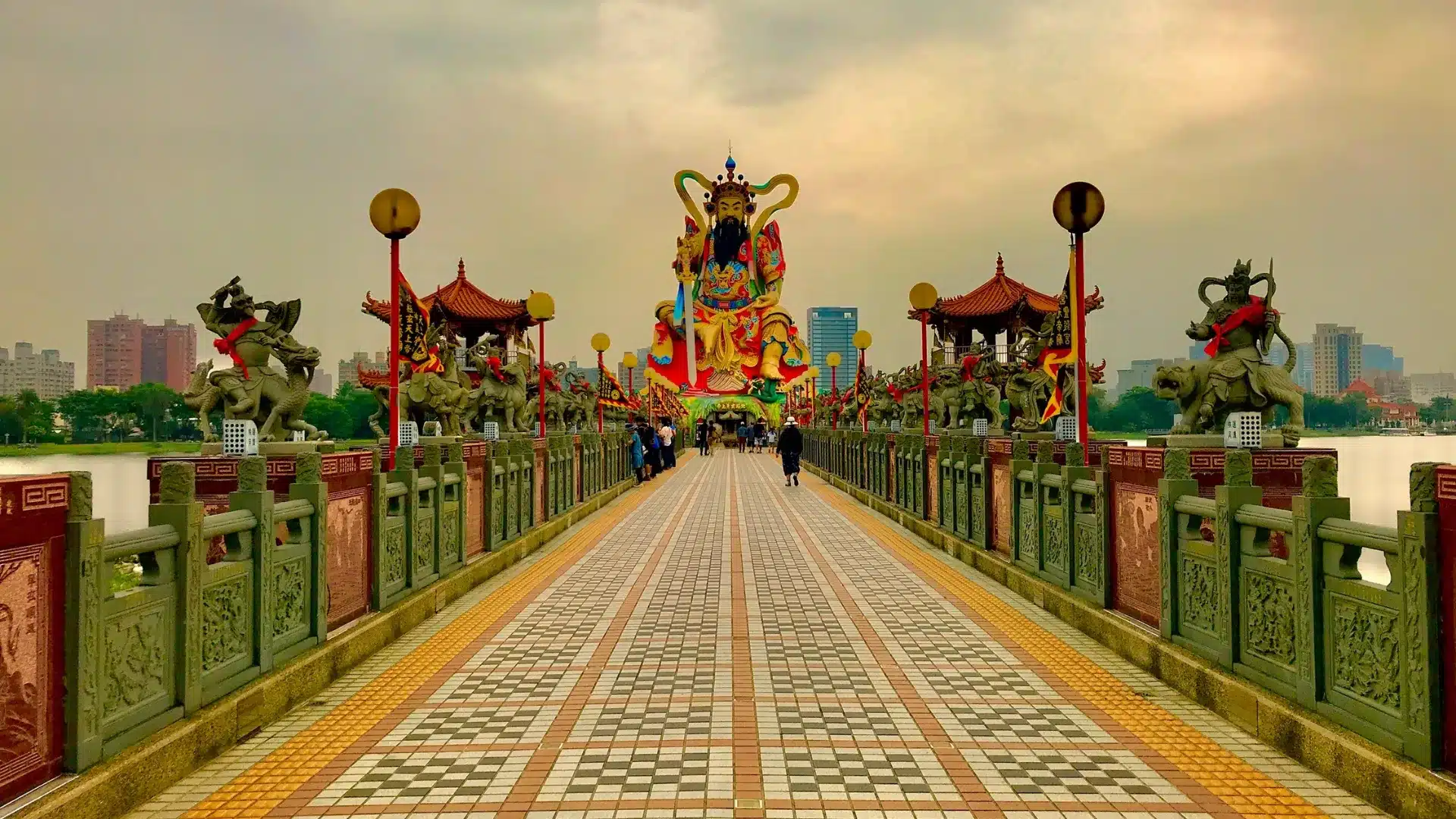
Film Production Services in Taiwan operate within one of Asia’s most visually diverse…
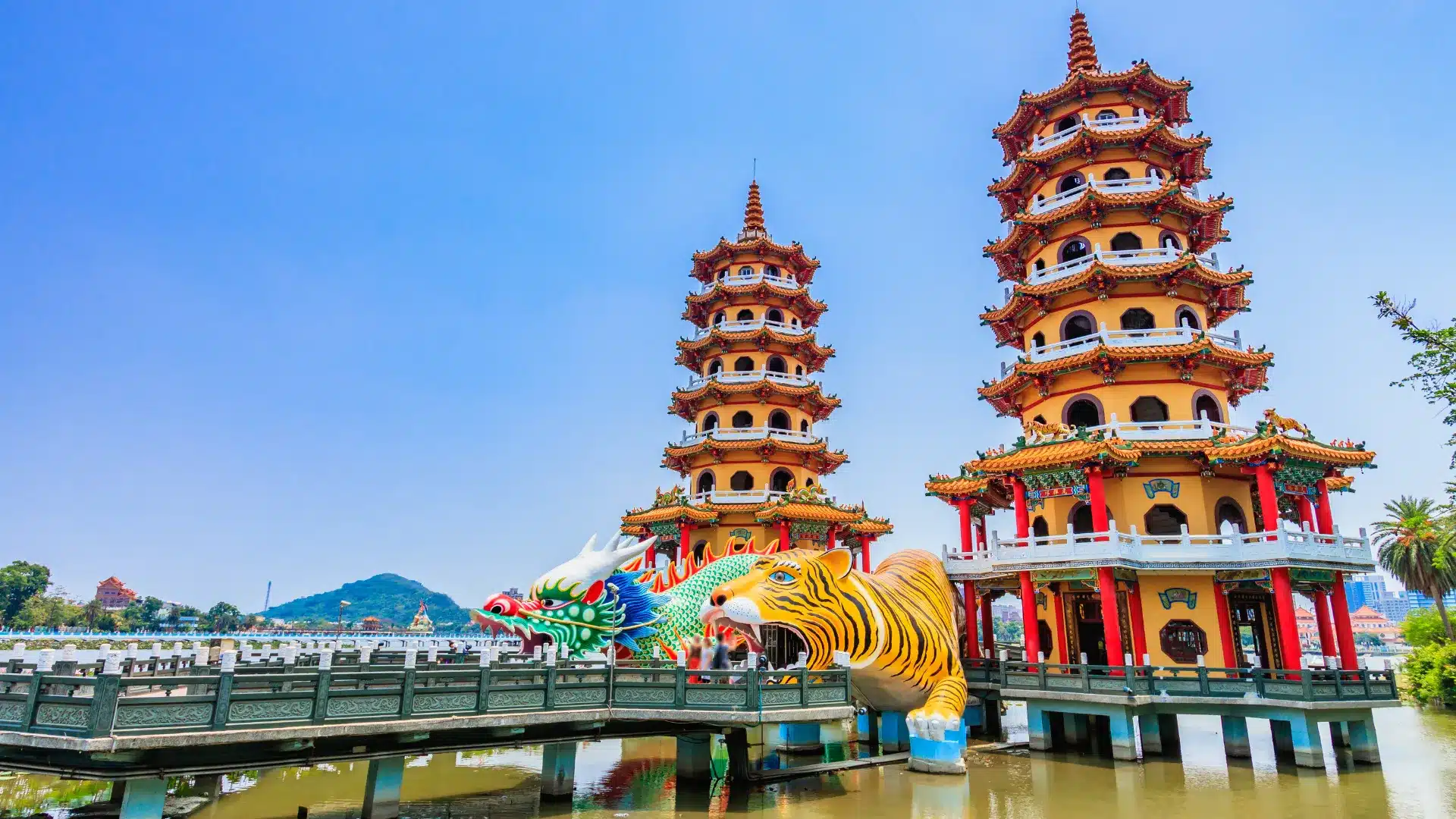
Production Support Taiwan has quickly become one of Asia’s most dependable foundations for…
Hoodlum offers expert film fixer services in Taiwan, supporting international productions across one of East Asia’s most efficiently run and visually varied filming destinations.
Taiwan packs an extraordinary range of environments into a compact island geography — the futuristic Taipei 101 skyline and the night markets and temples of the capital, the marble cliffs and gorge of Taroko National Park on the east coast, the historic temples and traditional cuisine of Tainan, the modern port infrastructure and arts scene of Kaohsiung, and the mountainous interior offering dramatic landscape work within a short drive of major cities.
Taiwan is consistently ranked among the safest countries in the world. Many nationalities can enter visa-free for stays under 90 days. The country is an ATA Carnet member with equipment clearance taking as little as 30 minutes to an hour. Film permits are issued by various governmental agencies depending on location, with applications also required to be filed with the local police department where filming takes place.
For productions needing a combination of modern Asian urban infrastructure, dramatic natural landscapes and an efficient, low-risk production environment, Taiwan is one of the most practically rewarding destinations in East Asia.
Taiwan is an East Asian filming destination that works for a wide range of production types within a compact, well-connected and highly efficient island geography. The country is served by Taoyuan International Airport near Taipei, with domestic connections via Taiwan’s high-speed rail network and regional airports to Taichung, Tainan, Kaohsiung and Hualien.
The main production environments include Taipei’s combination of the Taipei 101 skyline, night markets, temples and museums; Taichung’s arts and cultural scene; Tainan’s historic temples and traditional cuisine as Taiwan’s oldest city; Kaohsiung’s modern port infrastructure and growing arts district; and Hualien’s gateway position to the dramatic marble cliffs and gorges of Taroko National Park.
A successful Taiwan production benefits from a comparatively efficient approval framework. Many nationalities require no visa for stays under 90 days. Crew accreditation takes three to five working days. General film permits take three to six weeks and are filed with the relevant governmental agency and the local police department for the filming location. Equipment customs clearance under the ATA Carnet system takes as little as 30 minutes to an hour.
Taiwan works for productions that need a combination of modern Asian urban infrastructure, dramatic mountain and coastal landscapes, rich temple and cultural heritage, and one of the safest, most efficiently run production environments anywhere in the world.
Strong production use cases include:
Taiwan’s reputation as one of the top three safest countries in the world is a genuine practical advantage for productions, simplifying security planning and crew welfare considerations considerably compared to many other filming destinations.
English is commonly understood in tourist areas and major cities, simplifying communication with permit authorities, location managers and production partners, though Mandarin Chinese remains the language of government and formal processes.
October to March is the optimal filming window — Taiwan’s dry season, falling outside the typhoon risk period and offering the most reliable conditions for outdoor filming.
Summer (April to September/October) is long, hot and humid, with temperatures that can soar across the island. Winter (November to February) is short and mild, with snow occasionally falling in the mountains and at lower elevations in the north — a notable option for productions specifically seeking winter mountain landscapes.
Typhoon season (June to September) brings heavy rain and strong winds that can significantly impact coastal areas and outdoor shoots. Productions scheduling work during this period should build substantial weather contingency into the schedule, particularly for coastal and Taroko Gorge locations.
Productions should plan for:
As of June 2024, visitors entering Taiwan as tourists or for short-term visits under 90 days do not need a visa. Visitors from certain countries, including the United States, can take advantage of 30-day visa-free entry. No extensions or changes of status are permitted once inside Taiwan.
Required documentation (where a visa is needed):
Processing time: Seven to ten working days where a visa is required.
Estimated cost: USD 150, non-refundable.
Visa application: https://www.roc-taiwan.org/capetown_en/post/125.html
It is the applicant’s responsibility to ensure all entry requirements are met. Work authorisation for paid professional filming should be confirmed separately from visa-free or standard tourist entry for each crew member’s nationality, and productions should confirm current visa-free eligibility given periodic policy updates.
A filming permit is required for international film crews, with the local fixer liaising with relevant Taiwanese organisations to ensure all necessary licences and authorisations are obtained.
Required documentation:
Processing time: Three to five working days.
Estimated cost: USD 150–300 depending on the nature of the filming project.
This is one of the faster crew accreditation processes among comparable East Asian filming destinations, and should be initiated alongside the general film permit application given the overlapping documentation.
Permits for filming in Taiwan are issued by various governmental agencies depending on the location and nature of the shoot. A distinctive requirement is that permits must additionally be filed with the local police department where filming will take place.
Required documentation:
Processing time: Three to six weeks. If a permit is refused, additional time may be needed for re-application.
Estimated cost: USD 100 per application for the general permit. Government and private locations may charge up to USD 10,000 for a four-hour shoot at premium sites.
The local police filing requirement means that, in addition to the relevant governmental agency for a given location, productions must factor in police department coordination for every filming location — this is not an optional or occasional requirement but a standard part of the Taiwan permitting process.
Taipei filming locations — Taipei 101, once the world’s tallest building, anchors the skyline alongside the bustling night markets (Shilin, Raohe), temples (Longshan Temple), museums (National Palace Museum) and the modern commercial districts of Xinyi. Local police filing required for street and public space filming in addition to the governmental permit.
Taroko Gorge, Hualien — a dramatic marble canyon within Taroko National Park, with sheer cliffs, suspension bridges, mountain temples and the Liwu River. One of Taiwan’s most visually extraordinary natural environments. National park authority coordination required in addition to the general permit.
Tainan — Taiwan’s oldest city and former capital, with extensive temple architecture, traditional cuisine and cultural heritage sites reflecting the island’s earliest period of Chinese and Dutch colonial settlement. Heritage site coordination for temple filming.
Kaohsiung — Taiwan’s largest port city in the south, combining modern infrastructure, an emerging arts scene centred on the Pier-2 Art Center, and significant industrial and international trade activity. Port authority coordination required for any harbour or industrial filming.
Taichung — central Taiwan’s cultural hub, known for art galleries, parks and a growing reputation as an educational and industrial centre.
Yangmingshan National Park — a volcanic mountain park near Taipei offering hot springs, hiking trails and seasonal flower displays within easy reach of the capital. National park coordination required.
No significant limitations exist on importing drones into Taiwan, though a drone licence is required for operation.
Issuing authority: Taiwan Civil Aviation Administration.
Processing time: Fourteen working days.
Estimated cost: Varies depending on drone specifications and intended filming location.
The relatively permissive drone importation framework is a practical advantage for productions, though the licensing requirement and fourteen-working-day processing time should still be built into the pre-production schedule. Productions planning drone work at Taroko Gorge, near Taipei 101 or other sensitive urban and natural locations should confirm any site-specific restrictions in addition to the standard Civil Aviation Administration licence.
Taiwan is an ATA Carnet country, significantly simplifying the temporary import of professional filming equipment.
Required documentation:
Processing time: Approximately 30 minutes to an hour — one of the fastest equipment clearance timelines anywhere in this guide.
The filming permit functions as a required supporting document for customs clearance, reinforcing the value of having the permit confirmed before equipment arrives. Given the speed of clearance once documentation is in order, the practical priority for productions is ensuring the equipment list and permit are accurate and complete before arrival, rather than building in extensive customs contingency time.
Taiwan is regarded as one of the safest countries in the world, often ranking in the top three globally for safety. This is a genuine and significant practical advantage for international productions.
Key safety and security considerations:
Taiwan offers film incentive information through Hoodlum. Productions should confirm current incentive availability, eligibility criteria and application processes before budgeting.
Taiwan’s primary production advantages are efficiency, safety, infrastructure quality and a genuinely diverse visual environment within a compact, well-connected island geography.
Visa-free entry or visa application, crew accreditation, general film permit (governmental agency plus local police filing), drone permit (Taiwan Civil Aviation Administration) and ATA Carnet customs clearance are the main approval streams.
A complete production plan connects:
Hoodlum manages all of these as one coordinated workflow, with particular attention to the local police filing requirement that applies across all filming locations.
Taiwan is the right choice when a production needs a combination of modern Asian urban infrastructure, dramatic natural landscapes, rich temple and cultural heritage, and one of the world’s safest and most efficiently run production environments.
It is especially suitable for:
It may be less suitable for productions requiring extended timelines that cannot accommodate the three-to-six-week general permit process, or those without budget for premium location fees that can reach USD 10,000 for a four-hour shoot at certain government or private sites.
Avoid:
Support may include:
Do international film crews need a visa to film in Taiwan?
Many nationalities can enter visa-free for stays under 90 days, including 30-day visa-free entry for US passport holders. No extensions or status changes are permitted once inside Taiwan. Where a visa is required, processing takes seven to ten working days at a cost of USD 150. Work authorisation for professional filming should be confirmed separately from visa-free entry.
What makes Taiwan’s permit process distinctive?
Filming permits are issued by various governmental agencies depending on location and nature of the shoot, but must additionally be filed with the local police department where filming will take place. This dual requirement applies to every filming location and should be factored into the three-to-six-week processing timeline.
How long does crew accreditation take in Taiwan?
Three to five working days — one of the faster accreditation processes among comparable East Asian destinations. Cost: USD 150–300 depending on the nature of the filming project. Run in parallel with the general film permit application.
Can productions film at Taroko Gorge?
Yes. Taroko Gorge in Taroko National Park is one of Taiwan’s most visually distinctive natural environments, but requires national park authority coordination in addition to the general film permit and local police filing for the relevant jurisdiction.
Can productions use drones in Taiwan?
Yes. No significant import limitations exist, though a drone licence is required, issued by the Taiwan Civil Aviation Administration. Processing takes fourteen working days. Confirm any site-specific restrictions for locations like Taroko Gorge or central Taipei.
Is Taiwan a Carnet country?
Yes — Taiwan is an ATA Carnet country. Equipment clearance takes approximately 30 minutes to an hour with accurate documentation and a confirmed filming permit — one of the fastest clearance timelines in this guide.
Is it safe to film in Taiwan?
Yes. Taiwan is regarded as one of the safest countries in the world, often ranking in the top three globally. Standard security for crowd control and equipment safeguarding is still recommended in busy public areas, but the overall security planning burden is significantly lighter than in many other destinations.
Filming in Taiwan combines two qualities that rarely come together in the same destination: genuine production efficiency and one of the safest operating environments anywhere in the world.
Crew accreditation takes three to five working days. ATA Carnet customs clearance takes as little as 30 minutes to an hour. Taiwan consistently ranks among the top three safest countries globally. At the same time, the general film permit process has a distinctive structural requirement that productions must understand from the outset — permits are issued by the relevant governmental agency for the location, but must also be filed with the local police department where filming will take place, for every single location on the shot list.
Productions that understand this dual structure, and plan the three-to-six-week general permit timeline accordingly, will find Taiwan one of the most efficient, safe and visually rewarding production environments in East Asia.
The Taiwan film permit process has a structure that differs from most other destinations in this guide. Permits are issued by various governmental agencies depending on the specific location and nature of the shoot — but in addition to that agency approval, permits must be filed with the local police department where filming will take place.
This is not an occasional or location-specific requirement. It applies to every filming location in Taiwan, and productions that treat it as optional or assume the governmental agency approval alone is sufficient will encounter problems on the ground.
Required documentation includes detailed scene descriptions, location details, equipment lists with serial numbers and value, and crew passports and photos. Processing takes three to six weeks, with additional time required if a permit is refused and re-application becomes necessary. Cost: USD 100 per application for the general permit, though premium government and private locations may charge up to USD 10,000 for a four-hour shoot.
The filming visa Taiwan picture starts from a position of genuine accessibility. As of June 2024, visitors entering as tourists or for short-term visits under 90 days do not need a visa at all. Visitors from certain countries, including the United States, benefit from 30-day visa-free entry.
No extensions or changes of status are permitted once inside Taiwan, and it is the applicant’s responsibility to ensure all entry requirements are met. Where a visa is required for a particular nationality, processing takes seven to ten working days at a cost of USD 150, non-refundable.
The important distinction productions must make is that visa-free entry covers tourism and short-term visits — it does not automatically confer work authorisation for paid professional filming. This should be confirmed separately for each crew member’s nationality, even where entry itself requires no visa.
The Taiwan filming permit police department requirement is the single most distinctive feature of the country’s production approval framework, and the detail most likely to catch international productions unfamiliar with Taiwan off guard.
Every filming location requires coordination with the local police department in the relevant jurisdiction, alongside whichever governmental agency issues the substantive filming permit for that location type. This dual structure means productions filming across multiple Taiwanese cities or districts within a single shoot need to plan for multiple police department filings, not just one central governmental approval.
Hoodlum’s local fixer relationships with police departments across Taipei, Taichung, Tainan, Kaohsiung and Hualien are central to navigating this requirement efficiently — without established local relationships, the police filing component can become the bottleneck in an otherwise efficient permit process.
Taipei filming locations give productions access to one of East Asia’s most visually layered capital cities. Taipei 101 — once the world’s tallest building — anchors a modern skyline that sits alongside the sensory intensity of night markets including Shilin and Raohe, the historic Longshan Temple, the National Palace Museum’s extraordinary collection, and the contemporary commercial energy of the Xinyi district.
Street and public space filming in Taipei requires local police filing in addition to the relevant governmental agency permit — this applies whether the location is a night market, a temple precinct or a modern commercial district. Taipei’s deep local crew base and well-developed equipment rental infrastructure make it the natural production hub for most Taiwan shoots, even those with significant location days elsewhere on the island.
The Taroko Gorge filming location is Taiwan’s most visually extraordinary natural environment — a dramatic marble canyon within Taroko National Park on the east coast, with sheer cliff faces, suspension bridges, mountain temples and the Liwu River carving through rock formations of striking colour and scale.
Filming at Taroko Gorge requires national park authority coordination in addition to the general film permit and the standard local police department filing for the Hualien jurisdiction. Given the location’s natural drama and relative remoteness from Taipei, productions should build realistic travel time into the schedule alongside the permit and authority coordination.
Typhoon season (June to September) carries particular significance for Taroko Gorge given the canyon’s exposure to heavy rainfall and potential landslide risk — productions scheduling work here during this period should build substantial weather contingency into the plan.
The Taiwan Civil Aviation Administration drone permit process benefits from a notably permissive import framework — no significant limitations exist on bringing drones into the country — though operation requires a licence. Processing takes fourteen working days.
Productions should confirm any site-specific drone restrictions for sensitive locations, particularly Taroko Gorge given its national park status and central Taipei given the urban density around landmarks like Taipei 101. The standard Civil Aviation Administration licence covers general operation, but specific locations may carry their own additional conditions that should be confirmed before aerial sequences are committed to the schedule.
Taiwan customs clearance ATA Carnet processing is among the fastest of any destination in this guide — typically 30 minutes to an hour with accurate documentation. Required documentation includes the filming permit and a detailed equipment list with serial numbers and values.
The filming permit’s role as a required supporting document for customs clearance reinforces a pattern seen across Taiwan’s broader production framework: having documentation confirmed and accurate before the next step begins is what enables the genuinely fast processing times the country is known for. Productions arriving with an incomplete equipment list will not benefit from the 30-minute clearance window regardless of Taiwan’s overall efficiency.
The Kaohsiung filming location offers Taiwan’s largest port city — modern infrastructure, an emerging arts scene centred on the Pier-2 Art Center, and significant industrial and international trade activity that gives productions an urban character distinct from Taipei’s commercial and cultural density. Port authority coordination is required for any harbour or industrial filming, alongside the standard governmental permit and local police filing.
The Tainan filming location offers Taiwan’s oldest city and former capital — extensive temple architecture, traditional cuisine and cultural heritage sites reflecting the island’s earliest period of Chinese and Dutch colonial settlement. Temple filming requires specific heritage and cultural coordination beyond the general permit.
Together, Kaohsiung and Tainan give productions a southern Taiwan production base distinct in character from the capital — useful for productions seeking historical depth or modern port and industrial environments within the same broader shoot.
A Taiwan film fixer confirms visa-free eligibility for each crew nationality, coordinates crew accreditation in parallel with the general film permit, manages the relevant governmental agency approval alongside mandatory local police department filing for every location, coordinates Taroko National Park, temple heritage and port authority permissions where applicable, initiates Taiwan Civil Aviation Administration drone permit applications with site-specific restriction confirmation, prepares ATA Carnet documentation for fast customs clearance, negotiates premium location access where fees can reach USD 10,000 for a four-hour shoot, plans typhoon season contingency for June to September shoots, and coordinates high-speed rail logistics for multi-city productions spanning Taipei, Taichung, Tainan, Kaohsiung and Hualien.
Film production Taiwan works most efficiently when Hoodlum is engaged early enough to manage the three-to-six-week general permit timeline alongside the police department filing requirement for every location on the shot list.
Hoodlum provides full production support for international crews across all Taiwan filming locations — from early research and Taiwan location scouting through Taiwan filming permit police department coordination, Taroko Gorge and national park access, Taiwan Civil Aviation Administration drone permit planning, Taiwan customs clearance ATA Carnet preparation and on-the-ground production management across Taipei, Taichung, Tainan, Kaohsiung and Hualien. For enquiries, visit hoodlum.tv/contact-us.
For productions building an East Asia film production guide — comparing Taiwan with Japan, South Korea and China — Taiwan occupies a position defined by safety, efficiency and a distinctive dual-authority permit structure.
It is the only East Asian destination in this guide where the general film permit requires mandatory filing with the local police department for every location in addition to governmental agency approval, where equipment customs clearance can be completed in under an hour, and where the country itself ranks among the top three safest in the world — a combination that significantly simplifies production risk planning compared to most other Asian filming destinations.
The visual range — Taipei 101’s modern skyline, Taroko Gorge’s marble cliffs, Tainan’s historic temples, Kaohsiung’s port infrastructure — sits within a compact, high-speed-rail-connected geography that allows multi-region productions to move efficiently between very different environments within a single schedule.
Productions that plan correctly — visa-free eligibility confirmed, crew accreditation and the general permit running in parallel, local police department filing factored into every location’s timeline, drone applications initiated early with site-specific confirmation, accurate equipment documentation prepared for fast customs clearance, and Hoodlum’s Taiwan fixer team engaged to manage the dual governmental-agency-plus-police permit structure — will find Taiwan delivers production efficiency, safety and visual variety that few other East Asian destinations can match.
Planning a shoot in Taiwan? Contact Hoodlum for national and city film permits, national park authorisations, local fixers, location scouting, customs and ATA Carnet planning, drone coordination, production-subsidy guidance, Mandarin and Taiwanese-speaking crews, mountain and coastal logistics and full on-ground production management. You can also view the Hoodlum Film Fixers Taiwan Google Business Profile for local production details.