












Film Production Services in Austria
Austria is one of Europe’s most rewarding filming destinations, packing alpine grandeur, imperial cities, mirror-still lakes and medieval towns into a compact, highly navigable country. From the baroque streets of Vienna and the Mozart-era squares of Salzburg to the peaks of Tyrol and the lakes of the Salzkammergut, few places offer such cinematic range within such short travel distances, and fewer still pair it with the infrastructure, crew depth and incentives to shoot it efficiently.
For international crews, Austria offers a rare blend of creative variety and operational certainty. A production can base in Vienna, draw on local studios, crew and suppliers, then move out into the Alps, the lake districts, the Danube valley or a historic provincial town depending on the creative direction. As a member of the European Union and the Schengen Area, the country combines straightforward access for many nationalities with a mature, film-friendly administrative culture.
Hoodlum provides Film Production Services in Austria for documentaries, commercials, factual entertainment, branded content, music videos, photography campaigns, feature films and television drama. Our team supports visa and work-authorisation guidance, filming permits, location agreements, drone planning, customs and carnet clearance, local crew sourcing, transport, security planning and full on-ground production management. You can see the full scope of what we do and the people behind it on our who we are page.
Austria rewards productions that arrive with their paperwork in order. It is a welcoming, well-organised country for film, but it is not a destination for informal, undocumented shooting by foreign crews. The right immigration route, the right permits and the right equipment-clearance plan all need to be settled before the cameras roll, and the most efficient way to handle that is through an experienced local production partner.
Why Austria Works for Locations, Crew and Infrastructure
The country’s biggest production strength is the density of distinct, usable environments within short travel distances. In a single schedule a production can capture a grand imperial palace, a cobbled medieval old town, a high alpine pass, a glassy lake, a vineyard-covered river valley and a contemporary city street, often within a day or two of each other. That compactness keeps travel days down and shooting days up.
Vienna is the operational heart, but the value sits in the route. A commercial might pair a baroque Viennese interior with a Tyrolean mountain road and a Salzkammergut lake. A drama might combine a city studio build with location work in Salzburg and the Dolomites. A natural-history or travel piece might move from the Hohe Tauern peaks to the Danube’s wine terraces. The country is strong because it can stand in for many places at once: imperial Europe, storybook alpine idyll, contemporary metropolis or untamed mountain wilderness.
The country is especially well suited to:
- Feature films and high-end television drama
- Period and heritage productions
- Commercials and branded content
- Documentary and factual series
- Music videos and live performance capture
- Fashion and photography campaigns
- Automotive and lifestyle shoots
- Natural-history, ski and mountain programming
- Travel and tourism content
Hoodlum’s production support team helps crews decide which regions are practical, what permissions each location needs and how to sequence movement between the cities, the lakes and the high Alps.
Vienna as the Production Base
Vienna is the natural anchor for most international productions working in Austria. It is where crews usually arrive, where the major equipment houses, post facilities and production partners are concentrated, and where most immigration, permit and customs coordination begins. A state-of-the-art studio complex in the capital now adds further stage capacity and services for incoming productions.
The city itself is an enormous resource. It offers world-famous palaces, baroque and Habsburg-era streetscapes, grand libraries, museums, coffee houses, the Ringstrasse, the Danube and its canals, contemporary districts and elegant residential quarters that can double for many eras and many European cities. With the right approvals, productions have shot everywhere from the National Library’s Grand Hall and Heldenplatz to the city’s atmospheric underground canals.
Vienna also matters logistically. Crew accommodation, vehicle hire, fixers, customs agents, drone operators, security planning and medical support are all easiest to coordinate from the capital. Hoodlum uses Vienna as the practical hub for Film Production Services in Austria, particularly when a shoot needs to travel out to the provinces, the lakes or the mountains.
Salzburg and the Salzkammergut
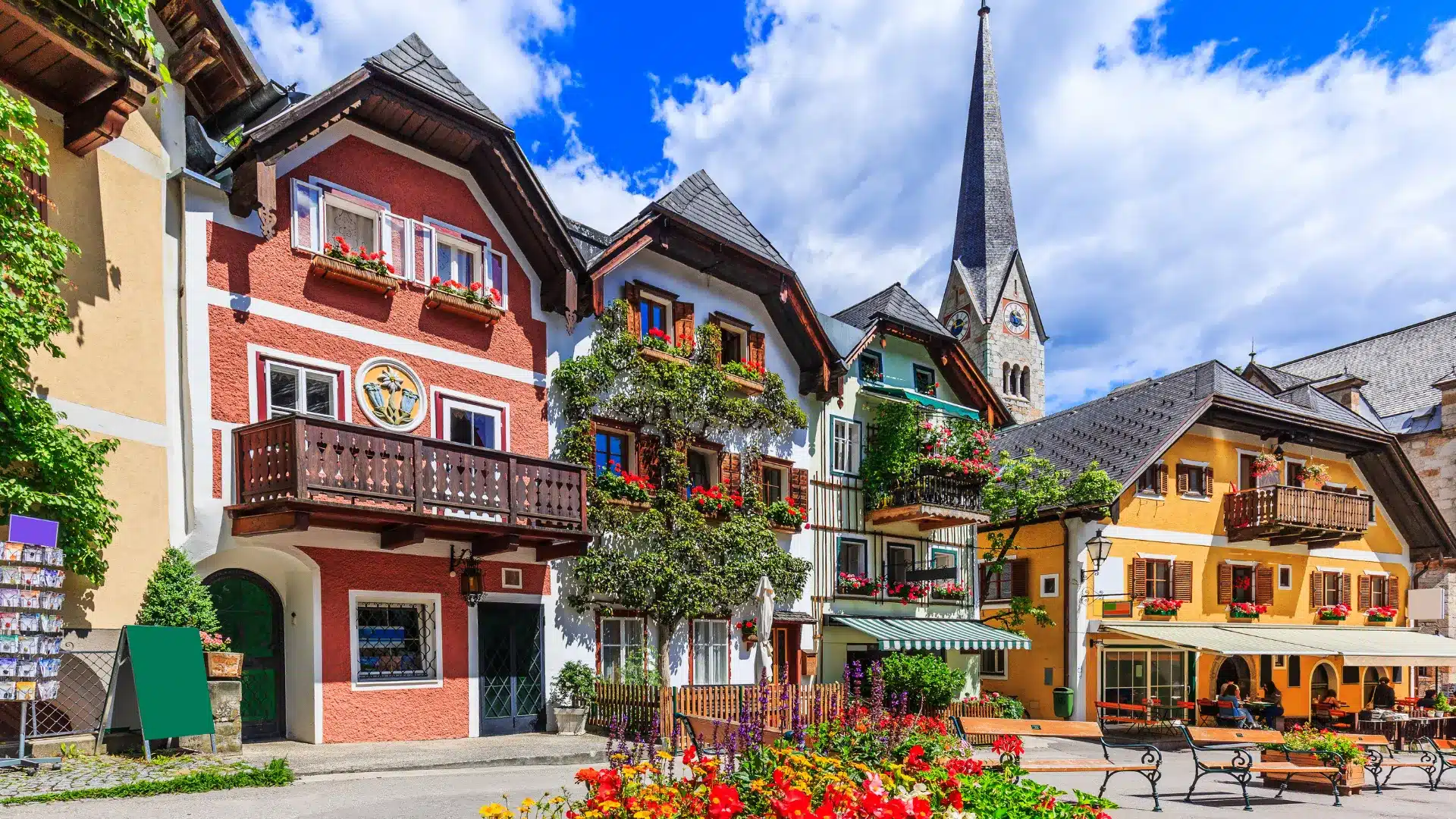
Salzburg delivers some of the most recognisable imagery in the country: a baroque old town beneath a hilltop fortress, Mozart-era squares, riverside facades and the surrounding lake-and-mountain country that has become shorthand for alpine romance. The neighbouring Salzkammergut lake district adds glassy water, lakeside villages such as Hallstatt, and a backdrop that has drawn productions and visitors for generations.
This region suits period drama, romance, travel content, commercials and natural-history work that needs both heritage texture and scenic grandeur. Filming around protected historic sites and popular tourist towns calls for careful timing, permit coordination and crowd management. Hoodlum handles the local permissions, access and logistics so the picturesque postcard becomes a workable filming day.
Tyrol and the Alps
Tyrol and the western provinces give the country its high-alpine register: dramatic peaks, glaciers, mountain passes, ski resorts, valleys and single-lane roads with extraordinary scale. The Dolomites, the Hohe Tauern and the Tyrolean ranges deliver wilderness and altitude that are hard to match elsewhere in Central Europe, and the region has supported large international productions and ski-set franchises.
These environments suit feature films, mountain and ski programming, automotive films, fashion shoots and adventure or expedition content. Filming at altitude requires tighter planning around weather, snow, daylight, access, accommodation and movement, since the most striking locations are often the furthest from a base and the most weather-dependent. The regional Cine Tirol incentive can also support productions shooting in the area. Hoodlum builds the local driver, location, accommodation and mountain-logistics coordination into the plan before a shoot moves into the high country.
The Danube Valley, Lakes and Provincial Towns
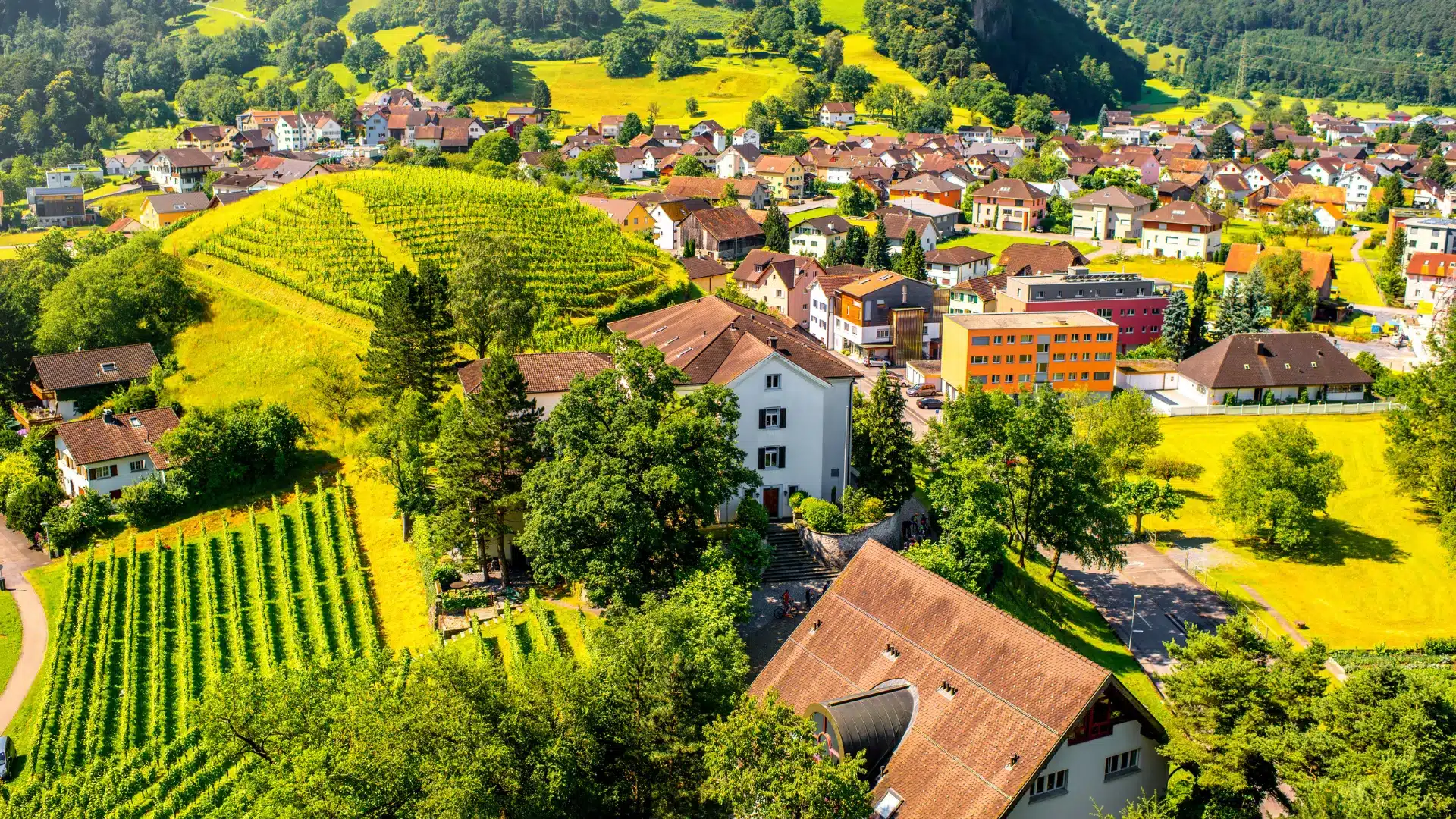
Beyond the headline regions, the country offers a wealth of further options. The Wachau valley along the Danube provides terraced vineyards, river views, abbeys and wine villages. Carinthia and Styria add southern lakes, rolling country and the city of Graz with its own old-town character. Provincial towns across the country supply medieval squares, castles, churches and quiet rural settings ready-made for period and contemporary work alike.
This range means productions can match almost any creative brief without long transfers, from gritty urban drama to chocolate-box rural romance to wild mountain natural history. Hoodlum helps productions plan these regions as distinct shooting environments, each with its own access, permit and logistics considerations, rather than as simple add-ons to a Vienna schedule.
Entry, Visas and Crew Authorisation
As an EU and Schengen member, the country offers straightforward access for many nationalities, but the right route still depends on each crew member’s nationality, role, length of stay and whether they will be paid locally.
Citizens of the EU, EEA and Switzerland may enter and work freely. Citizens of the US, UK, Canada, Australia and many other countries may enter visa-free for up to 90 days within any 180-day period under Schengen rules, while nationals of visa-required countries must obtain a Schengen visa in advance, typically processed in around 15 calendar days but sometimes longer. For paid filming or longer engagements, a work and residence authorisation may be required, usually arranged through an Austrian production service company, with work-permit categories taking several weeks to process.
Passports must meet the Schengen validity rule, and crews should travel with supporting production documentation, including an invitation letter or contract with the Austrian production partner, a crew list with passport details, a shooting schedule and location list, proof of accommodation, travel medical insurance meeting the Schengen minimum cover, and public liability insurance. Hoodlum helps productions match each crew member to the correct route, keep the documentation and crew list aligned, and avoid immigration becoming a late-stage problem.
Filming Permits and Location Permissions
There is no single national film permit covering the whole of Austria. Instead, filming permissions are coordinated location by location, which makes local knowledge essential, and the national and regional film commissions are central to the process.
FILM in AUSTRIA, the national film commission, is the first and central point of contact for international film, TV and streaming projects, offering free information, support and consulting. Regional commissions such as the Vienna Film Commission and Cine Tirol handle their own territories. Actual permits are issued by the relevant local and provincial authorities, from municipal offices and city councils to provincial governments in Vienna, Salzburg and Tyrol.
Applications generally require a completed form, a script or storyboard, location plans, proof of liability insurance, proof of permission from location owners and a detailed filming schedule. Simple permits for public spaces often clear in a few working days, while filming in protected areas or historic buildings, or anything needing multiple authorities, can take one to three weeks. Permit costs vary widely with location, production type and duration, and many small productions face only modest fees, though heritage sites, road closures and public-authority involvement add location costs.
Private locations, from castles and farms to hotels, businesses and private roads, are negotiated directly with owners or managers. A Hoodlum location scout can propose suitable options, after which we negotiate access, dates, crew size, vehicle movement, fees and reinstatement terms, and secure a standard location agreement. Private permission does not replace any municipal, heritage or public-space approvals that a location also requires, and fees are quoted once the locations are confirmed.
Drone Filming and Aviation Rules
Drone operation is regulated by Austro Control, the national aviation authority, within the harmonised EU drone framework. Commercial film work generally requires operator registration, pilot competence appropriate to the operation, adequate liability insurance and, depending on the risk category and location, specific authorisation. Flights near airports, over crowds, in protected areas or in sensitive urban airspace attract additional restrictions and approvals.
Applications typically require a completed form, proof of liability insurance, drone specifications and technical documentation, pilot qualifications and a flight plan with a risk assessment, with processing often taking around one to two weeks. Importing a drone means meeting customs requirements as well, usually via an ATA Carnet or temporary import procedure, with the drone declared and CE-conformity documentation available.
For incoming productions, the most practical route is often to engage a locally licensed drone operator who already holds the right registration, qualifications, insurance and familiarity with Austrian and EU airspace rules. Importing your own drone is possible but adds customs and compliance steps. Hoodlum helps productions decide between a local operator and importing equipment, and builds the necessary lead time into the plan.
Equipment Customs Clearance and the ATA Carnet
The country is an ATA Carnet country, which makes temporary equipment importation relatively straightforward for productions that prepare properly. An ATA Carnet acts as a single international customs document allowing professional filming gear to be temporarily imported duty-free and tax-free, on the guarantee that it will be re-exported within the validity period, typically up to one year.
Customs clearance is handled by the Austrian Federal Customs Administration (Zollamt Österreich), and a clean carnet supported by a detailed equipment list, accurate values and serial numbers usually moves through quickly, often within a few hours. Costs are modest relative to the value of a typical equipment package. For crews travelling within the EU, goods in free circulation move without carnet formalities, so the carnet primarily matters for kit arriving from outside the Union.
Hoodlum helps productions prepare the equipment list, values, carnet documentation and clearing-agent coordination so cameras, lighting, grip and sound gear move through the airport or border with minimal delay.
Incentives and Production Rebates
One of Austria’s strongest draws is its cash-rebate incentive, FISAplus, aimed squarely at international film, TV and streaming productions. The programme offers a 30% rebate on eligible Austrian production expenditure, plus an additional 5% green filming bonus for environmentally sustainable productions, and a gender-gap financing incentive for projects with significant female representation in key roles.
FISAplus is administered with FILM in AUSTRIA as the central contact point, and it covers feature films, documentaries, TV films and series for cinema, television and streaming, including projects carrying out only post-production or film-music work in Austria. Funding is capped per project, with minimum Austrian spend thresholds applying, and productions must pass a points-based cultural test. Advertising films, filmed events, talk and casting shows, news and similar formats are generally excluded.
Beyond the national scheme, Austria offers regional funding programmes across its nine states, including the Vienna Film Incentive and the Cine Tirol Production Incentive. The exact rates, caps, thresholds and eligibility rules are detailed and have changed in recent budget cycles, so productions should confirm current figures and take FILM in AUSTRIA’s free advice early, ideally before locking a budget.
Safety, Security and Practical Logistics
The country is generally considered a very safe and film-friendly destination, with a highly skilled workforce, strong infrastructure and authorities that actively support and encourage productions. The risk profile is low in most settings, but it still varies with location, subject matter, public exposure and crew footprint.
Controlled and private environments usually need little or no security. Busy public filming, high-profile landmarks, large crowd scenes or sensitive subjects may call for professional film-production security alongside coordination with local police and municipal guidelines. For mountain and remote work, the emphasis shifts to experienced personnel, safety planning and weather awareness rather than a heavy presence.
Weather and daylight are the practical variables that most affect a schedule. Conditions change quickly at altitude, snow and short winter daylight compress mountain shooting days, and access roads can close, so contingency planning matters. Medical infrastructure is excellent and no special vaccinations are required for entry. Hoodlum helps productions balance sensible security with efficient movement, and builds weather, daylight and contingency thinking into the schedule from the start.
Extending the Shoot into Liechtenstein
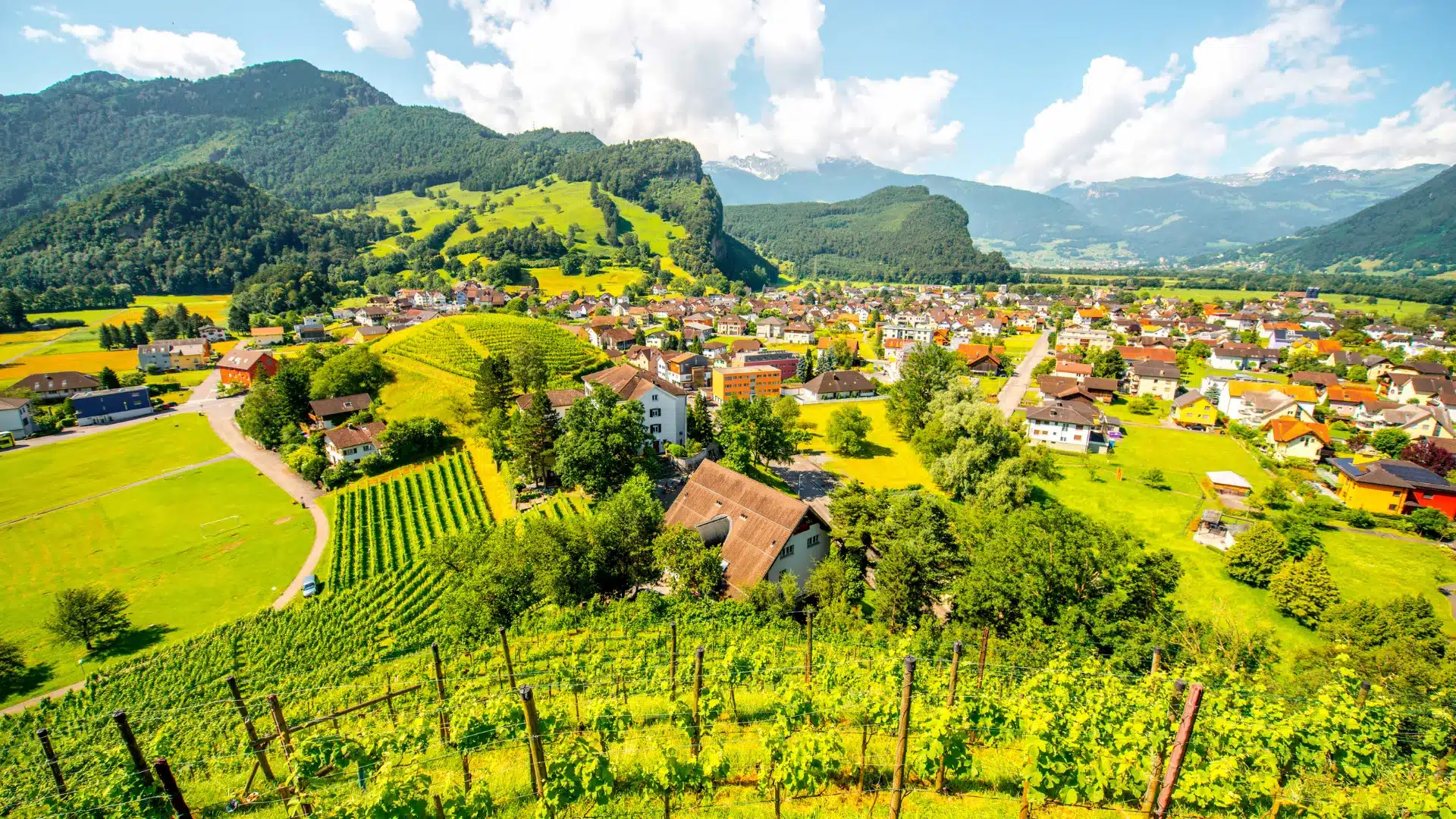
For productions wanting an additional alpine register, the principality of Liechtenstein sits just across the border between Austria and Switzerland, offering mountainous landscapes and compact historic architecture. Although not an EU member, Liechtenstein belongs to the Schengen Area and the European Economic Area, so visa rules follow the same Schengen regulations, and visa-free nationals may stay up to 90 days within 180.
Liechtenstein does not maintain a large-scale national film commission, so productions typically coordinate logistics through Austrian or Swiss partners, entering via Switzerland or Austria. Paid filming and extended stays may require work authorisation, and because of the principality’s small size and strict labour controls, approvals are limited, subject to quota and must be arranged well in advance, with filming permissions handled case by case through municipal authorities. Crews should plan Liechtenstein segments early. Hoodlum can fold a Liechtenstein leg into an Austria-based schedule, handling the cross-border movement, documentation and local permissions as part of one coordinated plan.
When Austria Is the Right Production Choice
The country is the right choice when a production needs a combination of imperial-city heritage, alpine grandeur, lakes and provincial charm, a competitive cash rebate and a compact, efficient geography. It is especially strong for feature films, high-end drama, period and heritage productions, commercials, documentary, natural history, ski and mountain content, fashion, automotive and travel work, and any project that wants to combine city, lake and mountain in a single efficient schedule.
It may be less suitable for productions that need instant, authorisation-free paid work for non-EU crew, or that expect to arrive and shoot informally without permits or planning. The country is highly workable when the immigration route, filming permissions, drone arrangements, carnet and location agreements are settled early.
Common Production Mistakes to Avoid
The most frequent mistakes include:
- Assuming visa-free Schengen entry covers paid crew work for non-EU nationals
- Leaving work-authorisation applications too late
- Underestimating permit lead times for protected and heritage sites
- Treating popular tourist locations as easy to shoot without timing and crowd planning
- Underestimating drone authorisation timelines and airspace restrictions
- Arriving with non-EU equipment before carnet preparation is complete
- Underestimating how much mountain weather and short winter daylight can compress a schedule
- Confirming incentive figures too late, after the budget is already locked
Most of these problems are avoidable by aligning the crew list, authorisations, filming permits, drone plan, carnet and location agreements well before the crew travels.
How Hoodlum Supports Productions in Austria
Hoodlum provides Film Production Services in Austria for international crews that need experienced local coordination from early planning through to wrap. Our support covers immigration and work-authorisation guidance, filming permits and location permissions, private location agreements, studio and regional coordination, drone planning, carnet and customs preparation, clearing-agent coordination, local crew sourcing, transport, accommodation, security planning and on-ground production management.
From Vienna and the studios to Salzburg, the Salzkammergut lakes, Tyrol and the Alps, the Danube valley and a cross-border leg into Liechtenstein, we help productions access the strongest filming environments in Austria with the right permits, fixers, customs planning and logistics in place. Planning a shoot? Contact us to talk through permits, work-authorisation support, local fixers, location scouting, carnet planning, drone coordination and full on-ground production management.
Frequently Asked Questions
Do international crews need a visa to film in Austria?
It depends on nationality, role and length of stay. EU, EEA and Swiss citizens may work freely, and many other nationals can enter visa-free for up to 90 days within 180 under Schengen rules. For paid filming or longer stays, a work and residence authorisation may be needed, usually arranged through an Austrian production company, and visa-required nationals must obtain a Schengen visa in advance.
Who issues filming permits?
There is no single national permit. FILM in AUSTRIA and the regional film commissions coordinate and advise, while actual permits are issued by local and provincial authorities depending on the location, with lead times from a few days to a few weeks.
Who regulates drones?
Austro Control regulates drone operation within the EU framework. Commercial work needs operator registration, appropriate pilot competence, liability insurance and, depending on the operation, specific authorisation. Using a locally licensed operator is usually the most practical route.
Is Austria an ATA Carnet country?
Yes. Temporary importation of professional filming equipment from outside the EU is handled cleanly through the ATA Carnet system, with clearance via the Austrian customs administration.
What incentives are available?
Austria’s FISAplus programme offers a 30% cash rebate on eligible Austrian spend plus a 5% green filming bonus, with gender-gap financing also available. Regional schemes such as the Vienna Film Incentive and Cine Tirol add further support. Caps, thresholds and a cultural test apply, so confirm current figures early.
What are the best filming locations?
Popular options include Vienna and its studios, Salzburg and the Salzkammergut lakes, Tyrol and the Alps, the Dolomites and Hohe Tauern, the Wachau and Danube valley, Graz and Styria, and the southern lakes of Carinthia, with Liechtenstein available as a cross-border alpine add-on.
Useful Authority Links
- FILM in AUSTRIA – National Film Commission
- FISAplus Incentive
- Austro Control – Drones
- Austrian Federal Government – Visas & Residence
- Austrian Foreign Ministry – Embassies & Visa Info
- Liechtenstein Government Portal
Planning a shoot in Austria? Contact Hoodlum for filming permit coordination, Location Austria support, local fixers, palace and heritage-site permissions, alpine location access, ATA Carnet customs planning, Austro Control drone coordination, ski-unit logistics, helicopter coordination, crew sourcing and full on-ground production management. You can also view the Hoodlum Film Fixers Austria Google Business Profile for local production details.