











Filming in Germany
Film Production Services in Germany
Germany is one of Europe’s strongest production territories, combining major studio infrastructure, experienced crew, efficient transport, distinctive city looks, industrial scale, period architecture, forests, mountains, ports, rivers, castles and a serious film-funding environment. For international producers, Germany can support feature films, television drama, documentaries, commercials, branded content, music videos, factual entertainment, fashion campaigns, automotive shoots, photography and large-scale service production with a level of technical reliability that few countries can match.
Germany is especially valuable when a production needs controlled logistics. Berlin, Munich, Hamburg, Cologne, Frankfurt, Leipzig, Stuttgart and Düsseldorf all offer different production looks and different operating advantages. Berlin brings contemporary European city texture, Cold War history, government buildings, creative districts, studios and nightlife. Munich gives access to Bavaria, Alpine roads, studio facilities and high-end commercial infrastructure. Hamburg offers ports, waterways, northern architecture and maritime access. Cologne and Düsseldorf provide strong media networks, modern business districts and industrial settings. Frankfurt brings finance, airports, glass towers and transport links. Across the country, Germany gives productions a high level of planning certainty when permits, locations, crew, customs, visas and transport are handled correctly.
Hoodlum provides Film Production Services in Germany for international productions that need experienced local coordination from early planning through to wrap. Our team supports film fixers, local producers, permit planning, location scouting, private location agreements, local crew sourcing, transport, accommodation, security, drone planning, customs and ATA Carnet coordination, visa and work-authorisation guidance, and full on-ground production management. Productions can explore the wider scope of what we do and learn more about the people behind Hoodlum on our who we are page.
Germany is highly film-friendly, but it is also highly structured. International crews should not treat the country as a destination for informal, undocumented filming. Public-space filming, road work, drone flights, railway stations, airports, ports, government areas, private interiors, heritage locations, forests, protected landscapes and city streets all need the right form of permission. The system works well when paperwork is complete, schedules are realistic and the production footprint is clear.
Why Germany Works for International Productions
Germany works because it gives productions both scale and precision. The country has a long screen history, experienced technicians, strong rental houses, regional film offices, modern studios, skilled art departments, multilingual production staff and reliable suppliers. It is a strong base for scripted work, commercials, documentaries, automotive films, fashion, technology, corporate content, live events and factual television.
A production in Germany can combine several strong looks in one schedule. Berlin can stand for contemporary Europe, political history, Cold War memory, nightlife, underground culture, modern design or gritty urban drama. Bavaria can deliver mountain roads, lakes, castles, forests, villages, high-end commercial locations and Alpine weather. Hamburg can provide port infrastructure, warehouses, shipyards, bridges, canals and northern maritime atmosphere. The Ruhr region offers industrial scale, power stations, factories, rail yards, steel-town character and large practical environments. Frankfurt gives skyline, finance, airports and corporate architecture. Saxony, Thuringia and Brandenburg offer forests, lakes, palaces, villages, old factories and quieter roads within reach of major crew centres.
Germany is also strong because of its public support systems. The German Federal Film Fund, known as the DFFF, supports qualifying production expenditure in Germany, and regional funds can sometimes sit alongside federal support depending on the project structure, spend, cultural criteria and eligibility. Productions should confirm current incentive rules through the official DFFF and German Films channels before budgeting, because rates, caps, deadlines and qualifying criteria can change.
For producers, the main advantage of Germany is control. Roads are good, suppliers are reliable, crews are experienced and local authorities are used to film work. The challenge is that Germany expects detail. A permit office, location owner or aviation authority will want to know what the production is doing, where it is happening, how many people are involved, what equipment is being used, whether the public is affected and how risk will be managed.
Berlin as a Production Hub
Berlin is the most internationally recognisable production hub in Germany. It offers a rare mix of contemporary city streets, historic buildings, government architecture, nightlife, brutalist structures, apartment blocks, industrial sites, creative neighbourhoods, museums, parks, canals, train stations, Cold War locations and studio infrastructure. The city can feel polished, raw, historic, modern, institutional, underground or residential depending on where a production is based.
Berlin works well for feature films, scripted television, fashion, commercials, music videos, documentary interviews, political programming, brand campaigns and cultural content. It is also practical for international teams because crew, equipment, accommodation, fixers, translators, casting, studio space and post-production suppliers are readily available.
Public filming in Berlin is usually coordinated through the relevant district office, road authority, police, transport operator, private owner or location manager depending on the location and impact. Productions may need permission for street filming, parking, traffic control, public-space occupation, special effects, stunts, night work, large lighting units, public gathering points or activity near sensitive buildings. The Berlin Brandenburg Film Commission is a useful starting point for regional production guidance, locations and support.
Berlin can be efficient, but it is not casual. Pavement space, parking, traffic, residents, nightlife, demonstrations, government buildings, embassies and transport infrastructure can all affect a filming day. A small documentary crew can often move more lightly, but a commercial or drama unit with trucks, lighting, cast, art department, extras and technical parking needs more preparation. Hoodlum helps productions build the Berlin plan around real city conditions rather than assuming that a well-known location will automatically be workable.
Munich, Bavaria and the Alpine Production Route
Munich is one of Germany’s most important production centres. It offers experienced crew, strong suppliers, high-end commercial production infrastructure, studio access, hotels, airport connections and a practical gateway into Bavaria. Bavaria gives productions lakes, forests, castles, villages, monasteries, roads, mountains, snow, ski areas, luxury interiors and rural locations with strong visual identity.
Germany is especially useful for automotive, outdoor, lifestyle and commercial work when Bavaria is part of the plan. Mountain roads, controlled rural routes, premium locations, Alpine backdrops and clean infrastructure make the region attractive for car launches, fashion, tourism, sport and branded content. Bavaria is also valuable for historical drama, documentaries, food programming and cultural projects that need village, castle, church, lake or mountain access.
Filming in Bavaria may involve municipal authorities, private landowners, police, road authorities, heritage managers, park authorities, mountain operators or lake and waterway authorities. Alpine filming needs extra care around weather, road closures, winter access, daylight, snow conditions, lift systems, rescue access and safety. A shoot that seems simple on a map can become difficult if the unit cannot park, if the mountain road is weather-affected, or if equipment needs to move across snow, gravel, cable-car access or narrow village roads.
Hoodlum supports Bavaria and Munich production by coordinating local scouts, fixers, drivers, technical suppliers, accommodation, safety planning and authority contact. Germany is organised, but mountain filming still depends on local knowledge and realistic scheduling.
Hamburg, Ports and Northern Germany
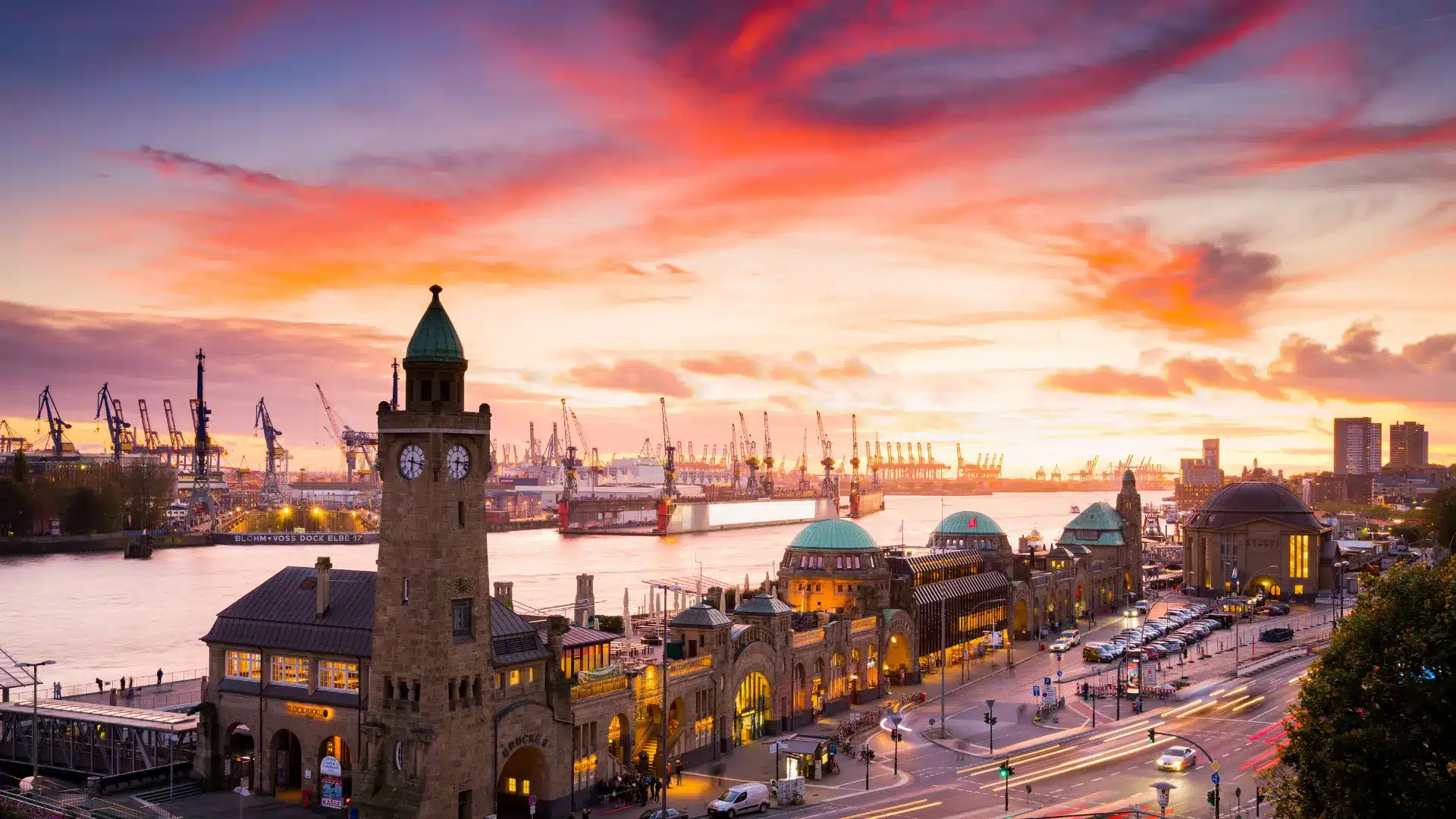
Hamburg gives Germany a strong maritime and industrial production character. The city is known for its port, bridges, warehouses, canals, river settings, shipping infrastructure, modern offices, red-brick architecture, music history and northern European atmosphere. It is a strong option for commercials, documentaries, drama, shipping stories, logistics content, industrial films, fashion, lifestyle and music-led projects.
The port environment is one of Hamburg’s biggest advantages, but it also requires serious planning. Filming around working docks, logistics zones, container terminals, ships, customs areas, cranes, waterways and port roads may involve port authorities, private operators, security requirements, safety briefings, restricted access and insurance. Public waterfront areas are easier than controlled port zones, but even public-facing locations can require permits when equipment, vehicles, lighting or crowd control affect the space.
Northern Germany also gives productions access to the North Sea, Baltic Sea, beaches, wind farms, fishing towns, islands, flat rural landscapes, military history, ferry terminals, bridges and coastal weather. Schleswig-Holstein and Lower Saxony can be useful for rural roads, coastline, documentary, energy, agriculture, wind power, maritime work and quieter production environments.
For international crews, Hamburg works well when marine, industrial or northern European looks are needed without sacrificing infrastructure. Hoodlum helps productions assess whether a port, ship, warehouse, waterfront, beach or island location can support the crew footprint and technical needs before the schedule is locked.
Cologne, Düsseldorf, Frankfurt and the Media Corridor
Western Germany gives productions strong access to media infrastructure, business environments, industrial zones and transport. Cologne is a major television and media centre with experienced crew, studios, broadcasters, production companies and suppliers. Düsseldorf offers fashion, business districts, modern architecture and access to the Rhine-Ruhr region. Frankfurt delivers finance, glass towers, trade-fair infrastructure, airport access and international corporate settings.
This part of Germany is especially strong for commercials, corporate content, documentary, factual entertainment, studio-based television, industrial films and branded campaigns. The Rhine-Ruhr region also offers factories, logistics hubs, rail yards, power infrastructure, former industrial sites, stadiums and urban environments that do not look like Berlin or Munich.
Permitting in this region depends heavily on the specific municipality and location. Filming in a corporate tower, airport-adjacent environment, convention centre, factory, public square, train station or industrial site will each follow a different path. Some locations are privately managed, while others require local authority approval, police coordination, safety plans or site-specific induction.
Germany’s regional structure matters here. A production moving from Cologne to Düsseldorf to Essen to Frankfurt is moving between different local authorities and different location owners. Hoodlum keeps that coordination clear, ensuring that each location is treated on its own terms while the overall route remains efficient.
Studios, Backlots and Controlled Environments
Germany offers strong studio options for productions that need control. Babelsberg near Berlin is one of Europe’s most historic studio environments, while Munich, Cologne, Hamburg and other production centres provide studio, stage, backlot and controlled interior options depending on the project. Germany is well suited to productions that need to combine practical locations with stage work, set builds, VFX, controlled interiors or post-production.
Studio filming in Germany can reduce many public-space complications, but it still needs careful planning. Productions should consider stage availability, build time, art department needs, fire regulations, power, rigging, parking, accommodation, crew availability, transport, security, catering and whether additional exterior locations are required nearby.
Controlled environments can be especially valuable for commercials, product films, scripted scenes, car interiors, green screen, tabletop work, fashion, interviews, special effects, stunt tests and weather-sensitive sequences. Hoodlum helps productions decide when a studio is more efficient than a practical location and when a practical location gives better production value.
Crew Entry, Visas and Work Authorisation
Crew entry into Germany depends on nationality, role, length of stay, employment relationship, country of residence and the purpose of travel. EU and EEA nationals generally have simpler movement and work rights, while non-EU crew may require a visa or work-authorisation route depending on the assignment.
The official starting point for Germany visa planning is the Federal Foreign Office visa portal and, for some countries, the relevant external visa application provider. Film crew members may need to provide a valid passport, completed application form, invitation letter, proof of financing, production details, film script or synopsis, detailed schedule, accommodation information, health insurance, proof of professional role, and evidence of qualifications or experience.
Processing can vary significantly. Short-stay and long-stay routes do not follow the same timelines, and nationality, consular workload, documentation quality and production complexity can all affect the result. Germany is efficient when the file is complete, but delays can happen if letters do not match the travel purpose, if the schedule is unclear, if insurance is insufficient or if the crew member’s role is not properly described.
For productions bringing non-EU crew into Germany, Hoodlum helps map the crew list against the likely entry requirements. That means identifying who needs a visa, who may travel visa-free, who may need work authorisation, what documents must be prepared and how much lead time should be allowed. Germany is not a country where crew-entry planning should be left until the week before travel.
International Crew Accreditation and Local Registration
Germany does not operate one simple national accreditation pass that automatically covers every international crew member, location and production. Accreditation and registration needs depend on the type of production, the location, the employer, the crew member’s nationality, the shooting structure and the authority involved.
In practice, international crew members may need to provide identification, proof of employment or contract, proof of professional qualifications, proof of experience, public liability insurance and production documentation. Depending on the production structure, there may also be tax, payroll, social security, local registration or invoicing considerations. Some productions may require local production company support to ensure that contracts, insurance and employment arrangements are handled correctly.
For media, documentary, event and public-location work, authorities and location owners may ask for crew lists, accreditation letters, press or production credentials, insurance documents and individual identification. For large shoots, the crew list is often part of the permit package. For sensitive locations, every crew member may need to be pre-cleared.
Hoodlum supports crew accreditation in Germany by preparing clear production documentation, confirming crew roles, helping with local authority communication and ensuring that the crew list matches the permit application. The smoother the paperwork, the easier the filming day.
Film Permits and Filming Approvals in Germany
Film permits in Germany are local, practical and location-specific. The relevant authority may be a municipal office, district office, film commission, state authority, police department, road authority, transport operator, private owner, park authority, heritage body, airport, port or railway operator. The correct route depends on what is being filmed and where.
A general film permit application in Germany usually requires a completed application form, shooting schedule, location plan, script or scene description, storyboard where relevant, crew size, vehicle plan, equipment list, proof of liability insurance, details of special effects or stunts, and evidence of permission from private owners or managers. When the production affects roads, pavements, public transport, parking, crowds, residents or businesses, additional approvals may be required.
Processing times vary. A simple shoot with a small footprint can move faster than a large production involving road closures, police, drones, night lighting, stunts, public crowds, technical vehicles or sensitive locations. Productions should allow several weeks for more complex filming in Germany, especially in major cities.
Germany rewards accurate detail. A permit office needs to know the real footprint. If a production applies for a small handheld crew and arrives with large lighting units, generators, trucks, cast, extras or drones, the shoot can run into immediate problems. Hoodlum helps productions describe their needs clearly, identify the correct authorities, file the right paperwork and build realistic lead times into the schedule.
Private Locations in Germany
Private locations in Germany are secured through direct agreement with owners, managers, businesses, institutions, property companies or location agencies. A fixer is often essential because access depends not only on whether a location looks right, but whether it can support the production’s technical footprint.
A private location fee in Germany usually cannot be confirmed properly until the owner has reviewed the production brief, synopsis, schedule, intended use, crew size, equipment, dressing needs and public impact. A documentary interview in a private office is very different from a commercial shoot in a hotel, a scripted sequence in a luxury apartment, a fashion shoot in a museum, or a night shoot in an industrial warehouse.
A strong private location agreement should cover dates, hours, access areas, preparation and strike, location fee, overtime, deposits, insurance, damage, reinstatement, floor protection, power, catering, security, parking, art department changes, noise, confidentiality and approval procedures. Some private locations may also need municipal permission if the production affects public streets, sidewalks, parking bays, exterior lighting, generators or public access.
Hoodlum’s approach is to scout for both creative and operational fit. In Germany, a location must look right, but it must also load in properly, hold the crew, support power, provide parking, satisfy insurance and allow the production to leave the site in the condition agreed.
Drone Filming in Germany
Drone filming in Germany is regulated under EU drone rules and German aviation requirements. Professional drone work requires careful planning around registration, pilot competence, insurance, flight category, operating area, airspace restrictions, privacy and local permission. The relevant national aviation body is the Luftfahrt-Bundesamt, while certain permissions may involve the relevant state aviation authority, known as the Landesluftfahrtbehörde.
Drone operators in Germany generally need to register where required, carry suitable liability insurance, comply with EU operational categories and hold the appropriate pilot competence for the flight. Drones above certain thresholds, drones with cameras, and operations near people, buildings, roads, controlled airspace, airports, railways, industrial sites, prisons, police operations, government buildings or protected areas need careful review.
For film work, the simplest and safest option is often to use a licensed local drone operator in Germany. A local operator will understand the LuftVG framework, EU rules, restricted zones, maps, privacy expectations, state-level processes and realistic timelines. Bringing a drone into Germany is possible, but the production must consider customs, EU conformity, CE marking, insurance, registration and whether the operator is correctly authorised.
A drone permit application may require a completed application form, pilot certificate, operator registration, proof of liability insurance, drone registration documents, flight plan, maps, coordinates, risk assessment and details of the filming area. Processing can range from a few days to several weeks depending on the authority and complexity of the operation. Urban work, controlled airspace, night flights, crowd-adjacent filming and sensitive areas need more lead time.
Hoodlum supports drone filming in Germany by helping productions choose between a local operator and an incoming drone team, checking location restrictions, coordinating with authorities and integrating the flight plan into the production schedule.
Equipment Customs Clearance and ATA Carnet
Germany is an ATA Carnet country, which makes temporary importation of professional filming equipment more practical for international crews arriving from outside the European Union. An ATA Carnet allows qualifying goods such as professional camera, lighting, grip, sound and production equipment to be temporarily imported without normal customs duties and taxes, provided the goods are re-exported and the carnet is properly processed.
Customs clearance in Germany is handled by the German Federal Customs Administration. Crews arriving from non-EU countries should prepare a detailed equipment list, serial numbers, values, commercial invoices where required, packing lists, certificates of origin where relevant, insurance documents and the carnet itself. Equipment travelling from within the EU may not require the same customs process, but productions should still check the exact movement route and ownership position.
Customs clearance can be quick when paperwork is accurate, but delays are possible if the equipment list is incomplete, values are inconsistent, serial numbers are missing, drone documentation is unclear, batteries are packed incorrectly or freight arrives separately from the carnet holder. Specialist equipment, large lighting packages, vehicles, drones, radio equipment and high-value camera systems should be discussed with a customs broker before travel.
Hoodlum supports customs planning in Germany by helping productions prepare equipment documentation, coordinate with clearing agents, advise on ATA Carnet handling and align the customs process with the shooting schedule. The aim is simple: gear should be available when the crew needs it, not sitting in a customs hold while the first filming day slips.
Local Crew, Fixers and Production Suppliers
Germany has an experienced crew base across multiple production centres. Berlin, Munich, Cologne, Hamburg, Frankfurt and the wider Rhine-Ruhr region all have access to camera, lighting, grip, sound, art department, wardrobe, hair and makeup, production management, locations, casting, transport, security, drone, catering and post-production suppliers.
Local crew sourcing in Germany should account for region, language, labour expectations, working hours, travel, accommodation, specialist skills and production scale. A Berlin crew may be ideal for a Berlin shoot, but not always the most efficient option for Bavaria, Hamburg, Cologne or rural Saxony. For regional work, local crew can reduce movement costs and improve authority communication. For highly specialised technical work, crew may need to travel from a major hub.
Film fixers in Germany are valuable because the country’s systems are organised but decentralised. A fixer can help identify the correct office, translate requirements, secure locations, manage permits, negotiate private access, coordinate drivers, source local crew, prepare release forms, handle police or municipal communication and manage production realities on the ground.
Hoodlum can scale production support in Germany according to the brief. A documentary may need a fixer, vehicle, local sound recordist, permits and releases. A commercial may need a production manager, location scout, casting, art department, crew, technical vehicles, catering, security and municipal approvals. A scripted project may need a more complete local production structure with deeper scheduling, contracts, insurance and regional coordination.
Transport, Accommodation and Production Movement
Germany’s transport infrastructure is a major production advantage. The country has strong road networks, major airports, extensive rail connections, high-speed routes, reliable vehicle suppliers and well-developed logistics. That said, production movement still needs proper planning.
In major cities, traffic, parking, low-emission zones, loading restrictions, public events, roadworks and resident sensitivity can affect the shoot. Berlin, Munich, Hamburg, Cologne and Frankfurt each have different movement challenges. A unit base may need to be separated from the filming location, technical vehicles may require approved parking, and equipment movement may need timed access.
For regional routes, Germany is generally efficient, but travel times should still be tested against the production day. Mountain roads, winter weather, rural access, ferry routes, port zones, industrial estates, private land and heritage villages can all slow movement. Productions should not assume that Germany’s good infrastructure removes the need for local route planning.
Accommodation should be secured early in major production periods, trade-fair dates, festival windows, summer travel periods and ski season. Frankfurt trade fairs, Berlin events, Munich Oktoberfest, Christmas markets, major sports events and regional festivals can all affect availability and cost. Hoodlum helps productions plan accommodation around call times, location access, crew turnaround, parking and transport rather than simply choosing the nearest hotel on a map.
Safety, Security and Practical Risk
Germany has a generally stable and secure production environment. Standard production security is often sufficient, especially for controlled locations and smaller crews. However, risk planning should still reflect the shoot’s visibility, equipment value, location, subject matter, crew size and time of day.
In large cities, productions should plan for equipment security, vehicle locking, crowd awareness, pickpocketing risk in busy public areas, overnight storage, public interaction and traffic safety. High-value camera packages should not be left unattended in vehicles or public locations. Large public shoots may need security personnel, marshals, barriers, signage or police coordination.
Industrial locations, ports, rail areas, factories and construction zones require site-specific safety procedures. Productions may need inductions, protective equipment, controlled walkways, fire-safety plans, security escorts or restricted access passes. Mountain, forest and rural shoots involve different concerns, including weather, terrain, road access, cold, heat, ticks, wildlife, water safety and emergency response times.
Germany’s medical infrastructure is strong, but productions should still carry appropriate insurance, emergency contacts, first-aid planning and risk assessments. Hoodlum supports practical security planning in Germany by matching the risk plan to the actual shoot. A small interview day does not need the same security structure as a city-night commercial, celebrity shoot, stunt sequence, drone operation or industrial location.
Film Rebates and Tax Incentives in Germany
Germany offers several important public funding routes for film and audiovisual production. The German Federal Film Fund, known as the DFFF, is one of the main national instruments supporting qualifying production activity in Germany. It is administered through the German federal film-funding framework and can provide support for eligible German production costs, subject to approval, cultural criteria, spend requirements, applicant eligibility, audit and current regulations.
In addition to the DFFF, Germany has regional funding bodies that may support productions based on regional spend, cultural value, local production activity or co-production structure. Depending on the project, regional funds can be relevant in Berlin-Brandenburg, Bavaria, North Rhine-Westphalia, Hamburg Schleswig-Holstein, Mitteldeutschland and other regions. Each fund has its own criteria, application deadlines and expectations.
The incentive conversation should happen early. Productions should not assume that funding is automatic or that all German spend will qualify. A proper incentive plan needs the right applicant structure, local expenditure, timing, cultural test, contracts, accounting trail and audit process. Projects with German production partners, co-production structures, post-production activity, VFX or significant local spend should review the funding position before the budget is locked.
Hoodlum helps connect the practical production plan with the funding conversation by identifying where the shoot will spend money in Germany, what suppliers may be needed, which regions are involved and where specialist funding advisors or local production partners should be brought into the process.
When Germany Is the Right Production Choice
Germany is the right production choice when a project needs strong infrastructure, reliable crew, European city looks, modern transport, industrial locations, controlled logistics, experienced suppliers, studio options and access to a serious film-funding ecosystem. It is especially strong for feature films, television drama, commercials, automotive content, documentary, factual entertainment, fashion, corporate films, music videos, photography and productions that need both locations and technical support.
Germany is also valuable when a production needs several different looks in one country. Berlin, Bavaria, Hamburg, the Ruhr region, Frankfurt, the Alps, the Baltic coast, the Black Forest, Saxony, Brandenburg and the Rhine can all support different visual registers without moving the production outside one national system.
Germany may be less suitable for productions that want to operate without paperwork, move large crews through public streets at short notice, fly drones informally or use private locations without detailed agreements. It is a highly workable country, but it expects accurate planning.
Common Germany Production Mistakes
One common mistake is assuming that Germany has one national filming permit. In reality, film permits are handled by the relevant local, municipal, state, private or specialist authority depending on the location and shoot impact.
Another mistake is underestimating lead times. A simple interview may be quick, but public-space filming, traffic impact, road closures, drone flights, stunts, night work, rail locations, airports, ports and heritage sites can take several weeks.
Productions also sometimes underestimate Germany’s decentralised structure. Berlin, Munich, Hamburg, Cologne, Frankfurt and smaller municipalities do not all follow the same process. A permit approach that works in one city may not apply in another.
Drone assumptions are another frequent problem. Germany follows EU drone rules and national aviation requirements. Professional drone work requires registration, pilot competence, insurance, location checks and sometimes specific approval from the LBA or state aviation authority.
Customs mistakes can also disrupt the schedule. Germany is an ATA Carnet country, but the carnet must be accurate and properly stamped. Missing serial numbers, mismatched equipment, unclear drone paperwork or late freight can create avoidable delays.
Finally, productions sometimes treat private location access as purely commercial. In Germany, a signed location agreement is essential, but it does not always cover public-space impact, parking, exterior lighting, traffic, drones or municipal permissions.
How Hoodlum Supports Productions in Germany
Hoodlum provides Film Production Services in Germany for international producers who need a practical local production partner. Our support covers film fixers, local producers, location scouting, permit planning, private location agreements, municipal coordination, crew sourcing, supplier booking, transport, accommodation, security, drone planning, customs and ATA Carnet support, visa guidance and on-ground production management.
For Berlin, Hoodlum helps productions navigate public-space filming, district permissions, technical parking, crew movement, private locations and sensitive city environments. For Munich and Bavaria, we support mountain access, roads, castles, lakes, studios, rural locations and Alpine logistics. For Hamburg and northern Germany, we help with port environments, maritime locations, industrial access and coastal movement. For Cologne, Düsseldorf, Frankfurt and the Rhine-Ruhr region, we support media, corporate, industrial and urban production needs.
Germany rewards preparation. Hoodlum’s role is to keep that preparation clear, realistic and production-focused, so the crew arrives with the right permissions, the right people, the right locations and the right logistics already in place.
Frequently Asked Questions
Do international crews need visas to film in Germany?
Crew-entry requirements for Germany depend on nationality, role, duration and employment structure. EU and EEA nationals generally have simpler access, while non-EU crew may need a visa or work-authorisation route. Applications are handled through official German visa channels, including the Federal Foreign Office visa service and relevant consular providers.
Who issues film permits in Germany?
Film permits in Germany are usually issued by the relevant local authority, municipal office, district office, state authority, film commission, police department, road authority, private owner or site operator depending on the location and filming impact. There is no single permit that automatically covers all of Germany.
Is Germany good for commercials and automotive filming?
Yes. Germany is strong for commercials and automotive work because it offers experienced crews, reliable infrastructure, studios, roads, industrial locations, city looks, Alpine routes, premium locations and strong technical suppliers. Bavaria, Berlin, Hamburg, Frankfurt and the Rhine-Ruhr region are all useful depending on the creative brief.
Can productions use drones in Germany?
Yes, but drone filming in Germany must comply with EU drone rules and German aviation requirements. Operators may need registration, pilot competence, insurance, flight planning and approval from the relevant authority depending on location and operation type. Sensitive sites, urban areas, airports, crowds and restricted airspace require particular care.
Is Germany an ATA Carnet country?
Yes. Germany accepts ATA Carnets for temporary importation of qualifying professional equipment. Crews arriving from outside the EU should prepare detailed equipment lists, serial numbers, values, packing lists, invoices where required and insurance documentation.
Does Germany offer film incentives?
Yes. Germany offers national and regional film-support systems, including the German Federal Film Fund, known as the DFFF. Eligibility depends on current rules, applicant structure, qualifying German expenditure, cultural criteria, approval and audit requirements.
What are the best filming locations in Germany?
The best filming locations in Germany depend on the project. Berlin is strong for contemporary city looks and history. Munich and Bavaria offer studios, mountains, lakes and castles. Hamburg offers ports and maritime settings. Cologne and Düsseldorf provide media and business environments. Frankfurt offers finance and airport access. The Ruhr region gives industrial scale, while Saxony, Brandenburg, the Black Forest, the Baltic coast and the Alps provide regional variety.
Why use a fixer in Germany?
A fixer in Germany helps international crews identify the right authorities, secure permits, negotiate private locations, source local crew, coordinate transport, manage translations, plan customs, arrange drone support and keep the shoot practical on the ground. Germany is efficient, but local knowledge prevents delays.
External Authority Links
- German Federal Foreign Office – Visa Service
- Germany Visa Application – TLScontact South Africa
- German Federal Film Fund – DFFF
- German Films
- Berlin Brandenburg Film Commission
- Film Commission Bayern
- Luftfahrt-Bundesamt
- German Federal Customs Administration
- German National Tourist Board
Germany offers exceptional production value when the work is planned properly. The right permits, crew-entry route, private location agreements, drone approvals, customs paperwork, local crew, transport plan and security structure all need to be in place before the cameras roll.
Planning a shoot in Germany? Contact Hoodlum for regional film commission and municipal filming permits, local fixers, Berlin and major-city location access, castle and heritage permissions, ATA Carnet customs planning, LBA drone coordination, Studio Babelsberg support, automotive-unit logistics, crew sourcing and full on-ground production management. You can also view the Hoodlum Film Fixers Germany Google Business Profile for local production details.