Film Production Services in Southern Italy
Southern Italy gives international productions a different production language from the north of the country: volcanic coastlines, ancient cities, working ports, island routes, dry rural roads, baroque towns, fishing harbours, archaeological sites, historic palazzi, Mediterranean light, rugged interiors, active volcanoes, beaches, caves, old villages, agricultural estates and dramatic sea roads. From Rome and Naples to the Amalfi Coast, Puglia, Basilicata, Calabria, Sicily, Sardinia and the smaller islands, Southern Italy offers a wide range of locations for commercials, feature films, television drama, documentaries, branded content, factual entertainment, reality formats, music videos, fashion campaigns and photography.
Hoodlum provides Film Production Services in Southern Italy for international crews that need local fixers, production support, permits, location access, customs guidance, drone planning, crew sourcing, transport, accommodation, security and on-ground management. Our team supports productions from early research through to wrap, including visa and crew-entry guidance, private location negotiations, municipal permits, heritage permissions, road access, marine logistics, ATA Carnet coordination and regional production planning. Productions can see the wider scope of what we do and learn more about the Hoodlum team on our who we are page.
Southern Italy is highly attractive on screen, but it is not a region where productions should rely on informal access. Public squares, old towns, ports, beaches, archaeological sites, churches, monasteries, private estates, islands, roads, drone zones, national parks, coastal roads, volcanic areas and heritage buildings all require the correct permission route. Southern Italy works best when crews build the production plan around real access, local relationships, seasonal pressure, island movement, heat, transport and the administrative differences between regions.
Why Southern Italy Works for International Productions
Southern Italy works because it offers strong visual range with a clear regional identity. Rome provides institutional scale, ancient streets, production infrastructure, studios, embassies, museums, residential districts, modern business settings and a deep crew base. Naples brings port energy, dense streets, volcanic surroundings, old palazzi, street life, sea views and access to Campania. The Amalfi Coast and Capri offer cliffs, roads, boats, villas and high-value coastal imagery.
Puglia gives Southern Italy whitewashed towns, olive groves, masserie, baroque architecture, beaches, dry rural roads and strong commercial appeal. Basilicata delivers stone towns, ravines, caves, empty roads and a more austere production look. Calabria brings rugged coastline, mountains, villages and less overexposed locations. Sicily offers cities, islands, volcanoes, ports, palaces, Greek ruins, rural interiors and strong story value. Sardinia gives another island register: granite coast, clear water, interior roads, ports, luxury resorts and remote-feeling landscapes.
The region is especially strong for productions that need Mediterranean realism rather than a polished studio version of it. Southern Italy can feel ancient, urban, raw, elegant, coastal, rural, industrial, aristocratic, religious or remote depending on where the production is based. It can support road films, food documentaries, fashion, luxury commercials, music videos, political interviews, historical drama, crime drama, marine work, archaeology, cultural programming, travel content, automotive sequences and stills.
Southern Italy also has strong production infrastructure in key centres. Rome remains the main national production hub, with crews, studios, suppliers, post-production and experienced producers. Naples, Bari, Palermo, Catania, Matera, Cagliari and other regional centres can support production with local fixers, location managers, suppliers, hotels, transport and regional crews. For larger shoots, a combination of travelling specialist crew and regional support is often the best structure.
The production challenge in Southern Italy is not whether the locations are strong. They are. The challenge is building a route that is realistic. A shoot that combines Rome, Naples, Puglia and Sicily needs more than a map. It needs permits, travel planning, ferries or flights, accommodation, local authorities, private access, weather cover and a clear customs and equipment plan.
Rome as the Main Southern Italy Production Hub
Rome is the strongest production base in Southern Italy and one of the most important production centres in Europe. It offers experienced crews, Cinecittà and studio infrastructure, rental houses, casting, production offices, government-facing locations, hotels, transport, post-production and a wide variety of urban, ancient, residential and institutional environments.
Rome can support almost every production type: feature films, television drama, commercials, documentaries, interviews, fashion, branded content, corporate films, music videos, stills, history programming and factual entertainment. The city offers ancient streets, modern districts, civic buildings, villas, parks, museums, apartment interiors, churches, markets, rooftops, working neighbourhoods and controlled interiors. It can be grand, intimate, political, religious, urban, historic or contemporary.
Filming in Rome requires careful permit planning. Public spaces, streets, piazzas, archaeological areas, churches, museums, government buildings, traffic routes, parks, drone flights, large lighting setups, picture vehicles, night shoots and crowd scenes all need the correct approval route. The relevant authority may be the municipality, a heritage body, the Ministry of Culture, police, private owners, religious authorities, road authorities or site managers.
Rome also requires practical movement planning. Traffic, parking, tourist pressure, public events, demonstrations, heritage restrictions and resident sensitivity can affect a filming day. A small documentary crew may work efficiently with a light footprint, but a commercial or scripted unit with trucks, lighting, cast, extras, art department and traffic impact needs a more structured plan.
Hoodlum supports Rome production by matching the creative ambition to the correct permit route, location agreement and movement plan. Southern Italy often begins in Rome because the city provides the strongest infrastructure before the crew moves into more regional environments.
Naples, Campania and the Amalfi Coast
Naples gives Southern Italy one of its most distinctive urban filming environments. The city offers density, energy, old streets, port infrastructure, historic interiors, volcanic surroundings, coastal views, markets, churches, rooftops, underground spaces, residential districts and a visual character that is hard to replicate elsewhere. It is useful for drama, documentaries, commercials, food programming, music videos, fashion, street-level storytelling and political or social content.
Naples requires a local fixer who understands both the city and the production footprint. Public streets, old neighbourhoods, port zones, traffic, parking, crowd control, private interiors, rooftop access, churches and municipal spaces all require coordination. A production should not assume that Naples works like Rome or Milan. It has its own rhythm, and that rhythm can be a strength when handled properly.
Campania also gives productions Pompeii, Herculaneum, Vesuvius, Caserta, islands, coastal towns, rural roads and historic sites. Archaeological locations such as Pompeii and Herculaneum require formal cultural permissions and careful technical planning. Vesuvius and surrounding areas involve park, safety and access considerations. The Reggia di Caserta can support grand interiors and period work, but heritage conditions must be respected.
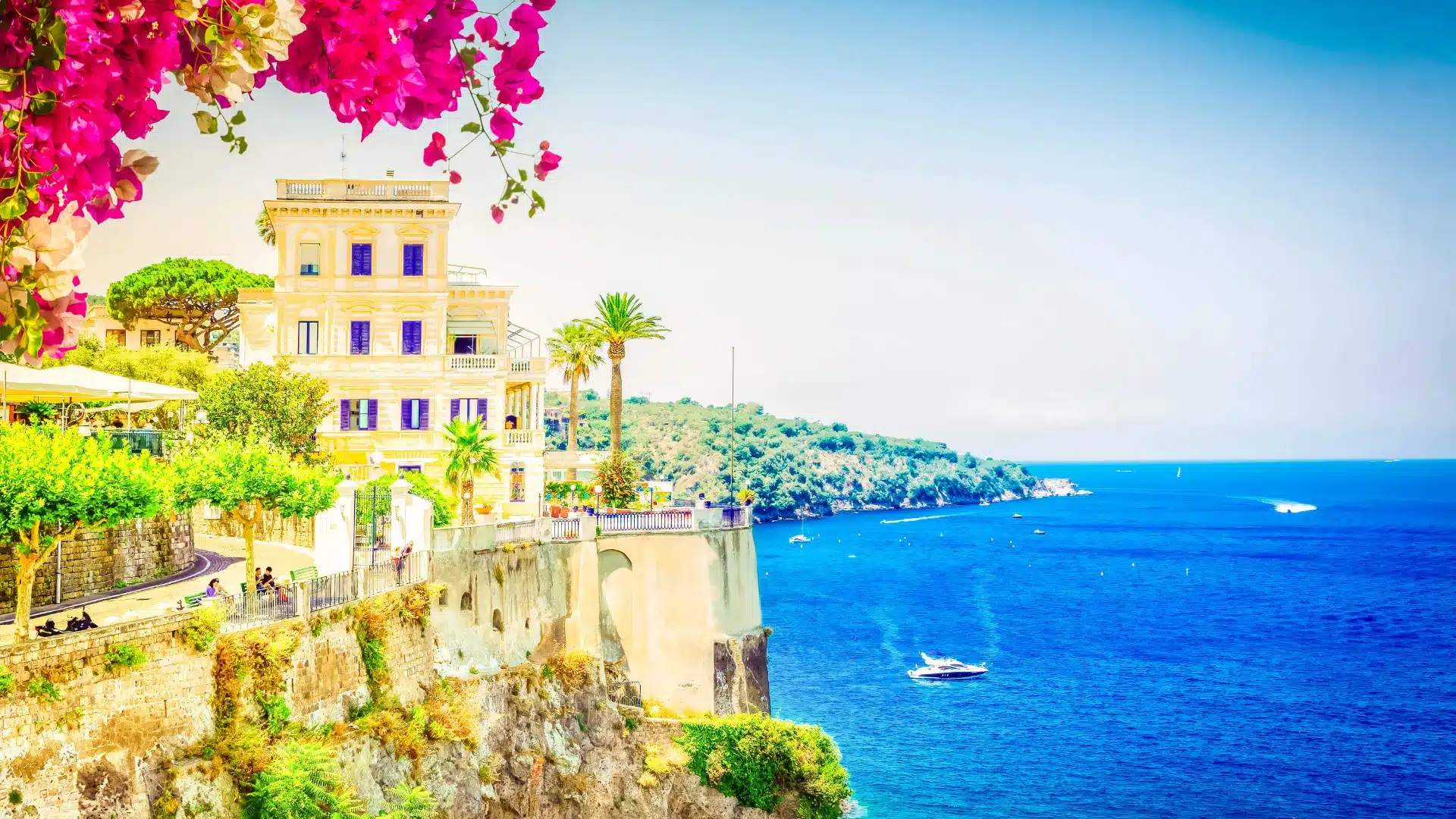
The Amalfi Coast, Capri, Ischia, Procida, Sorrento and Positano are valuable for luxury, travel, fashion, automotive, marine and high-end commercial work. They are also operationally sensitive. Narrow coastal roads, limited parking, steep streets, boat access, tourist pressure, seasonal crowds, private villas and weather all affect production. A location that looks close on the map can take time to access with crew and equipment.
Hoodlum helps productions in Campania plan around the real conditions: road access, marine transport, port permissions, private villa agreements, traffic management, accommodation, security, crowd control and seasonal timing. Southern Italy’s most recognisable coastlines need early planning to stay efficient.
Puglia and the Adriatic South
Puglia is one of the strongest production regions in Southern Italy for commercials, fashion, stills, travel, food, scripted drama and lifestyle work. It offers whitewashed towns, olive groves, dry roads, masserie, beaches, ports, limestone streets, baroque cities, rural estates and a visual range that can support both polished and naturalistic productions.
Bari is a practical regional base, with airport access, hotels, urban streets, port environments and production support. Lecce offers baroque architecture, courtyards, churches and refined historic city texture. Ostuni, Polignano a Mare, Monopoli, Alberobello, Locorotondo, Gallipoli, Otranto, Brindisi and the Salento coast all bring different Puglia looks. Alberobello and other heritage sites require specific permission and careful handling because of public access and protected status.
Puglia is also useful for road filming and lifestyle campaigns. Olive groves, masserie, rural roads, beaches, vineyards, stone walls and coastal routes can create strong visual continuity. However, private land access, environmental restrictions, drone permissions, beach use, parking, local roads, summer tourism and agricultural activity must be considered.
Productions working in Puglia may involve the regional film commission, municipal offices, private landowners, heritage authorities, coastguard or port authorities, police, road authorities and environmental bodies. Hoodlum supports Puglia shoots by coordinating location scouting, private agreements, local crew, road logistics, drone planning, accommodation and municipal permissions.
Puglia often gives Southern Italy a more spacious and controlled production feel than the Amalfi Coast or central Rome, but it still requires good local coordination.
Basilicata, Matera and Inland Southern Italy
Basilicata is one of Southern Italy’s most powerful regions for productions that need stone, ravines, caves, dry land, old streets, religious imagery, austere rural texture and dramatic interiors. Matera is the centrepiece, known for its Sassi districts, cave dwellings, rock churches and ancient-looking urban form. It has been used for major international productions because it can carry biblical, historical, ancient, Mediterranean and otherworldly looks without heavy construction.
Matera is highly filmable, but it is also sensitive. Heritage areas, narrow access, public movement, residents, stairs, surface protection, technical parking, night work, drones, lighting, crowd control and tourism all require careful planning. A large production in Matera needs realistic load-in routes, crew holding, vehicle management, equipment movement and local authority approval. Small crews also need to respect restrictions around churches, cave interiors, museums and public areas.
Basilicata beyond Matera offers ravines, villages, mountain roads, rural landscapes, coastlines on both the Tyrrhenian and Ionian sides, forests, abandoned or semi-abandoned towns, agricultural areas and quiet roads. It is useful for drama, documentaries, automotive work, historical content, fashion, music videos and productions seeking less familiar Southern Italy locations.
Hoodlum supports Basilicata shoots by building the plan around access. The region can deliver exceptional production value, but crews need to understand where vehicles can go, where equipment must be carried, what can be lit, where drones are permitted and what local approvals are required.
Calabria and the Southern Mainland
Calabria gives Southern Italy rugged coastal and inland environments that are less frequently used by international productions than Rome, Puglia or Sicily. It offers cliffs, beaches, mountain roads, old villages, ports, forests, agricultural settings, abandoned spaces, fishing towns and a strong sense of distance from the more familiar Italian production routes.
The region can be valuable for documentaries, travel content, social stories, road films, music videos, food programming, rural drama, coastal commercials and productions that need Southern Italy without an overexposed location. Calabria’s Tyrrhenian and Ionian coasts provide different sea looks, while the Aspromonte, Sila and Pollino areas add mountains, forests and interior roads.
Production in Calabria requires local coordination because infrastructure and crew depth can vary by area. Some shoots may base crew in a regional centre and travel to remote locations. Others may require local drivers, fixers, accommodation checks, road planning, municipal approvals and safety support. A production should not assume that suppliers available in Rome or Naples are immediately available in rural Calabria.
Hoodlum supports Calabria shoots by planning transport, local access, accommodation, permits, location agreements, security and contingency. Southern Italy’s less-used regions can be very rewarding when the production plan is grounded in local reality.
Sicily, Palermo, Catania and the Islands
Sicily is one of the most complete production environments in Southern Italy. It offers major cities, old towns, ports, volcanoes, rural roads, Greek ruins, baroque architecture, coastlines, islands, aristocratic interiors, fishing harbours, markets, vineyards, salt pans, industrial zones and strong cultural identity. Palermo and Catania are the main urban anchors, while the wider island can support a wide range of production looks.
Palermo brings palazzi, markets, old streets, theatres, churches, port environments, aristocratic interiors and dense urban texture. Catania offers black volcanic stone, Etna access, city streets, markets, coastline and a different eastern Sicilian look. Taormina, Syracuse, Noto, Ragusa, Modica, Scicli, Cefalù, Trapani, Marsala, Agrigento and the Aeolian Islands each add specific production value.
Mount Etna is a major location asset for Southern Italy, but volcanic and mountain filming requires safety planning, access checks, weather awareness, park permissions and local guides. The Aeolian Islands, including Stromboli, Vulcano, Salina and Lipari, require boat or ferry logistics, marine planning, accommodation and weather contingency. Archaeological sites such as the Valley of the Temples, Segesta and Selinunte require formal cultural permissions.
Sicily is strong for drama, documentaries, food programming, fashion, commercials, travel, music videos, history, archaeology, crime stories, island life, agriculture, marine work and stills. It can be highly cinematic, but movement takes time. A Palermo-to-Catania shoot, a coastal company move, or a jump to the islands should be scheduled realistically.
Hoodlum helps productions in Sicily with regional fixers, local crews, transport, cultural permissions, private locations, boats, drones, customs, safety and island logistics.
Sardinia and Western Island Production
Sardinia gives Southern Italy another island production option with a very different character from Sicily. It offers granite coastlines, clear water, luxury resorts, mountain interiors, rural roads, old villages, ports, archaeological sites, beaches, caves, forests and a strong sense of space. It is especially useful for luxury commercials, fashion, travel, automotive work, marine filming, stills, outdoor brands, documentaries and high-end lifestyle campaigns.
The Costa Smeralda and northeast Sardinia are valuable for luxury, yachts, hotels, villas and coastal imagery, but they can be expensive and seasonal. Cagliari offers a practical city base with airport access, old streets, harbour environments and regional support. Alghero, Oristano, Nuoro, Ogliastra, the south coast and the interior add different looks, from rugged roads to quiet beaches and rural settlements.
Sardinia requires island-specific logistics. Flights, ferries, cargo, vehicle hire, accommodation, boat access, seasonal demand, remote roads and marine conditions must all be considered. Some locations have protected-area rules, environmental restrictions or limited access. Beach and drone permissions should be checked early.
Hoodlum supports Sardinia shoots by coordinating local fixers, transport, accommodation, marine operators, private locations, permits, drone planning and safety. Sardinia can deliver exceptional production value, but it needs to be treated as its own production route rather than an add-on to mainland Southern Italy.
Crew Entry, Visas and Work Authorisation
Crew entry into Southern Italy depends on nationality, duration of stay, role and employment structure. Italy is part of the Schengen Area, so visa-required crew travelling for shorter stays may need a Schengen Type C visa. Film crew members staying longer than 90 days, or working under certain structures, may need a National Type D visa or additional work authorisation.
Visa applications for Italy can require a valid passport, visa application form, recent passport-sized photo, proof of payment, travel health insurance, proof of financial means, production-related documentation, invitation letter where applicable, hotel booking or accommodation proof, flight itinerary or travel plan and any additional information required by the consulate. Film-related documentation can include a production letter, shooting schedule, crew role, locations, employment contract, production synopsis and local partner information.
EU and EEA crew generally have simpler access, while non-EU crew should be checked carefully. A director, producer, camera operator, drone pilot, stylist, actor, sound recordist or agency representative may not all fall into the same practical category. Longer stays, repeated trips and paid work may require closer review.
Processing times vary by visa type and consular workload. Schengen Type C applications may be planned around a 15 to 30 day window, while National Type D and work-related routes can take longer. Hoodlum helps productions prepare consistent crew-entry documents so the visa letters, schedules, locations and role descriptions match the actual Southern Italy production.
Crew Accreditation, Codice Fiscale and Local Registration
Crew accreditation in Southern Italy depends on the production structure, local authorities, permits, tax requirements and locations involved. There is no single accreditation pass that automatically covers Rome, Naples, Puglia, Sicily, Sardinia, Calabria and Basilicata. Crew names and roles are usually included in permit applications, insurance documentation, location agreements and production paperwork.
Productions may need to register with the relevant local film commission or production office. Depending on the structure, crew members or production entities may need a Codice Fiscale, Italy’s tax identification number, particularly where local contracts, location agreements, leases, supplier payments, payroll or tax-credit documentation require it. Work permits or employment authorisations may be relevant for certain non-EU crew or longer assignments.
Documentation can include passports, visas where required, employment contracts, proof of qualifications, proof of professional experience, liability insurance, equipment insurance, crew lists, call sheets and production company details. Some heritage sites, ports, private estates, airports or sensitive locations may request additional pre-clearance.
Hoodlum supports accreditation in Southern Italy by preparing clear crew lists, matching those lists to permits and location agreements, coordinating with local film offices and making sure the paperwork is consistent across every region in the schedule.
Film Permits in Southern Italy
Film permits in Southern Italy are location-specific. The Italian Film Commissions network and local film commissions can guide productions, but approvals are usually issued by the relevant municipality, regional authority, heritage body, private owner, park authority, road authority, police, port authority, religious institution, archaeological site manager or other competent body.
A standard permit package may include a script or treatment, shooting schedule, location plan, crew list, equipment list, proof of liability insurance, proof of funding where required, owner authorisations, local authority permissions, safety plan, environmental impact assessment where necessary and completed application forms. More complex shoots may need traffic control, police coordination, road closures, crowd management, drone authorisation, night filming approval, marine permits, park permissions, special effects approval or heritage clearance.
Timelines vary. A small private interior may move quickly, while filming at archaeological sites, old towns, ports, beaches, churches, national parks, islands, coastal roads, public squares or busy tourist areas may need longer. Standard permits can take 7 to 15 working days in some situations, but productions should begin 8 to 12 weeks ahead for larger, public-facing or multi-location work.
Hoodlum helps productions identify the correct permit path for each Southern Italy location. Rome, Naples, Matera, Palermo, Catania, Bari, Lecce, Cagliari, Amalfi, Capri and rural municipalities do not all work the same way. Applying to the wrong authority, or applying with incomplete information, can delay the production.
Private Locations in Southern Italy
Private locations in Southern Italy include villas, palazzi, masserie, hotels, restaurants, estates, farms, boats, apartments, rooftops, monasteries, vineyards, private beaches, commercial spaces, warehouses, ports, courtyards and historic interiors. These locations can be highly valuable on screen, but access depends on clear negotiation and written agreements.
Owners and managers usually need a production synopsis, intended use, location requirements, shooting schedule, crew size, equipment list, dressing requirements, access needs and insurance before they can quote. Fees vary widely depending on the region, property type, exclusivity, season, impact, duration and whether the location is luxury, heritage, operational or residential.
A strong private location agreement should cover the fee, dates, access times, prep, strike, areas included, overtime, deposits, insurance, damage, reinstatement, floor protection, art department changes, power, catering, toilet access, parking, security, confidentiality, owner approvals and cancellation terms. For luxury properties and heritage interiors, restrictions around branding, image use, surface protection and restricted areas may be strict.
Private permission does not always cover surrounding public impact. If the production affects a street, piazza, beach, road, dock, neighbour, exterior lighting, drone flight, public parking or traffic, additional permits may be required. Hoodlum supports private location work in Southern Italy by securing the agreement and checking the wider permissions needed to make the shoot day practical.
Drone Filming in Southern Italy
Drone filming in Southern Italy is regulated under Italian civil aviation rules and the EU drone framework. ENAC, the Italian Civil Aviation Authority, is the national aviation body. Productions must consider operator registration, pilot competence, insurance, flight category, privacy, flight plan, airspace restrictions, local permissions and whether the operation requires specific authorisation.
Southern Italy is highly attractive for drone filming. The Amalfi Coast, Matera, Puglia, Etna, Sicily, Sardinia, coastal roads, islands, archaeological sites, ports, old towns, beaches and rural roads can all deliver strong aerial production value. Many of those same locations are sensitive or restricted. Airports, heliports, military zones, archaeological sites, national parks, UNESCO areas, protected coastlines, religious sites, crowded beaches, city centres and ports can limit or prevent drone operations.
A drone application may require valid ID, proof of insurance, operator registration, drone registration certificate, pilot licence, detailed flight plan, coordinates, maps, risk assessment, location permissions and compliance with EU and Italian rules. Standard drone permissions may take several working days, but complex, heritage, urban, coastal, port or park flights should be planned much earlier.
Drone importation into Southern Italy may require commercial invoices, bills of lading or air waybills, customs declarations, CE marking certificate, declaration of conformity, technical specifications, ATA Carnet or temporary import documentation and proof of insurance. In many cases, using a certified local drone operator is the most efficient route because the operator already understands local airspace, ENAC processes, weather, terrain and authority expectations.
Hoodlum supports drone filming by making sure aerial work is integrated with the film permit, location access, safety plan and customs documentation.
Equipment Customs Clearance and ATA Carnet
Italy is an ATA Carnet country, which makes temporary importation of professional filming equipment easier for productions arriving from outside the European Union. An ATA Carnet allows eligible professional equipment to be temporarily imported without normal duties and taxes, provided the items are re-exported and the carnet is processed correctly.
Customs clearance in Italy is handled by the Agenzia delle Dogane e dei Monopoli, known as ADM. Crews should prepare a detailed equipment list with descriptions, serial numbers, values, ownership information, commercial invoices where required, packing lists, customs declaration forms, proof of insurance, authorisation letters and the ATA Carnet. Cameras, lenses, lighting, grip, sound equipment, drones, batteries, vehicles, radio gear, marine equipment and specialist mountain or archaeological filming kit should all be listed clearly.
For productions travelling from within the EU, customs movement may be simpler, but ownership, routing and special equipment restrictions should still be checked. For crews arriving from non-EU territories, carnet preparation should be handled before departure. Freight arriving into Rome, Naples, Bari, Palermo, Catania, Cagliari or other entry points should be coordinated with a customs broker where needed.
Clearance can be quick when documentation is accurate, but delays happen when values are inconsistent, serial numbers are missing, drones are not documented, batteries are packed incorrectly or cases do not match the carnet. Hoodlum helps productions prepare customs documentation, coordinate clearing agents and align equipment arrival with prep and shoot dates.
Local Crew, Fixers and Production Suppliers
Southern Italy has a strong crew base in Rome and growing regional production support across Naples, Puglia, Sicily, Sardinia and other centres. Rome provides the deepest access to producers, fixers, location managers, camera crew, lighting, grip, sound, art department, wardrobe, hair and makeup, casting, drivers, security, drone operators, post-production and studios. Regional centres can provide local fixers, drivers, guides, crew, locations and on-ground support.
A local fixer in Southern Italy is essential for most international shoots. The fixer helps identify the correct authorities, secure permits, negotiate private access, coordinate with municipalities, support cultural permissions, source crew, arrange transport, manage releases, book boats, communicate with local owners, support customs and solve production problems on the day.
Southern Italy productions often work best with a hybrid crew model: specialist crew travel from Rome or another major hub, while local fixers and support crew are used in each region. This is especially useful in Sicily, Sardinia, Puglia, Calabria and Basilicata, where local knowledge improves access and prevents delays.
Hoodlum scales production support according to the project. A documentary may need a fixer, translator, driver, permits and releases. A commercial may need location scouts, production management, casting, art department, technical crew, security, drones, accommodation and transport. A scripted or reality production may need deeper support around regional schedules, contributors, locations, road control, accommodation and local compliance.
Transport, Accommodation and Regional Movement
Transport planning is one of the most important parts of filming in Southern Italy. Rome and Naples provide strong airports and road links, while Bari, Brindisi, Palermo, Catania, Cagliari and Olbia are important regional gateways. However, the region includes islands, mountains, coastal roads, old towns, ferries, ports, narrow streets and seasonal tourist pressure. Production movement must be planned around the real route, not just the distance on a map.
The Amalfi Coast is a clear example. It is visually exceptional but difficult for large vehicles. Narrow roads, traffic, limited parking, summer crowds and steep access can slow a shoot. Capri, Ischia, Procida and the Aeolian Islands require boat or ferry planning. Sicily and Sardinia involve flight or ferry movement, local vehicles, accommodation blocks and regional travel. Puglia is more road-friendly, but old towns, beaches and rural masserie still require access checks.
Accommodation should be secured early during summer, festivals, major events, high tourism periods and island shoots. A production hotel needs more than rooms. Crews need parking, equipment storage, early breakfast, late check-in, laundry, production space, reliable internet and realistic distance from location. In smaller towns and islands, accommodation capacity can be limited.
Hoodlum plans Southern Italy movement around call times, load-in, technical parking, ferries, boats, road restrictions, heat, meal breaks, crew turnaround, equipment security and weather contingency.
Safety, Security and Practical Risk
Southern Italy is generally workable and welcoming for film crews, but safety and security planning should match the scale and visibility of the production. Standard on-set security is often enough for small documentary shoots and controlled interiors. Larger commercials, high-profile talent, expensive equipment, public street scenes, night work, road filming, drone operations, beach shoots, marine sequences and heritage locations may require more formal security.
Equipment security is important in busy public spaces, tourist zones, ports, city streets, beaches and nightlife areas. Camera packages, drones, data drives, lenses and laptops should be secured. Vehicles should be locked, and overnight storage should be planned carefully.
Environmental risk also matters. Summer heat, strong sun, steep streets, uneven stone surfaces, cliffs, sea conditions, boat transfers, volcanic areas, rural roads, wildfire risk, remote locations and limited emergency access can all affect the shoot. Marine work requires safety boats, experienced skippers, flotation, weather checks and communication plans. Etna, Vesuvius and other volcanic or mountain locations require local guidance and safety awareness.
Hoodlum supports security and safety planning by matching the level of support to the production. A small interview shoot may need simple equipment control, while a high-value Amalfi Coast commercial, Naples street shoot, Etna sequence, Sicily road unit or Sardinia marine day may require security, safety officers, local guides and more detailed contingency.
Film Rebates and Tax Incentives in Italy
Italy offers national film and audiovisual tax-credit support through the Ministry of Culture’s Cinema and Audiovisual Directorate. International productions working in Southern Italy should confirm the current tax-credit rules, eligible categories, rates, minimum spend, maximum benefit, cultural requirements, application windows, audit rules and applicant structure before budgeting.
Regional support may also be relevant. Lazio, Campania, Puglia, Basilicata, Calabria, Sicily and Sardinia each have their own film commission structures, location support and potential regional funding or facilitation routes. These are not always simple cash rebates, and availability can change, but they may be important for local access, regional spend, production partnerships or location support.
Productions should not assume that incentive support is automatic. A proper incentive plan requires eligible local spend, compliant accounting, supplier documentation, contracts, payroll records, invoices, audit trails and the right production structure. If a production wants to access Italian support, the conversation should happen before the budget, schedule and local supplier plan are locked.
Hoodlum helps productions connect the Southern Italy creative route to the incentive conversation by identifying where the spend will fall, what regional support may be relevant and when specialist Italian tax-credit advisors or production partners should be involved.
When Southern Italy Is the Right Production Choice
Southern Italy is the right production choice when a project needs Mediterranean realism, ancient streets, ports, islands, coastlines, dry rural roads, volcanic landscapes, heritage towns, baroque architecture, fishing harbours, luxury villas, archaeological sites, food culture and strong regional identity. It is especially useful for documentaries, commercials, feature films, television drama, factual entertainment, travel content, fashion, music videos, reality formats, food programming, automotive sequences, marine shoots and stills.
Southern Italy is also strong when a production needs multiple visual worlds: Rome’s infrastructure, Naples’ street energy, Puglia’s rural roads, Matera’s stone environments, Sicily’s cities and volcanoes, Sardinia’s coastline, Calabria’s rugged landscapes and the Amalfi Coast’s high-value coastal routes. The region can be polished, raw, ancient, contemporary, rural, coastal, industrial or remote depending on the brief.
Southern Italy may be less suitable for productions that want to avoid paperwork, fly drones without approval, film archaeological sites at short notice, move large vehicles through narrow coastal roads without planning, or treat islands as simple day trips. The region is highly workable, but it requires local production discipline.
Common Southern Italy Production Mistakes
One common mistake is treating Southern Italy as if Rome, Naples, Puglia, Sicily and Sardinia all operate under the same local process. They do not. Each municipality, region, port, island and heritage site has its own practical requirements.
Another mistake is underestimating island logistics. Sicily and Sardinia are major islands with real distances, while Capri, Ischia, Procida, the Aeolian Islands and smaller islands require ferry, boat, weather and accommodation planning.
Productions also underestimate archaeological and heritage permissions. Sites such as Pompeii, Herculaneum, Matera, Greek ruins in Sicily, churches, monasteries and historic palazzi require formal approval and careful technical planning.
Drone assumptions are another frequent issue. Southern Italy has airports, heliports, military areas, archaeological sites, national parks, UNESCO locations, ports, coastlines and populated old towns that can restrict drone flights.
Customs errors can affect the first filming day. Italy is an ATA Carnet country, but the carnet must be accurate, stamped correctly and supported by detailed equipment lists.
Finally, productions often over-schedule coastal routes. The Amalfi Coast, Sicilian roads, Sardinian coast and old towns can be slow with crew vehicles, equipment and public traffic. Realistic movement protects the shoot.
How Hoodlum Supports Productions in Southern Italy
Hoodlum provides Film Production Services in Southern Italy for international crews that need practical local coordination across Rome, Naples, Puglia, Basilicata, Calabria, Sicily, Sardinia, the Amalfi Coast and the southern islands. Our support covers film fixers, local producers, permit coordination, location scouting, private location agreements, crew entry guidance, work permit support where required, Codice Fiscale coordination where relevant, drone planning, customs and ATA Carnet support, local crew sourcing, transport, accommodation, security, marine logistics and full on-ground production management.
For Rome, Hoodlum supports public-space filming, studios, private interiors, interviews, heritage permissions and crew infrastructure. For Naples and Campania, we support street filming, port access, archaeological locations, coastal movement and island logistics. For Puglia, Basilicata and Calabria, we coordinate rural roads, masserie, old towns, private locations, regional crews and municipal approvals. For Sicily and Sardinia, we support island routes, local fixers, boats, drones, regional permits, transport, accommodation and safety planning.
Southern Italy can deliver exceptional production value when it is planned properly. Hoodlum’s role is to make that planning clear, local, realistic and production-focused, so the crew arrives with the right permissions, the right people and the right logistics in place.
Frequently Asked Questions
Do international crews need visas to film in Southern Italy?
Crew-entry requirements for Southern Italy depend on nationality, duration, role and employment structure. Italy is part of the Schengen Area, so visa-required short-stay crew may need a Schengen Type C visa. Longer stays or certain work structures may require a National Type D visa or work authorisation.
Who issues film permits in Southern Italy?
Film permits in Southern Italy depend on the location. Municipalities, regional film commissions, heritage authorities, archaeological site managers, port authorities, police, private owners, park authorities and religious institutions may all be involved.
Can productions film in Pompeii or other archaeological sites?
Yes, but archaeological sites in Southern Italy require formal approval through the relevant cultural authorities and site managers. Productions should prepare a script or treatment, schedule, crew list, equipment list, insurance and technical plan, and should allow enough lead time.
Is Southern Italy good for drone filming?
Yes, Southern Italy can be excellent for drone filming, especially around coastlines, islands, volcanoes, old towns, rural roads and ports. Drone work must comply with ENAC and EU rules, and additional permissions may be required for archaeological sites, national parks, airports, ports and populated areas.
Is Italy an ATA Carnet country?
Yes. Italy accepts ATA Carnets for temporary importation of qualifying professional filming equipment. Crews should prepare detailed equipment lists, serial numbers, values, insurance documents, customs forms and carnet paperwork.
Does Italy offer film incentives?
Yes. Italy offers national film and audiovisual tax-credit support, and regional support may also be available depending on the project and location. Productions should confirm current rates, eligibility, caps, application windows and audit requirements before budgeting.
What are the best filming locations in Southern Italy?
Strong filming locations in Southern Italy include Rome, Naples, Pompeii, Herculaneum, the Amalfi Coast, Capri, Ischia, Puglia, Lecce, Bari, Matera, Calabria, Palermo, Catania, Mount Etna, Syracuse, Noto, Sardinia, Cagliari, the Aeolian Islands and the southern coastline.
Why use a fixer in Southern Italy?
A fixer in Southern Italy helps international productions secure permits, scout locations, negotiate private access, coordinate with municipalities, manage cultural permissions, source crew, arrange transport, support customs, plan drones and keep the shoot practical across multiple regions.
External Authority Links
- Italy for Movies
- Italian Film Commissions
- Direzione Generale Cinema e Audiovisivo
- Italian Ministry of Foreign Affairs – Visa for Italy
- ENAC – Italian Civil Aviation Authority
- Agenzia delle Dogane e dei Monopoli
- Roma Lazio Film Commission
- Campania Film Commission
- Apulia Film Commission
- Lucana Film Commission
- Calabria Film Commission
- Sicilia Film Commission
- Sardegna Film Commission
- Visit Italy
Southern Italy offers Rome, Naples, Sicily, Sardinia, Puglia, Basilicata, Calabria, the Amalfi Coast, archaeological sites, islands, ports, rural roads, volcanoes, beaches, old towns and high-value Mediterranean production environments. The strongest shoots are built on the right crew-entry route, permits, private location agreements, drone approvals, customs paperwork, regional fixers, local crew, transport, accommodation, security and realistic movement planning.
Hoodlum supports international productions across Southern Italy with film fixers, permit coordination, location scouting, customs and ATA Carnet guidance, drone planning, local crew sourcing, island logistics, transport, accommodation, security and full on-ground production management. To start planning a shoot in Southern Italy, contact us with your dates, locations, crew size, equipment list and creative brief.