


















Film Production Services in Nicaragua
Nicaragua is one of Central America’s most striking and affordable filming destinations, combining a chain of dramatic volcanoes, the vast Lake Nicaragua, Caribbean and Pacific coastlines, colonial cities, rainforest and a relaxed, uncrowded character into a compact and easily navigated country. From the colourful colonial streets of Granada and León to the volcanic islands of Ometepe, the surf beaches of San Juan del Sur and the lagoon-fringed Corn Islands, the country offers a rich and varied canvas that remains largely undiscovered by international productions.
For international crews, Nicaragua offers a rare blend of dramatic volcanic and colonial locations, very low production costs and a calm, generally safe working environment. It is one of the few places where a production can shoot an active volcano, a Spanish colonial city and a tropical island within a single tight schedule, at a fraction of the cost of better-known destinations, with a local partner to coordinate the permits and logistics that the country’s centralised approval process requires.
Hoodlum provides Film Production Services in Nicaragua for documentaries, commercials, factual entertainment, branded content, music videos, photography campaigns, travel and surf content, feature films and television productions. Our team supports visa guidance, filming permits, location agreements, local drone coordination, customs and temporary-import planning, local crew sourcing, transport, security liaison and full on-ground production management. You can see the full scope of what we do and the people behind it on our who we are page.
Nicaragua rewards productions that arrive with their paperwork in order, and it is a country where this matters more than most. Filming is centrally regulated and permits take real lead time, so it is not a destination for informal or last-minute shooting by foreign crews. The right entry route, the right film permit, the right customs plan and the right local coordination all need to be settled well before the cameras roll, and the most efficient way to handle that is through an experienced local production partner.
Why Nicaragua Works for Volcanoes, Colonial Cities and Value
The country’s biggest production strength is the combination of dramatic volcanic and colonial locations within short travel distances, at genuinely low cost. In a single schedule a production can capture a smoking volcano, a colonial cathedral, a vast freshwater lake, a Pacific surf break and a tropical island, often within a few hours of each other. The volcanoes and colonial architecture, in particular, give the country a powerful, photogenic identity that few neighbours can match.
Managua is the operational hub, but the value sits in the route. A travel piece might pair Granada’s colonial streets with the volcanoes around León and the island of Ometepe. A surf or lifestyle shoot might centre on San Juan del Sur and the Pacific beaches. A documentary might explore the lake, the volcanoes and the Caribbean coast. The country is strong because it offers a genuinely uncrowded, affordable canvas of volcanoes, colonial heritage, lakes and coastline that remains rare among international filming destinations.
The country is especially well suited to:
- Travel, surf and adventure content
- Documentary and factual series
- Commercials and branded content
- Natural-history and landscape programming
- Cultural and heritage stories
- Photography and fashion campaigns
- Reality and expedition formats
- Music videos
- Feature and television projects on tighter budgets
Hoodlum’s production support team helps crews decide which regions are practical, what the permit process requires and how to sequence movement between the cities, the volcanoes, the lake and the coasts.
Managua and the Central Region
Managua is the practical anchor for most international productions working in the country. It is where crews usually arrive through the international airport, where suppliers, transport and accommodation are easiest to coordinate, and where film-permit and customs coordination with the national film authority begins.
The capital offers contemporary urban backdrops, markets, neighbourhoods, lakeside settings and civic architecture, and it sits within easy reach of the colonial cities, the volcanoes and Lake Nicaragua. Crew accommodation, vehicle hire, fixers, customs coordination, local drone operators and security liaison are all easiest to arrange from the capital. Hoodlum uses Managua and the central region as the practical base for Film Production Services in Nicaragua, particularly when a shoot needs to fan out to the colonial cities and the volcanoes.
Granada, León and Colonial Heritage
Granada and León are the country’s signature colonial cities, and among its strongest visual assets. Granada offers a beautifully preserved historic centre of pastel facades, a grand cathedral, courtyards and a setting on the shore of the lake, while León brings bold colonial and revolutionary architecture, churches and the largest cathedral in Central America, framed by a backdrop of volcanoes.
These cities suit period and heritage drama, travel content, commercials, fashion and culture programming. Their colonial texture, colour and light make them ideal for productions needing authentic Spanish-colonial backdrops without the crowds of better-known destinations. Hoodlum handles the permissions, access and timing so these historic cities become workable filming days.
Volcanoes, Ometepe and Lake Nicaragua
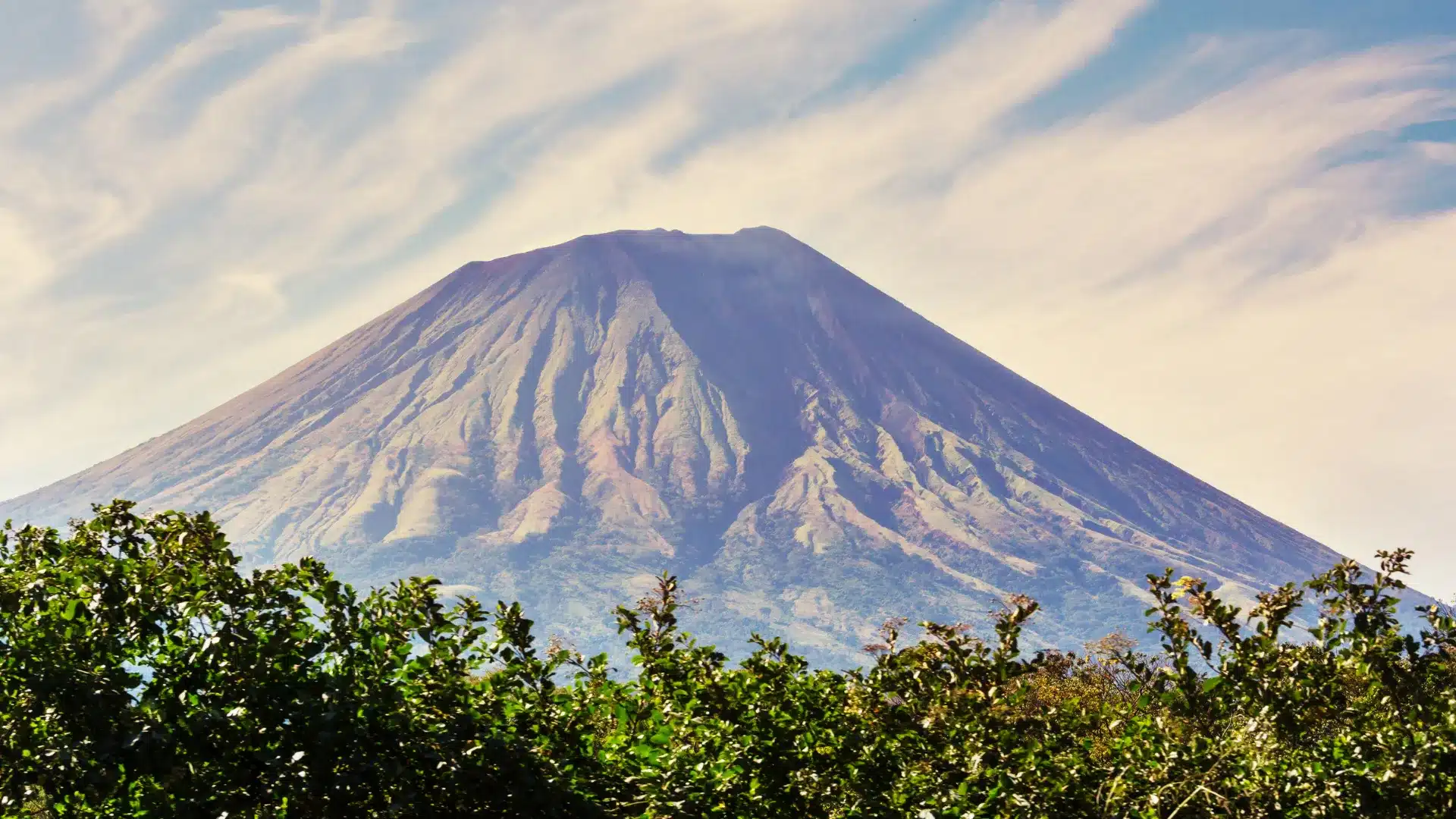
The country is defined by its volcanoes, from the smoking crater of Masaya, which can be approached unusually closely, to the perfect cones around León and the twin volcanoes of Ometepe, an island rising out of the lake. The lake itself is vast, dotted with islets and a freshwater landscape unlike anywhere else in the region.
These environments suit natural-history, adventure and travel content, landscape programming and drama needing dramatic volcanic backdrops. Volcano and island filming calls for planning around access, terrain, weather and boat logistics to reach Ometepe and the islets. Hoodlum builds local guides, drivers, boat support and logistics into the plan before a shoot moves to the volcanoes and the lake.
The Pacific Coast, San Juan del Sur and the Caribbean
The Pacific coast offers surf breaks, beaches and the lively hub of San Juan del Sur, a magnet for surf and lifestyle shoots, with dramatic headlands and reliable waves. On the other side of the country, the Caribbean coast and the Corn Islands offer a completely different, Afro-Caribbean character, with palm-fringed beaches, turquoise water and a slower island rhythm.
These locations suit surf, travel and lifestyle content, commercials and any project needing classic beach imagery or a distinctive Caribbean look. Coastal and island filming calls for planning around tides, surf, boat access and the longer travel involved in reaching the Caribbean side. Hoodlum helps productions plan the coasts and islands as their own production environments, with the right local knowledge, timing and logistics in place.
Entry, Visas and Crew Documentation
The country keeps entry comparatively simple for production crews, with the tourist entry covering most straightforward filming, though the right route still depends on each crew member’s nationality.
Many travellers can obtain a tourist visa valid for 90 days, often on arrival, typically requiring a passport valid for at least six months, passport photographs, hotel and flight details and, in some cases, a medical certificate, at very low cost. Crew accreditation as a separate step is generally not required. However, the film permit itself is the central requirement, and productions should travel with a production-company letter, media credentials, passport scans and the completed information sheet that the film authority requires for each crew member.
Hoodlum helps productions match each crew member to the correct entry route, assemble the permit and crew documentation, and avoid immigration or permitting becoming a late-stage problem.
Filming Permits and Location Permissions
Filming in Nicaragua is centrally regulated, and the film permit is issued by the national film authority, the Cinemateca Nacional, which oversees the authorisation of audiovisual and cinematographic projects in the country. This is the single most important process to plan around, since it is mandatory and takes real lead time.
A permit application generally requires a letter of application from the production company or media house, media credentials, passport scans and a completed information sheet for each crew member, and productions should allow a minimum of around thirty days for approval. Because the process is centralised and approval-gated, early submission and accurate documentation are essential, and a local partner who understands the authority’s requirements makes a substantial difference to timing.
Private locations are handled through the fixer, who presents a synopsis of the production to the property owner and negotiates the terms and fee. A Hoodlum location scout can propose suitable options, after which we negotiate access, dates, crew size, fees and conditions, and secure a location agreement. Private permission operates alongside, not instead of, the national film permit, and location fees are quoted once the locations are confirmed.
Drone Filming and Aviation Rules
Drone filming here comes with an important restriction: foreign crews are generally not permitted to bring their own drones into the country, so aerial work is carried out through a licensed local drone operator who already holds the necessary authorisation to fly. This is the standard and most practical route, and effectively the only one for incoming productions.
In practice, the fixer arranges a local operator and drone, coordinating the shoot schedule and synopsis with them, with the operator’s existing permissions covering the flight. Lead times of around a week are typical for arranging local aerial work. Because importing a drone is not an option, building the local operator into the plan early is essential. Hoodlum arranges licensed local drone operators, coordinates the aerial schedule and ensures the necessary permissions are in place before the shoot.
Equipment Customs Clearance and Temporary Import
Nicaragua is not an ATA Carnet country, so equipment importation is handled through the customs authority rather than a carnet, and it requires significant advance preparation. A full, detailed equipment list with serial numbers and values must be submitted well ahead of arrival, with around thirty days advised, so that clearance can be arranged in time.
Clearance is handled by the customs office, and the key to a smooth process is the accuracy and completeness of the equipment list and its early submission. A detailed inventory with serial numbers is essential, since the equipment is brought in temporarily and must be accounted for and re-exported. Allowing the full lead time, rather than treating customs as an arrival-day formality, is the single most important customs planning point for a Nicaragua shoot.
Hoodlum helps productions prepare the detailed equipment list and values, submits the customs documentation within the required lead time, and coordinates clearance so cameras, lighting, grip and sound gear move through with minimal delay.
Costs, Incentives and Production Support
The country does not currently offer a film rebate or tax-incentive scheme, which is a clear planning point, but its core advantage has never been a headline percentage. The country is one of the most affordable filming destinations in the region, and that low cost base is the real draw.
For productions, the practical benefits are very low location, crew, talent and accommodation costs, and a permit that carries little or no fee, even though it requires time and proper process. Because the local crew base is smaller and less deep than in larger markets, many productions bring key crew and specialist equipment and hire locally to fill out the team. Hoodlum can help productions make the most of the country’s strong cost advantages and coordinate the local crew, equipment and logistics that keep budgets efficient.
Safety, Security and Practical Logistics
The country is generally considered a safe country for visitors and film crews, with serious crime against tourists relatively uncommon and petty theft the main day-to-day concern. Most filming locations, from the colonial cities to the volcanoes and the beaches, are calm and welcoming, and crews typically find the country straightforward to work in on the ground.
Sensible precautions still apply: securing equipment and valuables, using reliable transport and standard location-scouting diligence are the practical foundations of a smooth shoot. Local police can be arranged as an extra precaution where a production wants additional security for crew, equipment or locations, and this is a useful option for larger setups or higher-value gear. Constant communication with local contacts and authorities helps keep things running smoothly.
Heat, tropical weather, volcanic terrain and the logistics of reaching islands and the Caribbean coast should all be planned for, with on-location first-aid support and an emergency plan for remote shoots. Medical and vaccination planning should be discussed with professionals ahead of travel. Hoodlum helps productions balance sensible security with efficient movement, draws on trusted local contacts and police liaison where wanted, and builds terrain, weather and contingency thinking into the schedule from the start.
When Nicaragua Is the Right Production Choice
The country is the right choice when a production needs dramatic volcanoes, beautifully preserved colonial cities, a vast lake and uncrowded Pacific and Caribbean coastlines, on a compact, highly affordable footprint that remains genuinely undiscovered. It is especially strong for travel, surf and adventure content, documentary, natural history, cultural and heritage stories, commercials and any project that wants volcanoes, colonial heritage and coast in a single efficient, cost-effective schedule.
It may be less suitable for productions that need a deep local crew base for very large shoots, a formal cash rebate, carnet-based equipment entry, the ability to import their own drones, or fast, last-minute permitting. The country is highly workable when the entry route, film permit, customs lead time, local drone arrangements and location agreements are settled early.
Common Production Mistakes to Avoid
The most frequent mistakes include:
- Underestimating the minimum thirty-day film-permit lead time
- Leaving the centralised permit application too late
- Assuming foreign drones can be imported, which they generally cannot
- Submitting the equipment list too late for customs clearance
- Assuming an ATA Carnet works, when temporary import is the route
- Treating the permit as a formality rather than a mandatory, gated process
- Assuming a deep local crew base for very large productions
- Underestimating travel and logistics to Ometepe and the Caribbean coast
Most of these problems are avoidable by aligning the crew list, the film-permit application, the customs documentation, the local drone arrangements and the location agreements well before the crew travels.
How Hoodlum Supports Productions in Nicaragua
Hoodlum provides Film Production Services in Nicaragua for international crews that need experienced local coordination from early planning through to wrap. Our support covers visa and documentation guidance, film-permit coordination with the national authority, private location agreements, local drone arrangements, customs and temporary-import planning, local crew sourcing, transport, boat and logistics support, security liaison, accommodation and on-ground production management.
From Managua and the central region to the colonial streets of Granada and León, the volcanoes of Masaya and Ometepe and the surf of San Juan del Sur, we help productions access the strongest filming environments in Nicaragua with the right permits, fixers, customs planning and logistics in place. Planning a shoot? Contact us to talk through permits, visa support, local fixers, location scouting, customs planning, local drone coordination and full on-ground production management.
Frequently Asked Questions
Do international crews need a visa to film in Nicaragua?
Many travellers can obtain a tourist visa valid for 90 days, often on arrival, with a passport valid at least six months, photographs, hotel and flight details and sometimes a medical certificate. Separate crew accreditation is generally not required, but the national film permit is mandatory, and crews should carry a production letter, media credentials and the required crew information sheets.
Who issues filming permits?
Filming is centrally regulated and the permit is issued by the Cinemateca Nacional, the national film authority. Applications need a production-company letter, media credentials, passport scans and a completed information sheet per crew member, with a minimum of around thirty days advised for approval.
Can productions bring their own drones?
No. Foreign crews are generally not permitted to import drones into the country. Aerial work is carried out through a licensed local drone operator who holds the necessary authorisation, arranged by the fixer with the shoot schedule and synopsis, typically with about a week’s lead time.
Is Nicaragua an ATA Carnet country?
No. Equipment is brought in through the customs authority, with a full detailed equipment list and serial numbers submitted around thirty days before arrival so clearance can be arranged in time.
Does Nicaragua offer film tax incentives?
No. Nicaragua does not currently offer a film rebate or tax incentive. Its advantage is its very low cost base: affordable locations, crew, talent and accommodation, and permits that carry little or no fee but require proper lead time and process.
What are the best filming locations?
Popular options include Managua, the colonial cities of Granada and León, the Masaya volcano, the island of Ometepe and the lake, the surf town of San Juan del Sur and the Pacific beaches, and the Corn Islands on the Caribbean coast.
Useful Authority Links
- Cinemateca Nacional de Nicaragua
- Visit Nicaragua – Official Tourism (INTUR)
- Nicaragua Civil Aeronautics Institute (INAC)
- Nicaragua Customs Authority (DGA)
- Nicaragua Migration and Foreigners Directorate
- Nicaragua Ministry of Foreign Affairs
Planning a shoot in Nicaragua? Contact Hoodlum for film permits, media accreditation, protected-area authorisations, local fixers, location scouting, customs clearance, drone coordination, security support, boat charters, volcano and 4×4 logistics and full on-ground production management. You can also view the Hoodlum Film Fixers Nicaragua Google Business Profile for local production details.