

Canada is one of the world’s premier filming destinations, a vast and versatile country combining spectacular mountains, forests, lakes, prairies, Arctic tundra and cosmopolitan cities with world-class studios, deeply experienced crews and one of the most competitive stacked tax-credit systems anywhere. From the mountains and rainforest of British Columbia and the studios and cityscapes of Toronto and Vancouver to the French-speaking heritage of Quebec, the prairies, the Rockies and the dramatic coasts, Canada offers extraordinary range and reliability within a stable, film-friendly jurisdiction, backed by refundable federal and provincial tax credits that can be combined to materially reduce production costs.
For international crews, Canada offers a rare blend of diverse locations, some of the deepest crew and studio capacity in the world, stable infrastructure, strong English and French-language capability and a layered tax-credit system worth a substantial share of qualifying labour, balanced against a permitting, immigration and customs framework that rewards early, well-structured planning. It is one of the few places where a production can shoot mountains, forests, cities that double for anywhere, and Arctic wilderness within one country, supported by mature regional film commissions and a service-production industry that has hosted many of the biggest films and series ever made.
Hoodlum provides Film Production Services in Canada for feature films, streaming series, commercials, documentaries, factual and reality television, branded content, music videos and large-scale studio productions. Our team supports work-permit and entry guidance, municipal film permits, location agreements, drone coordination, customs and equipment clearance, local crew sourcing, studio bookings, transport, accommodation, safety planning, tax-credit support and full on-ground production management. You can see the full scope of what we do and the people behind it on our who we are page.
The country rewards productions that arrive with their paperwork in order and their tax-credit planning structured from the start. It is professional, film-friendly and superbly organised, but it is not a destination for informal commercial shooting without approvals, and permits, customs, drones and the tax credits all run through specific processes, with a local production company central to the incentives. The right entry route, the right permits, the right customs plan and the right tax-credit structure all need to be settled before the cameras roll, and the most efficient way to handle that is through an experienced local production partner.
Why Canada Works for Range, Crews and Tax Credits
The country’s biggest production strength is the combination of extraordinary geographic range, world-leading crew and studio capacity, stability and a competitive, stackable tax-credit system. In a single country a production can access mountains, forests, lakes, prairies, coasts, Arctic wilderness and cities that convincingly double for locations worldwide, supported by deep infrastructure and refundable credits that combine federal and provincial support. The value is real and substantial, but it depends on structuring the production correctly to capture the federal and provincial credits together.
Vancouver, Toronto and Montreal are the main hubs, but the value sits in the range and the incentives. A series might base at a Vancouver or Toronto studio and shoot across the region. A feature might use the Rockies, the forests and a city double. A commercial might pair mountains with a cityscape. The country is strong because it delivers genuine diversity, unmatched infrastructure and layered, refundable tax credits, in one stable and professional jurisdiction, provided the production is structured to qualify.
The country is especially well suited to:
- Feature films and streaming series
- Commercials and branded content
- Reality and factual television
- Documentary and travel programming
- Animation, VFX and post-production
- Studio-based and effects-heavy productions
- Music videos
- Productions seeking a strong stacked tax credit
Hoodlum’s production support team helps crews decide which provinces and locations are practical, what permissions each one needs and how to sequence an efficient schedule across the country.
Vancouver, British Columbia and the West
British Columbia, centred on Vancouver, is one of the world’s busiest production centres, offering mountains, temperate rainforest, coastline, lakes, islands and a city that doubles seamlessly for locations across the globe, alongside some of the largest studio capacity and deepest crew bases anywhere. It is a magnet for studio series, features and effects-heavy work.
These locations suit features, streaming series, commercials and any project needing mountains, forest, coast or a versatile city double, with British Columbia’s studios, crews and infrastructure among the strongest in the world. Filming runs through the relevant municipal film offices, with the province offering some of the country’s most attractive stacked credits. Hoodlum uses Vancouver as a key base for Film Production Services in Canada, particularly for studio-backed and location-versatile productions.
Toronto, Ontario and the East
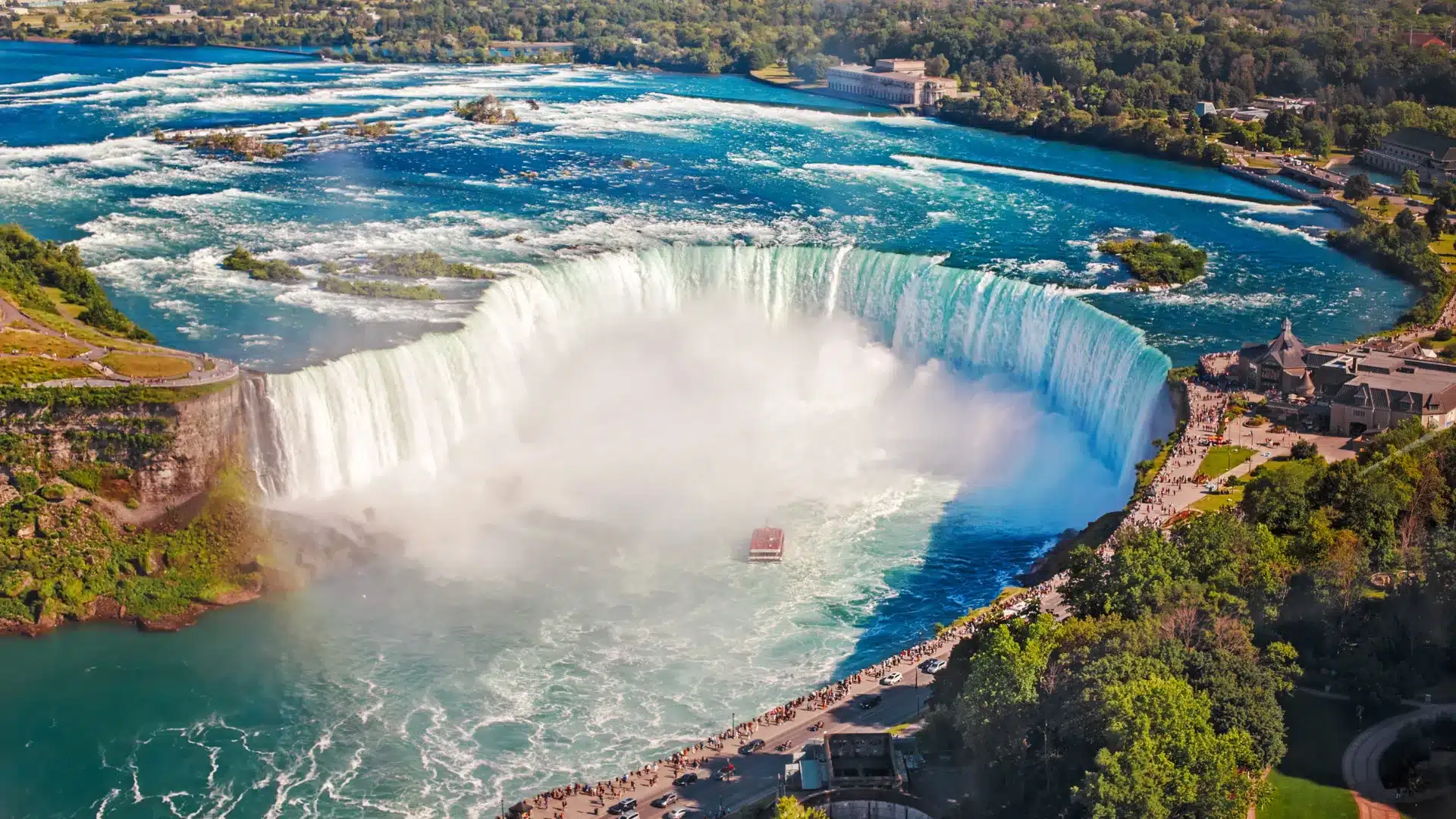
Toronto, the country’s largest city, is a major production hub with extensive studios, deep crews and a versatile urban landscape that regularly doubles for New York, Chicago and other cities, while the wider Ontario region adds lakes, forests, small towns, Niagara and varied countryside. It anchors production in the east.
These locations suit features, series, commercials, urban and any project needing a flexible North American city or eastern landscapes. Toronto’s studio capacity and crew depth rival any centre, and filming is coordinated through the city and regional film offices, with Ontario offering competitive stacked credits. Hoodlum uses Toronto as the practical base for productions working in the east, combining the city’s infrastructure with regional locations.
Quebec, the Prairies and the Rockies
Beyond the two largest hubs, Canada offers extraordinary further range: Montreal and Quebec bring European-flavoured, French-speaking heritage, historic architecture and strong studio and VFX capacity, while Alberta offers the spectacular Rocky Mountains, Banff, badlands and prairies, and the wider country adds the Maritimes, the Arctic and more. This regional variety is a major asset.
These locations suit period, features, natural-history, commercial and any project needing European-style heritage, dramatic mountains or wilderness. Each province runs its own film office and its own tax credit, so a multi-province shoot involves coordination across regions and incentive programmes. Hoodlum builds the provincial permissions, logistics and incentive coordination into the schedule so the full range of the country becomes workable.
Studios, Crews and Infrastructure
The country’s production infrastructure is among the most developed in the world, with major studio complexes in Vancouver, Toronto and Montreal, world-class crews across every department, advanced VFX and animation houses, and production teams thoroughly experienced in tax-credit compliance. This depth is a core reason productions choose the country.
Available capacity includes large sound stages, construction and fabrication facilities, extensive equipment rental, some of the world’s leading visual-effects and animation studios, and highly experienced departmental crews. Strong English and French-language capability supports international productions, and the scale of the industry means productions can staff and equip efficiently. Hoodlum uses this infrastructure to build production systems that are efficient, realistic and tailored to the actual needs of the project, sourcing the right balance of local crew, studios and equipment.
Entry, Work Permits and Crew Documentation
International crew working on paid productions in the country generally require a work permit or a work-permit exemption under the International Mobility Program, so immigration planning is an important early step, with the correct route depending on nationality, role and the nature of the production.
Applications typically require a letter from the production company, a detailed itinerary, proof of qualifications and experience, and supporting documentation, with processing times varying and some crew qualifying for exemptions while others need a temporary work permit. Because film work is paid professional activity, tourist entry does not cover it, and confirming each crew member’s route early is essential, particularly as union and guild considerations may also apply. A local partner familiar with the immigration routes is valuable here.
Because the work-permit process links to the permit, union and tax-credit framework, working with a local partner who manages it is valuable. Hoodlum helps productions identify the correct entry route for each crew member, assemble the documentation, and align immigration with the shoot schedule.
Film Permits and Location Permissions
Film permits are issued at municipal level through city film offices, such as those in Vancouver, Toronto, Montreal and other cities, so the correct route depends on where the shoot takes place, with processing commonly taking a few business days. Applications typically require a completed form, proof of liability insurance, a detailed shoot schedule, a location map and a script or storyboard.
Because permitting is handled city by city, a multi-location or multi-province shoot involves coordination across several film offices, each with its own process, fees and timing, and specific locations such as parks, heritage sites and controlled areas may require additional permissions. The local production company, which knows each jurisdiction’s requirements, keeps the process smooth and the timing realistic.
Private locations are arranged by the local producer or fixer, who scouts, secures and coordinates access and negotiates fees with owners. A Hoodlum location scout can propose suitable options, after which we negotiate access, dates, crew size, fees and conditions, and secure a location agreement. Private permission does not replace the municipal film permit or any park or heritage approvals a location also requires, and fees are quoted once the locations are confirmed.
Drone Filming and Aviation Rules
Drone filming is regulated by Transport Canada, and commercial operations generally require the appropriate pilot certification and, for many operations, authorisation such as a Special Flight Operations Certificate, along with compliance with the rules on altitude, line of sight and controlled airspace. This is a structured federal framework that must be planned around in advance.
Operators must hold the appropriate certification, register the drone, carry liability insurance and provide a flight plan, with additional authorisation needed for more complex or higher-risk operations and near controlled airspace or populated areas, and importation subject to compliance and certification requirements. Using a certified local operator who knows the Transport Canada framework is the standard route. Hoodlum arranges the certified drone operator and the required authorisations, and builds the requirements and lead time into the plan.
Equipment Customs Clearance and the ATA Carnet
Canada is an ATA Carnet country, and the carnet is strongly recommended for temporary importation of professional film equipment. An ATA Carnet acts as a single international customs document allowing professional gear to be temporarily imported duty-free and tax-free, on the guarantee that it will be re-exported within the validity period.
Customs is handled by the Canada Border Services Agency, with documentation including the carnet, a commercial invoice, bill of sale, the customs declaration and proof of insurance and ownership, and a customs broker is recommended to keep clearance efficient. Once a broker transmits the entry, processing can be quick, though timing varies with circumstances, so planning ahead matters. The equipment is brought in temporarily and must be re-exported, so an accurate, fully valued inventory is essential.
Hoodlum helps productions prepare the carnet and equipment lists, coordinate a customs broker and CBSA clearance, and time everything so cameras, lighting, grip and sound gear move through with minimal delay.
The Canada Tax Credits and Incentive Planning
The country’s headline financial draw is its layered, refundable tax-credit system, combining federal and provincial credits that stack to a substantial share of qualifying spend, making the country one of the world’s strongest production jurisdictions. At the federal level, the Production Services Tax Credit, or PSTC, offers a refundable credit of 16% of qualified Canadian labour and is open to foreign-owned productions with no cap, while the Canadian Film or Video Production Tax Credit, the CPTC, offers 25% of qualified labour for productions meeting Canadian-content and ownership requirements.
On top of the federal credit, each province offers its own refundable credit that stacks with it: British Columbia and Ontario offer competitive production-services credits for foreign productions, Quebec offers a services credit with additional visual-effects and animation uplifts, and Alberta, Nova Scotia and others run their own programmes, with regional, distant-location and VFX bonuses widely available. Combined, federal and provincial credits can reach a substantial effective rate, and the credits are refundable, meaning they are paid even where no tax is owed. To qualify, productions generally work through a Canadian production corporation, incur qualifying Canadian labour and spend, and apply for certification, with the credits claimed through the tax system after an audit.
Because the value depends on structuring the production and location choices to capture the federal and provincial credits together, planning must begin early. Hoodlum helps productions structure qualifying spend, choose provinces strategically, and manage the federal and provincial tax-credit process from planning to final certification.
Safety, Seasons and Practical Logistics
The country operates within structured, well-developed workplace safety standards, and each production still needs a project-specific risk system covering the realities of its locations, script and schedule, with security personnel such as off-duty police or licensed guards commonly engaged for on-set security, crowd control and equipment protection. The country’s mature industry and infrastructure make it a reassuring place to work.
Standard practice includes professional safety planning, secure equipment handling, traffic and crowd management and clear coordination, with excellent medical, transport and communications infrastructure throughout. The main practical variable is the climate and the seasons, which are pronounced: warm summers with long daylight, spectacular autumn colour, and cold, snowy winters that suit snow-based and atmospheric work but demand tight control around battery and camera performance, heated crew areas, transport and shorter daylight. Hoodlum uses seasonal planning to forecast not just the look of a shoot but its practical implications for budget, crew movement and daily efficiency, and builds contingency into the plan.
When Canada Is the Right Production Choice
Canada is the right choice when a production needs genuine geographic range, mountains, forests, cities that double for anywhere and Arctic wilderness, combined with world-leading crews and studios, stability, English and French capability and a competitive, stackable tax-credit system. It is especially strong for features and streaming series, commercials, reality and factual, documentary, animation, VFX and post, and studio-based productions that want scale, reliability and a strong incentive.
It may be less suitable for productions on very tight timelines that cannot accommodate work-permit lead times, or that cannot structure through a Canadian production company to access the credits. The country is highly workable when the work permits, municipal permits, drone arrangements, customs, tax-credit structure and location agreements are settled early and managed together.
Common Production Mistakes to Avoid
The most frequent mistakes include:
- Treating the incentive as one rate, when federal and provincial credits stack
- Not structuring through a Canadian production company to capture the credits
- Missing certification steps or residency documentation for labour claims
- Assuming crew can work on tourist entry, when work permits are usually required
- Underestimating work-permit and union or guild lead times
- Overlooking that permits are issued city by city across provinces
- Assuming equipment clears without a carnet and customs broker
- Planning demanding winter shoots without seasonal and daylight control
Most of these problems are avoidable by structuring the tax credits, work permits, municipal permits, customs and location agreements into one plan well before the crew travels, through a trusted local production partner.
How Hoodlum Supports Productions in Canada
Hoodlum provides Film Production Services in Canada for international crews that need experienced local coordination from early planning through to wrap. Our support covers work-permit and entry guidance, municipal film permits across cities and provinces, park and heritage approvals, private location agreements, certified drone operator coordination, carnet and customs clearance through CBSA, local crew and vendor sourcing, studio and facility bookings, transport, safety planning, accommodation, federal and provincial tax-credit structuring and reporting, and on-ground production management.
From the mountains and studios of Vancouver and British Columbia to the cityscapes of Toronto, the heritage of Montreal and Quebec, the Rockies of Alberta and the coasts and wilderness beyond, we help productions access the strongest filming environments here with the right permits, crews, customs planning, incentives and logistics in place. Planning a shoot? Contact us to talk through work permits, permits, local crews, location scouting, customs coordination, drone planning, tax-credit support and full on-ground production management.
Frequently Asked Questions
Do international crews need a visa to film in Canada?
Generally yes, in the form of a work permit or a work-permit exemption under the International Mobility Program, since paid film work is not covered by tourist entry. The correct route depends on nationality, role and production, with some crew exempt and others needing a temporary work permit, and union or guild considerations may apply, so confirm each crew member’s route early.
Who issues filming permits?
Film permits are issued at municipal level through city film offices, such as Vancouver, Toronto and Montreal, typically within a few business days, requiring a form, liability insurance, a shoot schedule, a location map and a script or storyboard. A multi-city or multi-province shoot involves several offices, and parks and heritage sites may need additional permissions.
Who regulates drones?
Transport Canada regulates drones, with commercial operations requiring the appropriate pilot certification and often authorisation such as a Special Flight Operations Certificate, plus compliance on altitude, line of sight and controlled airspace, registration and insurance. A certified local operator who knows the Transport Canada framework is the standard route.
Is Canada an ATA Carnet country?
Yes. The ATA Carnet is strongly recommended for temporary equipment import, handled by the Canada Border Services Agency with the carnet, commercial invoice, customs declaration and proof of insurance and ownership. A customs broker is recommended, and once the entry is transmitted, clearance can be quick, though timing varies.
Does Canada offer a film rebate?
Yes, through a layered, refundable tax-credit system. Federally, the PSTC offers 16% of qualified Canadian labour for foreign productions with no cap, and the CPTC 25% for Canadian-content productions. Each province adds its own stacking credit, such as British Columbia, Ontario and Quebec, so combined federal and provincial credits reach a substantial effective rate. Structuring through a Canadian company is required.
What are the best filming locations?
Standout options include the mountains, rainforest and studios of Vancouver and British Columbia, the versatile cityscapes and studios of Toronto, the heritage of Montreal and Quebec, the Rocky Mountains and Banff in Alberta, Niagara, the prairies, the Maritime coasts and the Arctic north.
Useful Authority Links
- CAVCO – Canadian Film or Video Production Tax Credits
- Creative BC – Film Incentives
- Immigration, Refugees and Citizenship Canada (Work Permits)
- Transport Canada – Drones
- Canada Border Services Agency (Customs)
- Destination Canada – Tourism
Ready to bring your production to Canada? Hoodlum handles the work permits, municipal permits, location scouting, customs and carnet coordination, certified drone operators, local crew and studios, safety planning, federal and provincial tax-credit structuring and full on-ground production management, so you can focus on the work in front of the lens. Get in touch with our team to start planning, and tell us your locations, dates and creative brief.
For more information, view our Hoodlum Film Fixers Canada Google Business Profile.