
Film Production Services in Chile
Chile is one of the most geographically spectacular and diverse filming destinations on earth, a long, narrow country that runs from the driest desert in the world to the glaciers of Patagonia, taking in the Andes, the Pacific coast, vineyards, lakes, volcanoes, ancient forests and the otherworldly landscapes of the Atacama along the way. From the surreal salt flats, geysers and clear skies of the Atacama Desert to the granite towers of Torres del Paine, the fjords of the south and the cosmopolitan energy of Santiago and Valparaíso, the country offers an unmatched range of looks within a single, stable and increasingly film-friendly territory, now backed by a competitive cash rebate.
For international crews, Chile offers a rare blend of extraordinary, unrepeatable landscapes, a stable and safe production environment, a skilled local workforce and a 30% to 40% cash rebate. It is one of the few places where a production can shoot the world’s driest desert, snow-capped Andean peaks, Pacific coastline and Patagonian wilderness within a single ambitious schedule, supported by experienced local producers and a film commission actively courting foreign productions.
Hoodlum provides Film Production Services in Chile for commercials, documentaries, factual entertainment, branded content, automotive shoots, music videos, fashion and lifestyle campaigns, feature films and television productions. Our team supports visa guidance, film permits, FilmInChile and CORFO liaison, location agreements, drone coordination, carnet and customs clearance, local crew sourcing, transport, accommodation, security planning, incentive support and full on-ground production management. You can see the full scope of what we do and the people behind it on our who we are page.
Chile rewards productions that arrive with their paperwork in order. It is a stable, safe and welcoming country for film, but it is not a destination for informal, undocumented shooting by foreign crews, and its visa, permit and customs frameworks need careful planning. The right entry route, the right permits, the right customs plan and the right incentive registration all need to be settled before the cameras roll, and the most efficient way to handle that is through an experienced local production partner.
Why Chile Works for Landscapes, Stability and Rebates
Chile’s biggest production strength is the combination of an unrivalled range of landscapes, a stable and safe operating environment and a genuine cash rebate. In a single schedule a production can capture desert, Andes, coast, forest and glacier, often standing in for locations across the planet, from Mars-like deserts to alpine and even lunar settings. This diversity, packed into one safe and well-organised country, is what sets Chile apart in the region.
Santiago is the operational hub, but the value sits in the range and the rebate. A commercial might pair the Atacama with the Andes. An automotive shoot might use desert highways and mountain passes. A documentary might explore astronomy in the clear desert skies, Patagonian wilderness or the vineyards of the central valleys. Chile is strong because it delivers planet-spanning visual variety, stability and a 30% to 40% incentive, with a skilled crew base and growing infrastructure.
The country is especially well suited to:
- Commercials and branded content
- Automotive shoots
- Feature films and television drama
- Documentary and factual entertainment
- Natural-history and landscape programming
- Travel and adventure content
- Fashion, beauty and lifestyle campaigns
- Astronomy and science programming
- Productions seeking a cash rebate
Hoodlum’s production support team helps crews decide which regions are practical, what permissions each location needs and how to sequence movement across the country’s extraordinary length.
Santiago and the Central Region
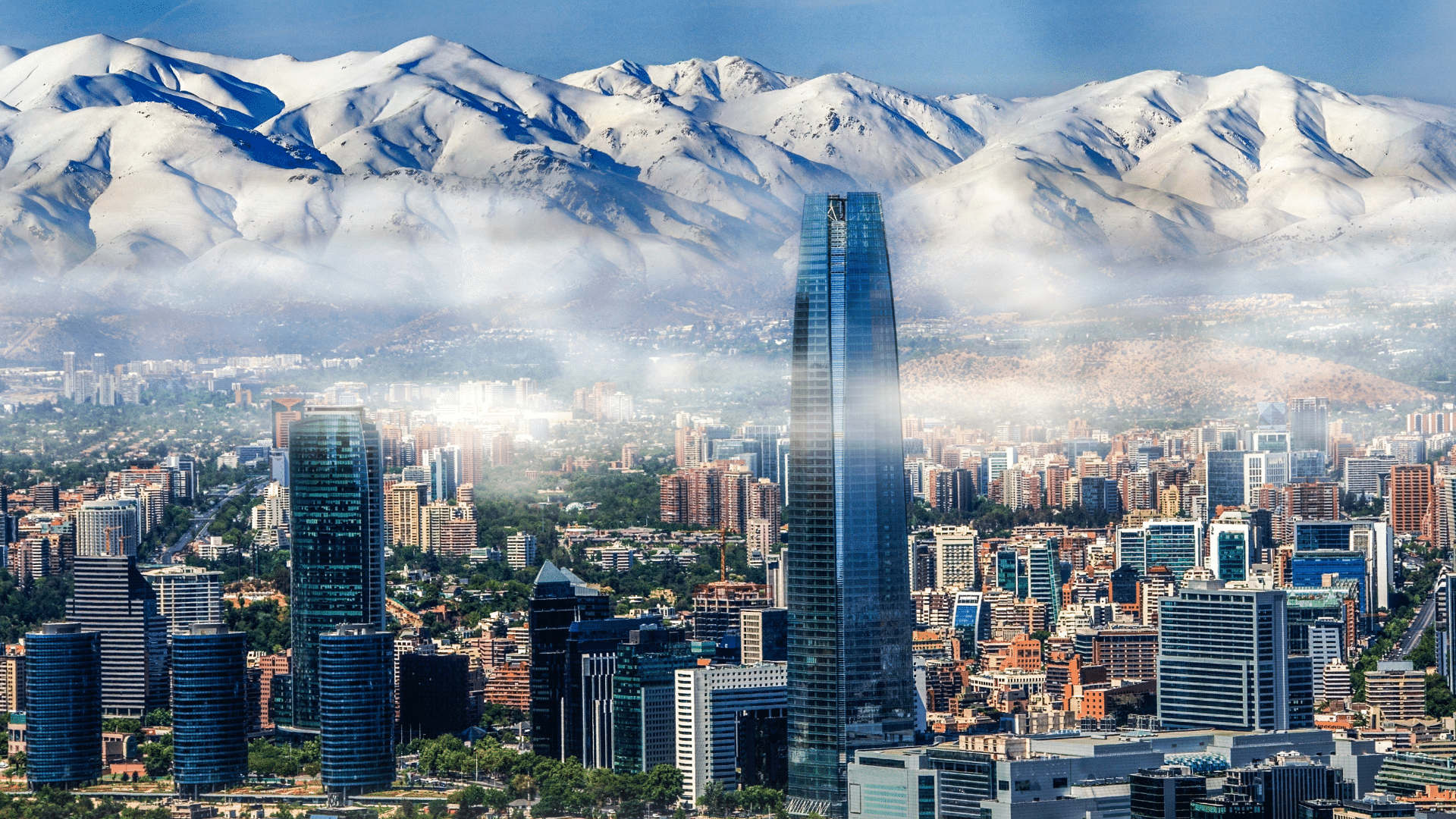
Santiago is the natural anchor for most international productions working in Chile. It is where crews arrive through the main international airport, where production companies, crews, equipment, studios and post facilities are concentrated, and where permit, customs and incentive coordination begins, framed dramatically against the snow-capped Andes.
The capital offers a modern skyline, business districts, neighbourhoods, parks and civic architecture, while the nearby coast brings the colourful, bohemian port city of Valparaíso and the beaches of Viña del Mar, and the central valleys add vineyards and rolling countryside within easy reach. Crew accommodation, vehicle hire, fixers, customs coordination, drone operators and security planning are all easiest to arrange from the capital. Hoodlum uses Santiago as the practical hub for Film Production Services in Chile, particularly when a shoot needs to combine the city with the coast, the vineyards and the Andes before reaching out to the desert or the south.
The Atacama Desert and the North
The Atacama Desert in the north is one of the most extraordinary landscapes on the planet: the driest place on earth, with salt flats, geysers, lagoons, flamingos, volcanoes, dunes and the clearest night skies in the world, home to the great international observatories. It is a defining location for any landscape, science-fiction or astronomy-led shoot.
This region is unmatched for commercials, automotive, science-fiction, natural-history and astronomy work, and it has stood in for Mars and the moon in major productions. Atacama filming calls for careful planning around extreme altitude, remote logistics, heat and aridity, distances and protection of equipment, with permits and local guides essential. Crucially, productions filmed entirely outside the Santiago region qualify for a higher rebate, which makes the north especially attractive. Hoodlum builds the permissions, transport, guides, altitude and equipment-protection planning into the schedule before a shoot reaches the desert.
Patagonia, the Lake District and the South
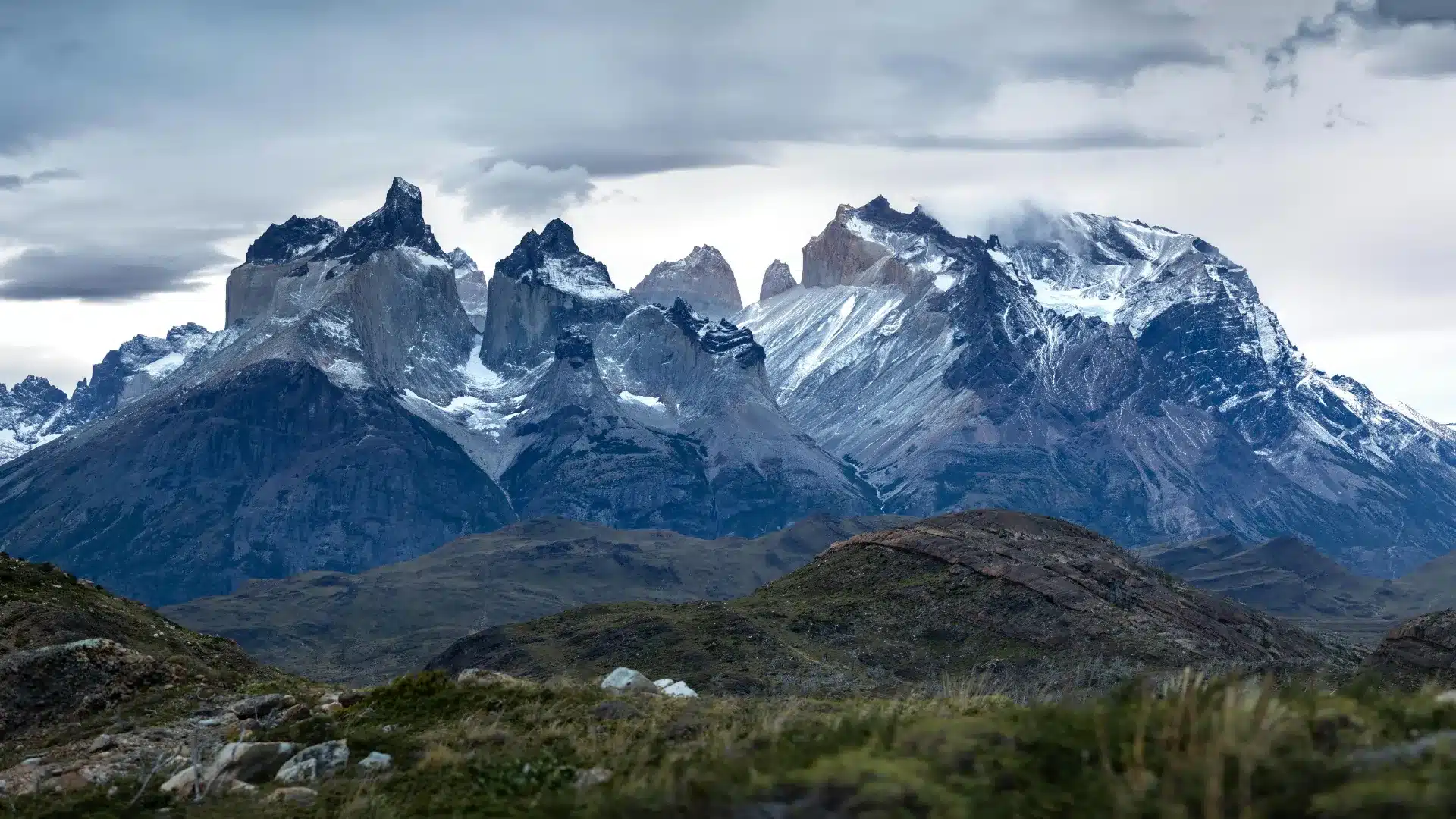
In the south, Chile unfurls into some of the most dramatic wilderness on earth: the granite towers and glaciers of Torres del Paine, the fjords, channels and ice fields of Patagonia, the volcanoes, lakes and ancient araucaria forests of the Lake District, and the mystical island of Chiloé. This is landscape filmmaking at its most epic.
These locations suit natural-history, adventure and travel content, automotive and outdoor-brand work, feature films and any project needing raw, pristine wilderness. Patagonian and southern filming calls for planning around distance, weather, seasonal access, transport and remote logistics, with national-park permits requiring significant lead time and environmental care. As with the desert, shooting entirely outside the metropolitan region also unlocks the higher rebate. Hoodlum builds the park permissions, local guides, transport and remote-location logistics into the plan before a shoot moves into the south.
Entry, Visas and Crew Documentation
Chile requires the correct entry authorisation for foreign film crews, and the right route depends on each crew member’s nationality and the length and nature of the stay, so early planning matters.
Some nationalities can enter without a visa, while others must apply in advance, typically online through the national migration service, with processing usually taking around 15 to 30 days. Applicants generally provide a passport valid at least six months, an application form, a photo, an invitation letter from the Chilean production company detailing the project and crew, proof of professional experience, an equipment list and proof of insurance, with police and medical certificates required for longer stays beyond 90 days. Formal nationwide crew accreditation is generally not required, though productions should carry full documentation.
Because requirements vary by nationality and can change, working with a local partner who tracks the current rules is valuable. Hoodlum helps productions match each crew member to the correct entry route, assemble the documentation, and avoid immigration becoming a late-stage problem.
Filming Permits and Location Permissions
There is no single national film permit in Chile, and permits are issued largely at municipal level, with the relevant local authority granting permission for public-space filming, so the correct route depends entirely on the locations. The film commission, FilmInChile, supports productions with location and permitting guidance, which makes coordination considerably smoother.
Simple permits for filming in public spaces often take around five to ten working days, while more complex permissions, such as national parks or restricted areas, can take fifteen to thirty working days or more and require additional documentation. Applications generally need a project synopsis, a script or treatment, a shooting schedule, a location list, crew and equipment lists, an insurance certificate, and for sensitive ecosystems an environmental plan, along with permissions from other authorities for national monuments, airports or protected areas. National parks are managed by the national forestry authority, CONAF, and require environmental care and lead time.
Private locations are arranged directly with owners or managers, with a fixer handling contact, scouting and negotiation. A Hoodlum location scout can propose suitable options, after which we negotiate access, dates, crew size, fees and conditions, and secure a location agreement. Private permission does not replace municipal, park or other approvals a location also requires, and fees are quoted once the locations are confirmed.
Drone Filming and Aviation Rules
Drone operation is regulated by the civil aviation authority, the DGAC, and registration and licensing are required for commercial film work, with only recreational use of drones under 750 grams in uninhabited areas exempt. Registration requires details such as the manufacturer, model, serial number and a photograph of the drone, along with liability insurance, an operational manual and pilot documentation.
Bringing a drone into the country requires declaring it on the customs form on entry, and importation may involve the agricultural and customs authorities and the relevant documentation. Processing for drone permissions can take several weeks, so early planning matters, and for many incoming productions engaging a locally registered drone operator who already holds the certifications is the most practical route. Hoodlum arranges local drone operators or coordinates registration and importation, and builds the required lead time into the plan.
Equipment Customs Clearance and the ATA Carnet
Chile is an ATA Carnet country, which makes temporary equipment importation relatively straightforward for productions that prepare properly. An ATA Carnet acts as a single international customs document allowing professional filming gear to be temporarily imported duty-free and tax-free, on the guarantee that it will be re-exported within the validity period, typically up to one year.
Customs clearance is handled by the national customs service, Servicio Nacional de Aduanas, and a clean carnet supported by a detailed equipment list with serial numbers and values, a commercial invoice and proof of insurance keeps the process moving, usually within a few working days. Productions should be aware that a deposit or guarantee, often calculated as a percentage of the equipment’s value, may apply, so budgeting for this is important. The equipment is brought in temporarily and must be re-exported, so an accurate inventory is essential.
Hoodlum helps productions prepare the carnet and equipment list, coordinates with the customs service and a local broker where needed, and times the process so cameras, lighting, grip and sound gear move through with minimal delay.
The Chile Film Incentive
Chile’s headline financial draw is the IFI Audiovisual program, a high-impact audiovisual investment incentive run by CORFO, the national development agency, in collaboration with the economy and culture ministries. It offers a cash rebate of up to 30% of qualified expenses incurred in the country, rising to 40% for productions filmed entirely in regions outside the Santiago metropolitan area, with a reimbursement cap of around USD $3 million.
The incentive is aimed at high-impact foreign audiovisual productions, including feature films, television series and digital-platform series, and requires a foreign producer to contribute the majority of the investment, working directly or through a co-execution agreement with a Chilean production company, with a minimum qualifying spend in the country. The higher 40% regional rate is a deliberate effort to spread production beyond the capital to the desert, the south and other regions, which aligns perfectly with the country’s most spectacular landscapes. Reimbursement is typically processed within around three months of approval. The exact rates, thresholds, caps and application windows change, so productions should confirm current figures and structure the application early through a local entity. Hoodlum can help connect productions with the right local partners and advisers to register, structure qualifying spend and capture the incentive rather than miss it.
Safety, Security and Practical Logistics
Chile is widely regarded as one of the safest and most stable countries in South America, with comparatively low levels of serious crime and a well-developed infrastructure, which makes it a reassuring base for international productions. As in any country, sensible precautions apply, particularly around petty theft in tourist and urban areas.
Standard practice includes hiring local fixers, conducting location risk assessments, securing equipment and valuables, using reputable transport and arranging equipment and crew insurance, with security coordination for higher-value or higher-profile shoots. Awareness of pickpocketing and opportunistic theft in crowded areas is the main day-to-day concern, and the country’s strong production base means experienced local support is readily available.
The country’s extraordinary length and varied climate are the defining logistical factors. Distances are vast, conditions range from desert heat and high altitude to Patagonian cold and wind, and seasons are reversed from the northern hemisphere, so distance, altitude, weather and contingency planning all matter. Hoodlum helps productions balance sensible security with efficient movement, draws on trusted local contacts, and builds distance, altitude, weather and contingency thinking into the schedule from the start.
When Chile Is the Right Production Choice
Chile is the right choice when a production needs planet-spanning landscape variety, the Atacama Desert, the Andes, the Pacific coast and Patagonian wilderness, combined with stability, safety, a skilled crew base and a 30% to 40% cash rebate. It is especially strong for commercials, automotive, features and drama, documentary, natural history, astronomy and any project that wants desert, mountain, coast and glacier in a single ambitious, cost-effective schedule.
It may be less suitable for productions that cannot meet the incentive’s minimum spend, need very short travel distances, or require a deep local crew base for the very largest shoots. It is highly workable when the entry route, permits, drone arrangements, carnet, incentive registration and location agreements are settled early.
Common Production Mistakes to Avoid
The most frequent mistakes include:
- Underestimating the country’s vast distances and reversed seasons
- Missing the higher 40% rebate by not planning a fully regional shoot
- Registering for the incentive too late or missing the minimum spend
- Underestimating altitude in the Atacama and the Andes
- Leaving national-park and protected-area permits too late
- Underestimating the carnet deposit or guarantee at customs
- Assuming you can fly your own drone without local registration
- Treating municipal permits as covering parks or restricted areas
Most of these problems are avoidable by aligning the crew list, visas, permits, drone plan, carnet, incentive registration and location agreements well before the crew travels.
How Hoodlum Supports Productions in Chile
Hoodlum provides Film Production Services in Chile for international crews that need experienced local coordination from early planning through to wrap. Our support covers visa and documentation guidance, film permits and national-park approvals, FilmInChile and CORFO liaison, private location agreements, drone planning, carnet and customs clearance, local crew sourcing, transport, security planning, accommodation, incentive registration and on-ground production management.
From Santiago and the central valleys to the Atacama Desert, the coast of Valparaíso, the Lake District, Torres del Paine and the fjords of Patagonia, we help productions access the strongest filming environments in Chile with the right permits, fixers, customs planning and logistics in place. Planning a shoot? Contact us to talk through permits, visa support, local fixers, location scouting, carnet coordination, drone planning, incentive support and full on-ground production management.
Frequently Asked Questions
Do international crews need a visa to film in Chile?
It depends on nationality. Some travellers enter visa-free, while others apply in advance through the national migration service, usually taking around 15 to 30 days. Applicants provide a passport, an invitation letter from the Chilean production company, proof of experience, an equipment list and insurance, with police and medical certificates for stays beyond 90 days.
Who issues filming permits?
There is no single national permit; permits are issued largely at municipal level for public-space filming, with the film commission FilmInChile supporting coordination. Simple permits take around five to ten working days, while national parks and restricted areas take fifteen to thirty or more and need extra documentation.
Who regulates drones?
The civil aviation authority, the DGAC, regulates drones. Commercial film work requires registration, licensing, insurance and documentation, with only recreational drones under 750 grams in uninhabited areas exempt. Importing a drone requires a customs declaration. Using a locally registered operator is usually the most practical route.
Is Chile an ATA Carnet country?
Yes. Temporary importation of professional filming equipment is handled cleanly through the ATA Carnet system, with clearance via the national customs service (Servicio Nacional de Aduanas). A deposit or guarantee based on equipment value may apply, so budget for it.
Does Chile offer a film rebate?
Yes. The IFI Audiovisual program, run by CORFO, offers up to a 30% cash rebate on qualified local spend, rising to 40% for productions filmed entirely outside the Santiago metropolitan region, capped at around USD $3 million. It requires a local production partner, majority foreign investment and a minimum qualifying spend. Confirm current rules and apply early.
What are the best filming locations?
Popular options include the Atacama Desert, Santiago and the Andes, the port city of Valparaíso, the central-valley vineyards, the Lake District and Chiloé, and the glaciers and granite towers of Torres del Paine and Patagonia.
Useful Authority Links
- FilmInChile – Chile Film Commission
- CORFO – IFI Audiovisual Incentive
- National Migration Service
- DGAC – Directorate General of Civil Aeronautics
- Servicio Nacional de Aduanas – Customs
- CONAF – National Forestry (National Parks)
Ready to bring your production to Chile? Hoodlum handles the permits, visa guidance, location scouting, carnet and customs coordination, drone planning, local crew, security planning, incentive registration and full on-ground production management, so you can focus on the work in front of the lens. Get in touch with our team to start planning, and tell us your locations, dates and creative brief.
For more information, view our Hoodlum Film Fixers Chile Google Business Profile.