Filming in Kazakhstan Requirements start with one practical truth: Kazakhstan is fully workable for international productions, but only when permits, entry rules, equipment movement, and aerial operations are planned early. Kazakhstan’s official eGov guidance says foreign nationals must follow the country’s entry and visa rules, and the receiving party must notify the migration service within three working days of arrival. The Aviation Administration of Kazakhstan also requires registration for many unmanned aircraft systems and publishes a formal registration process.
For producers and executive producers, the real question is not only Is Filming Allowed in Kazakhstan. The more useful question is how foreign crews should handle visas, customs, drones, protected areas, and location permissions without burning time or budget. Kazakhstan’s official sources show that the framework is manageable, but it is not a one-form, one-office market. Entry, migration notification, customs, and drone compliance sit with different authorities, so production planning needs to treat them as connected parts of one system.
Kazakhstan offers a rare mix of modern cities, steppe, mountains, deserts, and protected landscapes. That visual range is a gift for production, but it also means different rules can apply depending on where you shoot and what you bring. Filming in Kazakhstan Requirements are therefore best approached as a set of smart operating rules rather than a single generic checklist.
1. Is Filming Allowed in Kazakhstan? Yes, but access depends on where and how you shoot
Is Filming Allowed in Kazakhstan for foreign productions? In general, yes. There is no blanket prohibition on international filming, but access conditions vary by location type, public sensitivity, and whether your shoot involves protected areas, strategic sites, or controlled airspace. That distinction matters because a private warehouse, a city street, and a protected national park do not move through the same approval pathway.
For producers, the safest way to think about Filming in Kazakhstan Requirements is to divide locations into categories early:
- private property
- public urban locations
- protected natural areas
- heritage-sensitive sites
- areas affected by aviation or security restrictions
Kazakhstan’s law on specially protected natural areas restricts activities that may harm ecological systems in state national natural parks and their protected zones. Individual park rules can be even more specific. For example, Altyn-Emel National Park says visitors must have a confirming payment document to enter protected territory and lists separate rules for movement, routes, and permitted activities, including professional photo and video shooting.
That means Is Filming Allowed in Kazakhstan is not really a yes-or-no production question. It is a location question. The answer is usually yes in principle, but the path changes with the terrain.
2. Filming in Kazakhstan Requirements for foreign crew begin with passport-by-passport visa planning
One of the most important Filming in Kazakhstan Requirements is that entry rules depend on nationality, duration of stay, and visa type. Kazakhstan’s eGov portal says electronic visas are available to citizens of 109 countries, but they are issued only on the basis of a valid invitation from the Kazakhstan side, and entry on an e-visa is limited to certain international airports. The same official guidance says the receiving party must notify the migration service within three working days of the foreign national’s arrival.
That has two direct implications for production:
- a mixed-nationality crew should never be treated as one visa case
- host notification is part of the arrival workflow, not an optional admin afterthought
For line producers and executive producers, this is where Filming in Kazakhstan Requirements quietly become operational. A crew list with ten different passports can mean ten different eligibility checks, especially if some team members are staying longer, entering multiple times, or traveling for purposes that need supporting documents. Kazakhstan’s official entry guidance also points users to the current visa-regime list, so nationality-specific checks should always be verified against the live government source during prep.
A clean way to manage this is to build an entry tracker that includes passport nationality, visa route, invitation status, intended airport, and host-notification responsibility. It is not glamorous, but it keeps the schedule from getting ambushed at the border.
3. Drone Filming in Kazakhstan needs early paperwork and local compliance support
Drone Filming in Kazakhstan is possible, but it is one of the stricter planning areas for foreign productions. The Aviation Administration of Kazakhstan says unmanned aircraft systems with a maximum take-off weight of 0.25 kg or more, as well as all systems with data-collection equipment, are subject to registration, with certain exceptions. The same registration page explains that applications are submitted with an electronic digital signature and lists a technical compliance declaration as part of the process.
This is where Drone Filming in Kazakhstan stops being a camera-department detail and becomes a production-calendar issue. A foreign crew cannot assume they can land, unpack a drone, and fly after a quick safety briefing. Registration, technical compliance, and any location-specific airspace limitations need to be checked before the shoot window locks. Kazakhstan’s civil-aviation regulatory pages also maintain a dedicated drones section, which is another sign that aerial work sits inside a formal regulatory framework rather than an informal one.
There is another layer. Kazakhstan’s aviation rules allow flight-restriction zones for unmanned aircraft near government facilities, critical infrastructure, and controlled airfields, and the rules also set meteorological minima for UAV flights depending on terrain and flight type. In mountainous areas, those conditions can become especially relevant for scheduling and safety.
For producers planning Drone Filming in Kazakhstan, the smart sequence is:
- confirm whether the aircraft must be registered
- verify the operator’s compliance route
- map restricted or controlled areas
- build weather and airspace contingencies into the schedule
That sequence saves far more money than any heroic last-minute workaround.
4. Filming in Kazakhstan Requirements for gear are easier when customs planning starts before the flight is booked
Equipment movement is another core part of Filming in Kazakhstan Requirements. Kazakhstan participates in the ATA Carnet system, and Kazakhstan’s Chamber of International Commerce describes the carnet as an international customs document that allows temporary duty-free import of goods and simplifies customs processing. Atameken, the National Chamber of Entrepreneurs, also states that the ATA system in Kazakhstan covers professional equipment, including media, sound, television, and cinematographic equipment.
For productions, that is useful because film equipment usually fits squarely into the professional-equipment category. The catch is that carnet eligibility does not remove the need for careful documentation. Serial numbers, gear lists, routing, proof of ownership or control, and re-export timing still matter. Filming in Kazakhstan Requirements around customs are therefore less about whether temporary entry is possible and more about whether the paperwork is clean enough to keep the schedule moving.
A strong customs workflow should cover:
- ATA Carnet status for each shipment
- precise equipment list with identifiers
- port or airport of entry
- onward domestic transport plan
- re-export date and departure route
Without that structure, gear can become a sulking metal caravan at the border while the crew burns daylight somewhere scenic and expensive.
5. Is Filming Allowed in Kazakhstan in parks and protected areas? Sometimes, but never assume standard access
Is Filming Allowed in Kazakhstan inside protected areas? Sometimes, yes, but not on ordinary location logic. Kazakhstan’s law on specially protected natural areas restricts activities that can harm ecological systems, and park-specific rules can add access controls. Altyn-Emel’s published rules, for example, require visitors to have the relevant confirming document for use of the protected area and set restrictions on nighttime movement, off-route driving, and other activities.
That means producers should treat natural reserves, national parks, and environmentally sensitive zones as a separate compliance track. Filming in Kazakhstan Requirements become stricter in these settings because road access, vehicle movement, camping, drone use, and even the timing of movement can be constrained by conservation rules. Park administration approval may be necessary for certain activities, and the route approved for tourism is not automatically the route approved for production.
A practical park-planning checklist should include:
- whether the site is within a protected natural area
- whether park administration approval is needed
- route restrictions for vehicles and crew
- time-of-day restrictions
- limits on filming support activities such as parking or camp setup
This is one of the clearest areas where good prep beats brave improvisation.
6. Drone Filming in Kazakhstan becomes more sensitive near airports, infrastructure, and government-controlled zones
Drone Filming in Kazakhstan is not regulated only by registration. Kazakhstan’s aviation rules also allow flight-restriction zones for unmanned aircraft around controlled airfields, government facilities, and critical infrastructure, with temporary or permanent restrictions depending on the area and activity. That is especially important for productions planning urban aerials, transport shots, or sequences close to sensitive sites.
In practice, Drone Filming in Kazakhstan should be approached in two layers. The first layer is aircraft and operator compliance. The second is site-specific airspace analysis. A drone can be properly registered and still be unusable at a chosen location if the area falls inside a restriction zone or if the planned operation conflicts with weather minima or local controls.
For producers, this is where aerial planning needs a tighter bullet-point method:
- verify registration requirements
- verify location airspace restrictions
- check distance from controlled airfields
- assess critical infrastructure or government proximity
- build an alternate aerial plan for restricted zones
That is not bureaucracy for its own sake. It is how you stop a drone day from turning into a very expensive picnic with propellers.
7. Filming in Kazakhstan Requirements also include image-rights caution and public-space judgment
The final smart rule is about public-space filming and image use. Kazakhstan has recently been discussing tighter rules around filming people without consent. Reporting from late 2025 says the Ministry of Culture and Information was considering proposals that would clarify or tighten when people can be filmed and when their images may be published without permission. The minister described the idea as part of an ongoing discussion rather than a final blanket ban.
So Is Filming Allowed in Kazakhstan in public places? Generally, yes, but producers should be careful about how identifiable individuals are captured and how that footage will be used, especially in commercial contexts. The safest operating principle is simple: public filming does not automatically equal unrestricted publication of every visible person’s image.
That is why Filming in Kazakhstan Requirements should include a rights-and-consent layer in the production workflow:
- assess whether the public will be identifiable
- plan releases where practical
- treat children and sensitive situations with extra caution
- check current legal guidance if wide public capture is central to the shoot
It is a quieter rule than customs or drones, but it can save major headaches later in post and distribution.
Production-Focused FAQs
Is filming allowed in Kazakhstan for foreign productions?
Yes, in practical terms international productions can film in Kazakhstan, but requirements vary by location type, project scale, and whether the shoot involves protected areas, drones, imported equipment, or special permissions.
What are the main filming requirements in Kazakhstan?
The main requirements usually involve checking visa eligibility by passport, confirming location permissions, planning customs for imported equipment, and handling drone approvals early where relevant.
Is drone filming allowed in Kazakhstan?
Yes, but Drone Filming in Kazakhstan can involve registration, category-based approvals, and long lead times, especially for more regulated operations.
Does Kazakhstan accept ATA Carnet for film equipment?
Yes. Kazakhstan participates in the ATA Carnet system, and professional cinematographic and media equipment can be moved under that framework subject to the applicable customs process.
Do all foreign crew need visas?
No. Kazakhstan’s visa regime depends on nationality, and the Ministry of Foreign Affairs publishes country-specific rules showing that some passport holders are visa-free while others need visas.
Are there any changing rules producers should watch?
Yes. Late-2025 reporting indicated possible future tightening around filming identifiable people without consent, so producers should verify current privacy and image-use guidance during prep rather than rely on old assumptions.
Ultimately, understanding Filming in Kazakhstan Requirements early allows producers to move from location scouting to full production planning without unexpected delays.
Previous Work Done By Hoodlum
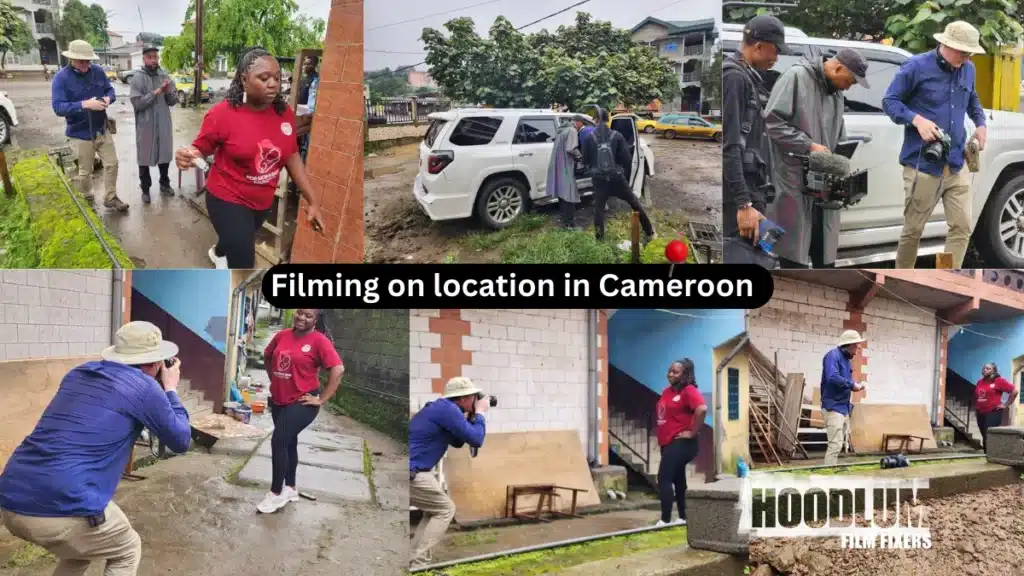
This article was written by Zandri Troskie-Naudé using verified information from relevant national authorities and regional production professionals, the filming environment reflects local regulatory oversight, location authority coordination, and established on-the-ground production capability. With experienced film fixers, comprehensive film production services, and dependable production support, productions operate within a framework built for structured, efficient execution.
Film Authorities and Industry Resources
Kazakhstan does not operate like a one-form, one-office market for every type of production. Entry, customs, drones, and location access sit across different authorities, so producers benefit from treating official sources as part of the prep workflow rather than something checked the week before the shoot.
- Kazakhstan Ministry of Foreign Affairs for visa regime checks and entry rules by nationality.
- Prime Minister of Kazakhstan official portal for recent migration and foreign national monitoring updates, including arrival notification context.
- Aviation Administration of Kazakhstan / Civil Aviation authorities for drone-related requirements and registration pathways, as reflected in Hoodlum’s operational guidance.
- State Revenue Committee / customs authorities for temporary import procedures and customs handling.
- Hoodlum Kazakhstan location page as a practical production summary of permits, logistics, drones, customs, and local support.
For international producers, the best use of these resources is not to replace local production management, but to support it. Official guidance gives the rulebook; local producers make sure the pages are being turned in the right order.