

















Film Production Services in Alaska
Alaska is one of the world’s most spectacular and untamed filming destinations, a vast frontier of glaciers, towering mountains, fjords, tundra, temperate rainforest, wildlife and Indigenous cultures on a scale found nowhere else. From the peaks of Denali, North America’s highest, and the glaciers of Kenai Fjords to the Inside Passage, the Arctic tundra, the Northern Lights and communities from Anchorage to remote bush villages, Alaska offers landscapes of staggering, genuinely wild beauty, backed by US infrastructure, experienced local crews accustomed to extreme conditions and unmatched natural spectacle. It is a place for productions that want nature at its most raw and magnificent.
For international crews, Alaska offers a rare combination of pristine wilderness, extraordinary wildlife, dramatic light and US-jurisdiction reliability, balanced against a permitting, logistics and safety reality shaped by remoteness, climate and terrain that rewards serious planning with an experienced local partner. It is one of the few places where a production can film glaciers, mountains, wildlife, tundra and the aurora within one country, provided the visas, permits, customs, logistics and wilderness safety are handled with genuine expertise.
Hoodlum provides Film Production Services in Alaska for documentaries, factual and natural-history television, commercials, branded content, travel and adventure programming, music videos, feature films and expedition shoots. Our team supports visa and entry guidance, Alaska Film Office and land-manager permits, location agreements, drone coordination, customs and equipment clearance, local crew and guide sourcing, transport, remote logistics, accommodation, wilderness safety planning and full on-ground production management. You can see the full scope of what we do and the people behind it on our who we are page.
The state rewards productions that arrive with their paperwork in order and their logistics carefully planned. It is welcoming and film-friendly with US infrastructure, but it is not a destination for casual or under-prepared shooting, and permits, customs, drones, remote logistics and wilderness safety all require serious coordination. The right entry route, the right permits, the right customs plan and thorough remote and safety logistics all need to be settled before the cameras roll, and the most efficient way to handle that is through an experienced local production partner.
Why Alaska Works for Wilderness, Wildlife and Scale
The state’s biggest production strength is access to genuinely untamed, large-scale wilderness and wildlife unmatched anywhere, within a US jurisdiction. In a well-planned schedule a production can capture glaciers, the highest peaks in North America, fjords, tundra, rainforest, extraordinary wildlife and the Northern Lights, supported by experienced local crews, guides and US infrastructure. For natural-history, documentary, adventure and expedition work in particular, that access to raw wilderness and dramatic light is genuinely rare and valuable.
Anchorage is the main hub, but the value sits in the wild. A natural-history production might follow the bears, whales or caribou. A documentary might explore the glaciers, the Arctic or Indigenous communities. An adventure piece might reach Denali, the Inside Passage or the tundra. The state is strong because it offers pristine, large-scale wilderness, incomparable wildlife and dramatic light, for productions prepared to plan thorough logistics with local expertise.
The state is especially well suited to:
- Natural-history and wildlife programming
- Documentary and factual television
- Adventure and expedition content
- Travel and landscape programming
- Commercials needing epic scenery
- Environmental and climate storytelling
- Feature films and scripted wilderness projects
- Aurora and night-sky productions
Hoodlum’s production support team turns the creative brief into a practical, locally-led plan that accounts for permits, remote logistics, safety and realistic timing.
Anchorage and the Accessible South
Anchorage, the state’s largest city, is the natural base and entry point for most productions, offering airport access, crews, equipment, accommodation and services, along with a mix of urban and immediately accessible wilderness, mountains and coastline. It is where most shoots establish before moving out.
The surrounding south-central region offers extraordinary and relatively accessible variety: the Kenai Peninsula, the glaciers and fjords of Kenai Fjords and Prince William Sound, the Chugach Mountains and the Matanuska-Susitna valleys. These locations suit natural-history, travel, commercial and documentary work. Filming here involves the relevant land-manager permissions, coordinated by the local producer, with logistics far simpler than the remote interior. Hoodlum uses Anchorage as the practical hub for Film Production Services in Alaska, establishing crews, permits, customs and logistics before a shoot moves into the wilder regions.
Denali, the Interior and the Arctic
The heart of the state’s wilderness appeal lies inland and north: Denali National Park, home to North America’s highest peak and abundant wildlife, the vast interior, and the Arctic regions of the Brooks Range and the North Slope, offering tundra, caribou migrations, the midnight sun and, in winter, the aurora. This is wilderness at its most epic and remote.
These locations are unmatched for natural-history, wildlife, expedition and documentary work, and any project needing epic wilderness or the Arctic. Interior and Arctic filming calls for serious planning around access, often by small aircraft, remote logistics, national-park and land-manager permits, guides, extreme weather, medical planning and communications. Hoodlum builds the permits, air transport, guides, remote logistics and safety planning into the schedule before a shoot moves into Denali, the interior or the Arctic.
The Inside Passage, Coast and Islands
Southeast Alaska’s Inside Passage offers a different but equally spectacular character: temperate rainforest, fjords, glaciers calving into the sea, whales and bears, and communities like Juneau, the capital, Sitka and Ketchikan, reachable largely by boat and air. The wider coast and islands add maritime and rainforest dimensions.
These locations suit natural-history, wildlife, marine, travel and documentary work, and any project needing rainforest, fjords or marine wildlife. Coastal and island filming calls for marine logistics, boat and floatplane transport, weather planning and land-manager permissions, often within national forest. Hoodlum handles the marine logistics, transport, permissions and guides so these spectacular coastal environments become workable filming days.
Entry, Visas and Crew Documentation
As part of the United States, the state follows US federal immigration and visa policy, so the entry route is the same as for anywhere in the country, and this is a key planning point for international crews. Paid professional filming generally requires the correct US entry route rather than tourist or visa-waiver entry.
Crew who need a visa must obtain the appropriate US visa for their nationality and the nature of the work, with foreign crew often requiring a work-related route, and productions should confirm each crew member’s requirement early, allowing sufficient lead time as US visa processing can take weeks to months. A valid passport, supporting production documentation and an invitation letter are typically needed. Because the rules follow US federal policy, confirming the correct route early is essential.
Because the entry route follows US federal rules and links to the permit and customs process, working with a local partner who manages it is valuable. Hoodlum helps productions match each crew member to the correct US entry route, assemble the documentation, and align everything with the shoot schedule.
Film Permits and Location Permissions
Film permits are coordinated through the Alaska Film Office alongside the relevant land managers, since so much of the state is public land, meaning permissions often involve state agencies such as the Department of Natural Resources and Transportation, the National Park Service, wildlife refuges, the US Forest Service, Native corporations and municipalities. Processing commonly takes from around two to six weeks, and more for remote or protected areas.
Applications typically require a completed permit form, filming schedule and location plans, proof of liability insurance, crew and cast lists and a project description, with protected areas, parks and refuges carrying their own rules, lead times and conservation requirements. Because filming so often involves federal and state lands and Native corporation lands, each with its own process, a local producer who knows the land managers is essential to keep the process smooth and the timing realistic.
Private and Native corporation locations are arranged by the local producer, who scouts, secures permissions and coordinates logistics with landowners and stakeholders. A Hoodlum location scout can propose suitable options, after which we handle access, terms and permissions. Private and land-manager permission must all be aligned, and fees are quoted once the locations and access are confirmed.
Drone Filming and Aviation Rules
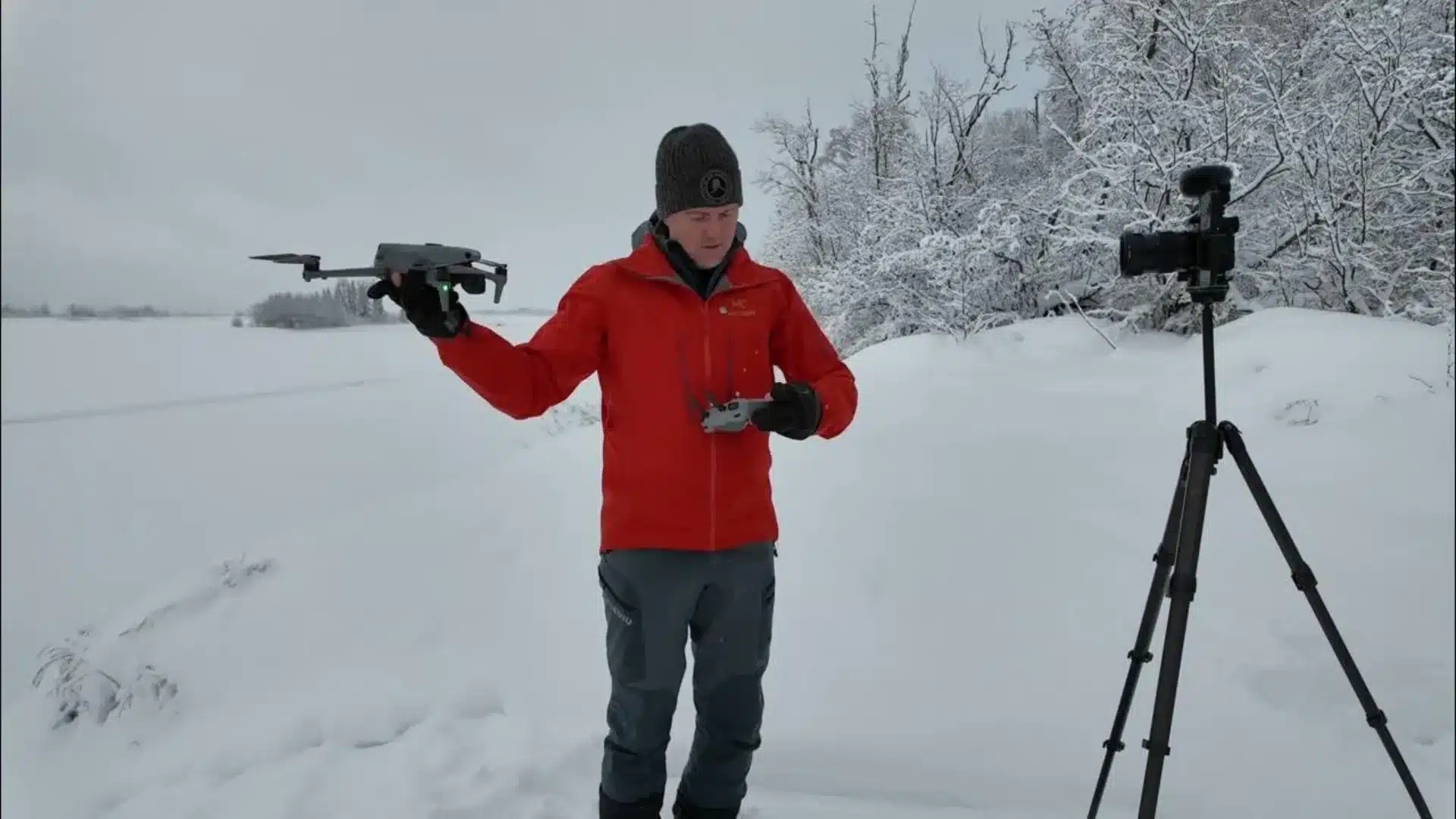
Drone filming in the state follows US federal rules under the Federal Aviation Administration, so commercial operations require an FAA Part 107 certified remote pilot, FAA drone registration and, where relevant, airspace authorisation, alongside landowner and land-manager permission, which is especially important given the amount of protected land. This is a structured framework that must be planned around in advance.
Commercial operators must hold the FAA Part 107 certificate, register the drone, carry liability insurance and maintain visual line of sight, with authorisation needed for restricted airspace and specific permission required for national parks, wildlife refuges and other protected or private lands, where drone use is often tightly restricted or prohibited to protect wildlife. Using a locally arranged, FAA-certified operator who understands the land rules is the standard route. Hoodlum arranges the FAA-certified drone operator and the required authorisations and land permissions, and builds the requirements and lead time into the plan.
Equipment Customs Clearance and the ATA Carnet
As part of the United States, the state is covered by the US ATA Carnet system, and the carnet is the recommended method for international productions bringing equipment in. An ATA Carnet acts as a single international customs document allowing professional filming gear to be temporarily imported duty-free and tax-free, valid for up to a year, and it serves as the official registration of the goods with customs on re-entry.
Equipment entering the US is processed by US Customs and Border Protection and is subject to inspection, so a complete, accurate inventory with serial numbers and values is essential and must match the carnet exactly, with a commercial invoice, packing list and a filming permit or letter of introduction as needed. Productions from non-carnet countries instead use a temporary importation arrangement prepared by a licensed US customs broker. The equipment is brought in temporarily and must be re-exported within the validity period to avoid duties, and remote onward logistics within the state should be planned in.
Hoodlum helps productions prepare the carnet or temporary-import documentation and equipment list, coordinate a customs broker and CBP clearance, and time everything so cameras, lighting, grip and sound gear move through and onward with minimal delay.
Costs, Incentives and Production Support
Alaska does not currently offer a film tax credit or rebate, as the state’s previous incentive programme was repealed and is no longer available, so productions should not plan around a financial incentive, though this is an area some hope to see revived. It is important to plan against the current reality rather than outdated references to the old programme.
In the meantime, the state’s genuine draw is its unrepeatable wilderness, wildlife and light rather than a rebate, and productions plan around that value and the real cost drivers of a remote shoot. Because the incentive no longer exists, budgets focus on logistics, transport, guides, permits, remote support and safety, and productions typically bring key crew and specialist equipment while relying heavily on experienced local producers, guides and pilots. Hoodlum helps productions build a realistic budget around the genuine advantages and cost realities of an Alaska shoot, and keeps them informed of any future incentive developments.
Safety, Wilderness and Practical Logistics
The state demands serious, wilderness-grade safety planning, which is the defining operational consideration, combining standard professional practice with protocols for the specific hazards of the environment. The remoteness, terrain, wildlife and climate mean safety and logistics are inseparable, and both must be built around expert local knowledge.
Safety planning should include bear and wildlife protocols, cold-weather and extreme-condition management, water and marine safety, aircraft coordination, thorough medical and emergency-response planning given the distances to help, satellite communications, and experienced local guides and safety experts familiar with the terrain. The distances, limited infrastructure in remote areas and the time required to reach assistance make contingency planning essential, and wildlife such as bears is a genuine, ever-present consideration that must be managed professionally.
The climate and the extreme seasonal light are the defining variables: long summer days with near-endless light, short winter days with the aurora, and conditions ranging from temperate rainforest to Arctic cold, all of which shape scheduling, equipment and safety. Hoodlum helps productions build a rigorous wilderness safety, medical, communications and logistics framework, draw on trusted local guides and pilots, and plan efficient schedules around the light, the seasons and the terrain.
When Alaska Is the Right Production Choice
Alaska is the right choice when a production specifically needs genuinely untamed wilderness, glaciers, the highest peaks in North America, extraordinary wildlife, the Arctic and the aurora, with US-jurisdiction reliability, and is prepared to commit to serious logistics, expert local partners and wilderness safety. It is especially strong for natural-history, documentary, adventure and expedition work, and any project that values raw, large-scale nature over infrastructure or incentives.
It may be less suitable for productions that need a cash rebate, a large studio base, easy access without remote logistics, or that cannot accommodate the climate, remoteness and wildlife realities. The state is workable when the US entry route, film office and land-manager permits, drone arrangements, customs, remote logistics and wilderness safety are all settled early with expert local support.
Common Production Mistakes to Avoid
The most frequent mistakes include:
- Assuming a film incentive exists, when the previous programme was repealed
- Relying on outdated references to the old tax-credit rates
- Treating entry as non-US, when US federal visa rules apply
- Underestimating remote logistics, distances and small-aircraft dependence
- Overlooking the many land managers whose permits filming requires
- Neglecting bear, wildlife and cold-weather safety planning
- Assuming drones can fly freely, when parks and refuges heavily restrict them
- Underestimating weather, light and seasonal constraints on scheduling
Most of these problems are avoidable by aligning the US entry route, film office and land-manager permits, customs, remote logistics and wilderness safety well before the crew travels, through a trusted local producer.
How Hoodlum Supports Productions in Alaska
Hoodlum provides Film Production Services in Alaska for international crews that need experienced local coordination from early planning through to wrap. Our support covers US entry and documentation guidance, Alaska Film Office and land-manager permits, national-park, refuge and forest approvals, private and Native corporation location agreements, FAA-certified drone operator coordination, carnet and customs clearance, local crew, guide and pilot sourcing, air and marine transport, remote logistics, wilderness safety and medical planning, accommodation and on-ground production management.
From Anchorage and the Kenai Peninsula to Denali, the Arctic tundra, the glaciers of Kenai Fjords and the rainforest of the Inside Passage, we help productions access the most extraordinary filming environments here with the right permits, producers, customs planning, safety and logistics in place. Planning a shoot? Contact us to talk through permits, US entry support, local producers and guides, location scouting, customs coordination, drone planning, wilderness safety and remote logistics and full on-ground production management.
Frequently Asked Questions
Do international crews need a visa to film in Alaska?
As part of the United States, Alaska follows US federal immigration policy, so the entry route is the same as anywhere in the country. Paid professional filming generally requires the correct US visa rather than tourist or visa-waiver entry, and processing can take weeks to months, so confirm each crew member’s requirement and start early.
Who issues filming permits?
Permits are coordinated through the Alaska Film Office alongside the relevant land managers, since much of the state is public land, potentially involving the Department of Natural Resources, National Park Service, wildlife refuges, the Forest Service, Native corporations and municipalities. Processing commonly takes two to six weeks, and more for remote or protected areas.
Who regulates drones?
Drones follow US federal rules under the FAA, requiring a Part 107 certified remote pilot, registration, insurance and airspace authorisation, plus landowner and land-manager permission. National parks, wildlife refuges and protected lands often heavily restrict or prohibit drones to protect wildlife, so an FAA-certified local operator who knows the land rules is the standard route.
Is the US an ATA Carnet country?
Yes. Alaska is covered by the US ATA Carnet system, recommended for temporary equipment import, processed by US Customs and Border Protection with a complete inventory of serial numbers and values that must match exactly. Non-carnet countries use a temporary importation prepared by a licensed US customs broker, and remote onward logistics should be planned in.
Does Alaska offer a film rebate?
No. Alaska does not currently offer a film tax credit or rebate, as its previous incentive programme was repealed and is no longer available. Productions should plan against this current reality rather than outdated references to the old rates. The state’s draw is its unrepeatable wilderness, wildlife and light rather than a financial incentive.
What are the best filming locations?
Standout options include Denali and North America’s highest peak, the glaciers and fjords of Kenai Fjords and Prince William Sound, the Kenai Peninsula, the Arctic tundra and Brooks Range, the Inside Passage and its rainforest and marine wildlife, and the aurora across the interior.
Useful Authority Links
- Alaska Film Office – Department of Revenue
- Alaska Department of Natural Resources
- National Park Service – Alaska (Filming)
- FAA – Drones (Part 107)
- US Customs and Border Protection
- Travel Alaska – Tourism
Ready to bring your production to Alaska? Hoodlum handles the permits, US entry guidance, location scouting, customs and carnet coordination, FAA-certified drone operators, local producers, guides and pilots, wilderness safety and remote logistics and full on-ground production management, so you can focus on the work in front of the lens. Get in touch with our team to start planning, and tell us your locations, dates and creative brief.
For more information, view our Hoodlum Film Fixers Alaska Google Business Profile.