



















Film Production Services in Brazil
Brazil is one of the world’s most vibrant and visually abundant filming destinations, combining the iconic beaches and mountains of Rio de Janeiro, the vast metropolis of São Paulo, the Amazon rainforest, the wetlands of the Pantanal, colonial towns, dramatic coastline and the surreal dunes of Lençóis Maranhenses into a single, continent-sized country. From Copacabana, Christ the Redeemer and the favelas of Rio to the high-rise energy of São Paulo, the colonial streets of Salvador and Paraty and the wildlife of the Amazon, the country offers an unmatched range of locations, culture and colour, backed by a large, experienced production industry.
For international crews, Brazil offers a rare blend of world-famous locations, a deep professional crew base, major production infrastructure and, in its leading cities, genuine cash-rebate incentives. It is one of the few places where a production can shoot a globally recognisable beachfront, a massive modern city, tropical rainforest and colonial heritage within a single ambitious schedule, supported by experienced local producers who navigate the country’s detailed permit and customs framework.
Hoodlum provides Film Production Services in Brazil for commercials, documentaries, factual entertainment, branded content, music videos, fashion and lifestyle campaigns, feature films and television productions. Our team supports visa guidance, ANCINE permits and accreditation, location agreements, drone coordination, customs and temporary-import clearance, local crew sourcing, transport, accommodation, security planning, incentive support and full on-ground production management. You can see the full scope of what we do and the people behind it on our who we are page.
Brazil rewards productions that arrive with their paperwork in order. It is a film-friendly country with a huge industry, but it is not a destination for informal shooting by foreign crews, and its ANCINE permitting, customs and security planning need genuine care. The right entry route, the right permits, the right customs plan and the right local coordination all need to be settled before the cameras roll, and the most efficient way to handle that is through an experienced local production partner.
Why Brazil Works for Icons, Scale and Incentives
Brazil’s biggest production strength is the combination of world-famous, instantly recognisable locations, a deep and capable crew base and, in Rio and São Paulo, real cash incentives. In a single schedule a production can capture an iconic beach, a global megacity, tropical rainforest and colonial heritage, supported by one of the largest audiovisual industries in Latin America. São Paulo alone hosts more than a thousand productions a year and represents a quarter of the country’s film market.
Rio and São Paulo are the operational hubs, but the value sits in the range and the rebates. A commercial might pair Rio’s beaches with São Paulo’s skyline. A drama might use colonial Salvador or Paraty. A documentary might explore the Amazon, the Pantanal or Brazilian culture and music. Brazil is strong because it delivers globally recognised imagery, a major industry and cash-rebate incentives in its leading cities, with extraordinary natural and cultural variety.
The country is especially well suited to:
- Commercials and branded content
- Fashion, beauty and lifestyle campaigns
- Music videos
- Feature films and television drama
- Documentary and factual entertainment
- Travel and natural-history programming
- Sports and culture content
- Productions seeking iconic tropical and urban imagery
- Projects pursuing a city cash rebate
Hoodlum’s production support team helps crews decide which regions are practical, what permissions each location needs and how to sequence movement across the country’s vast distances.
Rio de Janeiro and the Iconic Coast
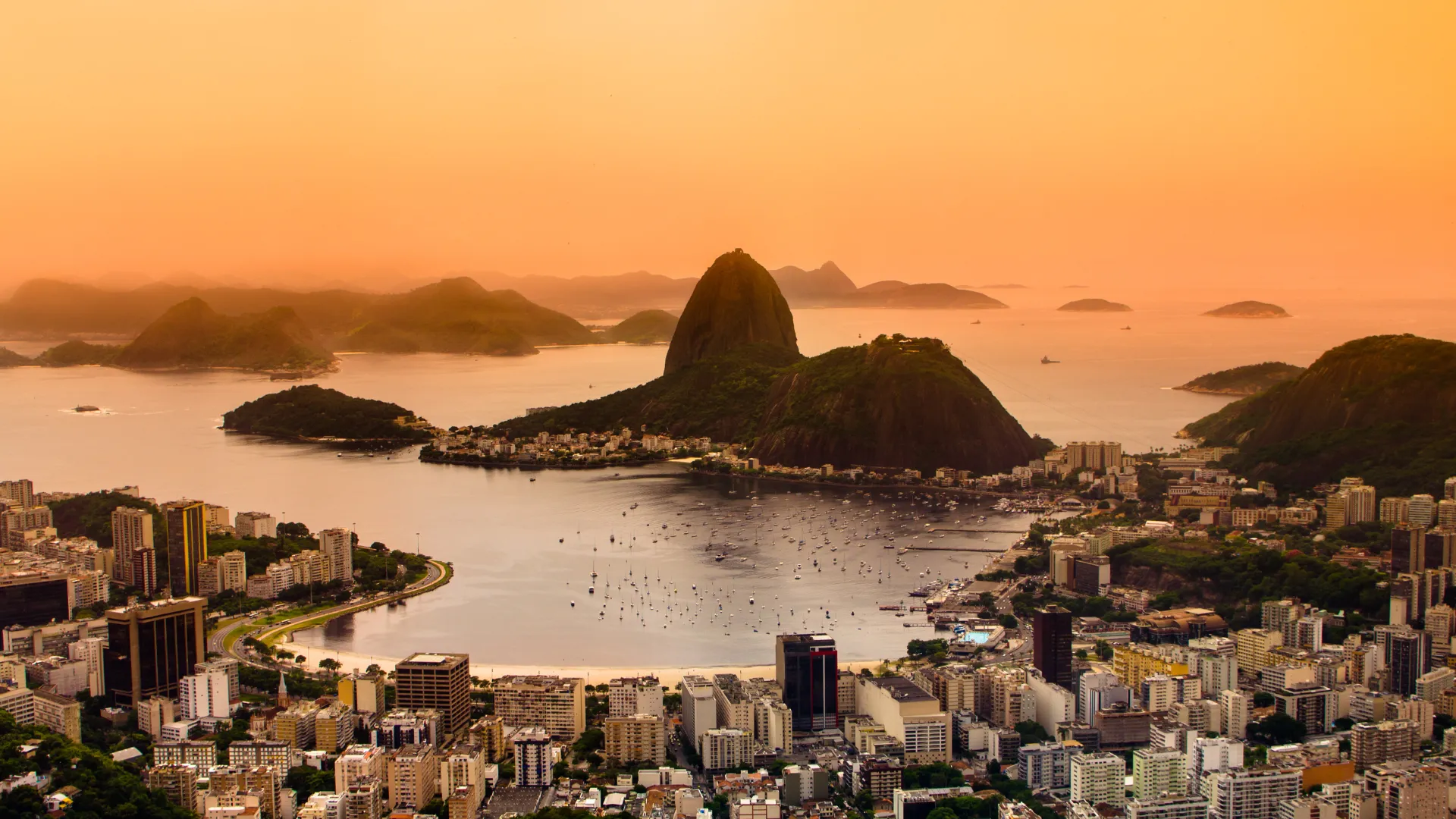
Rio de Janeiro is one of the most recognisable cities on earth and a defining production location, offering Copacabana and Ipanema beaches, Christ the Redeemer, Sugarloaf Mountain, lush forest-clad hills, colonial centres, favelas and a vivid culture of samba and carnival. It is the natural anchor for many international productions working in Brazil.
The city is a versatile resource, combining beaches, mountains, rainforest and dense urban texture in a single location, with crews, suppliers and a city film commission well used to international work. Public filming that affects traffic or pedestrians needs city-hall approval, beaches may require environmental-agency authorisation, and filming in favelas demands local guides, permission and careful coordination. Hoodlum uses Rio as a practical base for Film Production Services in Brazil, particularly when a shoot needs iconic beach, mountain and city imagery together.
São Paulo and the Urban Powerhouse
São Paulo is the country’s financial, cultural and creative capital, and the centre of its audiovisual industry, offering an endless modern megacity of skylines, business districts, street art, diverse neighbourhoods, design interiors and a vast pool of crew, talent and suppliers. It is the most production-ready base in the country.
The city suits commercials, fashion, branded content, drama and any project needing a contemporary metropolis or strong infrastructure, and it can double for many global cities. As the home of the country’s most established city film agency and cash-rebate scheme, it is also where many incentive-driven productions base themselves. Hoodlum uses São Paulo as a primary hub, drawing on its deep crew base, studios and suppliers to support shoots across the city and beyond.
The Amazon, the Pantanal and Natural Brazil
Beyond the cities, the country holds some of the most important natural environments on earth. The Amazon rainforest offers unparalleled biodiversity, rivers, indigenous culture and genuinely wild, expedition-grade locations, while the Pantanal wetlands are among the best places in the world for wildlife, and the dunes of Lençóis Maranhenses, the beaches of the northeast and the waterfalls of Iguaçu add further spectacle.
These environments suit natural-history, conservation, adventure and travel content. Filming in the Amazon and protected areas requires environmental permissions, local guides, careful logistics and emergency planning, with significant lead time and remote-location demands, and work involving indigenous communities calls for respectful coordination and consent. Hoodlum builds the permits, guides, remote logistics and medical and emergency planning into the schedule before a shoot moves into the rainforest or the wetlands.
Salvador, the Northeast and Colonial Heritage
The northeast offers a different Brazil: the Afro-Brazilian culture and colonial architecture of Salvador, the historic streets of Olinda and Paraty, palm-fringed beaches, dunes and a distinctive musical and culinary heritage. These locations are rich for culture, history, travel and music-led work.
The region suits documentary, travel, music and commercial work needing colonial texture, vibrant culture or classic tropical coastline. Filming at heritage sites and on beaches may require municipal, environmental and cultural permissions, and the northeast’s distinct rhythm and distances should be built into the plan. Hoodlum handles the permissions and local coordination so these culturally rich backdrops become workable filming days.
Entry, Visas and Crew Accreditation
Brazil’s entry requirements vary by nationality and have changed recently, with visas reintroduced for some nationalities such as the United States, Canada and Australia, so the correct route must be confirmed early. Many European, South American and other passport holders enjoy visa-free entry for tourism and business.
For filming, the process runs through ANCINE, the national film agency. The Brazilian partner company submits the project to ANCINE with passports, a shooting schedule, a production description, locations, a budget, an equipment list and a contract establishing the partnership, and ANCINE then requests the appropriate business visa for the crew from the embassy, with its own processing typically around ten days. Crew accreditation is included within the ANCINE permit, and foreign producers must hold a contract with a Brazilian producer to proceed. Visa processing at consulates typically takes one to two weeks.
Because the ANCINE and visa framework is detailed and partnership-dependent, working with a Brazilian production partner is essential. Hoodlum helps productions match each crew member to the correct entry route, coordinate the ANCINE submission and accreditation, and avoid immigration becoming a late-stage problem.
Film Permits and Location Permissions
ANCINE registration serves as the central film permit for foreign productions, and it is the most important process to plan around, typically taking from one to four weeks and built on the same partnership contract, crew, schedule and equipment documentation as the accreditation. Filming permits start from several hundred dollars depending on the project.
Beyond the ANCINE permit, location permissions are layered and local. Public filming that impacts traffic or pedestrians needs city-hall approval and sometimes a fee, many public parks are managed by private operators that require their own approval, and filming in subway, train and bus terminals must be approved by the transit companies. Beaches often require authorisation from the local environmental agency, and arrangements vary by city and by whether a location is a common area, a park or privately owned.
Private locations are handled through a local fixer, who negotiates access and terms with owners. A Hoodlum location scout can propose suitable options, after which we negotiate access, dates, crew size, fees and conditions, and secure a location agreement. Private permission does not replace the ANCINE permit or any city, transit, environmental or park approvals a location also requires, and fees are quoted once the locations are confirmed.
Drone Filming and Aviation Rules
Drone operation is regulated through a combination of authorities: DECEA for airspace and flight approval, ANAC for civil aviation and ANATEL for radio-frequency compliance. Pilots must be registered in the SARPAS system, drones must be homologated for use in the country, and a foreign pilot can be legalised to operate through a registration process with DECEA, though pilots generally need to be Brazilian citizens or residents.
Bringing a drone into the country requires authorisation from ANAC and ANATEL in advance, including an ANATEL seal confirming the drone meets Brazilian radio standards, which takes time to obtain, along with SISANT registration for drones over 250 grams and the relevant import documentation. Given this complexity, many productions use a locally registered drone and operator, which is usually the most practical route. Hoodlum arranges local drone operators or coordinates the homologation, registration and authorisations, and builds the required lead time into the plan.
Equipment Customs Clearance and Temporary Import
Brazil no longer accepts the ATA Carnet, which is a critical planning point, so equipment is brought in through a Brazilian temporary-import procedure rather than a carnet. The cleanest route is for equipment to arrive as accompanied luggage with the crew, declared through the electronic travellers’ goods declaration, with a detailed list of every item’s model, brand, type, serial number and value.
Clearance is handled by the federal revenue authority, Receita Federal, and where gear arrives separately as cargo, a specialist customs company is required and processing can take a few days. The equipment is brought in temporarily and must be re-exported, so an accurate inventory is essential, and costs vary with the volume and value of gear. Aligning the customs plan with the ANCINE and visa timeline keeps everything moving.
Hoodlum prepares the temporary-import documentation and equipment list, coordinates the travellers’ declaration or a specialist broker for cargo, and times the process so cameras, lighting, grip and sound gear move through with minimal delay.
Costs, Incentives and Production Support
Brazil does not currently offer a federal cash-rebate scheme for international productions, but its two leading cities run genuine, well-established city-level cash rebates, which is an important and often misunderstood point. São Paulo, through its film agency Spcine, offers a cash rebate of around 20% to 30% on eligible city spend, while Rio de Janeiro, through RioFilme, offers 30%, rising to 35% where Rio is the main location.
Both schemes require a registered local production partner, ANCINE authorisation, a minimum eligible spend of around BRL 2 million, and compliance with specific cultural, location and distribution conditions, with per-project caps. The Rio rebate, for example, can require multiple emblematic city locations and an international release across several non-Portuguese-speaking countries. Foreign producers can also access federal funding chiefly through official co-productions with Brazilian companies, which carry their own ownership and participation rules. The schemes are valuable but genuinely complex, with varying deadlines and conditions, so productions should confirm current rules and structure applications early. Hoodlum can help connect productions with the right local partners to assess eligibility and capture an incentive where it applies.
Safety, Security and Practical Logistics
Brazil requires considered security planning, and this varies significantly by location. While many filming environments are welcoming and straightforward, the country does have areas of higher crime, particularly in parts of the major cities and at night, so professional advice and planning are strongly recommended.
For many shoots, hiring local fixers and guides, secure transport, secure equipment storage and, in higher-risk settings, security escorts is standard practice, alongside equipment insurance and GPS tracking for high-value gear. Location-specific planning matters: filming in Rio’s favelas requires local guides and permission, busy urban and beach areas call for awareness of theft, and the Amazon and remote regions need emergency medical and evacuation planning. Thorough location scouting and clear unit management are the practical foundations of a smooth shoot.
The country’s vast scale, varied climate and health considerations are further logistical factors, with huge distances, tropical weather and vaccination planning all part of the picture. Hoodlum helps productions balance robust security with efficient movement, draws on trusted local security and logistics contacts, and builds distance, weather, health and contingency thinking into the schedule from the start.
When Brazil Is the Right Production Choice
Brazil is the right choice when a production needs iconic beaches and cities, the Amazon and Pantanal, colonial heritage and vibrant culture, combined with a major production industry, a deep crew base and genuine city cash rebates in Rio and São Paulo. It is especially strong for commercials, fashion and lifestyle, music videos, features and drama, documentary, natural history and any project that wants world-famous tropical and urban imagery in one ambitious schedule.
It may be less suitable for productions that need carnet-based equipment entry, a simple single-permit framework, minimal security planning, or a straightforward federal incentive. It is highly workable when the entry route, ANCINE permit and accreditation, customs plan, drone arrangements, security plan and location agreements are settled early.
Common Production Mistakes to Avoid
The most frequent mistakes include:
- Underestimating ANCINE permitting and the need for a Brazilian partner
- Assuming an ATA Carnet works, when temporary import is the route
- Believing Brazil has no incentives, when Rio and São Paulo offer city rebates
- Underestimating the conditions and caps attached to those rebates
- Leaving drone homologation, registration and authorisations too late
- Treating favela, beach and transit filming as ordinary locations
- Underestimating security planning and regional risk differences
- Underestimating the country’s vast distances and travel times
Most of these problems are avoidable by aligning the crew list, visas, ANCINE permit, temporary import, drone plan, security plan, incentive applications and location agreements well before the crew travels.
How Hoodlum Supports Productions in Brazil
Hoodlum provides Film Production Services in Brazil for international crews that need experienced local coordination from early planning through to wrap. Our support covers visa and ANCINE accreditation guidance, film permits, city, transit and environmental approvals, private location agreements, drone planning, temporary-import and customs coordination, local crew sourcing, transport, security planning, accommodation, incentive support and on-ground production management.
From Rio de Janeiro and São Paulo to Salvador, Paraty, the Amazon, the Pantanal, the dunes of Lençóis Maranhenses and the falls of Iguaçu, we help productions access the strongest filming environments in Brazil with the right permits, fixers, customs planning and logistics in place. Planning a shoot? Contact us to talk through ANCINE permits, visa support, local fixers, location scouting, temporary-import coordination, drone planning, incentive support and full on-ground production management.
Frequently Asked Questions
Do international crews need a visa to film in Brazil?
It depends on nationality, and rules changed recently, with visas reintroduced for some nationalities such as the US, Canada and Australia, while many European and South American passport holders are visa-free. For filming, the Brazilian partner submits the project to ANCINE, which requests the appropriate business visa from the embassy. Consular processing is typically one to two weeks.
Who issues filming permits?
ANCINE, the national film agency, provides the central authorisation, with a Brazilian production partner required to submit the project. ANCINE registration typically takes one to four weeks. Beyond it, city hall, transit companies and environmental agencies approve specific public locations.
Who regulates drones?
Drones are regulated through DECEA (airspace), ANAC (aviation) and ANATEL (radio frequency). Pilots register in SARPAS, drones must be homologated, and importing a drone needs ANAC and ANATEL authorisation including an ANATEL seal. Using a locally registered drone and operator is usually the most practical route.
Is Brazil an ATA Carnet country?
No. Brazil no longer accepts the ATA Carnet. Equipment is brought in through a Brazilian temporary-import procedure, ideally as accompanied luggage with an electronic travellers’ goods declaration, cleared by the federal revenue authority, Receita Federal.
Does Brazil offer film incentives?
There is no federal cash rebate, but Rio de Janeiro (RioFilme) and São Paulo (Spcine) run city cash rebates of around 30% (up to 35% in Rio as the main location) and 20–30% in São Paulo. Both require a local partner, ANCINE authorisation, a minimum spend of around BRL 2 million and specific conditions and caps.
What are the best filming locations?
Popular options include Rio de Janeiro’s beaches and mountains, the megacity of São Paulo, the Afro-Brazilian culture of Salvador, the colonial town of Paraty, the Amazon rainforest, the wildlife of the Pantanal, the dunes of Lençóis Maranhenses and the falls of Iguaçu.
Useful Authority Links
- ANCINE – National Film Agency
- Spcine – São Paulo Film Agency
- RioFilme / Rio Film Commission
- DECEA – Airspace Control (Drones)
- Receita Federal – Customs
- Brazil e-Visa Application
Ready to bring your production to Brazil? Hoodlum handles the ANCINE permits, visa guidance, location scouting, temporary-import and customs coordination, drone planning, local crew, security planning, incentive support and full on-ground production management, so you can focus on the work in front of the lens. Get in touch with our team to start planning, and tell us your locations, dates and creative brief.
For more information, view our Hoodlum Film Fixers Brazil Google Business Profile.