


















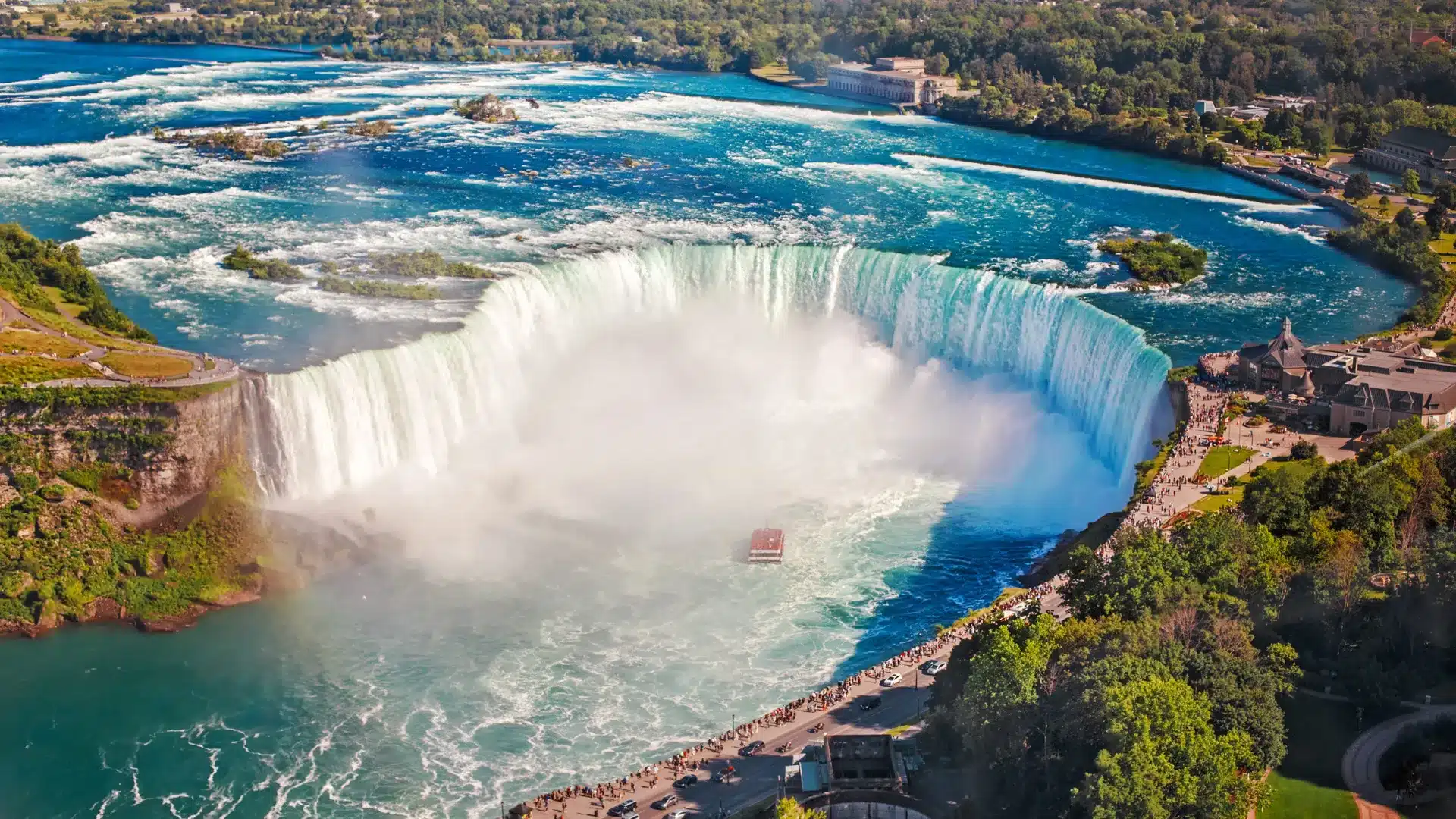
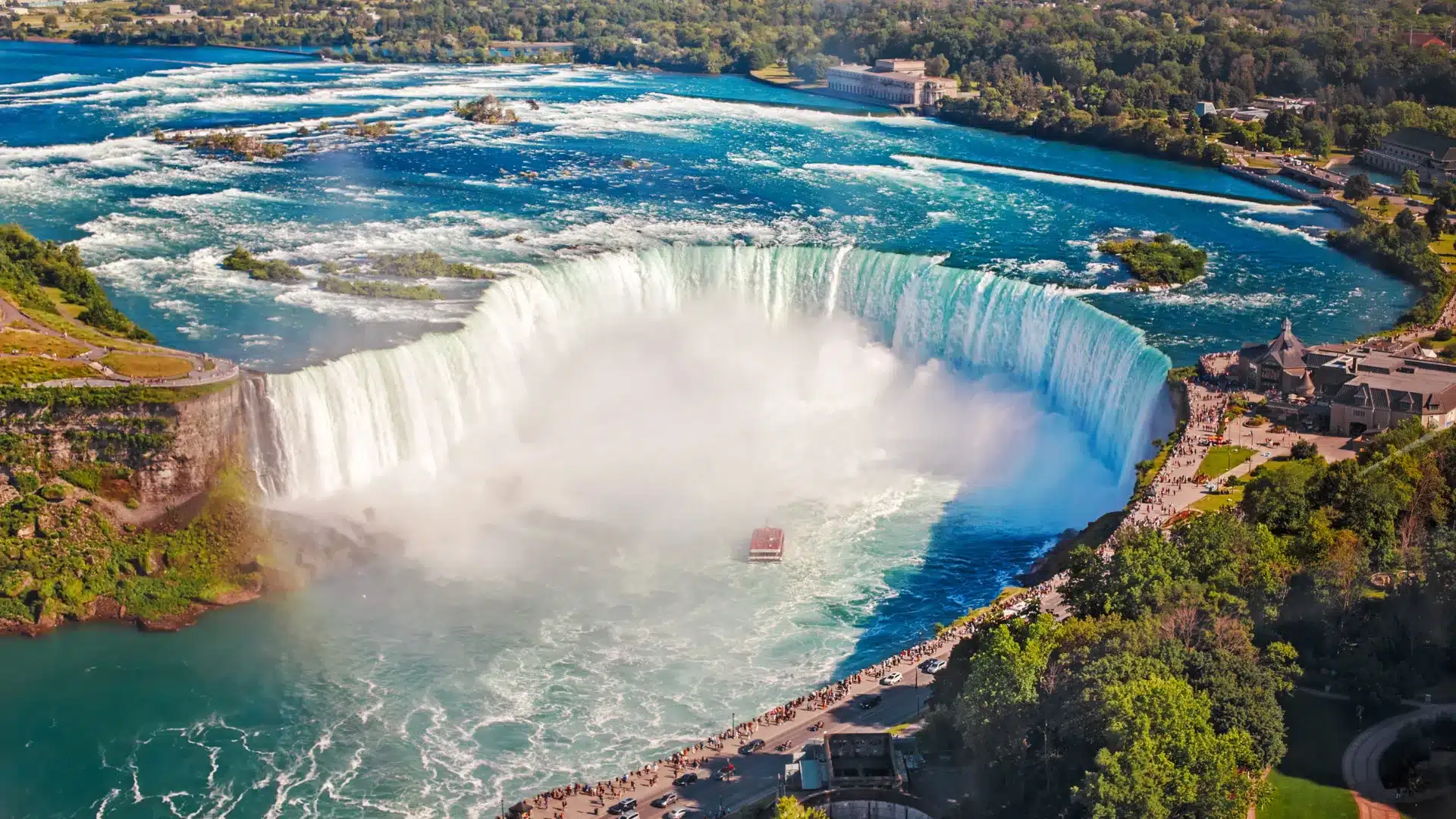

Canada is one of the world’s most established production destinations, a country where stacked federal and provincial tax credits, deep crew bases and a landscape running from Pacific rainforest to Arctic tundra combine into a market that has served international productions continuously for four decades. From the studio corridors of Vancouver and Toronto to the heritage streets of Old Montreal, the Rocky Mountain corridor, the prairie horizons of Alberta and Manitoba and the Atlantic coastlines of Nova Scotia and Newfoundland, Canada offers cinematic range and mature infrastructure inside a stable, English- and French-speaking jurisdiction with a currency that consistently favours foreign budgets.
For international crews, Canada offers something few markets can match: an incentive framework that layers a federal credit on top of a provincial one, so the effective return depends on where you shoot rather than whether you qualify. A production can film in British Columbia and claim the federal Production Services Tax Credit alongside the BC Production Services Tax Credit; the same production in Ontario or Quebec accesses a differently structured provincial credit calculated on a different base. Understanding which province suits a given budget shape is the single most valuable planning decision a foreign production makes here.
Hoodlum provides Film Production Services in Canada for feature films, television series, commercials, documentaries, branded content, fashion, automotive, music videos and large-scale international productions. Our team supports municipal permit coordination, work permit and immigration planning, tax credit structuring through the relevant provincial administrator, location agreements, customs and ATA Carnet clearance, drone permissions under Transport Canada rules, local crew sourcing, transport, accommodation and full on-ground production management. You can see the full scope of what we do and the people behind it on our who we are page.
Canada rewards productions that plan the paperwork early. It is not a difficult market, but it is a layered one — there is no national film permit, no single incentive, and no federal drone permission that covers a foreign pilot. Permits come from cities and park agencies, credits come from provinces, work permits come from a specific immigration exemption category, and drone authority sits with Transport Canada under rules that treat foreign operators differently from Canadian ones. Each of those runs on its own timeline, and the most efficient way to handle them together is through an experienced local production partner.
Why Canada Works for Stacked Incentives and Scale
Canada’s core production strength is the combination of layered incentives, genuinely deep crew bases and a landscape range wide enough to double for most of the northern hemisphere. The federal Production Services Tax Credit applies nationally to foreign and service productions with no Canadian content requirement, and it stacks with a provincial credit in every major production centre. A production shooting in British Columbia works with a labour-based provincial credit; one shooting in Ontario or Quebec works with an all-spend base that includes service contracts and tangible property. These are structurally different calculations, and the right choice depends on where a given budget concentrates its spend.
Beyond the money, Canada offers what large productions actually need day to day: crews who work continuously rather than seasonally, purpose-built stage capacity in Vancouver, Toronto and Montreal, established equipment houses, and post and visual effects capacity strong enough that many productions finish here as well as shoot here. It doubles convincingly for the United States, northern and central Europe, Arctic and mountain environments, and for generic North American urban settings, while also standing on its own for distinctly Canadian stories.
Canada is especially well suited to:
- Feature films and television series
- Streaming and episodic production requiring long-term stage capacity
- Visual-effects-heavy and animated productions
- Commercials and branded content
- Automotive shoots requiring mountain, prairie or winter conditions
- Documentary and wildlife programming
- Productions seeking stacked, reliable, legislated incentives
Hoodlum’s production support team helps crews choose the province that fits the budget, not just the location that fits the script.
Vancouver and British Columbia
Vancouver is Canada’s largest production centre and one of the busiest in North America, with a dense concentration of purpose-built stages, equipment suppliers, visual effects houses and crews who work year-round. The city itself doubles routinely for Seattle, Portland, San Francisco and generic American urban settings, while the surrounding region delivers temperate rainforest, mountains, fjords, islands, beaches and farmland within a short drive of the base.
Beyond Vancouver, British Columbia offers the Sea-to-Sky corridor and Whistler, the Okanagan’s semi-arid valleys and vineyards, Vancouver Island’s coastlines and old-growth forest, and the interior’s mountain and lake country. The province’s Production Services Tax Credit is labour-based and carries additional uplifts for productions working outside the Vancouver metropolitan zone, which makes regional shooting financially as well as creatively attractive. Hoodlum uses Vancouver as a primary base and plans BC schedules with the regional and distant-location structure in mind from the outset.
Toronto and Ontario
Toronto is Canada’s largest city and its second major production hub, with substantial purpose-built stage capacity, a deep crew base and a downtown that doubles for New York, Chicago and Boston with unusual reliability. The city runs one of the most experienced municipal film offices in the country, and its permitting process is well understood by productions returning year after year.
Ontario’s range extends well past Toronto: Hamilton’s industrial and heritage architecture, Ottawa’s federal and institutional buildings, the Niagara region, cottage country and the Muskoka lakes, Northern Ontario’s boreal forest and mining towns, and Great Lakes shorelines that read as coastal. Ontario’s provincial credit is calculated on all qualifying production expenditure rather than labour alone, which materially changes how a budget should be structured compared with British Columbia. Hoodlum coordinates Toronto’s municipal permits, regional Ontario permissions and the Ontario Creates application process together.
Montreal and Quebec
Montreal offers something no other Canadian city does: European-reading architecture. Old Montreal’s stone streets and Vieux-Port double for France and northern Europe convincingly enough that productions travel specifically for it, and the city pairs that with modern downtown, industrial districts and one of the strongest visual effects and animation sectors in North America.
Quebec’s provincial credit is all-spend based with a substantial additional uplift for computer-aided special effects and animation, which is why so much VFX work concentrates in the province. Beyond Montreal, Quebec City offers walled-city heritage found nowhere else in North America, and the Laurentians, Charlevoix, Gaspésie and the North Shore deliver mountain, river and remote coastal environments. Note that Quebec operates in French and that provincial administration runs through SODEC — Hoodlum handles the language and administrative interface so it does not become a scheduling problem.
The Prairies, the Rockies and the North
Alberta gives productions the Rocky Mountain corridor around Banff, Jasper and Kananaskis, the badlands around Drumheller, foothills ranching country and the open prairie, with Calgary as the operational base. It is the country’s strongest environment for westerns, automotive, adventure and any project needing mountain scale with road access. Note that filming in Banff and Jasper means Parks Canada permits rather than municipal ones, on a different and longer timeline.
Manitoba and Saskatchewan offer prairie horizons, historic small towns and — in Winnipeg’s case — a city that doubles unusually well for mid-century and small-town America, supported by one of the more competitive provincial incentive positions in the country. The territories, Yukon, Northwest Territories and Nunavut, deliver genuine Arctic and subarctic environments, aurora, tundra and ice, with logistics that require serious advance planning and specialist support. Hoodlum builds northern and remote schedules with the transport, communications, medical and weather contingency planning that these environments actually demand.
Atlantic Canada
Nova Scotia, New Brunswick, Prince Edward Island and Newfoundland and Labrador give productions Atlantic coastline, fishing harbours, lighthouses, colonial and Victorian architecture, and — in Newfoundland’s case — dramatic cliff and iceberg coastline with a distinct cultural identity. Halifax is the regional production base and carries a working crew community.
These provinces suit period drama, maritime storytelling, documentary, tourism and lifestyle work, and productions needing north Atlantic environments without transatlantic travel. Weather and daylight are the primary scheduling constraints, and ferry-dependent locations need particular care. Hoodlum coordinates Atlantic Canadian permissions, crew and logistics across the region.
Entry, Visas and Work Permits
Entering Canada and working in Canada are two separate questions, and productions regularly get caught by treating them as one. Entry depends on nationality: United States citizens need neither an Electronic Travel Authorisation nor a visa; other visa-exempt nationals flying to Canada need an eTA, which costs CAD 7; visa-required nationals need a Temporary Resident Visa at CAD 100, and biometrics at CAD 85 per person or CAD 170 per family may apply.
Working is a separate matter. Most foreign crew actively working on a production in Canada require a work permit, which costs CAD 155 per person. The relevant route for film is the C14 exemption under the International Mobility Program, which exempts essential production-stage crew on live-action television and film projects from the Labour Market Impact Assessment requirement.
The exemption applies whether the production is foreign or Canadian and whether it films entirely or only partly in Canada. Where the work falls under a collective agreement, a letter of no objection from the relevant union or guild is required. Before the crew member applies, the employer must submit an Offer of Employment through the IRCC Employer Portal and pay a compliance fee of CAD 230.
Timing is the constraint that catches productions out. Standard processing for LMIA-exempt work permits runs four to eight weeks or longer, and there is no guaranteed rush service — IRCC processes in the order received. Visa-exempt nationals may apply at the port of entry, which is faster but carries the risk of a refusal at the border with no fallback. Visa-required nationals must apply through a visa office abroad and cannot use the port-of-entry route.
There is a narrower business visitor route. Producers on foreign-funded productions can often enter as business visitors without a work permit, presenting a letter from their employer confirming the project is foreign-financed. In March 2026 IRCC clarified that small groups renting studio space for commercial production may also qualify as business visitors, provided they are not entering the Canadian labour market. This route does not extend to working crew.
Hoodlum maps each crew member to the correct route, prepares the employer-side portal submission and union documentation, and builds the immigration timeline into the schedule rather than discovering it late.
Film Permits and Location Permissions
Canada has no national film permit. Permits are issued locally, and which authority applies depends entirely on where the camera stands.
Municipal film offices issue permits for filming on city streets and city-owned property. Toronto, Vancouver, Montreal and Calgary all operate dedicated film offices with published fee schedules and established processes. Parks Canada issues permits for national parks and national historic sites, including Banff and Jasper, on a longer timeline than any municipality. Provincial park agencies handle provincial parks. Road closures, traffic control and paid police duty are arranged separately through the relevant municipal or provincial authority.
Provincial film commissions — Creative BC, Ontario Creates, SODEC, Alberta Film — do not issue permits. They administer tax credits and provide location and industry support. This distinction matters because approaching them for a permit costs a production time it does not have.
Standard municipal location filming with no closures typically clears in a few business days. Filming requiring street closures, heavy traffic management, transit interruption or filming at heritage or institutional sites requires substantially more lead time, commonly ten to thirty days. National parks require the longest lead of all. Permit fees are set by each municipality and vary considerably; alongside the permit itself, productions should budget for street occupancy charges, parking meter bagging and paid police duty where required.
Private locations require a written location agreement with the owner, and owners will normally require a certificate of insurance naming them as additional insured. Productions in Canada commonly carry general liability cover in the CAD 2–5 million range, with the specific limit driven by the location and the production’s own insurance programme. A Hoodlum location scout proposes options, after which we negotiate access, terms and permissions and align the private agreement with any municipal or park permit required alongside it.
Drone Filming and Transport Canada Rules
Canadian drone rules are administered by Transport Canada under Part IX of the Canadian Aviation Regulations, and the critical point for international productions is that Canada restricts who may operate, not what may be imported. A drone crosses the border as ordinary production equipment, on the carnet, like a camera body. The restriction sits on the flying.
A foreign pilot — anyone who is not a Canadian citizen, permanent resident, or a corporation incorporated federally or provincially — flying a drone of 250 grams or more needs a Canadian drone pilot certificate. There is no reciprocity and no credit for a foreign licence; the Canadian exam must be sat. Separately, foreign pilots cannot register a drone in Canada at all, because registration is limited to Canadian citizens, permanent residents and Canadian-incorporated corporations. A production that brings its own aircraft therefore needs a Foreign Special Flight Operations Certificate for a Remotely Piloted Aircraft System — a Foreign SFOC-RPAS — purely to satisfy the registration requirement.
The service standards are firm. A foreign SFOC-RPAS for a less complex operation takes up to 30 working days from receipt of a complete application. Medium and high-complexity operations run to a 60-business-day standard, and Transport Canada will reject a high-complexity application submitted fewer than 60 working days before the operation date. Filming at an advertised event carries its own 20-business-day standard and applies even to drones under 250 grams. Drones under 250 grams otherwise need no registration and no SFOC.
There is a route that avoids all of this. A foreign pilot flying as an employee, agent or representative of a Canadian RPAS operator holding an RPAS Operator Certificate does not need an SFOC. In practice this means the efficient answer for almost every international production is to engage a Canadian drone operator with an RPOC, Canadian-registered aircraft and certified pilots — which removes the SFOC requirement entirely and removes the 30-to-60-day lead time with it. Hoodlum arranges approved Canadian operators and, where a production genuinely needs to fly its own aircraft, files the foreign SFOC early enough to hold the schedule.
Equipment Customs and the ATA Carnet
Canada accepts ATA Carnets, and a carnet is the recommended route for temporary professional film equipment imports. The Canada Border Services Agency administers acceptance at the border. In Canada, carnets are issued by the Canadian Chamber of Commerce, which requires a security guarantee of 40% of the declared value of the goods for Canadian-issued carnets; productions arriving on a foreign carnet follow their own issuing association’s rules.
The alternative is a Temporary Admission Permit, historically Form E29B and now transitioning to Form BSF865 under the CBSA Assessment and Revenue Management system, which requires a refundable security deposit rather than a carnet guarantee. The carnet is faster at the border and avoids tying up cash.
A carnet is valid for one year from issue and cannot be accepted after expiry. It cannot be used for goods entering Canada for repair. Documentation should include the carnet itself, a detailed equipment list with make, model and serial number for every item, and crew details. Canadian customs scrutinises professional film equipment closely, and vague line entries are the most common cause of problems — “camera accessories” will not clear, where “24–70mm f/2.8 lens, serial ABC123” will. Values should reflect realistic replacement cost rather than being inflated.
For road crossings from the United States, goods must additionally be reported on an ACI eManifest before arrival at the border. With a valid carnet, an accurate list and advance notification, clearance is normally completed at the point of entry within the same day. Without a carnet, expect security lodgement, additional inspection and delay. On departure, the carnet must be presented again so the re-exportation counterfoil is stamped and the liability closed — an unclosed carnet leaves the holder liable for the full duties and taxes.
Hoodlum prepares carnet and equipment documentation, coordinates the customs broker where required, and times clearance so gear moves with the schedule.
Canadian Film Tax Credits and Incentives
Canada’s incentive framework is layered rather than singular: a federal credit stacks on top of a provincial one, and the provincial component is where most of the value sits.
Federal. Foreign and service productions claim the Film or Video Production Services Tax Credit, worth 16% of qualified Canadian labour expenditure. There is no Canadian content requirement. The credit is co-administered by the Canadian Audio-Visual Certification Office and the Canada Revenue Agency, and the claimant must be a taxable Canadian corporation or a foreign-owned corporation with a permanent establishment in Canada. The minimum threshold is CAD 1 million of Canadian labour spend per project, or 75% of total production cost where that is lower.
The separate Canadian Film or Video Production Tax Credit, worth 25% of qualified labour, requires Canadian copyright ownership and CAVCO content certification and is not available to foreign service productions. A production claims one federal credit, not both.
British Columbia. The BC Production Services Tax Credit is labour-based, with a basic rate of 36% of accredited qualified BC labour expenditure for productions that begin principal photography on or after 1 January 2025, increased from the previous 28%. A Major Production Tax Credit adds a further 2% for completed productions with BC production costs above CAD 200 million, taking the basic rate to 38%. Additional regional, distant-location and digital animation, visual effects and post-production uplifts are available — confirm the applicable rates directly with Creative BC, as several were amended in the 2025 and 2026 budget cycles.
Two cost changes matter for budgeting: the accreditation certificate application fee rose from CAD 10,000 to CAD 19,000 for applications received on or after 1 March 2026, and a major production certificate carries a CAD 5,000 fee from the same date. The claim filing deadline has been extended from 18 to 36 months after the tax year end, and the pre-certification and notice-of-intent requirements have been eliminated.
Ontario. The Ontario Production Services Tax Credit is calculated at 21.5% of all qualifying Ontario production expenditure — labour, eligible service contracts and tangible property — rather than labour alone. Ontario labour, including labour paid under an eligible service contract, must represent at least 25% of the qualifying expenditure claimed. It is administered by Ontario Creates, which issues a certificate of eligibility before the CRA processes the claim. A separate Ontario Computer Animation and Special Effects credit runs at 18% of eligible digital animation and visual effects labour.
Quebec. The Quebec refundable tax credit for film production services runs at a basic 25% on all-spend production costs incurred in Quebec, including qualified labour and qualified property. An additional 16% applies to qualified labour attributable to computer-aided special effects and animation. Where that work is contracted out, the combined rate is capped at 65%, giving an effective rate of 26.65%. It is administered by SODEC.
Other provinces operate their own programmes with different structures and thresholds, and Alberta additionally runs a small-budget grant stream with narrow twice-yearly intake windows. Because the federal and provincial layers interact, and because the provincial base — labour versus all-spend — differs fundamentally between jurisdictions, the province a production chooses should follow from where its budget concentrates rather than from a headline percentage. Hoodlum structures the qualifying spend, coordinates the provincial administrator and manages the certification process alongside the shoot.
Safety, Weather and Practical Logistics
Canada is a stable, low-risk production environment with strong rule of law, reliable infrastructure and emergency services that reach most of the country quickly. Security concerns are minimal by international standards, and standard measures are sufficient for most productions. High-value equipment, high-profile talent and sensitive locations may warrant private security, which is straightforward to arrange.
The genuine risks here are environmental and regulatory rather than criminal. Winter conditions in the prairies, the north and much of the interior regularly reach −30°C and below, which affects battery life, lubricants, vehicle reliability, crew exposure limits and every element of scheduling. Wildfire smoke has become a recurring factor across western and central Canada between roughly June and September, and can close locations or ground aerial units at short notice. Wildlife is a real consideration in parks and remote areas. Northern and remote shoots require satellite communications, medical evacuation planning and fuel and supply logistics built in from the start.
One compliance requirement is regularly missed by foreign productions: workers’ compensation registration is provincial and mandatory. A production working in British Columbia registers with WorkSafeBC, in Ontario with the WSIB, in Quebec with the CNESST, and equivalently elsewhere. This is separate from the production’s own insurance and separate from immigration compliance, and it must be in place before crew start work.
Hoodlum builds the weather contingency, remote logistics, provincial compliance registration and safety framework into the schedule rather than treating them as afterthoughts.
When Canada Is the Right Production Choice
Canada is the right choice when a production needs legislated, reliable, stacked incentives, deep crew and stage capacity, and a landscape that covers North American urban, mountain, prairie, coastal, forest and Arctic environments inside one stable jurisdiction. It is particularly strong for episodic and streaming production requiring long-term stage holds, for visual-effects-heavy projects, for anything doubling for the United States or northern Europe, and for productions where currency and cost predictability matter as much as the incentive itself.
It is less suitable for productions needing very fast turnaround with foreign crew, since work permit processing runs four to eight weeks or longer with no rush option, and for productions wanting to fly their own drones on short notice. It works best when immigration, permits, the provincial credit application and customs are all sequenced early.
Common Production Mistakes to Avoid
The most frequent mistakes include:
- Treating entry authorisation and work authorisation as the same thing
- Underestimating work permit processing at four to eight weeks or more, with no guaranteed rush
- Approaching a provincial film commission for a permit it does not issue
- Assuming a single national film permit exists
- Choosing a province on headline percentage without checking whether the credit is labour-based or all-spend
- Bringing a drone without knowing a foreign pilot cannot register it in Canada
- Submitting a high-complexity SFOC application inside the 60-working-day window, which is rejected outright
- Quoting equipment on a carnet as “camera accessories” rather than by model and serial number
- Failing to close the carnet on departure, leaving the holder liable for full duties and taxes
- Missing provincial workers’ compensation registration before crew start work
- Scheduling western and central Canadian exteriors through wildfire smoke season without contingency
Most of these are avoidable by sequencing immigration, permits, incentive certification and customs early through an experienced local partner.
How Hoodlum Supports Productions in Canada
Hoodlum provides Film Production Services in Canada for international crews needing strong local support from early planning through wrap. Our work covers municipal and Parks Canada permit coordination, work permit and immigration planning under the C14 route, provincial tax credit structuring and certification, location scouting and private location agreements, ATA Carnet and customs clearance, Canadian RPAS operator engagement and foreign SFOC filing where required, local crew sourcing, transport, accommodation, remote and winter logistics, provincial compliance registration and full on-ground production management.
From the stages of Vancouver and Toronto to Old Montreal, the Rocky Mountain corridor, the prairies, the Atlantic coast and the Arctic north, we help productions access the strongest filming environments in the country with the right permits, fixers, immigration planning, incentives and logistics in place. Planning a shoot? Contact us to talk through permits, work permits, tax credit structuring, customs and carnet coordination, drone planning and full on-ground production management.
Frequently Asked Questions
Do foreign film crew need a work permit to film in Canada?
Most working crew do. The relevant route is the C14 exemption under the International Mobility Program, which exempts essential production-stage crew on live-action film and television from the Labour Market Impact Assessment requirement. The work permit costs CAD 155 per person, and the employer must first submit an Offer of Employment through the IRCC Employer Portal and pay a CAD 230 compliance fee. Processing runs four to eight weeks or longer with no guaranteed rush service. Producers on foreign-funded productions can often enter as business visitors instead.
Who issues film permits in Canada?
There is no national film permit. Municipal film offices issue permits for city streets and city property, Parks Canada issues permits for national parks and historic sites including Banff and Jasper, and provincial park agencies handle provincial parks. Provincial film commissions such as Creative BC and Ontario Creates administer tax credits and do not issue permits. Standard municipal filming clears in a few business days; closures, heritage sites and national parks require considerably longer.
Can foreign productions fly their own drones in Canada?
Not easily. A foreign pilot flying a drone of 250 grams or more needs a Canadian drone pilot certificate, with no credit given for foreign licences, and foreign pilots cannot register a drone in Canada at all. Bringing your own aircraft therefore requires a Foreign SFOC-RPAS, which takes up to 30 working days, or 60 business days for medium and high-complexity operations. Engaging a Canadian operator holding an RPAS Operator Certificate removes the SFOC requirement entirely and is the practical route for most productions.
Is Canada an ATA Carnet country?
Yes. The Canada Border Services Agency accepts ATA Carnets for temporary imports of professional film equipment, and Canadian carnets are issued by the Canadian Chamber of Commerce against a security guarantee of 40% of declared value. The alternative is a Temporary Admission Permit with a refundable deposit. Carnets are valid one year, cannot be used for goods entering for repair, and must be presented on departure to close the liability.
What film tax credits does Canada offer foreign productions?
Foreign and service productions claim the federal Production Services Tax Credit at 16% of qualified Canadian labour, with no Canadian content requirement and a CAD 1 million minimum Canadian labour spend. That stacks with a provincial credit: British Columbia at a 36% basic rate on qualified BC labour, Ontario at 21.5% of all qualifying Ontario production expenditure, and Quebec at 25% all-spend with a 16% uplift for computer-aided effects and animation. Because provinces calculate on different bases, the right province depends on where the budget concentrates.
What is the best time of year to film in Canada?
It depends entirely on the region and the look. Southern Ontario, Quebec and coastal British Columbia work year-round, though Vancouver is wet from October to March. Prairie and northern winters regularly fall below −30°C and require specialist planning. Wildfire smoke affects western and central Canada from roughly June to September and can close locations at short notice. Mountain and Arctic locations have narrow access windows that should be confirmed at the scout stage.
Useful Authority Links
- Immigration, Refugees and Citizenship Canada — work permits
- IRCC — C14 exemption, essential television and film production workers
- Transport Canada — flying a drone as a foreign pilot or operator
- Canada Border Services Agency — Memorandum D8-1-7, ATA Carnets
- Canadian Chamber of Commerce — ATA Carnet
- Canadian Heritage / CAVCO — Film or Video Production Services Tax Credit
- Creative BC — Production Services Tax Credit
- Province of British Columbia — Production Services Tax Credit
This guide was prepared by the Hoodlum Film Fixers team using official government sources. Regulatory figures last reviewed 29 July 2026. For more information visit our Hoodlum Film Fixers Canada Business page.