

















Filming in China
Hoodlum offers expert film fixer services in China, supporting international productions across one of the most visually vast and logistically complex filming destinations in the world.
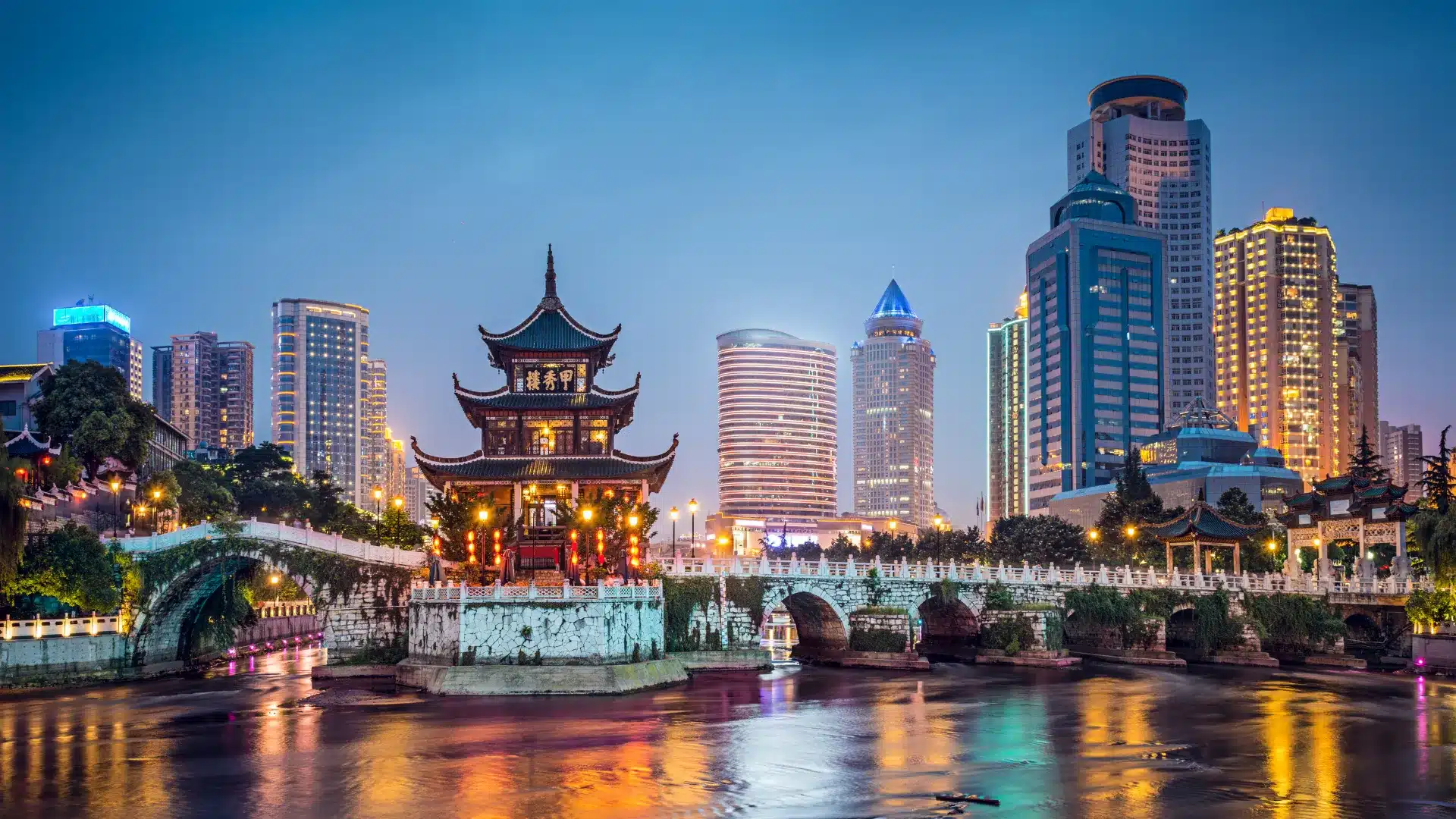
China is the world’s second most populous country and the largest in East Asia — a filming environment of extraordinary scale and diversity. The megacities of Shanghai, Beijing, Guangzhou and Chongqing. The Forbidden City and hutong alleyways of Beijing. The Bund waterfront and art deco architecture of Shanghai. The karst mountain landscape of Guilin and Zhangjiajie. The Yangtze River gorges. The Gobi Desert. The rice terraces of Yunnan. The Great Wall across the northern mountain ranges. The high-speed rail corridors connecting them all.
China has hosted some of the most significant international productions of recent decades — from Skyfall and Mission: Impossible III to Transformers: Age of Extinction, Crouching Tiger Hidden Dragon and The Last Emperor. Its production infrastructure, crew ecosystem and logistical capacity are among the most developed in Asia.
China also has one of the most structured and demanding production approval systems in the world. The China Film Administration (CFA) issues permits that take six to twelve weeks to process. An F Visa or Special Film Permit is required for foreign crews. CAAC drone regulations are specific and strictly enforced. Every production element — script, locations, crew, schedule — must be documented and approved.
Hoodlum’s in-country team has the local knowledge, authority relationships and production experience to make China a viable and rewarding filming destination for international productions that engage the right local support from the start.
China Film Production Guide for International Crews
China is an East Asian filming destination that works for international productions requiring the scale, visual diversity and production infrastructure that only China can provide — megacity environments, ancient heritage sites, dramatic natural landscapes, industrial settings, high-speed rail backdrops and a local crew ecosystem with deep experience supporting major international productions.
The country is served by major international airports in Beijing (Capital and Daxing), Shanghai (Pudong and Hongqiao), Guangzhou, Shenzhen, Chengdu and numerous other regional hubs. China’s high-speed rail network — the world’s most extensive — connects major production cities efficiently, giving productions logistics options that are unavailable in most other filming destinations.
The main production centres are distinct in character. Shanghai is China’s commercial and advertising capital — the hub for multinational brand productions, international advertising agencies and high-end commercial work. Its advertising industry was shaped by professionals from Taipei and Hong Kong, creating a more internationally fluent production environment. Beijing is the film and television capital — home to major studios, domestic productions and a higher volume of work at competitive budgets. Guangzhou, an hour from Hong Kong, offers exceptional set construction capabilities and easy access to Hong Kong production resources, making it particularly attractive for international shoots requiring controlled builds.
A successful China production requires six to twelve weeks of pre-production lead time for the CFA film permit alone. Visa processing, crew accreditation, CAAC drone approvals, ATA Carnet customs clearance and location-specific permissions must all run in parallel. Hoodlum’s in-country team manages those parallel processes as one coordinated workflow.
Why Film Production Works Well in China
China works for productions that need scale, visual diversity, world-class production infrastructure and a location portfolio that spans ancient imperial heritage, futuristic megacity environments, dramatic natural landscapes, agricultural plains, industrial backdrops and everything between.
Strong production use cases include:
- Feature film and television drama — including major international co-productions
- Commercial and advertising campaigns — particularly in Shanghai for multinational brands
- Automotive campaigns — China’s road infrastructure and diverse urban and landscape environments are exceptional
- Documentary and factual programming
- Industrial and technology productions
- Nature and landscape filming — Zhangjiajie, Guilin, Yunnan, Xinjiang, Tibet
- Heritage and cultural documentary work
- Travel and adventure programming
- Studio and set construction builds — Guangzhou for large-scale controlled builds
- Science and technology documentary work
- Agricultural and environmental productions
The scale of China’s production infrastructure — crew depth, equipment availability, studio facilities, set construction capability, post-production services and logistics capacity — is matched only by a small number of countries globally.
Productions should be aware that China’s regulatory framework applies to content as well as logistics. Scripts, content and messaging must comply with Chinese censorship and content regulations administered by the CFA. This is a substantive requirement that should be understood and planned for, not treated as an afterthought.
Best Time of Year to Film
Spring (April to May) and autumn (September to October) offer the most consistently pleasant filming conditions across most of China’s territory — mild temperatures, lower humidity and stable weather.
Summer (June to August) brings hot and humid conditions across most of the country, particularly in the south and along the east coast. It is generally not recommended for outdoor crew-heavy productions.
Winter (December to February) brings cold conditions across northern China — Beijing, Inner Mongolia, northeastern provinces — and snowfall that can affect schedules and logistics. Winter conditions can be visually extraordinary for the right brief.
Regional variation is significant:
- Southern China (Guangzhou, Shenzhen, Hainan) is warm year-round
- Western and plateau regions (Yunnan, Sichuan, Tibet) require specific seasonal planning
- Northern and northeastern provinces have extreme winter conditions
- Coastal regions have typhoon exposure July to September
Productions working across multiple regions should plan seasonal timing for each specific location rather than treating China as a single climate zone.
Visa and Entry Requirements for Crew
Foreign film crew members must obtain an F Visa (cultural exchange or film work) or a Special Film Permit. This is not a standard tourist visa — it is a work-category visa that requires specific documentation from Chinese film authorities.
Required documentation:
- Valid passport
- Completed visa application form
- Invitation letter from a Chinese film organisation
- Detailed filming itinerary, script and equipment list
- Proof of financial support
Processing time: Four to six weeks.
Work authorisation requirements are specific and strictly enforced. Productions should start the visa process at the same time as the CFA film permit application — both processes require similar documentation and the timelines must align before any crew member can travel.
Hoodlum’s in-country team provides the Chinese film organisation invitation letter and helps productions prepare the complete visa documentation package for all international crew members.
International Crew Accreditation
Film crew members must obtain accreditation from the China Film Administration or the local film bureau. The process involves submitting both personal and project-related documents and may include a police background check.
Required documentation:
- Valid passport
- ID card
- Proof of employment or contract
- Film script and equipment list
- Completed accreditation application form
Processing time: Two to four weeks.
Accreditation should run in parallel with visa and CFA film permit applications. Hoodlum coordinates all three processes simultaneously to ensure the timelines align and the crew is fully authorised before the first filming day.
Film Permits and the China Film Administration
The China Film Administration (CFA) is the central authority for all film production approvals in China. It is the most important and longest-lead approval process for any international production.
Required documentation:
- Detailed script — including content review compliance
- Storyboard
- Filming schedule
- Complete location list
- Equipment list
- Cast and crew information
- Proof of financing and insurance
Processing time: Six to twelve weeks. This is the binding timeline in any China pre-production calendar. All other approvals must be planned around this window.
Estimated cost: RMB 5,000–50,000 (approximately USD 725–7,250) depending on production type, scale and duration.
The CFA review process covers both the logistics of the production and the content of the script. Productions must understand that their scripts and content are subject to review under Chinese content regulations. Sensitive topics, political content, historical revisionism, religious content and certain cultural references may require script modifications or result in permit refusal.
Hoodlum helps productions understand the CFA requirements before the script is finalised, so content planning and permit preparation are aligned from the outset.
Key Filming Locations and Production Centres
Shanghai — China’s commercial capital and the primary hub for international advertising and brand production. The Bund waterfront, Pudong skyline, the French Concession, Xintiandi, M50 art district and the elevated highways give productions an unmatched range of urban visual environments. Shanghai’s production infrastructure — crews, equipment, studios and post — is the most internationally experienced in China.
Beijing — China’s film and television capital, home to the Forbidden City, Tiananmen Square, the hutong alleys, the Summer Palace, the Olympic venues and surrounding natural environments including the Great Wall. Beijing’s production volume is higher than Shanghai with a more domestically oriented commercial ecosystem and a concentration of major film and television studio infrastructure.
Guangzhou — One hour from Hong Kong, Guangzhou is China’s set construction capital. Large-scale builds, period reconstruction, controlled environment productions and productions requiring access to Hong Kong’s production resources use Guangzhou as a primary base. Pearl River Delta environment for river and industrial imagery.
Zhangjiajie, Hunan — the pillar rock formations of Zhangjiajie National Forest Park, which influenced the visual design of Pandora in Avatar. One of China’s most distinctive natural filming environments. National park permits required.
Guilin and Yangshuo — the karst mountain and Li River landscape of Guangxi, one of the most filmed natural environments in China. Used in countless international productions for its distinctive visual character.
The Great Wall — multiple sections accessible for filming, from the popular Badaling and Mutianyu sections near Beijing to more remote and visually dramatic sections. Each section has its own access conditions and permit requirements.
Yunnan Province — the highland province bordering Myanmar, Laos and Vietnam, offering Tibetan-influenced architecture in Shangri-La, ancient town environments in Lijiang and Dali, and the dramatic landscape of Tiger Leaping Gorge.
Xinjiang — the western autonomous region, offering Central Asian desert and mountain landscapes, Uyghur cultural environments and the Silk Road heritage cities of Kashgar and Turpan. Productions must be aware of the significant political and reputational sensitivity of this region.
Drone Filming Requirements
Drone operations in China are regulated by the Civil Aviation Administration of China (CAAC). Operators must obtain a CAAC permit and comply with all regulations.
Key operational requirements include flying below 120 metres, avoiding restricted areas, and obtaining approval from local authorities in addition to the national CAAC permit.
Required documentation (local drone permit):
- Completed application form
- Drone technical specifications
- Proof of liability insurance
- Pilot certification
- Detailed flight plan
Required documentation (drone importation):
- Commercial invoice
- Bill of lading
- Packing list
- Certificate of origin
- Detailed technical specification of the drone
Issuing authority: Civil Aviation Administration of China (CAAC).
Processing time: Twenty to thirty working days.
Estimated cost: RMB 500–5,000 (approximately USD 73–730).
China has extensive no-fly zones covering military areas, government buildings, airports, certain heritage sites and populated urban areas. Productions must confirm drone approval for each specific location — general CAAC permit approval does not automatically authorise operations everywhere the production plans to film.
Drone importation requires a separate permit from the General Administration of Customs (GACC) including Ministry of Commerce approval and applicable duties and taxes. Allow extended lead time for drone importation in addition to the operational permit.
Equipment Customs Clearance
China is an ATA Carnet country. Professional filming equipment can be imported under the standard ATA Carnet system.
Required documentation:
- Valid passport
- Visa documentation
- ATA Carnet covering all filming equipment
- Commercial invoice
- Packing list
- Detailed equipment list
- Letter of introduction or permit from the China Film Bureau
Issuing authority: General Administration of Customs of the People’s Republic of China (GACC).
Processing time: Two to five working days.
The CFA film permit is a required supporting document for customs clearance. Customs clearance cannot be fully completed without the production’s CFA approval in hand. This dependency must be factored into the logistics timeline — film permit confirmation must precede customs preparation.
Carnet documentation must match exactly what arrives. Productions bringing equipment into multiple entry points across China’s cities should ensure documentation reflects each arrival location.
Safety and Security for Productions
China provides a safe filming environment with low street crime and efficient law enforcement. The primary production risks are regulatory and bureaucratic rather than security-related.
Key safety and regulatory considerations include:
- Hire local government-licensed security personnel or work with a reputable fixer or production service company for all productions
- Be aware of surveillance infrastructure throughout China — production behaviour and content should be planned with awareness of local legal and regulatory expectations
- Comply strictly with all filming restrictions at government buildings, military installations, border areas and politically sensitive locations
- Follow CFA content regulations throughout production — filming sequences that deviate from the approved script may create post-production and clearance complications
- Xinjiang and Tibet require specific travel permits for foreign nationals in addition to standard visa and film permit documentation
- Protect equipment in extreme summer heat and winter cold depending on region and season
- Plan medical access for remote locations including western provinces and highland regions
- Ensure production insurance covers all China-specific regulatory and operational risks
Film Incentives — Regional Programmes
China does not offer a national film rebate programme. However, several provinces and cities provide financial incentives and subsidies for qualifying film and television productions.
Shanghai, Beijing and Qingdao are among the cities that have offered production incentives and subsidies. The nature, scale and eligibility criteria of these regional programmes change over time.
Before budgeting any regional incentive:
- Confirm current availability and eligibility criteria with the specific city or province authority
- Confirm which expenditure categories qualify
- Confirm minimum spend thresholds
- Confirm whether approval must be in place before spend begins
- Confirm payment timelines after production completion
Hoodlum helps productions identify current regional incentive opportunities and structure in-country spend accordingly.
How the Main Approvals Fit Together
F Visa, CFA film permit, crew accreditation, CAAC drone permit, GACC drone importation, ATA Carnet customs clearance and location-specific permissions are all separate processes. The CFA permit is the binding timeline at six to twelve weeks — everything else must be planned around it.
A complete production plan connects:
- F Visa for all international crew — four to six weeks, initiated simultaneously with CFA permit
- CFA film permit — six to twelve weeks, the longest lead process
- Crew accreditation — two to four weeks, running in parallel
- CFA permit confirmation — required before customs clearance proceeds
- CAAC drone permit — twenty to thirty working days
- GACC drone importation permit — additional process beyond the Carnet
- ATA Carnet customs clearance — two to five working days after permit confirmation
- Location-specific permissions — Great Wall sections, national parks, heritage sites, military-adjacent zones
- Regional incentive registration where applicable, before qualifying spend begins
- Xinjiang/Tibet travel permits where applicable for foreign nationals
Hoodlum manages all of these as one integrated pre-production workflow.
When China Is the Right Choice
China is the right choice when a production needs the scale, visual diversity and production infrastructure that only China can provide — from futuristic megacity skylines and ancient imperial heritage to dramatic natural landscapes and the world’s most developed high-speed rail network.
It is especially suitable for:
- Major international feature films and co-productions
- Large-scale commercial and brand campaigns in Shanghai
- Automotive campaigns requiring diverse road and landscape environments
- Film and television productions requiring Chinese settings or storylines
- Nature and landscape filming — Zhangjiajie, Guilin, Yunnan, the Gobi
- Heritage and cultural documentary work
- Industrial and technology productions
- Agricultural and environmental documentary
- Studio and set construction builds — Guangzhou for large-scale controlled environments
- Science, technology and innovation documentary work
It may be less suitable for productions with short pre-production windows, content that does not align with CFA requirements, or productions without the budget to engage experienced local production partners across the permit, accreditation and compliance processes.
Common Mistakes to Avoid
Avoid:
- Starting the CFA film permit process with less than twelve weeks before the first filming day
- Treating the F Visa as a standard tourist visa — it requires specific documentation from Chinese film authorities
- Assuming CAAC drone approval covers all locations — no-fly zones are extensive and location-specific confirmation is required
- Attempting customs clearance before the CFA permit is confirmed — it is a required supporting document
- Treating Xinjiang and Tibet as standard Chinese filming destinations without confirming specific travel permit requirements
- Assuming China has a national film rebate without confirming current regional programme availability
- Submitting scripts without awareness of CFA content requirements — script review is part of the permit process
- Planning productions without a local fixer who has established CFA and authority relationships
- Underestimating China’s regional climate variation across multi-location shoots
- Working without government-licensed security or a reputable local production service company
How Hoodlum Supports Local Production
Support may include:
- Local fixer coordination across Shanghai, Beijing, Guangzhou and all regional locations
- CFA film permit application management
- Chinese film organisation invitation letters for all international crew visa applications
- Crew accreditation coordination
- Script and content compliance guidance for CFA review
- Location research and RECCE across all China filming environments
- CAAC drone permit and GACC importation coordination
- ATA Carnet customs clearance preparation
- Great Wall, national park and heritage site access coordination
- Xinjiang and Tibet travel permit coordination where applicable
- Regional incentive identification and registration
- Local crew and talent sourcing
- Studio and set construction coordination in Guangzhou
- Transportation and vehicle hire
- Accommodation sourcing across all production cities
- Government-licensed security coordination
- Weather and seasonal planning for multi-region shoots
- On-the-ground production management
FAQ Section
Do international film crews need a special visa to film in China? Yes. Foreign film crew members require an F Visa (cultural exchange or film work visa) or a Special Film Permit — not a standard tourist visa. An invitation letter from a Chinese film organisation is required. Processing takes four to six weeks. Start visa applications simultaneously with the CFA film permit application.
How long does the China Film Administration film permit take? Six to twelve weeks from submission of a complete application. This is the binding timeline in any China pre-production calendar. All other approvals — visa, accreditation, drone, customs — must be planned around this window. Allow a minimum of fourteen weeks from first engagement to first filming day.
What is the difference between filming in Shanghai and Beijing? Shanghai is China’s commercial and advertising capital — the hub for multinational brand productions with the most internationally experienced production infrastructure. Beijing is the film and television capital — higher volume of domestic and co-production work, major studio infrastructure, and access to iconic heritage locations including the Forbidden City and the Great Wall.
Can productions use drones in China? Yes, but drone operations require CAAC approval — twenty to thirty working days processing — and compliance with strict no-fly zone regulations. Drone importation requires a separate GACC permit beyond the ATA Carnet. General CAAC approval does not automatically authorise all locations. Each specific filming location must be confirmed against no-fly zone restrictions.
Is China a Carnet country? Yes — China is an ATA Carnet country. Customs clearance takes two to five working days. The CFA film permit is a required supporting document for customs clearance — clearance cannot be completed until the permit is confirmed.
Does China offer a film rebate? There is no national film rebate. Several provinces and cities — including Shanghai, Beijing and Qingdao — offer regional incentives and subsidies for qualifying productions. Current availability, eligibility criteria and application processes should be confirmed directly with the relevant city authority before budgeting.
What are the content requirements for filming in China? Scripts and production content must comply with CFA content regulations. The script review is part of the film permit process. Sensitive topics, political content, certain historical subjects, religious content and specific cultural references may require script modifications or result in permit complications. Hoodlum helps productions understand CFA content requirements before scripts are finalised.
What documents are typically needed? F Visa with Chinese film organisation invitation letter, CFA film permit application including script, storyboard, schedule, location list, equipment list, crew information and insurance, crew accreditation documentation, CAAC drone permit, GACC drone importation permit, ATA Carnet, CFA permit confirmation for customs clearance, and location-specific permissions for heritage sites, national parks and sensitive areas.
Authority Links
- China Film Administration (CFA)
- Civil Aviation Administration of China (CAAC)
- General Administration of Customs of China (GACC)
- Chinese Visa Application Service
- Hoodlum Film Fixers — Contact
Everything You Need to Know About Filming in China
Filming in China requires a longer pre-production runway than almost any other international filming destination, and understanding why is the foundation of successful China production planning.
The China Film Administration film permit takes six to twelve weeks. The F Visa requires a Chinese film organisation invitation letter and four to six weeks of processing. Crew accreditation takes two to four weeks. CAAC drone approval takes twenty to thirty working days. And the CFA permit is a required supporting document for customs clearance — meaning every element of the logistics chain depends on the permit being confirmed first.
Productions that engage Hoodlum’s in-country team at least fourteen weeks before the first filming day, with a complete script and documentation package ready to submit, will find China one of the most rewarding production environments on earth. Productions that start later will find the permit timeline the binding constraint on everything else.
This section consolidates the practical information for international productions planning a China shoot.
The China Film Administration permit — content and logistics together
The CFA film permit is unlike most international film permits in one important respect: it reviews both the logistics of the production and the content of the script.
Required documentation includes a detailed script, storyboard, filming schedule, complete location list, equipment list, cast and crew information, and proof of financing and insurance. The script is reviewed against Chinese content regulations as part of the permit process. Sensitive topics — political content, certain historical subjects, religious content, content that conflicts with Chinese national values or historical narratives — may require script modifications or result in permit complications.
This is not a bureaucratic formality. It is a substantive content review that should be understood and planned for before the script is finalised. Hoodlum helps productions understand CFA content requirements early in development so that creative planning and permit preparation are aligned from the outset rather than in conflict during the application window.
Processing costs range from RMB 5,000 to RMB 50,000 (USD 725–7,250). Processing takes six to twelve weeks from a complete submission.
Filming visa China — the F Visa and invitation letter requirement
The filming visa China process requires an F Visa (cultural exchange or film work category) or a Special Film Permit — not a standard tourist or business visa. An invitation letter from a Chinese film organisation is a required component of the F Visa application. Without that letter, the application cannot be submitted.
Hoodlum provides the Chinese film organisation invitation letter as part of the standard pre-production package for all international productions. Processing takes four to six weeks. Visa applications should be submitted simultaneously with the CFA permit application — the documentation requirements overlap significantly, and the timelines must align to ensure crew authorisation is in place before the first filming day.
Work authorisation requirements should be confirmed for each international crew member’s nationality individually. Mixed-nationality productions should provide Hoodlum with complete crew details as early as possible.
Beijing filming locations and Shanghai filming locations — the two production capitals
Beijing filming locations and Shanghai filming locations are the two most requested production environments in China, and they serve different production briefs.
Beijing filming locations centre on the historical and political heart of China. The Forbidden City, Tiananmen Square, the hutong alleyways of the old city, the Temple of Heaven, the Summer Palace, the 798 Art District and the surrounding countryside where the Great Wall crosses the northern ridgelines give productions a combination of imperial heritage, urban energy and natural landscape within a single production base. Beijing’s film and television studio infrastructure is the most extensive in China, making it the natural base for major domestic productions and international co-productions requiring studio builds alongside location work.
Shanghai filming locations offer a completely different register. The Bund waterfront with its art deco colonial facades facing the Pudong financial skyline is one of the most cinematically powerful urban contrasts in the world. The French Concession, Xintiandi, the elevated highways, the Huangpu River, the M50 creative district and the city’s grid of international commercial environments make Shanghai the centre of China’s advertising and brand production industry. Shanghai’s production infrastructure is the most internationally experienced in China — the city’s advertising industry heritage, shaped by professionals from Taipei and Hong Kong, has created a production culture that communicates more fluently with international clients and creative teams than anywhere else in the country.
China Film Administration CFA and the permit-customs dependency
The China Film Administration is the central authority for all film production approvals in China. The CFA permit is not only the longest-lead approval in the pre-production calendar — it is also a required supporting document for ATA Carnet customs clearance.
This creates a specific sequencing dependency that productions must understand. ATA Carnet customs clearance for filming equipment cannot be completed at Chinese customs without the CFA permit in hand. Productions that arrive hoping to clear customs before the permit is confirmed will face delays regardless of how well their Carnet documentation is prepared.
The correct sequence is: CFA permit confirmed first, then customs clearance initiated. Productions should plan equipment arrival to allow the full CFA processing window plus two to five working days for customs clearance after permit confirmation.
CAAC drone permit China — the 20–30 working day process
The CAAC drone permit China process takes twenty to thirty working days from submission of a complete application. This is one of the longer drone permit timelines of any filming destination and must be initiated well in advance of any aerial production days.
CAAC permits cover general drone operation in China but do not automatically authorise operations everywhere. China has extensive no-fly zones covering military areas, government buildings, airports, certain heritage sites and urban areas. Each specific filming location where drone operations are planned must be confirmed against no-fly zone restrictions — general permit coverage is not sufficient.
Productions planning drone work at the Forbidden City, Tiananmen Square, along the Great Wall, above Shanghai’s Bund or Pudong skyline, or at any heritage or government site must confirm specific location authorisation with coordinates and flight parameters, not just general permit coverage.
Drone importation requires a separate GACC permit including Ministry of Commerce approval and applicable duties and taxes. This runs as an additional process beyond the standard ATA Carnet. Productions should not arrive with drones without having confirmed both the CAAC operational approval and the GACC importation documentation well before departure.
China customs clearance ATA Carnet — the permit dependency explained
China customs clearance for filming equipment operates through the ATA Carnet system. China is a Carnet country. Standard clearance with complete documentation takes two to five working days through the GACC.
The critical planning point is the permit dependency described above. The CFA film permit must be confirmed before customs clearance can proceed. Productions must build this sequence into the logistics plan — not assume that Carnet presentation alone is sufficient for clearance on arrival.
All items should be listed with serial numbers and values. Carnet documentation must match exactly what arrives at each entry point. Productions bringing equipment into multiple Chinese cities through different airports should ensure documentation reflects each arrival location.
Regional film incentives — Shanghai, Beijing and Qingdao
China does not operate a national film rebate programme. Several provinces and cities offer regional incentives and subsidies for qualifying productions. Shanghai, Beijing and Qingdao have each offered production support at various times.
The nature, scale and eligibility criteria of regional programmes change over time. No regional incentive should be budgeted without written confirmation of current availability from the specific city authority. Hoodlum maintains current information on regional incentive availability and helps productions identify and structure qualifying spend before production begins.
China location scouting — managing a vast and regionally diverse geography
China location scouting across a country of this geographic scale requires a fixer team with genuine regional knowledge across multiple provinces and production centres.
The production environments of Shanghai, Beijing, Guangzhou, Zhangjiajie, Guilin, Yunnan, Xinjiang and the Great Wall’s various sections each require different permit routes, different authority relationships, different logistics infrastructure and different seasonal planning. A fixer who knows Shanghai’s advertising production environment may not have the relationships or regional knowledge for a Yunnan documentary or a Zhangjiajie national park shoot.
Hoodlum’s in-country network covers multiple production regions, ensuring that location scouting, permit coordination and logistics planning reflect the actual conditions of each specific Chinese filming environment rather than a generic national approach.
What a China film fixer actually does
A China film fixer provides the Chinese film organisation invitation letters for all international crew F Visa applications, manages the CFA film permit application with script content guidance, runs crew accreditation in parallel, initiates CAAC drone approval and GACC importation clearance as separate parallel processes, coordinates ATA Carnet customs preparation for confirmation after CFA permit, manages Great Wall section and heritage site access, coordinates regional incentive identification and registration, advises on CFA content compliance before scripts are finalised, provides government-licensed security coordination, and manages multi-region logistics across Shanghai, Beijing, Guangzhou and regional locations.
Film production China works most efficiently when Hoodlum is engaged at least fourteen weeks before the first filming day — giving the CFA permit its full processing window while running all other approvals simultaneously.
Hoodlum provides full production support for international crews across all China filming locations — from early research and China location scouting through CFA permit coordination, content compliance guidance, drone planning, customs clearance and on-the-ground production management across Shanghai, Beijing, Guangzhou and all regional environments. For enquiries, visit hoodlum.tv/contact-us.
China in an East Asia film production guide context
For productions building an East Asia film production guide — comparing China with Japan, South Korea, Taiwan and Hong Kong — China occupies a position of unmatched scale and visual diversity.
It is the only East Asian filming destination that combines megacity production infrastructure in Shanghai and Beijing with ancient imperial heritage at the Forbidden City and Great Wall, dramatic natural landscapes at Zhangjiajie and Guilin, the world’s most extensive high-speed rail network as a production logistics asset, and a growing regional incentive landscape in cities like Shanghai, Beijing and Qingdao.
The trade-off is a production framework that requires more lead time, more content compliance planning and more experienced local partnership than any other filming destination in the region. The CFA permit timeline, the F Visa requirement, the CAAC drone process and the permit-customs dependency all add complexity that must be planned for rather than discovered.
Productions that plan correctly — fourteen weeks minimum, CFA content guidance sought before scripts are finalised, all approval streams running in parallel, customs clearance sequenced after permit confirmation, and Hoodlum’s in-country team engaged across the full production geography — will find China delivers production value on a scale that no other single filming destination in the world can match.