















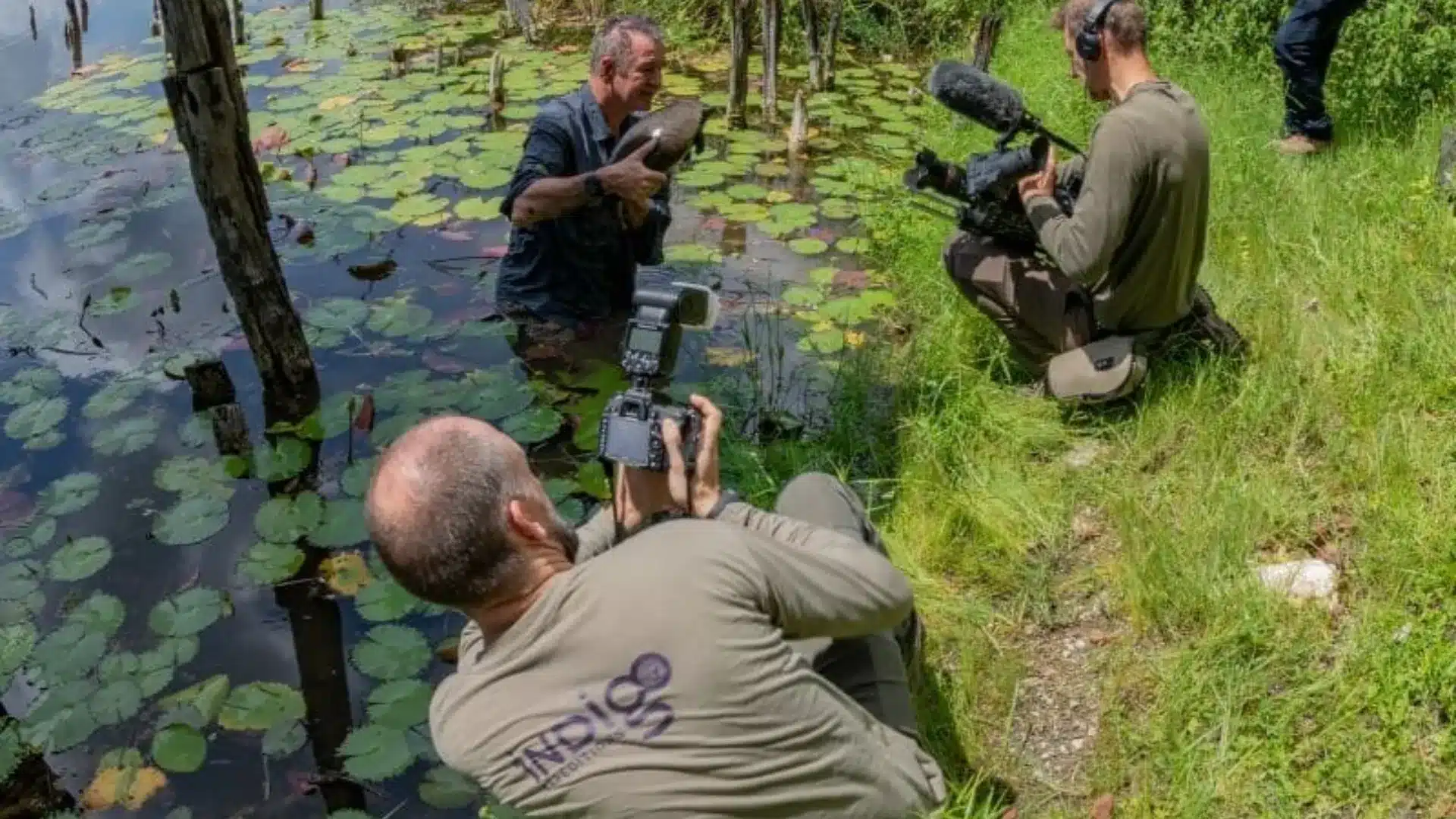
Hoodlum provides film production services in Guatemala for international crews shooting in Antigua, Tikal, Lake Atitlán, the Petén and Guatemala City. Guatemala has no national film commission and no film incentive scheme, so permits are obtained from the authority controlling each location — the Ministry of Culture and Sports for archaeological parks, CNPAG for Antigua, CONAP for protected areas and the municipality for public streets. Filming authorisation for archaeological sites is issued free of charge with a 17-day official response time. Equipment enters under temporary import rather than ATA Carnet. We handle permits, fixers, customs, drones, crew and full on-ground production management.
Guatemala is one of Central America’s most visually rich filming destinations, combining towering volcanoes, ancient Maya temples, colonial architecture, highland lakes, cloud forests and a deeply rooted indigenous culture into a compact, affordable and increasingly sought-after country. From the UNESCO-listed colonial streets of Antigua and the great Maya city of Tikal to the volcanoes around Lake Atitlán, the markets of the highlands and the jungles of the Petén, the country offers a depth of heritage and landscape that few destinations in the region can match.
For international crews, Guatemala offers a rare blend of extraordinary locations, low production costs and a comparatively quick permit process, even though it does not yet have a formal film commission or tax incentive scheme. It is one of the few places where a production can shoot a smoking volcano, a UNESCO World Heritage colonial city and a thousand-year-old Maya temple rising above the rainforest within a single tight schedule, supported by helpful cultural and tourism authorities and genuinely affordable local costs.
Hoodlum provides Film Production Services in Guatemala for documentaries, commercials, factual entertainment, branded content, music videos, photography campaigns, archaeology and history programming, feature films and television productions. Our team supports visa guidance, filming permits, location agreements, drone planning, customs and temporary-import coordination, local crew sourcing, transport, security and tourism-police liaison, and full on-ground production management. You can see the full scope of what we do and the people behind it on our who we are page.
Guatemala rewards productions that arrive with their paperwork in order. It is an affordable and welcoming country for film, but it is not a destination for informal, undocumented shooting by foreign crews, particularly at its protected heritage sites. The right entry route, the right permits, the right customs plan and the right local coordination all need to be settled before the cameras roll, and the most efficient way to handle that is through an experienced local production partner.
Why Guatemala Works for Maya Heritage, Volcanoes and Value
The country’s biggest production strength is the combination of world-class heritage and landscape within short travel distances, very low production costs and a relatively quick permit process. In a single schedule a production can capture an ancient Maya temple, a colonial plaza, an active volcano, a highland lake ringed by villages and a bustling indigenous market, often within a few hours of each other. The cultural depth and visual variety are exceptional for the budget.
The capital is the usual arrival point, but the value sits in the route. A documentary might move from Tikal in the Petén to Antigua and Lake Atitlán. A commercial might pair a volcano with a colonial street and a market. A history or culture piece might explore Maya ruins, living indigenous traditions and dramatic highland scenery. Guatemala is strong because it offers a genuinely unique canvas of Maya archaeology, colonial heritage, volcanoes and indigenous culture at a fraction of the cost of many alternatives.
The country is especially well suited to:
- Archaeology, history and culture programming
- Documentary and factual series
- Travel and adventure content
- Commercials and branded content
- Natural-history and landscape programming
- Photography and fashion campaigns
- Reality and expedition formats
- Music videos
- Feature and television projects on tighter budgets
Hoodlum’s production support team helps crews decide which regions are practical, what permissions each location and protected site needs, and how to sequence movement between the city, the colonial towns, the lakes, the volcanoes and the Maya sites. Our film fixers across the Americas handle regional schedules that cross borders as one plan rather than several, which matters more in Central America than most producers expect.
Guatemala City and the Central Highlands
Guatemala City is the practical anchor for most international productions working in the country. It is where crews usually arrive through La Aurora International Airport, where suppliers, transport, equipment and accommodation are easiest to coordinate, and where permit and customs coordination with the cultural and tax authorities begins.
The capital offers contemporary urban backdrops, business districts, markets, neighbourhoods and civic architecture, while the surrounding central highlands open quickly onto volcanoes, lakes and colonial towns. Crew accommodation, vehicle hire, fixers, customs coordination, drone operators and security planning are all easiest to arrange from the capital. One planning note: a 6 km no-fly radius around La Aurora covers a substantial part of the city, so aerial work in the capital needs to be mapped against that restriction before it is scheduled. Hoodlum uses the capital and the central region as the practical base for Film Production Services in Guatemala, particularly when a shoot needs to fan out to the heritage sites and the highlands.
Antigua and Colonial Heritage
Antigua is one of the country’s signature locations: a UNESCO World Heritage colonial city of cobbled streets, pastel facades, ruined churches, courtyards and volcano backdrops, framed by the dramatic Agua, Fuego and Acatenango volcanoes. It is among the most internationally requested filming locations in the region.
Antigua suits period and heritage drama, travel content, commercials, fashion and culture programming. Because it is a protected colonial city, filming there falls under CNPAG, the Consejo Nacional para la Protección de La Antigua Guatemala, a decentralised state body created under Decreto 60-69 specifically to safeguard the city and its surrounding areas. Its authorisation applies to private property inside the protected perimeter as well as to public space, so a location agreement with an owner does not remove the need for it. Lead time and proper permits are essential.
Semana Santa deserves its own line. Antigua’s Holy Week processions are one of the most extraordinary sequences available anywhere in the Americas, and one of the hardest weeks to shoot. Crowds, accommodation pressure and expanded aviation restrictions all peak simultaneously. It is a specialist shoot that needs to be planned months ahead, not a normal week with a good backdrop. Hoodlum handles the heritage permissions, access and timing so this colonial backdrop becomes a workable filming day.
Tikal, the Petén and Maya Sites
The Petén in the north is home to Tikal, one of the greatest Maya cities, where stone temples rise dramatically above the rainforest canopy, alongside other major sites such as Yaxhá and the remote El Mirador. These locations are unmatched for archaeology, history and adventure programming and have drawn the world’s leading documentary and natural-history makers.
Filming at Tikal and the Petén sites is more involved than a standard location. Tikal and Yaxhá are archaeological parks administered by the Ministry of Culture and Sports, and filming authorisation is issued by DEMOPRE, the Departamento de Monumentos Prehispánicos y Coloniales, within the Dirección General del Patrimonio Cultural y Natural. The authorisation itself is issued free of charge, with an official response time of 17 days, and applications are submitted in person in Guatemala City. CONAP, the Consejo Nacional de Áreas Protegidas, manages the surrounding Maya Biosphere Reserve, so some activity triggers a second approval on top of the ministry’s. Site entry and supervision fees apply separately under Acuerdo Ministerial 1171-2012.
Substantial productions at flagship sites should still allow 60 days rather than working to the 17-day statutory response. Remote jungle locations also call for tighter planning around access, transport, communications, heat and medical cover. Hoodlum builds the site permissions, reserve coordination, guides and remote-location logistics into the plan well before the crew reaches the Petén.
Lake Atitlán, Volcanoes and the Highlands
Lake Atitlán, ringed by volcanoes and indigenous villages, is one of the most beautiful locations in the Americas, while the wider highlands offer markets such as Chichicastenango, colourful traditional dress, cloud forests, coffee plantations and a string of active and dormant volcanoes including Pacaya, Acatenango and Fuego.
These environments suit travel, culture and adventure content, natural-history programming and drama needing dramatic landscape and living tradition. Mountain, lake and volcano filming calls for planning around access, weather, altitude and respectful coordination with local indigenous communities and authorities. Altitude is a real scheduling factor rather than a footnote: Antigua sits at roughly 1,530 m, Lake Atitlán at 1,560 m and Quetzaltenango at 2,330 m, so highland nights are genuinely cold, battery performance drops and call sheets need to account for it. Hoodlum builds local guides, translators, community liaison and logistics into the plan before a shoot moves into the highlands, recognising the importance of working respectfully with indigenous communities.
The Caribbean Coast, Río Dulce and Alta Verapaz
Guatemala’s Caribbean side is a different country visually and culturally from the highlands. Livingston, reachable only by boat, is the centre of Garífuna culture, with its own language, music and cuisine and an Afro-Caribbean character found nowhere else in the country. The Río Dulce gorge running inland from the coast, with jungle walls rising directly from the water and the Spanish colonial fortress of San Felipe at its head, gives productions a river and rainforest environment within reach of a road head.
Inland, Alta Verapaz offers cloud forest, coffee country and Semuc Champey — a series of turquoise limestone pools suspended above an underground river — which has become one of the most requested natural locations in Central America. Access is genuinely rough, the final stretch demands appropriate vehicles, and the site sits within a protected area administered by CONAP, so permissions and lead time need to be handled properly rather than assumed.
These regions suit travel and adventure content, natural history, cultural documentary and anything that needs a Caribbean or rainforest look without leaving the country. Hoodlum coordinates the boat access, protected-area permissions, local guides and community liaison that make them workable.
Entry, Visas and Production Documentation
Guatemala keeps entry comparatively simple for production crews, but the right route still depends on each crew member’s nationality and the nature of the shoot.
Around 83 nationalities enter visa-free and receive a 90-day stamp on arrival, including travellers from the US, Canada, the UK, all EU member states, Australia, New Zealand, Japan, South Korea, Israel, South Africa and most of Latin America. Passports need at least six months’ validity. Roughly 70 other nationalities, including China, India and most African countries, must obtain a visa in advance from a Guatemalan embassy or consulate. Entry is administered by the Instituto Guatemalteco de Migración.
For most straightforward filming a tourist entry is sufficient; depending on the production’s size, profile, duration and whether crew are being paid locally, a work-category visa may be required. All productions should carry a production letter setting out purpose, dates, locations and crew, together with an equipment list, for immigration and customs.
One point catches out productions running regional schedules. Guatemala belongs to the CA-4 agreement with El Salvador, Honduras and Nicaragua, and the 90-day visa-free allowance is shared across all four countries — it is not renewed at each border crossing. The clock resets only after leaving the CA-4 area entirely, to Belize, Mexico or Costa Rica, usually for at least 72 hours and at immigration’s discretion. A crew arriving in Guatemala after several weeks of filming in Honduras or El Salvador has less time than it thinks.
Where a regional schedule needs the clock to reset, routing through Costa Rica or Belize between blocks is the practical solution, and it is far cheaper to build in at the schedule stage than to fix at a border. Where a longer single stay is needed, a 90-day extension can be applied for at the Instituto Guatemalteco de Migración, currently around US$25 per person, and it should be started at least two weeks before the original stamp expires.
Guatemala has no national film commission and no central crew-accreditation body, which is why permits are handled authority by authority rather than through a single window. That may be about to change. Initiative 5906, the proposed Ley de Cine, passed its second reading in Congress in February 2026 and advanced to third debate — the furthest any Guatemalan film law has reached in nearly two decades of attempts. If enacted it would create the Instituto Guatemalteco de Cine, incorporating a national film commission, alongside a Consejo Nacional de Cinematografía, a Fondo de Fomento al Cine and an incentive regime.
It had not been enacted as of August 2026, and its proposed funding mechanism remains contested. Until it passes, permits and temporary equipment imports are managed through the Ministry of Culture and Sports and SAT, the Superintendencia de Administración Tributaria. Hoodlum helps productions match each crew member to the correct entry route, assemble the documentation, and avoid immigration becoming a late-stage problem.
Filming Permits and Location Permissions
There is no single national film permit and no centralised film commission, so permits are obtained from whichever authority controls the specific location. That makes local knowledge essential, but the process is comparatively quick and inexpensive by regional standards.
Who issues what:
- Archaeological parks and sites including Tikal, Yaxhá and Quiriguá — the Ministry of Culture and Sports, through DEMOPRE within the Dirección General del Patrimonio Cultural y Natural
- Heritage buildings and cultural property — IDAEH, the Instituto de Antropología e Historia
- Protected areas and the Maya Biosphere Reserve — CONAP
- La Antigua Guatemala and its surrounding areas — CNPAG, under Decreto 60-69
- Public streets, plazas and municipal property — the relevant municipality
- Tourism facilitation and coordination — INGUAT
- Airspace and drones — DGAC
- Equipment import — SAT
The Ministry of Culture and Sports issues the archaeological filming authorisation at no charge, with an official 17-day response time. Applications are submitted in person at the Dirección General del Patrimonio Cultural y Natural in zona 1, Guatemala City, under Acuerdo Ministerial 379-2005 and its subsequent reforms. Municipal permissions for street and public-space work are usually turned around within a few working days to two weeks. Major productions at flagship sites should allow 60 days.
The costs that do apply are separate from the permit itself: site entry and supervision fees set by Acuerdo Ministerial 1171-2012, municipal fees, insurance and, in protected areas, any required environmental assessment. The ministry also operates a Unidad de Cine y Audiovisual, which handles film and audiovisual matters at ministry level.
Private locations are more straightforward: with written permission from the property owner, filming confined to private property generally needs no additional permit. A Hoodlum location scout can propose suitable options, after which we negotiate access, dates, crew size, fees and conditions, and secure a location agreement. Private permission does not replace heritage, archaeological, protected-area or municipal approvals where a location also falls under one of those authorities — a colonial house inside Antigua’s protected perimeter sits under CNPAG regardless of who owns it. Fees are quoted once locations are confirmed. Send us a client brief with your locations and dates and we will come back with the permissions each one needs.
Drone Filming and Aviation Rules
Drone operation is regulated by the Dirección General de Aeronáutica Civil (DGAC). Registration is mandatory under RAC 101, in force since 2013, and a dedicated RPAS regulation, RAC 107 — adding operator certification, a Certificado de Piloto de Dron, defined restricted zones and altitude limits — went to public consultation in August 2025 and is pending adoption.
Three restrictions shape aerial planning in practice. Flying is prohibited within a 6 km radius of La Aurora International Airport, which covers a substantial part of Guatemala City, and around government buildings, hospitals, embassies, prisons and mass gatherings. Filming from the air over an archaeological park, protected area or heritage site requires separate authorisation from the Ministry of Culture and Sports or CONAP on top of the DGAC approval — the aviation permit alone is not enough.
And during Semana Santa, DGAC expands restricted zones and tightens temporary permit conditions to protect the Holy Week processions, which directly affects aerial work in Antigua during the country’s single most-requested filming week. Productions planning Semana Santa coverage should treat aerials as a separate, early application rather than an assumption.
Commercial film drones require registration, authorisation, liability insurance, a qualified pilot and a flight plan, with the drone declared on arrival under the temporary-import procedure. Foreign companies carrying out aerial work apply through DGAC using form DVSO-804, the special permit for remotely piloted aircraft, and should allow several weeks. Because that route is slow and needs local support, the practical answer for most international productions is a Guatemalan operator already holding current registration and authorisation. Hoodlum arranges the operator, coordinates the aviation and cultural approvals in parallel, and builds the lead time into the schedule.
Equipment Customs Clearance and Temporary Import
Guatemala is not an ATA Carnet country, so equipment enters under the Central American temporary import regime instead — the régimen de importación temporal con reexportación en el mismo estado set out in RECAUCA. This is a genuine planning point rather than a technicality, and worth knowing that Article 426 of RECAUCA expressly names professional equipment, including press, broadcast, television and cinematographic equipment, as an eligible category. Film gear is provided for in the regulation by name.
Productions submit a request to SAT, ideally about a month ahead of arrival, with a letter listing the equipment to be imported. Authorisation is granted by formal resolution, and a guarantee may be required for goods falling outside the Article 426 categories. It is strongly advised to have a local contact coordinate with customs in advance, both to keep the file moving and to stay current with procedural changes.
A clear request supported by a commercial invoice or packing list, certificate of origin, proof of insurance and passport copies helps the process run smoothly. With pre-approval in place, clearance is usually completed within one to two working days; without it, allow three to five. A detailed equipment list with serial numbers is essential, since the temporary import is tied to that specific gear being re-exported. Done properly, bringing equipment in incurs no import duties. Failure to re-export within the authorised period converts the entry to a definitive import and duties become payable.
Hoodlum prepares the temporary-import request and equipment list, coordinates with SAT and a local broker where needed, and times the process so cameras, lighting, grip and sound gear move through with minimal delay. Carnet and temporary-import handling is something we manage across the Americas, where carnet and non-carnet countries sit side by side and a single regional shoot can need both routes.
Costs, Incentives and Production Support
Guatemala does not currently operate a cash rebate, tax credit or any other financial film incentive, and it does not have a centralised film commission. Both are important points to plan around. What it offers instead is a genuinely cost-competitive production environment: low location, crew and talent costs, an archaeological filming authorisation issued free of charge, and no import duties on equipment brought in and re-exported under the temporary import regime.
For productions weighing Guatemala against a rebate territory, it is worth comparing directly. Our film incentives hub sets out what is available across every territory we operate in, and for Latin American projects specifically the Colombia film incentive offers a very different financial structure. Guatemala competes on base cost rather than on a headline percentage, and for many documentary, factual and mid-budget commercial projects that maths works out better than a rebate with a high minimum spend attached.
Because the local crew base is smaller and less deep than in larger markets, many productions bring key crew and specialist equipment with them and hire locally to fill out the team.
This position may change. Initiative 5906, the proposed Ley de Cine, would establish an incentive regime alongside the Instituto Guatemalteco de Cine. It passed its second reading in Congress in February 2026 and advanced to third debate but had not been enacted as of August 2026, and its proposed funding mechanism — a levy on air tickets sold to foreign travellers — remains contested by the aviation sector. Confirm current status before building any incentive assumption into a budget. Hoodlum can help productions structure a shoot to make the most of the country’s cost advantages and the support available on the ground.
Safety, Security and Practical Logistics
Guatemala is safe and welcoming across most of its tourist and filming destinations, where foreign crews are genuinely made to feel at home, but it does have higher-risk areas that call for sensible, location-specific planning. The risk picture varies considerably by region rather than nationally, so route and location planning matter more than blanket precautions.
The tourism police can provide assistance and accompaniment to film crews on request, handing off between units as a production moves through the country, usually at no cost beyond occasional fuel and food. It is a genuinely valuable resource. Standard precautions around securing equipment and valuables, using reliable transport and avoiding higher-risk zones in the capital and certain border, rural and remote areas are wise, and private security and secure equipment storage are available for larger setups. Thorough location scouting, crew briefings and constant communication with security and local authorities are the practical foundations of a smooth shoot.
Environmental and logistical risk is concentrated around volcanic activity, dense jungle terrain in the Petén, rural road conditions and heavy rainfall during the May to October wet season. Climate is not uniform: the coasts and the Petén are tropical, while the highland belt at 1,500 to 2,300 m is temperate with cold nights. Working respectfully with indigenous communities is both important and practical, especially in remote highland villages, where local contacts, translators and respect for local authority make a real difference.
Plan first-aid support and an emergency route for remote shoots, follow site rules strictly at archaeological parks — conservation breaches jeopardise access for future productions — and discuss medical and vaccination planning ahead of travel. Hoodlum helps productions balance sensible security with efficient movement, draws on tourism-police liaison and local contacts, and builds terrain, weather and contingency thinking into the schedule from the start.
When Guatemala Is the Right Production Choice
Guatemala is the right choice when a production needs world-class Maya archaeology, UNESCO colonial heritage, dramatic volcanoes and lakes and living indigenous culture, on a compact, highly affordable footprint with quick, inexpensive permits. It is especially strong for archaeology, history and culture programming, documentary, travel and adventure content, commercials, natural history, and any project that wants ruins, volcanoes and colonial towns in a single efficient, cost-effective schedule.
It may be less suitable for productions that need a deep local crew base for very large shoots, a formal cash rebate or tax incentive, carnet-based equipment entry, or guaranteed access without heritage-site lead times. Where a project genuinely needs an incentive, neighbouring territories may suit it better and we can advise on the trade-off — see where we work for the full territory list. The country is highly workable when the entry route, permits, heritage-site approvals, drone arrangements, temporary import and location agreements are settled early.
Common Production Mistakes to Avoid
The most frequent mistakes include:
- Expecting a national film commission or single-window permit — neither exists yet
- Budgeting for a rebate or tax credit, when Guatemala has none as of August 2026
- Assuming 90 fresh days on arrival when the CA-4 allowance has already been partly used in Honduras, El Salvador or Nicaragua
- Underestimating the 17-day response time on archaeological filming authorisations, and the 60 days flagship sites really need
- Treating archaeological parks and protected areas as ordinary locations
- Assuming an ATA Carnet works, when temporary import under RECAUCA is the route
- Planning aerials over Antigua during Semana Santa without an early, separate DGAC application
- Forgetting that a DGAC drone permit does not authorise flying over a heritage or archaeological site
- Bringing a full crew and assuming a deep local pool for very large productions
- Packing for “tropical” and arriving to a cold highland night at 1,500 to 2,300 m
- Overlooking respectful coordination with indigenous communities
- Ignoring regional safety differences and the value of tourism-police accompaniment
Most of these problems are avoidable by aligning the crew list, visas, permits, heritage approvals, drone plan, temporary import and location agreements well before the crew travels.
How Hoodlum Supports Productions in Guatemala
Hoodlum provides Film Production Services in Guatemala for international crews that need experienced local coordination from early planning through to wrap. Our support covers visa and documentation guidance, filming permits and heritage-site approvals, private location agreements, coordination with the Ministry of Culture and Sports, CONAP, CNPAG and INGUAT, drone planning, temporary-import and customs coordination, local crew sourcing, transport, security and tourism-police liaison, accommodation and on-ground production management. Where a shoot needs full budget and schedule ownership on the ground, we can also place a line producer in Guatemala.
From Guatemala City and the central highlands to Antigua’s colonial streets, the temples of Tikal and the Petén, the volcanoes and villages of Lake Atitlán and the Garífuna Caribbean coast, we help productions access the strongest filming environments in Guatemala with the right permits, fixers, customs planning and logistics in place. Planning a shoot? Contact us to talk through permits, visa support, local fixers, location scouting, temporary-import coordination, drone planning and full on-ground production management.
Frequently Asked Questions
Do international crews need a visa to film in Guatemala?
Around 83 nationalities — including the US, Canada, the UK, all EU states, Australia, New Zealand, Japan, South Korea and South Africa — enter visa-free with a 90-day stamp on arrival. Passports need six months’ validity. Note that under the CA-4 agreement those 90 days are shared with El Salvador, Honduras and Nicaragua, not renewed at each border. A 90-day extension is available from the Instituto Guatemalteco de Migración for around US$25.
Is there a film commission in Guatemala, and who issues filming permits?
There is no national film commission. Permits come from the authority controlling the location: the Ministry of Culture and Sports through DEMOPRE for archaeological parks such as Tikal and Yaxhá, IDAEH for heritage property, CONAP for protected areas, CNPAG for La Antigua Guatemala, and the relevant municipality for streets and public spaces. Initiative 5906, the proposed Ley de Cine, would create one, but had not been enacted as of August 2026.
How long does a filming permit take, and what does it cost?
Filming authorisation inside archaeological parks and sites is issued free of charge with an official response time of 17 days. Municipal permissions typically take a few working days to two weeks. Flagship sites and large productions should allow 60 days. Site entry, supervision, municipal and private location fees apply separately from the permit itself.
Can we film at Tikal?
Yes. Tikal is an archaeological park administered by the Ministry of Culture and Sports, and filming requires authorisation from DEMOPRE, submitted in Guatemala City with a 17-day official response time. CONAP manages the surrounding Maya Biosphere Reserve, so some activity triggers a second approval. Site entry and supervision fees apply under Acuerdo Ministerial 1171-2012. Allow 60 days for a substantial production.
Do we need a separate permit to film in Antigua?
Yes. La Antigua Guatemala and its surrounding areas fall under CNPAG, a decentralised state body created by Decreto 60-69 specifically to protect the colonial city. Its authorisation is required in addition to any municipal permission, and it applies to private property inside the protected perimeter as well as to public space.
Who regulates drones, and can we bring our own?
DGAC regulates all drone activity under RAC 101, with a dedicated RPAS regulation, RAC 107, pending. Drones must be declared on arrival and cleared under temporary import. Flying is prohibited within 6 km of La Aurora International Airport and near government buildings, hospitals, embassies and mass events, and DGAC tightens restrictions during Semana Santa. Aerial work over archaeological or heritage sites needs separate Ministry of Culture or CONAP approval. Foreign companies apply via DGAC form DVSO-804, but engaging a licensed Guatemalan operator is usually faster.
Is Guatemala an ATA Carnet country?
No. Equipment enters under the Central American temporary import regime — importación temporal con reexportación en el mismo estado under RECAUCA, whose Article 426 expressly covers cinematographic, press and broadcast equipment. SAT authorises it by resolution. Submit around a month ahead. No duties apply provided everything is re-exported in the same state within the authorised period.
Does Guatemala offer film tax incentives or a rebate?
No. There is no cash rebate and no tax credit as of August 2026. The advantage is the cost base: low crew, talent and location costs, a free archaeological filming authorisation, and no import duties on temporarily imported equipment. Initiative 5906 would introduce an incentive regime, but it has not been enacted and its funding mechanism is contested. For territories that do offer one, see our film incentives hub.
What are the best filming locations in Guatemala?
Antigua’s colonial streets and volcano backdrops; the Maya temples of Tikal, Yaxhá and El Mirador in the Petén; Lake Atitlán ringed by volcanoes and indigenous villages; the Chichicastenango highland market; the active volcanoes Pacaya, Acatenango and Fuego; Semuc Champey and the Alta Verapaz cloud forest; and the Garífuna Caribbean coast at Livingston and Río Dulce.
When is the best time to film in Guatemala?
The dry season, roughly November to April, gives the most reliable conditions, with the wet season running May to October. Semana Santa is visually extraordinary in Antigua but brings crowds, accommodation pressure and expanded drone restrictions, so it needs planning as a specialist shoot rather than a normal week. Highland locations are cold at night year-round.
Can we combine Guatemala with other Central American countries?
Yes, and it is common — but watch the CA-4 clock. The 90-day allowance is shared with El Salvador, Honduras and Nicaragua rather than renewed at each border. Guatemala pairs naturally with Honduras for Maya sites and Caribbean coast, El Salvador for Pacific surf and volcanoes, and Costa Rica for rainforest and wildlife. We run these as one coordinated plan through our Americas team.
Useful Authority Links
- Ministry of Culture and Sports (MCD)
- Filming authorisation for archaeological parks — official procedure
- CNPAG — Consejo Nacional para la Protección de La Antigua Guatemala
- CONAP — National Council of Protected Areas
- INGUAT — Guatemalan Tourism Institute
- SAT — Tax and Customs Authority
- DGAC — Directorate General of Civil Aviation
- Instituto Guatemalteco de Migración
This guide was prepared by the Hoodlum Film Fixers team using official Guatemalan government sources, including the Ministry of Culture and Sports, DGAC, SAT, CONAP and the Instituto Guatemalteco de Migración. Last reviewed August 2026. Permit fees, processing times and entry rules can change; confirm current requirements with us before locking a schedule.
Planning a shoot in Guatemala? Contact Hoodlum for film permits, Maya archaeological and national park authorisations, local fixers, location scouting, customs and ATA Carnet planning, drone coordination, indigenous community liaison, volcano access, boat and 4×4 logistics and full on-ground production management. You can also view the Hoodlum Film Fixers Guatemala Google Business Profile for local production details.