
















Film Production Services in Libya
Hoodlum provides practical, fixer-led Film Production Services in Libya for international productions that need permits, local crew, location access, customs, drones, transport, security and full production support. Libya is a complex but high-value production environment where every shoot must be built around official approvals, security planning, local authority coordination, controlled movement and experienced on-the-ground production management.
Libya can support documentary, factual, current affairs, news, commercial, development, heritage, energy, infrastructure, branded and controlled-location productions. The country offers a wide range of production environments, including Tripoli, Benghazi, coastal cities, desert routes, heritage areas, industrial sites, urban locations and remote landscapes. However, filming in Libya requires a disciplined approach to planning. Permits, visas, accreditation, security, customs, drone approvals and private location access all need to be organised before the crew arrives.
Film permits in Libya are typically issued by the Libyan Ministry of Culture and Information. International crews also need to prepare visa applications, crew accreditation, location plans, equipment lists and security support. Drone operations require prior permission from the Libyan Civil Aviation Authority and the Ministry of Defense. Equipment can be temporarily imported using an ATA Carnet, but customs clearance still requires proper documentation and coordination with the Libyan Customs Authority.
Hoodlum supports productions in Libya with fixer-led production planning, visa guidance, crew accreditation coordination, permit support, private location negotiation, drone permit planning, customs clearance, local crew sourcing, armed security coordination, convoy movement, risk management, transport, accommodation and complete on-the-ground production support. Libya can be a powerful filming location, but the production must be structured around security, documentation and trusted local coordination from the start.
Why Libya Works for International Productions
Libya works for productions that need controlled access to North African urban, desert, coastal, industrial or heritage environments. The country can be relevant for documentaries, factual television, news, current affairs, energy-sector films, development stories, commercial projects, historical context, regional affairs and productions requiring locations that are difficult to replicate elsewhere.
The production value in Libya is connected to its mix of geography, history, infrastructure and contemporary access. A shoot may involve interviews in Tripoli, controlled filming in Benghazi, coastal routes, industrial locations, desert movement, heritage sites, port areas or security-managed urban sequences. These environments can provide strong editorial and visual value, but they are only workable when the approval and security framework is in place.
Libya is not suitable for informal or lightly supported filming. Productions need to work with local fixers, security advisors, drivers, permit contacts and authority-facing coordinators. The country’s security profile means that crew movement, filming permissions, equipment handling and location access should be treated as linked parts of one production plan.
Hoodlum helps producers assess whether Libya is viable for a specific project. We consider the locations, subject matter, filming style, crew size, equipment package, drone requirements, security needs, permit timelines and customs process. This allows the creative ambition to be matched with a realistic operational plan.
Tripoli as a Main Production Base
Tripoli is one of the most important bases for international productions filming in Libya. It can support crew arrivals, permit follow-up, local fixer coordination, government liaison, security briefings, hotel-based production work, transport allocation, equipment handling and controlled filming. For many productions, Tripoli is where the operational structure is established before filming begins.
The city may be relevant for interviews, institutional access, urban scenes, controlled commercial locations, port context, government-facing sequences or contributor work. However, filming in Tripoli should be managed carefully. Public filming, government-adjacent areas, sensitive infrastructure, security sites, transport hubs and high-visibility street work may require additional approvals and security coordination.
Crews should carry the correct documentation while operating in Tripoli. This may include visas, film permits, crew accreditation, local fixer details, equipment lists, insurance documentation and security contact information. The fixer and security team should normally manage local interactions and movement decisions.
Hoodlum supports Tripoli-based filming with permit coordination, fixer support, location planning, security management, vetted transport, accommodation, equipment handling and daily logistics. A properly organised Tripoli base gives the production a stronger platform for controlled filming and regional movement.
Benghazi and Eastern Libya Production Planning
Benghazi and eastern Libya may be relevant for productions requiring regional access, coastal settings, urban context, development stories, current affairs, infrastructure, heritage or security-managed fieldwork. Productions considering Benghazi should assess the location carefully and build the schedule around current access, local authority coordination and security requirements.
Eastern Libya may involve different local contacts, route planning, security dynamics and authority relationships from Tripoli. A permit or approval process should be checked against the specific region where filming will take place. Productions should not assume that access in one part of Libya automatically applies across the country.
Crew movement between regions requires careful coordination. Security conditions, road routes, checkpoints, accommodation, local escorts, vehicle selection and communication systems can all affect the production. Depending on the project, armed security personnel, convoy escorts and risk management experts may be required.
Hoodlum helps productions assess the feasibility of filming in Benghazi and eastern Libya, coordinate local fixer support, plan security, organise transport and align permissions with the actual shoot route. Regional filming in Libya should always be built around current operational realities and trusted local advice.
Desert, Coastal, Heritage and Industrial Locations
Libya offers a wide range of production environments, including desert landscapes, coastline, ports, heritage areas, urban ruins, industrial facilities, energy infrastructure, roads, compounds and controlled private locations. These settings can create strong production value for documentary, commercial, factual, energy, automotive, heritage and current affairs projects.
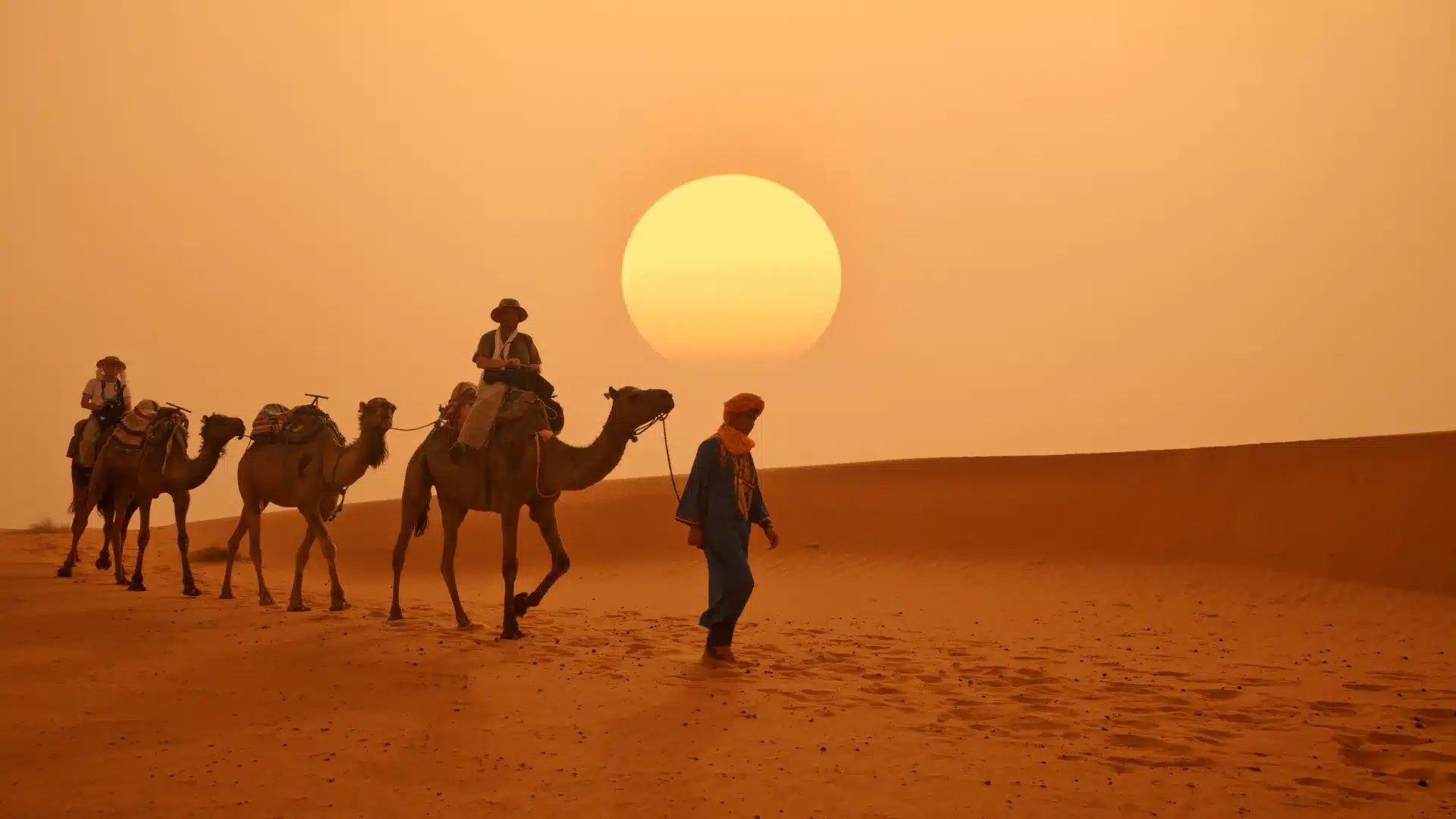
Desert filming requires detailed planning around vehicles, fuel, communications, heat, distance, security, accommodation and emergency response. A crew may need convoy movement, armed escorts, experienced drivers, satellite communications, spare vehicles, medical planning and strict movement windows. Desert routes should never be treated as simple travel legs.
Coastal and port filming may require site-specific approval, security coordination and customs or port authority liaison. Industrial and energy locations may require private owner permission, company approval, safety induction, PPE, restricted access management and additional documentation.
Heritage locations may require specialist approval from relevant cultural or local authorities. Productions should confirm whether filming, drones, lighting, tripods, vehicle access or crew size are restricted. Hoodlum helps identify which permissions are needed and how to integrate them into the wider production schedule.
Crew Entry and Visa Requirements for Libya
Visitors entering Libya typically need a valid passport with at least six months’ validity, a visa obtained in advance from a Libyan embassy or consulate, and proof of onward travel. Specific requirements vary depending on nationality, purpose of visit and the nature of the production. Film crews should confirm the correct visa route before travel.
Film crew visa applications for Libya typically require a valid passport, completed visa application form, a letter explaining the purpose of the visit and details of the film project, and an authorisation letter from the Libyan Ministry of Culture and Information. Depending on the crew’s nationality and the application route, additional documents may be required.
Visa processing for film crews in Libya can take around 2 to 4 weeks, or approximately 10 to 20 working days. Productions should not book tight travel schedules without allowing for visa processing. A visa delay can affect permit timing, location access, security arrangements and crew availability.
The cost of a film crew visa for Libya can range from USD 1,000 to USD 3,000. Productions should confirm current fees before submitting applications, as costs may vary by nationality, visa type, duration and processing route.
Hoodlum supports crews by helping coordinate visa documentation with the wider production file. The visa application, authorisation letter, project purpose, filming dates, crew list, itinerary and permit documentation should all align before submission.
International Crew Accreditation in Libya
International crew members filming in Libya typically need accreditation from the Libyan Ministry of Culture and Information. Accreditation helps establish who is working on the production, what their professional role is and how the project will operate in the country.
Required documents for international film crew accreditation typically include a passport copy, ID, proof of profession, film project synopsis, script, shooting schedule, equipment list and a letter of authorisation from the Libyan embassy or consulate in the crew’s home country.
Crew accreditation in Libya can take around 4 to 6 weeks, or approximately 20 to 30 working days. This timeline is longer than many crews expect and should be built into pre-production. Productions with multiple crew members, specialist equipment, sensitive subject matter or regional movement should allow additional time.
The cost of international film crew accreditation in Libya can range from USD 1,500 to USD 5,000. Productions should confirm current costs before submission and include accreditation in the early production budget.
Hoodlum supports crew accreditation by helping prepare the crew list, passport copies, proof of profession, synopsis, script, shooting schedule, equipment list and authorisation materials. The accreditation file should align with the film permit and security plan so that the production presents a clear and consistent operational picture.
Film Permits in Libya
Film permits in Libya are typically issued by the Libyan Ministry of Culture and Information. International productions should plan for a formal permit process before filming, especially for documentary, current affairs, news, factual, commercial, branded, development, heritage or broadcast work.
A film permit application for Libya typically requires a detailed script, shooting schedule, location plans, equipment list, crew list and a letter explaining the purpose and content of the film project. These documents help authorities understand the subject matter, locations, crew footprint, technical requirements and intended use of the footage.
The processing time for a film permit in Libya can take around 6 to 8 weeks, or approximately 30 to 40 working days. This is a major planning consideration. Productions should begin the permit process early, particularly if the shoot involves drones, sensitive locations, regional movement, public filming, government access or large equipment packages.
Film permit costs in Libya should be confirmed through the relevant authority or local production partner before submission. Fees may vary depending on the type of production, duration, locations, crew size and required approval route.
Hoodlum supports productions by preparing the permit file, structuring the project explanation, aligning the location plan, gathering crew and equipment details, coordinating with local contacts and ensuring that the permit application reflects the actual filming plan. In Libya, a clear permit file is essential to reducing delays and avoiding confusion on the ground.
Private Locations and Property Access
Private location access in Libya is usually arranged through a local fixer. The fixer plays a crucial role in identifying private film locations, negotiating with property owners, obtaining necessary permissions and helping ensure a smooth filming process. Local knowledge and relationships are especially important in Libya, where access can depend on ownership, security considerations, local authority awareness and current conditions.
Private location costs in Libya are determined on a case-by-case basis. A quote can usually only be provided after receiving the production schedule, location requirements, crew size, equipment details, duration and specific needs. A controlled interview, private compound, industrial site, commercial property, heritage-adjacent location or remote site may each carry different access requirements and costs.
A private location agreement should clarify filming dates, areas of access, parking, equipment storage, security needs, power, privacy, property protection, crew movement and wrap-out requirements. In Libya, private location access should also be checked against the wider security and permit plan.
Hoodlum supports private location access by negotiating with owners, confirming conditions, coordinating logistics and making sure the location fits the production’s security profile. Private access should never be treated as separate from the overall production plan.
Public Filming and Local Authority Coordination
Public filming in Libya requires careful coordination. Visible filming in streets, public spaces, markets, roads, transport areas, ports, heritage zones or government-adjacent areas may attract attention and require additional permissions. Crews should not assume that a general film permit is enough for every location.
Local authorities, security contacts, property managers or community representatives may need to be informed depending on the location. The fixer and security team should advise where public filming is practical and where it should be avoided or controlled.
Crews should carry documentation at all times, including film permits, accreditation, visas, passport copies, equipment lists and local contact details. In Libya, permit visibility and authority coordination are part of crew safety.
Hoodlum helps productions manage public filming by aligning location plans with approvals, briefing the crew, coordinating with local contacts, organising secure movement and ensuring the production is not exposed unnecessarily. A public filming plan in Libya should be precise, documented and security-aware.
Drone Filming in Libya
Drone operations in Libya require prior permission from the Libyan Civil Aviation Authority and the Ministry of Defense. Requirements and restrictions can vary depending on the type of drone, flight location and purpose of the flight. Drone work should be treated as a sensitive approval process, not a simple camera department decision.
The Libyan Civil Aviation Authority issues drone permits. To apply for a drone permit, productions typically need a completed application form, drone specifications, proof of insurance, pilot licence and a detailed flight plan. The flight plan should include intended locations, dates, airspace considerations, operating altitude, safety procedures and production purpose.
Drone permit processing typically takes around 7 to 14 days. The cost is approximately USD 700 to USD 1,400. Productions should still allow additional time where Ministry of Defense clearance, sensitive areas, military zones, government sites or security conditions affect approval.
Drone operations should be coordinated with the film permit, location permissions and security plan. Flights near airports, military areas, government buildings, ports, sensitive infrastructure, populated areas or convoy movement may require additional restrictions or may not be approved.
Hoodlum helps productions assess whether drone filming is viable, prepare the permit materials, coordinate with aviation and defence requirements, and integrate aerial filming into the broader security and production plan.
Drone Importation into Libya
Drone importation into Libya requires a special permit from the Libyan Customs Authority and the Ministry of Defense. Certain drone types and equipment may be subject to restrictions or prohibitions. Crews should not attempt to bring drones into Libya without confirming the approval route in advance.
Drone importation documentation typically includes a commercial invoice, bill of lading, packing list, certificate of origin and a permit from the Libyan Customs Authority. Depending on the equipment and planned use, additional defence or aviation approvals may be required.
Drone importation should be aligned with the drone operating permit, film permit and equipment customs clearance. If the drone appears on the equipment list without the correct supporting documentation, clearance may be delayed or the equipment may be held.
Hoodlum supports drone importation planning by helping productions identify the required approvals, prepare the documentation and decide whether importing a drone is practical for the shoot. In some cases, the production may need to consider local or alternative aerial options depending on approval timelines and restrictions.
Equipment Customs Clearance in Libya
Libya is not an ATA Carnet country, and no carnet can be issued for Libyan entry because there is no affiliated issuing association in the country. Productions should not build a customs plan around a carnet, and should not assume a carnet issued elsewhere will be processed on arrival.
Equipment enters under a temporary importation arranged with Libyan Customs by the local production company, submitted in advance rather than presented at the border. The submission needs a full equipment list with make, model and serial numbers, a declared value for every item, the approved film permit and crew passport copies. Everything imported temporarily must be re-exported in the same configuration, so inventory accuracy matters as much as it would under a carnet.
Libyan Customs operates the ASYCUDA electronic declaration system, so the temporary import is filed in advance by a licensed Libyan customs broker rather than presented at the border. The broker is engaged through the local production company alongside the film permit.
Because customs arrangements are handled by the local partner and depend on the entry point used, the equipment plan should be settled at the same time as the film permit rather than afterwards. Hoodlum prepares the equipment schedule, coordinates the temporary import request and confirms the arrangement before the crew travels.
Local Crew, Fixers and Production Support
Local fixers are essential for filming in Libya. A fixer helps connect the production to authorities, private owners, drivers, local crew, security contacts, customs support, location managers and regional contacts. In Libya, the fixer’s role is both logistical and operationally protective.
A Libya fixer may support visa coordination, crew accreditation, film permit preparation, private location negotiation, equipment customs clearance, drone permit planning, route planning, security liaison, translation, contributor access, accommodation and daily production troubleshooting.
Local crew sourcing depends on the scale and sensitivity of the shoot. Some productions may bring specialist camera, sound, lighting or editorial crew from abroad while sourcing fixers, drivers, translators, assistants, local producers, security and logistics personnel in Libya. Other projects may require a more substantial local support structure due to regional travel, sensitive subject matter or security needs.
Hoodlum helps productions build the right local team for the project. In Libya, local support needs to be practical, connected and security-aware. The crew model should reflect the locations, permits, customs requirements and risk profile of the shoot.
Transport, Accommodation and Controlled Movement
Transport in Libya should be planned through vetted drivers, secure vehicles and clear route management. Depending on the region and production profile, crews may require convoy escorts, armed security personnel, route checks, backup vehicles, communications support and movement windows approved by local contacts.
Accommodation should be selected around safety, access, vehicle control, communications, power, equipment storage and proximity to filming locations. The production should avoid accommodation choices that complicate movement or expose the crew and equipment unnecessarily.
Controlled movement is central to filming in Libya. The crew should know each day’s route, call time, security arrangement, location permissions, emergency contacts and contingency plan. Vehicle loading, equipment storage, parking and location entry should be arranged before the shoot day.
Hoodlum supports transport, accommodation and controlled movement by coordinating drivers, vehicles, security, hotel selection, route planning and daily logistics. In Libya, movement is part of the production’s security architecture and should be managed professionally.
Safety and Security in Libya
Film productions in Libya typically require armed security personnel, convoy escorts and risk management experts, as well as close coordination with local authorities and militias where relevant. Security should be built into the production plan from the first stage of planning.
The level of security required will depend on the filming region, subject matter, crew size, equipment value, public visibility and route. A controlled interview in a secured location may have different requirements from a regional field shoot, public filming sequence, desert movement or current affairs production.
Security planning should include route assessment, convoy planning, armed or unarmed support, local authority liaison, emergency response, communications, medical planning, equipment protection and daily risk briefings. Crews should avoid unnecessary exposure and should not move independently without local guidance.
Hoodlum supports productions by coordinating risk management, security personnel, convoy movement, local authority liaison, driver selection, accommodation planning and emergency response. Libya can be filmed responsibly, but the production must be designed around security realities rather than adjusted to them later.
Health and Medical Planning
Health and medical planning should be integrated into Libya production logistics. Crews should seek professional travel health advice before departure and confirm any medical entry requirements, insurance conditions and evacuation options.
Productions should consider heat, long road movements, fatigue, security delays, medical access, medication, first-aid kits and emergency response. Remote or desert filming requires additional planning around water, communications, vehicle support and evacuation routes.
Medical planning should be connected to the security plan. The production should know how to respond if a crew member becomes ill or injured, where medical help is available, who controls transport and how the crew communicates in an emergency.
Hoodlum helps productions include health and medical considerations in route planning, accommodation, security coordination and field logistics. A stable health plan supports both crew welfare and production continuity.
Film Rebates and Tax Incentives
Libya does not currently offer a film rebate or incentive programme for local or international film productions. Producers should not budget around a local rebate when planning a Libya shoot.
Budgeting for Libya should focus on the operational costs that make filming possible: visas, accreditation, film permits, private location fees, armed security, convoy escorts, risk management, local fixers, transport, accommodation, customs clearance, ATA Carnet preparation, drone permits and contingency planning.
Hoodlum helps productions build realistic budgets for Libya by identifying the real cost drivers. In Libya, production value comes from controlled access, location relevance, local support and secure execution rather than incentive-based financing.
When Libya Is the Right Production Choice
Libya is the right production choice when a project needs controlled North African access, desert routes, coastal environments, heritage context, current affairs access, industrial locations, energy infrastructure, Tripoli or Benghazi-based interviews, regional production value or stories that cannot be authentically filmed elsewhere.
The country is best suited to productions that can plan early. Visas may take 2 to 4 weeks, crew accreditation can take 4 to 6 weeks, film permits may take 6 to 8 weeks, drone permits can take 7 to 14 days, and equipment customs clearance can take 2 to 5 working days. Security planning must also be built into the schedule.
Libya is less suitable for productions that need informal access, last-minute travel, unsupervised movement or low-security public filming. The approval and security environment requires a structured approach.
Hoodlum helps producers decide whether Libya fits the creative, operational, security and budget requirements of the project. When Libya is viable, we provide the local production support needed to make the shoot safe, compliant and practical.
Common Libya Production Mistakes
A common mistake is underestimating permit timing. Film permits in Libya can take 6 to 8 weeks, and crew accreditation can take 4 to 6 weeks. These timelines need to be included in the production schedule from the start.
Another mistake is treating security as optional. Film productions in Libya typically require armed security personnel, convoy escorts, risk management experts and close coordination with local authorities and militias where relevant. Security should shape the schedule, not be added after locations are chosen.
Productions also sometimes underestimate the visa process. Film crew visas can take 2 to 4 weeks and may cost USD 1,000 to USD 3,000. Applications require a clear project explanation and authorisation from the Libyan Ministry of Culture and Information.
Drone planning is another risk area. Drone operations require permission from the Libyan Civil Aviation Authority and the Ministry of Defense. Drone importation also requires permits from the Libyan Customs Authority and the Ministry of Defense. Without the correct documentation, drones may be delayed or restricted.
Finally, productions sometimes assume private locations can be arranged quickly. Private location costs and approvals are case-specific and usually depend on the production schedule, location requirements and security profile.
How Hoodlum Supports Productions in Libya
Hoodlum supports productions in Libya with practical, fixer-led production services for international crews. We help coordinate the documentation, approvals, local relationships, security and logistics needed to film responsibly.
Our support includes visa guidance, authorisation letter coordination, film permit preparation, crew accreditation support, private location negotiation, drone permit planning, drone importation advice, ATA Carnet coordination, customs clearance support, local crew sourcing, fixer services, security coordination, convoy movement, risk management, transport, accommodation and daily production logistics.
We help productions prepare scripts, shooting schedules, location plans, equipment lists, crew lists, project explanations, accreditation files and customs documentation. We also help align permits, security and route planning so that the production is structured before the crew arrives.
Libya requires serious preparation and trusted local coordination. Hoodlum provides the on-ground production support needed to keep international crews documented, protected and operational.
FAQ
Do film crews need a visa for Libya?
Yes. Film crews typically need a valid passport, a visa obtained in advance from a Libyan embassy or consulate, and proof of onward travel.
How long does a Libya film crew visa take?
A film crew visa for Libya typically takes around 2 to 4 weeks, or 10 to 20 working days.
What documents are required for a Libya film crew visa?
Film crews typically need a valid passport, completed visa application form, a letter explaining the purpose of the visit and film project details, and an authorisation letter from the Libyan Ministry of Culture and Information.
Who issues film permits in Libya?
Film permits are typically issued by the Libyan Ministry of Culture and Information.
How long does a Libya film permit take?
A Libya film permit can take around 6 to 8 weeks, or 30 to 40 working days.
What documents are required for a Libya film permit?
A film permit application typically requires a detailed script, shooting schedule, location plans, equipment list, crew list and a letter explaining the purpose and content of the project.
Is crew accreditation required in Libya?
Yes. International crew members typically need accreditation from the Libyan Ministry of Culture and Information.
How long does crew accreditation take in Libya?
International crew accreditation can take around 4 to 6 weeks, or 20 to 30 working days.
Can film crews use drones in Libya?
Yes, but drone operations require prior permission from the Libyan Civil Aviation Authority and the Ministry of Defense.
Who issues drone permits in Libya?
Drone permits are issued by the Libyan Civil Aviation Authority, with additional approvals from the Ministry of Defense where required.
How long does a Libya drone permit take?
Drone permits typically take around 7 to 14 days.
Is Libya an ATA Carnet country?
No. Libya is outside the ATA Carnet system and no carnet can be issued for Libyan entry. Equipment is temporarily imported through Libyan Customs, arranged in advance by the local production company using a detailed equipment list with serial numbers and declared values.
Who handles customs clearance in Libya?
Customs clearance is issued by the Libyan Customs Authority.
Does Libya offer film rebates?
No. Libya does not currently offer a film rebate or incentive programme for local or international productions.
Is security required for filming in Libya?
Yes. Film productions in Libya typically require armed security personnel, convoy escorts, risk management experts and close coordination with local authorities and militias where relevant.
External Authority Links
Contact Hoodlum today for expert Film Production Services in Libya, including fixer support, film permits, crew sourcing, drone permissions, customs clearance, location access and complete on-the-ground production management. For more information, visit the Hoodlum Film Fixers Libya Google Business Profile.