















Introduction
Hoodlum offers expert film fixer services in Pakistan, supporting international productions across one of South Asia’s most visually diverse and cinematically underused filming destinations.
Pakistan is a country of extraordinary geographic and cultural range — the ancient Mughal heritage of Lahore’s walled city, the Badshahi Mosque and the Lahore Fort, the bustling port energy of Karachi, the high-altitude mountain landscapes of the Karakoram and Hindu Kush, the Hunza Valley at the foot of some of the world’s tallest peaks, the ancient Gandhara civilisation ruins of Taxila, the desert environments of Balochistan, the fertile Punjab plains and the Indus River corridor that connects Pakistan’s history from the Neolithic Mehrgarh to the present day.
For documentary productions, commercial campaigns, travel programming, adventure content and feature films requiring authentic South Asian or Central Asian settings, Pakistan offers a visual range that is genuinely distinctive and largely untapped by international productions.
Pakistan’s journalist visa covers both accreditation and the Ministry of Information film permit — all processed as a single application. Processing takes six to eight weeks. Pakistan is an ATA Carnet country. Drone local usage permission takes two to five days.
Productions must check current travel advisories for Pakistan for all crew nationalities before any commitment is made. Some regions require specific travel consideration and security planning. Hoodlum’s in-country team provides current, location-specific guidance.
Pakistan Film Production Guide for International Crews
Pakistan is a South Asian filming destination that works for productions with a specific creative or editorial reason to be in-country — documentary, factual, travel, adventure, heritage and commercial work requiring authentic Pakistani settings, landscapes and storytelling.
The country is served by Islamabad International Airport, Jinnah International Airport in Karachi and Allama Iqbal International Airport in Lahore, with domestic connections to Gilgit, Skardu, Peshawar, Quetta and other regional hubs. The Karakoram Highway — one of the world’s most dramatic mountain roads — connects the Punjab plains to the Gilgit-Baltistan mountain region and on to the Chinese border, providing overland access to some of the most visually extraordinary landscapes in Asia.
The main production environments include Lahore’s UNESCO World Heritage Mughal sites, Karachi’s urban and coastal character, Islamabad’s modern capital and surrounding Margalla Hills, the Karakoram Highway corridor and Hunza Valley, the Gilgit-Baltistan high-altitude mountain environments, the ancient ruins of Taxila (Gandhara civilisation), Multan’s Sufi shrine culture, the Sindh desert and the Balochistan plateau.
A successful Pakistan production is built around the journalist visa process — a single application that covers the Ministry of Information film permit and crew accreditation simultaneously. The six-to-eight-week processing timeline is the binding pre-production constraint. Everything else — drone permissions, customs clearance, location access — runs from and around that timeline.
Why Productions Film in Pakistan
Productions come to Pakistan for specific creative and editorial reasons that cannot be served by proxy locations. The Mughal heritage of Lahore — the Badshahi Mosque, Lahore Fort, Shalimar Gardens and the walled city — represents one of the most significant concentrations of Mughal architecture anywhere in the world. The Karakoram Highway and Hunza Valley give productions access to high-altitude mountain environments of extraordinary visual quality. The Gandhara civilisation ruins at Taxila are of global archaeological significance.
Strong production use cases include:
- Documentary and current affairs on Pakistan, South Asia and Islamic civilisation
- Heritage and archaeological documentary — Lahore Fort, Taxila, Mohenjo-daro
- Adventure and expedition content — Karakoram Highway, K2 approaches, Hunza Valley
- Travel and exploration programming
- Commercial campaigns requiring South Asian heritage or mountain environments
- Feature film requiring Mughal, colonial or Central Asian historical settings
- Cultural documentary — Sufi tradition, truck art, crafts and festival culture
- Nature and landscape filming — Karakoram, Hindu Kush, Sindh desert, Balochistan
- Conservation and environmental storytelling
Productions should have a clear creative reason for filming in Pakistan, check current travel advisories and engage Hoodlum’s in-country team for a current security and logistics assessment before any commitment is made.
Best Time of Year to Film
Pakistan’s climate varies significantly by region and altitude.
Spring (March to May) and Autumn (October to November) offer the most pleasant conditions across most of the country — mild temperatures, manageable humidity and comfortable outdoor filming environments in Lahore, Islamabad, Karachi and cultural heritage locations.
Summer (June to September) is hot in the plains but is the optimal window for the northern mountain regions — Hunza, Gilgit-Baltistan, the Karakoram Highway and K2 base camp approaches are at their most accessible in summer when high-altitude passes are clear of snow.
Winter (December to February) is cool and dry across most of Pakistan. Mountain passes close. Excellent for Lahore, Karachi, Islamabad and lower-altitude heritage and cultural filming.
The southwest monsoon (June to September) brings significant rainfall to parts of Pakistan and can affect road access in mountainous areas. Productions in northern mountain regions during this period should build weather contingency into the schedule.
Visa and Entry Requirements for Crew
Pakistan requires a journalist visa for international film crews. This single visa application simultaneously covers the Ministry of Information film permit and crew accreditation — all processed together as one application.
Required documentation:
- Synopsis of the project
- Letter from the broadcaster or commissioner
- Crew list with names, roles and nationalities
- CV with previous work credits for key crew members
Processing time: Six to eight weeks.
Estimated cost: USD 500.
Visa application: https://visa.nadra.gov.pk/journalist-visa
The six-to-eight-week timeline is the binding pre-production constraint for any Pakistan production. All other approvals — drone, customs, location access — should be initiated and planned around this window. Productions must apply at least eight weeks before the intended first filming day.
Productions must also check current travel advisories for Pakistan for all crew nationalities before applying. Some regions require additional travel consideration beyond the standard journalist visa.
Ministry of Information Film Permit and Crew Accreditation
Pakistan’s journalist visa covers both the Ministry of Information film permit and international crew accreditation as a single integrated process. There is no separate standalone permit application — the journalist visa application is the film permit application.
Required documentation is the same as the journalist visa application:
- Project synopsis
- Letter from broadcaster or commissioner
- Crew list
- CV and previous work credits
Processing time: Six to eight weeks — processed simultaneously with the visa.
Estimated cost: USD 500 — included within the journalist visa cost.
This integrated process is one of Pakistan’s production administration advantages — a single application replaces what would be three separate processes in many other countries. The trade-off is the six-to-eight-week timeline, which must be the first planning conversation with Hoodlum.
Key Filming Locations and What Access Requires
Lahore filming locations — Pakistan’s cultural capital contains some of the most significant Mughal architecture in the world. The Badshahi Mosque, Lahore Fort (both UNESCO World Heritage Sites), the Walled City of Lahore, Shalimar Gardens, the Lahore Museum and the Food Street of Gawalmandi give productions a heritage, cultural and urban range within a single city. UNESCO and heritage site permissions apply for professional filming at the Fort and mosque. Municipal coordination for public location and street filming.
Karachi filming location — Pakistan’s largest city and economic hub, with a coastal setting on the Arabian Sea, colonial-era architecture, the busy port environment, the Clifton Beach waterfront, the old city character of Lyari and the modern commercial districts. A city of diverse and layered visual character. Municipal coordination for public location filming.
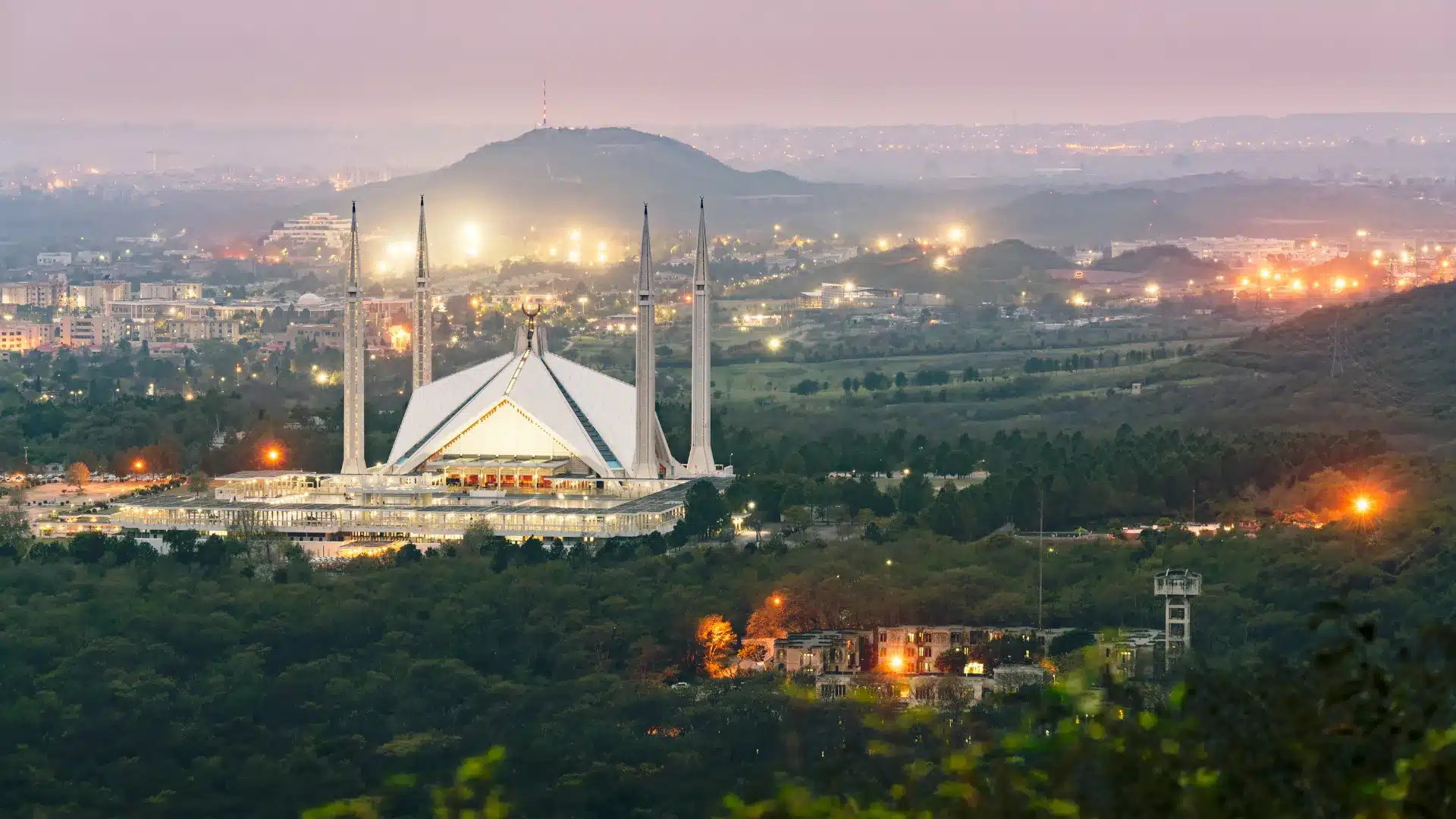
Islamabad — the planned modern capital, surrounded by the Margalla Hills. The Faisal Mosque — one of the largest mosques in the world — gives productions an architectural landmark of significant scale. Modern government district, the Pakistan Monument and the green hill backdrop. Municipal coordination for public filming.
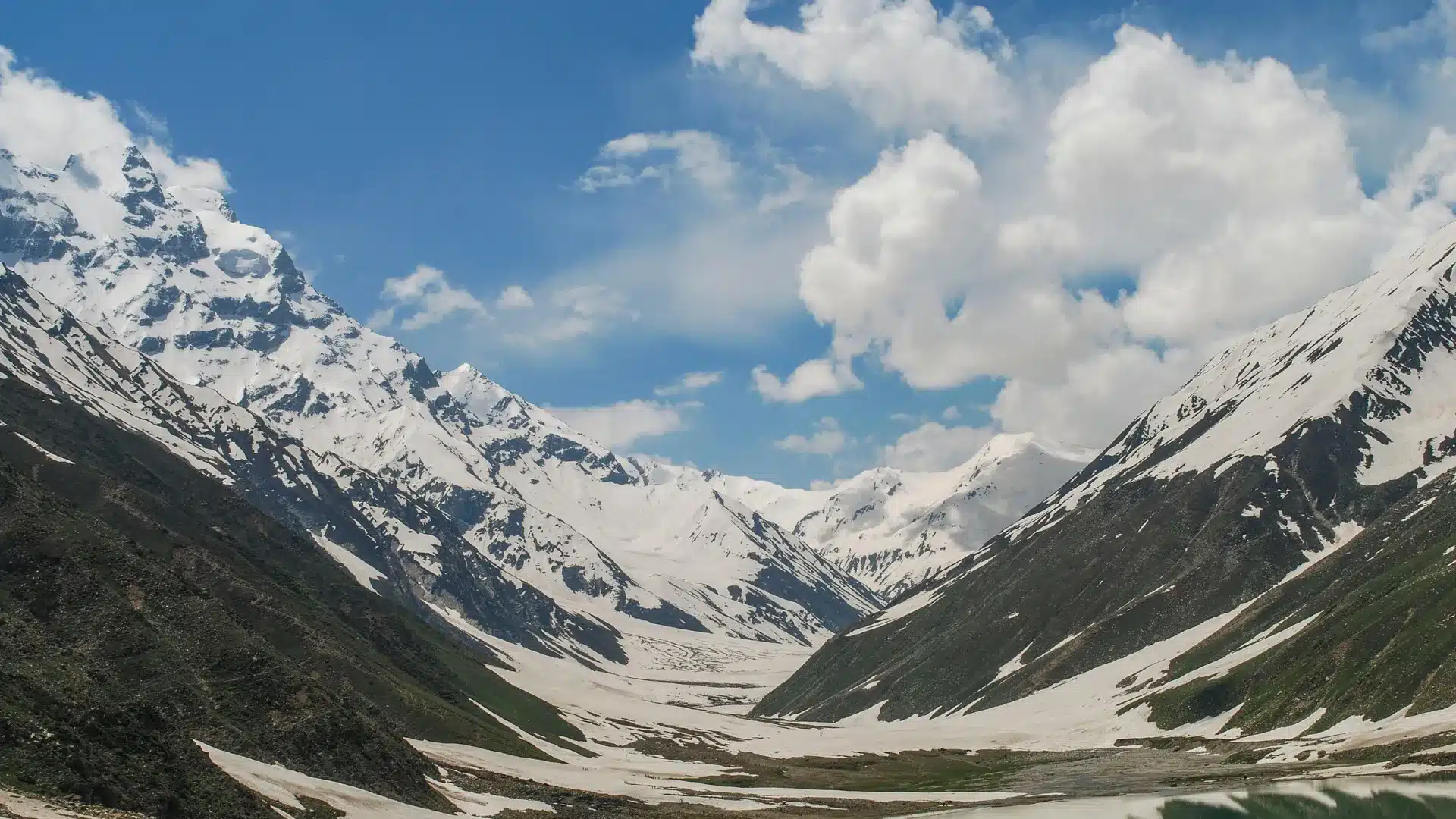
Karakoram Highway filming — one of the world’s most dramatic mountain roads, connecting Islamabad to the Chinese border through the Karakoram range. The highway passes through Besham, Chilas, Gilgit and the Hunza Valley, with the Karakoram, Hindu Kush and Pamir ranges visible throughout. For automotive, travel, adventure and landscape productions, the Karakoram Highway offers a filming corridor of extraordinary visual quality.
Hunza Valley filming location — a high-altitude valley in Gilgit-Baltistan, with Rakaposhi, Ultar Sar and Bojahagur Duanasir II forming the backdrop. The ancient Baltit Fort, the apricot orchards and the distinctive Hunzakut culture give productions a combination of heritage, landscape and human character. One of the most visually compelling valleys in Asia.
Taxila — the ancient Gandhara civilisation site northwest of Islamabad, a UNESCO World Heritage Site with Buddhist stupas, monasteries and Hellenistic-influenced sculpture dating back to the fourth century BCE. Department of Archaeology permissions required for professional filming.
Mohenjo-daro, Sindh — one of the world’s earliest urban settlements, a UNESCO World Heritage Site of the ancient Indus Valley Civilisation. Department of Archaeology permissions required. Remote access by domestic flight or road from Karachi.
Gilgit-Baltistan — the high-altitude mountain region encompassing K2, Nanga Parbat, the Concordia glacier confluence and the Fairy Meadows viewpoint. For expedition, adventure and mountain documentary productions. Some areas require additional permits and security coordination.
Drone Filming Requirements
Drone local usage permission in Pakistan is obtained from local authorities and takes two to five days from submission.
Required documentation:
- Synopsis of the project
- Letter from the broadcaster or commissioner
- Crew list
- CV with previous work credits
Processing time: Two to five days.
Estimated cost: USD 50 for local drone usage permission.
Drones can be imported into Pakistan without additional importation permits beyond standard customs clearance. However, drone operations near military installations, government buildings, airports and sensitive locations require specific local authority confirmation. Productions should not assume that general local usage permission covers operations at every intended filming location.
Hoodlum coordinates drone permission alongside the broader production logistics to ensure aerial days are supported within the schedule.
Equipment Customs Clearance
Pakistan is an ATA Carnet country. Professional filming equipment can be imported under the standard Carnet system.
General process:
- ATA Carnet prepared in the country of equipment origin, including a list of equipment, values and serial numbers
- Copy sent to Hoodlum in advance to facilitate customs clearance
- Presented at airport customs upon arrival
Issuing authority: Customs at the arrival airport.
Processing time: Quick with pre-prepared documentation.
Hoodlum’s pre-clearance process — receiving the Carnet copy in advance and coordinating with customs — is the most effective way to ensure equipment clearance supports the production schedule rather than delaying it. Send the Carnet documentation to Hoodlum before freight departs.
Safety and Security for Productions
Pakistan’s security environment varies significantly by region. Productions must check current government travel advisories for all crew nationalities before any commitment is made. Some regions carry elevated risk profiles that require specific assessment and planning.
Key safety and security considerations:
- Check current government travel advisories for all crew nationalities before committing to any Pakistan production
- Conduct a current regional security assessment with Hoodlum for each specific location on the shot list
- Some locations may require security personnel to manage crowds in busy urban areas
- Certain regions — parts of Balochistan, border areas with Afghanistan, tribal districts — require specific security planning beyond standard production precautions
- Hire experienced local guides and fixers with current regional knowledge for all locations
- Establish clear communication protocols, check-in schedules and emergency procedures before crew travel
- Confirm medical access and emergency response planning for remote northern mountain locations
- Protect equipment in extreme summer heat in plains regions and extreme cold in northern mountain environments
- Ensure production insurance covers Pakistan-specific risks
Hoodlum’s in-country team provides honest, current, location-specific security assessment and coordinates appropriate security personnel where required.
Film Incentives and Production Benefits
Pakistan does not currently offer a national film rebate or tax incentive programme for international productions. The primary production advantages are competitive production costs, distinctive visual environments and the integrated journalist visa process that combines permit and accreditation into a single application.
Confirm any available facilitation with the Ministry of Information and Hoodlum before budgeting.
How the Main Approvals Fit Together
Journalist visa, Ministry of Information film permit and crew accreditation (all one integrated process), drone local usage permission, ATA Carnet customs clearance, UNESCO and heritage site permissions and private location agreements are the main approval streams for a Pakistan production.
A complete production plan connects:
- Journalist visa submitted — six to eight weeks before first filming day, initiated first
- Drone local usage permission — two to five days, initiated closer to the shoot
- ATA Carnet documentation sent to Hoodlum before freight departs
- UNESCO and heritage site permissions for Lahore Fort, Badshahi Mosque, Taxila, Mohenjo-daro
- Current security assessment for all intended locations
- Regional-specific security planning for Balochistan, border areas or sensitive zones where applicable
- Medical access and evacuation planning for northern mountain locations
Allow eight to ten weeks from first engagement to first filming day.
When Pakistan Is the Right Choice
Pakistan is the right choice when a production has a specific creative or editorial reason to be in-country and has confirmed current travel conditions with Hoodlum.
It is especially suitable for:
- Documentary on Pakistan, Islamic heritage and South Asian civilisation
- Heritage and archaeological documentary — Lahore Fort, Taxila, Mohenjo-daro
- Adventure and expedition content — Karakoram Highway, Hunza Valley, K2 region
- Travel and exploration programming
- Mughal heritage feature film production
- Commercial campaigns needing mountain or heritage environments
- Cultural documentary — Sufi traditions, crafts, festival culture, truck art
- Conservation and environmental storytelling
It may be less suitable for productions that cannot allocate adequate resources to security planning, have no specific in-country creative requirement, or have short pre-production windows that cannot accommodate the six-to-eight-week journalist visa process.
Common Mistakes to Avoid
Avoid:
- Starting the journalist visa application with less than eight weeks before the intended first filming day
- Failing to check current travel advisories for all crew nationalities before committing to the production
- Assuming drone local usage permission covers all locations without checking military and sensitive area restrictions
- Arriving with incomplete Carnet documentation — send to Hoodlum in advance for pre-clearance
- Planning Lahore Fort and Badshahi Mosque filming without confirming UNESCO heritage authority permissions
- Planning northern mountain locations without medical access and evacuation arrangements confirmed
- Working without a local fixer who has current regional knowledge for the specific locations on the shot list
- Underestimating the Karakoram Highway journey times and logistics for multi-location northern mountain shoots
How Hoodlum Supports Local Production
Support may include:
- Local fixer coordination across Islamabad, Lahore, Karachi and all regional locations
- Journalist visa application support — synopsis, broadcaster letters, crew list coordination
- Ministry of Information film permit and accreditation (integrated with visa)
- UNESCO and heritage site permission coordination — Lahore Fort, Badshahi Mosque, Taxila, Mohenjo-daro
- Karakoram Highway and Hunza Valley logistics
- Gilgit-Baltistan and northern mountain location coordination
- Drone local usage permission coordination
- ATA Carnet pre-clearance coordination with customs
- Location research and RECCE across all Pakistan filming environments
- Private location agreements
- Local crew and talent sourcing
- Transportation and vehicle hire
- Accommodation sourcing across Pakistan
- Current security assessments and regional security coordination
- Medical access planning for remote and mountain locations
- On-the-ground production management
FAQ Section
Do international film crews need a special visa to film in Pakistan? Yes. A journalist visa is required for professional filming. The journalist visa application simultaneously covers the Ministry of Information film permit and crew accreditation — one application covers all three. Processing takes six to eight weeks. Cost: USD 500. Apply at https://visa.nadra.gov.pk/journalist-visa. Check current travel advisories for all crew nationalities before applying.
How long should productions allow for approvals? Allow eight to ten weeks from first engagement to first filming day. The journalist visa takes six to eight weeks and is the binding timeline. Drone local usage permission takes two to five days and can be processed closer to the shoot. ATA Carnet documentation should be sent to Hoodlum well before freight departs.
Can productions film at Lahore Fort and the Badshahi Mosque? Yes, but both are UNESCO World Heritage Sites requiring specific heritage authority permissions in addition to the Ministry of Information approval included in the journalist visa. Confirm Lahore Fort and Badshahi Mosque permissions as separate parallel streams alongside the visa application.
Can productions use drones in Pakistan? Yes. Local drone usage permission from local authorities takes two to five days and costs approximately USD 50. Drones can be imported without additional importation permits. Operations near military installations, airports and sensitive areas require specific local authority confirmation before aerial sequences are scheduled.
Is Pakistan a Carnet country? Yes — Pakistan is an ATA Carnet country. Send the Carnet documentation copy to Hoodlum before freight departs for pre-clearance coordination. Quick clearance at the airport with pre-prepared documentation.
What makes the Karakoram Highway significant for productions? The Karakoram Highway is one of the world’s highest paved roads, connecting Islamabad to the Chinese border through the Karakoram range. It passes through the Hunza Valley and gives productions access to dramatic mountain landscapes, ancient fortresses, traditional mountain communities and the Karakoram, Hindu Kush and Pamir mountain backdrops. For automotive, travel, adventure and landscape productions it is one of the most distinctive filming corridors in Asia.
Is it safe to film in Pakistan? Safety varies significantly by region. Productions must check current government travel advisories for all crew nationalities and conduct a location-specific security assessment with Hoodlum before any commitment is made. Many locations — Lahore, Islamabad, Karachi, the Karakoram Highway and Hunza Valley — are regularly filmed by international productions with appropriate planning. Hoodlum provides current, honest, region-specific guidance.
Authority Links
- Pakistan Journalist Visa Application
- Pakistan Ministry of Information
- Pakistan Tourism Development Corporation
- Hoodlum Film Fixers — Contact
Everything You Need to Know About Filming in Pakistan
Filming in Pakistan is built around one central administrative fact and one central operational responsibility.
The administrative fact: Pakistan’s journalist visa combines the Ministry of Information film permit and crew accreditation into a single integrated application. One form, one submission, one six-to-eight-week timeline. This is one of the most streamlined production approval structures in South Asia — and the six-to-eight-week timeline is the binding constraint that must be the first planning conversation with Hoodlum.
The operational responsibility: Pakistan’s security environment varies significantly by region. Productions must check current government travel advisories for all crew nationalities and conduct a location-specific security assessment with Hoodlum before any commitment is made. Lahore, Islamabad, Karachi, the Karakoram Highway and Hunza Valley are regularly filmed by international productions with appropriate planning. Some regions require additional security consideration. Hoodlum provides honest, current, region-specific guidance.
Productions that understand both facts — and plan accordingly — will find Pakistan delivers visual production value of extraordinary depth and distinctiveness.
The Pakistan journalist visa — one application, three approvals
The journalist visa Pakistan filming process is one of the most practically efficient production permit structures in Asia. A single application — submitted at https://visa.nadra.gov.pk/journalist-visa — simultaneously covers the journalist visa for entry, the Ministry of Information filming permit, and international crew accreditation.
Required documentation is the same across all three: project synopsis, letter from the broadcaster or commissioner, crew list with names and nationalities, and CVs with previous work credits for key crew. Processing takes six to eight weeks. Cost: USD 500 per application.
The efficiency of this integrated process means that productions do not need to manage three separate government relationships, three separate document packages and three separate processing timelines. The trade-off is the six-to-eight-week window, which must be the first item confirmed in the pre-production calendar.
Productions should submit the journalist visa application at least eight weeks before the intended first filming day. Productions that start later will find the timeline is the constraint that determines everything else.
Lahore filming locations — Mughal heritage and the UNESCO sites
Lahore filming locations give international productions access to some of the most significant Mughal architecture in the world.
The Badshahi Mosque — built by Emperor Aurangzeb in 1673 — is one of the largest mosques in the world, with a courtyard capacity of 100,000 worshippers. Lahore Fort — a UNESCO World Heritage Site — is a compound of Mughal palaces, gardens, elephant ramps and the jewel-encrusted Shish Mahal (Mirror Palace) that spans five centuries of construction. Shalimar Gardens, another UNESCO World Heritage Site, is a terraced Mughal garden of extraordinary formal beauty. The Walled City of Lahore contains bazaars, shrines, mosques and havelis of the Mughal and colonial periods within a dense medieval urban fabric.
Lahore filming locations at UNESCO sites require specific heritage authority permissions in addition to the Ministry of Information coverage within the journalist visa. These are separate approval streams that must be initiated in parallel with the visa application. Productions that assume the journalist visa covers unrestricted Lahore Fort and Badshahi Mosque access will discover this on location.
Municipal coordination applies for public street filming in the Walled City and major bazaar areas. Lahore’s street life — the food markets, the truck art workshops, the Sufi shrine evenings at Data Darbar — gives productions a human and cultural visual depth that is one of Pakistan’s most distinctive production assets.
Karakoram Highway filming and Hunza Valley filming location
The Karakoram Highway is one of the world’s most extraordinary filming corridors and one of the most under-used by international productions relative to its visual quality.
The highway runs from Islamabad to the Chinese border through the Karakoram range — approximately 1,300 kilometres of mountain road through Besham, Chilas, Gilgit, the Hunza Valley, the Khunjerab Pass and on to Kashgar. For the majority of its length, the highway passes through some of the most dramatic mountain landscapes in Asia, with the Karakoram, Hindu Kush and Pamir ranges visible from the road itself.
The Hunza Valley filming location gives productions what many consider the most beautiful valley in Pakistan. Baltit Fort above Karimabad, the apricot and cherry blossom orchards in spring, Rakaposhi and Ultar Sar dominating the valley skyline, and the Hunzakut culture of music, hospitality and mountain agriculture give productions a combination of heritage, landscape and human character of exceptional quality.
Journey times on the Karakoram Highway require honest planning. Islamabad to Gilgit by road is twelve to sixteen hours. Productions should plan road journeys as distinct production logistics days with accommodation en route, not as incidental travel between location days. Domestic flights to Gilgit and Skardu are available but are weather-dependent.
Pakistan Ministry of Information filming — integrated permit structure
The Pakistan Ministry of Information filming approval is embedded within the journalist visa application — no separate permit submission is required. This means the same documentation package covers entry, working rights and filming authority in a single six-to-eight-week process.
What the journalist visa Ministry of Information coverage does not automatically include is UNESCO World Heritage Site access, Department of Archaeology permissions for Taxila and Mohenjo-daro, and regional-specific permissions for Gilgit-Baltistan or other sensitive areas. Those run as parallel streams that Hoodlum manages alongside the journalist visa application.
Productions filming at Taxila — the ancient Gandhara civilisation site near Islamabad — require Department of Archaeology permission. Taxila’s Buddhist stupas, Hellenistic-influenced sculpture and extraordinary archaeological depth make it one of the most significant and visually compelling heritage locations in South Asia, and one of the least-filmed internationally. Mohenjo-daro in Sindh — a UNESCO World Heritage Site of the 4,500-year-old Indus Valley Civilisation — requires the same Department of Archaeology coordination and remote access logistics.
Drone permit Pakistan — two to five day local permission
The drone permit Pakistan process is notably simpler than in many filming destinations. Local drone usage permission from local authorities takes two to five days and costs USD 50. Drones can be imported without additional importation permits beyond standard customs clearance.
Required documentation is consistent with the journalist visa package: project synopsis, broadcaster letter, crew list and CVs with previous work.
The important caveat is location sensitivity. Drone operations near military installations, government buildings, airports and certain sensitive areas require specific local authority confirmation before aerial sequences are scheduled. General local usage permission does not automatically authorise operations everywhere the production plans to fly.
Productions planning drone work along the Karakoram Highway, above the Lahore Fort and Badshahi Mosque, or in the Hunza Valley should confirm location-specific permissions with Hoodlum before committing aerial days to the schedule.
Pakistan customs clearance ATA Carnet — the pre-clearance advantage
Pakistan customs clearance for filming equipment benefits from Pakistan’s ATA Carnet membership. The most efficient approach is to send a copy of the Carnet documentation to Hoodlum before freight departs — Hoodlum pre-coordinates with airport customs so clearance on arrival is fast.
With pre-prepared documentation, clearance is quick. Without advance coordination, customs processing can extend significantly. Send the Carnet copy to Hoodlum before packing freight.
Complete equipment lists with serial numbers and values are required. Productions routing equipment through different Pakistani airports — Islamabad, Lahore or Karachi — should ensure documentation reflects the actual arrival airport for each item.
Karachi filming location — Pakistan’s urban and coastal capital
The Karachi filming location gives productions access to Pakistan’s largest city and its most economically diverse urban environment.
Karachi’s visual character combines the historic colonial architecture of the Frere Hall and the Empress Market, the port energy of the Arabian Sea waterfront, the Clifton Beach seafront, the old city character of Lyari, the Quaid-e-Azam’s mausoleum, the commercial towers of the modern business district, and the extraordinary social and cultural diversity of a city of over twenty million people.
For commercial campaigns, documentaries on Pakistan’s urban economy, feature films requiring a South Asian metropolitan environment and content exploring Pakistan’s multicultural character, the Karachi filming location offers a visual range and human depth that is genuinely distinct from Lahore’s heritage character or Islamabad’s planned capital aesthetic.
Municipal coordination applies for public location filming. Security planning for specific Karachi locations should be confirmed with Hoodlum given the city’s variable neighbourhood security profile.
Pakistan location scouting — from Punjab to Karakoram
Pakistan location scouting across a country of this geographic range — from the Punjab plains and Lahore’s Mughal heritage, to the Sindh desert and Mohenjo-daro, to the Karakoram Highway and the Hunza Valley, to the Balochistan plateau and the Makran coast — requires a fixer with genuine regional knowledge and honest current assessment of which locations are viable for international productions.
Hoodlum’s Pakistan location scouting covers the full national geography with current situational awareness built into every recommendation. Pakistan location scouting is most effective when Hoodlum is engaged before the shot list is fixed, so locations are assessed against both the creative brief and the current operational reality.
What a Pakistan film fixer actually does
A Pakistan film fixer submits the journalist visa application with complete documentation — the single integrated submission that covers the Ministry of Information filming permit and crew accreditation simultaneously — manages UNESCO and heritage authority permissions for Lahore Fort, Badshahi Mosque, Taxila and Mohenjo-daro as parallel independent streams, coordinates drone local usage permission closer to shoot days, sends the ATA Carnet copy to customs for pre-clearance coordination, conducts current region-specific security assessments for each location on the shot list, plans Karakoram Highway journey logistics with realistic travel times, manages Hunza Valley access and logistics, coordinates security personnel where required for urban crowd management, confirms medical access for northern mountain locations, and conducts Pakistan location scouting across the full national geography.
Film production Pakistan works most efficiently when Hoodlum is engaged eight to ten weeks before the first filming day — giving the journalist visa its six-to-eight-week processing window while running all other approval streams in parallel.
Hoodlum provides full production support for international crews across all Pakistan filming locations — from early research and Pakistan location scouting through journalist visa coordination, Lahore filming location heritage access, Karakoram Highway and Hunza Valley filming location logistics, drone permit Pakistan coordination, Pakistan customs clearance ATA Carnet pre-clearance, and on-the-ground production management across Islamabad, Lahore, Karachi and all regional environments. For enquiries, visit hoodlum.tv/contact-us.
Pakistan in a South Asia film production guide context
For productions building a South Asia film production guide — comparing Pakistan with India, Nepal, Bhutan, Bangladesh and Sri Lanka — Pakistan occupies a position of distinctive visual identity and specific logistical character.
It is the only South Asian country that combines the Karakoram Highway filming corridor, the Hunza Valley filming location, K2 and the world’s second-highest peak, the Mughal heritage concentration of Lahore filming locations including Lahore Fort, the Gandhara civilisation of Taxila, the Indus Valley Civilisation of Mohenjo-daro, the Sufi cultural depth of Multan, and the Arabian Sea coastal energy of the Karachi filming location — all within a single journalist visa and Ministry of Information filming integrated permit framework.
Productions that have filmed in India will find Pakistan a visually and culturally distinct alternative register — a different architectural vocabulary, a different mountain landscape character, a different urban energy, and a production approval structure that is notably more streamlined than India’s multi-authority, multi-state system.
The practical groundwork is always the same: submit the journalist visa eight weeks before filming, treat it as the single integrated permit that it is, initiate UNESCO and heritage authority permissions in parallel, send the ATA Carnet to Hoodlum before freight departs, apply for drone local usage permission two to five days before aerial shoot days, check current travel advisories and complete a location-specific security assessment before any schedule is confirmed, and engage Hoodlum’s Pakistan film fixer team at the research and budgeting stage rather than the departure week.