
















Introduction
Hoodlum offers expert film fixer services in the Philippines, supporting international productions across one of Southeast Asia’s most visually diverse archipelago destinations.
The Philippines comprises over 7,000 islands spanning a vast range of environments — the dense urban energy of Metro Manila, the limestone karst lagoons of El Nido and Coron in Palawan, the rice terraces of the Cordillera mountains in northern Luzon, the white sand beaches of Boracay and Siargao, the historic Spanish colonial architecture of Vigan and Intramuros, the volcanic landscapes of Mayon and Taal, and the marine biodiversity of the Visayas and Mindanao reef systems.
The Philippines has hosted numerous major international productions and has a well-developed local production infrastructure with experienced crew, equipment rental and post-production facilities concentrated in Metro Manila and Cebu.
The Philippines is an ATA Carnet country, though a customs bond is currently required for equipment importation alongside the Carnet process. The general film permit is issued at provincial, city, barangay and police level depending on the location and subject matter — meaning the correct permitting authority varies significantly by shoot location. The Film Development Council of the Philippines (FDCP) plays a central role in drone importation and customs clearance documentation. Special Work Permits (SWP) are required for all foreign crew, with no personal appearance required.
Philippines Film Production Guide for International Crews
The Philippines is a Southeast Asian filming destination that works for a wide range of production types across an archipelago of extraordinary geographic diversity. The country is served by Ninoy Aquino International Airport in Manila, Mactan-Cebu International Airport, Francisco Bangoy International Airport in Davao, and numerous regional airports connecting to Palawan, Boracay, Siargao and other island destinations.
The main production environments include Metro Manila’s urban density and historic Intramuros district, the limestone island lagoons of Palawan (El Nido and Coron), the rice terraces of Banaue and the Cordillera mountain region in northern Luzon, the beach destinations of Boracay and Siargao, the colonial heritage town of Vigan, the volcanic landscapes of Mayon and Taal, Cebu and the Visayas island chain, and the diverse cultural and natural environments of Mindanao.
A successful Philippines production requires understanding the permitting structure — the relevant authority (provincial government, city government, barangay, police or traffic bureau) depends on the location and subject matter, and processing times range from two to three days for most locations to six months or more for military locations or support. Special Work Permits, drone permits and customs clearance through the FDCP run as parallel processes.
Why Film Production Works Well in the Philippines
The Philippines works for productions that need a combination of dramatic island and marine environments, tropical mountain landscapes, Spanish colonial heritage architecture, dense modern urban environments and a production infrastructure with experienced English-speaking local crew.
Strong production use cases include:
- Feature film and television drama
- Commercial and advertising campaigns
- Travel and tourism content — island and beach environments
- Nature and marine documentary — reef systems, whale shark and marine biodiversity
- Heritage and cultural documentary — Spanish colonial architecture, indigenous Cordillera culture
- Adventure and surf content — Siargao, northern Luzon
- Music videos
- Reality and competition formats
- Still photography and fashion campaigns
- Volcanic and geological documentary — Mayon, Taal
The Philippines’ English proficiency — one of the highest in Asia — significantly simplifies communication with permit authorities, location managers, crew and production partners. Manila and Cebu have established local crew bases with international production experience.
Best Time of Year to Film
The dry season from December to May offers the most reliable filming conditions across most of the Philippines — clear skies, lower humidity and minimal rainfall for outdoor, island and aerial work.
The rainy season runs June to November, with frequent rainfall and high humidity. Typhoon season overlaps with this period, particularly July to October, and can significantly affect outdoor filming, inter-island travel and flight schedules across the archipelago.
Regional variation applies:
- Palawan (El Nido, Coron) — best conditions November to May. Avoid peak typhoon months for island-hopping logistics.
- Boracay and the Visayas — December to May optimal.
- Cordillera mountains (Banaue rice terraces) — accessible year-round but clearer views in dry season; rainy season brings dramatic mist and cloud.
- Siargao — surf season and best weather typically September to November, though this overlaps with typhoon risk.
- Mindanao — generally drier than the rest of the country with less pronounced seasonal variation.
Productions should plan typhoon contingency for any shoot scheduled June to November, particularly for inter-island and aerial logistics.
Visa and Entry Requirements for Crew
International crews should complete pre-travel registration through the official government portal before arrival. Many nationalities are eligible for visa on arrival — productions should check eligibility for each crew member’s nationality.
Required documentation:
- Pre-travel registration confirmation
- Valid passport
- Proof of visa eligibility or visa on arrival documentation for the relevant nationality
- Yellow fever vaccination card, where applicable
- COVID-19 vaccination documentation, where required
Processing time: Allow at least three weeks for Tourist Visa processing for nationalities that require one in advance.
Estimated cost: Visa fees vary depending on country of origin.
The tourist visa or visa on arrival covers entry. Work authorisation for paid professional filming is handled through the separate Special Work Permit process — see crew accreditation below.
International Crew Accreditation — Special Work Permit (SWP)
All foreign crew members require a Special Work Permit (SWP) to work professionally in the Philippines. Hoodlum facilitates the SWP application process with the Bureau of Immigration. No personal appearance is required for foreign crew members.
Required documentation (individual):
- CGAF Form
- BIR Form 1904
- 2×2 photo on white background
- Scanned passport bio page
- Scanned marriage certificate and/or national ID of spouse, where applicable
- Accomplished Joint SPA (original signature required)
- Copy of round-trip international flight booking
Required documentation (group):
- Working Contract
- Contract for Bid
- Flex Form A
- Flex Form B
Processing time: Hoodlum manages the application process to minimise delays.
Estimated cost: USD 100 plus application costs, handled by Hoodlum.
The SWP is a required prerequisite for the customs clearance guarantee letter — this dependency should be factored into the pre-production timeline.
Film Permits and the Multi-Authority Permitting Structure
The general film permit process in the Philippines is unusual in that the permitting authority depends on the location and subject matter — it may be the Provincial Government, City Government, Barangay (village), Police and/or Traffic Bureau.
Required documentation:
- Letter of request
- Storyboard, where required (not always)
- Project synopsis
Processing time:
- Two to three days for most standard locations
- Up to one to two weeks for government offices
- Six months or more for military locations or military support
Estimated cost:
- PHP 5,000–50,000 depending on the location
- Private establishments may charge more than PHP 100,000
The wide range in processing time — from two days to six months — makes early identification of the correct permitting authority for each location the single most important planning step. A production that assumes a uniform two-to-three-day timeline across all locations and discovers a military support requirement late in pre-production will face significant schedule disruption.
Hoodlum identifies the correct permitting authority for each specific location at the outset and manages applications across all relevant authorities in parallel.
Key Filming Locations and What Access Requires
Manila filming locations — the National Capital Region combines the historic Spanish colonial walled city of Intramuros, the modern business districts of Makati and Bonifacio Global City, the colourful jeepney and street culture of the wider metro area, and the Manila Bay waterfront. Permitting authority depends on the specific district — city government and barangay coordination required.
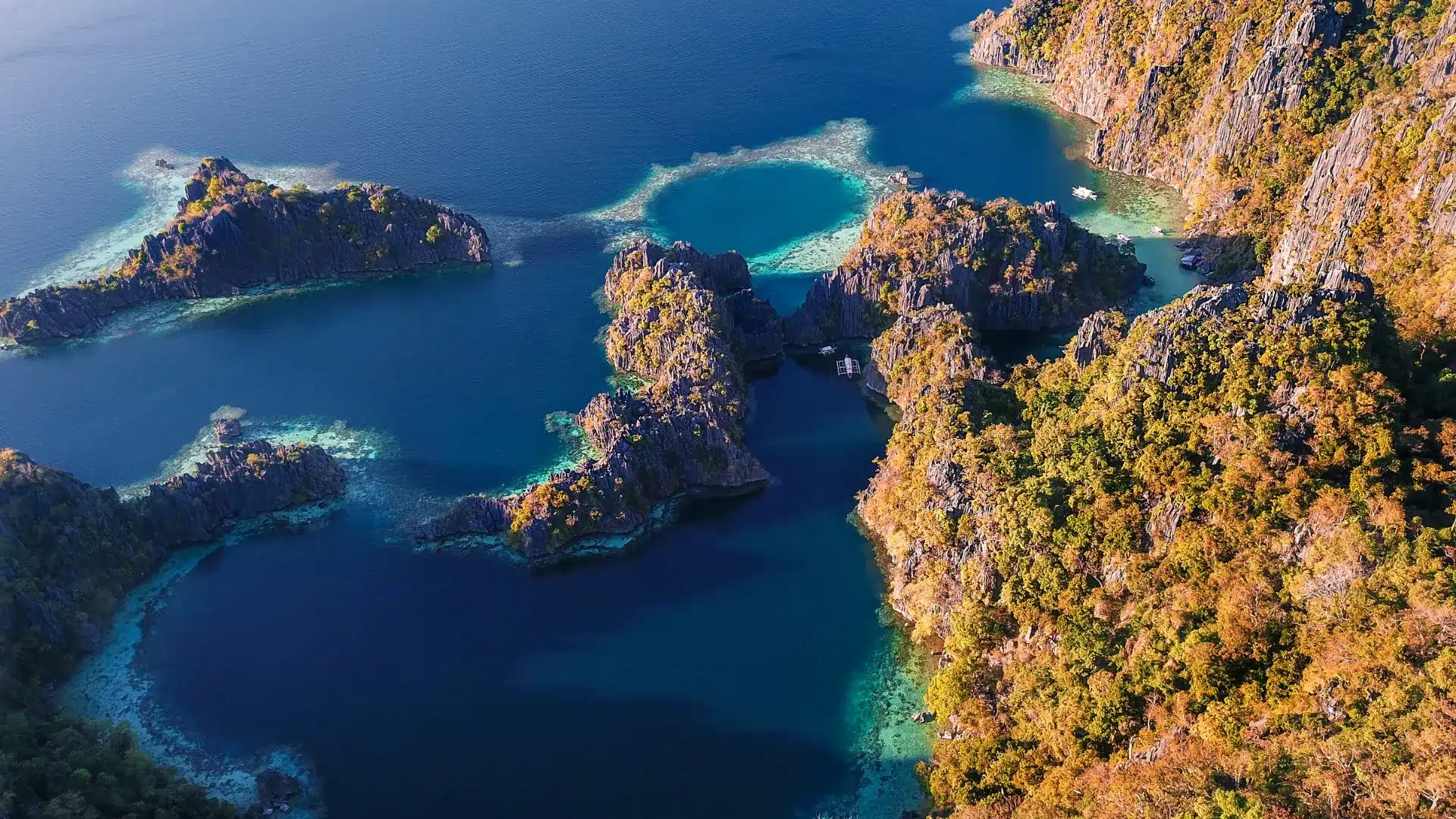
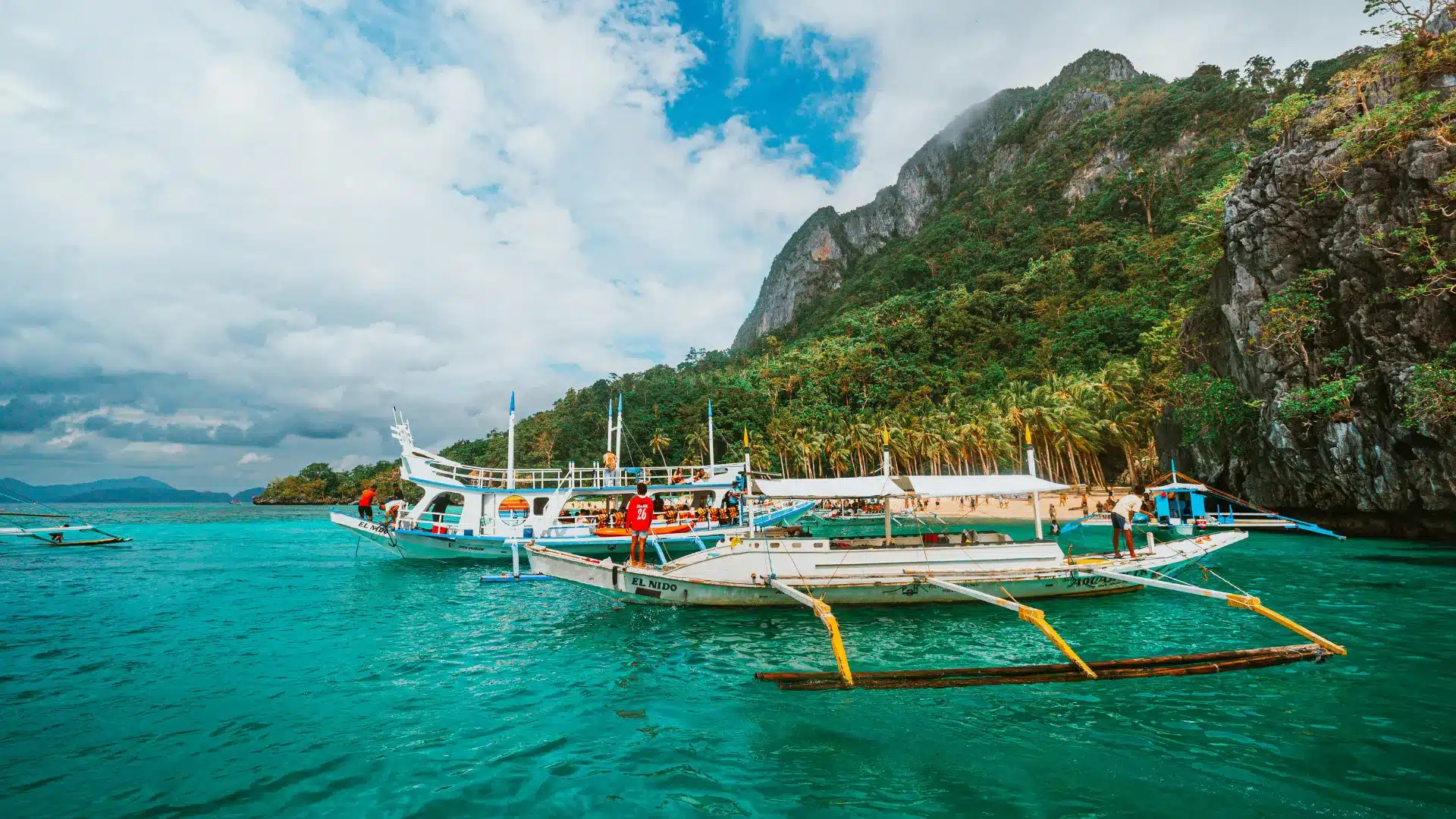
Palawan filming location — El Nido and Coron — limestone karst island lagoons widely regarded as among the most visually spectacular in the world. El Nido’s Bacuit Archipelago and Coron’s shipwreck diving sites and Kayangan Lake give productions marine and landscape environments of exceptional quality. Boat logistics required for island-hopping. Provincial and local permitting.
Cordillera mountains — Banaue Rice Terraces — UNESCO World Heritage Site rice terraces carved into the mountainsides of northern Luzon by the Ifugao people over 2,000 years ago. Indigenous community coordination and provincial permitting required. Remote logistics from Manila — significant road travel time.
Boracay filming location — one of the world’s most internationally recognised beach destinations, with White Beach’s powder-fine sand. Heavily regulated following environmental rehabilitation — specific permitting and capacity considerations apply. Provincial and municipal coordination required.
Cebu filming location and the Visayas — Cebu City as the “Queen City of the South” combines urban, historic (Magellan’s Cross, Fort San Pedro) and gateway-to-islands character. The surrounding Visayas islands — Bohol (Chocolate Hills), Siquijor, and the whale shark interaction sites of Oslob — extend the region’s production range significantly.
Siargao — the surfing capital of the Philippines, with Cloud 9 and a growing reputation for laid-back island character combined with world-class waves. Surf season logistics and inter-island flight planning required.
Mayon Volcano and Taal Volcano — two of the Philippines’ most iconic and most active volcanoes, offering dramatic geological landscapes for documentary and landscape productions. Volcanic activity monitoring and safety zone restrictions apply — confirm current status before scheduling.
Vigan — a UNESCO World Heritage Site Spanish colonial town in Ilocos Sur with cobblestone streets and preserved colonial architecture, offering a heritage filming environment distinct from Manila’s Intramuros.
Drone Filming Requirements
Drone operations in the Philippines follow the same permitting authorities as the general film permit — meaning processing time can range from two to three days to six months depending on location.
Local drone operators and rental:
Hoodlum works with local drone operators offering a range of drones including FPV, Mavic Cine 3 and Inspire 2. Competitive rental rates: Mavic Cine 3 approximately PHP 25,000 per day; Inspire 2 approximately PHP 50,000 per day. Using local operators significantly simplifies the importation and licensing process.
Drone importation:
Advance notice is required to obtain a customs clearance letter from the Film Development Council of the Philippines (FDCP). A special working permit for drone pilots is facilitated by Hoodlum.
Required documentation (local drone permit): Storyboard or synopsis and shoot schedule.
Required documentation (drone importation): Shoot schedule, synopsis and storyboard.
Processing time: Same as the general film permit — two to three days to six months depending on location and authority.
For productions without their own drone equipment, hiring local operators with existing licensed drones is significantly more efficient than importing foreign equipment.
Equipment Customs Clearance
The Philippines is an ATA Carnet country, though a customs bond is currently required for equipment importation via air or sea freight alongside the Carnet process.
Process:
- Apply for the Special Work Permit (SWP)
- Obtain a guarantee letter of re-exportation from the Film Development Council of the Philippines (FDCP)
- Present the letter to customs officials at the airport
Required documentation:
- Equipment list
- Project synopsis
- Crew member details
Issuing authority: Philippines Customs.
Processing time:
- Customs clearance letter: three to five days
- Special Work Permit: one week (no crew member appearance required)
Estimated cost:
- Freight costs depend on weight and destination
- Customs clearance letter and Special Work Permit: PHP 6,440 plus USD 50
The sequencing here matters — the SWP must be obtained before the FDCP guarantee letter can be issued, and the guarantee letter must be presented to customs. Productions should factor this dependency chain into the equipment logistics timeline.
Safety and Security for Productions
The Philippines is generally safe for international productions, with caution advised in the same manner as any international destination. The southernmost regions of Mindanao require additional security consideration.
Key safety and security considerations:
- No mandatory security measures unless specifically requested by the production
- Exercise standard travel caution as in any international destination
- Additional security planning required for filming in the southernmost regions of Mindanao — confirm current conditions with Hoodlum
- Build typhoon contingency into schedules for June to November shoots
- Plan inter-island logistics carefully — flights and ferries are weather-dependent during typhoon season
- Volcanic activity monitoring for Mayon and Taal locations — confirm current alert status before scheduling
- Protect equipment from high humidity and salt air in coastal and island environments
- Ensure production insurance covers all activities and locations
Film Incentives and Production Benefits
The Philippines offers film incentive information through Hoodlum and the Film Development Council of the Philippines. Productions should confirm current incentive availability, eligibility criteria and application processes directly with Hoodlum and the FDCP before budgeting.
The primary cost advantage of the Philippines as a production destination is competitive local crew rates, equipment rental (including drone hire) and logistics, combined with a highly English-proficient workforce that simplifies international production management.
How the Main Approvals Fit Together
Pre-travel registration and visa, Special Work Permit (SWP), general film permit (authority varies by location), drone permit (same authority structure), FDCP customs clearance guarantee letter and ATA Carnet/bond customs process are the main approval streams.
A complete production plan connects:
- Pre-travel registration and visa eligibility confirmed for all crew nationalities
- Special Work Permit (SWP) — approximately one week, required before FDCP guarantee letter
- General film permit — two to three days for standard locations, up to six months for military locations; correct authority identified per location
- Drone permit — same authority structure and timeline as film permit
- FDCP customs clearance guarantee letter — three to five days, requires SWP first
- ATA Carnet plus customs bond presented at airport
- Provincial, indigenous community or volcanic safety zone permissions where applicable
Hoodlum manages all of these as one coordinated workflow, with particular attention to identifying the correct permitting authority and processing time for each specific location early in pre-production.
When the Philippines Is the Right Choice
The Philippines is the right choice when a production needs a combination of dramatic island and marine environments, mountain rice terrace landscapes, Spanish colonial heritage architecture, modern urban environments and an English-proficient production base with competitive costs.
It is especially suitable for:
- Travel and tourism content across the archipelago
- Marine and nature documentary — reef systems, whale sharks, island biodiversity
- Feature films and television drama requiring island or Southeast Asian urban settings
- Commercial campaigns needing beach, island or tropical environments
- Heritage and cultural documentary — Cordillera, Spanish colonial towns
- Adventure and surf content
- Music videos
- Reality and competition formats
- Still photography and fashion campaigns
- Volcanic and geological documentary
It may be less suitable for productions requiring a single uniform permitting timeline across all locations, or those planning military-adjacent locations without six months of lead time.
Common Mistakes to Avoid
Avoid:
- Assuming a uniform two-to-three-day permit timeline across all locations — military locations can take six months or more
- Not identifying the correct permitting authority (provincial, city, barangay, police, traffic bureau) for each location early
- Treating the SWP and FDCP guarantee letter as independent — the SWP must come first
- Importing foreign drones without considering local operator hire as the simpler alternative
- Planning inter-island logistics during typhoon season without contingency
- Scheduling Mayon or Taal volcano locations without confirming current activity status
- Underestimating Boracay’s specific environmental permitting requirements post-rehabilitation
- Working without a local fixer who can navigate the location-dependent permitting structure
How Hoodlum Supports Local Production
Support may include:
- Local fixer coordination across Manila, Cebu, Palawan, the Cordillera and all regional locations
- Pre-travel registration and visa eligibility guidance
- Special Work Permit (SWP) application management with the Bureau of Immigration — no crew appearance required
- General film permit coordination across provincial, city, barangay, police and traffic bureau authorities
- Drone permit coordination and local drone operator partnerships
- FDCP customs clearance guarantee letter coordination
- ATA Carnet and customs bond preparation
- Location research and RECCE across the archipelago
- Indigenous community coordination for Cordillera and other cultural sites
- Local crew and talent sourcing
- Equipment rental coordination including drones
- Transportation and inter-island logistics
- Accommodation sourcing across the Philippines
- Typhoon and volcanic activity contingency planning
- Film incentive information and guidance
- On-the-ground production management
FAQ Section
Do international film crews need a visa to film in the Philippines? Crews should complete pre-travel registration via the official government portal and check visa-on-arrival eligibility for their nationality. Tourist visa processing, where required in advance, takes at least three weeks. A separate Special Work Permit (SWP) is required for all foreign crew working professionally — Hoodlum manages this with no personal appearance required.
How does the film permit process work in the Philippines? The permitting authority depends on the location and subject matter — it could be the Provincial Government, City Government, Barangay, Police and/or Traffic Bureau. Processing takes two to three days for most locations, one to two weeks for government offices, and six months or more for military locations. Identifying the correct authority early is essential.
What is the Special Work Permit (SWP)? The SWP is the work authorisation required for all foreign crew to work professionally in the Philippines. Hoodlum facilitates the application with the Bureau of Immigration — no personal appearance required. Cost: USD 100 plus application costs. The SWP must be obtained before the FDCP customs guarantee letter can be issued.
Can productions use drones in the Philippines? Yes. Local drone operators with various drones (FPV, Mavic Cine 3, Inspire 2) are available at competitive rates. Drone permits follow the same authority structure and timeline as the general film permit — two to three days to six months. Importing foreign drones requires an FDCP customs clearance letter and a special working permit for pilots.
Is the Philippines a Carnet country? Yes, but a customs bond is currently required for equipment importation alongside the Carnet. The process requires the SWP first, then an FDCP guarantee letter of re-exportation, presented to customs. Customs clearance letter: three to five days. SWP: one week. Cost: PHP 6,440 plus USD 50, plus freight costs.
What is the best time of year to film in the Philippines? December to May — the dry season — offers the most reliable conditions for outdoor, island and aerial work. June to November is the rainy and typhoon season, requiring contingency planning for inter-island logistics, particularly July to October.
Is it safe to film in the Philippines? Generally yes, with standard international travel caution. The southernmost regions of Mindanao require additional security consideration — confirm current conditions with Hoodlum. No mandatory security measures otherwise, unless requested by the production.
Authority Links
- Film Development Council of the Philippines — FDCP
- Philippines Bureau of Immigration
- Philippines e-Travel Pre-Registration
- Hoodlum Film Fixers — Contact

Everything You Need to Know About Filming in the Philippines
Filming in the Philippines rewards productions that understand one defining structural fact: there is no single film permit authority. The relevant authority — Provincial Government, City Government, Barangay, Police or Traffic Bureau — depends on the specific location and subject matter, and the processing timeline ranges from two days to six months accordingly.
A production that assumes a uniform two-to-three-day permitting timeline across an archipelago shoot involving a beach location, a heritage town and a location near a military installation will discover, partway through pre-production, that one of those locations operates on a completely different timeline. Identifying the correct authority and realistic timeline for every location at the outset is the single most important planning task for a Philippines production.
This section consolidates the practical information for international productions planning a Philippines shoot.
The Philippines film permit — a multi-authority structure
The general film permit in the Philippines is issued by whichever authority is relevant to the specific location and subject matter — Provincial Government, City Government, Barangay (village), Police and/or Traffic Bureau.
Required documentation is comparatively light — a letter of request, project synopsis and storyboard where required. Processing takes two to three days for most standard locations, one to two weeks for government offices, and six months or more for military locations or productions requiring military support.
Cost ranges from PHP 5,000 to PHP 50,000 for most locations, with private establishments able to charge significantly more — over PHP 100,000 in some cases.
The practical implication is that Philippines location scouting must include authority identification as a core component, not an afterthought. A location list that mixes a beach resort, a heritage town centre and a site near a coast guard installation contains three different permit processes with three different timelines, and the production schedule must be built around the longest of them.
Filming visa Philippines — pre-travel registration and the SWP
The filming visa Philippines process begins with pre-travel registration through the official e-Travel government portal, completed before arrival. Many nationalities are eligible for visa on arrival — eligibility should be confirmed for each crew member’s nationality individually. Where a tourist visa is required in advance, processing takes at least three weeks.
The tourist visa or visa on arrival covers entry only. Professional filming work authorisation is handled through the Special Work Permit (SWP) — a separate process facilitated by Hoodlum with the Bureau of Immigration, requiring no personal appearance from foreign crew members.
The SWP requires individual documentation — CGAF Form, BIR Form 1904, passport photo, passport bio page scan, and round-trip flight confirmation — plus group documentation including working contracts and Flex Forms. Cost: USD 100 plus application costs, handled by Hoodlum.
The SWP’s significance extends beyond work authorisation. It is also a required prerequisite for the FDCP customs guarantee letter, which makes it one of the first processes that should be initiated regardless of the production’s specific location list.
Special Work Permit Philippines filming — the customs dependency
The Special Work Permit Philippines filming process is the linchpin of two separate approval chains: crew work authorisation and equipment customs clearance.
For crew, the SWP authorises foreign personnel to work professionally in the Philippines. For equipment, the SWP must be obtained before the Film Development Council of the Philippines can issue the guarantee letter of re-exportation required for customs clearance.
This means the SWP should be initiated immediately upon engaging Hoodlum — regardless of whether the production’s first concern is crew documentation or equipment freight. Processing takes approximately one week with no crew appearance required. Productions that treat the SWP as a crew-only process and leave it until late in pre-production will find their equipment customs clearance delayed as a consequence.
Manila filming locations — the capital’s urban range
Manila filming locations give productions access to the Philippines’ most internationally connected and infrastructure-rich production base.
Intramuros — the walled city built by Spanish colonisers in the sixteenth century — contains Fort Santiago, San Agustin Church (a UNESCO World Heritage Site) and cobblestone streets that give productions a colonial heritage environment within the capital itself. Makati and Bonifacio Global City provide modern commercial towers, glass architecture and contemporary urban environments for corporate and lifestyle productions. The Manila Bay waterfront, the jeepney-filled streets of the wider metro area, and the historic district of Binondo — one of the world’s oldest Chinatowns — add further texture.
Permitting authority for Manila filming locations depends on the specific district — city government and barangay-level coordination apply, and productions working across multiple Metro Manila cities (Manila, Quezon City, Makati, Pasay) should expect to coordinate with multiple local government units.
Palawan filming location — El Nido, Coron and island logistics
The Palawan filming location encompasses some of the most visually celebrated island and lagoon environments in the world. El Nido’s Bacuit Archipelago — limestone karst islands rising from turquoise water, with hidden lagoons accessible only by small boat through narrow rock passages — and Coron’s shipwreck diving sites and the cobalt-blue Kayangan Lake represent a tier of marine and landscape filming environment that few destinations globally can match.
Access to most of Palawan’s signature locations requires boat-based island-hopping logistics. Productions should plan location days around boat availability, sea conditions and the specific access routes to each lagoon or island, which can vary significantly in difficulty and weather-dependency.
Provincial and local government permitting applies. Given Palawan’s environmental significance, productions should expect specific conditions around anchoring, marine life interaction and waste management as part of the permitting conversation.
Cordillera mountains filming — Banaue and indigenous coordination
Cordillera mountains filming centres on the Banaue Rice Terraces — a UNESCO World Heritage Site carved into the mountainsides of northern Luzon by the Ifugao people over more than two thousand years. The terraces represent one of the most visually extraordinary examples of human-modified landscape anywhere in the world.
Filming in the Cordillera region requires coordination with indigenous Ifugao communities in addition to provincial-level permitting. This coordination is not a formality — it is a genuine relationship-based process that respects the communities whose ancestral land and ongoing agricultural practice the terraces represent.
The Cordillera region is also significantly more remote from Manila than most Luzon locations — road travel time should be planned as a distinct logistics consideration, and productions should build buffer days around weather-dependent mountain road conditions, particularly during the rainy season.
Drone permit Philippines — local hire versus importation
The drone permit Philippines process follows the same authority structure as the general film permit, meaning processing time can range from two days to six months depending on location.
For most productions, the more efficient route is local drone operator hire rather than equipment importation. Hoodlum works with local operators offering FPV, Mavic Cine 3 (approximately PHP 25,000 per day) and Inspire 2 (approximately PHP 50,000 per day) drones. Local hire avoids the FDCP customs clearance letter and special working permit process required for imported drones and pilots.
For productions that must bring their own drone equipment, advance notice is required to obtain the FDCP customs clearance letter, and a special working permit for the drone pilot is facilitated by Hoodlum. Required documentation — storyboard, synopsis and shoot schedule — is comparatively light, but the timeline follows the same location-dependent structure as the general permit.
Philippines customs clearance ATA Carnet — the bond requirement
Philippines customs clearance ATA Carnet processing has an additional layer beyond the standard Carnet system: a customs bond is currently required for equipment importation via air or sea freight.
The process sequence is specific: the Special Work Permit must be obtained first, then the Film Development Council of the Philippines issues a guarantee letter of re-exportation, which is then presented to customs officials at the airport alongside the equipment list, project synopsis and crew details.
Processing for the customs clearance letter takes three to five days. The SWP takes approximately one week and must precede it. Cost: PHP 6,440 plus USD 50 for the clearance letter and SWP combined, with freight costs calculated separately based on weight and destination.
Productions should initiate the SWP application as early as possible specifically because of this customs dependency — even productions with minimal crew but significant equipment freight need the SWP in place before the FDCP guarantee letter process can begin.
Cebu filming location and the Visayas island chain
The Cebu filming location serves as the Philippines’ secondary production hub and the natural gateway to the Visayas island chain. Cebu City itself combines historic sites — Magellan’s Cross and Fort San Pedro — with a modern urban commercial environment and an established local crew base.
Beyond Cebu City, the Visayas offer Bohol’s Chocolate Hills (a distinctive geological formation of over a thousand symmetrical mounds), the whale shark interaction sites of Oslob, and the laid-back island character of Siquijor. For productions seeking island diversity without the logistics distance of Palawan or Mindanao, the Visayas — anchored by Cebu’s infrastructure — offer an efficient combination of accessibility and visual range.
What a Philippines film fixer actually does
A Philippines film fixer identifies the correct permitting authority and realistic timeline for every location on the shot list at the outset, initiates the Special Work Permit early given its dual role in crew authorisation and customs clearance, manages film and drone permit applications across provincial, city, barangay, police and traffic bureau authorities as required, coordinates local drone operator hire as the default efficient option,.
Manages FDCP customs clearance guarantee letter and ATA Carnet bond documentation, coordinates indigenous community relationships for Cordillera locations, plans inter-island boat and flight logistics for Palawan, Visayas and Mindanao locations, monitors volcanic activity status for Mayon and Taal locations, builds typhoon contingency into schedules for June to November shoots, and sources local crew and equipment across Manila, Cebu and regional hubs.
Film production Philippines works most efficiently when Hoodlum is engaged early enough to map the full location-dependent permitting timeline before the shoot schedule is finalised — particularly for any production with multi-region or military-adjacent locations.
Hoodlum provides full production support for international crews across all Philippines filming locations — from early research and Philippines location scouting through Special Work Permit and permit authority coordination, drone planning, FDCP customs clearance and on-the-ground production management across Manila, Cebu, Palawan and all regional environments. For enquiries, visit hoodlum.tv/contact-us.
Philippines in a Southeast Asia film production guide context
For productions building a Southeast Asia film production guide — comparing the Philippines with Thailand, Indonesia, Vietnam and Malaysia — the Philippines occupies a distinctive position defined by both its archipelago geography and its decentralised permitting structure.
It is the only Southeast Asian destination where the film permit authority itself varies by location — a structural characteristic that rewards productions with strong local fixer relationships and penalises those that assume uniformity. It is also home to some of the region’s most visually celebrated island environments in Palawan and the Visayas, the UNESCO rice terrace landscapes of the Cordillera, extensive Spanish colonial heritage architecture unique among Southeast Asian nations, and an English-proficient workforce that simplifies international production management to a degree matched by few other destinations in Asia.
The practical groundwork is always the same: map the permitting authority and timeline for every location before the schedule is fixed, initiate the Special Work Permit early given its customs dependency, default to local drone hire over importation, build typhoon contingency for June to November, confirm volcanic activity status for Mayon and Taal where relevant, coordinate indigenous community relationships for Cordillera locations, and engage Hoodlum’s Philippines fixer team at the location-scouting stage so the permitting structure shapes the shot list rather than disrupting it.