















Film Production Services in Bora Bora
Hoodlum provides practical, fixer-led Film Production Services in Bora Bora for international productions that need permits, local crew, location access, customs, drones, boats, resort coordination, transport, security and full production support. Bora Bora is one of French Polynesia’s most recognisable filming environments, but professional production on the island requires careful planning around visas, film permits, crew accreditation, drone authorisations, ATA Carnet customs clearance, resort permissions, marine logistics, environmental restrictions and local coordination.
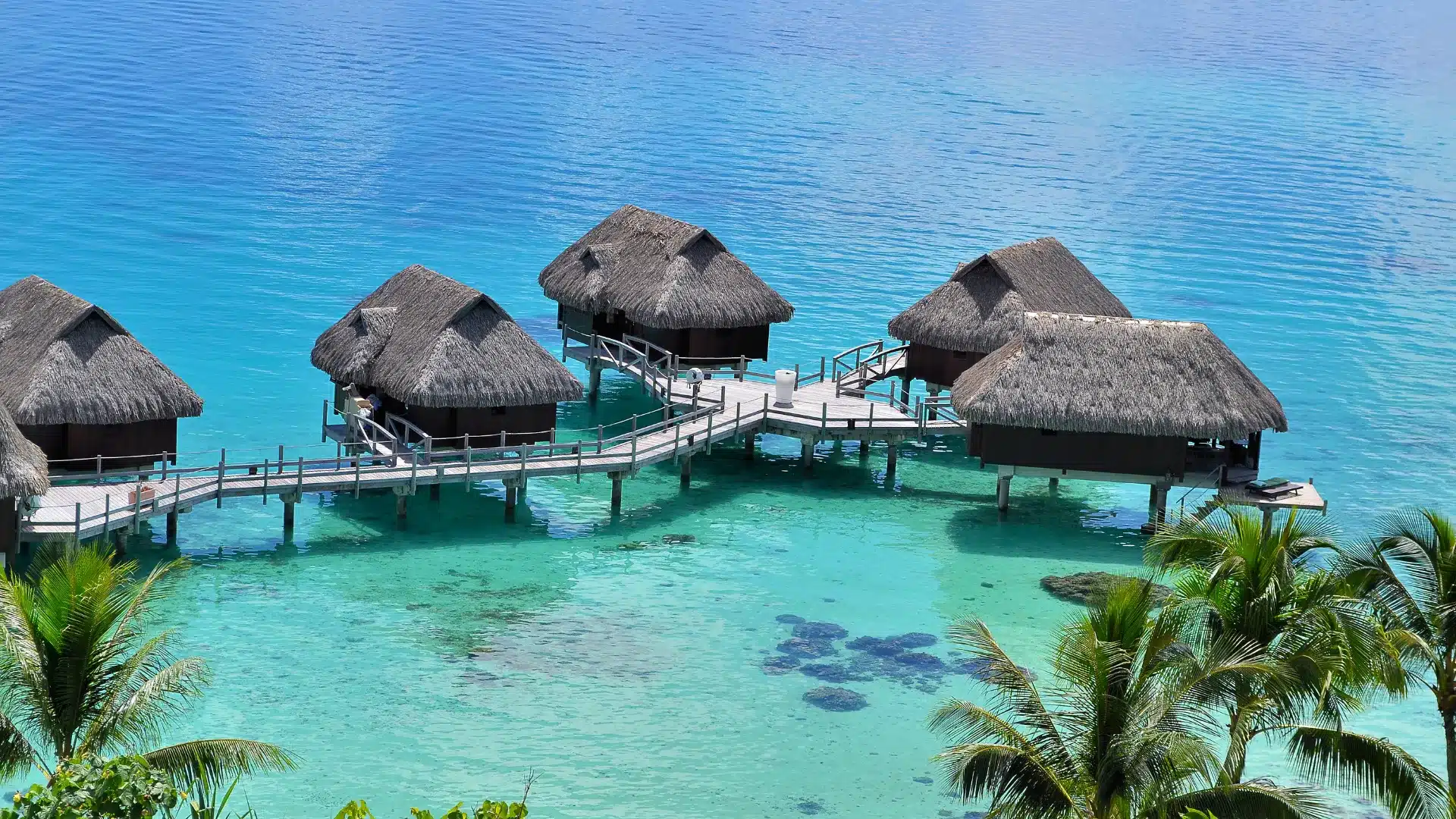
Bora Bora can support commercial, branded, luxury, travel, documentary, resort, lifestyle, marine, tourism, factual, social, fashion and controlled-location productions. The island offers production environments around lagoons, resorts, overwater villas, beaches, boats, coastal roads, private properties, village areas, marine access, hospitality locations and controlled scenic viewpoints. However, because Bora Bora is a small island with a strong tourism economy and sensitive environmental conditions, productions should plan early and work through the correct local channels before crew and equipment arrive.
Film permits in Bora Bora are typically handled through the French Polynesian Government’s Film Commission, also known as the Comité du Film de Polynésie Française. Crew accreditation may also be required through the Film Commission. Drone permissions are issued through the French Polynesian Civil Aviation Authority, also referred to as DGAC, and drone flights must respect restricted areas such as resorts, villages, airports and sensitive environmental zones. French Polynesia, including Bora Bora, is a Carnet country, so ATA Carnet procedures are strongly recommended for professional camera, sound, lighting, drone and production equipment.
Hoodlum supports productions in Bora Bora with visa guidance, film permit coordination, crew accreditation, fixer services, resort and private location access, drone permit planning, ATA Carnet and customs support, local crew sourcing, boat and marine logistics, accommodation, equipment security, risk planning and complete on-the-ground production management. Bora Bora can work very well for international crews when the production plan is built around island logistics, local permissions and the operational realities of filming in a high-value resort environment.
Why Bora Bora Works for International Productions
Bora Bora works for productions that need lagoon access, resort environments, overwater architecture, marine scenes, beach locations, boats, hospitality settings, lifestyle visuals, travel content, commercial backdrops and controlled luxury production value. It is particularly useful for productions where the island itself is central to the story or brand positioning.
The island is visually strong but logistically specific. Productions may need to coordinate with resorts, private owners, marine operators, local authorities, customs, drone regulators and the Film Commission before filming begins. Access to certain beaches, villas, boats or resort areas may depend on owner permissions, guest privacy, operating hours and environmental conditions.
Bora Bora is best suited to productions that can plan well in advance. Film permits can take 4 to 6 weeks, and productions are advised to apply 3 to 4 months before filming to allow enough time for approval, location confirmations, drone planning and customs preparation. Visa processes can take 2 to 4 weeks, and crews are advised to apply 6 to 8 weeks in advance where required.
Hoodlum helps producers build a realistic Bora Bora plan around the permit timeline, resort permissions, drone restrictions, Carnet documentation, marine logistics and island movement. The result is a production plan that protects filming time and avoids preventable delays on the ground.
Bora Bora as a Luxury Island Production Base
Bora Bora is a specialist island production base rather than a conventional production hub. It can support visually driven shoots, but international crews should not assume the same level of infrastructure available in larger production centres. Specialist equipment, crew and technical resources may need to be brought in or coordinated through French Polynesia.
The island is especially relevant for resort, travel, luxury, lifestyle, commercial and marine shoots. Productions may work with overwater bungalows, boats, lagoons, beach clubs, hospitality interiors, private villas, coastal roads and controlled outdoor areas. Each location may have its own access rules, fees and restrictions.
Resort filming requires careful coordination. Guest privacy, brand approvals, operating schedules, safety policies, boat access, staff access, food and beverage operations, power, parking, load-in, weather and insurance requirements should all be agreed before the shoot. A fixer or local production coordinator is essential for managing communication between the crew, resort, owners and authorities.
Hoodlum supports Bora Bora filming with local fixer services, resort liaison, location scouting, permit coordination, boat logistics, customs planning, drone support, local crew sourcing and daily production management. Bora Bora works best when the production footprint is clear, respectful and tightly organised.
Crew Entry and Visa Requirements for Bora Bora
Bora Bora is part of French Polynesia, so entry requirements are linked to French and French Polynesian visa rules. Film crews travelling to Bora Bora may require a short-stay visa depending on nationality, project duration and purpose of travel. Where a visa is required, applications should be made in advance through the French Embassy, Consulate or France-Visas platform.
Film crew visa documentation typically includes a valid passport, proof of onward travel, a letter explaining the purpose of the film project, a detailed shooting schedule, equipment list and a permit from the French Polynesian Government’s Film Commission. The production letter should clearly explain the project, crew, schedule, locations and purpose of travel.
Visa processing can take approximately 2 to 4 weeks, but productions should apply at least 6 to 8 weeks in advance to allow for timely approval. Visa costs for film crew are estimated at approximately 8,000 to 12,000 Pacific Francs, or around USD 80 to USD 120 per person, depending on visa type and duration of stay.
Where crew are visa-exempt, the production should still prepare supporting documents for travel, including return or onward travel, accommodation, production letters, insurance and permit confirmations. Immigration requirements should be checked by nationality before travel.
Hoodlum supports visa planning by preparing production letters, shooting schedules, equipment lists, local invitation support, Film Commission permit references and travel documentation. Entry planning should be coordinated with permits, crew accreditation, customs and accommodation.
International Crew Accreditation in Bora Bora
Film crew members in Bora Bora may require accreditation from the French Polynesian Government’s Film Commission. This process typically involves submitting a completed application form, proof of identity and production documentation.
Crew accreditation documents usually include a completed application form, valid passport, proof of identity, a letter from the production company confirming each crew member’s role and a certificate of liability insurance. These documents are submitted to the French Polynesian Government’s Film Commission.
Processing usually takes approximately 3 to 5 working days, but productions are advised to apply at least 2 to 3 weeks in advance to ensure timely approval. Accreditation costs are typically around 5,000 to 10,000 Pacific Francs per person, or approximately USD 50 to USD 100, depending on accreditation type and duration of stay.
Accreditation should match the film permit, visa and customs documentation. Crew names, roles, passport details, insurance and schedule information should be consistent across all production documents.
Hoodlum supports accreditation by preparing crew lists, role letters, passport copies, insurance documentation and Film Commission submissions. Proper crew accreditation helps the production operate professionally and reduces friction with authorities and location managers.
Film Permits in Bora Bora
Film permits in Bora Bora are typically issued by the French Polynesian Government’s Film Commission, also known as the Comité du Film de Polynésie Française. Professional productions should obtain the correct film permit before filming.
A Bora Bora film permit application typically requires a completed application form, detailed shooting script, shooting schedule, location list, crew list, equipment list, proof of liability insurance and a letter of intent from the production company. The application should clearly state where the production will film, what will be filmed, how long the crew will be on site and what equipment will be used.
Film permit processing typically takes approximately 4 to 6 weeks. Productions are advised to apply at least 3 to 4 months in advance to allow for timely approval, especially if the shoot involves resorts, drones, marine locations, multiple locations, large crews or sensitive areas.
The cost of a general film permit in Bora Bora typically ranges from 200,000 to 500,000 Pacific Francs, or approximately USD 2,000 to USD 5,000, depending on production type, location and duration of the shoot.
Hoodlum supports film permit applications by preparing production letters, scripts, schedules, location lists, crew lists, equipment lists, liability insurance documents and Film Commission submissions. A complete permit file is the foundation for smooth production in Bora Bora.
Private Locations, Resorts and Owner Agreements
Private location filming in Bora Bora is arranged through local negotiation with property owners, resort managers, location managers and relevant authorities. A fixer is typically involved in scouting, securing permissions, arranging access and coordinating the logistics of the filming day.
Private locations may include resorts, overwater villas, beaches, private homes, boats, restaurants, hospitality interiors, docks, gardens, private roads, viewpoints and commercial properties. Resort locations are particularly sensitive because productions must work around guest privacy, staff operations, brand standards and safety requirements.
The cost of a private film location in Bora Bora cannot be accurately quoted until the production schedule, specific location requirements, shoot dates and equipment needs have been finalised. Fees may depend on exclusivity, filming duration, crew size, disruption, access hours, areas used, guest impact, staffing, boat access and insurance.
A written location agreement should confirm filming dates, access times, permitted areas, fees, insurance, resort restrictions, privacy requirements, power, parking, boat access, equipment storage, security, overtime and cancellation terms.
Hoodlum supports private and resort location filming by scouting suitable locations, negotiating with owners and managers, securing agreements and managing production access. In Bora Bora, private location planning should begin early because high-demand resort locations can be difficult to secure at short notice.
Marine, Boat and Lagoon Filming
Marine logistics are central to many Bora Bora productions. Lagoon shots, boat scenes, resort transfers, beaches, floating platforms, water-based talent movement and equipment transport all require careful coordination.
Productions filming on or near the water should plan around boat availability, safety, tides, weather, loading, dry storage, radio or phone communication, crew transfer, marine permissions, insurance and environmental protection. Camera, sound, drone and data equipment should be protected from salt, humidity and spray.
Boat-based filming may require additional agreements with operators, captains, resorts or location owners. If the shoot involves talent in water, marine life, branded vessels or guest-facing resort areas, additional safety and clearance planning may be required.
Hoodlum supports marine production by coordinating boats, operators, resort transfers, loading plans, weather checks, safety procedures and equipment protection. Bora Bora can deliver strong marine production value when lagoon logistics are planned in detail.
Drone Filming in Bora Bora
Drone filming in Bora Bora requires prior authorisation from the French Polynesian Civil Aviation Authority, also referred to as DGAC. Drone operators must respect restricted areas, including overflight of resorts, villages, airports and sensitive environmental zones. Operators must also comply with altitude, distance, safety and privacy limitations.
Drone permit applications typically require a completed application form, a copy of the drone registration certificate, proof of liability insurance, detailed flight plan and a valid pilot licence or certification. These documents must be submitted to the French Polynesian Civil Aviation Authority.
Drone permit processing usually takes approximately 7 to 10 working days, but productions are advised to apply at least 2 to 3 weeks in advance to ensure timely approval. Permit costs typically range from 5,000 to 20,000 Pacific Francs, or approximately USD 50 to USD 200, depending on permit type, flight duration and location.
Drone planning should be coordinated with the film permit, resort permissions, environmental restrictions and guest privacy. A drone flight may require both aviation approval and permission from the relevant resort or location owner.
Hoodlum supports drone filming by preparing flight plans, drone registration documents, insurance, pilot certification, location details and authority submissions. In Bora Bora, drone work should be planned carefully because resorts and sensitive environmental areas may restrict aerial filming.
Drone Importation into Bora Bora
Drone importation into Bora Bora requires temporary import planning. French Polynesia, including Bora Bora, is a Carnet country, and drones may be included in an ATA Carnet when brought in as professional production equipment. Drone importation may also require customs declarations and additional approvals depending on drone type and use.
Drone importation documents typically include a commercial invoice, bill of lading, certificate of origin, customs declaration form, ATA Carnet and detailed list of drone equipment and accessories. These should match the drone permit application and the production equipment list.
Productions should not travel with undeclared drone equipment. The drone should be listed clearly with serial numbers, accessories, batteries and values. Battery carriage and airline requirements should also be checked before travel.
Hoodlum supports drone importation by coordinating ATA Carnet documentation, customs declarations, drone equipment lists, aviation approvals and film permit materials. Drone importation should be planned before the crew departs, not resolved on arrival.
Equipment Customs Clearance in Bora Bora
French Polynesia, including Bora Bora, is a Carnet country. The general process involves obtaining an ATA Carnet before arrival, presenting it to customs upon entry and using it to temporarily import professional equipment duty-free and tax-free for a specific period, typically up to one year.
For film crew customs clearance in Bora Bora, required documents typically include a commercial invoice, packing list, ATA Carnet, crew list, equipment list and completed temporary importation form. These documents are submitted to the French Polynesian customs authorities.
Customs clearance is issued by the French Polynesian Customs Authority, also known as the Direction des Douanes or Douanes de Polynésie française. Clearance typically takes around 2 to 4 hours, depending on shipment complexity, documentation accuracy and customs workload.
Customs clearance costs for film crews typically range from 5,000 to 20,000 Pacific Francs, or approximately USD 50 to USD 200, plus potential duties of 5% to 10% on the value of equipment where applicable. Some items may be exempt or eligible for temporary importation bond arrangements.
Hoodlum supports customs clearance by preparing ATA Carnet documentation, equipment lists, serial numbers, commercial invoices, packing lists, crew lists and temporary importation materials. Bora Bora customs is manageable when paperwork is accurate and equipment is clearly documented.
Local Crew, Fixers and Production Support
Local fixer support is essential for filming in Bora Bora. A fixer helps coordinate visas, Film Commission permits, crew accreditation, private locations, resort access, customs, drones, boats, transport, local crew, accommodation, security and daily logistics.
Because Bora Bora is a small island environment, specialist production equipment and crew may be limited. International productions should confirm what can be sourced locally and what needs to be brought from elsewhere in French Polynesia or internationally. Large technical packages should be planned alongside Carnet and customs requirements.
A Bora Bora fixer may support resort negotiations, boat logistics, local authority liaison, translation, supplier coordination, marine access, transport, scouting, guest-sensitive scheduling, drone approvals and shoot-day troubleshooting.
Hoodlum helps build the right production structure for each Bora Bora shoot. A resort commercial, marine sequence, travel documentary, luxury campaign or lifestyle shoot will each require a different mix of local support, equipment planning and location coordination.
Transport, Accommodation and Island Logistics
Transport in Bora Bora should be planned around island roads, resort transfers, boat movement, equipment volume, crew size and filming schedule. Productions may need vehicles, boats, luggage and equipment transfers, resort carts, staff assistance or private marine transport depending on the locations.
Accommodation should be arranged early, especially for shoots involving resorts or larger crews. Hotel and resort availability can affect production timing, travel costs, call times and access. Accommodation should be selected around filming locations, equipment storage, crew movement, power, privacy and security.
Island logistics should include vehicle movement, boat transfers, loading times, equipment protection, weather contingencies, charging, data backup, meals, water, sunscreen, marine safety and guest-sensitive working practices.
Hoodlum supports Bora Bora logistics by coordinating accommodation, transport, boats, local drivers, resort access, equipment movement and daily production plans. Island efficiency depends on keeping the schedule realistic and access well organised.
Safety and Security in Bora Bora
Bora Bora is generally a safe filming environment, but productions should still plan around equipment security, resort privacy, marine safety, weather, environmental conditions and natural hazard readiness. High-value equipment, luxury locations and public-facing shoots may require additional security support.
For film productions in Bora Bora, local security personnel or a reputable security company may be recommended to provide protection for equipment, crew and locations. Productions should also prepare a risk management plan covering theft, damage, weather disruption, marine activity, equipment movement and natural disaster response.
Security planning should be proportionate. A small documentary crew may need simple equipment watch and local liaison, while a larger commercial shoot may need 24/7 equipment protection, secure storage, private transport and location security.
Hoodlum supports safety and security planning by coordinating local personnel, resort security, equipment storage, access control and risk procedures. Bora Bora is low-risk compared with many production environments, but high-value shoots still need organised protection.
Environmental and Cultural Considerations
Bora Bora has sensitive environmental areas and a strong focus on preserving local culture and natural resources. Productions should respect marine environments, reefs, resort policies, village areas, local customs and environmental restrictions.
Drone flights, boat movement, beach filming, marine sequences and larger crew setups should be planned to avoid damaging sensitive environments or disturbing local communities. Environmental restrictions may apply to certain lagoon, coastal or protected areas.
Crews should work with local fixers and location contacts to understand what is acceptable in each location. Resort and village filming should be handled respectfully, with clear communication and minimal disruption.
Hoodlum supports responsible production by coordinating local liaison, environmental awareness, marine access planning and location-specific restrictions. Sustainable and respectful filming is essential in Bora Bora.
Film Rebates and Tax Incentives
French Polynesia, including Bora Bora, offers a film rebate programme known as the Tax Rebate for Film and Audiovisual Productions. This can provide a rebate of up to 30% of qualifying production costs incurred in French Polynesia.
Productions should confirm eligibility, qualifying spend, application procedures, minimum spend requirements, local partner obligations and payment timelines before budgeting around the incentive. The rebate should not be assumed until current programme rules are confirmed.
The incentive may be relevant for productions with meaningful local spend in French Polynesia, including crew, accommodation, transport, locations, logistics, services and eligible production costs. Documentation and local coordination are likely to be important.
Hoodlum supports productions by helping assess incentive relevance, coordinating with local partners and aligning production planning with documentation needs. Incentive planning should run alongside permits, customs, visas and production logistics.
When Bora Bora Is the Right Production Choice
Bora Bora is the right production choice when a project needs lagoon visuals, resort access, marine scenes, luxury hospitality settings, overwater villas, island roads, boats, travel content or French Polynesian production value. It is especially suitable for commercials, branded campaigns, lifestyle shoots, travel documentaries, tourism content and controlled marine filming.
The island is best suited to productions that can plan ahead. Film permits can take 4 to 6 weeks, visa processes can take 2 to 4 weeks where required, crew accreditation can take 3 to 5 working days, drone permits can take 7 to 10 working days, and customs clearance needs accurate Carnet and temporary importation documents.
Bora Bora is less suitable for productions that need last-minute approvals, informal resort access, spontaneous drone flights, large unsupported crews or heavy equipment packages without customs planning. The island rewards careful coordination and penalises unclear access plans.
Hoodlum helps producers assess whether Bora Bora fits the creative, budget, schedule and logistical requirements of the project. When it is the right location, we provide the fixer-led support needed to keep filming efficient and properly approved.
Common Bora Bora Production Mistakes
A common mistake is assuming Bora Bora can be filmed informally because it is a tourism destination. Professional productions still need permits, location permissions, insurance and local coordination.
Another mistake is leaving the Film Commission permit too late. Film permits can take 4 to 6 weeks, and productions should apply 3 to 4 months in advance for best results.
Productions also sometimes underestimate resort access. Overwater villas, beaches and hospitality locations are private or managed spaces, and guest privacy can affect filming.
Drone planning is another frequent issue. Drone flights require prior authorisation and may be restricted near resorts, villages, airports and sensitive environmental areas.
Customs can also create delays if ATA Carnet documents, packing lists, equipment lists or temporary importation forms are incomplete.
Finally, productions may underestimate boat and marine logistics. Lagoon filming requires planning around weather, loading, safety, equipment protection and operator availability.
How Hoodlum Supports Productions in Bora Bora
Hoodlum supports productions in Bora Bora with practical, fixer-led production services for international crews. We help coordinate the approvals, location relationships and island logistics needed to film efficiently and respectfully.
Our support includes visa guidance, France-Visas support, Film Commission permit coordination, crew accreditation, private location negotiation, resort liaison, drone permit planning, DGAC coordination, ATA Carnet and customs support, equipment list preparation, boat logistics, local crew sourcing, transport, accommodation, security coordination, risk planning and daily production management.
We help productions prepare valid passports, proof of onward travel, film project letters, shooting schedules, equipment lists, Film Commission permit documents, crew role letters, liability insurance, scripts, location lists, drone registration certificates, flight plans, pilot licences, commercial invoices, packing lists, ATA Carnet documentation and temporary importation forms.
Bora Bora can deliver exceptional production value when permits, locations, customs, drones and island logistics are handled early. Hoodlum provides the on-ground support needed to keep international crews documented, mobile and ready to film.
FAQ
Do film crews need a visa for Bora Bora?
Visa requirements depend on nationality. Bora Bora is part of French Polynesia, and some crew may require a short-stay visa through French visa channels.
How long does a film crew visa take?
Visa processing can take approximately 2 to 4 weeks, but productions should apply 6 to 8 weeks in advance where a visa is required.
How much does a film crew visa cost?
Visa costs are estimated at approximately 8,000 to 12,000 Pacific Francs, or around USD 80 to USD 120 per person, depending on visa type and duration.
Who issues film permits in Bora Bora?
Film permits are typically issued by the French Polynesian Government’s Film Commission, also known as the Comité du Film de Polynésie Française.
How long does a Bora Bora film permit take?
Film permits typically take 4 to 6 weeks, but productions are advised to apply 3 to 4 months in advance.
How much does a general film permit cost?
Permit costs typically range from 200,000 to 500,000 Pacific Francs, or approximately USD 2,000 to USD 5,000.
Is crew accreditation required?
Crew accreditation may be required through the French Polynesian Government’s Film Commission.
How long does crew accreditation take?
Crew accreditation usually takes approximately 3 to 5 working days, but productions should apply 2 to 3 weeks in advance.
Can film crews use drones in Bora Bora?
Yes, but drone operators require prior authorisation from the French Polynesian Civil Aviation Authority and must respect restricted areas.
How long does a drone permit take?
Drone permits usually take 7 to 10 working days, but productions should apply 2 to 3 weeks in advance.
How much does a drone permit cost?
Drone permit costs usually range from 5,000 to 20,000 Pacific Francs, or approximately USD 50 to USD 200.
Is Bora Bora an ATA Carnet location?
Yes. French Polynesia, including Bora Bora, is a Carnet country.
How long does customs clearance take?
Customs clearance typically takes 2 to 4 hours, depending on shipment complexity and documentation accuracy.
Who handles customs clearance?
Customs clearance is handled by the French Polynesian Customs Authority, also known as Direction des Douanes or Douanes de Polynésie française.
Does Bora Bora offer a film rebate?
French Polynesia offers a Tax Rebate for Film and Audiovisual Productions, providing up to 30% rebate on qualifying production costs incurred locally.
Is Bora Bora safe for filming?
Bora Bora is generally safe, but productions should plan for equipment security, resort privacy, marine safety, weather and risk management.
External Authority Links
Contact Hoodlum today for expert Film Production Services in Bora Bora, including fixer support, film permits, crew sourcing, drone permissions, customs clearance, location access and complete on-the-ground production management. For more information, visit the Hoodlum Film Fixers Bora Bora Google Business Profile.