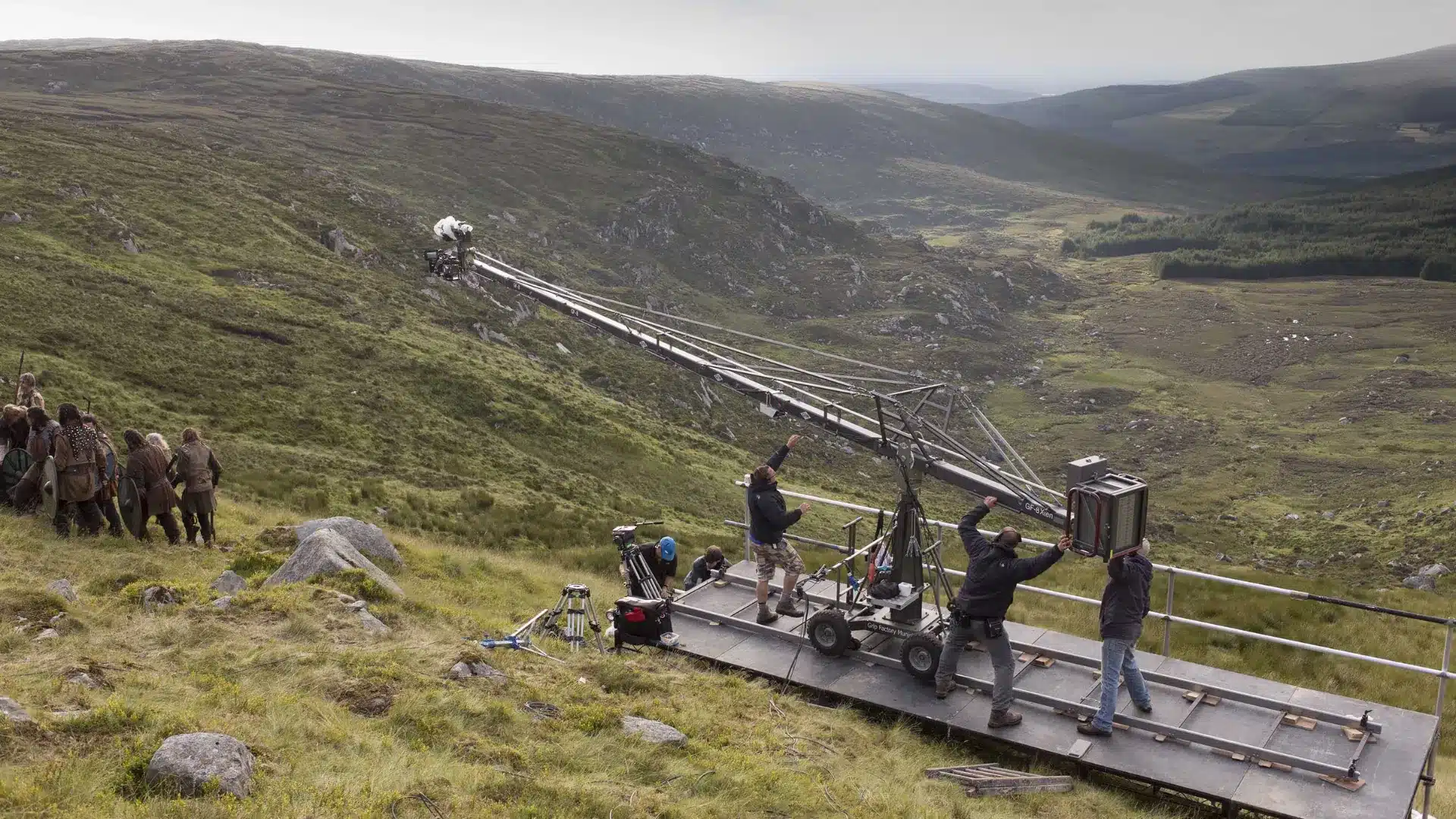
Film Production Services in Ireland
Ireland is one of Europe’s most reliable and well-supported filming destinations, combining an experienced English-speaking crew base, a mature screen sector, Georgian and historic streets, dramatic coastlines, green rural landscapes, castles, studios and one of the most competitive tax incentives on the continent. From Dublin and Cork to Galway, the mountains of Wicklow, the coastlines of Kerry and Connemara and the cliffs and villages of the Wild Atlantic Way, the country delivers a broad range of looks within manageable travel distances, backed by genuine infrastructure and the long-established Section 481 incentive.
For international crews, Ireland offers a rare combination of professional local crews, English-speaking infrastructure, varied locations and a tax credit that runs from 32% up to 40% for qualifying productions. It is one of the few places where a production can shoot a contemporary city, a Georgian terrace, a medieval castle and a wild Atlantic coastline within a single schedule, supported by a deep pool of producers, fixers, technicians and post facilities.
Hoodlum provides Film Production Services in Ireland for commercials, documentaries, factual television, feature films, television drama, branded content, travel campaigns, photography, music videos and location-led productions. Our team supports visa and work-permission planning, Screen Ireland liaison, local authority film permits, national park and heritage access, private location agreements, drone coordination, carnet and customs clearance, crew sourcing, transport, accommodation, safety planning, Section 481 guidance and full on-ground production management. You can see the full scope of what we do and the people behind it on our who we are page.
Ireland rewards productions that arrive with their paperwork in order. It is a production-friendly country, but the main challenges are permissions, weather and public impact rather than infrastructure. The right entry route, the right permits, the right customs plan and the right safety planning all need to be settled before the cameras roll, and the most efficient way to handle that, and to access the incentive, is through an experienced local production partner.
Why Ireland Works for Crew, Locations and Incentives
The country’s biggest production strength is the combination of strong production infrastructure, compact access to varied visuals and a powerful tax credit. In a single schedule a production can capture a business district, a Georgian street, a coastal road, dramatic cliffs, green countryside, a historic estate and a castle, with the experienced crew base making the whole shoot run smoothly. The deep, English-speaking talent pool is a genuine differentiator across the region.
Dublin is the operational hub, but the value sits in the crew, the route and the incentive. A commercial might pair the city with a Wicklow mountain road and a coastal cliff. A drama might combine a studio build with castle and countryside locations. A travel piece might follow the Wild Atlantic Way. The country is strong because it pairs a mature, reliable screen sector and English-speaking crews with distinctive locations and a 32% to 40% tax credit that few competitors can match on a net basis.
The country is especially well suited to:
- Commercials and branded content
- Feature films and television drama
- Documentaries and factual entertainment
- Travel and tourism campaigns
- Heritage and history programming
- Automotive and outdoor shoots
- Photography and music videos
- Animation and VFX-heavy projects
- Drone-led landscape and coastal filming
Hoodlum’s production support team helps crews decide which regions are practical, what permissions each location needs and how to sequence movement between the cities, the countryside and the coast.
Dublin as the Production Base
Dublin is the natural anchor for most international productions working in the country. It offers airport access, hotels, suppliers, studios, casting, a deep local crew base and post facilities, alongside historic streets, Georgian architecture, modern business districts, residential neighbourhoods, cultural locations, pubs, parks and waterfront areas.
The city works both as a shooting location and as a base for production coordination and studio-linked work. Public filming may require approval from Dublin City Council or another relevant authority depending on the location and footprint, with a small documentary crew facing a simpler process than a commercial using public space, lighting, vehicles, crowd control, traffic management, drones or a visible unit base. Hoodlum uses Dublin as the practical hub for Film Production Services in Ireland, particularly when a shoot combines city, studio and surrounding countryside.
Cork, Galway and Regional Production
Cork and Galway offer strong regional options for crews wanting city access with a different identity from Dublin. Cork provides harbour settings, historic streets, food culture, maritime and industrial locations and routes into the southern coast. Galway is ideal for cultural stories, west-coast access, music and street life, harbour visuals and routes toward Connemara and the Wild Atlantic Way.
These regions suit documentary, travel, food-and-culture, coastal and lifestyle work. Local authority approvals vary by county, and public filming may require council permission, proof of public liability insurance, location plans and traffic or crowd management, with national parks, ports, heritage sites and private properties needing separate approvals. Regional shoots are efficient when planned properly, with manageable distances, though crew movement, accommodation, weather, ferry access and rural roads should be confirmed before locking the route. Hoodlum helps productions compare Dublin, Cork, Galway and regional bases for the right balance of access, control and location value.
Wicklow, Kerry, Connemara and Rural Landscapes
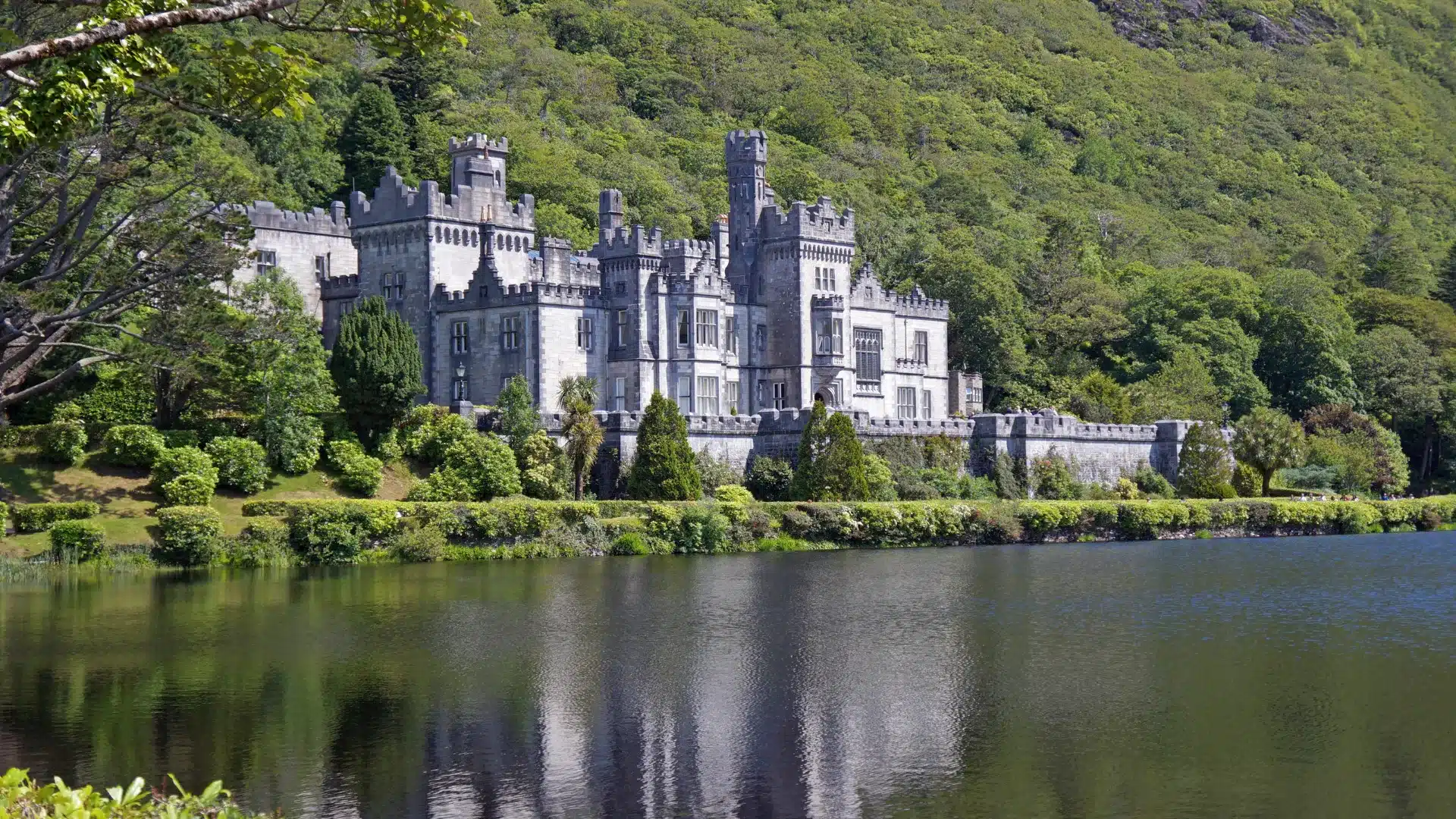
The country is often chosen for rural landscapes, coastlines, mountain roads, historic estates, fields, villages, castles and countryside. Wicklow, known as the “Garden of Ireland,” is especially practical for rural and mountain looks close to Dublin and hosts a major studio. Kerry and Connemara offer stronger west-coast scale, dramatic roads, coastal landscapes, stone walls, villages, mountains, lakes and weather-driven atmosphere.
These regions suit feature films, drama, automotive shoots, travel campaigns, documentary, outdoor-brand content, photography, drone work and heritage stories. Rural filming can look straightforward, but private land, farms, estates, roads, national parks, heritage sites and coastal access points each have their own approval routes, and weather, narrow roads, parking, animal control, accommodation and public visitors all need planning. Hoodlum supports rural and coastal filming by scouting practical locations, confirming ownership, arranging private location agreements and building schedules that account for weather and access.
The Wild Atlantic Way and Coastal Filming
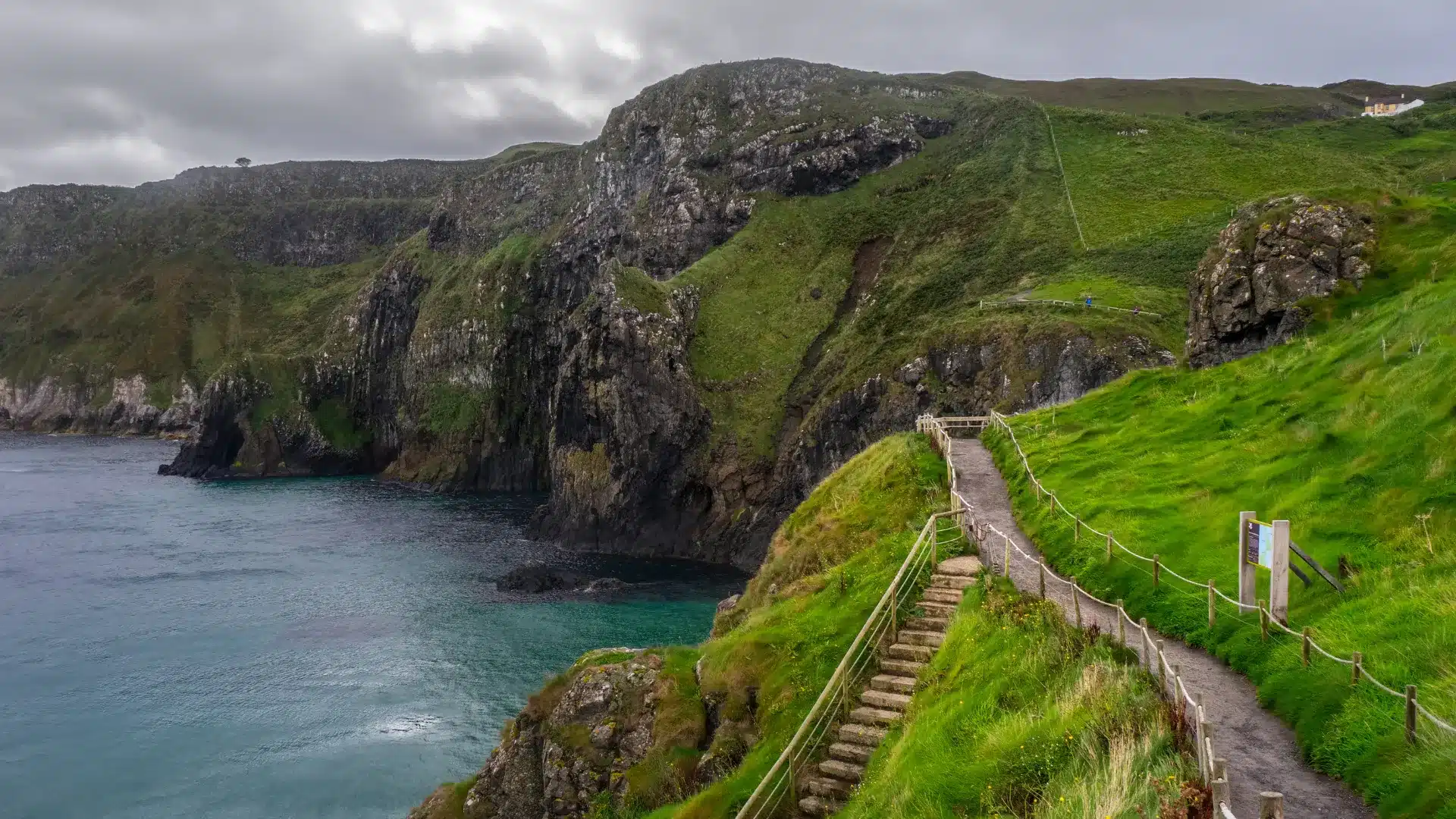
The Wild Atlantic Way is one of the country’s strongest filming routes, offering coastal roads, cliffs, beaches, ports, fishing villages, Atlantic weather, islands and travel-led visuals, ideal for commercials, tourism films, documentaries, automotive shoots, outdoor campaigns and photography.
Coastal filming should account for wind and weather, tides, road access, parking and unit-base limits, public visitors, drone restrictions, cliff and water safety, marine access, private land ownership and council or protected-area permissions. Some locations are visually powerful but hard to control, and a smaller crew often works better than a large unit in exposed or busy coastal areas, while road-based shoots may need traffic management and Garda coordination depending on impact. Hoodlum helps productions choose coastal locations that match the brief while remaining practical for crew, equipment, permits and safety.
Entry, Visas and Crew Permissions
Ireland is not part of the Schengen Area and runs its own immigration system, so the right route depends on each crew member’s nationality, employment status and the nature of the work.
EU and EEA citizens may work freely. Crew from other countries may need an employment permit such as the General Employment Permit, or may be able to use the Van der Elst route where they are employed by a company in another EU state and posted to Ireland, with the correct path depending on the production structure and duration. Applicants typically provide a passport, proof of qualifications and experience, a production-company or employer letter, a project description, a role description, a production schedule and a contract, with work-permission processing often taking around four to six weeks, so early planning matters for larger or specialist crews.
Separately, accreditation may be requested by certain authorities, broadcasters or the screen agency, confirming the crew’s qualifications and connection to a legitimate production. Hoodlum helps productions match each crew member to the correct entry and work-permission route, and keeps visa, permit and accreditation documents consistent across the process.
Film Permits and Local Authority Approvals
Film permits are usually issued by local authorities such as Dublin City Council or the relevant county council, with some locations also requiring approval from national bodies including the National Parks and Wildlife Service, the Irish Aviation Authority, transport and road authorities, ports, airports or heritage bodies. The correct route depends on the location and production impact, which makes local coordination essential.
Applications generally require a completed form, proof of public liability insurance, a detailed shoot schedule, a location plan, a script or project outline, production-company and key-personnel contacts, crew and equipment lists, a vehicle and parking plan, and where relevant a traffic plan, drone details and a risk assessment. Processing typically takes around two to six weeks, with national parks, road filming, drone work, protected sites and multi-authority applications taking longer, and fees varying widely with location, duration and services.
Some of the strongest locations sit within national parks, heritage areas or protected landscapes, and these need separate approval, often from the National Parks and Wildlife Service or heritage bodies, with supervision, environmental measures, limited crew numbers and reinstatement plans, and longer lead times. A council permit does not cover a national park or heritage property. Private locations are arranged directly with owners and managers through a location agreement covering approved areas, access times, crew size, parking, restoration, insurance and any content restrictions. A Hoodlum location scout proposes options, negotiates access, dates, fees and conditions, and secures the agreement, with costs quoted once the synopsis and schedule are known.
Drone Filming and Aviation Rules
Drone operation is regulated by the Irish Aviation Authority, within the EU drone framework. Commercial drone work generally requires operator registration, proof of pilot competency, public liability insurance, a detailed flight plan and a risk assessment, with the requirements depending on the operation, location and airspace, and tighter rules near airports, over crowds, in urban areas, in national parks and at sensitive sites.
Processing can range from around two to twelve weeks depending on the permit type, complexity and authority workload, so productions should begin drone planning early, especially for urban areas, controlled airspace, events, road filming or sensitive locations. Importing a drone is separate from gaining permission to fly it. For many international productions, hiring a locally licensed drone operator already familiar with Irish Aviation Authority procedures and location restrictions is the most efficient route. Hoodlum helps productions decide between a local operator and importing equipment, and builds the required lead time into the plan.
Equipment Customs Clearance and the ATA Carnet
Ireland is an ATA Carnet country, which makes temporary equipment importation relatively straightforward for productions that prepare properly. An ATA Carnet acts as a single international customs document allowing professional filming gear to be temporarily imported duty-free and tax-free, on the guarantee that it will be re-exported within the validity period, typically up to one year.
Customs clearance is handled by the Revenue Commissioners’ Customs Division, and a clean carnet supported by a detailed equipment list with values and serial numbers, a packing list and any required declarations usually clears within a few hours when documentation is complete, with complex or freight shipments taking longer. For crews travelling within the EU, goods in free circulation move without carnet formalities, so the carnet primarily matters for kit arriving from outside the Union. Importing a drone may involve its own customs and compliance documentation and is separate from aviation approval.
Hoodlum helps productions prepare the carnet, equipment list, values and serial numbers, and coordinates customs declarations and arrival plans so camera, lighting, grip, sound and drone equipment clears efficiently.
Section 481 and the Irish Tax Incentives
Ireland’s headline financial draw is Section 481, a long-established and producer-friendly film and television tax credit administered through the corporation tax system, with guidance available via Screen Ireland. The standard rate is 32% of eligible Irish expenditure, applying to all qualifying spend up to 80% of total production cost, with a generous per-project cap, and unusually it is a direct credit rather than taxable income, so the headline rate is close to the net rate.
For lower-budget feature films, the Scéal uplift raises the credit to 40% for qualifying live-action and animated features with eligible expenditure under €20 million, provided at least one key creative role is filled by an EEA national or resident and the film is released in Irish cinemas. A separate 40% VFX uplift applies to productions with at least €1 million of qualifying visual-effects spend, lifting the rate across eligible Irish expenditure up to a €10 million cap, and Ireland has also introduced a first-in-Europe 20% credit for unscripted production, with claims possible during production to help cash flow.
To access Section 481, a production works through an Irish producer company, passes a cultural test, meets minimum expenditure thresholds and obtains a cultural certificate before production begins. The exact rates, caps, thresholds and rules change periodically, so productions should confirm current figures and structure the application early, ideally with an established Irish production company. Hoodlum can help connect productions with the right local producers, accountants and advisers to access and secure the incentive.
Safety, Security and Practical Logistics
The country is generally a safe and film-friendly destination with experienced crew, developed infrastructure and a strong production sector. Standard production security is usually enough for small and medium shoots, though specific measures may be needed for public filming, high-value equipment, celebrity talent, large crowds, road work or sensitive locations, including licensed security, crowd control, traffic management and Garda liaison.
Sensible foundations include public liability insurance, equipment security, secure transport, overnight storage planning, first aid and location-specific risk assessments. For coastal, cliff and mountain work, water and cliff safety and weather awareness matter most, and for road shoots, traffic management and authority coordination are key. Medical infrastructure is excellent.
Weather is the defining production variable. Rain, wind and changing light can affect outdoor shoots, especially on the west coast, the cliffs and the mountains, so productions should allow for cover sets, weather holds and flexible scheduling. Hoodlum helps productions build a safety plan and schedule that match the footprint, season and location, and folds weather and contingency thinking in from the start.
When Ireland Is the Right Production Choice
Ireland is the right choice when a production needs English-speaking crew, strong local infrastructure, coastal roads, historic streets, green rural landscapes, castles, city locations, experienced screen support and a competitive 32% to 40% tax credit. It works especially well for commercials, features and drama, documentaries, factual and unscripted television, branded content, travel campaigns, animation and VFX-heavy projects, photography, music videos, heritage stories and rural or coastal location work.
It may be less suitable for productions that need guaranteed dry weather, instant road permits, unrestricted drone use or multiple protected locations without lead time. The country is highly workable when visas, employment permissions, permits, private locations, drone approvals, carnet documents and safety plans are handled early.
Common Production Mistakes to Avoid
The most frequent mistakes include:
- Leaving visa or employment-permission planning too late
- Assuming council permits cover national parks or heritage sites
- Failing to prepare public liability insurance
- Underestimating weather and not building in cover sets
- Not allowing enough time for drone approvals
- Arriving with incomplete ATA Carnet documents
- Booking private locations without clear written agreements
- Trying to cover too many distant regions in too short a schedule
Most of these problems are avoidable by aligning the crew list, visas and permissions, permits, private location agreements, drone plan, carnet, safety plan and Section 481 application well before the crew travels.
How Hoodlum Supports Productions in Ireland
Hoodlum provides Film Production Services in Ireland for international productions that need reliable local support from early planning through to wrap. Our services include visa and work-permission guidance, General Employment Permit and Van der Elst support, crew accreditation coordination, Screen Ireland liaison, film-permit support, council communication, national park and heritage access planning, location scouting, private location agreements, local fixers, crew sourcing, drone planning, Irish Aviation Authority coordination, carnet and Revenue customs preparation, transport, accommodation, safety planning, Section 481 guidance and on-ground production management.
From Dublin, Cork, Galway and Wicklow to Kerry, Connemara, the Wild Atlantic Way, castles, estates, coastal roads, national parks, rural landscapes and historic towns, we help productions access the strongest filming environments in Ireland with the right paperwork, permissions, crew and logistics in place. Planning a shoot? Contact us to talk through permits, visa and work-permission support, local fixers, location scouting, carnet planning, drone coordination, Section 481 guidance and full on-ground production management.
Frequently Asked Questions
Do international crews need a visa to film in Ireland?
Ireland runs its own immigration system and is not in the Schengen Area. EU and EEA citizens work freely. Other crew may need an employment permit such as the General Employment Permit, or the Van der Elst route if posted from another EU state, depending on the production structure and duration, with processing often around four to six weeks.
Who issues film permits?
Permits are usually issued by local authorities such as Dublin City Council or the relevant county council, with national parks, aviation, roads, ports and heritage sites requiring separate approvals. Processing typically takes two to six weeks, with complex or multi-authority shoots taking longer.
Who regulates drones?
The Irish Aviation Authority regulates drones within the EU framework. Commercial work needs operator registration, pilot competency, insurance, a flight plan and a risk assessment, with tighter rules near airports, crowds, urban areas and national parks. A locally licensed operator is often the most practical route, and processing can take two to twelve weeks.
Is Ireland an ATA Carnet country?
Yes. Temporary importation of professional filming equipment from outside the EU is handled through the ATA Carnet system, with clearance via the Revenue Commissioners’ Customs Division.
Does Ireland offer a film rebate?
Yes. Section 481 provides a 32% tax credit on eligible Irish expenditure, rising to 40% for qualifying lower-budget feature films (the Scéal uplift) and for productions with significant VFX spend, plus a first-in-Europe 20% unscripted credit. Productions work through an Irish producer company and must pass a cultural test and obtain a certificate before production.
What are the best filming locations?
Popular options include Dublin’s Georgian streets and studios, Cork and Galway, the mountains of Wicklow, the coastlines of Kerry and Connemara, castles and historic estates, and the cliffs, beaches and villages of the Wild Atlantic Way.
Useful Authority Links
- Screen Ireland – Section 481
- Revenue – Film Tax Credit
- Department of Foreign Affairs – Visas for Ireland
- Irish Aviation Authority – Drones
- National Parks and Wildlife Service
- Dublin City Council – Filming
Ready to bring your production to Ireland? Hoodlum handles the permits, visa and work-permission guidance, location scouting, carnet and customs planning, drone coordination, local crew, Section 481 guidance, safety planning and full on-ground production management, so you can focus on the work in front of the lens. Get in touch with our team to start planning, and tell us your locations, dates and creative brief.
For more information, view our Hoodlum Film Fixers Ireland Google Business Profile.