
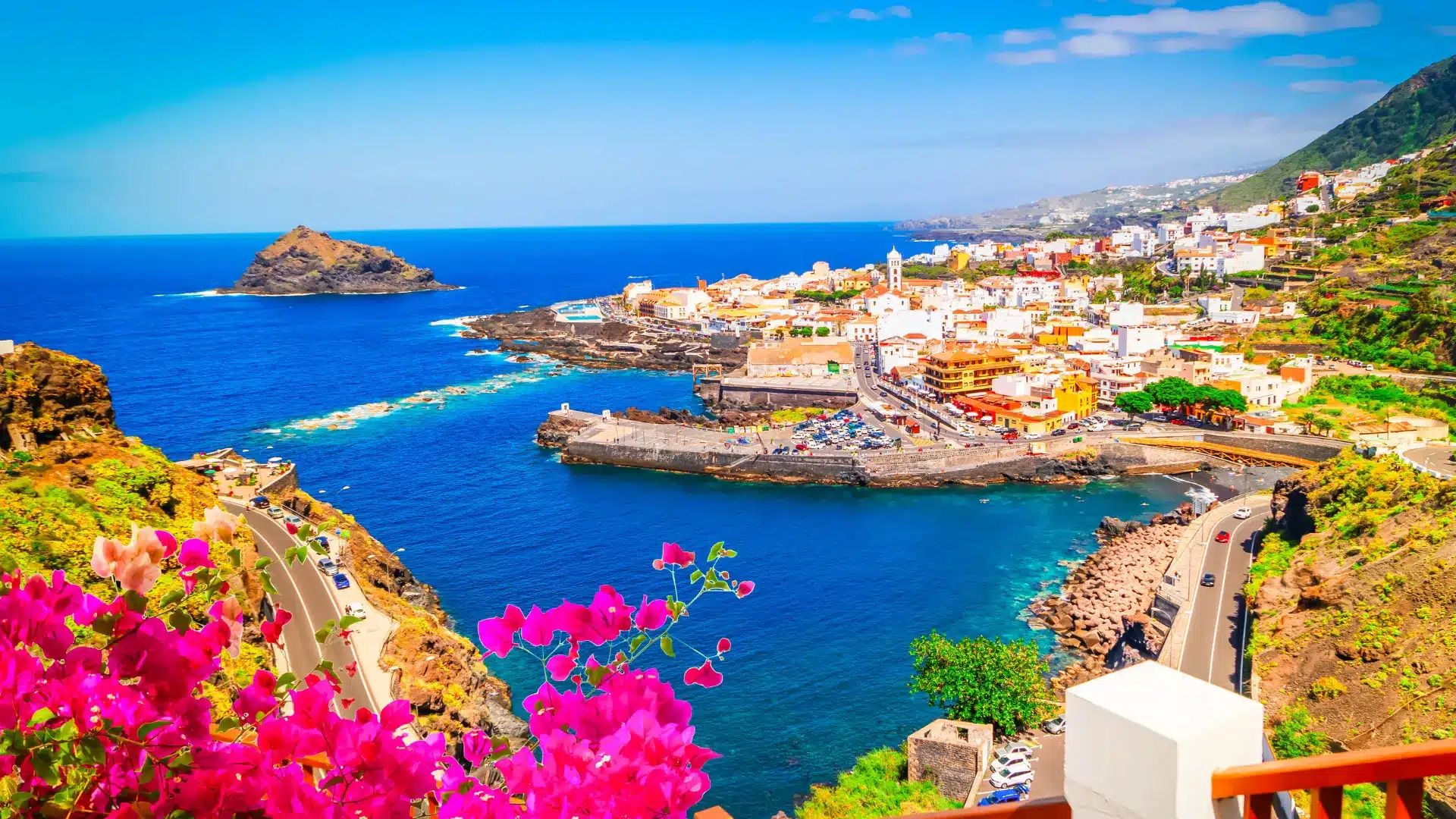
Film Production Services in Spain
Spain is one of Europe’s most versatile and production-ready filming territories, offering major cities, coastal roads, islands, deserts, mountains, historic towns, modern architecture, ports, studios, villages, castles, vineyards, luxury resorts and a deep base of experienced crew. For international productions, Spain can support feature films, television drama, commercials, documentaries, branded content, factual entertainment, reality formats, music videos, fashion campaigns, automotive shoots and photography with a strong mix of location variety, infrastructure, regional production support and attractive incentive potential.
Hoodlum provides Film Production Services in Spain for international crews that need practical local coordination from early planning through wrap. Our work covers film fixers, permit planning, location scouting, private location negotiations, crew entry guidance, work-authorisation support where required, drone planning, customs and ATA Carnet coordination, local crew sourcing, accommodation, transport, security, regional production support and full on-ground production management. Productions can explore the wider scope of what we do and learn more about Hoodlum on our who we are page.
Spain is highly film-friendly, but it is also regionally structured. A shoot in Madrid, Barcelona, Seville, Valencia, Bilbao, Málaga, the Canary Islands, the Balearic Islands, Galicia, Aragón or Almería will not follow one single permission path. Public streets, heritage buildings, beaches, ports, roads, drone zones, private villas, deserts, national parks, islands, airports, railway stations and historical monuments all require the correct local approval. Spain works best when the production plan is clear, the permit route is identified early and the local fixer understands both the creative brief and the regional administrative process.
Why Spain Works for International Productions
Spain works for international productions because it offers location diversity without sacrificing infrastructure. A single country can deliver European city streets, Moorish architecture, Mediterranean beaches, Atlantic coastlines, volcanic islands, desert roads, snow-covered mountains, modern business districts, fishing ports, medieval towns, vineyards, castles, industrial sites and high-end resorts. This makes Spain valuable for productions that need multiple looks within one national production framework.
Madrid is the country’s main production hub, with studios, crew, rental houses, casting, post-production, international transport, corporate locations and access to central Spain. Barcelona provides architecture, design, coastal streets, fashion, creative industry access and Mediterranean city texture. Andalusia offers Seville, Granada, Córdoba, Málaga, Cádiz, Almería and dramatic southern landscapes. The Canary Islands bring volcanic terrain, beaches, desert-like roads, forests, strong weather reliability and high incentive appeal. The Balearic Islands offer luxury, sea, yachts, villas, nightlife, rural interiors and Mediterranean island value. Northern Spain adds mountains, green coastlines, ports, old towns and Atlantic weather. Basque Country, Galicia, Asturias and Cantabria can all provide looks that differ sharply from the south.
Spain is especially strong for commercials, automotive campaigns, feature films, television drama, historical work, documentary, food programming, travel, sport, music videos, fashion, technology, architecture and large-scale service production. Its film industry is mature, and regional film commissions are used to working with international crews. The country can support a lean factual unit or a much larger scripted or commercial production.
The practical advantage of Spain is that it can scale. A small crew can work efficiently with local permits, a fixer and a vehicle. A major production can access studios, regional incentives, crew depth, road control, casting, art department, stunts, drone operators, special effects, marine support and production offices. The challenge is choosing the right region for the production and respecting the approval process for each location.
Madrid as a Production Hub
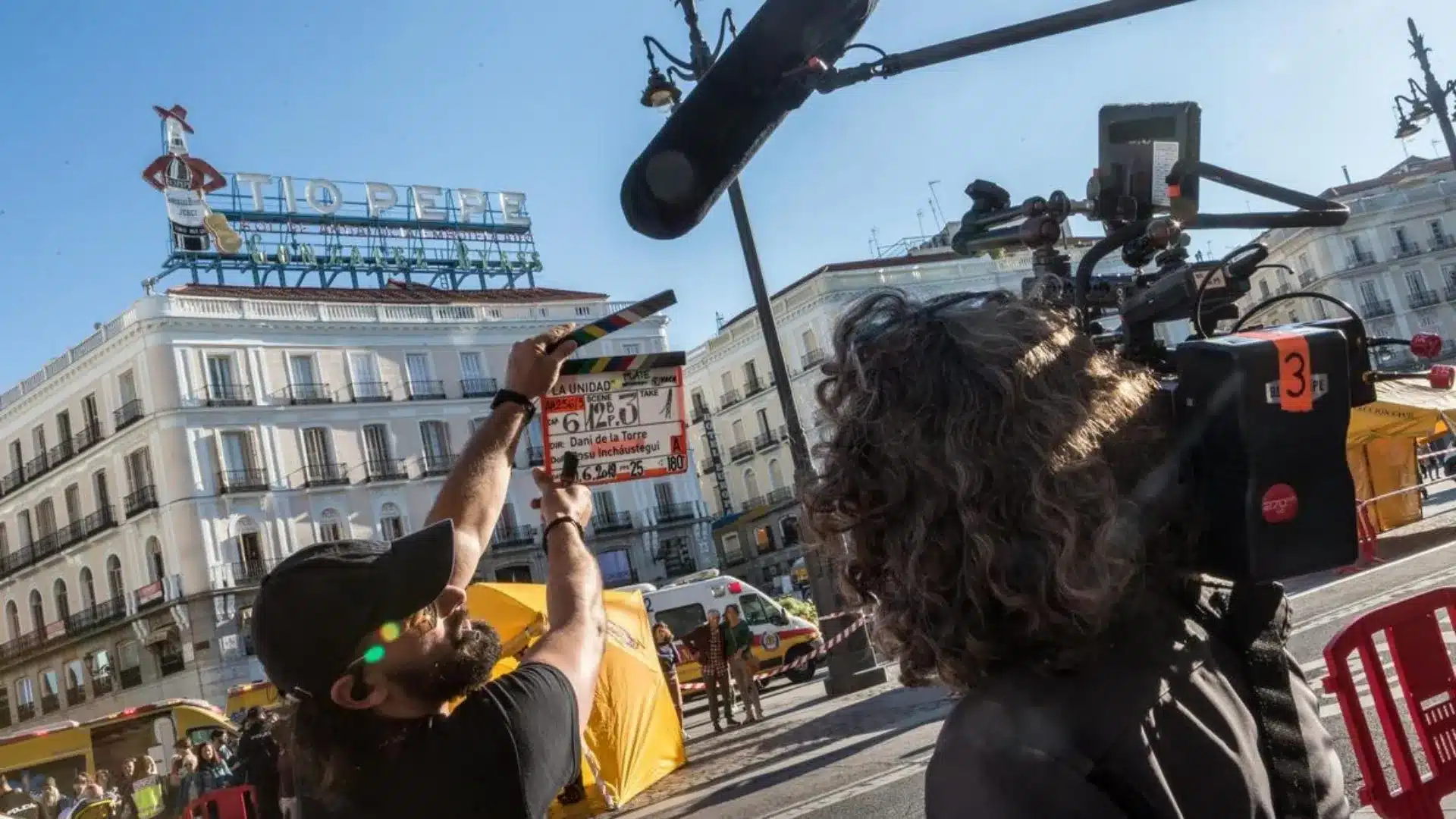
Madrid is one of Spain’s strongest production bases. It offers experienced crew, equipment suppliers, post-production facilities, casting, studios, agencies, hotels, transport links, government-facing locations, modern business districts, historic streets, parks, museums, rooftops, residential areas and industrial surroundings. For commercials, feature films, television drama, documentaries, corporate content, fashion, interviews, branded work and music videos, Madrid can provide both production infrastructure and location range.
The city can look formal, contemporary, historic, institutional, high-end or everyday depending on the neighbourhood. Gran Vía, Salamanca, Malasaña, Chueca, Lavapiés, Retiro, Chamberí, Castellana and the wider metropolitan area each bring different textures. Madrid also gives productions access to central Spanish landscapes, castles, plains, old towns and roads within a manageable distance.
Filming in Madrid may involve the municipal film office, local authorities, police, traffic departments, private owners, heritage managers, transport operators or other site-specific entities. Public-space filming, road control, technical parking, crowd management, drones, night work, large lighting, picture vehicles and filming near sensitive buildings require early coordination. Smaller documentary crews may have a lighter footprint, but they still need to check whether location approval is required.
Madrid is practical, but it is still a busy capital. Traffic, parking, public events, demonstrations, tourism, residents and business activity can affect filming. Hoodlum supports Madrid shoots by building the plan around permit timing, vehicle access, public-space impact, private location agreements, insurance and realistic movement between locations.
Barcelona and Catalonia
Barcelona is one of Spain’s most recognisable and visually distinctive filming environments. The city offers modernist architecture, beaches, port areas, old streets, rooftops, plazas, design-led interiors, hotels, fashion locations, museums, creative districts, transport infrastructure and Mediterranean light. It is useful for commercials, fashion, music videos, documentaries, corporate content, travel, lifestyle, architecture, sport and scripted work.
Barcelona’s production value also creates sensitivity. Popular streets, beaches, tourist areas, heritage buildings, public squares, markets and transport locations require careful management. Productions should consider pedestrian flow, residents, parking, technical vehicles, public crowd control, filming hours and whether the shoot affects tourism or local businesses. A small crew can often move more easily than a full commercial unit, but public filming still requires the correct process.
Catalonia beyond Barcelona offers coastline, mountains, medieval towns, vineyards, industrial sites, modern roads, Girona, Tarragona, Lleida, the Pyrenees and the Costa Brava. Girona is useful for historic streets and controlled city looks. Tarragona provides Roman heritage, port access and coastline. The Pyrenees add mountain roads, snow, forests and alpine settings. The Costa Brava can support luxury, coastal, marine and travel work, but seasonal pressure and environmental restrictions must be considered.
Hoodlum helps productions in Barcelona and Catalonia by coordinating local permits, location scouting, private agreements, municipal communication, drone planning, transport, accommodation and security. Barcelona can deliver excellent production value, but it rewards crews that plan access and public impact carefully.
Andalusia, Seville, Málaga and Almería
Andalusia is one of Spain’s strongest production regions because of its architecture, climate, coastline, desert, mountains and cultural identity. Seville, Granada, Córdoba, Málaga, Cádiz, Ronda, Jerez and Almería all provide different looks. The region can support historical drama, commercials, documentaries, travel content, music videos, fashion, food programming, automotive work and large-scale productions.
Seville offers palaces, plazas, old streets, riverfronts, Moorish and baroque architecture, hotels, courtyards and strong cultural texture. Granada provides mountain access, Islamic heritage, old districts and dramatic views. Córdoba gives historic streets, courtyards and religious architecture. Málaga is a practical coastal production base with airport access, urban locations, beaches and nearby mountain or rural areas. Cádiz adds Atlantic coastal texture, ports, old streets and maritime history.
Almería is especially important for productions that need desert, dry roads, western-style landscapes, dramatic terrain and controlled open spaces. It has a long screen history and can double for multiple regions depending on art direction. The Tabernas Desert, coastal roads and surrounding landscapes can support automotive, action, fashion, commercials, historical work and adventure content.
Andalusia is film-friendly, but the region still requires specific approvals. Municipalities, regional authorities, heritage sites, private owners, road authorities, police, park authorities, beach managers, port authorities and drone regulators may all be involved. Hoodlum supports Andalusia shoots by planning regional routes, local crew, permits, private locations, desert access, road control, accommodation and heat management.
The Canary Islands
The Canary Islands are one of Spain’s most valuable production territories for international crews. Tenerife, Gran Canaria, Lanzarote, Fuerteventura, La Palma, La Gomera and El Hierro offer volcanic terrain, beaches, forests, roads, deserts, cliffs, modern resorts, old towns, marine environments and strong weather reliability. The islands are especially useful for commercials, feature films, television drama, travel, automotive, fashion, adventure, documentary and photography.
The Canary Islands can double for many different places. Lanzarote and Fuerteventura can provide desert, volcanic, lunar and coastal looks. Tenerife can offer mountains, forests, roads, beaches, cities and Teide National Park environments. Gran Canaria gives urban infrastructure, beaches, dunes, mountains and practical crew support. La Palma, La Gomera and El Hierro offer more remote-feeling volcanic and natural landscapes.
The Canary Islands are also important because of their incentive environment. Spain’s national incentive structure is already attractive, and the Canary Islands have historically offered enhanced tax conditions for qualifying productions. Productions should always confirm the latest eligibility, rates, caps, minimum spend and application rules before budgeting, but the islands remain a major destination for international production because of the combination of incentives and locations.
Island logistics must be planned properly. Flights, cargo, ferries, accommodation, local vehicles, weather, protected areas, national parks, drone restrictions and equipment availability all matter. Hoodlum supports Canary Islands shoots by coordinating local fixers, island permits, crew sourcing, customs and equipment movement, drone permissions, road access, accommodation and safety planning.
Balearic Islands: Mallorca, Ibiza and Menorca
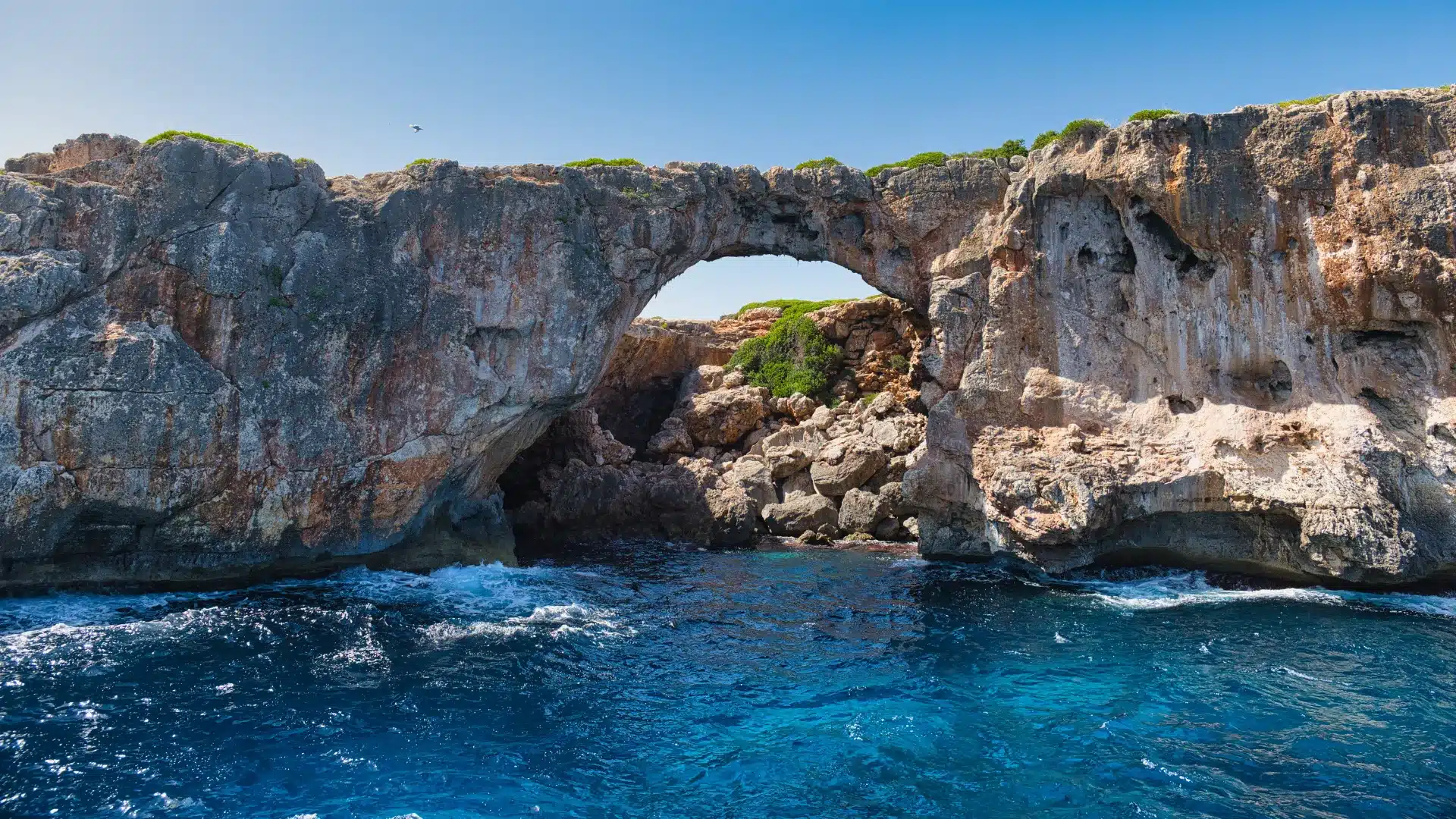
The Balearic Islands provide a very different production environment from mainland Spain. Mallorca offers mountains, beaches, old towns, luxury villas, roads, marinas, hotels, caves, villages and coastal cliffs. Ibiza brings nightlife, villas, beaches, music culture, fashion, wellness, boats and high-end commercial value. Menorca provides quieter beaches, stone villages, countryside, ports and a more restrained island look.
The Balearics are strong for commercials, lifestyle, luxury, fashion, travel, music videos, reality formats, branded content, marine shoots and stills. They can also support drama and documentary, especially where the project needs island identity, coastal access or Mediterranean luxury.
Production in the Balearics is highly seasonal. Summer brings crowds, high accommodation costs, limited availability, traffic, beach pressure and increased sensitivity around public filming. Villas, hotels, beach clubs, boats and marinas should be booked early. Public beaches, protected coastlines, drones, boats and larger crews may require several layers of approval.
Island movement also matters. A Mallorca shoot can involve mountain roads, narrow village streets, beach access and marina logistics. Ibiza can be difficult during peak season because of demand and privacy concerns. Menorca may be easier in some respects, but crew and equipment availability may be more limited.
Hoodlum helps productions in the Balearic Islands with local fixers, private villa agreements, beach approvals, boat operators, accommodation, security, drones, transport and realistic island schedules.
Northern Spain, Basque Country and Galicia
Northern Spain gives productions a greener, more Atlantic version of the country. Basque Country, Galicia, Asturias, Cantabria, Navarra, La Rioja and Aragón can provide mountains, coastlines, fishing ports, forests, rain, old towns, industrial sites, vineyards, modern architecture, roads and less familiar Spanish looks.
Bilbao and San Sebastián are strong production bases in Basque Country. Bilbao offers modern architecture, industrial heritage, riverfronts, museums, business districts and contemporary urban texture. San Sebastián provides beaches, old streets, coastal elegance, food culture and festival identity. Basque Country can support commercials, drama, documentaries, food programming, technology, industrial stories, fashion and corporate content.
Galicia provides Atlantic coast, fishing villages, green landscapes, stone towns, ports, forests, pilgrimage routes and dramatic weather. Asturias and Cantabria add mountains, rugged coastlines, rural roads and northern village looks. Navarra and Aragón can provide plains, deserts, mountains, medieval towns and road filming opportunities. La Rioja is strong for vineyards, rural roads and food or wine content.
Northern Spain requires planning around weather, regional languages, local authorities, road access, ports, private owners and protected landscapes. Hoodlum supports productions by identifying regional crew, securing permits, planning weather cover and matching the creative brief to the right northern region.
Crew Entry, Visas and Work Authorisation
Crew entry into Spain depends on nationality, duration of stay, role, employment structure and whether the crew member is entering under Schengen short-stay rules or a longer work-related route. EU citizens usually need only a valid passport or national ID card, while non-EU crew may require a Schengen visa, work authorisation or a longer-stay visa depending on the assignment.
For short stays, visa-required crew may need a Schengen visa. Supporting documents commonly include a valid passport, completed visa application form, proof of visa fee payment, travel or health insurance, proof of financial means, invitation letter from a Spanish production company or local partner, accommodation information, travel itinerary, shoot schedule and production details. For longer stays or paid work under certain structures, crew may need work authorisation, sometimes described in local terms as a work authorisation card or employment-related permission.
Processing can take several weeks. A short-stay visa may be faster than a long-stay or work-related process, but productions should still allow enough time for appointment availability, consular review, document corrections and nationality-specific requirements. Large productions should begin crew-entry planning well before travel, especially when multiple non-EU crew members are involved.
Hoodlum supports Spain crew-entry planning by mapping the crew list against nationality, length of stay, role and travel route. The goal is to make sure each crew member has documentation that matches the production reality: dates, locations, role, employer, local partner and purpose of travel.
International Crew Accreditation and Production Documentation
International crew accreditation in Spain is usually tied to the production’s permits, visa support, work authorisation, insurance and local production structure. Crew members working in Spain may need to appear on permit applications, location access lists, insurance documentation and local production paperwork. Some productions may also require support from a regional film commission, local production company or relevant authority.
Crew documentation can include valid passports, ID cards, proof of employment or contract, proof of qualifications or experience, crew lists, role descriptions, production company details, completed forms and proof of liability insurance. Depending on the region and the production type, accreditation may be free or may involve a small administrative fee.
The timing for crew accreditation can vary. Some documentation can be prepared quickly, but productions should not leave it until the final days before travel. If a crew member’s name, role or travel dates change, those changes may need to be reflected in permit documents, visa letters, access lists and insurance.
Hoodlum supports crew accreditation by preparing consistent crew lists, production summaries, letters and supporting documents that can be used across visa, permit, location and insurance processes.
Film Permits and Regional Approvals
Film permits in Spain are issued by the relevant authority depending on the location and type of filming. The Spanish Institute of Cinematography and Audiovisual Arts, known as ICAA, is the national audiovisual body, but practical filming permissions are usually handled by regional or local authorities, municipal film offices, road authorities, police, private owners, heritage managers, port authorities or site-specific bodies. Madrid Film Office, Barcelona Film Commission and regional film commissions are important starting points for local guidance.
A film permit application in Spain may require a detailed script or treatment, storyboard, shooting schedule, location plan, proof of insurance, crew list, equipment list, vehicle plan, traffic impact information, drone details, risk assessment and a completed application form. For complex shoots, additional approvals may be required for police support, road closures, public-space occupation, crowd control, stunts, night filming, special effects, weapons, animals, marine work or heritage locations.
Timelines vary widely. A small public-space shoot can be processed faster than a large-scale production involving road closures, drones, city centres, monuments, police, airports, ports or protected landscapes. Productions should allow several weeks for standard permit work and several months for large, multi-location or high-impact shoots.
Costs also vary. Some permits are modest, while complex public-space occupation, police support, traffic control, heritage access or large-scale exclusive use can increase costs significantly. Hoodlum helps productions identify the right permitting authority for each Spain location and prepare a realistic application that reflects the true production footprint.
Private Locations in Spain
Private locations in Spain include villas, apartments, hotels, restaurants, offices, estates, farms, vineyards, castles, warehouses, rooftops, marinas, private beaches, factories, studios, nightclubs, palaces, haciendas and private roads. A fixer or location manager plays a key role in scouting, contacting owners, negotiating terms, managing logistics and coordinating with local authorities where required.
Private location fees are usually quote-specific. Owners need to review the production synopsis, script or treatment, intended use, schedule, crew size, equipment, dressing, access requirements and impact before providing a realistic fee. A small documentary interview in a private office is not comparable to a fashion campaign in a luxury villa, a commercial in a hotel, a music video in a nightclub, or a drama sequence in a historic estate.
A strong private location agreement should cover fees, access dates, prep and strike, areas included, overtime, deposits, insurance, damage, reinstatement, art department changes, power, catering, toilets, parking, security, confidentiality, owner approvals and cancellation terms. Private permission does not automatically cover public impact. If equipment, vehicles, lighting, drones, cables or crew activity affect streets, beaches, pavements, neighbours, traffic or public parking, additional public permits may still be required.
Hoodlum supports private location work in Spain by finding suitable locations, negotiating access, checking practical logistics and making sure the private agreement aligns with public authority requirements.
Drone Filming in Spain
Drone filming in Spain is regulated under European drone rules and Spanish aviation requirements. AESA, the Spanish Aviation Safety Agency, is the national aviation regulator. Professional drone work may require operator registration, pilot certification, liability insurance, a flight plan, compliance with EU UAS categories and specific authorisation depending on the location, airspace and risk profile.
Spain offers outstanding drone opportunities: cities, deserts, islands, beaches, mountains, roads, vineyards, ports, castles and coastal cliffs. Many of these locations are also restricted or sensitive. Airports, heliports, military zones, national parks, archaeological sites, protected landscapes, urban centres, ports, public crowds and controlled airspace can all affect whether a flight is possible.
A drone permit or authorisation package may require a detailed flight plan, pilot certification, drone registration documents, liability insurance, maps, coordinates, risk assessment, location permission and a completed application or notification process. Processing may take several weeks, especially for more complex operations. Productions should not treat drone work as a last-minute add-on.
Importing drones into Spain for commercial filming may require customs documentation, commercial invoices, bills of lading or air waybills, certificate of origin, declaration of conformity with EU standards, proof of duties and taxes where applicable, EORI details and proof of insurance. In many cases, hiring a certified local drone operator is the most efficient route because the operator understands AESA processes, Spanish airspace, local permits and practical flight constraints.
Hoodlum supports drone filming in Spain by coordinating aviation requirements, location permissions, customs documentation, local drone operators and ground safety planning.
Equipment Customs Clearance and ATA Carnet
Spain is part of the ATA Carnet system, which makes temporary importation of professional filming equipment more practical for crews arriving from outside the European Union. An ATA Carnet allows eligible professional equipment to enter temporarily without normal duties and taxes, provided the equipment is re-exported and the carnet is processed correctly.
Customs clearance in Spain is handled through the Spanish Tax Agency, Agencia Tributaria, and AEAT customs systems. Crews should prepare a detailed equipment list, commercial invoice, packing list, certificate of origin where required, ATA Carnet, proof of insurance, identification and serial numbers for cameras, lenses, lighting, grip, sound equipment, drones, batteries, radio gear, vehicles and specialist kit.
Clearance can be quick when the documentation is accurate, but delays can occur when serial numbers are missing, values are inconsistent, drones are not documented, batteries are packed incorrectly, freight arrives separately from the carnet holder or the shipment is complex. Productions arriving through Madrid, Barcelona, Málaga, Valencia, Seville, Bilbao, Tenerife, Gran Canaria or other ports and airports should align the customs plan with the production schedule.
For crews travelling within the EU, movement may be simpler, but productions should still check ownership, route and special equipment requirements. Hoodlum supports Spain customs planning by preparing carnet information, coordinating with clearing agents and ensuring the equipment list matches the actual cases.
Local Crew, Fixers and Production Suppliers
Spain has a deep and experienced crew base. Madrid and Barcelona offer the strongest access to producers, fixers, location managers, production managers, assistant directors, camera crew, lighting, grip, sound, art department, wardrobe, hair and makeup, casting, drivers, drone operators, editors, security, caterers, post-production and studios. Andalusia, the Canary Islands, the Balearics, Basque Country, Galicia and other regions also have strong local production networks.
A fixer in Spain is valuable because each region has its own administrative and practical character. A Madrid street shoot, Barcelona fashion shoot, Seville heritage location, Almería desert sequence, Tenerife road film, Mallorca villa shoot or Bilbao industrial documentary all require different local knowledge. The fixer helps identify the correct authority, secure permits, negotiate private access, source crew, arrange transport, coordinate releases, communicate with police or councils and solve problems on the ground.
Hoodlum scales production support according to the brief. A documentary may need a fixer, translator, vehicle, permits and releases. A commercial may need location scouts, production management, casting, technical crew, art department, security, drones, catering and agency support. A feature or television project may need deeper support around regional schedules, extras, road control, studio work, tax incentive planning and long-term crew logistics.
Transport, Accommodation and Production Movement
Spain has strong transport infrastructure, including high-speed rail, international airports, highways, ports and regional road networks. However, production movement still needs careful planning. Madrid and Barcelona traffic, old city access, beach parking, island ferries, mountain roads, desert locations, national parks, port areas and tourist seasons can all affect the schedule.
Madrid, Barcelona, Málaga, Seville, Valencia, Bilbao and other cities may require technical parking plans and public-space approvals. In the Canary Islands and Balearics, cargo, ferries, flights, accommodation and local vehicles need early coordination. In Andalusia and Almería, heat, long rural routes and desert access should be considered. In northern Spain, weather and mountain roads can shape the day.
Accommodation should be secured early during summer, major festivals, trade fairs, sporting events, film festivals and peak tourism periods. San Sebastián, Cannes-adjacent travel routes, Barcelona events, Ibiza summer, Mallorca high season, Seville festivals and Canary Islands winter demand can all affect availability and pricing.
Hoodlum plans Spain movement around call times, technical parking, vehicle access, ferry schedules, flight connections, road permissions, equipment storage, crew turnaround, meals and contingency. Good movement planning protects both the budget and the shoot day.
Safety, Security and Practical Risk
Spain is generally a safe and stable production destination, but standard precautions are important. Pickpocketing and petty theft can occur in tourist areas, busy city centres, beaches, transport hubs and crowded public spaces. Productions should protect equipment, data, vehicles and personal belongings, particularly in Barcelona, Madrid, beach areas and major tourist sites.
Small shoots may need only basic equipment security and local awareness. Larger commercials, high-profile talent, expensive equipment packages, night shoots, public crowds, street work, road closures, drone operations and celebrity campaigns may require professional security, controlled access, secure storage, vehicle monitoring and crowd management.
Practical risks vary by region. Summer heat in Andalusia can affect crew stamina and equipment. Island shoots require marine safety and weather planning. Desert work in Almería needs water, shade, vehicles and communication. Mountain filming in the Pyrenees or Sierra Nevada requires weather awareness, road planning and safety support. Port, industrial and road filming require site-specific safety procedures.
Hoodlum supports safety and security planning by matching the level of support to the actual shoot. The aim is to keep the crew, equipment and public safe without overcomplicating smaller productions.
Film Rebates and Tax Incentives in Spain
Spain offers attractive tax incentives for qualifying audiovisual productions, including support for international productions that incur eligible expenses in Spain. The headline structure has included significant deductions for qualifying Spanish expenditure, with enhanced systems in certain territories such as the Canary Islands, Navarre and Basque Country. Productions should confirm the current rules, rates, caps, eligible costs, applicant requirements, minimum spend, regional differences and audit requirements before budgeting.
The incentive conversation should happen early. To access a rebate or deduction, the production may need a compliant local structure, Spanish production-service partner, eligible expenditure, accounting documentation, supplier invoices, payroll records, cultural or certification requirements and audit trails. Reality formats, documentaries, scripted projects, animation, series and feature films may not all be treated the same way, so eligibility should be checked case by case.
Spain’s incentive environment is one of the reasons the country has become increasingly attractive to international productions, but it should never be treated as automatic. Hoodlum helps producers connect the creative plan with the incentive conversation by identifying likely Spanish spend, regional options, local crew, suppliers, accommodation, transport, locations and production services that may be relevant to the structure.
When Spain Is the Right Production Choice
Spain is the right production choice when a project needs strong European production infrastructure, varied landscapes, reliable crew, competitive incentives, city locations, coastlines, islands, deserts, mountains, historic architecture, modern design, roads, ports, studios and regional variety. It is especially strong for commercials, feature films, television drama, documentaries, factual entertainment, travel content, automotive films, fashion, music videos, branded content and photography.
Spain is also useful when a production needs several distinct looks in one country. Madrid, Barcelona, Seville, Valencia, Bilbao, Galicia, Almería, the Canary Islands, the Balearic Islands, Basque Country, La Rioja, Aragón and the Pyrenees can all support different creative needs.
Spain may be less suitable for productions that want to avoid paperwork, fly drones without proper approval, film in busy public spaces at short notice, use roads without traffic coordination or assume that a permit in one region applies to another. Spain is highly workable, but it rewards local planning.
Common Spain Production Mistakes
One common mistake is assuming Spain has one national filming permit. In practice, permits depend on the region, municipality, location and activity. Madrid, Barcelona, Seville, Tenerife, Mallorca, Bilbao and Almería all have different processes.
Another mistake is underestimating drone permissions. Spain follows EU UAS rules and AESA requirements. Airports, military areas, urban zones, national parks, ports and protected landscapes can restrict flights.
Productions also underestimate regional logistics. Mainland Spain is large, and island shoots require separate planning for cargo, crew, ferries, flights, accommodation and local vehicles.
Customs errors can delay equipment. Spain is an ATA Carnet country, but carnet lists must be accurate and properly stamped. Drones, batteries and radio equipment should be documented clearly.
Private location assumptions can also cause problems. A signed private agreement may not cover public parking, street impact, drones, exterior lighting or neighbour disruption.
Finally, productions sometimes budget around incentives before confirming eligibility. Spain’s incentives can be strong, but the rules, caps and regional structures must be checked before the budget is locked.
How Hoodlum Supports Productions in Spain
Hoodlum provides Film Production Services in Spain for international productions that need practical local coordination across Madrid, Barcelona, Andalusia, the Canary Islands, the Balearic Islands, Basque Country, Galicia, Valencia, Aragón, Castile and the wider country. Our work covers film fixers, local producers, permit coordination, location scouting, private location agreements, crew entry guidance, work authorisation support where required, drone planning, customs and ATA Carnet coordination, local crew sourcing, transport, accommodation, security, regional logistics and full on-ground production management.
For Madrid, Hoodlum supports city permits, technical parking, private interiors, studio access and central Spain routes. For Barcelona and Catalonia, we coordinate municipal approvals, fashion and commercial shoots, coastal access and regional locations. For Andalusia, we support historical locations, desert shoots, road work, coastal filming and large-scale service production. For the Canary Islands and Balearics, we manage island logistics, drone planning, accommodation, local crew and regional access.
Spain gives productions exceptional range when the groundwork is handled properly. Hoodlum’s role is to keep that groundwork clear, local, realistic and production-focused so the crew arrives with the right permissions, the right people and the right plan.
Frequently Asked Questions
Do international crews need visas to film in Spain?
Crew-entry requirements for Spain depend on nationality, duration, role and employment structure. EU citizens usually need only a valid passport or national ID card. Non-EU crew may need a Schengen visa, work authorisation or long-stay visa depending on the production and length of stay.
Who issues film permits in Spain?
Film permits in Spain are usually issued by the relevant regional or local authority, municipal film office, road authority, police, private owner, heritage body, port authority or location manager. ICAA is the national film and audiovisual body, but practical filming permissions are location-specific.
Can productions film in Madrid and Barcelona?
Yes. Madrid and Barcelona are both major production centres, but public-space filming, technical parking, traffic impact, drones, crowds, heritage areas and private locations require proper coordination and permits.
Is Spain good for drone filming?
Yes, Spain can be excellent for drone filming, but operations must comply with AESA and EU drone rules. Operators may need registration, pilot certification, insurance, flight planning and specific authorisation depending on the location and airspace.
Is Spain an ATA Carnet country?
Yes. Spain accepts ATA Carnets for temporary importation of qualifying professional filming equipment. Crews should prepare detailed equipment lists, serial numbers, values, insurance documentation, packing lists and customs paperwork.
Does Spain offer film incentives?
Yes. Spain offers tax incentive structures for qualifying audiovisual productions, with enhanced systems in some regions such as the Canary Islands, Navarre and Basque Country. Productions should confirm current rates, caps, eligibility and application requirements before budgeting.
What are the best filming locations in Spain?
Strong filming locations in Spain include Madrid, Barcelona, Seville, Granada, Córdoba, Málaga, Cádiz, Almería, Valencia, Bilbao, San Sebastián, Galicia, the Canary Islands, the Balearic Islands, La Rioja, Aragón, the Pyrenees and the Spanish coastlines.
Why use a fixer in Spain?
A fixer in Spain helps international productions secure permits, source locations, negotiate private access, coordinate with regional authorities, arrange local crew, manage drones, support customs, plan transport and keep the shoot practical across Spain’s regional systems.
External Authority Links
- Spain Film Commission
- ICAA – Instituto de la Cinematografía y de las Artes Audiovisuales
- Spanish Ministry of Foreign Affairs – Visas
- Spain Visa Information
- AESA – Spanish Aviation Safety Agency
- Agencia Tributaria – Customs
- Madrid Film Office
- Barcelona Film Commission
- Andalucía Film Commission
- Canary Islands Film
- Spain.info
Spain gives international productions access to Madrid, Barcelona, Andalusia, the Canary Islands, the Balearic Islands, Basque Country, Galicia, deserts, mountains, coasts, cities, ports, heritage sites, studios and strong regional crew. The strongest shoots are built on the right permits, crew-entry planning, private location agreements, drone approvals, customs documentation, incentive advice, local fixers, transport, accommodation, security and realistic movement.
Hoodlum supports productions across Spain with film fixers, permit coordination, location scouting, customs and ATA Carnet guidance, drone planning, local crew sourcing, transport, accommodation, security and full on-ground production management. To start planning a shoot in Spain, contact us with your dates, locations, crew size, equipment list and creative brief.