
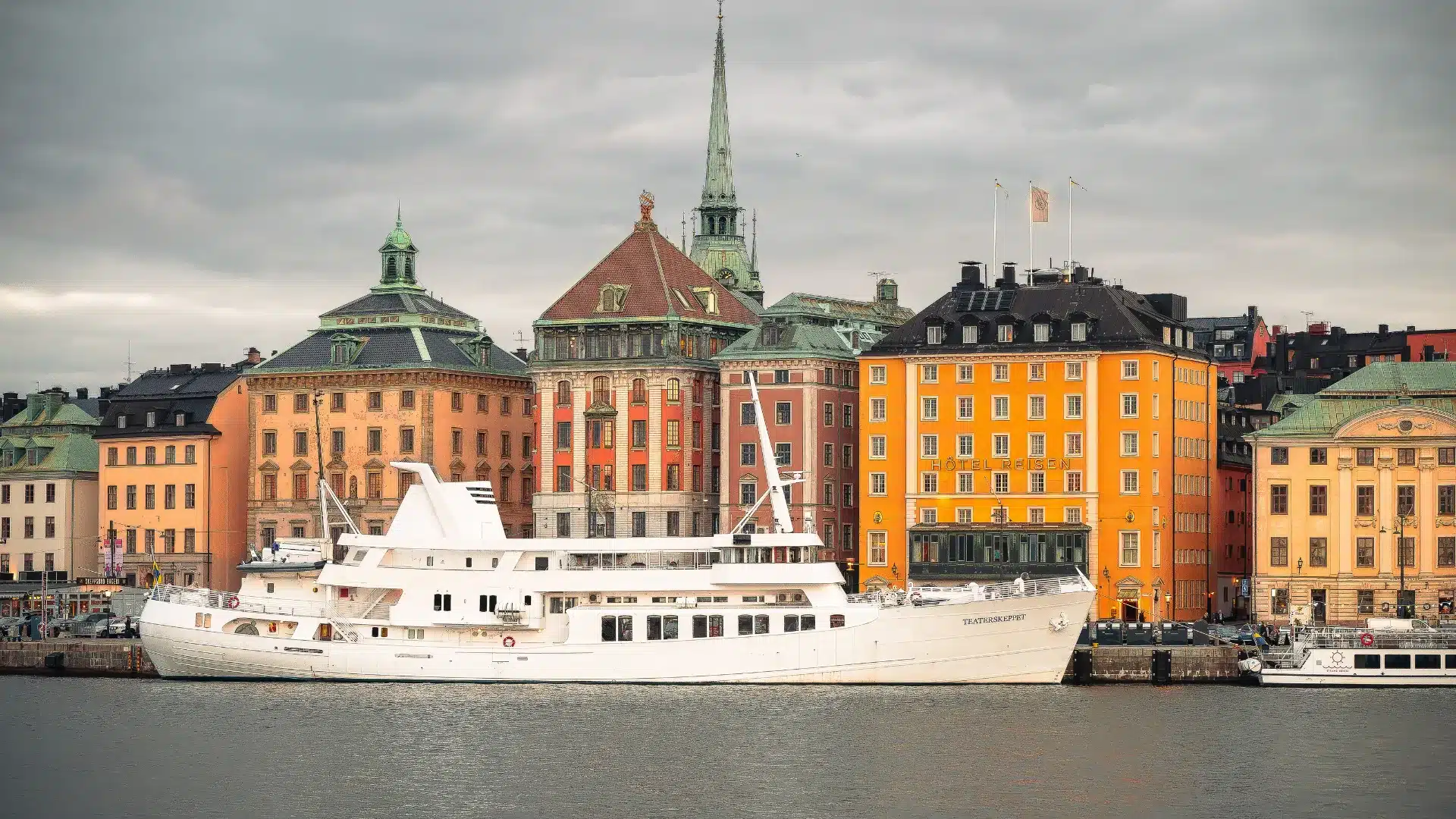
Film Production Services in Sweden
Sweden is a strong Nordic production destination for international crews that need modern cities, forests, lakes, archipelagos, snow, clean design, Arctic access, coastal locations and reliable local production support. The country works well for commercials, documentaries, feature films, television drama, branded content, factual entertainment, photography, travel campaigns, winter shoots and productions that need a professional Scandinavian filming base.
Hoodlum provides Film Production Services in Sweden for productions filming across Stockholm, Gothenburg, Malmö, Swedish Lapland, Kiruna, Gotland, the Stockholm archipelago, forests, lakes, coastal towns, snowfields, private interiors, modern urban locations and remote northern regions. Our team supports visa planning, Swedish Migration Agency documentation, local film permits, municipality coordination, crew accreditation, drone registration, ATA Carnet customs clearance, private location agreements, local fixers, crew sourcing, transport, accommodation, safety planning and on-ground production management.
The country is production-friendly and generally very safe, but international crews still need to prepare the right approvals. Depending on the project, filming may involve Schengen visa requirements, work or residence permit checks, local municipality permits, County Administrative Board permissions, drone registration, Swedish Transport Agency rules, Swedish Customs clearance, public liability insurance, private property agreements and coordination with local authorities.
Hoodlum helps productions understand which permissions apply, what documents are needed and how to build a realistic schedule around permits, crew movement, locations, customs, drones, weather and safety.
Why Sweden Works for International Productions
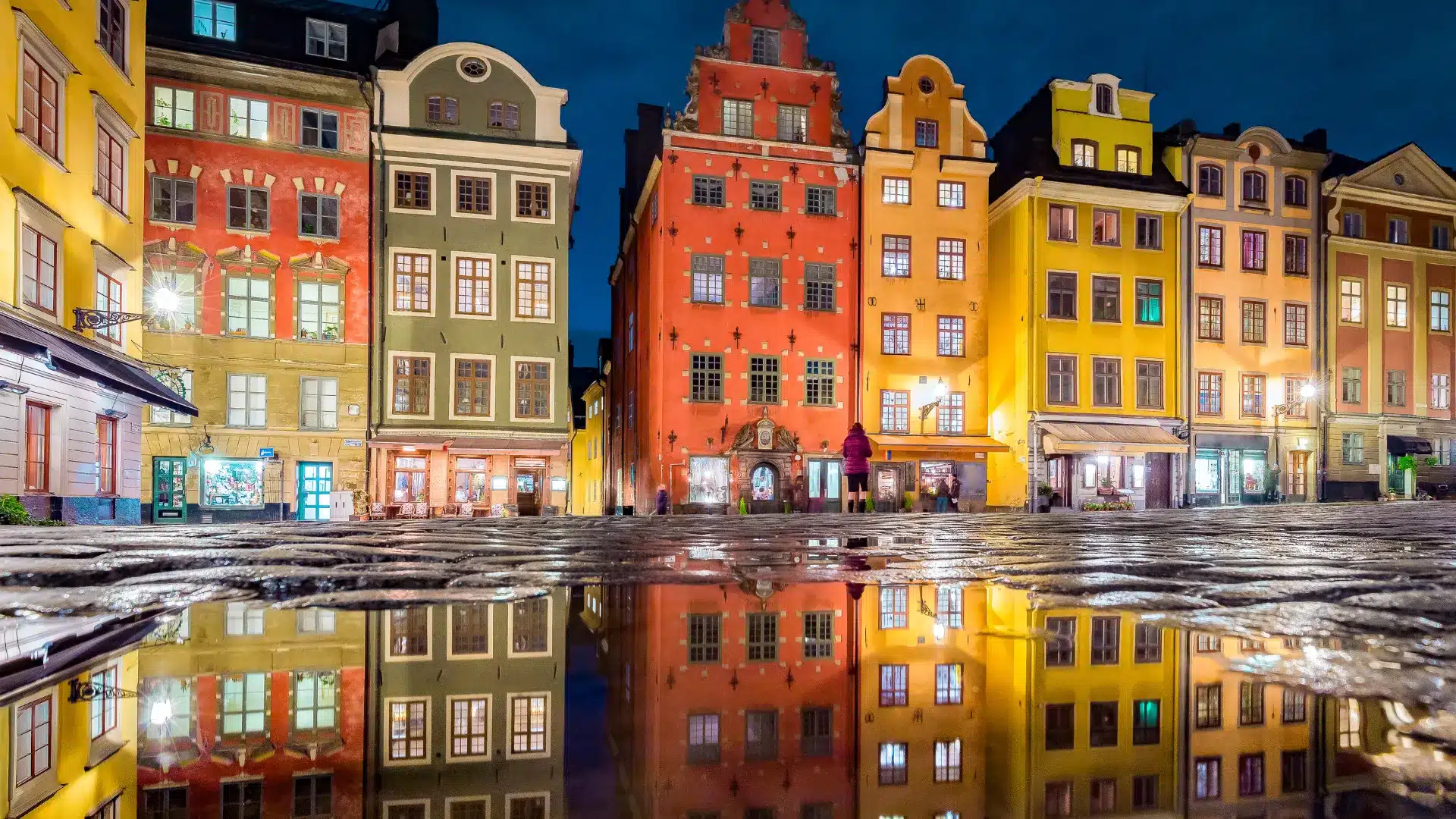
Sweden works because it combines strong production infrastructure with a wide range of usable locations. Stockholm can provide waterfronts, modern offices, old town streets, clean design interiors, transport hubs, residential areas and archipelago access. Gothenburg offers harbour, industrial, automotive and west coast visuals. Malmö provides southern city access, bridges, modern architecture and easy movement toward regional locations. Northern Sweden gives crews snow, Arctic light, forests, mining towns, frozen landscapes and winter roads.
The country is especially useful for:
- Commercials and branded content
- Documentaries and factual entertainment
- Feature films and television drama
- Travel and tourism campaigns
- Photography projects
- Fashion and design shoots
- Automotive filming
- Outdoor apparel campaigns
- Winter and snow productions
- Technology and sustainability stories
- Drone-led landscape filming
- Nordic lifestyle content
A major advantage is the professional crew base and strong local infrastructure. Productions can access experienced local producers, fixers, camera crew, lighting teams, location managers, drivers, drone operators, production coordinators, equipment suppliers and regional film contacts. English is widely used in production environments, which helps international crews work efficiently.
The main production challenge is matching the right region to the brief. A Stockholm-based shoot is very different from a Swedish Lapland winter production, and a coastal archipelago shoot has different logistics from a city commercial. Hoodlum helps crews choose the right base, route and production footprint before permits and suppliers are locked.
Stockholm as the Main Production Base
Stockholm is the main production hub and a practical starting point for many international crews. The city offers airport access, hotels, local crew, suppliers, studios, modern architecture, old town streets, waterfront areas, islands, bridges, offices, residential neighbourhoods, restaurants, museums and strong transport infrastructure.
Stockholm can support:
- Commercials
- Corporate films
- Documentary interviews
- Fashion and photography shoots
- Branded content
- Design and architecture campaigns
- Technology stories
- Travel films
- Urban lifestyle content
- Waterfront and archipelago filming
- Small and medium-size television productions
Public filming in Stockholm may require local municipality approval or coordination with property owners, public transport authorities, road authorities, harbour operators or other site managers depending on the location and production footprint. A small documentary crew may be simpler to manage than a commercial using lighting, vehicles, drones, traffic control, crowd management, reserved parking or a visible unit base.
Stockholm filming may require:
- Production details
- Script or project outline
- Location plans
- Filming dates and times
- Crew information
- Insurance certificates
- Equipment list
- Vehicle and parking plan
- Traffic or pedestrian management plan, if required
- Drone information, if applicable
- Private property permission, where needed
Hoodlum helps productions identify the correct approval route, prepare permit documents, secure private interiors and coordinate practical logistics for shoot days in and around the city.
Gothenburg, Malmö and Southern Sweden
Gothenburg and Malmö offer strong alternatives to Stockholm. Gothenburg is useful for harbour, industrial, automotive, west coast and modern city visuals. Malmö can provide southern urban locations, contemporary architecture, residential areas, coastal access and road or bridge-based visuals. Both cities can support commercials, documentaries, corporate content, factual programming and photography.
Southern Sweden can support:
- Urban lifestyle campaigns
- Industrial and harbour filming
- Automotive content
- Documentary interviews
- Architecture and design stories
- Coastal road sequences
- Travel campaigns
- Private interiors
- Small drama projects
- Photography shoots
Local approvals vary by municipality and location. Public spaces, roads, ports, transport sites, large equipment setups, drones and private properties may require separate permission. County Administrative Boards may become relevant for certain protected areas, nature reserves or land-use issues.
Hoodlum helps productions compare Stockholm, Gothenburg, Malmö and regional bases to decide which area gives the best balance of location value, crew access, permits, cost and logistics.
Swedish Lapland and Arctic Production
Swedish Lapland is one of the strongest filming regions in the country for snow, forests, frozen rivers, Arctic light, northern lights planning, mining towns, ice hotels, winter roads, reindeer-related access and remote landscapes. Locations around Kiruna, Abisko, Jukkasjärvi and other northern areas can work well for winter commercials, documentaries, outdoor apparel campaigns, automotive content, travel films and photography.
Swedish Lapland can support:
- Snow and winter campaigns
- Outdoor apparel shoots
- Automotive winter visuals
- Travel and tourism films
- Documentary sequences
- Drone landscape filming
- Northern lights planning
- Ice hotel and winter resort content
- Reindeer and local culture stories
- Expedition-style productions
- Photography campaigns
Arctic filming requires more planning than city production. Crews should account for cold temperatures, short winter daylight, snow road conditions, remote transport, battery performance, heated holding areas, local guides, accommodation pressure and weather contingency. Reindeer, Sámi cultural access, private land and sensitive community locations require respectful planning and permission.
Hoodlum helps productions structure Swedish Lapland shoots around realistic movement, local support, safety, access and weather conditions.
Gotland, Archipelagos and Coastal Filming
Sweden is useful for productions that need islands, coastlines, harbours, ferries, beaches, rocky shorelines, coastal towns and summer lifestyle visuals. Gotland can provide historic streets, limestone landscapes, beaches, rural roads and island atmosphere. The Stockholm archipelago offers water, boats, islands, cabins, harbours and clean Nordic coastal visuals close to the capital.
Coastal and island filming may require:
- Ferry planning
- Boat access
- Harbour permissions
- Local municipality approval
- Private property agreements
- Weather and wind planning
- Drone restrictions
- Marine safety
- Accommodation planning
- Equipment transport
- Public access management
Island shoots should not be treated like standard city work. Loading gear, moving crew, working around ferry schedules and securing accommodation can affect the production day. Hoodlum helps crews decide whether an island route is worthwhile or whether a coastal mainland location can deliver the same creative result more efficiently.
Forests, Lakes and Rural Locations
Sweden offers forests, lakes, cabins, roads, rural villages, agricultural areas, nature reserves, private estates and remote outdoor locations. These settings can work well for documentaries, commercials, outdoor brands, travel content, automotive work, photography and factual television.
Rural and forest filming can support:
- Lake and cabin visuals
- Forest scenes
- Road sequences
- Outdoor apparel campaigns
- Nature documentaries
- Lifestyle commercials
- Drone landscapes
- Small crew factual production
- Winter and summer rural scenes
- Private location filming
Even when a location looks open, productions should confirm whether it is public land, private property, a nature reserve, a protected area or a site managed by a local authority. Some activities may require permission, especially where filming affects public access, nature, wildlife, drones, vehicles or safety.
Hoodlum helps productions scout practical rural and forest locations, confirm ownership, secure agreements and plan realistic crew movement.
Visa Requirements and Crew Entry
Film crew entering Sweden from outside the EU generally need a valid passport. Depending on nationality, purpose of stay and duration, some crew may also need a Schengen visa, work permit, residence permit or other documentation. EU citizens can generally enter freely within the applicable rules, while non-EU crew should confirm requirements before travel.
Visa or entry documents may include:
- Valid passport with at least six months’ validity
- Completed visa application form, where required
- Proof of travel purpose
- Invitation letter or confirmation from a Swedish production company
- Proof of accommodation
- Proof of financial means
- Travel medical insurance
- Crew list
- Role descriptions
- Production schedule
- Employment or contract documentation
Processing can take around 15 to 30 days, and some cases can take 30 to 60 days depending on nationality, application type, documentation and authority workload. Productions should begin entry planning early, especially for larger crews, paid work activity, long stays or productions requiring work or residence permits.
The Schengen visa fee is generally around EUR 90, although costs may vary depending on nationality, application centre, permit type and services used.
Visa information is available through the Swedish Migration Agency:
Hoodlum helps productions prepare supporting documents, including invitation letters, crew lists, role descriptions, accommodation information and shooting schedules.
International Crew Accreditation
International crew accreditation may involve obtaining the correct permits, certifications or documents for film production crew members, depending on the production, role, location and authority requirements. Accreditation can be relevant for controlled locations, official access, events, public-space filming, larger productions or crew members requiring proof of professional status.
Accreditation documents may include:
- Valid passport
- Proof of employment or contract with the production company
- Health insurance
- Letter of invitation or confirmation from the Swedish production company
- Crew list
- Role descriptions
- Contact details
- Production schedule
- Relevant certifications or licences, where required
- Work or residence permit documents, if applicable
Processing can take around 15 calendar days, but some cases may take up to 30 to 60 days if additional checks, permits or complex documentation are required. Productions should allow more time for large crews, specialist roles, official access or multi-location shoots.
Costs can range from approximately EUR 150 to EUR 550 depending on the type of permit, accreditation, processing route and production requirements.
Hoodlum helps crews organise accreditation materials so the production file is ready for authorities, location owners, municipalities and local production partners.
General Film Permits and Local Approvals
Film permits are typically issued by local municipalities or County Administrative Boards, depending on the location and type of filming. Public spaces, roads, parks, transport areas, nature reserves, protected land, government buildings, harbours and private properties may all have different approval routes.
A film permit application may require:
- Production details
- Script or project description
- Location plans
- Filming dates and times
- Crew information
- Insurance certificates
- Equipment list
- Vehicle and parking details
- Traffic or public impact plan, if required
- Drone details, if applicable
- Risk assessment, where needed
- Private property permission, where relevant
Permit applications should generally be submitted 1 to 6 weeks before filming, depending on the complexity of the project. Low-impact filming may require less time, while public disruption, roads, drones, protected areas, large crews, night filming, stunts or special equipment need longer lead times.
Film permit costs vary depending on location, production type, authority involvement and services required. Additional costs may apply for traffic management, parking, security, location supervision, protected areas or municipal services.
Hoodlum helps productions identify the correct authority, prepare permit documents, coordinate with municipalities and reduce delays caused by incomplete schedules, missing insurance or unclear location plans.
Private Locations and Location Agreements
Private filming locations are arranged directly with owners, managers, businesses, hotels, restaurants, homes, cabins, farms, estates, industrial sites, studios, offices, resorts or commercial property representatives. The process usually starts by identifying potential locations and then contacting the owner or manager to confirm availability and conditions.
The private location process may include:
- Location scouting
- Ownership research
- Contacting the location owner or manager
- Explaining the production
- Sharing the schedule and requirements
- Negotiating location fees
- Confirming access
- Reviewing insurance
- Agreeing on crew and equipment limits
- Signing a location agreement
A private location agreement should cover:
- Approved filming areas
- Access times
- Crew size
- Equipment access
- Parking
- Overtime
- Cleaning and restoration
- Security
- Cancellation terms
- Drone restrictions
- Public liability insurance
- Content restrictions, if any
- Payment terms
Private location costs vary widely and are production-dependent. A small documentary interview in a private office will have a different cost from a commercial in a design house, hotel, cabin, estate, industrial site or island property. Costs cannot usually be fixed until the owner reviews the schedule, script, crew size, equipment and intended use.
Hoodlum helps productions scout, approach, negotiate and manage private locations so the crew has confirmed access and clear shoot-day terms.
Drone Filming and Swedish Transport Agency Rules
Drone operations are governed by EU drone rules and the Swedish Transport Agency. Depending on the type of operation, drone category, weight, location and risk level, operators may need registration, pilot competency, insurance and additional permission for specific or higher-risk operations.
In open airspace, a separate permit may not be needed for some low-risk operations, but crews must still comply with the applicable rules. Drone operators should confirm requirements before filming, especially for commercial work, drones over 250 grams, flights near airports, national parks, military areas, urban locations or sensitive sites.
Drone planning should account for:
- Swedish Transport Agency requirements
- EASA drone regulations
- Operator registration
- Pilot competency
- Drone details
- Drone weight and category
- Proof of identity
- Insurance
- Flight area
- Maximum altitude rules
- No-fly zones
- Airports
- National parks
- Military areas
- Private property permission
- Privacy and consent
- Weather and wind
A local drone registration or permit process may require:
- Online registration form
- Proof of identity
- ID card or passport
- Drone make and model
- Drone weight
- Drone category
- Operator details
- Pilot competency information
- Flight plan or risk assessment, where required
Online drone operator registration is available through the Swedish Transport Agency:
https://www.transportstyrelsen.se/en/Forms/Aviation/drones/registration-of-uas-operator
Processing can take around 2 to 4 weeks depending on the operation, complexity, category and authority workload. Costs can range from approximately EUR 100 to EUR 500 depending on registration, permissions and operational requirements.
For many international productions, hiring a local drone operator can simplify compliance. Hoodlum helps crews decide whether to bring a drone team or use a Swedish operator already familiar with airspace restrictions, national park rules and local requirements.
Drone Importation
Drone importation from outside the EU should be planned as part of equipment customs clearance. Productions bringing drones into Sweden from outside the EU may need an ATA Carnet and supporting customs documents. Importing the drone does not automatically allow it to be flown.
Drone importation documents may include:
- ATA Carnet from outside the EU
- Commercial invoice
- Packing list
- Certificate of origin
- Harmonized System code
- Export declaration from the exporting country
- Drone make, model and serial number
- Proof of ownership
- Technical specifications
- Battery transport information
- Insurance documents
- Operator registration details, where available
Drone rules may also require registration for drones over 250 grams. Operators should check age limits, altitude restrictions, no-fly zones, airport restrictions, national park restrictions and military-area restrictions before planning any flight.
Hoodlum helps productions separate drone importation from flight approval so the crew does not arrive with equipment that cannot legally or practically be used.
Equipment Customs Clearance and ATA Carnets
Sweden accepts ATA Carnets, which makes temporary importation practical for professional film equipment entering from outside the EU. A Carnet allows temporary importation without paying duties or taxes upfront, provided the equipment is re-exported within the specified timeframe.
The general ATA Carnet process is:
- Obtain the ATA Carnet before travel
- List all temporary import goods accurately
- Include values and serial numbers where relevant
- Present the Carnet to customs officials on entry
- Use the equipment for the production
- Present the Carnet again on exit
- Re-export the goods within the permitted timeframe
- Return the Carnet to the issuing association
Customs clearance documents may include:
- Commercial invoice
- Packing list
- Certificate of origin
- Export declaration from the exporting country
- ATA Carnet, if applicable
- Detailed equipment list
- Serial numbers
- Equipment values
- Drone documents, if relevant
- Freight documents, if applicable
Customs clearance is handled by Swedish Customs, known as Tullverket. For Carnets from outside the EU, airport customs clearance can be very quick when documents are complete, sometimes only a few minutes. Timing can be longer if equipment is freighted, documentation is incomplete, the shipment is complex or customs requests inspection.
Costs are not always fixed and depend on the customs route, broker involvement, freight handling, storage or additional processing. Productions should confirm whether a customs broker or freight forwarder is needed before travel.
Hoodlum helps productions prepare Carnet paperwork, equipment lists, serial numbers, customs declarations and arrival plans so camera, lighting, sound, grip and drone equipment can move efficiently.
Film Rebates and Tax Incentives
Sweden has a production rebate that can provide a 25% cash rebate for qualifying audiovisual works. The rebate is generally open to eligible projects such as feature films, documentaries, drama series and documentary series. It does not typically apply to reality TV shows.
Productions should confirm eligibility before budgeting any rebate recovery. The rules, qualifying expenditure, minimum spend requirements, production type, application window and available funding can affect whether a project qualifies.
Incentive planning may affect:
- Local production partner selection
- Budget structure
- Qualifying local expenditure
- Payroll and contractor treatment
- Local supplier use
- Accommodation and transport spend
- Accounting records
- Audit documentation
- Application timing
- Delivery requirements
Hoodlum helps productions understand whether the rebate route is worth exploring and when to involve local producers, accountants, rebate specialists or production service partners.
Safety, Security and Local Risk
Sweden is considered a very safe country for film crews, with a strong emphasis on safety, order and public responsibility. Basic security precautions are still recommended, especially for public filming, high-value equipment, night shoots, city-centre locations, transport hubs, remote northern locations or sensitive sites.
Safety and security planning may include:
- Advance reconnaissance
- Location-specific risk assessments
- Coordination with local authorities
- Emergency service awareness
- Equipment security
- Secure storage
- Vehicle and transport planning
- Public filming management
- Crowd awareness
- Data and media security
- First aid planning
- Weather monitoring
- Drone safety
- Remote communication for northern shoots
A small documentary crew may only need standard equipment management and basic safety planning. Larger commercials, public city filming, celebrity shoots, high-value camera packages or remote winter work may require local security, controlled access or more detailed risk assessment.
Hoodlum helps productions match the security plan to the actual shoot rather than overbuilding simple productions or underplanning complex locations.
Weather, Seasons and Production Logistics
Sweden has distinct seasonal production conditions. Summer offers long daylight hours, mild weather, archipelago access and green landscapes. Winter provides snow, low sun, frozen lakes and strong Arctic visuals in northern regions. Autumn and spring can offer transitional looks, but weather may be more variable.
Production logistics should account for:
- Seasonal daylight changes
- Winter cold
- Snow and ice
- Road conditions
- Accommodation availability
- Ferry and island access
- Archipelago transport
- Remote northern travel
- Equipment protection
- Battery performance in cold weather
- Crew warm-up areas
- Weather contingency
- Local supplier availability
Swedish Lapland and northern winter shoots need more preparation than city filming. Crews should allow time for cold-weather safety, transport, snow roads, warm vehicles, battery rotation and contingency days.
Hoodlum helps productions build a realistic route around the season, location type, weather and available infrastructure.
When Sweden Is the Right Production Choice
Sweden is the right choice when a production needs clean Nordic cities, modern design, forests, lakes, archipelagos, snow, Arctic access, coastal towns, efficient infrastructure and experienced local crew.
It works especially well for commercials, documentaries, feature films, drama series, documentary series, branded content, travel campaigns, photography, fashion shoots, automotive content, winter productions and outdoor lifestyle films.
The country may be less suitable for projects that need instant permits, unrestricted drone access, rebate support for reality TV or low-cost Arctic logistics with no lead time. It is highly workable when visas, work permissions, permits, private locations, drones, customs, insurance and safety planning are handled early.
Common Production Mistakes
Common mistakes include assuming a passport alone is enough for every non-EU crew member, leaving visa or work permission checks too late, failing to confirm whether a municipality or County Administrative Board permit is required, not checking drone registration rules, assuming open airspace means no compliance obligations, importing drones from outside the EU without Carnet planning, underestimating winter logistics, and budgeting a rebate for a project type that may not qualify.
Another common mistake is choosing a recognisable Stockholm or Lapland location without checking whether a more controllable private interior, regional road, forest, lake or archipelago location can deliver the same visual result with fewer restrictions.
Hoodlum helps productions compare creative goals against permissions, access, timing, cost, season, safety and production control.
How Hoodlum Supports Productions in Sweden
Hoodlum provides Film Production Services in Sweden for international productions that need reliable support from planning through wrap. Our services include visa guidance, Swedish Migration Agency document support, crew accreditation coordination, local film permit support, municipality and County Administrative Board communication, location scouting, private location agreements, local fixers, crew sourcing, drone planning, Swedish Transport Agency registration support, ATA Carnet and Swedish Customs preparation, transport, accommodation, safety planning, rebate guidance and on-ground production management.
From Stockholm, Gothenburg and Malmö to Swedish Lapland, Kiruna, Gotland, the Stockholm archipelago, forests, lakes, coastal towns, private interiors and remote northern roads, Hoodlum helps productions access the country with the right paperwork, permissions, crew and logistics in place.
FAQ
Do international film crews need a visa to enter Sweden?
Non-EU crew may need a Schengen visa, work permit, residence permit or other documentation depending on nationality, purpose and duration of stay. A valid passport is required for entry from outside the EU.
What documents are usually needed for a visa?
At minimum, crews should have a valid passport. Depending on nationality and visa type, additional documents may include an application form, invitation letter, accommodation proof, insurance, financial proof, crew list and production schedule.
How long does visa processing take?
Processing can take around 15 to 30 days, and some cases may take 30 to 60 days depending on application type and authority workload.
How much does a visa cost?
The Schengen visa fee is generally around EUR 90, although costs can vary depending on nationality, application centre and permit type.
Is crew accreditation required?
Crew accreditation may be required for certain locations, official access, larger productions or specialist roles. It can involve employment proof, insurance, invitation letters and production documentation.
How long does crew accreditation take?
Processing can take around 15 calendar days, but some cases may take 30 to 60 days depending on complexity.
Who issues film permits?
Film permits are usually issued by local municipalities or County Administrative Boards, depending on the location and type of filming.
How far in advance should film permit applications be submitted?
Permit applications should generally be submitted 1 to 6 weeks before filming, depending on the complexity of the project.
What documents are needed for a film permit?
Common documents include production details, script or project description, location plans, filming dates and times, crew information and insurance certificates.
Can productions film on private locations?
Yes. Private locations require agreement with the owner or manager. Costs vary depending on the location, schedule, crew size, equipment and production requirements.
Are drones allowed for filming?
Yes, but drone operations must comply with Swedish Transport Agency and EASA rules. Registration may be required, especially for drones over 250 grams or higher-risk operations.
Is a drone permit needed in open airspace?
Some low-risk operations in open airspace may not require a specific permit, but operators must still comply with registration, category, altitude, no-fly zone, privacy and safety rules.
How long does drone registration or approval take?
Processing can take around 2 to 4 weeks depending on the operation, category and authority requirements.
Is Sweden an ATA Carnet country?
Yes. ATA Carnets can be used for temporary importation of eligible professional film equipment from outside the EU.
Who handles customs clearance?
Customs clearance is handled by Swedish Customs, known as Tullverket.
Does Sweden offer a film rebate?
Yes. The country has a 25% production rebate for qualifying audiovisual works, but it generally does not apply to reality TV shows.
Is Sweden safe for filming?
Yes. It is considered very safe, but productions should still use basic security precautions, risk assessments and local authority coordination where needed.
External Authority Links
Planning a shoot in Sweden? Contact Hoodlum for visa support, film permits, local fixers, location scouting, ATA Carnet customs planning, drone coordination, crew sourcing, rebate guidance, safety planning and on-ground production management. You can also explore our film production services and learn more about who we are. For more information, you can also visit our Hoodlum Film Fixers Sweden Google Business Profile for local production details.