













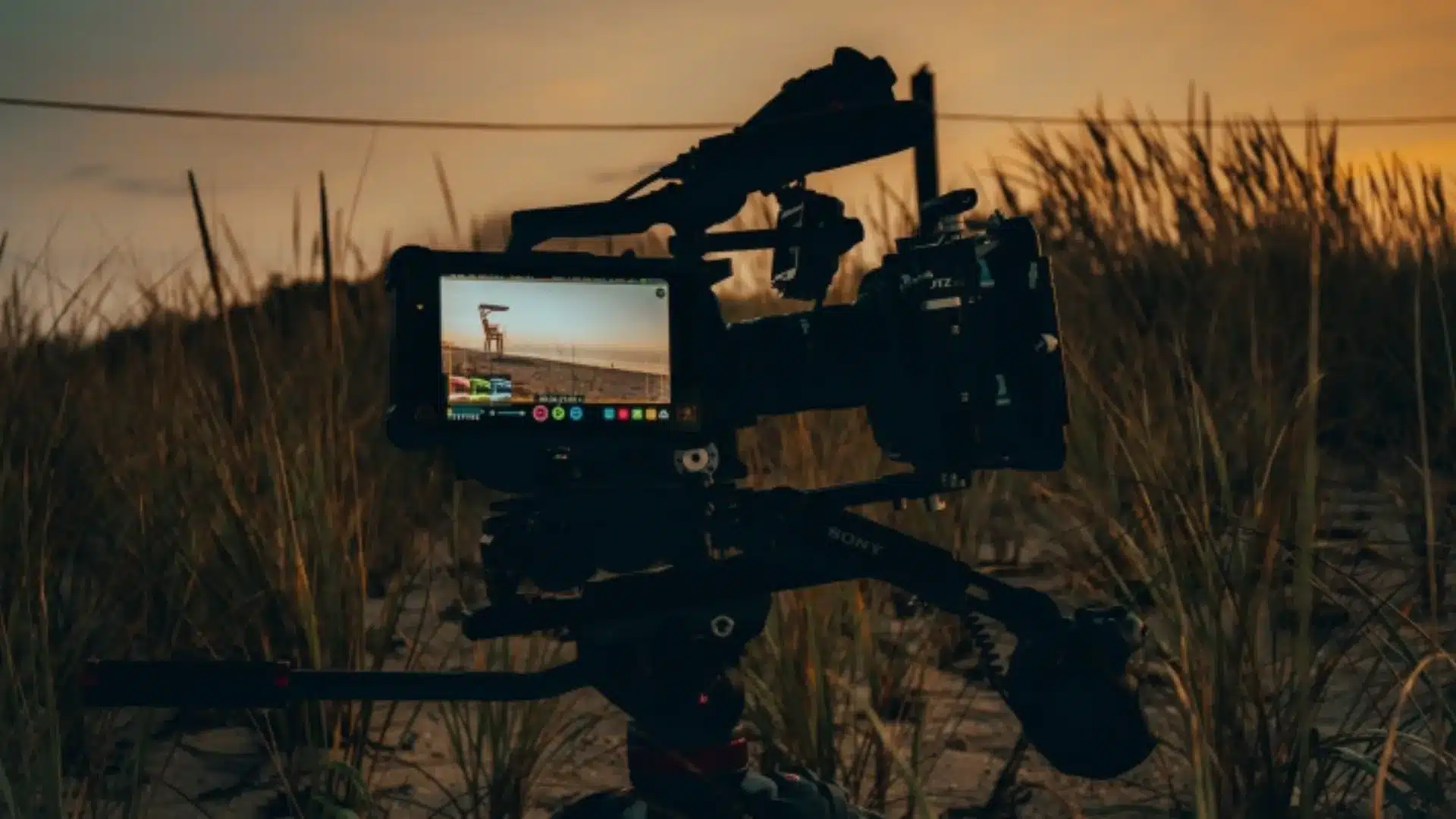
Filming in Morocco
Morocco is one of Africa’s strongest and most established film production bases, a country of extraordinary cinematic range combining Sahara dunes, Atlas mountain roads, imperial cities, ancient kasbahs, medinas, Atlantic coastline and world-class studios with deeply experienced crews and one of the continent’s most competitive cash rebates. From the legendary studio corridor of Ouarzazate and the earthe n kasbah of Aït Benhaddou to the riads and souks of Marrakech, the dunes of Merzouga, the imperial heritage of Fes and the Atlantic light of Essaouira, Morocco offers cinematic scale and reliable infrastructure within one film-friendly jurisdiction, backed by a 30% cash rebate administered by the Moroccan Cinematographic Centre.
For international crews, Morocco offers a rare blend of desert, mountain, imperial-city and coastal locations, decades of experience serving major international productions, competitive costs, established studios and a national cash rebate on qualifying spend, balanced against a permitting, incentive and customs framework that rewards early, well-managed planning. It is one of the few places where a production can shoot Sahara desert, mountain passes, ancient kasbahs, imperial cities and Atlantic coast within one efficient, incentive-backed schedule, supported by a mature ecosystem that has hosted epics from Lawrence of Arabia to Gladiator and Game of Thrones.
Hoodlum provides Film Production Services in Morocco for feature films, television series, commercials, documentaries, branded content, fashion, automotive, music videos and large-scale international productions. Our team supports CCM permit coordination, the mandatory local production company, location agreements, drone coordination, customs and equipment clearance, local crew sourcing, desert and mountain logistics, transport, accommodation, security planning, rebate support and full on-ground production management. You can see the full scope of what we do and the people behind it on our who we are page.
The Moroccan system rewards productions that arrive with their paperwork in order. It is superbly film-friendly and experienced, known for relatively efficient approvals, but it is not a destination for informal shooting without permits, and the CCM permit, customs, drones and the rebate all run through specific processes, with a licensed local production company mandatory. The right permits, the right customs plan and the right rebate registration all need to be settled before the cameras roll, and the most efficient way to handle that is through an experienced local production partner.
Why Morocco Works for Desert, Studios and Rebates
The kingdom’s biggest production strength is the combination of extraordinary visual range, decades of production reliability, world-class desert studios and a competitive, uncapped 30% cash rebate. In a single schedule a production can capture Sahara dunes, Atlas mountain roads, ancient kasbahs, imperial cities and Atlantic coast, supported by experienced crews, established studios and a rebate that materially improves project viability. It can double convincingly for North Africa, the Middle East, the Mediterranean, ancient worlds and desert kingdoms, while also offering a distinct Moroccan identity that stands strongly on its own.
Marrakech and Ouarzazate are the main hubs, but the value sits in the range and the incentive. A historical epic might combine Ouarzazate’s studios with Aït Benhaddou and the desert. A commercial might pair the dunes with a mountain pass and a medina. A fashion film might use Marrakech’s riads and the coast. The country is strong because it delivers cinematic scale, proven infrastructure and a competitive rebate, in one experienced and film-friendly package.
The country is especially well suited to:
- Feature films and television series
- Historical and epic productions
- Commercials and branded content
- Fashion and automotive shoots
- Travel and documentary programming
- Music videos
- Desert, mountain and imperial-city productions
- Productions seeking a competitive cash rebate
Hoodlum’s production support team helps crews choose locations that are both visually strong and realistic to permit, access and manage.
Ouarzazate, Studios and Desert Infrastructure
Ouarzazate is central to the Moroccan film industry’s international identity, one of Africa’s best-known filming hubs, offering desert access, major studio infrastructure at Atlas Studios and CLA Studios, experienced local crews and a long history of foreign productions. Its standing sets and backlots can double for ancient Egypt, Roman cities, biblical streets, Middle Eastern towns and desert kingdoms.
The region gives productions backlots, kasbahs, desert roads, rocky plains, palm valleys and mountain approaches alongside controlled studio environments, making it ideal for feature films, historical projects, automotive work and commercials that need exterior scale with an established base. For many projects, a studio or backlot solution is more efficient than controlling a remote public location. Hoodlum uses Ouarzazate as a key base for Film Production Services in Morocco, deciding when to use the studios, when to push into the desert and when the infrastructure will protect the schedule.
Marrakech, Riads and the Medinas
Marrakech is one of the most useful production cities in the kingdom, offering strong visual density and established hospitality infrastructure, with riads, courtyards, souks, rooftops, palaces, gardens, luxury hotels, palm groves and old-city movement within a compact footprint. It is often the logistical base for productions moving between city, desert and mountain locations.
The medina and souks work beautifully for fashion, travel, documentary, branded and scripted work, though they require careful coordination of access, crowd movement, loading, sound and filming hours, while riads and hotels involve private agreements and guest-privacy rules. These locations suit fashion campaigns, commercials, features and cultural programming. Hoodlum helps crews scout Marrakech with both the creative and operational plan in mind, and uses it as a springboard to the wider Moroccan schedule.
Aït Benhaddou, Kasbahs and Heritage
Aït Benhaddou is one of the most recognisable Moroccan filming locations, a UNESCO-listed earthen kasbah whose hillside form and ancient architecture deliver immediate historical and cinematic value, famous from countless epics. It anchors the ancient-world look that productions travel for, alongside the many other kasbahs and fortified villages across the Atlas and the south.
These locations suit historical programming, travel, fashion, commercials, scripted sequences and desert-adjacent storytelling. Heritage sites deliver enormous production value but need careful handling around access, preservation, community coordination, tourism movement and site-specific permissions, with restrictions possible on crew size, vehicles and lighting. Hoodlum handles the heritage-site approvals, community coordination and access so these authentic locations become workable filming days, and advises when a studio build would better protect a scene.
The Atlas Mountains and the Sahara
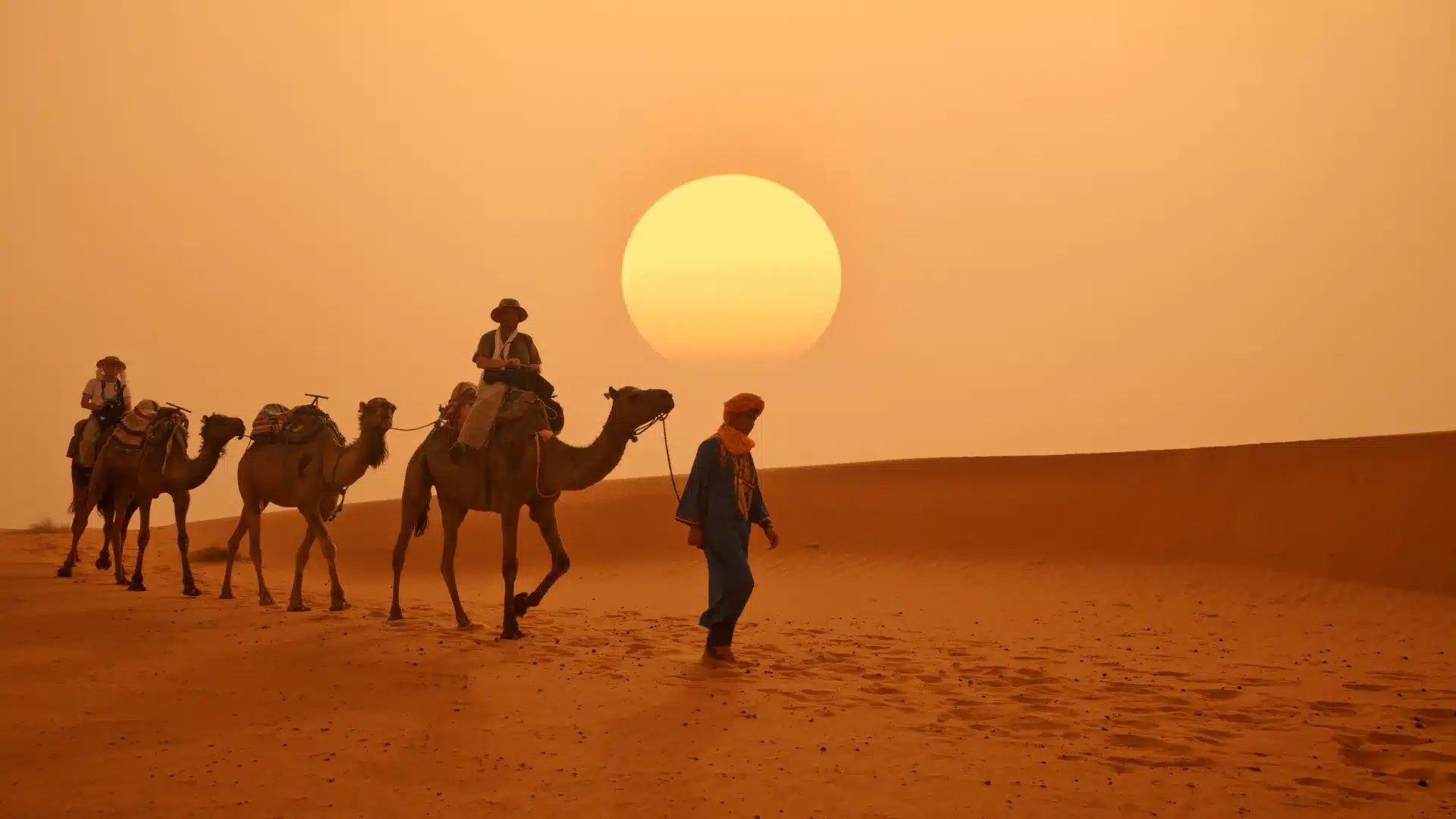
The Moroccan mountain and desert routes are a major reason crews come. The Atlas Mountains offer winding roads, valleys, villages, high passes, seasonal snow and dramatic terrain, while the Sahara and pre-Saharan regions bring dunes, rocky plains, palm groves, dry riverbeds and wide horizons, with Merzouga known for its dunes and Zagora, Erfoud and the Draa Valley offering kasbah routes and palm valleys.
These areas suit automotive campaigns, adventure content, fashion, documentaries, music videos and feature sequences. Desert and mountain filming need careful planning around movement times, vehicle reliability, heat, cold, altitude, sand, dust, communications, medical support and equipment protection. Hoodlum builds the desert and mountain routes, transport, guides, safety and logistics into the schedule so shoots that look ambitious on screen still work on the ground.
Imperial Cities and Modern Morocco
Beyond the desert, the kingdom offers imperial and modern city range: the medieval medina and ancient university of Fes, the imperial heritage of Meknes, the administrative capital Rabat with its diplomatic architecture and gardens, and the large commercial city of Casablanca with business districts, ports, coastal roads and modern interiors. These broaden the Moroccan range well beyond the expected desert look.
These locations suit drama, commercial, documentary, urban and cultural work, and any project needing imperial heritage or a contemporary Moroccan city. Casablanca and Rabat in particular provide modern and formal city looks, while Fes offers one of the world’s best-preserved medieval cities. Hoodlum coordinates the city permissions, traffic, access and police support so the full urban range of these imperial and modern cities becomes workable.
The Atlantic Coast
The Moroccan Atlantic coast gives productions beaches, ports, fishing towns, sea walls, old fortifications, resorts and surf locations, with Essaouira especially strong for textured coastal filming through its harbour, ramparts, blue boats, narrow streets and Atlantic light, while Agadir offers a resort-led environment and Tangier a distinctive northern coastal mood between the Atlantic and Mediterranean.
These locations suit lifestyle, travel, fashion, documentary and hospitality work, along with any project needing coast, port or fortified-town character. Coastal filming should account for wind, tides, port restrictions, public access, tourism and marine safety. Hoodlum manages the coastal permissions, port coordination and logistics so these Atlantic locations become workable filming days across the wider route.
Entry, Visas and Crew Documentation
Most international crew entering Moroccan territory for professional filming may use visa-free or tourist-visa entry depending on nationality, with filming generally authorised through the approved CCM permit rather than a separate business visa in standard cases, so the CCM process is central. Many nationalities receive visa-free entry for up to ninety days.
Crew who require a visa apply in advance through one of two routes. Eligible nationalities apply online through Morocco’s official Acces Maroc portal, with processing typically 24 to 72 hours; allow three to five business days and file at least two weeks ahead of travel. All remaining nationalities apply at the nearest Moroccan embassy or consulate, where processing commonly takes five to ten working days. Both routes need a passport valid at least six months, a passport photograph, accommodation and travel details, and a letter of invitation from the local production company.
There is no visa on arrival in Morocco — visa-free entry means no visa is issued at all. Importantly, visa or visa-free entry supports travel but does not replace the CCM film permit, location permissions or customs clearance, which remain separate requirements. Confirming each crew member’s route early is essential.
Because entry, permits and customs are separate but interlinked, working with a local partner who manages them together is essential. Hoodlum helps productions match each crew member to the correct route, assemble the invitation and documentation, and align everything with the CCM process.
The CCM Permit System and Location Permissions
All film permits are issued through the Moroccan Cinematographic Centre, the CCM, and a licensed Moroccan production company must sponsor the application, which makes local production support essential from the outset. Standard CCM processing usually takes around two to four weeks once documents are complete, and Morocco is known for relatively efficient approvals compared with many regional markets.
Applications typically require a synopsis, full script or treatment, shooting schedule, location list, cast and crew details, passport copies, production-company information and an equipment list, with indicative permit costs varying by scale, and additional costs for public locations, traffic control, police, gendarme or military supervision and special-access areas. Because the CCM permit is the backbone of the shoot, and because security review is built into the process, clear and realistic paperwork matters. Hoodlum prepares CCM submissions that reflect the real shoot plan rather than a vague wishlist.
Drone Filming and Aerial Rules
Drone use is tightly controlled in Morocco and this is a critical planning point. Since February 2015 the import, sale and use of civilian drones has been banned without prior authorisation, and customs treat all consumer drones as restricted, including sub-250g models — an undeclared unit found on X-ray is confiscated and can bring fines and legal complications, while declaring it grants no permission to fly. Recreational and tourist drone use is not authorised at all.
Professional aerial work is possible, but it runs on its own track and its own clock. Bringing a drone in requires a specific import licence obtained in advance from the Ministry Delegate for Foreign Trade, filed through the PortNet single window with inter-ministerial review, and that licence takes roughly 40 days for specialised equipment. Aerial filming also requires a dedicated CCM permit in addition to the ground filming permit, with flight authorisation running around 15 days depending on region. Aviation liability insurance naming the exact aircraft by model and serial number, with explicit Moroccan cover, is mandatory.
For most schedules the faster and safer route is renting locally rather than importing. Moroccan suppliers hold DJI Inspire 2 and 3, Matrice series, Mavic 3 Cine, Alta X and FPV cinelifter units, and foreign operators must in any case secure authorisation through a local drone licence holder, with each request assessed individually against the pilot’s experience. Restricted airspace around military sites, royal residences, government buildings, airports and ports overlaps directly with key filming areas in Ouarzazate, Rabat, Casablanca, Marrakech and Tangier.
Hoodlum assesses whether aerial coverage is realistic within the schedule, arranges licensed local operators and the CCM aerial permit, and advises when cranes, elevated rigs or helicopter work will protect the shoot day better than a drone application.
Equipment Customs Clearance and the ATA Carnet
Morocco is an ATA Carnet signatory, but productions should not treat a Carnet as a guaranteed clearance document. Issuing chambers list Morocco as accepting Carnets for trade fairs and exhibitions, and will accept a letter of indemnity on company letterhead covering other categories in case the Carnet is refused, which means professional film equipment can be challenged at the border. The working approach is to travel with the Carnet and the indemnity letter, while the CCM-registered local production company arranges temporary admission through Moroccan customs as the primary route.
Customs documentation should include the Carnet, the indemnity letter, the approved CCM film permit, a detailed equipment list with serial numbers and declared values, and crew passport copies. With pre-clearance organised in advance by the local company, gear can move same-day; without it, deposits, bonds and delays should be assumed. Camera, lighting, grip, audio, monitors, batteries and specialist items must all be listed accurately with values, and everything imported temporarily must be re-exported, so inventory accuracy is not optional. The CCM facilitates simplified temporary import and export procedures for filming equipment as part of its production support, which is precisely why the local partner needs to be engaged early.
The Morocco Cash Rebate and Incentives
Morocco’s headline financial draw is its 30% cash rebate on eligible Moroccan production expenditure, administered by the CCM. The rate was raised from 20% to 30% under the reform of 28 March 2022 and is now uncapped at project level, making it one of Africa’s most competitive incentives — Gladiator II recorded over MAD 273 million of local expenditure in Morocco. A VAT exemption of approximately 20% on production purchases sits alongside it, applying to qualifying supplier and crew invoices above MAD 5,000, which meaningfully improves the effective saving.
Qualification turns on four things. The production must spend at least MAD 10 million, around USD 1 million, and complete at least 18 days of work in Morocco including set building; it must partner with a CCM-registered Moroccan production company; it must pass a points-based cultural test; and it must lodge a bank guarantee of 5% of the requested support within 30 days of conditional approval, renewable once only. Eligible expenses are capped at 90% of total expenditure, so budget structuring matters from day one. Eligible formats include feature films, TV series, TV films, documentaries, docufiction, long-form internet fiction and reality television. One frequently missed detail: airfares qualify only when booked through national carriers such as Royal Air Maroc.
The timing rules are strict and anchored to specific events. Work must begin within 6 months of the deposit payment, shooting must finish within 12 months of the first shooting day, and detailed accounts must reach the CCM within 3 months of wrap. The rebate is then paid within a maximum of 180 days of a complete payment-request file being submitted, as a single instalment once the commission has approved the audited file — a cash-flow lag that should be built into the financing structure rather than discovered late.
Although uncapped per project, the rebate draws on an annual fund, so early application genuinely matters. Approved productions must also credit production support from the Kingdom of Morocco and allow the CCM to use excerpts promotionally.
The Moroccan rebate is one of several national incentives we track — see our film incentives hub for how it compares against other territories, and our Morocco film incentive guidance for the full application detail. Morocco was named European Film Market Country in Focus at Berlinale 2026, reflecting its rising international profile. Hoodlum engages the mandatory local company, structures qualifying spend against the CCM’s eligibility grid, and manages the rebate, guarantee and VAT process from planning through final submission.
Safety, Security and Practical Logistics
The kingdom is generally safe and highly experienced with international crews, with security review built into the CCM process, so production security is a normal, well-understood part of shooting there rather than a barrier. Depending on content, locations and equipment, authorities may review the script, subject matter, crew, locations or communications gear, and police or gendarmes may be assigned for public filming, traffic, crowds, sensitive sites or areas needing supervision, in which case their presence is mandatory and billed to the production.
Safety planning should cover professional drivers, secure transport, desert and mountain logistics, heat and cold, communications, medical support for remote locations, and clear coordination between crew, fixers and any assigned security. Public streets, road work, ports, government-adjacent areas and military-sensitive locations should never be approached casually, and respect for local customs is important throughout. The main production regions are well set up, while remote desert areas require additional planning.
The climate ranges from intense desert heat to mountain cold and snow in season, so productions plan wardrobe, scheduling and logistics around region and altitude, and build heat, dust and contingency thinking in. Hoodlum helps productions build a sound security and logistics framework, coordinate any required police or gendarme support, and plan efficient, weather-aware schedules across the desert, mountains, cities and coast.
When Morocco Is the Right Production Choice
Morocco is the right choice when a production needs cinematic desert and mountain scale, ancient kasbahs, imperial cities, Atlantic coast and world-class studios, combined with experienced crews, competitive costs, a film system that understands international work and an uncapped 30% cash rebate. It is especially strong for historical and epic projects, fashion, automotive, commercials, travel, music videos, features and any production needing North African, Middle Eastern, Mediterranean, ancient-world or desert looks.
It may be less suitable for productions that need casual drone use, informal filming without a local sponsor, last-minute permit changes or unplanned large-crew movement. The Moroccan process is highly workable when the CCM permit, the mandatory local company, customs, drone arrangements, rebate registration and location agreements are all settled early.
Common Production Mistakes to Avoid
- Assuming a film-friendly reputation means permits are not needed
- Overlooking the 30% rebate or missing its spend, shooting-day or local-company requirements
- Registering for the rebate late, when the annual fund is drawn down first-come
- Budgeting the full local spend as eligible and forgetting the 90% eligible-expense ceiling
- Booking international flights on non-national carriers and losing their eligibility
- Travelling with a drone and no import licence, risking confiscation and fines
- Treating an ATA Carnet as guaranteed clearance for professional film equipment
- Underestimating desert and mountain travel times and conditions
- Booking kasbah or medina locations too late
- Forgetting that police or gendarme support may be mandatory and billed
Most of these problems are avoidable by aligning the CCM permit, the mandatory local company, rebate registration, customs and location plan early, through a trusted local partner.
How Hoodlum Supports Productions in Morocco
Hoodlum provides Film Production Services in Morocco for international crews that need strong local support from early planning through to wrap. Our work covers CCM permit coordination, the mandatory licensed local production company, location scouting, private location agreements, regional authority coordination, customs and carnet preparation, crew sourcing, transport, accommodation, aerial filming guidance, desert and mountain logistics, studio coordination, security and gendarme coordination, rebate and VAT support, and on-ground production management.
From the studios of Ouarzazate and the kasbah of Aït Benhaddou to the riads of Marrakech, the dunes of Merzouga, the medina of Fes, the streets of Casablanca and the Atlantic light of Essaouira, we help productions access the strongest Moroccan filming environments with the right permits, fixers, customs planning, incentives and logistics in place. Planning a shoot? Contact us to talk through CCM permits, local production support, location scouting, customs and carnet coordination, drone planning, rebate support and full on-ground production management.
Frequently Asked Questions
Do international crews need a business visa to film in Morocco?
Not usually. Around 70 nationalities enter visa-free for up to 90 days, others apply via Morocco’s e-Visa portal or at an embassy, and filming is authorised through the approved CCM permit rather than a separate business visa. There is no visa on arrival. A letter of invitation from the local production company is recommended, and entry clearance never replaces the CCM permit or customs clearance.
Who issues filming permits?
Film permits are issued by the Moroccan Cinematographic Centre (CCM), and a licensed Moroccan production company must sponsor the application, so local support is essential. Standard processing takes around two to four weeks once documents are complete, with public locations, special-access areas or sensitive subjects needing more time and possible authority supervision.
Can productions fly drones in Morocco?
Drone use is tightly restricted. Import, sale and use have been banned without prior authorisation since 2015, and undeclared drones are confiscated at customs. Professional aerial work is possible but requires a separate import licence taking around 40 days, a CCM aerial permit, flight authorisation of roughly 15 days, aircraft-specific insurance and a licensed local operator. Renting locally is usually faster and safer than importing.
Is Morocco an ATA Carnet country?
Morocco is an ATA Carnet signatory, but acceptance is category-restricted and professional film equipment is not guaranteed to clear on a Carnet alone. Travel with the Carnet plus a letter of indemnity from your issuing chamber, and have your CCM-registered local production company arrange temporary admission with Moroccan customs as the primary route. With pre-clearance, gear moves same-day; without it, expect deposits and delays.
Does Morocco offer a film rebate?
Yes. Morocco offers a 30% cash rebate on eligible local spend, raised from 20% in March 2022 and uncapped at project level, plus a VAT exemption of around 20% on qualifying invoices above MAD 5,000. Qualification requires MAD 10 million minimum local spend, at least 18 shooting days including set building, a CCM-registered local company, a cultural test and a 5% bank guarantee, with eligible expenses capped at 90% of total spend. It draws on an annual fund on a first-come basis, so apply early.
What are the best filming locations?
Popular options include the studios of Ouarzazate, the kasbah of Aït Benhaddou, the riads and souks of Marrakech, the dunes of Merzouga and Zagora, the Atlas Mountains, the imperial cities of Fes and Meknes, Rabat and Casablanca, and the Atlantic coast around Essaouira, Agadir and Tangier.
Useful Authority Links
- Moroccan Cinematographic Centre (CCM)
- Morocco Film Incentive – Rebate Guidance
- Morocco Ministry of Foreign Affairs
- Moroccan Customs Administration (ADII)
- Morocco e-Visa Portal
- Visit Morocco – Tourism
Ready to bring your production to Morocco? Hoodlum handles the CCM permits, the mandatory local company, location scouting, customs and carnet coordination, approved drone operators, local crew, desert and mountain logistics, security and gendarme coordination, rebate and VAT registration and full on-ground production management, so you can focus on the work in front of the lens. Get in touch with our team to start planning, and tell us your locations, dates and creative brief.
For more information, view our Hoodlum Film Fixers Morocco Google Business Profile.