









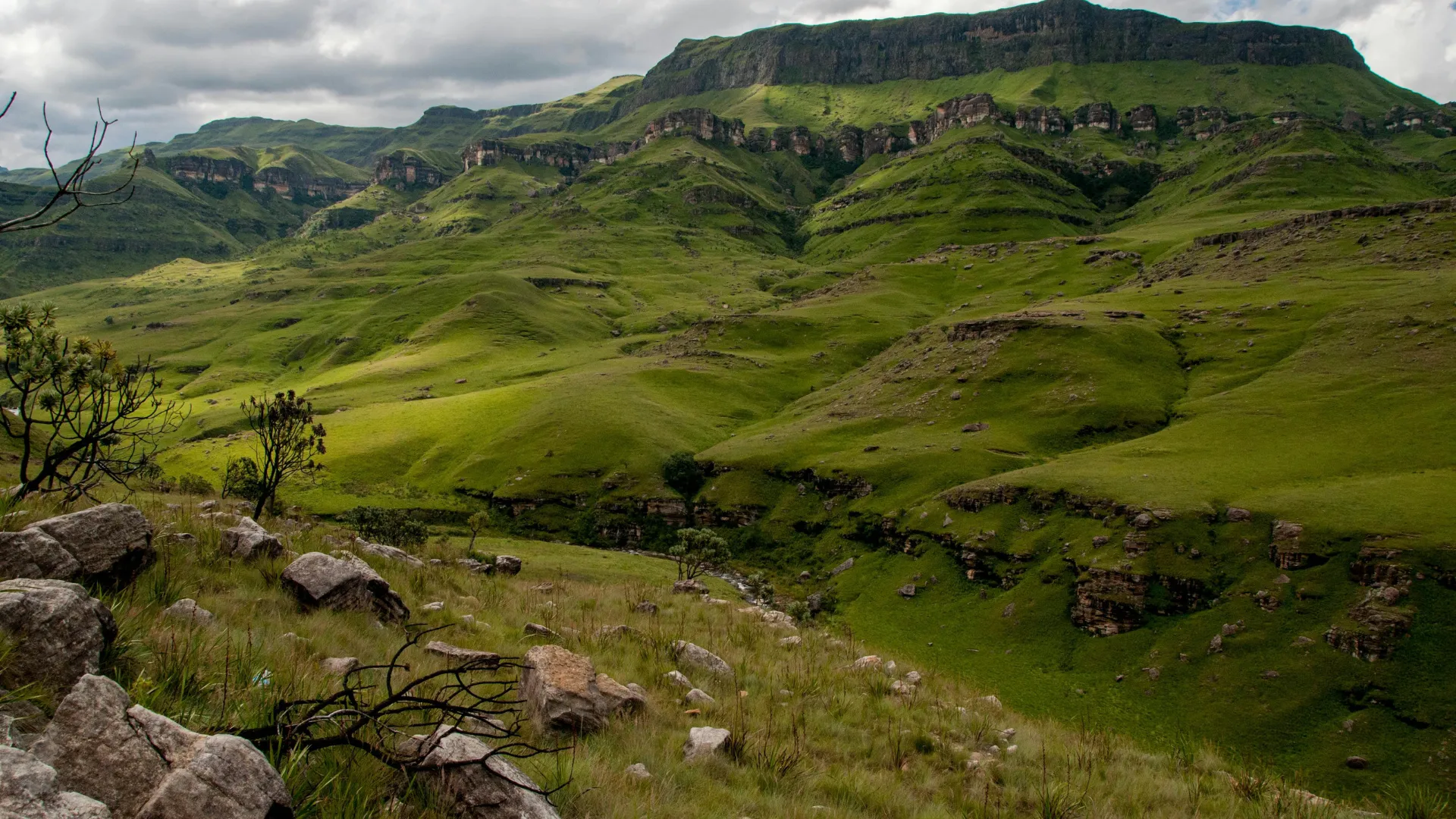
Botswana is where productions go for wildlife and wilderness that cannot be faked — the Okavango Delta, Chobe’s elephant herds, the Makgadikgadi salt pans, the Central Kalahari, the red cliffs and rock art of the Tsodilo Hills. It is also one of the most tightly regulated filming environments in Southern Africa, and the two facts are related. Botswana protects roughly a third of its land, and it protects it with paperwork.
Hoodlum provides Film Production Services in Botswana for documentaries, natural history, commercials, television, branded content and feature work across Gaborone, Maun, Kasane, Francistown, the Delta, Chobe, the pans and the Kalahari. We handle Ministry of Environment and Tourism film permits, DWNP Supplementary Permits and park fees, ATA Carnet clearance through registered agents, CAAB drone approvals, licensed guides, remote logistics and full on-ground production management.
The country rewards productions that plan early and punishes those that improvise. Permits take up to 30 days, a second permit is needed for the parks, and drones are banned over the locations most productions come for.
Why Film in Botswana
Botswana offers wilderness at a scale and quality that few countries can match, with wildlife densities and landscapes that read as genuinely untouched on camera.
Particularly strong for:
- Natural history and wildlife documentary
- Conservation and environmental films
- Safari, travel and destination campaigns
- Luxury lodge and hospitality content
- Desert, pan and salt-flat work
- Adventure and expedition formats
- Commercials needing authentic wilderness
- Cultural and anthropological documentary
The trade-off is infrastructure. Crew depth is limited, most heads of department and specialist equipment come from South Africa, and remote locations demand self-sufficiency. Botswana is a location country, not a service hub — and the production plan needs to reflect that.
Film Permits — The Part Producers Get Wrong
You need a film permit regardless of where you film or for how long. Not just in the parks. A street in Gaborone, a shop interior, private land, three hours of filming — all of it requires a permit from the Ministry of Environment and Tourism. The widespread assumption that permits apply only inside protected areas is the single most common planning error, and it is the one that strands crews.
The application requires the completed form, the applicant’s passport, passport copies for every international and local crew member, an invitation letter from a Botswana host or organisation stating the purpose of filming, the script or synopsis, the shooting schedule with exact locations, and a statement of how the local crew and Botswana benefit from the production. Local crew engagement is expected.
Processing takes up to 30 days, and applications should be submitted at least a month ahead. Foreign applicants are advised not to travel to Botswana before the permit is issued.
Two things about the process that rarely appear in production budgets:
The Memorandum of Agreement. Successful applicants sign an MoA with the Government of Botswana before the permit issues. Where a registered fixer submitted the application, the MoA must be signed by the filmmaker personally. A fixer cannot sign on the production’s behalf, which means a signatory has to be available at the right moment.
The Film Site Monitor. The Ministry assigns a monitor, independent of the crew, and the production covers their transport, accommodation, food and other necessities for the duration. On a two-week Delta shoot that is a real number, and it belongs in the budget from day one.
The standing commercial film permit fee has been BWP 10,000, charged the same whether you shoot for a day or a month. That fee is under review — the Ministry has proposed commercial filming permits between P20,000 and P50,000 as part of a broader tourism fee revision flagged to take effect from April 2026. We confirm the current fee at the point of application rather than quoting from a published figure.
Filming in the National Parks — The Second Permit
Filming in a national park or game reserve requires a Supplementary Permit from the Department of Wildlife and National Parks, and it can only be applied for once the general film permit is in hand. It is issued only for the people named on that permit, so late crew additions are a problem.
The Supplementary Permit carries no fee of its own, but park filming fees do — and they are charged per person per week or part thereof, so a single filming day costs a full week:
- Crew: around P1,000 per person per week
- Botswana citizens: around P125 per person per week
- Residents: around P250 per person per week
- Vehicles: around P50 per day foreign-registered, P10 per day Botswana-registered
The differential is the reason a Botswana-crewed, Botswana-vehicled unit costs materially less inside the parks than a foreign one, and it is worth structuring around.
Off-road driving requires specific DWNP permission, requested within the Supplementary Permit application. It may be refused. Since off-road access is what separates a usable wildlife position from a road-bound one, request it explicitly and early, and have a plan for refusal.
Vehicles operating under a film permit carry required signage.
Wildlife Filming Rules
These are conditions of the permit, not guidelines, and breaching them ends a shoot:
- Using sound recordings to attract any species is prohibited. No playback to bring in predators or birds.
- Darting animals for filming purposes is forbidden under any circumstances.
- Only licensed professionals may capture wildlife, and filmmakers may not be involved in capture operations.
Beyond the rules, Botswana’s wildlife authorities take a stricter view of animal disturbance than most markets. Approach distances, vehicle positioning and time spent on a sighting are all subject to guide judgement, and a production that pushes will lose access.
Where Productions Shoot
Maun is the practical base for most productions — the gateway to the Delta, with charter operators, guides and the closest thing Botswana has to a production support cluster.
The Okavango Delta is the reason most productions come: channels, floodplains, islands, and wildlife densities that concentrate as the floodwaters arrive. Access is by light aircraft, boat and mokoro, which shapes crew size and equipment loads more than anything else.
Chobe National Park carries the elephant populations, riverfront game viewing and the Kasane access point, close to the Zimbabwe and Zambia borders for multi-country routing.
The Makgadikgadi and Nxai Pans offer the salt flats, baobabs and zebra migration — visually unlike anything else on the continent and comparatively accessible.
The Central Kalahari Game Reserve provides desert scale, Kalahari lion and genuine remoteness.
Gaborone covers urban, government, commercial and interview requirements, plus the ministries and CAAB.
Kasane, Francistown, Lobatse, Palapye and Mahalapye provide town and infrastructure coverage.
Best Time of Year to Film
Botswana runs a subtropical desert climate with large day-night temperature swings and low humidity.
Dry season, May to October is the filming window. Predictable weather, warm sunny days, concentrated wildlife around water, easier vehicle access. Nights get genuinely cold — near freezing in June and July.
Wet season, November to March brings high temperatures, rain, dispersed wildlife and access difficulties on unsurfaced roads. It also brings the pans to life and the zebra migration to the Makgadikgadi, so it is the right window for specific briefs rather than a season to avoid outright.
The Delta flood peaks between roughly June and August, which is not when the rain falls — the water arrives from the Angolan highlands months later. Productions planning water-based Delta coverage should schedule around the flood, not the rainfall.
Visas and Crew Status
Most Commonwealth nationals enter visa-free, with the exception of nationals of Bangladesh, Cameroon, Ghana, India, Nigeria, Pakistan and Sri Lanka. SADC residents, most European countries, the USA and Canada are also visa-exempt. Everyone else applies through the eVisa portal or a Botswana mission, allowing 7 to 14 working days.
Passports need at least six months’ validity from arrival, and a Yellow Fever certificate is required if arriving from an endemic country.
Botswana operates no separate accreditation system for foreign film crew — no badges, no press IDs, no film visa category. The film permit is the production’s authorisation and covers the crew named on it. What that does not do is convert a visitor’s entry into work authorisation: entry permission and production authorisation are assessed separately, and immigration officers make the admission decision at the border. We confirm crew status alongside the permit rather than assuming the visa settles it.
Equipment and Customs
Botswana accepts ATA Carnets, and a carnet lets equipment enter without paying fees to BURS. This is the correction most likely to affect a budget: without a carnet, temporary importation attracts a deposit of roughly 14% of declared equipment value, refundable when the equipment leaves through the same port. With a carnet, that deposit does not arise.
Either way, clearing must go through a registered clearing agent — this is not a counter transaction. Agent fees run in the region of BWP 1,500. Clearance is typically same-day where the agent has pre-cleared.
Two-way radios and similar communications equipment need BOCRA type approval before use. On a Delta shoot with units spread across water and bush, radios are standard kit and this gets missed.
Most equipment arrives overland from Johannesburg, the nearest established production centre. Botswana sits inside the Southern African Customs Union with South Africa, Namibia, Lesotho and Eswatini, so the movement should be planned as one routing rather than two unrelated imports.
Expect to bring camera, lighting and grip packages in. Local rental depth is limited.
Drone Filming — Read This Before Boarding a Drone
Drones are prohibited over all national parks, game reserves and wildlife sanctuaries. Chobe, Moremi, the Central Kalahari, the Okavango. The aerial of the Delta that half the briefs open with is not obtainable by drone, and no permit unlocks it for a commercial shoot.
Where drone work is possible — private land with owner consent, outside protected areas and away from the restrictions below — every RPA must be registered with CAAB before operation, and flying unregistered is an offence.
The envelope: 400 ft / 120 m maximum, within 500 m of the pilot, visual line of sight at all times, daylight only, no flights within 3 km of an airport, pilot 18 or over, one drone per pilot, and no flying over public roads and moving vehicles, tourism facilities, power lines within 200 m, private property without consent, or built-up areas and gatherings. Registered RPAs may not cross international boundaries — relevant near Kasane, where three borders meet.
Registration requires Botswana Police fingerprint clearance, DIS security vetting, a physical inspection of the aircraft at CAAB and a copy of the user manual, with fees around BWP 500 commercial and BWP 250 private. Those steps happen in person in Botswana, and the framework contemplates operators who are citizens or residents.
The practical answer is to engage a Botswana-registered licensed operator. Flying a pilot in with a drone and registering on arrival does not work to a schedule.
For genuine aerial coverage of the Delta or Chobe, plan a crewed aircraft with the appropriate approvals, and budget it as a separate unit.
Safety, Medical and Remote Operations
Botswana is safe and stable, and the risks are environmental. Medical facilities are reasonable in Gaborone, Francistown and Maun and thin elsewhere, which makes evacuation cover essential rather than advisable — Delta and Kalahari positions are hours from definitive care and often accessible only by air.
Malaria prophylaxis is advised for the north. Heat, sun and water supply drive the schedule on pan and desert locations. Dangerous game protocols apply on every wildlife location, and licensed guides are not a formality. Much of the country has no infrastructure and unreliable mobile coverage, so units need to be self-sufficient in fuel, water, recovery gear and communications.
Private security is generally unnecessary.
How the Approvals Fit Together
Sequence matters more in Botswana than in most markets, because the permits are dependent rather than parallel:
- Film permit from the Ministry of Environment and Tourism — up to 30 days, required everywhere
- Memorandum of Agreement signed by the filmmaker personally
- DWNP Supplementary Permit — only after the film permit, only for named crew
- Off-road driving permission — requested within the Supplementary Permit, may be refused
- Park fees — per person per week, per vehicle per day
- CAAB drone registration — where drone work is possible at all
- BURS clearance through a registered agent, carnet in hand
- BOCRA type approval for radios
- Visas and crew status confirmed alongside the permit
Each step has a predecessor. A production that starts the Supplementary Permit late, or discovers the MoA signatory requirement in week one, loses days it cannot recover.
Common Mistakes to Avoid
- Assuming a film permit is only needed inside the national parks
- Arriving without a carnet and tying up 14% of equipment value in a refundable deposit
- Budgeting Delta aerials as drone work
- Leaving the DWNP Supplementary Permit until after arrival, or adding crew who are not named on the general permit
- Missing the park fee structure — per person, per week, a single day charged as a full week
- Not requesting off-road permission, then finding the wildlife position unreachable
- No budget line for the Film Site Monitor’s transport, accommodation and food
- Sending a fixer to sign the Memorandum of Agreement
- Bringing two-way radios without BOCRA type approval
- Flying a drone pilot in and expecting to register on arrival
- Quoting the BWP 10,000 permit fee without checking whether the 2026 revision has taken effect
- Treating a tourist visa as authorisation for paid production work
How Hoodlum Supports Film Production in Botswana
We provide practical film production services in Botswana:
- Ministry of Environment and Tourism film permit applications and MoA coordination
- DWNP Supplementary Permits, park fees and off-road driving permissions
- Film Site Monitor coordination and budgeting
- ATA Carnet preparation and BURS clearance through registered agents
- BOCRA type approval for communications equipment
- CAAB drone registration and Botswana-registered licensed operators
- Licensed guides, dangerous game protocols and safety planning
- Charter aircraft, boats and mokoro logistics for Delta access
- Remote camp, catering, fuel and vehicle recovery planning
- Crew sourcing locally and from South Africa
- Medical evacuation planning and insurance coordination
Frequently Asked Questions
Do I need a film permit in Botswana if I’m only filming for a few hours?
Yes. A film permit from the Ministry of Environment and Tourism is required regardless of duration or location — a street, a shop, private land or a national park. The fee is the same whether you film for a day or a month.
Who issues film permits in Botswana?
The Ministry of Environment and Tourism, formerly the Ministry of Environment, Natural Resources Conservation and Tourism. Applications take up to 30 days and should be submitted at least a month before filming. Successful applicants sign a Memorandum of Agreement with the Government of Botswana, which must be signed by the filmmaker personally rather than by a fixer.
What does a film permit cost in Botswana?
The standing commercial film permit fee has been BWP 10,000, charged the same regardless of shoot length. The Ministry has proposed raising commercial filming permits to between P20,000 and P50,000 as part of a fee revision flagged for April 2026, so confirm the current fee before budgeting.
Do I need a separate permit to film in Chobe or the Okavango Delta?
Yes. Filming in any national park or game reserve requires a Supplementary Permit from the Department of Wildlife and National Parks, applied for after the general film permit is issued and granted only for the crew named on it. The Supplementary Permit is free, but park filming fees apply per person per week and per vehicle per day.
Can I fly a drone over the Okavango Delta or Chobe?
No. Drone flights are prohibited over all national parks, game reserves and wildlife sanctuaries in Botswana, including Chobe, Moremi, the Central Kalahari and the Okavango. Aerial coverage of these areas requires a crewed aircraft with the appropriate approvals.
What are the drone rules in Botswana outside the parks?
All drones must be registered with the Civil Aviation Authority of Botswana before operation. Flights are limited to 400 feet above ground level, within 500 metres of the pilot, in visual line of sight, in daylight only, and not within 3 km of an airport. Registration requires Botswana Police fingerprint clearance, DIS security vetting and physical inspection of the aircraft at CAAB, so productions generally engage a Botswana-registered licensed operator.
Is Botswana an ATA Carnet country?
Yes. ATA Carnets are accepted and allow temporary importation of production equipment without paying fees to BURS. Without a carnet, a deposit of roughly 14% of declared equipment value applies, refundable on re-export through the same port. Clearing must go through a registered clearing agent either way.
Does Botswana offer a film rebate or incentive?
No. Botswana operates no film rebate, tax credit or cash grant. Costs are managed instead through carnet clearance, engaging Botswana citizens and residents for lower park fees, using Botswana-registered vehicles, and combining Botswana with a South Africa leg.
Do foreign crew need a visa to film in Botswana?
Most Commonwealth nationals, SADC residents, most European nationals and US and Canadian citizens enter visa-free, with exceptions including nationals of Bangladesh, Cameroon, Ghana, India, Nigeria, Pakistan and Sri Lanka. Botswana operates no separate film crew accreditation — the film permit covers named crew. Entry permission and production authorisation are assessed separately.
What wildlife filming rules apply in Botswana?
Using sound recordings to attract any species is prohibited, darting animals for filming is forbidden under any circumstances, and only licensed professionals may capture wildlife. These are permit conditions, and breaching them ends a shoot.
When is the best time to film in Botswana?
May to October, the dry season, offers predictable weather, concentrated wildlife and easier access. Note that the Okavango flood peaks around June to August, arriving from the Angolan highlands months after the rains — so water-based Delta coverage should be scheduled around the flood, not the rainfall.
Do I need approval for two-way radios in Botswana?
Yes. BOCRA type-approves communications equipment, including two-way radios, before it can be used in Botswana. Declare radios in advance with the rest of the equipment list.
External Authority Links
- Ministry of Environment and Tourism — Environmental Filming and Photography Permit
- Botswana Filming Guidelines (PDF)
- Filming Permit Application Form (PDF)
- Civil Aviation Authority of Botswana — RPA / Drone Registration
- CAAB Forms
- Government of Botswana — Visa Applications
- Botswana Unified Revenue Service — customs and temporary importation
- Botswana Communications Regulatory Authority (BOCRA) — equipment type approval
Planning a shoot in Botswana? Contact Hoodlum for film permits, DWNP park permissions, carnet clearance, licensed guides, Delta logistics and on-ground production management. You can also view the Hoodlum Film Fixers Botswana Google Business Profile.