















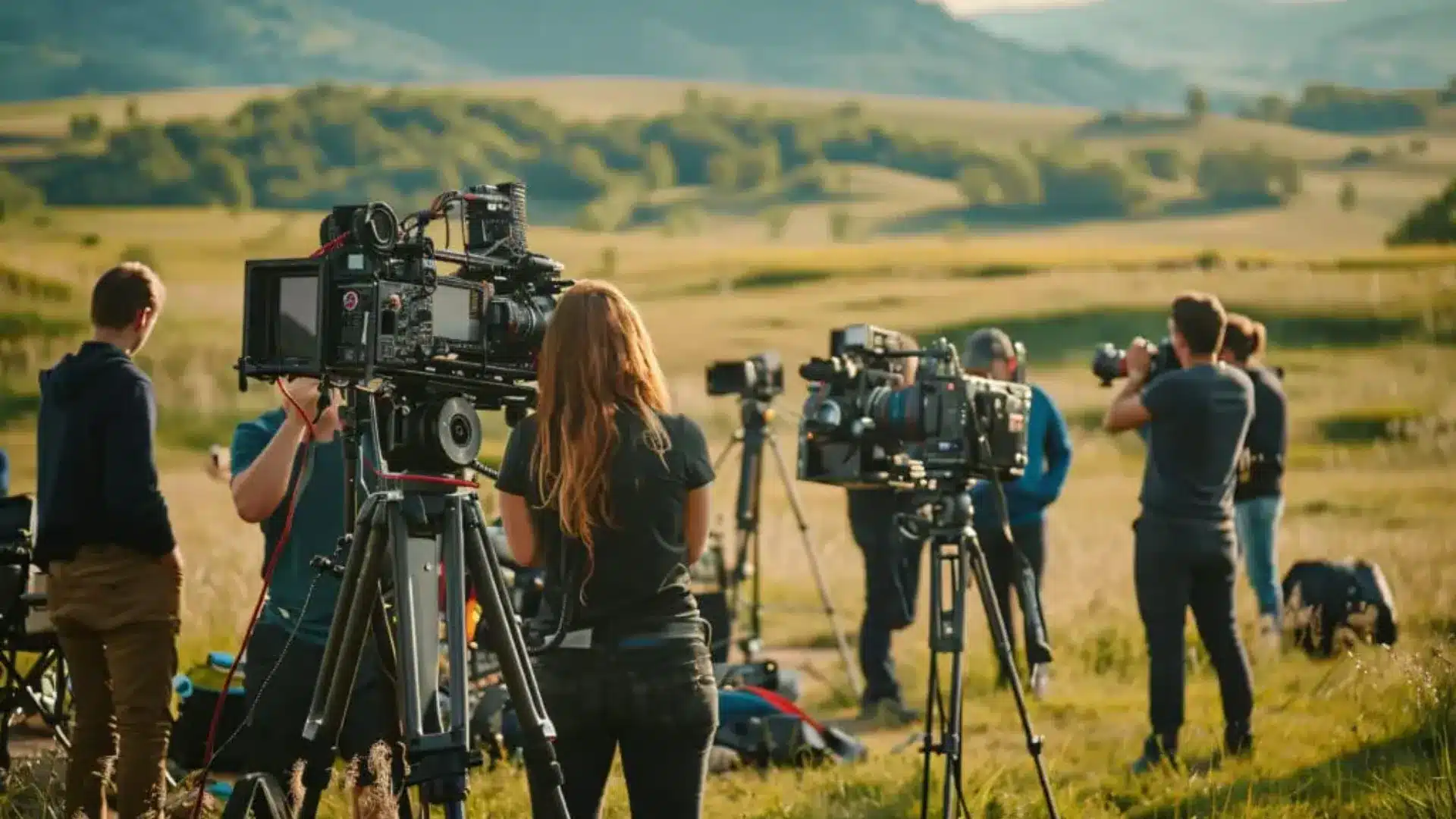
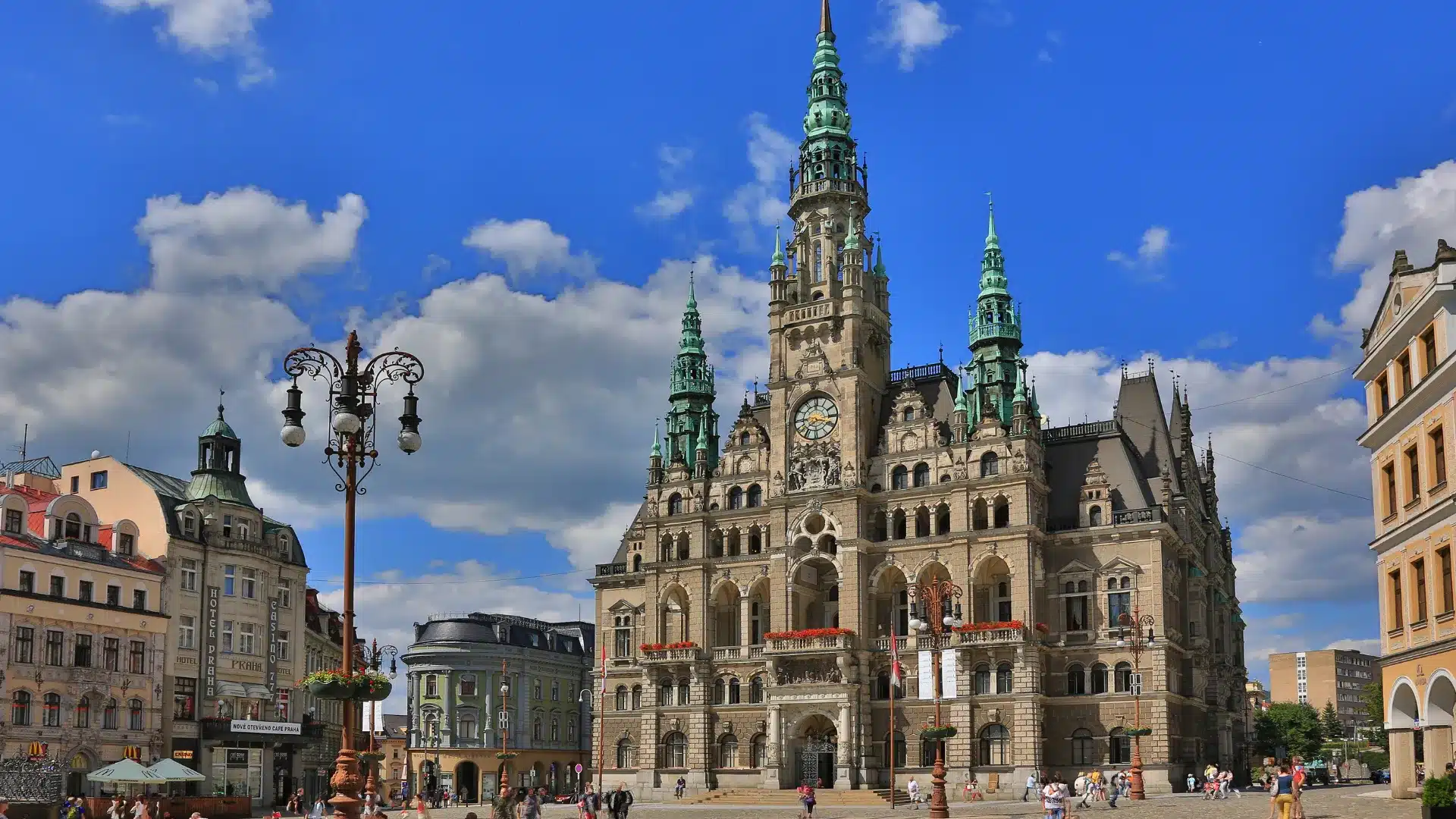
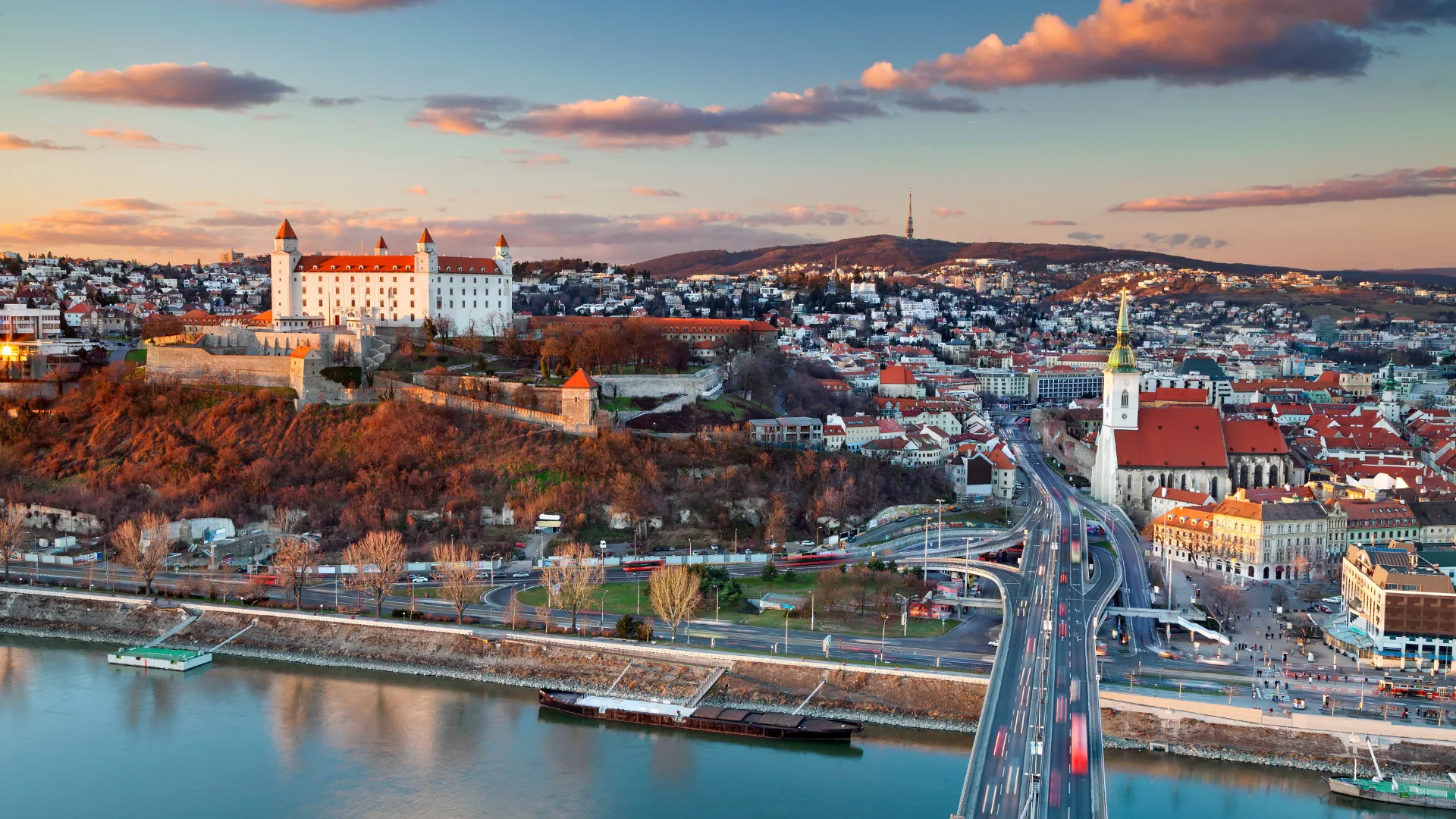
Slovakia is the most under-used production territory in Central Europe, and the gap between what it offers and how well known it is has become a commercial advantage. It returns 33% of eligible local spend with no cap on eligible costs, holds more than 200 castles, runs from alpine peaks to Danube waterfront inside a country you can cross in a morning, and — unlike its neighbours — is not saturated, so crew and equipment are available at short notice.
Hoodlum provides Film Production Services in Slovakia for commercials, feature films, television series, documentaries, branded content, fashion and automotive campaigns and stills photography, across Bratislava, Košice, Žilina, Banská Bystrica, the High and Low Tatras, Slovenský raj and the castle and wine regions. We handle Slovak Audiovisual Fund registration and rebate documentation, municipal and heritage permits, national park approvals, Transport Authority drone authorisation, ATA Carnet and customs coordination, crew sourcing, transport and full on-ground production management.
Slovakia is straightforward to work in, but it is not permissionless. There is no single national film permit, ownership of a location determines who signs off on it, and the film commission — helpfully and explicitly — does not issue permits at all. Knowing which door to knock on is most of the job.
The 33% Cash Rebate — What It Pays and What It Demands
Slovakia returns 33% of eligible expenses spent on film or TV production in the country, through the Slovak Audiovisual Fund. The rate rose from 20% to 33% on 1 January 2020 and has held since.
There is no cap on eligible costs. That is the structural difference from most competing schemes, and it is what makes Slovakia disproportionately attractive at the upper end of a budget — a production spending €5 million locally recovers the same 33% as one spending €500,000, with no per-project ceiling to work around.
Minimum spend over the three-year registration window:
- €300,000 — television series of up to 26 episodes
- €100,000 — individual feature film
- €50,000 — documentary or animation
Eligible formats are narrative features of at least 70 minutes, TV miniseries or series of up to 26 parts at 40 minutes or more per part, standalone documentaries of at least 50 minutes, and animation.
How registration works. The applicant applies to the Slovak Audiovisual Fund with an estimated budget, a production schedule, a completed application form and supporting documents, through the Fund’s registration portal. Registration costs €1,000. The project must pass a cultural test scoring at least 24 points out of a maximum 48 — the test forms part of the registration itself.
On registration the producer receives a certificate, and the three-year eligibility period for expenses starts on the date that certificate is issued, not on the date of application. Expenses incurred before then do not count.
The date that decides when you get paid is 1 August. For the expected rebate to be included in the Slovak Audiovisual Fund’s budget for the following budgetary year, the project must be registered before 1 August of the current year. Registering in September does not mean refusal — it means the allocation moves into a later budget year, which changes the cash-flow model of the whole production. It is the single most important date on this page.
What counts as eligible. Costs must be actually incurred and paid, linked to a registered project that has passed the cultural test, with contracts, invoices and proof of payment available for verification. Eligible costs include royalties and fees paid to cast and crew registered to pay tax in Slovakia, costs paid to entities with a tax domicile in the Slovak Republic, and costs where tax was deducted and paid in Slovakia.
The 10% rule shapes your crew list. Costs for foreign freelancers who remain tax resident in their home country while working on the registered production are limited to a maximum of 10% of the project’s approved eligible costs. Everything above that is outside the claim. In practice this decides how many heads of department a production can fly in and still model the rebate accurately — and it is the constraint most often discovered too late.
Payment. The rebate is paid after production completes, all eligible costs are settled, and the applicant delivers a final balance sheet together with an independent auditor’s report. It is payable to the Slovak service or production partner, or to the international company’s Slovak branch — the recipient must be an individual or legal entity registered in Slovakia.
Slovakia also holds double taxation agreements with a range of countries, which affects how visiting crew fees are structured and whether they fall inside or outside the eligible base.
Compare Slovakia against other markets on our film incentives hub.
Slovakia Against Its Neighbours — August 2026
The regional picture has moved considerably in the past year, and it currently favours Slovakia.
Hungary resumed its rebate without limitation on 1 July 2026, after a registration cap froze new projects through 2025. Its 30% base lifts to an effective 37.5% of Hungarian spend through the non-Hungarian cost allowance — a higher effective rate than Slovakia, but drawn from a first-come, first-served annual allocation, and with a six-month principal photography deadline attached to registration.
The Czech Republic’s audiovisual fund is currently paused.
That leaves Slovakia offering 33% with no cap on eligible costs, an active fund, and no queue, immediately next door to both. For a production weighing Central European options in the second half of 2026, that combination is worth a conversation.
Incentive positions move quickly — we confirm the current status of all three before any production commits.
The structural advantages sit underneath the rate. Crew, accommodation, vehicle hire, catering and equipment rental cost less than in Prague or Budapest. The market is not saturated, so availability is real rather than theoretical. And Bratislava is 45 minutes from Vienna Schwechat, with Prague, Budapest and Kraków all within reach — so a Slovak shoot can draw on the wider regional crew and equipment pool without losing the local spend that drives the claim.
Bratislava
Bratislava is the country’s most versatile urban location and the practical base for most productions.
The Old Town delivers medieval streets, pastel façades, ornate balconies, market squares, archways and textured alleys. Bratislava Castle sits above the Danube with panoramic city views and open grounds suited to establishing shots and wide sequences. St Martin’s Cathedral, the coronation church of Hungarian kings and queens, anchors the historic centre, and Devín Castle stands on the rock where the Morava meets the Danube at the Austrian border.
Against that, the Eurovea and River Park districts give contemporary waterfront architecture and controlled public space for high-end commercials, and the New Bridge with its elevated observation deck provides a distinctive modern silhouette.
The city doubles convincingly for Vienna, Prague, Munich and Ljubljana, and for generic Central European settings where a specific city is not required.
Bratislava is also where the institutions sit: the Slovak Audiovisual Fund, the Slovak Film Commission, the Transport Authority’s Civil Aviation Division at M. R. Štefánik Airport, and the customs authorities.
Castles and Heritage
Slovakia holds over 200 castles, and they are the reason a great many productions come.
Spiš Castle is one of the largest castle complexes in Europe — dramatic hilltop stonework, extensive ruins and 360-degree views, UNESCO-listed and suited to period, fantasy and epic work. Bojnice Castle is the romantic, fairy-tale option. Orava Castle carries its own film history, having appeared in Murnau’s Nosferatu. Trenčín Castle dominates its town from a rock above the Váh.
Banská Štiavnica is a UNESCO-listed mining town of pastel houses, steep lanes and centuries of mining heritage — a complete period environment rather than a single location. The wooden churches of the Slovak Carpathians, also UNESCO-listed, add cultural texture and interiors that exist nowhere else in Europe.
Heritage sites carry their own management, their own protocols and their own time windows. Several are administered by denominations or religious orders rather than the State or a municipality, which changes who signs the agreement.
Mountains, Forests and Water
The High Tatras provide jagged alpine peaks, glacier lakes, dramatic valleys, snow plateaus and mountain trails, with the crisp light and high contrast that suits landscape cinematography and premium commercials. The Low Tatras hold Jasná, Slovakia’s largest ski resort, for winter sports and snow work.
Slovenský raj National Park is the country’s most distinctive natural location — narrow gorges, waterfalls, wooden ladders, moss-covered rock corridors and atmospheric mist. It is also the most operationally demanding: access is single-file in places, which constrains crew size and equipment more than any permit.
The Carpathian forests give dense canopy, natural fog, wildlife corridors and deep-green pathways, shifting through four genuinely distinct seasonal moods. Dobšinská Ice Cave and the Demänovská Cave of Liberty offer underground environments with conservation limits on lighting and crew numbers.
Slovakia is landlocked, but the Danube through Bratislava provides wide water, bridges and reflective skylines, and the Orava Reservoir and Liptovská Mara deliver expansive water surrounded by alpine silhouettes — mirror-still reflections and sunrise work without ocean unpredictability.
Beyond that: rural plains, farm villages, wooden cabins, shepherd scenes and open meadows; vineyards through the south and southwest; automotive and electronics plants for industrial work; and coal, nuclear and hydroelectric infrastructure for energy locations.
Košice and the Regions
Košice, in the east, is Slovakia’s second city and a strong Gothic and Art Nouveau environment with its own cultural identity and a cost base below Bratislava. It is roughly 30 km from the Hungarian border and around 100 km from the Ukrainian border, which makes it a practical base for eastern Slovakia and for regional routing.
Žilina, near the Tatras, gives access to valleys and peaks. Banská Bystrica, Trenčín and Nitra — one of Slovakia’s oldest cities — provide quieter, cost-effective urban alternatives, including socialist-era industrial zones that are increasingly hard to find elsewhere in the EU.
Most Slovak locations sit within two to three hours of Bratislava or Košice, and there are airports at Bratislava, Košice and Poprad for the mountain region.
Studios and Infrastructure
Most productions come to Slovakia for locations rather than stages, but controlled space exists. A4 Studio in Bratislava offers a stage of roughly 70 × 30 metres with a Spidercam system, underground cable corridors and parking for around 600 vehicles. Koliba Studios, Shining Film Studio and Jumpcat provide further facilities.
The crew base is smaller than Prague’s or Budapest’s but experienced and multilingual, with generations of trained directors, DOPs, art directors, animators, composers and editors. English is widely but not universally spoken on crew, which makes a bilingual local coordinator more than a convenience. Slovakia has hosted significant international production, including Red Sparrow.
Filming Permits — Who Actually Issues What
This is where Slovak shoots go wrong, and the reason is structural rather than bureaucratic.
There is no single national film permit and no one-door process. Permits for shooting in cities are issued by different municipal departments, and which department depends on what the shoot does — occupying public space, restricting traffic, closing a road, or using a particular building. Filming in public traffic areas with stopping restrictions or roadblocks goes to the relevant municipal department for that function.
Ownership determines the signature. Slovak locations may belong to the State, a local authority, a denominational group, a religious order or a private individual. Where land, a building or any other structure is used as a location — or as a support facility such as unit base, catering or parking — a shooting permit is required from the owner or from the authority managing that site. A production that has cleared the street has not necessarily cleared the church, the castle or the car park it intends to use.
The Slovak Film Commission does not issue permits. It assists with location scouting, connects productions with Slovak partners and professionals, and tells you which authority issues what — free of charge. It is the right first call and the wrong place to send an application.
Timing: the Commission recommends submitting permit applications 30 workdays before the intended production start date. Many straightforward locations move faster in practice — a few days for most, about a week for central city locations, and roughly a week for High Tatras national park permits, occasionally expedited. Build the schedule on 30 workdays and treat anything faster as recovered time.
Applications carry the production company details, synopsis, shooting schedule, location list, crew and equipment lists, proof of insurance including public liability, and traffic or public-space plans where relevant.
Drone Filming
Slovakia applies the EU drone framework under Regulation 2019/947, with the Transport Authority of the Slovak Republic (Dopravný úrad) as the national authority, based at the Civil Aviation Division at M. R. Štefánik Airport in Bratislava.
Operator registration is required for any drone of 250 g or more, or any drone carrying a sensor capable of recording personal data — which captures every camera drone regardless of weight. The administrative fee is €35, registration runs for one year and is renewable, and proof of insurance is required for A2, A3 and all Specific category operations.
The reciprocity rule saves the most time. An operator already registered in another EASA country does not register again in Slovakia — that registration and the A1/A3 or A2 remote pilot certificate are valid here. Bringing an EU-registered operator is substantially faster than registering a non-EASA operator from scratch. Operators from outside the EASA area register in Slovakia as their state of registration.
Remote pilot competency comes from an online theory examination administered by the Transport Authority, and the resulting certificate is valid across the EASA area.
Open category limits: maximum 120 m above ground level, visual line of sight at all times, no flying over uninvolved persons in A1, minimum 30 m from people in A2 (5 m in low-speed mode), and minimum 150 m from residential, commercial, industrial and recreational areas in A3.
Most urban commercial work does not fit inside those limits, which puts it in the Specific category — operational authorisation from the Transport Authority based on a risk assessment, with an operations manual and a maintained flight log.
Check the zones before every flight. UAS geographic zones are maintained by the Ministry of Transport and the Transport Authority and are subject to change. The Malacky-Kuchyňa, Sliač and Prešov military airfields require Ministry of Defence approval. Restrictions also apply near airports, over protected natural areas and national parks, and near national borders — a live consideration in a country bordering five states, where an unremarkable-looking valley can sit within a few kilometres of Poland, Ukraine, Hungary, Austria or Czechia.
Allow 10 to 15 working days for standard authorisations and longer for Specific category operations, protected areas, urban centres and heritage sites.
Equipment, Carnets and VAT
Slovakia is an EU member state and an ATA Carnet country, and the route depends entirely on origin.
Equipment arriving from another EU member state moves freely — no carnet, no customs entry, nothing to arrange. Since most equipment reaches Slovakia overland from Vienna, Prague or Budapest, this covers a large share of productions and is the single easiest thing about shooting here.
Equipment arriving from outside the EU customs union should travel on an ATA Carnet. A single carnet covers the EU customs territory, so kit properly entered in one EU carnet country and re-exported from another is unlikely to attract claims.
Without a carnet, temporary import attracts VAT at the Slovak standard rate of 23%, plus customs charges. That rate rose from 20% on 1 January 2025, with further goods reclassified to the standard rate from 1 January 2026. On a substantial equipment package that is a real cash-flow event, and any older percentage circulating in production guidance is now wrong.
Customs is handled by the Financial Administration of the Slovak Republic. Clearance typically takes one to four hours at airport or land border with complete documentation.
Visas and Work Authorisation
Slovakia is in the EU and the Schengen Area. EU, EEA and Swiss nationals need no visa and no work permit, which covers most crew moving within Europe and removes the immigration question entirely.
Third-country nationals from visa-exempt countries may enter for up to 90 days in any 180-day period. Others apply for a Schengen short-stay visa at a Slovak mission or at a Schengen partner mission representing Slovakia — €90, lodged at least 15 calendar days before travel, normally decided within 15 days and extendable to 45.
Entry permission is not work authorisation. Where crew are employed or paid by the Slovak production company, or staying beyond 90/180, residence and work authorisation is required and arranged through the Slovak host. Where crew stay employed and paid by the foreign entity for a short shoot, confirm the position per production rather than assuming it.
Passports need at least three months’ validity beyond intended departure and must have been issued within the previous ten years.
Best Time of Year to Film
Slovakia runs a genuine four-season continental climate, and that range is a production asset rather than a scheduling problem.
May to September offers the most reliable sunny weather, long days and full access to mountain and forest locations. Spring (April to June) brings lush green and blossom; autumn (September to October) brings strong colour and comfortable temperatures — both are the practical windows for most exterior work.
November to April is the window for snow. Snow lies around 130 days a year in some mountain ranges, which makes Slovakia reliable for winter looks in a way that lower-lying European markets are not. Winter road conditions and shorter daylight need building into the schedule.
The ability to shoot four visually distinct seasons in one country, within short drive times, is one of the strongest arguments for Slovakia on multi-season campaigns.
How the Approvals Fit Together
No single approval covers a Slovak shoot:
- Entry — free movement for EU/EEA/Swiss crew; Schengen entry or visa for others. Not work authorisation
- Work authorisation — where crew are engaged or paid locally, or staying beyond 90/180
- Municipal permit — from the relevant department, for public space, traffic and road impact
- Site permission — from the owner or managing authority, whether State, municipality, denomination, religious order or private individual
- National park or heritage approval — where applicable, with their own lead times
- Drone authorisation — Transport Authority, plus Ministry of Defence for military airfield zones
- Customs — nothing for intra-EU movement, carnet from outside the EU
- Rebate registration — before 1 August, before the eligibility clock starts
The rebate sequence is the one that catches producers: eligible expenditure only begins counting from the date the registration certificate is issued, so registration has to precede spending, not follow it.
Common Mistakes to Avoid
- Registering for the rebate after spending has started — the three-year eligibility period runs from certificate issue
- Missing the 1 August registration deadline and pushing the allocation into a later budget year
- Budgeting foreign heads of department without applying the 10% cap on non-resident freelancer costs
- Sending permit applications to the Slovak Film Commission, which does not issue them
- Assuming a municipal permit covers a castle, church or private site
- Treating site permission as covering the street, pavement or parking outside it
- Working to a two-week permit assumption instead of the recommended 30 workdays
- Registering a drone operator from scratch when an EASA-registered operator can fly on existing credentials
- Planning urban drone work inside Open category limits when it needs a Specific category authorisation
- Flying near a border without checking the geographic zones
- Quoting a pre-2025 VAT percentage for non-carnet equipment imports
- Assuming everyone on a Slovak crew speaks fluent English
How Hoodlum Supports Film Production in Slovakia
We provide practical film production services in Slovakia:
- Slovak Audiovisual Fund registration, cultural test preparation and rebate documentation
- Eligible spend structuring, including the 10% non-resident freelancer cap
- Final audit and balance sheet coordination for rebate payout
- Municipal permits across Bratislava, Košice and regional authorities
- Heritage, castle, church and UNESCO site permissions
- National park and protected area approvals
- Transport Authority drone authorisation and EASA-registered operators
- ATA Carnet preparation and customs coordination
- Location scouting across castles, mountains, gorges, caves, industrial and urban environments
- Bilingual crew sourcing, transport, accommodation and on-ground production management
Frequently Asked Questions
What is the film rebate in Slovakia?
Slovakia offers a 33% cash rebate on eligible expenses spent on film or TV production in the Slovak Republic, administered by the Slovak Audiovisual Fund. There is no cap on eligible costs.
What is the minimum spend for the Slovak cash rebate?
Over the three-year registration period: €300,000 for a television series of up to 26 episodes, €100,000 for an individual feature film, and €50,000 for a documentary or animation.
When must a project register for the Slovak cash rebate?
Before 1 August of the current year, for the expected rebate to be included in the Slovak Audiovisual Fund’s budget for the following budgetary year. Registration costs €1,000 and is valid for three years — and the eligibility period for expenses starts on the date the registration certificate is issued, so registration must come before spending.
Does Slovakia have a cultural test?
Yes. The project must score at least 24 points out of a maximum 48. The cultural test forms part of the registration.
Can foreign crew costs be claimed under the Slovak rebate?
Only in part. Costs for foreign freelancers who remain tax resident in their home country are capped at 10% of the project’s approved eligible costs. Costs paid to cast and crew registered to pay tax in Slovakia, and to entities with Slovak tax domicile, qualify in full.
Who issues filming permits in Slovakia?
There is no single national permit. Permits for shooting in cities are issued by different municipal departments depending on what the shoot does, and where land or a building is used as a location or support facility, permission comes from the owner or managing authority — which may be the State, a municipality, a denomination, a religious order or a private individual. The Slovak Film Commission does not issue permits, though it will tell you which authority does.
How far in advance should I apply for filming permits in Slovakia?
The Slovak Film Commission recommends applying 30 workdays before the intended production start date. Many straightforward locations move faster in practice, but 30 workdays is the figure to schedule against.
Do international crews need a visa to film in Slovakia?
Slovakia is in the EU and the Schengen Area. EU, EEA and Swiss nationals need no visa and no work permit. Third-country nationals from visa-exempt countries may enter for up to 90 days in any 180-day period; others apply for a Schengen short-stay visa costing €90. Entry permission is not work authorisation.
Do I need to register a drone in Slovakia?
Yes, for any drone of 250 g or more or carrying a camera. Operator registration with the Transport Authority costs €35 and lasts one year. But an operator already registered in another EASA country does not re-register — that registration and the remote pilot certificate are valid in Slovakia.
How does Slovakia compare with Hungary and the Czech Republic?
Slovakia offers 33% with no cap on eligible costs. Hungary resumed its rebate without limitation on 1 July 2026, with a 30% base rising to an effective 37.5% of Hungarian spend, drawn from a first-come, first-served annual allocation. The Czech audiovisual fund is currently paused. Positions change, so confirm current status before committing.
External Authority Links
- Slovak Film Commission — first contact for international productions
- Cash rebate — Slovak Film Commission — rate, thresholds, cultural test, process
- Shooting permissions — Slovak Film Commission — which authority issues what
- Slovak Audiovisual Fund — administers the incentive
- Project registration portal — registracia.avf.sk
- Slovak Film Institute — national audiovisual heritage and information
- Transport Authority — Unmanned Aviation — drone operator registration
- Financial Administration of the Slovak Republic — customs and temporary importation
- Ministry of Foreign and European Affairs of the Slovak Republic — visas
Planning a shoot in Slovakia? Contact Hoodlum for rebate registration, municipal and heritage permits, national park approvals, drone authorisation, carnet support, bilingual crew and on-ground production management.