















St Vincent and the Grenadines Film Production Guide for International Crews
St Vincent and the Grenadines is an Eastern Caribbean filming destination that works for a wide range of production types across a genuinely diverse multi-island geography. The main island of St Vincent is served by Argyle International Airport near Kingstown, which accepts international arrivals and connects to the wider Caribbean network. The Grenadines islands are accessed by inter-island flights from St Vincent to the smaller airports on Bequia, Mustique, Canouan and Union Island, or by ferry and water taxi services across the island chain.
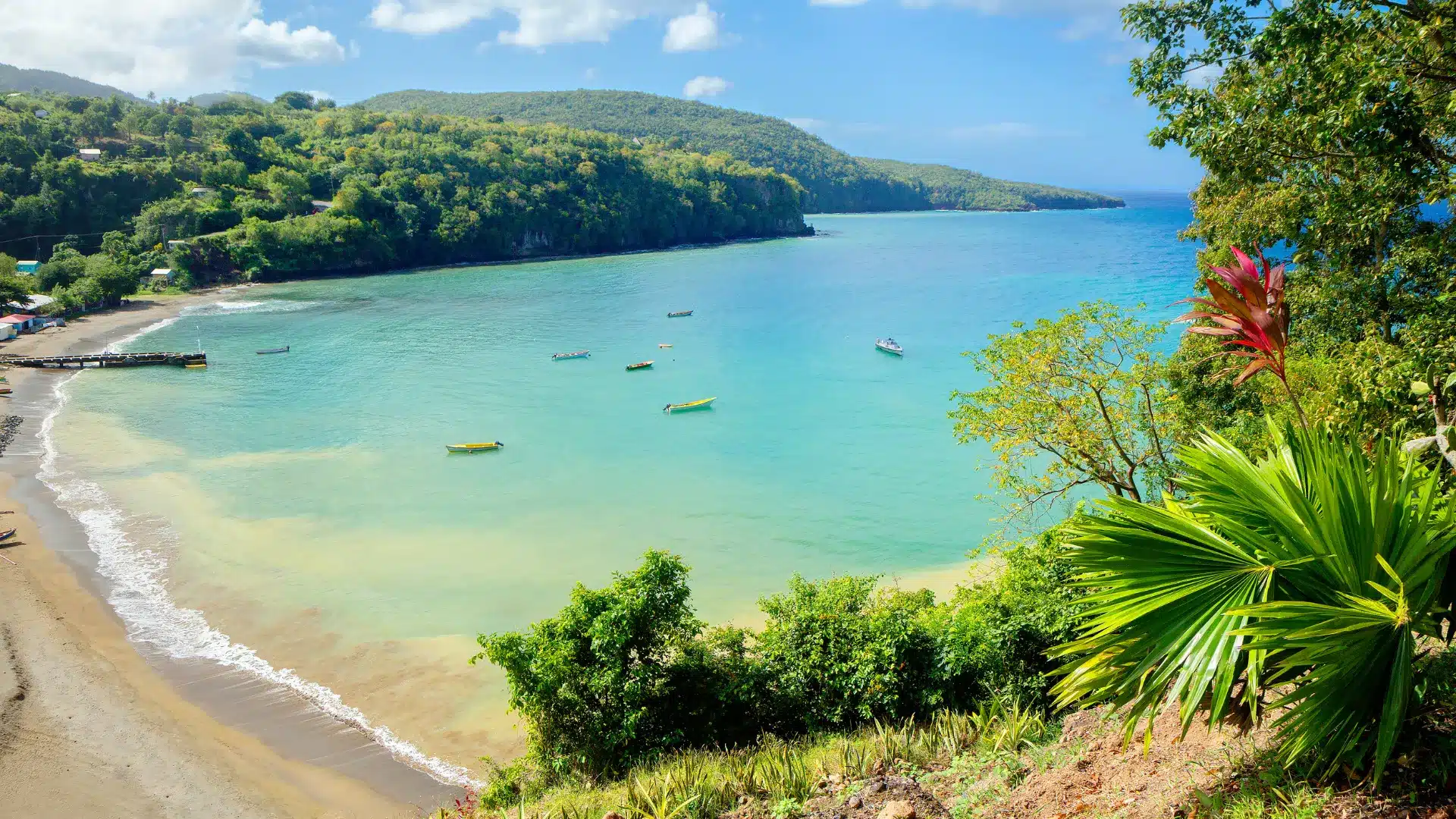
The main production areas on St Vincent include Kingstown and its colonial architecture and harbour, the black sand and grey sand beaches of the leeward coast, the volcanic interior and La Soufrière approaches, the windward coast’s more exposed Atlantic environments, and the lush tropical hillside above the capital. In the Grenadines, the key production environments include Bequia’s Port Elizabeth and boat-building culture, Mustique’s private estate and beach landscape, Canouan’s resort environments, and the Tobago Cays — shallow, reef-sheltered, uninhabited cays inside a protected marine park that represent arguably the most distinctive natural filming environment in the entire Eastern Caribbean.
A successful shoot in St Vincent and the Grenadines depends on early preparation. Caribbean visa rules, Tourism Authority film permits, ECCAA drone approvals, customs clearance requirements, inter-island logistics and rebate programme registration should all be confirmed before crew travel. Hoodlum helps visiting productions consolidate those processes into one practical production plan.
Why Film Production Works Well in St Vincent and the Grenadines
St Vincent and the Grenadines works for productions that need a combination of volcanic main island terrain, diverse island characters across the Grenadines chain, pristine marine park environments, sailing and nautical culture, colonial architecture, tropical forest interiors and the kind of remote Caribbean aesthetic that is increasingly difficult to find at commercial scale elsewhere in the region.
Strong production use cases include:
- Feature film and television drama
- Commercial and advertising campaigns
- Documentary and nature programming
- Travel and adventure content
- Sailing and nautical productions
- Marine and underwater work
- Luxury and lifestyle campaigns
- Reality and competition formats
- Conservation and ecological storytelling
- Music videos
- Still photography and branded content
The 40% film production rebate on qualifying local expenditure is one of the most competitive incentive structures in the entire Caribbean and makes St Vincent and the Grenadines a genuinely compelling financial choice for qualifying productions alongside its visual strengths. Combined with the English-speaking production environment, the active Tourism Authority film permit process and the extraordinary range of location types across the island chain, the destination offers a combination of creative and financial value that is rare in this region.
Productions should note that the multi-island geography requires logistics planning from the outset. Moving crew, equipment, catering and vehicles between St Vincent and the Grenadines islands involves inter-island flights, ferries and water taxis, and each island has its own access conditions and local characteristics. Mustique is a private island with specific access requirements that are unlike any other destination in the chain. The Tobago Cays is a protected marine park with conservation regulations that apply to all production activity. Both require early engagement and independent approval processes.
Best Time of Year to Film
St Vincent and the Grenadines has a tropical climate with a clearly defined dry season and wet season. The dry season from December to June offers the most reliable exterior filming conditions — lower humidity, minimal rainfall, lower storm risk, cleaner visibility for marine and underwater work, and the most consistent light for outdoor production across both the main island and the Grenadines.
The wet season from July to November brings heavy rainfall, strong winds and an increased risk of hurricanes. Productions filming during this period should build substantial weather contingency into both the schedule and the budget, and confirm that insurance covers weather-related delays, inter-island access disruption and equipment exposure.
Productions should plan for:
- Inter-island flight and ferry scheduling around production days
- Rapid weather changes in the volcanic interior and windward coast
- Marine safety for all Grenadines island and Tobago Cays work
- Conservation regulations for Tobago Cays Marine Park sequences
- Wind exposure on exposed coastal and elevated positions
- Mustique private island access lead time
- Equipment protection in high-humidity conditions
- Hurricane contingency for July to November shoots
- Seasonal variation in reef visibility for underwater work
The diversity of environments across the island chain means that conditions in Kingstown, on Bequia, at the Tobago Cays and on the windward coast of St Vincent can all behave differently within the same day. Hoodlum helps crews build schedules around real inter-island access, weather patterns, marine conditions and location-specific requirements.
Visa and Entry Requirements for Crew
St Vincent and the Grenadines applies Caribbean Community (CARICOM) and bilateral visa arrangements. Many nationalities may enter visa-free for short stays; others require a visa. Film crews visiting for commercial filming purposes may require a special permit and/or work permit in addition to visa compliance, and these should be arranged through the relevant government agencies before travel.
For professional filming activity, crews should not assume that general visitor entry covers paid production work. Work authorisation should be confirmed separately according to crew nationality, role, stay length and production activity.
Typical visa and entry documentation may include:
- Valid passport
- Completed visa application form, where required
- Recent passport-sized photographs
- Proof of onward travel
- Proof of funds
- Payment of relevant visa fee
- Production invitation letter or filming permit, where applicable
Visa processing typically takes three to five working days. Productions with complex crew lists or multiple nationalities should allow additional time to align visa applications with accreditation and invitation letters.
Estimated cost: USD 82.43.
Visa application: https://security.gov.vc/security/index.php?option=com_content&view=article&id=708:entry-visa-application-form&catid=70&Itemid=426
International Crew Accreditation and Work Permissions
International film crews working professionally in St Vincent and the Grenadines should provide documentation to obtain accreditation and necessary permits through the relevant authorities. Work authorisation depends on crew nationality, duration and production activity.
Typical accreditation documentation may include:
- Valid passport copies for all international crew
- Completed application form
- Crew list with names, roles and nationalities
- Equipment list
- Proof of insurance
- Letter of intent outlining the purpose and scope of the project
- Shooting schedule
- Location list — specifying St Vincent and each Grenadines island separately
- Local fixer or production contact details
Accreditation typically takes three to five working days. Productions involving Mustique, the Tobago Cays Marine Park, conservation areas, drone operations or inter-island logistics should allow additional time as more stakeholders may be involved.
Estimated cost: USD 185–370.
Film Permits and Production Approval
Film permits in St Vincent and the Grenadines are issued by the St Vincent and the Grenadines Tourism Authority. The processing time varies depending on the complexity of the shoot — a single-location documentary crew has a different permit profile from a multi-island feature production with underwater work and drone sequences across the Tobago Cays.
Typical permit documentation may include:
- Completed application form
- Copy of passport
- Proof of travel insurance
- Detailed script and/or storyboard
- Location list — with island-specific details for each Grenadines location
- Letter stating the purpose of the production
- Crew list and equipment list
- Drone details, if applicable
- Marine or conservation area impact notes, where relevant
- Local fixer or production contact details
Estimated permit fees: USD 250–400. Confirm current fee structure directly with the St Vincent and the Grenadines Tourism Authority.
Productions involving the Tobago Cays Marine Park, Mustique, conservation areas, La Soufrière approaches, marine reserves or drone operations should allow additional time and confirm whether additional approvals are required from conservation bodies, the Mustique Company, the Tobago Cays Marine Park Authority or other stakeholders beyond the Tourism Authority permit.
A strong permit application explains clearly what will be filmed, across which islands, on which dates, with what size crew and equipment, whether marine or conservation environments could be affected, and what drone activity is planned. Hoodlum helps turn the creative brief into the practical local documentation the Tourism Authority needs.
Private Locations, Island Estates and Marine Areas
Private properties across St Vincent and the Grenadines — including plantation estates and historic homes on St Vincent, private villa estates on Bequia, and the private estate landscape of Mustique — require individual written permission from owners or management. Marine areas including the Tobago Cays Marine Park require conservation approvals from the Tobago Cays Marine Park Authority in addition to the Tourism Authority permit.
Mustique is a private island owned and managed by the Mustique Company. Access for productions requires direct engagement with the Mustique Company from the outset — it is not a location that can be accessed through standard permit channels. Early contact, a clear production brief, detailed crew and equipment information, and a professional approach are essential. Productions that treat Mustique as a standard Caribbean island location will not gain access.
Tobago Cays Marine Park is a protected marine environment and one of the most pristine filming locations in the Caribbean. Production access requires conservation approval and compliance with all marine park regulations covering wildlife, reef, anchoring, waste management and crew conduct. Drone operations within the marine park require specific additional approval.
A strong location agreement across any island should confirm:
- Approved filming areas
- Shoot dates and hours
- Crew and vessel size
- Equipment restrictions
- Guide or conservation officer requirements
- Marine park or conservation restrictions
- Drone use, if relevant
- Fees and payment terms
- Restoration and site-reinstatement responsibilities
Hoodlum helps productions identify workable locations across the island chain, coordinate the right approvals for each island and location type, and keep the creative plan realistic against actual access conditions.
Drone Filming Requirements
Drone operations in St Vincent and the Grenadines require permission from both the Eastern Caribbean Civil Aviation Authority (ECCAA) and the local police, and must comply with ECCAA regulations covering altitude, proximity to airports and populated areas, and safety requirements. Drone planning should be treated as a separate approval process from the general Tourism Authority film permit — one does not cover the other.
Typical drone permit documentation may include:
- Completed application form
- Proof of drone registration
- Drone specifications and serial number
- Proof of liability insurance
- Detailed flight plan including dates, times and coordinates
- Take-off and landing locations
- Proximity to airports, populated areas and sensitive sites
- Safety procedures
Issuing authority: Eastern Caribbean Civil Aviation Authority (ECCAA).
Drone permits typically take three to five working days. Productions planning drone work over the Tobago Cays Marine Park, near Argyle International Airport, above populated areas of Kingstown or over conservation-sensitive environments should allow additional time and confirm specific restrictions before travel.
Drone importation is regulated by the Customs and Excise Department and requires a permit, compliance with ECCAA regulations, and may attract duties and taxes on the drone and related equipment. Crews should carry full drone documentation — serial numbers, pilot credentials, insurance certificates, ECCAA approval and customs importation papers — before departure.
Estimated cost: USD 37–185.
Equipment Customs Clearance
St Vincent and the Grenadines is not an ATA Carnet country. This is one of the most practically significant customs facts for international productions, and it is frequently underestimated by crews arriving from Carnet-country production environments.
In a non-Carnet country like St Vincent and the Grenadines, professional filming equipment must be imported under a temporary importation process. A Bond or Deposit may be required to ensure goods are re-exported within a specified timeframe. Duties and taxes may be applicable depending on the nature of the equipment and the importation arrangement.
Typical customs documentation may include:
- Commercial invoice
- Bill of lading or airway bill
- Customs declaration form
- Detailed equipment list with serial numbers and values
- Crew list with passport details
- Proof of temporary importation or bond arrangement
Issuing authority: Customs and Excise Department.
Customs clearance typically takes approximately 24 hours for well-prepared documentation. Every item — cameras, lenses, drones, batteries, lighting, grip, sound equipment, underwater housing and specialist gear — should be listed clearly with serial numbers and values. Incomplete documentation is the most common cause of clearance delays and additional scrutiny.
Estimated cost: USD 19–185 depending on equipment volume, importation arrangements and applicable duties.
Productions bringing equipment across multiple inter-island arrivals should ensure documentation reflects the actual arrival plan. Hoodlum helps productions prepare complete customs documentation in advance so clearance supports the schedule.
Safety and Security for Productions
St Vincent and the Grenadines offers a film-friendly environment with stunning natural beauty, friendly local communities and a relatively straightforward security context for professional productions. Production risks are a combination of logistical, environmental and marine — inter-island movement, volcanic terrain, weather, marine safety and equipment management — alongside standard security awareness in Kingstown.
Key safety considerations include:
- Hire local police officers or licensed security personnel for on-set security and crowd control as required
- Plan inter-island flight, ferry and water taxi scheduling as a core logistics layer
- Build hurricane season weather contingency for July to November shoots
- Monitor weather carefully for volcanic interior, windward coast and marine locations
- Confirm marine safety for all Grenadines island, Tobago Cays and underwater work
- Plan conservation officer accompaniment for Tobago Cays Marine Park sequences
- Confirm medical access and emergency response for remote island and volcanic terrain locations
- Protect equipment in high-humidity conditions between shoot days
- Ensure insurance covers all activities, locations, islands and marine environments
Hoodlum helps crews build practical safety planning around the actual multi-island production footprint.
Film Incentives — St Vincent and the Grenadines Film Rebate Programme
St Vincent and the Grenadines offers one of the highest film production rebate rates in the entire Caribbean. The film rebate incentive provides up to 40% of qualifying production expenditures for international productions filming on the islands. This is a genuinely significant financial incentive — at 40%, it is among the most competitive rebate structures available to international productions anywhere in the region — and it makes St Vincent and the Grenadines a compelling budget choice for qualifying productions alongside its exceptional visual range.
For productions that qualify, the rebate can represent a transformative difference in local spend return and directly improves the financial case for shooting in St Vincent and the Grenadines versus other Caribbean and international destinations with lower or no incentive structures.
Before budgeting the rebate, productions must confirm:
- Whether the project type qualifies under current programme rules
- Minimum qualifying spend thresholds, if applicable
- Which expenditures are classified as qualifying local spend
- Whether the rebate applies to the full production or only in-country spend
- Which authority administers and approves rebate claims
- Whether approval must be in place before spend begins
- Whether local crew and supplier engagement is required for qualification
- Payment timelines for rebate disbursement after completion
Administering authority: St Vincent and the Grenadines Tourism Authority.
Rebate registration should happen before production spend begins — not after. Hoodlum helps productions register at the correct stage and structures local spend tracking so the paperwork trail for a rebate claim is built into the production process from the start.
How the Main Approvals Fit Together
Caribbean visa rules, Tourism Authority accreditation, film permits, Mustique Company access, Tobago Cays Marine Park conservation approvals, ECCAA drone approvals, customs clearance and rebate registration are all separate processes in St Vincent and the Grenadines. One approval does not automatically unlock the others.
A visa allows entry but does not authorise filming. A Tourism Authority permit supports general filming but does not cover Mustique access or Tobago Cays conservation approvals. ECCAA drone clearance runs independently of the film permit. Customs clearance allows equipment in but does not determine where it can be operated. Rebate registration must happen before spend — not after.
A complete production plan connects:
- Crew entry and visa status by nationality
- Work permission checks by role and stay length
- Tourism Authority accreditation and film permit
- Mustique Company access engagement — initiated independently and early
- Tobago Cays Marine Park conservation approval
- Island-specific location agreements across the Grenadines chain
- ECCAA drone authorisation and police notification
- Customs temporary importation or bond arrangements
- Liability insurance across all islands, locations and marine environments
- Rebate programme registration and qualifying spend tracking
- Inter-island logistics planning as a core production layer
- Safety planning for volcanic terrain, marine environments and remote island locations
Hoodlum helps productions turn those parallel requirements into one usable workflow across the full island chain.
When St Vincent and the Grenadines Is the Right Choice
St Vincent and the Grenadines is the right production choice when a project needs a combination of volcanic main island terrain, pristine multi-island Caribbean geography, protected marine park environments, sailing and nautical culture, diverse island characters, an English-speaking production environment and one of the most competitive film rebate structures in the Caribbean.
It is especially suitable for:
- Feature films needing dramatic tropical terrain and remote island settings
- Commercial campaigns requiring pristine beach, reef and marine environments
- Luxury and lifestyle productions using Mustique’s private island character
- Sailing, nautical and adventure content across the Grenadines chain
- Nature and conservation documentaries in the Tobago Cays Marine Park
- Travel and exploration programming
- Marine, dive and underwater productions
- Music videos
- Reality and competition formats needing multi-island logistics
- Heritage and cultural storytelling rooted in Kingstown and St Vincent
It may be less suitable for productions that need large studio infrastructure, major freight logistics into a single hub, or large-scale crowd scenes in a well-developed urban environment. Those shoots may be possible but require more detailed planning and stronger local coordination.
Film production services in St Vincent and the Grenadines are most effective when the concept fits the islands’ genuine strengths: volcanic and tropical terrain, multi-island geography, pristine marine environments, Tobago Cays access, the private island character of Mustique and Bequia, and an active 40% rebate programme.
Common Mistakes to Avoid
Most production problems in St Vincent and the Grenadines come from underestimating inter-island logistics, attempting to access Mustique without proper advance engagement, leaving Tobago Cays conservation approvals too late, arriving without temporary importation documentation confirmed, or failing to register for the rebate before spend begins.
Avoid:
- Treating Mustique as a standard accessible Caribbean island location
- Assuming the Tourism Authority permit covers Tobago Cays Marine Park access
- Leaving ECCAA drone approval to the week before the shoot
- Arriving without temporary importation documentation — St Vincent and the Grenadines is not a Carnet country
- Submitting incomplete equipment lists to customs
- Treating inter-island logistics as an afterthought rather than a core planning layer
- Leaving rebate programme registration until after the shoot
- Ignoring hurricane season contingency for July to November shoots
- Assuming visitor entry covers paid professional filming work
- Working across multiple Grenadines islands without a fixer who knows each island’s specific access conditions
How Hoodlum Supports Local Production
Hoodlum provides end-to-end production support for international crews filming across St Vincent and the Grenadines, from early research through on-the-ground execution across the full island chain.
Support may include:
- Local fixer coordination across St Vincent and the Grenadines islands
- Tourism Authority accreditation and film permit support
- Mustique Company access coordination
- Tobago Cays Marine Park conservation approval support
- Location research, access and RECCE coordination across all islands
- Marine and underwater production logistics
- Inter-island flight, ferry and water taxi coordination
- Crew and local supplier sourcing
- Entry documentation and visa support
- ECCAA drone planning and permit support
- Customs temporary importation preparation
- Accommodation sourcing across St Vincent and the Grenadines
- Transportation and vessel hire
- Safety and risk management planning
- Hurricane season contingency planning
- Rebate programme registration and qualifying spend tracking
- On-the-ground production management
Production support in St Vincent and the Grenadines is most valuable when crews need one clear route through Caribbean entry rules, Tourism Authority permitting, island-specific conservation and access approvals, ECCAA drone authorisation, customs clearance, rebate registration and multi-island logistics. Hoodlum reduces uncertainty so the production can focus on the shoot.
FAQ Section
Do international crews need a visa to film in St Vincent and the Grenadines? Visa requirements depend on nationality, stay length and purpose of travel. Many nationalities may enter visa-free for short stays, while others require a visa. Film crews may require a special permit and/or work permit for commercial filming in addition to visa compliance. Apply at the official government portal. Processing typically takes three to five working days. Estimated cost: USD 82.43.
How long should productions allow for filming approvals? Allow a minimum of four to six weeks before the shoot start date to run all approval processes in parallel. Tourism Authority accreditation and permits take three to five working days for standard applications, but productions involving Mustique, the Tobago Cays Marine Park, conservation areas, drone operations or complex inter-island logistics should allow significantly more time.
Can productions access the Tobago Cays Marine Park? Yes, but access requires conservation approval from the Tobago Cays Marine Park Authority in addition to the standard Tourism Authority film permit. Drone operations within the marine park require additional specific approval. Productions should treat Tobago Cays as an independent approval stream and initiate contact with the Park Authority early in pre-production.
Can productions film on Mustique? Mustique is a private island managed by the Mustique Company. Access requires direct engagement with the Mustique Company from the outset of pre-production. It is not accessible through standard permit channels. Allow extended lead time and engage a local fixer with specific Mustique access experience.
Is St Vincent and the Grenadines a Carnet country for equipment clearance? No — St Vincent and the Grenadines is not an ATA Carnet country. Professional filming equipment must be imported under a temporary importation process and a Bond or Deposit may be required. Duties and taxes may apply. Complete equipment lists with serial numbers and values are required. Clearance typically takes approximately 24 hours with well-prepared documentation.
Does St Vincent and the Grenadines offer a film rebate? Yes — the film rebate incentive offers up to 40% of qualifying production expenditures, administered through the St Vincent and the Grenadines Tourism Authority. This is one of the highest rebate rates in the Caribbean. Rebate registration must be completed before production spend begins. Confirm current eligibility criteria, qualifying categories and minimum thresholds directly with the Tourism Authority.
Can productions use drones? Yes, but drone operations require ECCAA approval and local police notification before any operation begins. This is separate from and not covered by the Tourism Authority film permit. Drone importation requires customs permits and may attract duties. Allow three to five working days minimum and additional time for sensitive locations including the Tobago Cays Marine Park.
What documents are usually needed? Productions typically need a synopsis, location list specifying each island separately, shoot dates, crew list with nationalities and roles, equipment list with serial numbers, insurance, letter of intent, proof of onward travel and local production contact details. Tobago Cays, Mustique and drone operations each require additional documentation.
Authority Links
St Vincent and the Grenadines Tourism Authority
Eastern Caribbean Civil Aviation Authority (ECCAA)
Everything You Need to Know About Filming in St Vincent and the Grenadines
Filming in St Vincent and the Grenadines rewards productions that plan for the multi-island reality from the outset. This is not a single-location shoot destination. It is a 32-island nation stretching across 45 kilometres of ocean, with each major island — St Vincent, Bequia, Mustique, Canouan, Mayreau, Union Island and the Tobago Cays — having its own access conditions, its own logistical requirements, and in some cases its own entirely separate approval process that sits outside the standard Tourism Authority permit framework.
A production that plans for St Vincent and ignores the Grenadines logistics, or one that puts the Tobago Cays on the shot list without initiating Marine Park conservation approval early, or one that assumes Mustique can be accessed through normal channels, will discover the consequences of that planning gap on location. This section consolidates the practical information that prevents those discoveries.
The St Vincent Tourism Authority film permit process
Film permits in St Vincent and the Grenadines are issued by the St Vincent and the Grenadines Tourism Authority and cover general filming activity across the country. The permit application requires a completed form, passport copy, travel insurance, detailed script or storyboard, location list, purpose letter, crew list and equipment list. Permit fees range from USD 250 to USD 400 depending on production scale and complexity.
What the Tourism Authority permit covers is general filming approval. What it does not automatically cover is Mustique access, Tobago Cays Marine Park conservation approvals, ECCAA drone clearance, or island-specific conservation area requirements. Each of those runs as a separate and parallel process. A production that receives its Tourism Authority permit and considers approvals complete has missed the most complex parts of the approval picture for a multi-island shoot.
Allow a minimum of four to six weeks before the shoot start date for the full approval process. Productions with Mustique, Tobago Cays, drone operations or conservation-area locations should build in significantly more time.
The Tobago Cays Marine Park — filming in one of the Caribbean’s most protected environments
The Tobago Cays Marine Park is a protected marine environment comprising five uninhabited cays — Baradal, Petit Tabac, Jamesby, Petit Rameau and Petit Bateau — inside a horseshoe reef of extraordinary visual clarity. The shallow, turquoise, reef-sheltered water, the white sand cays and the complete absence of commercial development make the Tobago Cays one of the most distinctive natural filming environments in the entire Caribbean. It has been used for major feature film productions and consistently appears on international location scouts’ shortlists for pristine tropical marine environments.
Access for professional productions requires conservation approval from the Tobago Cays Marine Park Authority, separate from and in addition to the Tourism Authority film permit. The Marine Park has specific regulations covering wildlife interaction, reef proximity, anchoring, waste management, generator use, and crew and vessel conduct within the park boundary. Drone operations within the Marine Park require additional specific approval from the Park Authority on top of the standard ECCAA drone clearance.
Productions should treat the Tobago Cays as an independent approval stream — initiating contact with the Marine Park Authority early in pre-production, providing full production documentation, confirming access conditions and restrictions, and ensuring all crew are briefed on park regulations before the shoot day. The Tobago Cays is not a location that responds well to late requests or incomplete documentation. The earlier the conversation with the Park Authority begins, the more options the production has.
Mustique — accessing a private island
Mustique is a private island owned and managed by the Mustique Company. It is one of the most distinctive filming environments in the Caribbean — an intimate, meticulously maintained private island with a landscape of villa estates, private beaches, tropical gardens and extraordinary sea views that gives productions a visual character unlike any other location in the Grenadines. It has hosted photography and film productions for international luxury, lifestyle and fashion clients.
What it is not is an accessible location through standard permit channels. The Mustique Company manages all access to the island, and production access requires direct engagement with the Mustique Company from the very earliest stage of pre-production. Attempting to access Mustique through the Tourism Authority permit process, or arriving without confirmed Mustique Company approval, will result in the crew being turned away.
Early contact, a detailed production brief, complete crew and equipment information, clear shoot dates and a professional approach are the minimum requirements for beginning a Mustique access conversation. A local fixer with specific Mustique access experience and an existing relationship with the Mustique Company is the most reliable route to securing this location. Allow extended lead time — this is not a two-week turnaround process.
The 40% St Vincent and Grenadines film rebate
The St Vincent and the Grenadines film rebate incentive offers up to 40% of qualifying production expenditures — one of the highest rebate rates available to international productions anywhere in the Caribbean, and one of the most financially significant incentive structures in the entire region. For a production with substantial local spend on crew, locations, accommodation, transport, catering and equipment, a 40% return on qualifying expenditure is a material budget consideration that can determine whether St Vincent and the Grenadines is viable compared to competing destinations.
The rebate is administered through the St Vincent and the Grenadines Tourism Authority. The most important operational fact about the rebate is timing: registration must happen before production spend begins. A production that completes its shoot and then attempts to register retrospectively cannot claim spend from before registration. Hoodlum helps productions register at the correct stage and builds local spend tracking into the production process from day one so that the paperwork trail for a rebate claim is complete and auditable.
Confirm current eligibility criteria, qualifying expenditure categories, minimum spend thresholds, local supplier requirements and payment timelines directly with the Tourism Authority before the rebate is built into the budget.
St Vincent customs clearance — non-Carnet country requirements
St Vincent and the Grenadines is not an ATA Carnet country. Professional filming equipment must be imported under a temporary importation process, and a Bond or Deposit may be required with the Customs and Excise Department to confirm that all equipment will be re-exported. Duties and taxes may apply depending on the nature and volume of the equipment and the importation arrangement.
Customs clearance for well-prepared documentation typically takes approximately 24 hours at the point of arrival. What extends that timeline is incomplete paperwork — equipment lists missing serial numbers, absent values, vague item descriptions or a mismatch between declared equipment and what physically arrives. Every item should be listed clearly and completely. Productions moving equipment across inter-island legs after initial customs clearance on St Vincent should understand how that movement affects the original importation documentation.
Estimated costs range from USD 19 to USD 185 depending on equipment volume, temporary importation arrangements and applicable duties. Hoodlum helps productions prepare complete documentation before departure so clearance supports the schedule rather than delaying it.
ECCAA drone approvals and what they cover
Drone filming in St Vincent and the Grenadines requires ECCAA approval and local police notification before any operation begins. This runs independently of the Tourism Authority film permit — one does not cover the other. Drone permits typically take three to five working days for standard applications. Productions planning drone work over the Tobago Cays Marine Park, near Argyle International Airport, above La Soufrière approaches or over conservation-sensitive island environments should allow additional time and confirm specific restrictions before travel.
Drone importation requires a separate customs permit from the Customs and Excise Department and may attract duties and taxes on the drone and related equipment. Productions should not arrive with drones without having confirmed ECCAA operational approval, police notification, customs importation documentation and — where applicable — Tobago Cays Marine Park Authority drone approval, all in advance.
Running drone approvals in parallel with Tourism Authority accreditation and permit applications — rather than sequentially after them — is the most reliable way to protect aerial shooting days across the island chain.
What a St Vincent and the Grenadines film fixer actually does
A St Vincent and the Grenadines film fixer coordinating a multi-island production is managing Tourism Authority accreditation and permits, Mustique Company access negotiations, Tobago Cays Marine Park conservation approvals, ECCAA drone clearance, customs temporary importation preparation, rebate registration and inter-island logistics — simultaneously, in parallel, across multiple islands with different access conditions, different stakeholder relationships and different approval timelines. For international crews unfamiliar with the Grenadines, that coordination is the difference between a production plan and a production reality.
Film production in St Vincent and the Grenadines works most efficiently when the fixer is engaged at the research and budgeting stage — four to six weeks before the shoot at minimum, and significantly earlier if Mustique or the Tobago Cays are on the location list. Early engagement means approval processes can run in parallel, inter-island logistics can be planned around real access conditions, and the rebate registration can be in place before the first dollar of qualifying spend is committed.
Hoodlum provides full production support for international crews across St Vincent and the Grenadines — from early research and budget planning through permit coordination, island access, drone planning, customs preparation, rebate registration and on-the-ground multi-island logistics management. For enquiries, visit hoodlum.tv/contact-us.
St Vincent and the Grenadines as part of a wider Caribbean film production guide
For productions building a Caribbean film production guide — comparing destinations, assessing incentive structures, planning multi-territory shoots — St Vincent and the Grenadines occupies a position that no other single Caribbean nation can replicate. It is the only destination in the region that combines an active 40% film production rebate, a UNESCO-adjacent marine park of global visual significance in the Tobago Cays, a genuinely private island location in Mustique, the volcanic main island terrain of La Soufrière and St Vincent’s interior, and the sailing and nautical culture of the Grenadines chain — all within one country, under one permit framework, with English as the official language.
Productions that have filmed in Barbados, St Lucia, Antigua or Jamaica will find St Vincent and the Grenadines a destination of genuinely different visual register — wilder, more remote, less developed in the commercial sense, and extraordinary for productions that need that character. Productions coming to the Caribbean for the first time with a budget-conscious brief will find the 40% rebate the most compelling financial argument for any single Eastern Caribbean destination.
The practical groundwork is always the same: start the Tourism Authority permit process early, initiate Mustique Company and Tobago Cays Marine Park Authority contact independently and immediately, run ECCAA drone approvals in parallel, prepare temporary importation documentation before freight is packed, register for the rebate before spend begins, plan inter-island logistics as a core production layer, and have a local fixer across the full island chain who knows the specific access conditions, conservation requirements and logistical realities that make this destination extraordinary — and occasionally demanding — in equal measure.