


















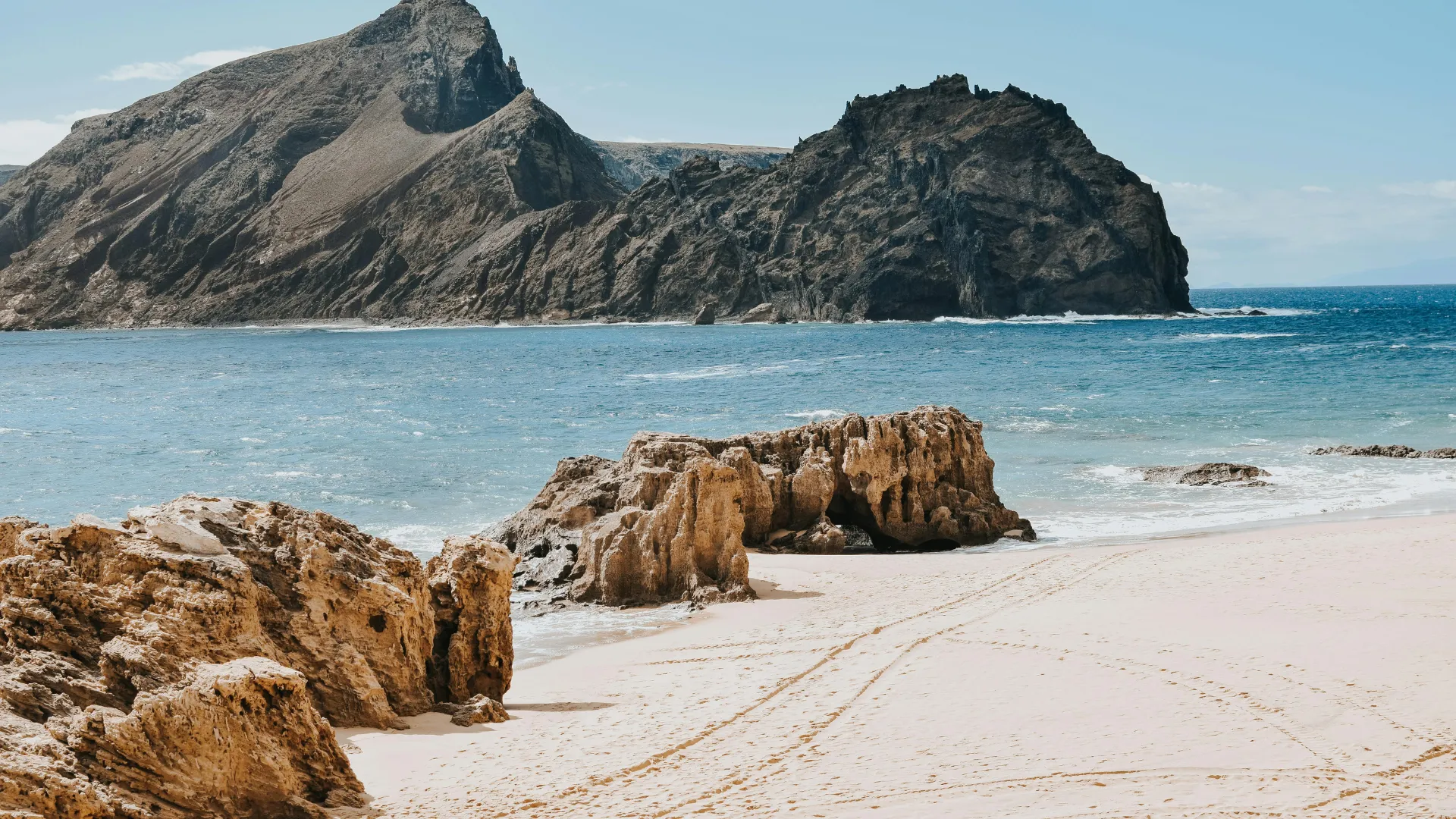
Film Production Services in Portugal
Portugal is one of Europe’s most versatile filming territories, offering Atlantic coastlines, historic cities, modern infrastructure, surf beaches, mountain roads, islands, wine regions, ports, contemporary architecture, old villages, desert-like interiors, river valleys and a strong production culture within a compact national footprint. For international producers, Portugal can work for commercials, documentaries, factual entertainment, branded content, reality formats, feature films, television drama, music videos, fashion campaigns, photography, travel programming and automotive shoots.
Hoodlum provides Film Production Services in Portugal for crews that need experienced local coordination before the production travels and throughout the shoot. Our work covers film fixers, permit planning, location scouting, private location access, visa and crew-entry guidance, local production support, drone planning, customs and ATA Carnet coordination, local crew sourcing, transport, accommodation, security, beach and port approvals, and full on-ground production management. Productions can see more about what we do and the team behind Hoodlum on our who we are page.
Portugal is film-friendly, but it should not be treated as an informal filming destination. Public-space filming now needs official authorisation even for small crews in public locations, and location-specific approvals may involve municipalities, police, port authorities, private owners, protected-area managers, heritage bodies, drone authorities and other competent entities. The strongest Portugal shoots are the ones that are planned clearly: the crew list is accurate, insurance is in place, public liability cover is arranged, locations are secured, drone operations are checked and equipment importation is handled before the first filming day.
Why Portugal Works for International Productions
Portugal works for international productions because it offers strong production variety in a manageable geographic space. A production can shoot Lisbon streets, Atlantic beaches, old fishing ports, modern business districts, castles, vineyards, mountain roads, rural villages and island environments without moving across several countries. The country also provides a reliable crew base, good roads, international airports, English-speaking production support and a range of visual identities that can suit both European and non-European story worlds.
Lisbon is a major production hub with historic streets, tiled façades, trams, rooftops, river views, modern offices, luxury hotels, old neighbourhoods, cultural institutions and access to the Atlantic coast. Porto offers a different city texture, with hills, bridges, riverfronts, wine cellars, old streets and northern production routes. The Algarve gives Portugal beaches, cliffs, resort settings, caves, golf environments, villas and sun-driven commercial value. The Alentejo offers dry roads, rural scale, cork forests, farms, old towns and quieter interiors. The Douro Valley gives vineyards, river movement and dramatic road access. Madeira and the Azores add island production value, with mountains, volcanic terrain, ocean roads, forests, remote-feeling coastlines and weather-driven landscapes.
Portugal is especially strong for commercials, fashion, automotive, tourism, travel, food, documentary and lifestyle work. Its light, coastline, old architecture and road access make it useful for brands that need high production value with efficient movement. It is also strong for factual stories around climate, surf culture, fisheries, wine, migration, urban renewal, design, tourism, maritime history, renewable energy and island life.
The practical advantage of Portugal is that it can feel logistically controlled while still giving productions real texture. The challenge is that permissions are location-specific. A street in Lisbon, a beach in the Algarve, a vineyard in the Douro, a drone flight over a coastal town, a port sequence in Setúbal, a protected area in Madeira and a private villa in Cascais will not all follow the same process. Hoodlum helps productions build the correct approval route for each location.
Lisbon and the Tagus Production Hub
Lisbon is the most common starting point for international productions in Portugal. It offers the country’s strongest production infrastructure, broad accommodation base, international airport access, local crew, rental suppliers, production offices, post-production options and a wide range of urban looks. Lisbon can feel historic, coastal, modern, creative, residential, elegant or raw depending on the neighbourhood and the framing.
The city gives productions tiled buildings, steep streets, viewpoints, trams, bridges, waterfront spaces, markets, old interiors, palaces, restaurants, hotels, modern business districts and residential areas. Alfama, Baixa, Chiado, Bairro Alto, Príncipe Real, Belém, Alcântara, Parque das Nações and the wider Lisbon region each offer a different visual language. Across the river, Almada and the south bank provide industrial edges, bridge views, beaches and wider spaces that can be useful for larger units.
Filming in Lisbon requires municipal approval for public locations. The process can involve the city hall, police, traffic departments, private owners, public transport bodies, cultural site managers and other authorities depending on the footprint. Productions may need to provide a shoot description, locations, dates, times, crew size, equipment details, vehicle plan, insurance and any special requirements such as traffic control, drones, night filming, public crowd management or road occupation.
A Lisbon permit request may also lead to further authority requirements depending on what the production needs. For example, filming on public roads, bridges, waterfront areas, transport infrastructure, monuments or public buildings may require additional approvals. Hoodlum supports Lisbon shoots by identifying the correct route early and making sure the production plan is described accurately enough for authorities to assess the impact.
Porto, the Douro and Northern Portugal
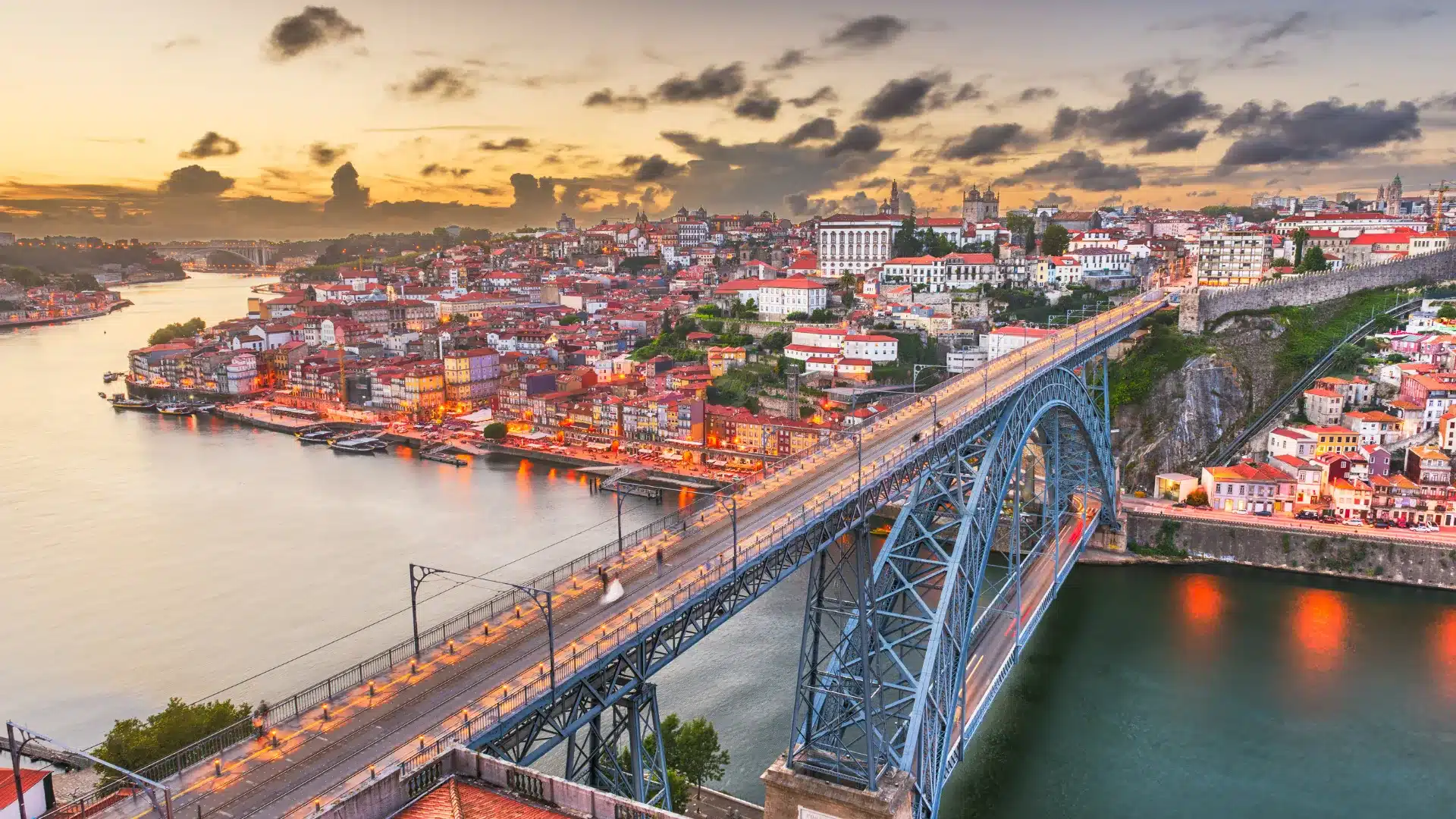
Porto gives Portugal a distinct northern production look. The city has river views, bridges, tiled churches, old streets, warehouses, wine cellars, industrial edges, historic interiors, contemporary architecture and a strong atmosphere that differs from Lisbon. It is useful for documentaries, commercials, drama, fashion, food content, travel programming, corporate films and photography.
The Douro Valley adds vineyards, river roads, terraces, estates, rail routes, old towns and dramatic landscapes. For wine, food, luxury, travel, lifestyle and automotive work, the Douro can be one of Portugal’s strongest regions. However, filming in the valley requires planning around narrow roads, private estates, harvest periods, weather, river access, accommodation and local permissions.
Northern Portugal also includes Braga, Guimarães, Viana do Castelo, Aveiro, Peneda-Gerês and the Minho region, each offering different production options. Guimarães and Braga provide historic streets and heritage environments. Viana do Castelo and the coast offer maritime settings. Aveiro brings canals, flat landscapes and coastal access. Peneda-Gerês provides mountains, villages, forests and protected-area considerations.
Productions in northern Portugal may need to coordinate with municipalities, private owners, regional tourism bodies, port authorities, park authorities or heritage managers depending on the location. Hoodlum helps productions assess whether Porto or the north is the right base, where local crew should be sourced and how movement between city, river, coast and mountain should be scheduled.
Algarve, Beaches and Coastal Production
The Algarve is one of Portugal’s strongest regions for beach, resort, lifestyle, travel, fashion, marine and commercial filming. It offers cliffs, caves, beaches, marinas, fishing towns, golf resorts, villas, roads, luxury hotels, surf spots and clear coastal light. Lagos, Faro, Albufeira, Tavira, Portimão, Sagres, Vilamoura and the surrounding coastline all provide different production opportunities.
Coastal filming in Portugal requires careful approval. Beach filming may involve local municipalities, maritime authorities, environmental bodies, concession holders, private owners, police or port authorities. If filming takes place on beaches, additional authorisation may be required from port authorities. This is particularly important for shoots involving drones, boats, swimmers, vehicles, large crews, catering, public crowd control or equipment on the sand.
The Algarve can be efficient because of its hotel base and road access, but productions should plan around summer tourism, parking, sun exposure, wind, marine conditions and public use. A beach that works in March may be unmanageable in August without strong control. Sea caves and boat-based filming need skippers, safety planning, weather checks, tide awareness, flotation, marine communication and backup days.
Hoodlum supports Algarve shoots by coordinating coastal permissions, local authorities, boat operators, safety support, private villas, accommodation, vehicles, security and drone planning. Portugal’s coast is a production asset, but it must be handled as a managed environment.
Alentejo, Rural Roads and Interior Portugal
The Alentejo gives Portugal a quieter and more open production register. It offers dry roads, cork forests, farms, vineyards, whitewashed towns, castles, reservoirs, plains, rural estates, old streets and lower-density environments. It is useful for automotive, fashion, food, documentary, lifestyle, travel, music videos and scripted work that needs space and atmosphere beyond the cities and beaches.
Évora, Monsaraz, Marvão, Beja, Estremoz, Elvas, Comporta and the wider Alentejo region offer historic towns, agricultural environments, old fortifications, coastal-adjacent luxury areas and long rural roads. Comporta and the surrounding coast are particularly useful for high-end lifestyle and fashion work, but private property, environmental restrictions, beach access and seasonal demand can make planning important.
The Alentejo can feel simpler than Lisbon or the Algarve, but productions should still plan permissions carefully. Road filming, drone work, private estates, farms, protected areas, archaeological sites and old-town public spaces may all require local approvals. Agricultural activity, harvest periods, livestock, heat and long distances between services should also be considered.
Hoodlum helps productions use interior Portugal efficiently by checking access, local crew, accommodation, route timing, private land agreements and contingency. The region is strong when the production wants space, roads and rural texture without the pressure of major tourist centres.
Madeira, the Azores and Island Filming
Portugal’s islands give productions another layer of location value. Madeira offers mountains, ocean roads, forests, cliffs, tunnels, old towns, volcanic terrain, gardens, harbour settings and a strong hotel base. It is useful for commercials, travel, adventure, fashion, automotive, documentary, nature content and lifestyle filming. The Azores provide volcanic landscapes, crater lakes, green fields, coastlines, whale and marine stories, geothermal environments, remote-feeling roads and weather-driven imagery.
Island filming in Portugal requires different planning from mainland work. Flights, cargo, ferry or boat movement, accommodation, local vehicles, weather, drone restrictions, protected areas and limited equipment replacement options all matter. Madeira may offer more developed tourism infrastructure, while the Azores can require more careful inter-island planning, especially if a production wants to move between São Miguel, Pico, Faial, Terceira or other islands.
Drone filming on islands should be checked carefully because airports, heliports, protected landscapes, birds, marine environments, cliffs and weather can all affect operations. Protected areas, natural parks and coastline locations may also require additional approvals. For documentary and natural-history work, local guidance is essential.
Hoodlum supports island shoots in Portugal by planning cargo, customs, local fixers, flights, vehicles, accommodation, drone permissions, safety and realistic weather cover. Madeira and the Azores can deliver strong production value, but they need to be treated as island operations, not simple extensions of a Lisbon schedule.
Crew Entry, Visas and Work Authorisation
Crew entry into Portugal depends on nationality, duration of stay, role and employment structure. Portugal is part of the Schengen Area. Citizens of the European Union and certain associated European states generally have simpler access, while many third-country nationals may enter for short stays if visa-exempt or may need a Schengen short-stay visa depending on nationality. Short stays are generally limited to 90 days in any 180-day period across the Schengen Area.
Visa-required crew members should prepare the appropriate short-stay visa application through the official consular route for Portugal. Supporting documents can include a completed and signed visa application form, passport photographs, passport valid beyond the stay, proof of funds, proof of return or onward travel, accommodation details, travel health insurance and documents explaining the purpose of the visit. For production travel, those purpose documents may include a production letter, invitation letter, shooting schedule, crew role, location list and confirmation of local production support.
For stays exceeding 90 days, crew members may need a national visa or residence route. Portuguese law includes routes for cultural and highly qualified activities, and audiovisual professionals may need to consider longer-stay authorisation depending on the assignment. These cases should be reviewed early with official visa guidance or specialist immigration advice.
Hoodlum supports Portugal crew-entry planning by mapping the crew list against nationality, length of stay, role and travel route. The important questions are who is travelling, how long they will stay, what work they will perform, whether they are visa-exempt, whether they need a Schengen visa, whether the project exceeds 90 days and what documents must support the application.
International Crew Accreditation and Production Documentation
International crew accreditation in Portugal is usually connected to the film permit, visa support, insurance, local production structure and location access. There is no single accreditation route that automatically covers every production, location and crew member. Instead, productions should prepare clear documentation that can be used for authorities, municipalities, location owners, police, customs, port authorities and drone processes.
Crew documentation may include completed and signed visa forms where required, passport photos, passport copies, proof of funds, travel insurance, onward travel details, documents justifying the purpose of the visit, production company letters, crew lists, shooting schedules, role descriptions and insurance certificates. For some productions, local public liability insurance is essential for permit approval and can be arranged locally.
The production documentation should be consistent across every request. Crew names, dates, locations and equipment should match the permit application, visa letters, drone request, customs list and location agreements. When those documents conflict, approvals can slow down.
Hoodlum supports crew accreditation and production documentation in Portugal by preparing clear crew lists, permit summaries, location schedules, insurance notes and local support letters. This keeps the production legible to Portuguese authorities and makes the approval process smoother.
Film Permits and Public Location Authorisation
Film permits in Portugal are issued by the administrative authorities, central or local administration, site owners, police or other entities with jurisdiction over the area being filmed. Depending on the shoot, several authorities may be involved. A street, beach, port, public building, national park, heritage site, private property, road or drone location may each require a different approval route.
Portugal introduced a more formal approach in 2024, requiring film permits for all filming in public locations, regardless of crew size. This means that even small teams filming in public without tripods should not assume that they can operate without authorisation. Official approval is required for public locations, and productions should build permit time into the schedule.
Most permits should allow at least 10 working days, especially in main cities. Smaller municipalities may be more flexible, but complex filming still needs lead time. Lisbon can involve higher administrative costs and may require the initial city hall request before other authorities are identified. Beach filming can require additional port authority approval, and traffic, public safety, drones, police, heritage sites or environmental sensitivity can add further steps.
A Portugal film permit request commonly needs a description of the shoot, locations, dates, times, crew size, technical footprint and proof of local public liability insurance. Depending on the location, productions may also need a risk assessment, traffic plan, drone details, security plan, waste plan, owner permission or beach and maritime authorisation.
Hoodlum helps productions identify the correct permitting path, prepare the request, coordinate with local authorities and keep the permit package aligned with the real production footprint.
Private Locations in Portugal
Private locations in Portugal include villas, apartments, hotels, restaurants, farms, vineyards, palaces, offices, studios, warehouses, beaches under concession, estates, shops, boats, marinas and private houses. Access is usually secured directly through the owner, administrator, manager or representative.
The process begins with location scouting and a clear production brief. Owners usually need to understand the intended use, dates, hours, crew size, equipment, dressing, access requirements, public impact, insurance and reinstatement expectations before quoting. Costs vary widely depending on the location type, region, exclusivity, season and production impact. Major city locations, luxury villas, heritage buildings and exclusive coastal properties can be expensive.
A private location agreement should cover the fee, shoot dates, access times, prep and strike, areas included, overtime, deposits, damage, insurance, reinstatement, art department changes, power, catering, toilets, parking, security, confidentiality and owner approvals. In Portugal, as in many film-friendly countries, private permission does not always cover public impact. If equipment, vehicles, lighting, crew holding, cables, drones or public access affect the surrounding street, beach, pavement or road, public permits may still be required.
Hoodlum supports private location work in Portugal by scouting options, negotiating terms, checking practical access, securing owner approval and confirming whether additional municipal or authority permissions are required around the location.
Drone Filming in Portugal
Drone filming in Portugal is regulated under European drone rules and Portuguese aviation requirements. ANAC, the National Civil Aviation Authority, is the key aviation authority for drone operations. Operations that meet the open category rules may not require prior ANAC authorisation, but they must still comply with the relevant requirements, including visual line of sight, altitude limits, airspace restrictions, airport and heliport restrictions, and category-specific operating rules.
Portugal also has a separate process for the capture of aerial images for dissemination. Aerial image capture may require prior authorisation from the National Aeronautical Authority, known as AAN, and this request is handled after ANAC authorisation where ANAC approval is applicable. For production work, this distinction matters. A drone flight may satisfy aviation requirements but still need image-capture clearance if the footage will be used publicly.
Drone operations in Portugal are divided into open, specific and certified categories under the EU framework. Open category work can be relatively straightforward when the operation stays within the rules. If the operation falls outside those rules, such as more complex environments, restricted areas, controlled airspace or higher-risk activity, it may require direct prior authorisation from ANAC. Local registered drone operators are often the most efficient route because they understand the ANAC and AAN processes and can make the required requests.
A local drone request may require the drone make and serial details, operator licence, pilot identification, equipment value, flight plan, location details and insurance information. Drone importation or travel with drones should also be documented, especially where equipment is entering from outside the EU.
Hoodlum supports drone filming in Portugal by coordinating licensed local drone operators, checking the open or specific category position, preparing ANAC and AAN workflows where needed and aligning drone activity with the film permit, location permission and safety plan.
Equipment Customs Clearance and ATA Carnet
Portugal is an ATA Carnet country, which makes temporary importation of professional filming equipment more practical for crews arriving from outside the European Union. An ATA Carnet allows qualifying goods such as cameras, lenses, lighting, grip, sound equipment and related production gear to be temporarily imported without normal duties and taxes, provided the goods are re-exported and the carnet is processed correctly.
Customs clearance in Portugal is handled by the Portuguese Tax and Customs Authority, Autoridade Tributária e Aduaneira. Productions should prepare an import request for filming equipment where required, along with a detailed equipment list, serial numbers, values, ownership information, commercial invoices where relevant, packing lists, insurance documents and the ATA Carnet. Drones, batteries, radio equipment, vehicles and specialist equipment should be clearly listed.
Crews travelling from within the EU may have a simpler equipment movement process, but productions should still check ownership, route and any special equipment restrictions. For crews arriving from South Africa, the United Kingdom, the United States, Canada, Australia or other non-EU territories, carnet preparation should be completed before departure.
A clean customs plan is important because replacement equipment may not always be immediately available outside Lisbon or Porto. Hoodlum helps productions prepare the carnet documentation, equipment values, serial-number lists and clearing-agent coordination so the gear is available when the crew needs it.
Local Crew, Fixers and Production Suppliers
Portugal has an experienced and practical production-service environment. Lisbon and Porto provide access to local producers, fixers, production managers, assistant directors, camera crew, lighting, grip, sound, art department, wardrobe, hair and makeup, casting, drone operators, drivers, security, caterers, stills teams and post-production suppliers. The Algarve, Madeira, the Azores and regional centres also have useful local support, though specialist crew may need to travel from Lisbon or Porto depending on the scale of the shoot.
A fixer in Portugal is valuable because the country’s approval systems are location-specific and often depend on local relationships. A fixer helps identify the correct authority, prepare permit requests, negotiate private locations, communicate with municipalities, coordinate with police or port authorities, source crew, organise transport, manage releases, arrange local insurance and keep the shoot practical on the ground.
Portugal can support lean documentary crews and larger commercial or scripted projects, but the production structure should match the brief. A small factual shoot may need a fixer, vehicle, permits and releases. A commercial may need location scouting, production management, casting, art department, technical crew, security, drone operators, accommodation and transport. A reality or factual entertainment project may need regional coordinators, contributor management, multiple locations, long-stay planning and a stronger logistics structure.
Hoodlum scales Portugal production support according to the project, keeping the crew supported without overcomplicating the shoot.
Transport, Accommodation and Production Movement
Portugal is compact and well connected, but production movement still needs planning. Lisbon, Porto and Faro provide strong airport access. Roads are generally good, and the country can support city-to-coast, city-to-vineyard and city-to-rural movement efficiently. However, traffic, parking, old streets, beach access, toll roads, ferry movement, mountain roads, island logistics and seasonal tourism can affect the schedule.
Lisbon has city traffic, narrow streets, limited parking in historic areas and public-space restrictions. Porto has hills, narrow streets and riverfront access issues. The Algarve can be busy in summer, with coastal roads and resort areas under pressure. The Douro has narrow and winding roads. Madeira has tunnels, mountain roads and steep access. The Azores involve inter-island flights, ferries, weather and limited replacement equipment.
Accommodation should be secured early during summer, major events, festival periods, surf seasons, resort peaks and island shoots. Productions should choose hotels or apartments based on call times, parking, equipment storage, breakfast times, laundry, production space and access to locations. A visually perfect base may be impractical if crew vehicles cannot park or if the first location is two hours away on a narrow route.
Hoodlum plans Portugal movement around the real production day: crew pickups, technical parking, equipment load-in, unit base, road access, boat movement, meals, turnaround and contingency.
Safety, Security and Practical Risk
Portugal is generally a safe filming destination with low crime rates, reliable infrastructure and a welcoming production environment. However, productions should still plan for petty theft, especially in major tourist cities, crowded areas, beaches, transport hubs and parking locations. Foreign-registered vehicles and hire cars can be targeted, so equipment security should be taken seriously.
Standard security may be enough for small documentary shoots or controlled interiors. Larger productions, public locations, high-value camera packages, celebrity talent, night filming, crowded tourist sites, beach shoots or vehicle-heavy units may require private security guards, secure storage, location security and controlled access. Productions should avoid leaving equipment visible in vehicles and should plan overnight storage carefully.
Portugal’s practical risks are often environmental and location-based: heat, sun exposure, wind, cliffs, surf, ocean conditions, slippery stone, narrow streets, steep roads, mountain weather, island weather and beach crowds. Marine filming needs boat safety, skippers, life jackets, communication systems, weather checks and contingency. Drone filming needs ground control and public safety planning.
Hoodlum supports safety and security planning in Portugal by matching the risk plan to the actual shoot. A small interview day does not need the same structure as a beach commercial, drone shoot, celebrity campaign, Lisbon street unit, surf sequence or island production, but every shoot needs clear equipment control and local awareness.
Film Rebates and Tax Incentives in Portugal
Portugal has had film and audiovisual incentive mechanisms in recent years, including cash rebate and production support structures connected to national film and tourism bodies. However, incentive availability, application windows, eligible categories, minimum spend, caps and operational rules can change, and productions should not assume that an incentive is automatically available without checking the current programme position.
For international productions, the safest approach is to confirm the current rebate or incentive status directly with the Portugal Film Commission, ICA, Turismo de Portugal or specialist local production advisors before budgeting. Some productions may find facilitation, regional support, co-production routes or incentive windows relevant, while others may need to budget Portugal as a service-production destination without relying on a rebate.
The incentive conversation should happen early. If a production wants to structure spend in Portugal, it needs to understand the applicant requirements, qualifying expenditure, local supplier documentation, payroll, accounting, audit trails and deadlines. Waiting until after locations and suppliers are locked can reduce flexibility.
Hoodlum helps productions connect the creative plan to the incentive conversation by identifying likely Portuguese spend, local crew, locations, accommodation, transport, equipment, post-production and production services that may be relevant to any current support route.
When Portugal Is the Right Production Choice
Portugal is the right production choice when a project needs Atlantic coastlines, historic cities, modern infrastructure, surf beaches, old towns, vineyards, island landscapes, road access, river valleys, coastal cliffs, contemporary design, travel value and experienced local production support. It is especially strong for commercials, documentaries, branded content, fashion campaigns, automotive films, music videos, travel content, factual entertainment, reality formats, feature films and television drama.
Portugal is also useful when a production needs several looks in a short schedule. Lisbon, Cascais, Sintra, Porto, the Douro, the Algarve, Alentejo, Madeira and the Azores can all provide different production environments. The country can feel urban, historic, coastal, rural, Atlantic, island-based, luxurious, raw or remote depending on the brief.
Portugal may be less suitable for productions that want to film public locations without permits, fly drones without checking ANAC and AAN rules, shoot beaches without port authority approval, or rely on private access without written agreements. The country is highly workable, but it expects proper authorisation.
Common Portugal Production Mistakes
One common mistake is assuming that small public shoots do not need permits. Since the 2024 regulation change, public-location filming in Portugal requires official authorisation even for small teams.
Another mistake is underestimating beach and coastal permissions. Beaches may require port authority approval in addition to local permissions, especially when boats, drones, public impact or larger crews are involved.
Productions also underestimate Portugal’s drone process. Even where ANAC authorisation is not required for open-category operations, aerial image capture for dissemination may still require AAN approval.
Customs assumptions can create delays. Portugal is an ATA Carnet country, but equipment lists, serial numbers and values must be accurate. Drones, batteries and specialist gear should be clearly documented.
Private location assumptions are another frequent problem. Owner approval is essential, but public impact around the property may still need municipal permission.
Finally, productions often over-schedule because Portugal looks compact. Short distances can still be affected by traffic, old streets, parking, beach access, island weather, mountain roads and permit restrictions.
How Hoodlum Supports Productions in Portugal
Hoodlum provides Film Production Services in Portugal for international crews that need practical local support across Lisbon, Porto, the Algarve, Alentejo, the Douro Valley, Madeira, the Azores and the wider country. Our support covers film fixers, local producers, permit coordination, public-location authorisations, private location agreements, crew entry guidance, local insurance support, drone planning, ANAC and AAN coordination where required, customs and ATA Carnet support, local crew sourcing, transport, accommodation, security, beach approvals, port authority liaison and full on-ground production management.
For Lisbon, Hoodlum supports city permits, technical parking, public-space filming, old-town access, private interiors and coastal movement. For Porto and the north, we support river locations, wine regions, historic streets and regional routes. For the Algarve, we coordinate beach permissions, resorts, villas, boats, cliffs and marine safety. For Madeira and the Azores, we support island logistics, weather planning, cargo, local fixers, protected areas and drone requirements.
Portugal delivers strong production value when the groundwork is handled properly. Hoodlum’s role is to keep that groundwork clear, local, realistic and production-focused so the crew arrives with the right permissions, the right people and the right plan.
Frequently Asked Questions
Do international crews need visas to film in Portugal?
Crew-entry requirements for Portugal depend on nationality, duration, role and employment structure. Portugal is part of the Schengen Area, so visa-required crew may need a Schengen short-stay visa for stays of up to 90 days in any 180-day period. Longer stays may require a national visa or residence route.
Who issues film permits in Portugal?
Film permits in Portugal are issued by the relevant administrative authority, municipality, site owner, police body, port authority, private owner or other competent entity with jurisdiction over the filming location. Several authorities may be involved for one shoot.
Do small crews need permits in Portugal?
Yes. Portugal introduced a more formal requirement in 2024 for public-location filming, meaning official authorisation is required even for small crews filming in public spaces.
Can productions use drones in Portugal?
Yes, but drone operations in Portugal must comply with ANAC and EU drone rules. Open-category operations may not require prior ANAC authorisation if all conditions are met, but aerial image capture for public dissemination may require authorisation from AAN. More complex operations may need direct ANAC approval.
Is Portugal an ATA Carnet country?
Yes. Portugal accepts ATA Carnets for temporary importation of qualifying professional filming equipment. Crews should prepare accurate equipment lists, serial numbers, values, insurance documents and carnet paperwork.
Are beach permits required in Portugal?
Beach filming in Portugal may require local authorisation and, in many cases, additional approval from port authorities. This is especially important for commercial shoots, drones, boats, larger crews, public impact or protected coastal areas.
Does Portugal offer film incentives?
Portugal has had film and audiovisual incentive mechanisms, but productions should confirm the current rebate or support position directly with Portuguese film and tourism authorities or local incentive advisors before budgeting.
What are the best filming locations in Portugal?
Strong filming locations in Portugal include Lisbon, Cascais, Sintra, Porto, the Douro Valley, the Algarve, Comporta, Alentejo, Madeira, the Azores, Nazaré, Peneda-Gerês, Setúbal, Évora, Coimbra and the Atlantic coastline.
Why use a fixer in Portugal?
A fixer in Portugal helps international productions secure permits, identify the correct authorities, scout locations, negotiate private access, arrange local crew, coordinate drones, manage customs, plan transport and keep the shoot practical on the ground.
External Authority Links
- Portugal Film Commission
- Portugal Film Commission – Shooting in Portugal
- Portuguese Ministry of Foreign Affairs – Visas
- Schengen Visa Nationality Exemption List
- ANAC Portugal – Drones
- ANAC Open Category Drone Rules
- AAN Aerial Images Authorisation
- Portuguese Tax and Customs Authority
- ICA – Portuguese Institute of Cinema and Audiovisual
- Visit Portugal
- Turismo de Portugal
Portugal gives international productions access to Lisbon, Porto, the Algarve, Alentejo, the Douro Valley, Madeira, the Azores, Atlantic beaches, old towns, vineyards, ports, islands, rural roads and strong local crew. The best shoots are built on the right permits, insurance, drone approvals, customs paperwork, private location agreements, local fixers, crew entry planning, transport, accommodation, security and realistic movement.
Planning a shoot in Portugal? Contact Hoodlum for Portugal Film Commission and ICA coordination, municipal filming permits, local fixers, heritage-site permissions, coastal and surf location access, ATA Carnet customs planning, ANAC drone coordination, boat-unit and island logistics, Madeira and Azores production support, crew sourcing and full on-ground production management. You can also view the Hoodlum Film Fixers Portugal Google Business Profile for local production details.