
Bali is one of those locations that can make a treatment sparkle before the first frame is even shot. But for international producers and agencies, Drone Filming in Bali is not just about beaches, cliffs, temples, and rice terraces. It sits inside a broader Indonesian production framework that links immigration, filming-location permissions, customs handling, and aviation compliance. Indonesia’s official eVisa guidance for foreign film production makes that clear by requiring a guarantor and a filming-location permit from the relevant ministry as part of the visa process.
That is why Drone Filming in Bali works best when the production is designed as a compliance workflow, not a last-minute add-on. If the crew is arriving with cameras, drone kits, batteries, and wireless gear, the project quickly touches three operational lanes at once: visa eligibility for foreign film activity, customs planning for temporary import, and drone-operation rules under Indonesia’s civil aviation system. Bali is film-friendly, but it is not a free-for-all sky playground.
For Hoodlum’s internal link plan, the natural primary link in the introduction is the Bali location page, with a supporting link to the Indonesia production support page in the logistics section and the wider Where We Work hub used once in a contextual paragraph or closing section. Those are the clearest on-site internal routes for a user who wants practical next steps after reading the blog.
Why Bali needs a more operational approach than it looks
The seduction of Bali is visual. The reality is administrative. Drone Filming in Bali often involves dense tourism zones, cultural sites, temple areas, coastal resorts, and airspace considerations shaped by Ngurah Rai International Airport. Indonesia’s transport ministry and airport authorities treat Bali as a high-traffic aviation environment, which is exactly why foreign productions should assume that local airspace awareness is part of pre-production, not something figured out on the bonnet of a van at sunrise.
That operational mindset matters just as much for Importing Film Equipment into Bali. Bali may be the shooting destination, but the customs and logistics chain can still run through wider Indonesian entry systems and major ports of entry. For productions using ATA Carnets, Indonesia accepts carnets for professional equipment, but the best-known 24-hour carnet customs offices listed by ATA sources are in Jakarta and Soekarno-Hatta/Tangerang. That does not make Bali unworkable. It simply means Importing Film Equipment into Bali should be planned around the actual freight route and not reduced to a dreamy assumption that “Bali” is a customs system by itself.
The same goes for Carnet Requirements in Bali. The key fact is that Bali sits inside Indonesia’s carnet regime, not outside it. Indonesia has accepted ATA Carnets since May 15, 2015, and accepts them for professional equipment and exhibitions and fairs, but not commercial samples. For film crews, that makes Carnet Requirements in Bali valid and useful as a planning concept, even though the customs treatment must still match the actual Indonesian point of entry and the exact gear profile.
Entry and visa planning for foreign film crews
Before a drone ever leaves its case, the crew needs the correct immigration basis. Indonesia’s official eVisa FAQ includes a film-production route that allows activities related to producing a foreign film and lists a guarantor plus a filming-location permit from the relevant ministry among the requirements. The same page states a stay of up to 60 days and a cost of IDR 2,000,000 for that visa product. A related immigration page for C14 film-production activity states that it is a single-entry visit visa for filmmaking, music videos, reality shows, documentaries, television, radio, and similar location-based activity, with an initial stay of up to 60 days and extensions possible up to a maximum of 180 days.
That matters directly for Drone Filming in Bali because drone work does not sit outside the film-production workflow. If the project is a foreign commercial, documentary, television segment, branded shoot, or similar assignment, the operational route should be built around the production visa pathway rather than hoping a general tourist entry basis will quietly absorb a film crew with cases, batteries, and flight plans. The official immigration language is already clear enough to steer producers away from that gamble.
A practical visa-prep checklist for international crews looks like this:
- confirm the correct foreign-film visa category before travel
- line up the Indonesian guarantor early
- secure the filming-location permit required by immigration
- build lead time for supporting documents and extensions
- make sure the visa path matches the actual production activity
That checklist may not glitter, but it is the scaffolding underneath successful Drone Filming in Bali.
Importing film equipment into Bali
For foreign crews, Importing Film Equipment into Bali is where romance meets paperwork and paperwork wins. The good news is that Indonesia is an ATA Carnet country. The less glamorous news is that producers still need to map the freight route carefully, especially if the gear is not hand-carried and the arrival workflow depends on customs timing, broker support, and onward domestic movement. ATA guidance states that all customs offices in Indonesia are entitled to handle carnets during office hours, while 24-hour service is specifically noted for Tanjung Priok in Jakarta and Soekarno-Hatta in Tangerang.
That means Carnet Requirements in Bali should be treated as an Indonesia-wide customs question with Bali-specific routing consequences. If the production enters through Jakarta before moving onward, the carnet process may be smoother there than trying to design the shoot around assumptions at the island level. This is why Importing Film Equipment into Bali is not just a customs topic. It is also a scheduling topic, a transport topic, and a unit-management topic.
For most international jobs, the safest workflow for Importing Film Equipment into Bali includes:
- a final gear list with serial numbers before dispatch
- confirmation of whether the shipment will use ATA Carnet or another temporary import route
- customs-broker coordination at the actual Indonesian entry point
- extra buffer for onward transport to Bali if the port of entry is elsewhere
- early separation of imported gear from locally sourced expendables or rentals
Handled well, Carnet Requirements in Bali become a useful simplifier rather than a customs riddle wearing a sarong.
Drone rules and why Bali needs local airspace awareness
The operational heart of this blog is simple: Drone Filming in Bali is rarely just about the drone. It is about location, altitude, nearby airspace, cultural sensitivity, and whether the planned shot falls inside controlled or sensitive zones. Indonesia’s transport authorities have long treated unmanned-aircraft oversight as a safety issue requiring regulation and inter-agency supervision, and the country’s aviation framework is not casual about flights near active aviation environments.
In Bali specifically, producers should assume extra caution around Ngurah Rai International Airport and other high-traffic airspace. Even where a flight seems visually simple, the presence of a major airport changes the risk profile. A sunrise beach shot can still become an airspace issue if it drifts into the wrong zone. That is why Drone Filming in Bali should always be matched to a local airspace check, not just a creative brief.
The practical drone-planning checklist is:
- verify whether the location sits near controlled or sensitive airspace
- confirm whether a local permit or aviation coordination is required
- align drone plans with the filming-location permission
- check whether the shoot is near temples, ceremonies, resorts, or protected landscapes
- use a local fixer or drone specialist to pressure-test the flight plan
For international agencies, that is the real production value in Drone Filming in Bali: not merely getting airborne, but getting airborne legally, safely, and without the shoot collapsing into a preventable argument with authority.
Temples, tourism zones, and protected areas
A lot of the most desirable Bali imagery sits in places that are culturally or environmentally sensitive. That means Drone Filming in Bali cannot be treated as a purely aviation question. It is also a location-permission question. Even where national civil aviation rules are satisfied, local cultural authorities, landowners, tourism operators, or conservation bodies may still shape what is possible in practice. Indonesia’s national parks film-commission guidance, for example, makes clear that protected areas have their own authorization logic and environmental rules.
This is where international producers can get caught by postcard logic. A stunning cliff temple or protected landscape may look wide open from a storyboard perspective while being tightly constrained in real life. That is another reason Drone Filming in Bali is strongest when paired with a local fixer who understands not only the law but the lived geography of permissions. In Bali, a location can be physically accessible and administratively delicate at the same time.
How to position Bali operationally for international clients
For agencies and producers, the cleanest way to sell this internally is to frame Bali as high-reward but compliance-led. Drone Filming in Bali can produce spectacular results, but it works best when built on correct visa routing, advance customs thinking, and local drone checks. Importing Film Equipment into Bali is manageable, especially because Indonesia accepts ATA Carnets for professional equipment, but it still needs actual routing discipline. And Carnet Requirements in Bali are useful precisely because they help foreign crews avoid reinventing the customs wheel in flip-flops.
That is why the most reliable production model for Bali is:
- foreign producer or agency leading the creative
- Indonesian sponsor or guarantor in place early
- local fixer coordinating permits and local authorities
- customs planning tied to the real entry route
- drone operations assessed location by location
This is not overkill. It is the quiet machinery that turns a Bali mood board into an actual shoot.
Production-focused FAQs
Do foreign film crews need a specific visa to shoot in Bali?
Yes. Indonesia’s official eVisa guidance includes a foreign-film production route and lists a guarantor plus a filming-location permit from the relevant ministry among the requirements.
Is ATA Carnet valid for Bali?
Yes, because Indonesia accepts ATA Carnets for professional equipment. Bali operates within Indonesia’s customs system, so the relevant question is usually the Indonesian port of entry and handling route, not Bali as a separate carnet territory.
What are the key carnet limitations to remember?
Indonesia accepts carnets for professional equipment and exhibitions and fairs, but not for commercial samples.
Is Drone Filming in Bali automatically permitted if the location looks remote?
No. Airspace, airport proximity, cultural sensitivity, and local permissions can all affect whether the flight is workable. Producers should treat each location as a separate compliance check.
What is the biggest customs mistake foreign crews make?
Treating Importing Film Equipment into Bali as a casual island-arrival issue instead of a national customs-routing issue. The real planning point is the Indonesian entry route, broker support, and timing.
Why is a fixer especially useful for Drone Filming in Bali?
Because the fixer links visa paperwork, local permissions, cultural realities, customs, and drone compliance into one schedule. In Bali, those pieces tend to behave like a knot, not separate strings. This is an operational inference supported by the way Indonesia’s immigration, customs, and aviation systems intersect.
Previous Work Done by Hoodlum
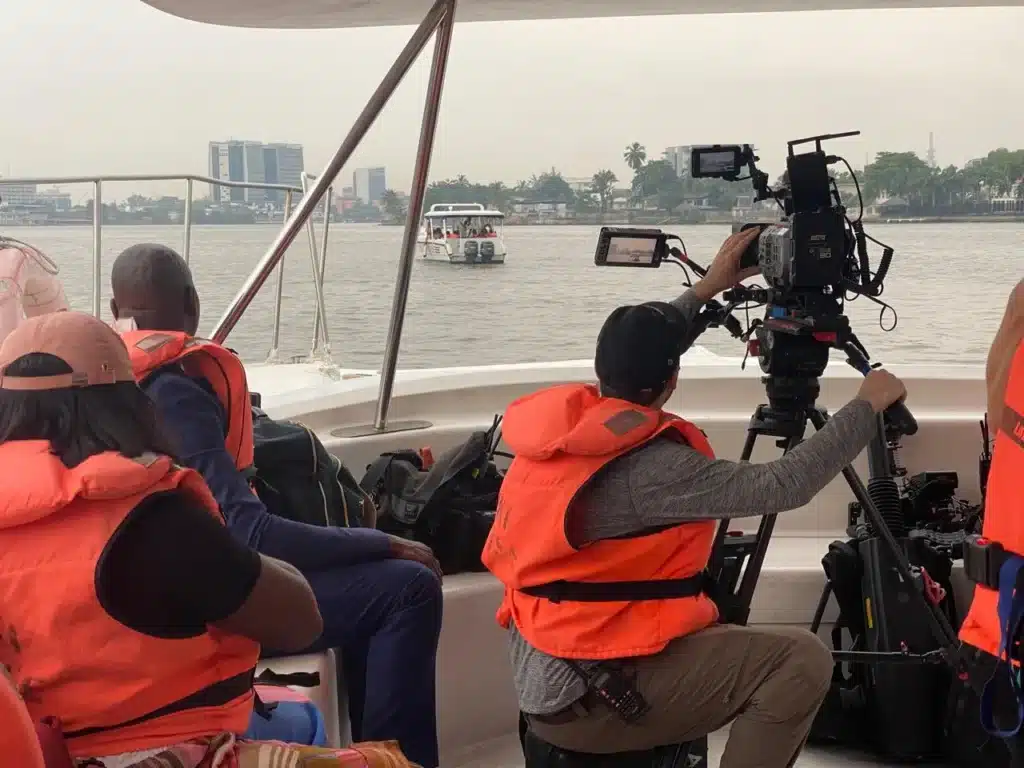


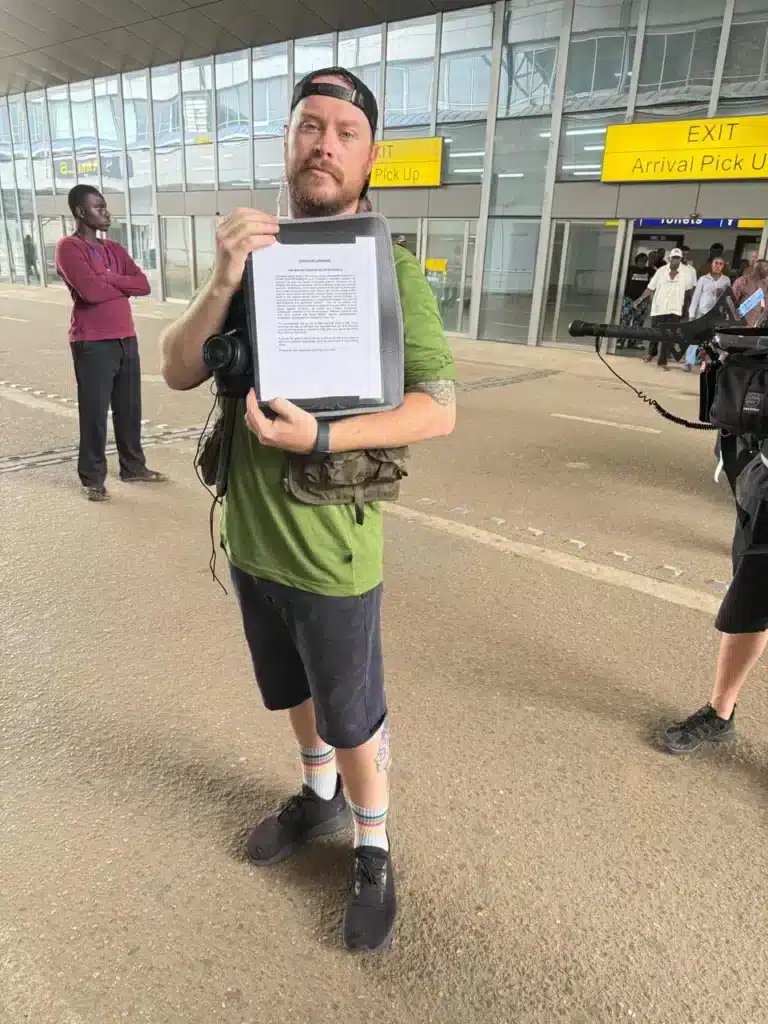
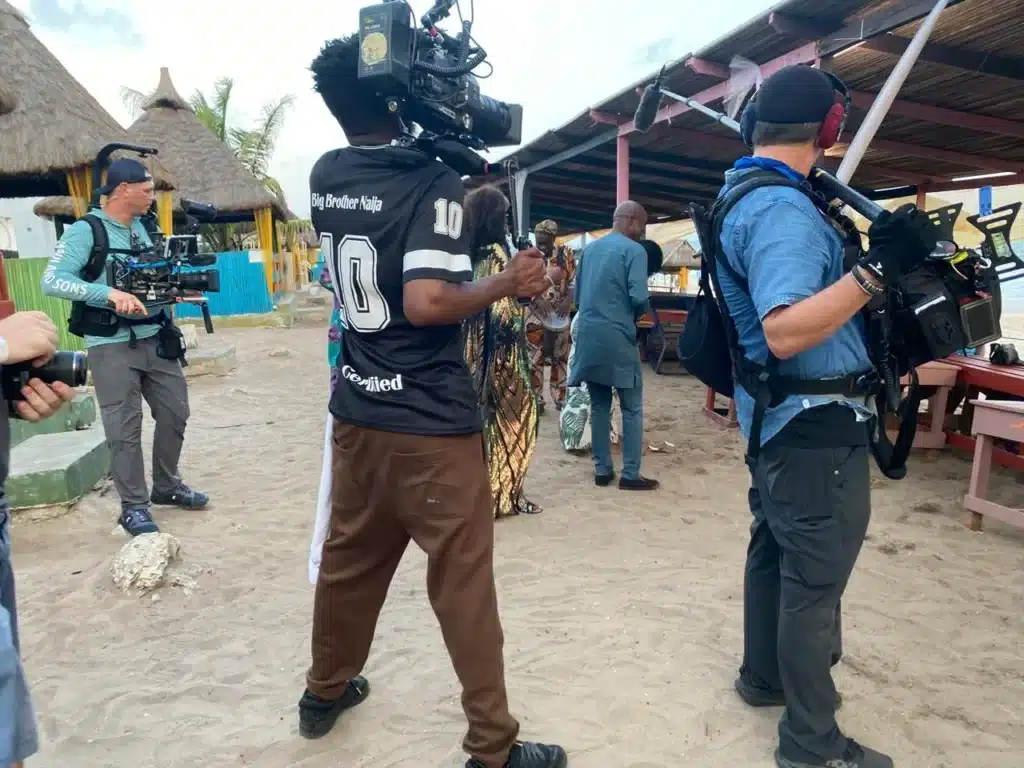
This article was written by Zandri Troskie-Naudé using verified information from relevant national authorities and regional production professionals, the filming environment reflects local regulatory oversight, location authority coordination, and established on-the-ground production capability. With experienced film fixers, comprehensive film production services, and dependable production support, productions operate within a framework built for structured, efficient execution.
Film authorities and industry resources
For producers planning Drone Filming in Bali, the most useful starting points are the official and semi-official sources that govern entry, customs, and airspace rather than relying on travel-blog folklore. Bali may feel like a creative playground, but the production framework sits inside Indonesia’s national immigration, customs, and aviation systems.
- Indonesia eVisa / Directorate General of Immigration for foreign-film visa routes and required supporting documents.
- ATA Carnet / ICC references for Indonesia for current carnet acceptance and equipment category rules.
- Indonesia transport and civil-aviation authorities for drone oversight and airspace compliance context.
- Hoodlum Bali and Indonesia pages for production support context and the internal next-step pathway on your own site.
Those sources are useful for orientation, but the real trick is connecting them into one coherent workflow. In Bali, the difference between “beautiful destination” and “successful shoot” is usually coordination.