
Is Laos an emerging film destination in South East Asia?
The short answer is yes. The longer answer is: selectively.
Laos does not compete with Thailand’s scale or Vietnam’s growing international exposure. It operates differently. Filming in Laos is not built around volume, studio ecosystems, or high-output service production. It is built around landscape, authenticity, and underexposed visual territory.
For productions seeking atmosphere over infrastructure, Laos is increasingly relevant.
For operational support and on-ground coordination, visit our Laos location page
The Film Industry in Laos: Developing, Not Saturated
The film industry in Laos is modest in scale but active in pockets. Independent filmmaking, documentary work, NGO content, and regional collaborations form the backbone of domestic production.
There are no mega studio complexes. No high-frequency international service pipeline. But that absence creates space.
Filming in Laos offers a kind of visual rarity within South East Asia filming destinations. Locations feel untouched. Urban areas remain low-rise and visually distinct. Rural villages have not been reshaped for tourism-driven cinematic repetition.
The film industry in Laos is developing gradually, often through cross-border collaboration with Thailand and Vietnam. That regional proximity matters.
Producing in Laos: A Strategic Choice
Producing in Laos is rarely about convenience. It is about specificity.
If your story requires:
- Mekong river environments
- Mountainous Southeast Asian terrain
- Buddhist temple landscapes without heavy commercialisation
- Quiet colonial architecture
- Rural Southeast Asian authenticity
then filming in Laos becomes strategically attractive.
If your production requires dense crew pools, complex studio builds, or rapid turnaround infrastructure, neighbouring markets may offer greater efficiency.
Producing in Laos is a decision rooted in creative need rather than logistical simplicity.
Infrastructure for Production in Laos
Infrastructure for production in Laos is concentrated primarily in Vientiane and Luang Prabang.
Within these hubs, producers can access:
- Local fixers and production managers
- Translators
- Transport services
- Accommodation networks
- Basic technical support
Outside major towns, infrastructure for production in Laos becomes thinner.
Rural filming logistics Laos require:
- Advanced transport coordination
- Flexible scheduling
- Conservative travel assumptions
- Clear communication systems
This does not eliminate viability. It simply defines scale.
Filming in Laos works best when production size aligns with available infrastructure.
Local Crew Availability Laos
Local crew availability Laos is improving, but depth varies by department.
There are capable production assistants, location coordinators, and documentary-focused professionals. However, larger productions may require importing senior technical heads or partnering regionally.
Producing in Laos often involves hybrid models:
- Core international crew
- Local coordination teams
- Regional technical support
This is common across emerging South East Asia filming destinations and does not represent a barrier, but it does require planning.
Permit Process in Laos: Centralised and Structured
The permit process in Laos typically operates through central government coordination.
While not as automated as mature production hubs, the permit process in Laos is navigable with early engagement and clear documentation.
Productions should allow sufficient lead time and avoid last-minute location changes.
We will not dive deeply into permit mechanics here. The key takeaway is that filming in Laos requires structured planning, not improvisation.
Rural Filming Logistics Laos
The cinematic strength of Laos lies beyond the capital.
Mountain passes, riverbanks, forested landscapes, and small towns provide some of the most compelling visuals in mainland Southeast Asia.
But rural filming logistics Laos demand:
- Weather flexibility
- Road condition awareness
- Travel time buffers
- Medical contingency planning
Laos rewards patient scheduling.
For producers accustomed to highly developed South East Asia filming destinations, the difference is not impossibility. It is pace.
Cost Advantages Laos
Cost advantages Laos are often cited as a reason to consider filming in Laos.
Local labour and location access can be competitively priced relative to Thailand or Singapore.
However, cost advantages Laos must be balanced against:
- Regional travel
- Imported specialist crew
- Extended logistics timelines
Laos can be cost-effective, particularly for mid-scale productions, but only when planning aligns with local realities.
Risk Considerations Laos
Risk considerations Laos are typically operational rather than political.
Primary factors include:
- Rural access challenges
- Weather unpredictability
- Limited infrastructure outside urban hubs
- Medical access in remote areas
These risk considerations Laos do not make the country unviable. They simply require structured risk management for productions.
Filming in Laos is about measured expectation.
Regional Positioning: Mainland South East Asia
Laos sits within a competitive but complementary regional cluster.
Thailand offers scale and mature infrastructure. Vietnam offers rapid growth and expanding international visibility.
Laos offers something different: authenticity with minimal saturation.
Within South East Asia filming destinations, Laos fills a niche rather than competing directly.
Is Laos an Emerging Film Destination?
Laos is emerging in visibility, not volume.
It is emerging through selective international productions.
Through documentary relevance.
Through regional collaboration.
It is not emerging as a high-volume studio hub.
Filming in Laos makes sense when:
- Landscape is central to narrative
- Authenticity outweighs infrastructure
- Schedule allows flexibility
- Production scale is aligned with local capacity
For producers willing to approach producing in Laos strategically rather than opportunistically, the country offers distinct creative advantage.
Regional Competitiveness: Where Laos Fits in South East Asia
When evaluating South East Asia filming destinations, Laos should not be measured against Singapore’s regulatory efficiency or Thailand’s studio depth. It operates in a different lane.
Thailand offers scale and mature line production.
Vietnam offers coastal diversity and rapidly growing international visibility.
Laos offers environmental authenticity and low saturation.
This distinction matters.
Filming in Laos works best for productions seeking landscapes that feel visually unprocessed. Compared to neighbouring markets, Laos remains relatively underexposed in global commercial content. That scarcity can become a strategic advantage for brands and filmmakers looking for originality within the region.
Producing in Laos is rarely about competing with larger hubs. It is about occupying a niche that those hubs no longer offer.
Storytelling Advantage: Why Creative Teams Look at Laos
There is a creative reason the question “Is Laos an emerging film destination?” continues to surface.
Laos provides:
- Dense jungle environments
- River-based communities
- Mountain villages
- Spiritual and Buddhist architectural settings
- Quiet colonial-era urban spaces
The location diversity in Laos is not extreme in geographic contrast, but it is cohesive in tone. For filmmakers seeking continuity of atmosphere rather than constant environmental shifts, filming in Laos offers narrative stability.
In a region where some South East Asia filming destinations have become visually familiar, Laos still feels less catalogued.
That creative distinction influences producing decisions.
Infrastructure Trajectory: Slow Growth, Steady Direction
Infrastructure for production in Laos is evolving gradually rather than explosively.
There are signs of growth:
- Increased regional co-productions
- Cross-border crew collaboration
- Expanding hospitality infrastructure
- Greater familiarity with international filming standards
However, infrastructure for production in Laos remains modest compared to established hubs.
This trajectory suggests that Laos may not experience rapid transformation into a high-volume service destination. Instead, it is likely to develop as a selective production environment.
For producers, that means expectations should be calibrated to progression, not acceleration.
Future Outlook for Filming in Laos
Looking forward, filming in Laos is likely to increase gradually rather than dramatically.
Regional integration across mainland Southeast Asia is strengthening. As Thailand and Vietnam continue to attract international productions, spillover collaboration and location expansion into Laos is natural.
Infrastructure for production in Laos will likely continue improving incrementally. Local crew availability Laos will deepen through exposure and cross-border partnerships.
Laos may never aim to become the largest production hub in the region.
But it may increasingly become the most atmospheric.
For producers who prioritise mood, authenticity, and emerging positioning within South East Asia filming destinations, Laos represents calculated opportunity.
FAQ
Is Laos an emerging film destination in South East Asia?
Laos is emerging selectively rather than at scale. It is gaining visibility for landscape-driven and documentary-style productions, but it does not yet operate as a high-volume service hub like Thailand. Its appeal lies in authenticity and low saturation rather than studio infrastructure.
How developed is the film industry in Laos?
The film industry in Laos is modest but active. It supports independent projects, documentaries, and regional collaborations. While technical depth is improving, larger productions often supplement local teams with regional crew support.
What are the main production challenges in Laos?
Production challenges in Laos are primarily logistical rather than political. These may include rural access limitations, smaller technical rental pools, and infrastructure gaps outside major urban centres. Proper scheduling and local coordination mitigate most concerns.
Is there sufficient local crew availability in Laos?
Local crew availability Laos is growing, particularly in coordination, translation, and production support roles. For specialised technical departments, hybrid crew models combining local and regional professionals are often most effective.
How does filming in Laos compare to Thailand or Vietnam?
Compared to neighbouring South East Asia filming destinations, Laos offers less infrastructure but more underexposed landscapes. Thailand provides mature studio ecosystems. Vietnam offers expanding international visibility. Laos offers atmosphere and authenticity.
What types of productions are best suited to filming in Laos?
Filming in Laos is particularly suited to projects requiring natural environments, Mekong river settings, rural Southeast Asian backdrops, or culturally specific storytelling. It is ideal when the environment is central to the narrative.
Filming in Laos is not about speed. It is about atmosphere.
It is not about scale. It is about texture.
The film industry in Laos is developing steadily. Infrastructure for production in Laos is expanding incrementally. Regional integration within mainland Southeast Asia is strengthening.
Laos is not a replacement for larger production hubs. It is a deliberate choice.
Explore operational capabilities and local coordination support here: Laos country page
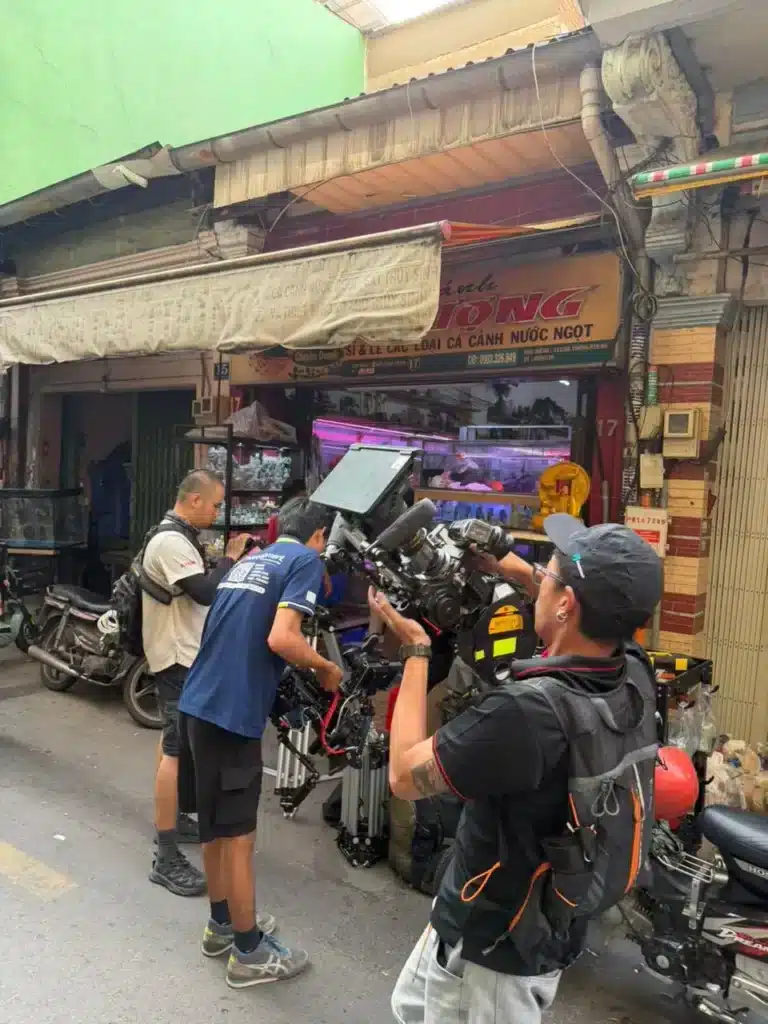
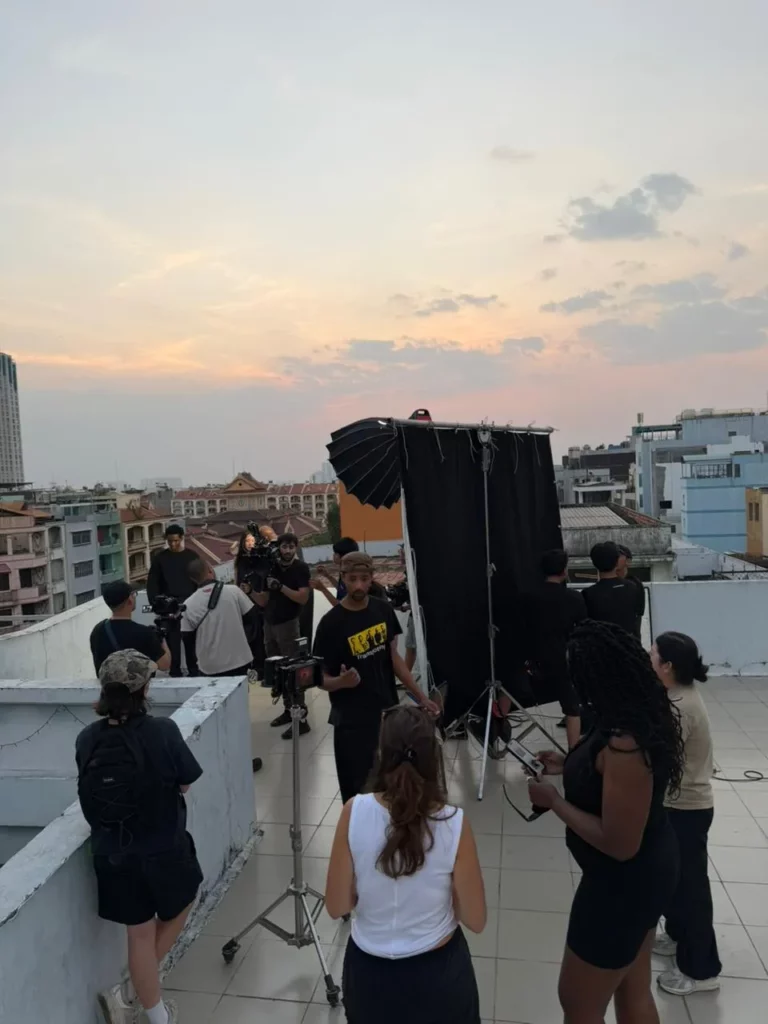
Previous Work We’ve done


This article was written by Zandri Troskie-Naudé using verified information from relevant national authorities and regional production professionals, the filming environment reflects local regulatory oversight, location authority coordination, and established on-the-ground production capability. With experienced film fixers, comprehensive film production services, and dependable production support, productions operate within a framework built for structured, efficient execution.
Film Authorities & Key Regulatory Bodies
Filming in Laos operates through a centralised government structure rather than a fragmented regional system. While the framework is not as digitised as some neighbouring markets, it is formal and coordinated.
Ministry of Information, Culture and Tourism (MICT)
The primary government body overseeing film, media, and cultural activity in Laos. Most filming approvals and coordination for foreign productions are routed through this ministry.
Official site: http://www.mict.gov.la/
Department of Cinema (under MICT)
Responsible for matters relating to film production, review, and facilitation. International productions typically engage through this department as part of the permit process in Laos.
Provincial Information, Culture and Tourism Offices
When filming outside Vientiane, provincial offices may be involved in coordinating local-level permissions, particularly for heritage sites or culturally sensitive locations.
Local Administrative Authorities
District and village authorities may also be consulted for rural filming logistics Laos, especially where community engagement is required.
Because the permit process in Laos is centrally influenced but locally implemented, early engagement with the appropriate ministry and experienced local coordination remains essential for smooth execution.