- A local fixer must be present on set at all times
- The state may provide a local escort at no cost
- Additional security is recommended for mountain or desert filming locations
Algiers
Algiers, Oran, Constantine, Ghardaïa, Timimoun, Tamanrasset, Annaba, Sétif
Arabic (Darja), Tamazight, French widely used in business and production
Algerian Dinar (DZD)
Hot & Humid
No vaccination certificates are required for entry to Algeria, though standard travel vaccinations are recommended.
Visa applications must be submitted through the Algerian embassy or consulate covering the applicant's country of residence. There is no e-Visa or visa-on-arrival route for Algeria, and requirements vary by nationality, so each crew member's route should be confirmed individually.
Official reference: Ministry of Foreign Affairs — https://www.mfa.gov.dz/
International film crews must obtain accreditation before filming. Accreditation is generally processed alongside visa and filming permit procedures.
Film permits are typically issued through:
Private locations are negotiated directly with property owners. The local fixer or production partner coordinates negotiations and secures permissions.
Costs vary depending on:
Fees are negotiated directly with property owners.
Importation of foreign drones is strictly prohibited
Algerian Civil Aviation Authority (CAA)
Case-by-case upon request.
Quoted upon request
Algeria accepts ATA Carnets for temporary importation of film equipment.
Algerian Customs Authority.
Algeria is generally considered safe for filming. Security is typically not required for urban locations.
Algeria's position is worth weighing against its neighbours while a schedule is still flexible: Morocco runs a 30% uncapped cash rebate and Tunisia operates a VAT-exemption framework, so a North African project that can move locations may find a materially different cost base next door. Our film incentives hub sets out what each territory currently offers.
Fill in our client brief and we’ll get back to you with everything you need to start filming in this region.












Branded Content Production in North Africa requires more than good creative direction. It…
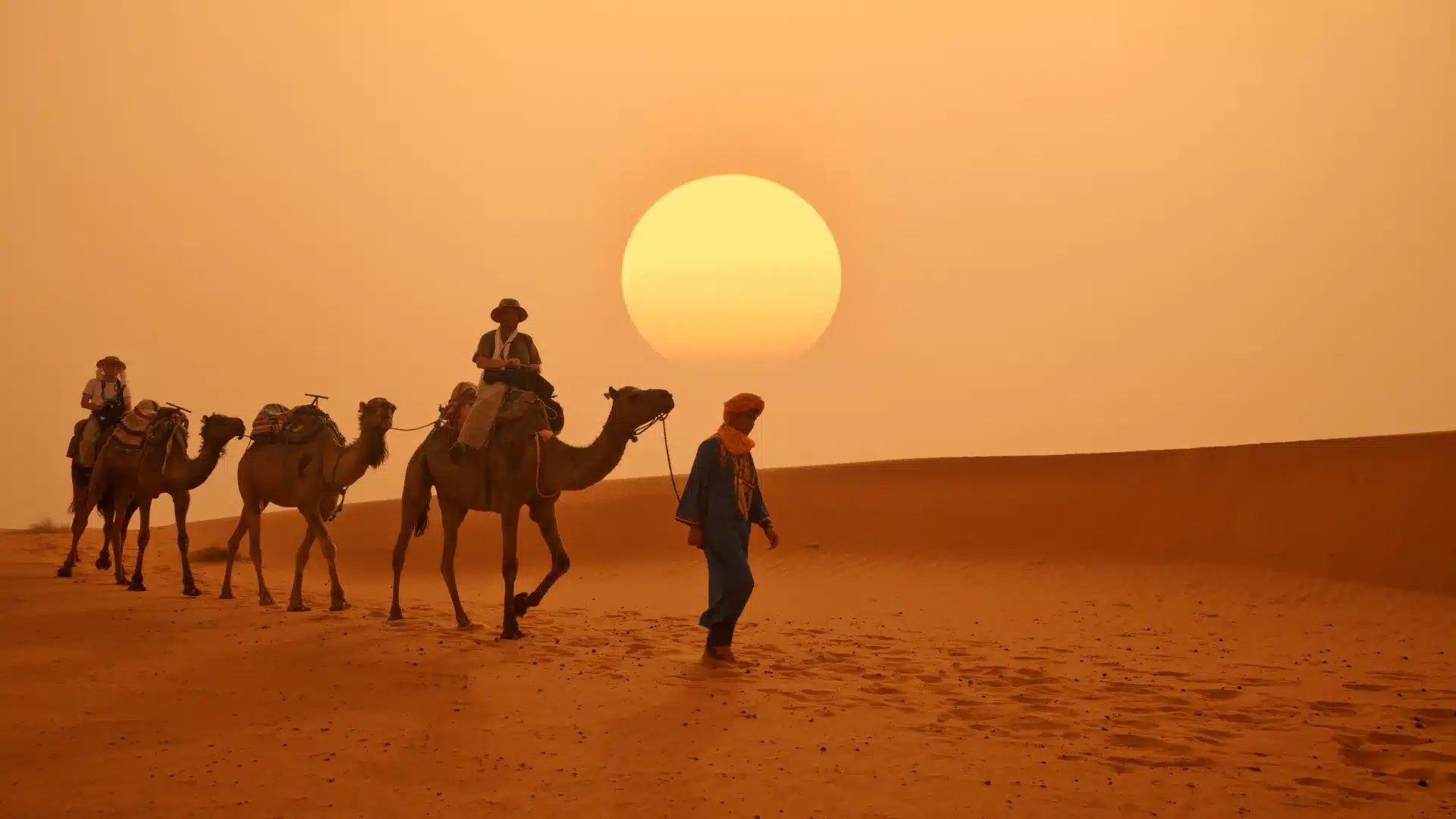
For centuries, North Africa has captured the imagination of explorers, artists, and storytellers….
For producers, broadcasters, equipment rental houses, and logistics coordinators, temporarily importing film equipment…
Algeria is one of North Africa’s most visually powerful filming destinations, offering Mediterranean cities, Ottoman and French colonial architecture, Roman ruins, desert towns, mountain landscapes, Saharan dunes, kasbahs, coastlines and vast remote interiors. For documentaries, commercials, travel campaigns, factual television, branded content, video production and desert-based productions, filming in Algeria gives international crews access to scale, history and cinematic geography that few countries can match.
Hoodlum is a film fixer in Algeria and provides film production services in Algeria for documentaries, commercials, travel campaigns, factual television and desert-based productions across Algiers, Oran, Constantine, Ghardaïa, Timimoun, Tamanrasset, Djanet, the Sahara, heritage sites and historic urban locations. Our team manages visa planning guidance, temporary press accreditation, Ministry of Culture liaison, filming permit coordination, local fixer support, location scouting, private location access, Carnet ATA customs planning, transit agent coordination, drone feasibility guidance, translator support, desert logistics, security planning and full on-ground production management.
Algeria is a highly regulated filming environment. Productions should plan early for visas, accreditation, film permits, equipment customs clearance, location approvals, local authority coordination and security requirements. Drones are strictly restricted, desert filming requires additional logistics, and filming in sensitive areas such as military zones, borders, government facilities, airports, ports and infrastructure locations requires special authorisation.
For productions that want to shoot in Algeria for North African city texture, Sahara landscapes, cultural heritage and large-scale desert visuals, Algeria can be an exceptional production destination when approvals and local coordination are handled well in advance.
Algeria works well for productions that need desert scale, historic architecture, Mediterranean urban settings, mountain regions and North African cultural context. The country offers a rare combination of coastline, cities, Roman ruins, oases, desert roads and Saharan landscapes.
The destination is especially suitable for:
Algiers offers white city architecture, the Casbah, Mediterranean light, streets, ports, government-adjacent areas and urban production value. Oran provides coastal city visuals and cultural texture. Constantine brings dramatic bridges, cliffs and historic urban landscapes. Ghardaïa and Timimoun offer desert-town architecture and oasis visuals. Tamanrasset, Djanet and the Sahara provide remote landscapes, mountains, dunes and immense visual scale.
The strength of Algeria is range. A production can move from Mediterranean streets to deep desert worlds, but the approval process, transport plan and security structure must be built carefully.
Algeria has a Mediterranean climate along the northern coast and a desert climate across southern regions. Choosing the right filming window is important, especially for desert productions.
Spring, from March to May, and autumn, from September to November, are generally the best filming periods. These months offer milder temperatures and more stable weather conditions.
Productions should plan around:
Summer, from June to August, can be extremely hot, particularly in desert regions where temperatures may exceed 40°C. Winter is generally mild on the coast, but mountain areas can become cold and may experience snow.
Hoodlum helps productions plan the right filming window for the desired look, locations and crew safety requirements.
It is recommended that visas are applied for and approved before the film permit application begins. Visa applications can sometimes take longer than one month, so productions should not book travel before confirming the correct visa route.
Typical film crew visa planning for Algeria should allow approximately 4 weeks, although timing may vary depending on nationality, embassy process and supporting documentation.
Required information and costs are confirmed through the relevant visa application route; see the Algerian Ministry of Foreign Affairs entry visa guidance. Vaccination certificates or PCR tests are not currently listed as mandatory in the supplied production guidance, but health documentation is recommended.
Visa planning should be treated as the first step, not an afterthought. Entry approval does not authorise filming, and film permit processing may depend on confirmed crew details.
Hoodlum helps productions sequence visa planning, accreditation and film permit submissions so the approval process does not become a tangled carpet of dates.
Media accreditation is required for international crews filming in Algeria. Temporary press accreditation is usually handled through the Algerian Consulate, and in some cases the Ministry of Culture may also be involved.
Typical accreditation documentation may include:
Accreditation timing is approximately 4 weeks. Costs are generally aligned with visa fees according to the supplied guidance.
This process should begin early, especially for documentary filming, factual productions, public filming, heritage sites, desert routes or sensitive subject matter.
Hoodlum helps productions prepare accreditation documentation and align it with visa, permit and customs planning.
Film permits in Algeria are usually issued through temporary press accreditation via the Algerian Consulate. In some cases, a Ministry of Culture filming authorisation (autorisation de tournage) may also be required, particularly for cultural, heritage or special-location filming.
Filming permit processing in Algeria generally takes 4 to 8 weeks.
Typical film permit documentation may include:
There is usually no cost for the film permit unless filming takes place at registered heritage sites or other special locations. Heritage sites, mosques, monuments, infrastructure locations, public areas, desert regions and protected or sensitive locations may require additional approvals.
Hoodlum helps productions prepare permit submissions with clear location details, crew roles and realistic schedules so authorities can review the project properly.
The main Algeria filming locations for international crews are Algiers, Oran, Constantine, the desert towns of Ghardaïa and Timimoun, and the Sahara, from Tamanrasset to Djanet and Tassili n’Ajjer. Hoodlum provides location scouting in Algeria and builds location decks around your creative brief, approvals and travel distances.
Algiers is the main production base and one of the strongest urban filming locations in the country. The city offers Mediterranean views, white architecture, the Casbah, streets, markets, stairways, government-adjacent areas, coastal roads, hotels and controlled interiors.
Useful Algiers filming looks include:
Algiers is useful for documentaries, travel campaigns, commercials, branded content, interviews and historical context.
Public filming may require coordination with local authorities. Government buildings, police, military personnel, ports and infrastructure should not be filmed without special permission.
As a film fixer in Algiers, Hoodlum helps productions coordinate access, permits, camera crews in Algiers, translators and local movement.
Oran provides coastal city visuals, architecture, cultural texture and Mediterranean-facing production value. It is useful for travel campaigns, documentaries, urban sequences and historical or cultural stories.
Constantine offers one of the most dramatic urban settings in North Africa, with cliffs, bridges, historic streets and strong visual geography. It can support documentaries, travel films, commercials and architecture-led sequences.
Filming in these cities may involve:
Hoodlum’s film fixer in Oran and Constantine helps productions identify what is practical to film and which city locations require additional approvals.
Ghardaïa and Timimoun are valuable for desert-town architecture, oasis visuals, cultural heritage, roads, markets and historic urban texture. These locations are especially strong for travel campaigns, documentaries, branded content and cultural programming.
Desert-town filming may require:
These locations should be approached with respect for local customs, architecture and community life. Hoodlum helps productions plan access, permissions and community coordination.
The Sahara is one of Algeria’s major production strengths. Filming in the Algerian Sahara offers dunes, mountains, desert roads, oases, rock formations, vast skies and extraordinary scale. Filming in Djanet and Tassili n’Ajjer, a UNESCO World Heritage Site known for its sandstone landscapes and prehistoric rock art, adds some of the most striking desert visuals in North Africa, but heritage and access approvals must be confirmed early.
Sahara filming requires serious logistics, including:
Desert filming is not just a location move. It is a small expedition wearing a call sheet. Productions should plan for distance, weather, emergency access, vehicle recovery and crew safety.
Hoodlum helps productions coordinate desert routes, local support, security guidance and practical field logistics.
Filming is not permitted in military areas, border regions or sensitive government facilities without special authorisation.
Additional approval may be required for:
Photography or filming of government buildings, police or military personnel is generally restricted.
Public filming in streets, markets or public squares may require coordination with local authorities. Police assistance or crowd control may be required depending on the scale of the shoot.
Productions should never assume that a visually interesting location is automatically filmable. Hoodlum helps crews identify restricted areas before the schedule is locked.
Filming at mosques, historic monuments and cultural heritage sites may require approval from the Ministry of Culture or site authorities.
Restrictions may apply to:
Heritage and religious locations should be approached with sensitivity and clear permissions. Production teams should avoid treating these locations as ordinary public spaces.
Hoodlum helps crews coordinate cultural and religious site approvals and plan shoots around local rules.
Private location filming is negotiated directly by the fixer with the private owner. This may include homes, hotels, restaurants, offices, farms, courtyards, private rooftops, commercial interiors and other controlled spaces.
Costs are negotiated by the fixer with the private owner and depend on location, duration, crew size, equipment footprint and access requirements.
Written agreements should confirm:
Hoodlum helps productions scout and secure private access and confirm whether additional authority approval is required.
Drones are strictly forbidden for general import and use. Drone services may be offered only under limited conditions and in limited locations, so there is no simple drone permit in Algeria for visiting crews.
Even where drone filming in Algeria is explored, approval is not guaranteed. Applications require a strict and detailed full shot list.
Drone importation is strictly forbidden.
The relevant authority is the Algerian Civil Aviation Authority. Any potential local drone request may require:
Timing and cost are confirmed upon request.
Productions should not build creative treatments around drone shots unless feasibility has been confirmed early. Alternatives such as cranes, elevated positions, rooftops, vehicles, licensed local options or stock footage may be more practical.
Hoodlum helps productions assess whether drone services are possible and avoid planning aerial shots that cannot be approved.
Algeria is a Carnet ATA country. A Carnet ATA is required for temporary import of film equipment.
It is recommended to hire a transit agent because customs handling can be complex and lead times are long.
Typical customs documentation may include:
Clearance is handled through Algerian Customs. Timing is generally 4 to 8 weeks.
Costs include transit agent fees and a recoverable guarantee deposit paid to customs, which is refunded before the return flight.
Productions should plan customs as a major prep item. Equipment should not be shipped or flown in without checking the correct process, guarantee requirements and timing. Where importing a full kit is impractical, ask Hoodlum which film equipment rental options are available locally in Algeria for your shoot.
Hoodlum helps productions coordinate Carnet ATA documentation, transit agent support and customs planning before arrival.
There is currently no national film rebate or incentive programme in Algeria.
Government support may occasionally be available on a case-by-case basis through the Ministry of Culture or other local authorities.
Support may depend on:
Incentive structures and available support can change, so productions should confirm current options during pre-production.
For budgeting, productions should not rely on automatic rebate recovery. Instead, the cost of filming in Algeria should be planned around visas, accreditation, permits, transit agent fees, customs guarantee deposits, local fixer support, security, transport, private locations, translation and desert logistics.
Algeria’s position is worth weighing against its neighbours while a schedule is still flexible: Morocco runs a 30% uncapped cash rebate and Tunisia operates a VAT-exemption framework, so a North African project that can move locations may find a materially different cost base next door. Our film incentives hub sets out what each territory currently offers.
Algeria is generally considered safe for productions working with the correct approvals. Security is not typically required in cities or urban locations. However, it is mandatory to have a local fixer on set at all times.
A local escort may be provided by the state at no cost. General security is advised for mountain and desert filming locations.
Safety planning should consider:
Desert and mountain filming should be treated as specialist logistics. Crews should plan for water, shade, vehicles, medical access and experienced local guidance.
Hoodlum helps productions coordinate fixers, escorts, security advice and route planning.
One approval does not unlock the whole production.
A visa may allow a crew member to enter Algeria, but it does not approve filming. Temporary press accreditation supports production activity, but it does not automatically approve every location. A filming permit may support the shoot, but heritage sites, mosques, government buildings, airports, ports, infrastructure sites and border areas may require additional permissions. A private location agreement may secure property access, but it does not override public authority restrictions. Carnet ATA customs clearance allows equipment entry, but it does not approve where equipment can be used. Drone importation is strictly forbidden unless a limited local arrangement is separately explored and approved.
A complete production plan connects:
Hoodlum keeps these moving parts aligned so the production does not get swallowed by the paperwork dunes before reaching the real ones.
Algeria is a strong choice when a production needs Sahara scale, Mediterranean city visuals, historic architecture, desert towns, cultural heritage, mountain roads and North African production value.
The destination is especially suitable for:
The country may be less suitable for productions that need fast visas, instant film permits, casual drone use, unrestricted public filming or short-notice customs clearance. Those shoots may still be possible, but they require early coordination and experienced local support.
Crews comparing North African options can also look at filming in Morocco and filming in Egypt.
For many international crews, Algeria works best when used for its natural strengths: Algiers, Oran, Constantine, Ghardaïa, Timimoun, Tamanrasset, Djanet, the Sahara and heritage locations.
Common mistakes include:
Most issues are preventable with early paperwork, precise location planning and experienced local coordination.
Hoodlum provides practical support for international crews filming in Algeria, from early planning through shoot execution. As an Algeria film fixer and film production company in Algeria, we work as your local fixer, line producer in Algeria and on-the-ground production partner.
Support may include:
Film production in Algeria requires more than striking cities and desert landscapes. A successful shoot needs visa planning, accreditation, permits, customs preparation, location restrictions, security awareness, drone realism and reliable local support.
Hoodlum helps productions reduce risk, avoid unsupported assumptions and plan the shoot as a practical operation from the first stage of prep.
Vous préparez un tournage en Algérie ? Hoodlum est votre fixeur en Algérie et votre société de production en Algérie : visas, accréditation presse, autorisation de tournage en Algérie auprès du ministère de la Culture, repérage en Algérie, carnet ATA, logistique dans le Sahara et gestion de production sur le terrain. Contactez-nous pour organiser votre tournage.
Yes. International crews need temporary press accreditation, and a filming permit is usually issued through that accreditation via the Algerian Consulate. Heritage sites, mosques and other special locations may need further approval from the Ministry of Culture.
Yes. It is recommended that visas are applied for and approved before the film permit application begins.
Visa applications can take approximately 4 weeks and may sometimes take longer than one month.
Yes. Temporary press accreditation is required.
Accreditation usually takes approximately 4 weeks.
Film permits are handled through the Algerian Consulate for temporary press accreditation and, in some cases, the Ministry of Culture. Hoodlum Algeria office handles this through our film fixer in Algeria.
Film permits generally take 4 to 8 weeks.
The film permit itself is usually free unless you film at registered heritage sites or other special locations. The main costs of filming in Algeria are visas, accreditation, transit agent fees, a recoverable customs guarantee deposit, local fixer support, private location fees, transport, translation, security and desert logistics. Hoodlum provides a full quote once your locations and crew size are confirmed.
Drone use is strictly restricted. Drone importation is forbidden, and any limited local drone service requires a detailed shot list and cannot be guaranteed.
Yes. Algeria is a Carnet ATA country.
No. There is currently no national film rebate or incentive programme in Algeria. Government support may occasionally be available case by case through the Ministry of Culture or local authorities.
The country is generally safe with proper approvals. A local fixer must be on set at all times, and security is advised for mountain and desert locations.
Planning to shoot in Algeria? Contact Hoodlum, your local film fixer in Algeria, for visa planning, temporary press accreditation, film permits, Ministry of Culture liaison, local fixers, location scouting, Sahara logistics, Carnet ATA customs planning, transit agent coordination, drone feasibility guidance, translator support, security planning and full on-ground production management. You can also view the Hoodlum Film Fixers Algeria Google Business Profile for local production details.