















Grenada: The Ultimate Guide for International Crews
FILM FIXER GRENADA — HOODLUM PRODUCTION SERVICES
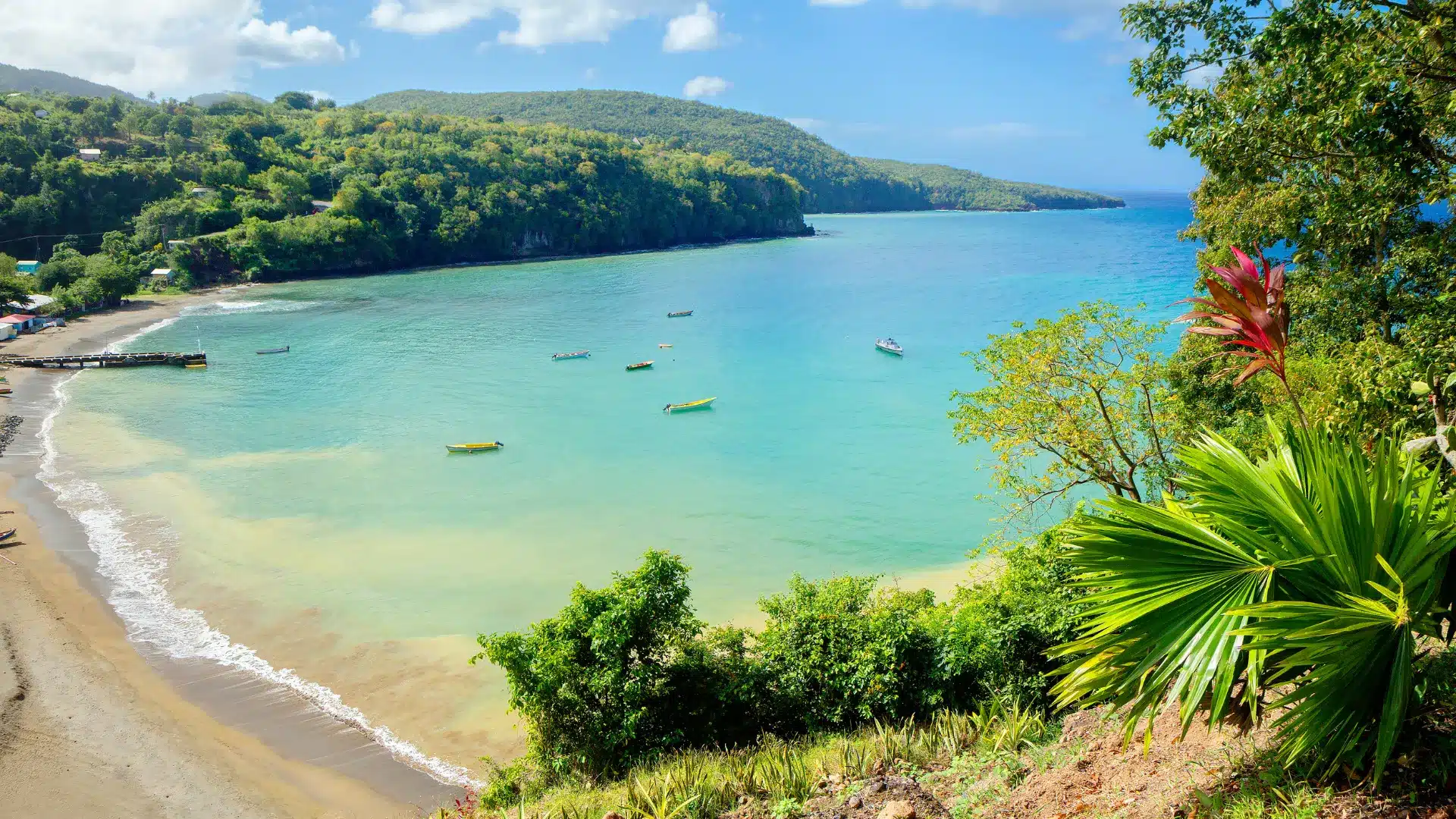
Hoodlum is the expert film fixer Grenada international productions rely on for location scouting, permit management, logistics coordination, local crew and talent connections, equipment customs clearance and end-to-end production support across one of the Eastern Caribbean’s most visually compelling filming territories. Known as the Spice Isle, Grenada combines lush rainforest interiors, volcanic crater lakes, working nutmeg and cocoa estates, pristine beaches, colourful harbour towns and some of the Caribbean’s most dramatic underwater environments — including the world-famous Underwater Sculpture Park off Grand Anse. That range of landscapes makes Grenada a genuinely versatile production destination, capable of supporting luxury travel campaigns, branded content, conservation documentaries, reality television, still photography and high-end scripted drama.
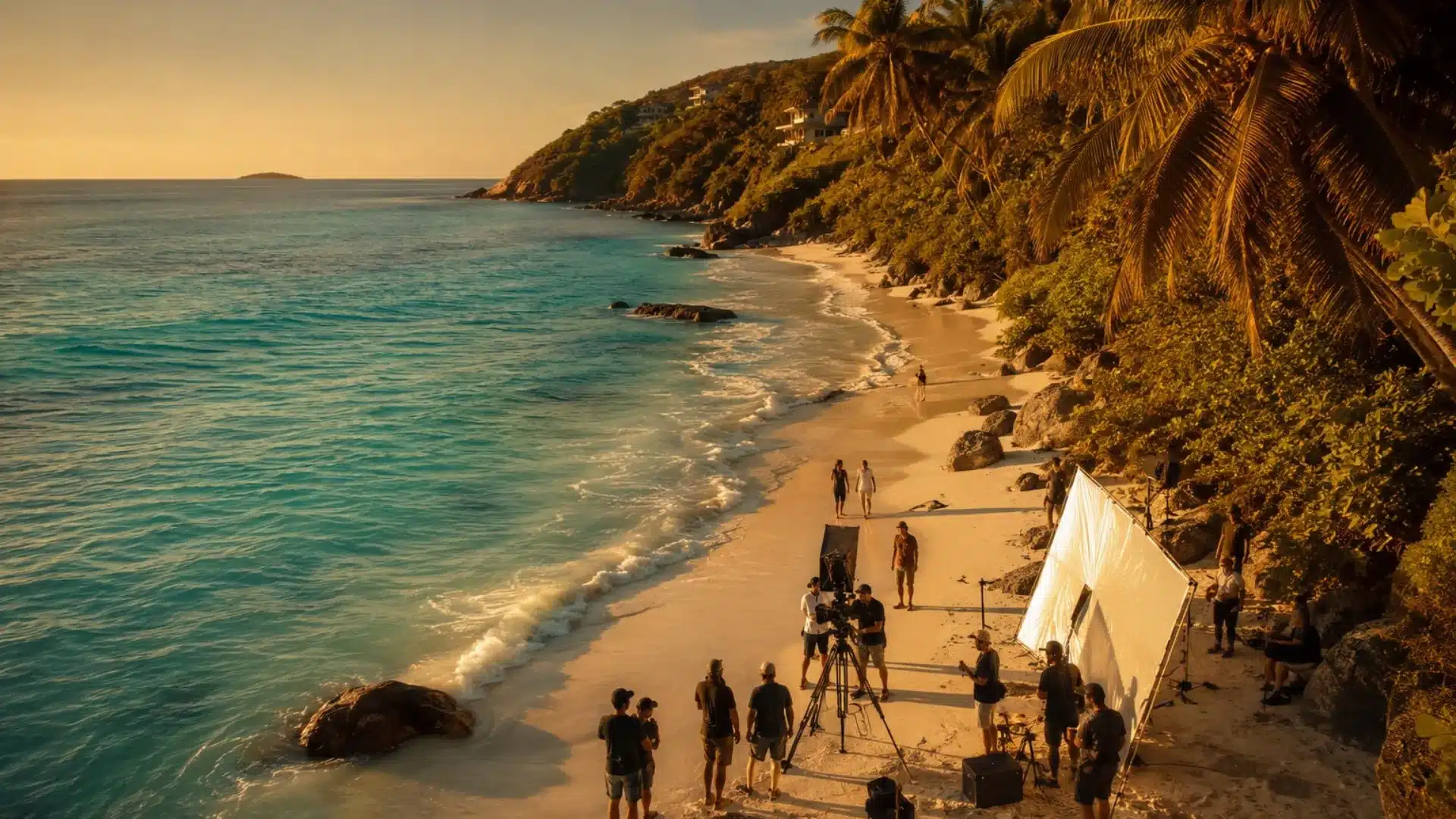
Hoodlum facilitates international productions of every scale across Grenada’s main island, Carriacou and Petite Martinique, managing every layer of local complexity so your crew can focus entirely on the creative work.
FILM FIXER GRENADA — WHY IT WORKS FOR PRODUCTIONS
Grenada is a film-friendly destination with a clear permitting process, English as the official language, an experienced local production community and a tropical climate that offers reliable filming conditions for most of the year. The Eastern Caribbean Dollar is the local currency, though US Dollars are widely accepted, which simplifies budget management for international productions.
Strong production use cases include travel and tourism campaigns, luxury resort and villa content, underwater and marine documentaries, conservation films, food and agriculture content using Grenada’s working spice plantations, reality television, factual entertainment, branded social content, commercial photography and small to medium international drama productions.
Grenada’s main production bases are St. George’s, the capital, with its distinctive horseshoe harbour and French colonial architecture, and Grand Anse, home to one of the Caribbean’s most photographed beaches. Beyond those primary locations, Gouyave, Grenville, Sauteurs and Victoria each offer distinct visual character — fishing communities, market towns, hillside vistas and working waterfronts that give productions authentic Caribbean texture without the congestion of larger island destinations.
PRODUCTIONS WE HAVE SUPPORTED IN GRENADA
Hoodlum has supported international productions across Grenada and the wider Caribbean, providing on-the-ground film fixer services from early research through to execution.
The Fortune Hotel — Fixer Hoodlum supported The Fortune Hotel as a local fixer, coordinating location access, permits and logistics across the Caribbean production. We managed the on-the-ground plan to support the production’s requirements across Grenada’s diverse locations and hospitality environments.
Below Deck — Production Assistant, Bravo Hoodlum provided production assistant support on Below Deck, Bravo’s long-running reality series, coordinating local logistics, marine access and supplier coordination to support the production’s fast-moving schedule across Caribbean waters.
Love Link Caribbean — Production Supervisor Hoodlum served as production supervisor on Love Link Caribbean, overseeing logistics, local crew coordination, location management and on-the-ground execution across the Caribbean production.
BEST TIME OF YEAR TO FILM IN GRENADA
Grenada’s tropical climate makes it an attractive filming destination year-round, but the dry season from December to June is the most reliable period for exterior work. During these months the weather is generally sunny and calm, sea conditions are more predictable and the risk of disruption from tropical weather is significantly lower.
Hurricane season runs from June to November, with the peak risk period falling between August and October. Productions scheduling exterior days, boat sequences, beach work, drone shoots or multi-location movement should avoid the peak hurricane window or build substantial contingency into the schedule. Grenada sits at the southern end of the Eastern Caribbean hurricane belt, which gives it slightly more protection than islands further north, but the risk is real and should not be ignored in production planning.
Grenada’s dry season also aligns with the island’s most vibrant production calendar — the Grenada Carnival, the Carriacou Regatta and the Grenada Chocolate Festival all fall within the broader dry and shoulder season window, offering productions potential access to authentic cultural content and event-based visual opportunities.
Climate: Tropical, with a dry season running December to June and a wet season from July to November. Hurricane season peaks August to October. Grenada sits at the southern end of the Eastern Caribbean hurricane belt, which gives it marginally more protection than islands further north — but this should not be treated as immunity. The dry season is the most reliable window for exterior filming, boat and underwater work, drone operations and multi-location movement. January to May is the sweet spot: consistent sun, calm seas and reliable light for beach and resort content. The Grenada Carnival (August) and Carriacou Regatta (August) fall within the wet season and require built-in contingency for any production scheduling around them.
VISA AND ENTRY REQUIREMENTS FOR FILM CREWS
Many nationalities enter Grenada visa-free for short stays, including citizens of the UK, US, Canada, EU member states and most Commonwealth countries. Visa-required nationalities must apply in advance through the relevant consular process.
Typical entry documentation includes a valid passport, completed visa application where required, proof of accommodation, return or onward travel confirmation, proof of funds and a production invitation or support letter where applicable.
For professional filming, crews should not assume ordinary visitor entry covers paid production activity. Work permissions depend on role, nationality, stay length and whether work is paid locally. Visa-required crew should allow two to four weeks for processing. Productions with large international crew lists should begin immigration coordination six to eight weeks before the production start date.
Hoodlum helps crews prepare supporting documentation so immigration planning, entry requirements and production paperwork stay aligned from the outset.
UNDERWATER SCULPTURE PARK FILMING IN GRENADA
The Underwater Sculpture Park The Molinere Beauséjour Underwater Sculpture Park, off Grand Anse beach, is one of Grenada’s most distinctive and internationally recognised filming locations — a collection of submerged human sculptures by artist Jason deCaires Taylor that has featured in numerous international travel and nature productions. It sits within a marine protected area.
Filming at the Sculpture Park requires permission from the Grenada Tourism Authority and, depending on the nature of the shoot, coordination with the Grenada Fund for Conservation or the Fisheries Division. The site is accessible by dive or snorkel — equipment must be hand-carried by dive. Productions should also carry appropriate marine park dive insurance and confirm current site conditions (visibility, marine activity, coral health considerations) before scheduling underwater shooting days.
The park is a genuine production asset and the authorities are generally cooperative with serious productions — the key is treating the application seriously, providing a clear brief on what will be filmed and how, and not arriving with a camera without prior coordination.
CARRIACOU AND PETITE MARTINIQUE
Filming on Carriacou and Petite Martinique Grenada’s sister islands — Carriacou (approximately 34km north of the main island) and tiny Petite Martinique — offer a production environment that is quieter, less developed and visually distinct from the main island. Carriacou in particular has a strong boatbuilding tradition, working fishing communities, the Hillsborough waterfront and a Carnival that is one of the most authentic in the Eastern Caribbean.
Access is by ferry from St. George’s (approximately 90 minutes on the Osprey ferry) or by small aircraft. Equipment freight must travel by ferry — plan accordingly. Accommodation on Carriacou is limited; for productions with larger crews, the main island remains the overnight base with day transfers. Filming on Carriacou and Petite Martinique falls under the same Film Commission jurisdiction as the main island, but additional lead time should be built in for location access on the outer islands.
LOCAL CREW AND EQUIPMENT IN GRENADA
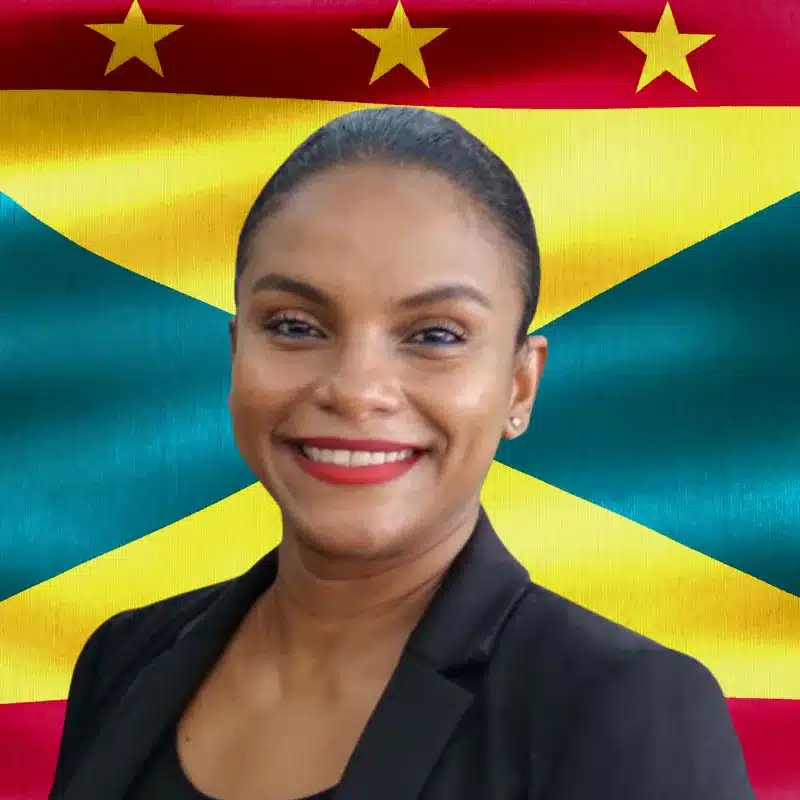
Local Crew and Equipment Grenada has a developing local production community anchored by experience in reality television and travel content — Marica’s credits on The Fortune Hotel and Below Deck reflect the kind of professional production experience available on the ground. Camera operators, production assistants, drivers, location managers and support crew with international credits are available. For specialist roles — DoPs with specific camera system experience, gaffers with large-rig experience, sound recordists for drama production — plan to bring from outside the island.
Equipment rental is limited. Productions should bring all specialist camera, lighting, grip and sound equipment. Dive equipment for underwater shoots is available through local dive operators — confirm availability and suitability for production use in advance rather than assuming dive-shop stock will meet broadcast specification. Basic production supplies and transport vehicles are available locally.
INTERNATIONAL CREW ACCREDITATION AND WORK PERMISSIONS
The Grenada Tourism Authority, in conjunction with the Grenada Film Commission, issues filming permits and crew accreditation to international productions. Crew accreditation requires a valid passport, completed application form, recent passport-sized photographs, proof of travel insurance and a letter of introduction from the production company.
Typical production documentation may include a production company profile, project synopsis or treatment, crew and cast list, passport copies, shooting schedule, location list, equipment list and insurance details.
Documentation should be consistent across all applications — the crew list used for accreditation should match the crew list used for the filming permit, which should match the equipment list used for customs clearance. Inconsistencies between documents are among the most common causes of delays. As the film fixer Grenada productions depend on for permit coordination, Hoodlum keeps those documents aligned across every approval stream.
FILM FIXER GRENADA — PERMITS AND PRODUCTION APPROVAL
The Grenada Film Commission issues the general filming permit, which requires a completed application form, script or storyboard, location list, shooting schedule, equipment list, crew list, proof of insurance and payment of the permit fee. Permits are coordinated alongside the Grenada Tourism Authority and relevant government departments depending on the locations and activity involved.
Productions should allow two to four weeks for general permit approval. Shoots involving protected natural areas, marine environments, national parks, public roads or government-owned sites may require additional approvals and longer lead times.
A clear permit application explains what is being filmed, where the crew will be, how many people are involved, what equipment will be used and whether public access, marine environments or conservation areas may be affected. As the film fixer Grenada authorities already work with, Hoodlum translates the creative brief into practical information that stakeholders can review and approve efficiently.
PRIVATE LOCATIONS, ESTATES AND MARINE SITES
Private-property filming requires owner or manager permission. Resorts, beaches, working plantations, private estates, dive sites and marine areas may require separate written agreements, particularly where the shoot involves crew, equipment, talent, vehicles, drones, boats or environmental impact.
Grenada’s working nutmeg, cocoa and spice estates are among the island’s most distinctive production environments — locations that require early engagement with estate owners and clear agreements around crew access, equipment movement and restoration responsibilities. Hoodlum facilitates communication with property owners, negotiates location fees and arranges the logistics, permits and documentation required for filming at private locations across Grenada, Carriacou and Petite Martinique.
A strong location agreement should confirm approved filming areas, shoot dates and hours, crew size, equipment access, parking and loading arrangements, drone use where relevant, privacy rules, fees and payment terms, cancellation terms and restoration responsibilities.
PRODUCTION TIMELINE — WHAT TO PLAN FOR
Production schedules depend on concrete numbers. Here is what international crews should build into their timelines when planning a shoot in Grenada. All approval streams should run in parallel — waiting for one process before starting another adds weeks to pre-production unnecessarily.
General filming permission through the Grenada Film Commission takes 2 to 3 weeks from submission of a complete application. Incomplete submissions restart the clock — getting the documentation right first time matters more than submitting early.
Marine and protected area permits require a minimum of 3 to 4 weeks and should be treated as the longest lead item in the approval chain. If your shoot involves the Underwater Sculpture Park, marine reserves or protected coastal zones, submit those applications before any other local approval.
Drone authorisation through the Grenada Civil Aviation Authority and the Ministry of National Security typically takes 2 to 3 weeks for standard locations. Sensitive areas, populated beaches, airport-adjacent zones and marine environments require additional review time — allow 4 to 5 weeks for those applications and submit alongside the main filming permit.
Equipment customs clearance through Maurice Bishop International Airport can process same day for carried baggage with a complete ATA Carnet and serialised equipment list. Freight shipments require additional lead time for broker coordination, inspection and release — allow a minimum of 5 to 7 working days.
Visa-free nationalities require no advance processing for short stays. Visa-required nationalities should allow 3 to 4 weeks. Where work authorisation is required, allow 4 to 6 weeks and begin that process immediately upon confirming the production.
As a working rule, shoots involving marine locations, drone work and an international crew requiring visas should allow a minimum of 8 weeks pre-production lead time. As the film fixer Grenada productions depend on for parallel processing, Hoodlum runs all approval streams simultaneously to compress that timeline where possible.
DRONE FILMING REQUIREMENTS IN GRENADA
Commercial drone operations in Grenada require permission from the Grenada Civil Aviation Authority and the Ministry of National Security. Drone approval should be handled separately from general filming permission — location access and filming permits do not automatically authorise drone flights.
Typical drone documentation includes proof of drone registration, pilot certification, liability insurance, a detailed flight plan with proposed locations, dates and times, take-off and landing areas and nearby sensitive zones.
Productions should allow 2 to 3 weeks for standard drone applications and 4 to 5 weeks for sensitive areas including marine parks, populated beaches, the Underwater Sculpture Park, airport-adjacent zones and protected natural areas. Drone equipment should be declared and supported by customs documentation on arrival. Hoodlum aligns drone permissions with location plans, customs preparation and the wider shoot schedule as part of the film fixer Grenada service.
EQUIPMENT CUSTOMS CLEARANCE
Grenada is an ATA Carnet country. Film crews must obtain an ATA Carnet prior to arrival and present the carnet, a valid passport and a completed Customs Declaration Form to customs officials at Maurice Bishop International Airport upon entry.
Typical customs documentation includes the ATA Carnet, a full equipment list with serial numbers and declared values, proof of ownership, a production support letter and permit documentation.
A clean, consistent equipment list is the foundation of smooth customs clearance. Cameras, lenses, drones, batteries, lighting, grip, audio gear and specialist items should all be itemised with serial numbers and declared values before travel. Same-day clearance is achievable for carried baggage with complete documentation. Freight shipments require additional lead time and broker coordination. Hoodlum helps productions prepare customs documents so gear movement supports the shoot schedule rather than delaying it.
FILM REBATES AND TAX INCENTIVES
Grenada offers one of the Caribbean’s most competitive film incentive programmes, with a rebate of up to 40% of qualifying production expenditures. This is a significant financial benefit for international productions and should be factored into early budget planning.
Before budgeting the rebate, productions should confirm which expenditures qualify, which authority administers the programme, whether approval is needed before spending begins, whether local suppliers must be used to qualify, and whether the rebate applies to the specific production type and activity. Written confirmation of eligibility should be obtained before committing budget on the basis of the incentive.
As the film fixer Grenada productions work with for incentive coordination, Hoodlum helps productions ask the right questions early so the budget is built on confirmed information rather than assumptions.
KEY FILMING LOCATIONS — GRENADA
Grenada’s compact geography means a crew can move between dramatically different environments in a single day. Each location carries its own access conditions, permit requirements and production considerations.
Grand Anse Beach is Grenada’s most recognisable location — a two-mile arc of white sand backed by calm Caribbean waters and resort infrastructure. Strong for travel campaigns, lifestyle content, beach commercials and tourism productions. Resort and private beach agreements required for commercial shoots.
St. George’s Harbour offers one of the Caribbean’s most photographed harbour settings — a horseshoe bay flanked by Georgian and French colonial architecture, the famous Carenage waterfront and the hillside Fort George. Strong for travel documentaries, period-adjacent drama, branded content and interview setups.
The Underwater Sculpture Park, Moliniere Bay is one of the world’s most distinctive underwater filming locations — a collection of permanent sculptures submerged on the reef off Grand Anse, combining marine conservation and visual art in a single shootable environment. Marine permit required. Strong for conservation documentaries, luxury travel campaigns and underwater commercial work.
Grand Etang National Park covers Grenada’s volcanic interior — crater lake, montane rainforest, hiking trails and endemic wildlife including the Mona monkey. Strong for nature documentaries, conservation content and adventure travel productions. National park permit required.
Working spice and cocoa estates across Grenada’s interior provide authentic agricultural production environments unique in the Caribbean — nutmeg drying facilities, cocoa fermentation houses and plantation landscapes that give food, travel and documentary productions genuine local texture unavailable elsewhere in the region.
Carriacou and Petite Martinique offer quieter, less developed island environments for productions needing an unspoiled outer island look. Carriacou’s traditional wooden boat-building industry at Windward is one of the Caribbean’s most distinctive documentary locations. Inter-island logistics require additional planning — both islands are accessible by ferry from St. George’s or by small aircraft.
EQUIPMENT PLANNING — TROPICAL AND MARINE CONDITIONS
Grenada’s tropical environment creates specific equipment risks that productions should plan for before gear leaves home base.
Salt air and humidity affect exposed metal and electronic components rapidly. All camera bodies, lenses, audio gear and electronic equipment should travel in sealed cases with silica gel packs. Equipment stored overnight in non-air-conditioned environments is at particular risk — plan climate-controlled storage for sensitive gear on all shoot days.
Marine and beach shoots require waterproof cases for all equipment moving near the water. The Underwater Sculpture Park and other marine sites involve full submersion for underwater camera systems — housing, dome ports and O-ring maintenance should be confirmed before travel, not on location.
Grenada’s interior rainforest locations add rain, mud and humidity to the equipment risk profile. Protective covers for cameras and lenses, waterproof bags for sound gear and sealed storage for batteries should all be part of the kit plan for Grand Etang and interior location days.
SAFETY AND SECURITY FOR PRODUCTIONS
Grenada is a generally safe filming destination with a relatively straightforward production environment, but productions should plan carefully for marine activity, interior location work, hurricane season scheduling and equipment security.
Key safety considerations include marine safety procedures for boat and underwater work, life jackets and qualified supervision for all water activity, weather monitoring during the June to November hurricane season, medical access for remote interior and outer island locations, secure equipment storage at all base locations, experienced local security personnel for high-value equipment on extended shoots, and insurance aligned with the full range of production activity including marine, drone and rainforest location work.
Hoodlum recommends engaging local, experienced security personnel for productions with significant equipment value on location. As the film fixer Grenada productions depend on for safety planning, we help crews build the right risk and logistics approach for each specific shoot scenario.
BVI VERSUS GRENADA — PLANNING THE RIGHT CARIBBEAN TERRITOR
Productions sometimes consider both Grenada and other Caribbean destinations for the same brief. Grenada’s strongest differentiators are its film rebate programme of up to 40%, its unique combination of spice estate interiors and marine environments, its volcanic landscape offering rainforest and crater lake locations unavailable on flatter Caribbean islands, and its position outside the main hurricane belt compared to more northerly territories.
For productions that need yacht culture, sailing aesthetics and private island settings, the British Virgin Islands remains a stronger fit. For productions that need visual diversity — coast, rainforest, marine, agriculture, colonial architecture and outer island environments — all within a single territory offering a competitive financial incentive, Grenada is one of the Caribbean’s most complete production destinations.
[Internal link: See our British Virgin Islands production guide] [Internal link: See our Bonaire production guide]
FREQUENTLY ASKED QUESTIONS — FILM FIXER GRENADA
Do I need a film permit to shoot in Grenada?
Yes. The Grenada Film Commission issues the general filming permit for commercial productions. Additional approvals are required for protected natural areas, marine sites, drone operations and private locations. Visitor entry does not cover paid production activity — filming intent must be declared and permitted before the crew arrives.
What is the film rebate in Grenada?
Grenada offers a rebate of up to 40% of qualifying production expenditures through its film incentive programme. Eligibility, qualifying expenditures and the application process should be confirmed directly with the Grenada Tourism Authority and relevant government authorities before budgeting the rebate.
Who issues drone permits in Grenada?
Commercial drone operations require permission from the Grenada Civil Aviation Authority and the Ministry of National Security. Applications require proof of drone registration, pilot certification, liability insurance and a detailed flight plan. Allow 2 to 3 weeks for standard locations and 4 to 5 weeks for sensitive or protected areas.
Is Grenada an ATA Carnet country?
Yes. Grenada accepts ATA Carnets for professional filming equipment. Crews must obtain the carnet before arrival and present it alongside a valid passport and completed Customs Declaration Form at Maurice Bishop International Airport.
Can I film at the Underwater Sculpture Park?
Yes, with a marine permit. The Underwater Sculpture Park at Moliniere Bay is one of Grenada’s most distinctive filming locations. A marine permit is required and productions must comply with conservation protocols governing equipment use and reef impact. Hoodlum coordinates marine permit applications as part of the film fixer Grenada service.
What is the best time of year to film in Grenada?
The dry season from December to June is the most reliable period for exterior and marine filming. Hurricane season runs from June to November, with peak risk between August and October. Productions with exterior-heavy schedules should target the dry season and build hurricane contingency into any shoot scheduled between June and November.
How far in advance should I apply for filming permits in Grenada?
General filming permits take 2 to 3 weeks. Marine and protected area permits take 3 to 4 weeks. Drone approvals take 2 to 5 weeks depending on location. For shoots involving marine work, drone operations and international crew, allow a minimum of 8 weeks pre-production lead time and run all approval streams in parallel.
Can Hoodlum connect us with local crew in Grenada?
Yes. Hoodlum connects visiting productions with local crew, trained production assistants, dive operators, boat captains, location scouts and specialist suppliers across Grenada, Carriacou and Petite Martinique. Local crew with international production experience are available for most roles.
COMMON MISTAKES TO AVOID
Most production problems in Grenada come from late planning, incomplete documentation or underestimating the permit requirements for protected environments. Avoid assuming visitor entry covers paid production work, leaving filming permits until the final week, treating drone approval as automatic, ignoring marine permit requirements for underwater locations including the Sculpture Park, arriving without an ATA Carnet, underestimating the logistics gap between the main island and Carriacou or Petite Martinique, assuming the film rebate is automatic without written confirmation, and working without a film fixer Grenada authorities and location owners already know.
FILM FIXER GRENADA — HOW HOODLUM SUPPORTS YOUR PRODUCTION
Hoodlum provides practical film fixer Grenada support for international crews from early research through on-the-ground execution. The aim is to make the shoot workable before the crew arrives and keep the moving parts aligned during production.
Support includes local fixer coordination, filming permit support, location research and access across Grenada, Carriacou and Petite Martinique, private estate and resort agreements, crew and supplier coordination, entry documentation support, drone planning, ATA Carnet and customs preparation, marine logistics support, accommodation, transport, safety planning and on-the-ground logistics throughout the production.
Film fixer Grenada support is most valuable when crews need one clear route through entry requirements, filming permits, customs, aviation checks, marine planning and daily logistics. Hoodlum reduces uncertainty so the production can focus on the shoot instead of the paperwork.