
















Film Production Services in Bolivia
Bolivia is one of South America’s most visually extraordinary and underexplored filming destinations, offering the surreal infinite-white horizons of the Salar de Uyuni, the dramatic high-altitude topography of La Paz, the ancient ruins of Tiwanaku, Andean peaks, the colonial elegance of Sucre, Amazon rainforest and high-altitude deserts within a single, astonishingly varied country. From the world’s largest salt flat to the cloud forests of the Yungas, Lake Titicaca and the wildlife of Madidi National Park, the country offers a genuinely otherworldly canvas at a fraction of the cost of better-known destinations.
For international crews, Bolivia offers a rare blend of unique, unrepeatable locations, exceptionally low production costs, specialist high-altitude technical support and a permit framework that, while detailed, is well understood by local fixers. It is one of the few places where a production can shoot a mirror-like salt flat, a dramatic Andean city, ancient pre-Columbian ruins and Amazon rainforest within a single ambitious schedule, supported by experienced local production partners who handle the country’s paperwork and logistics.
Hoodlum provides Film Production Services in Bolivia for documentaries, commercials, factual entertainment, branded content, travel campaigns, photography, feature films and television productions. Our team supports visa guidance, CONACINE film licensing, permit coordination, location agreements, drone planning, customs and temporary-import clearance, local crew sourcing, high-altitude support, transport, accommodation, security planning and full on-ground production management. You can see the full scope of what we do and the people behind it on our who we are page.
Bolivia rewards productions that arrive with their paperwork in order. It is a welcoming and affordable country for film, but it is not a destination for informal, undocumented shooting by foreign crews, and its licensing, customs and altitude demands need careful planning. The right entry route, the right film licence, the right customs plan and the right local coordination all need to be settled before the cameras roll, and the most efficient way to handle that is through an experienced local production partner.
Why Bolivia Works for Otherworldly Landscapes and Value
The country’s biggest production strength is the combination of genuinely unique, otherworldly locations and exceptionally low production costs. In a single schedule a production can capture the blinding white expanse of the Salar de Uyuni, the dramatic bowl of La Paz, ancient ruins, Andean peaks and Amazon jungle, much of which simply cannot be replicated anywhere else on earth. For science-fiction, adventure, documentary and landscape-led work, the visual payoff is remarkable, and the budget stretches further than almost anywhere in the region.
La Paz is the usual entry and coordination point, but the value sits in the landscapes and the cost. A commercial might pair the salt flat with the high Andes. A documentary might explore the lithium rush, Aymara and Quechua heritage or Amazonian conservation. A feature might use Uyuni and La Paz for otherworldly or sci-fi settings. Bolivia is strong because it offers an unrepeatable canvas, specialist high-altitude support and a cost base that few destinations can match.
The country is especially well suited to:
- Documentary and factual entertainment
- Travel and adventure content
- Commercials and branded content
- Science-fiction and landscape-led features
- Natural-history and conservation programming
- Cultural and heritage stories
- Photography campaigns
- Automotive and outdoor shoots
- Productions seeking dramatic value on a tight budget
Hoodlum’s production support team helps crews decide which regions are practical, what permissions each location needs and how to plan movement and acclimatisation across the country’s extreme altitudes.
La Paz and the High Andes
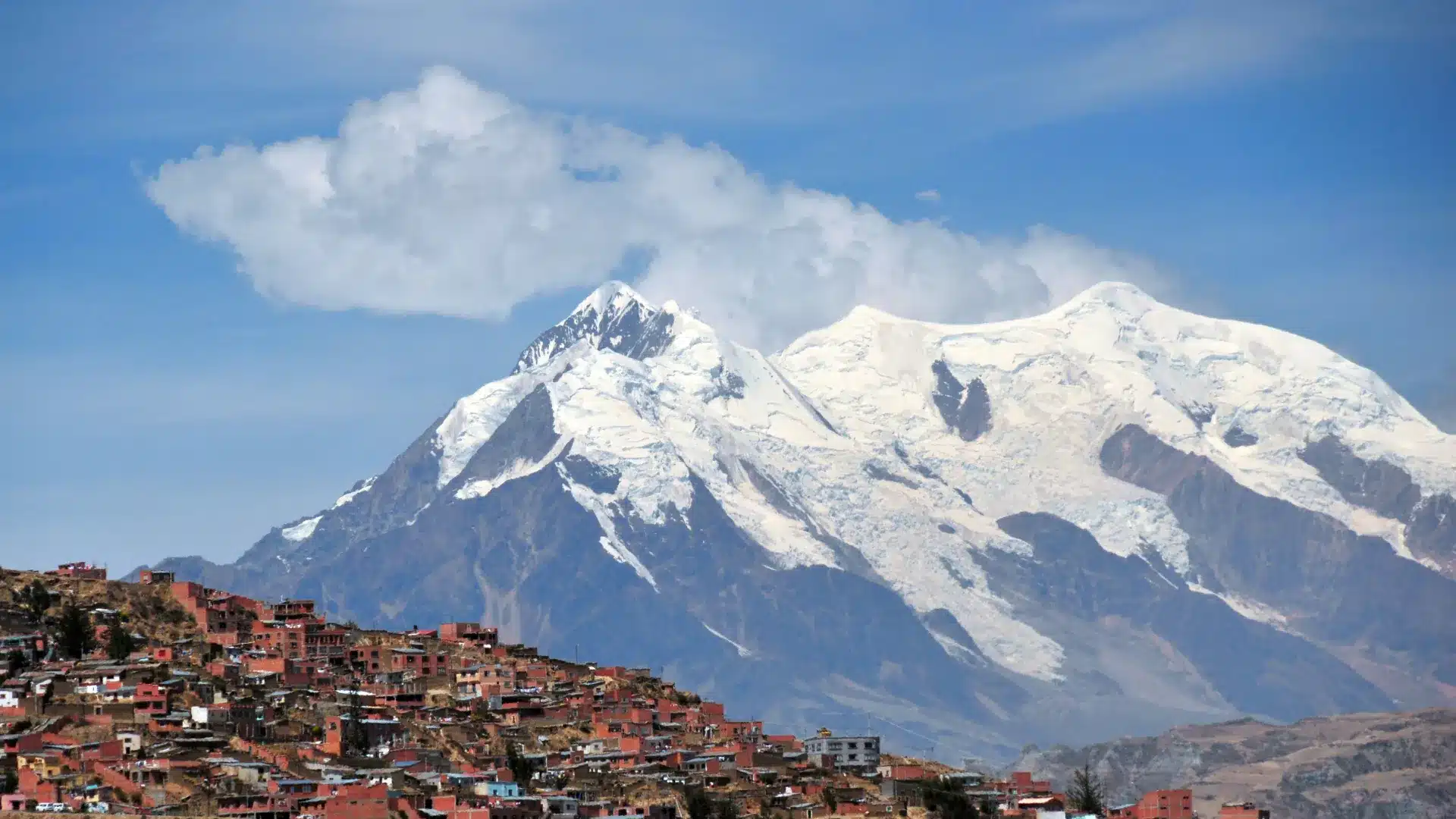
La Paz is the practical anchor for most international productions working in the country. It is where crews usually arrive, where production partners, fixers, crew and equipment are easiest to coordinate, and where CONACINE licensing and customs coordination begins. As the highest administrative capital in the world, dramatically set in a canyon ringed by the Andes and overlooked by the peak of Illimani, it is also a striking location in its own right.
The city offers steep, dramatic urban topography, cable cars, markets, colonial and modern architecture and a vivid Andean culture, with the neighbouring city of El Alto and the Altiplano nearby. Altitude is a central planning factor here, as La Paz sits well above 3,500 metres, demanding acclimatisation time and careful crew welfare. Hoodlum uses La Paz as the practical base for Film Production Services in Bolivia, particularly when a shoot needs to combine the city with the salt flat and the wider Andes.
The Salar de Uyuni and the Southwest
The Salar de Uyuni, the world’s largest salt flat, is Bolivia’s signature location and one of the most extraordinary landscapes on the planet: a vast white expanse that becomes a perfect mirror in the wet season, surrounded by cactus islands, volcanoes, coloured lagoons, flamingos and the surreal rock formations and deserts of the southwest.
This region is unmatched for commercials, science-fiction, fashion, automotive and landscape-led work, and it has drawn productions from around the world for imagery that exists nowhere else. Uyuni filming calls for careful planning around extreme altitude, remote logistics, salt and its effect on equipment and vehicles, weather, and the long distances involved, with permits and local guides essential. Hoodlum builds the permissions, 4×4 transport, local guides, equipment protection and altitude planning into the schedule before a shoot reaches the salt flat.
Lake Titicaca, Tiwanaku and Cultural Heritage
Lake Titicaca, the highest navigable lake in the world, offers deep blue water, reed boats, island communities and a powerful sense of Andean spirituality, while the nearby ruins of Tiwanaku represent one of the most important pre-Columbian sites in the Americas. The colonial cities of Sucre and Potosí add UNESCO-listed heritage, whitewashed streets and silver-mining history.
These locations suit documentary, history, culture and travel programming. Filming at heritage sites such as Tiwanaku, Sucre and Potosí requires authorisation from the cultural authorities, and work involving indigenous communities calls for respectful coordination with community leaders, since consent, cultural sensitivity and local liaison are essential. Hoodlum handles the heritage permissions and community liaison so these remarkable cultural backdrops become workable, respectful filming days.
The Amazon, Madidi and the Lowlands
Beyond the Andes, Bolivia drops into the tropical lowlands and the Amazon basin, where Madidi National Park is one of the most biodiverse protected areas on earth, offering rainforest, rivers, wildlife and genuinely wild, expedition-grade locations. The Yungas cloud forests bridge the high mountains and the jungle.
These environments suit natural-history, conservation, adventure and travel content. Filming in national parks and protected areas requires permission from the national protected-areas authority, SERNAP, along with environmental rules, guides and remote-location logistics, with significant lead time. Hoodlum builds the park permits, local guides and remote logistics into the plan before a shoot moves into the Amazon and the lowlands.
Entry, Visas and Crew Documentation
Bolivia’s entry requirements vary by nationality, and filming activity generally calls for the correct visa and authorisation, so early planning matters.
Many nationalities can enter as tourists, sometimes obtaining a visa on arrival, while others must apply in advance at a Bolivian consulate, with processing that can take several weeks and fees varying by country. For filming, crew may need a specific-purpose or temporary work visa, and productions should carry a passport valid at least six months, a letter of introduction from the production company, a project description, a flight itinerary and proof of insurance. Documents often need to be translated into Spanish and apostilled, which takes time to arrange.
Because the visa and authorisation framework is detailed and document-heavy, working with a local partner who manages these processes is essential. Hoodlum helps productions match each crew member to the correct entry route, assemble and legalise the documentation, and avoid immigration becoming a late-stage problem.
Film Licensing and Location Permissions
Foreign productions must register with CONACINE, the National Cinema Council, to obtain a filming licence, a requirement designed to protect the country’s cultural values, with the development agency ADECINE assisting on permits and logistics under current regulations. This central licence is the most important process to plan around, typically taking around two to three weeks.
The application is built around a letter to CONACINE’s executive director detailing the project, theme, locations, format, estimated duration and length of stay, a crew payroll, an equipment list, a passport copy, a flight itinerary, proof of the company’s legal domicile legalised by the Bolivian diplomatic representation, and a commitment to deliver a copy of the finished work to the Cinemateca Boliviana within a year. Licence fees vary with the type of production and length of stay, and additional permissions apply for national parks via SERNAP, for heritage sites via the cultural authorities, and for filming with telecommunications or satellite equipment.
Private locations are handled through a local fixer, who negotiates access and terms with owners. A Hoodlum location scout can propose suitable options, after which we negotiate access, dates, crew size, fees and conditions, and secure a location agreement. Private permission does not replace the CONACINE licence or any park, heritage or community approvals a location also requires, and fees are quoted once the locations are confirmed.
Drone Filming and Aviation Rules
Drone operation is regulated by the civil aviation authority, the DGAC, and many productions simply rent drones locally, which is usually the most practical route. If a drone is brought in, it must be registered with the DGAC, meet international standards such as FAA or EASA certification, and carry the right documentation, with drones over two kilograms requiring special permits and commercial use requiring additional approvals.
A local drone operation generally requires a valid pilot licence, a medical certificate, a flight itinerary and the drone’s serial number, make and model, while importing a drone follows the same temporary-import logic as camera equipment, with a commercial invoice, packing list, certificate of origin and an import permit. Aerial work may also involve registration with the national aerial-photography service. Hoodlum arranges local drone rental or registered operators, coordinates any importation and registration, and builds the required lead time into the plan.
Equipment Customs Clearance and Temporary Import
Bolivia is not an ATA Carnet country, which is a critical planning point, so equipment is brought in through a temporary-import procedure rather than a carnet, coordinated by the development agency and, where gear is shipped separately, a specialist customs company. Ideally all equipment travels with the crew on the plane, and a detailed spreadsheet must list every item with full specifications.
Clearance is handled by the national customs authority, Aduana Nacional, and the single most important rule is that every item that comes in must go out exactly as listed on the equipment spreadsheet, so accuracy is essential. The process typically takes around two to three weeks and should be aligned with the CONACINE licence timeline, with costs varying by the value and volume of gear.
Hoodlum prepares the detailed equipment spreadsheet and temporary-import documentation, coordinates with the customs authority and a specialist broker where gear is shipped separately, and times the process so cameras, lighting, grip and sound gear move through with minimal delay.
Costs, Incentives and Production Support
Bolivia does not currently offer a formal, established film rebate or tax-incentive scheme for foreign productions, which is an important planning point, and its film-industry support has historically focused on local filmmakers rather than international ones. Any incentive claim should therefore be confirmed directly and current before a production relies on it.
The country’s real and dependable advantage is cost. Production costs are among the lowest in the region, locations are genuinely unique, and specialist high-altitude technical support is available, which together make Bolivia a strategically valuable destination for productions that want extraordinary value and imagery. Because the local crew base is smaller than in larger markets, many productions bring key crew and specialist equipment and hire locally to fill out the team. Hoodlum can help productions make the most of the country’s strong cost advantages and coordinate the licensing, crew, equipment and logistics that keep budgets efficient.
Safety, Security and Practical Logistics
Bolivia is generally a safe country to film in, with petty crime and ordinary urban awareness the main day-to-day concerns rather than serious threats. Most filming regions are welcoming, and the country is well used to documentary and adventure productions, though hiring a local security company for filming locations is sensibly advised, particularly for high-value equipment.
Standard precautions around securing equipment and valuables, using reliable transport and thorough location scouting are the practical foundations of a smooth shoot, alongside clear unit management. The country’s strong network of local fixers and guides means experienced support is readily available for both city and remote work.
Altitude is the single defining production and welfare factor. Much of the country sits extremely high, with La Paz above 3,500 metres and the Uyuni region higher still, so acclimatisation time, slower schedules, medical awareness, oxygen availability and careful crew welfare are essential, and equipment performance can also be affected. Remote distances, weather and the salt environment add further logistical demands. Hoodlum helps productions balance sensible security with efficient movement, and builds altitude, acclimatisation, distance and contingency thinking into the schedule from the start.
When Bolivia Is the Right Production Choice
Bolivia is the right choice when a production needs genuinely otherworldly landscapes, the Salar de Uyuni, dramatic high-altitude cities, ancient ruins, Andean culture and Amazon wilderness, combined with exceptionally low costs and specialist high-altitude support. It is especially strong for documentary, travel and adventure content, commercials, science-fiction and landscape-led features, natural history and any project that wants unrepeatable imagery on a highly efficient budget.
It may be less suitable for productions that need a formal cash rebate, carnet-based equipment entry, a deep local crew base for very large shoots, or guaranteed access without the licensing, customs and altitude lead times the country requires. It is highly workable when the entry route, CONACINE licence, customs plan, drone arrangements, altitude planning and location agreements are settled early.
Common Production Mistakes to Avoid
The most frequent mistakes include:
- Underestimating altitude and failing to allow acclimatisation time
- Expecting a formal cash rebate, which the country does not offer
- Leaving the CONACINE licence and document legalisation too late
- Assuming an ATA Carnet works, when temporary import is the route
- Failing to match the equipment spreadsheet exactly on entry and exit
- Treating heritage sites and national parks as ordinary locations
- Overlooking respectful coordination with indigenous communities
- Underestimating remote distances and the salt environment at Uyuni
Most of these problems are avoidable by aligning the crew list, visas, CONACINE licence, temporary import, drone plan, altitude planning and location agreements well before the crew travels.
How Hoodlum Supports Productions in Bolivia
Hoodlum provides Film Production Services in Bolivia for international crews that need experienced local coordination from early planning through to wrap. Our support covers visa and documentation guidance, CONACINE film licensing and permit coordination, heritage and national-park approvals, private location agreements, drone planning, temporary-import and customs coordination, local crew sourcing, high-altitude support, transport, security planning, accommodation and on-ground production management.
From La Paz and the high Andes to the Salar de Uyuni, Lake Titicaca, the ruins of Tiwanaku, the colonial cities of Sucre and Potosí and the Amazon of Madidi, we help productions access the strongest filming environments in Bolivia with the right permits, fixers, customs planning and logistics in place. Planning a shoot? Contact us to talk through licensing, visa support, local fixers, location scouting, temporary-import coordination, drone planning, altitude support and full on-ground production management.
Frequently Asked Questions
Do international crews need a visa to film in Bolivia?
It depends on nationality. Many travellers enter as tourists, sometimes with a visa on arrival, while others apply in advance at a consulate, which can take several weeks. Filming may require a specific-purpose or temporary work visa, and documents often need to be translated into Spanish and apostilled, so plan early.
Who issues filming permits?
Foreign productions register with CONACINE, the National Cinema Council, to obtain a filming licence, with the development agency ADECINE assisting on permits and logistics. The licence typically takes around two to three weeks, with extra approvals for national parks (SERNAP) and heritage sites.
Who regulates drones?
The civil aviation authority, the DGAC, regulates drones. Many productions rent locally, which is usually simplest. Imported drones must be registered with the DGAC and meet FAA or EASA standards, with special permits for units over two kilograms and additional approvals for commercial use.
Is Bolivia an ATA Carnet country?
No. Equipment is brought in through a temporary-import procedure, ideally travelling with the crew, with a detailed spreadsheet listing every item. Crucially, everything that enters must leave exactly as listed. Clearance is handled by the national customs authority, Aduana Nacional.
Does Bolivia offer film tax incentives?
No. Bolivia does not currently offer a formal, established film rebate or tax incentive for foreign productions, and support has historically focused on local filmmakers. Its dependable advantage is very low cost, unique locations and specialist high-altitude support. Confirm any incentive claim directly.
What are the best filming locations?
Popular options include the Salar de Uyuni salt flat, La Paz and the high Andes, Lake Titicaca, the ruins of Tiwanaku, the colonial cities of Sucre and Potosí, and the Amazon rainforest of Madidi National Park.
Useful Authority Links
- CONACINE – National Cinema Council
- Bolivia Cultural Heritage – Ministry of Cultures
- SERNAP – National Service of Protected Areas
- DGAC – Directorate General of Civil Aviation
- Aduana Nacional de Bolivia – Customs
- Bolivia Tourist Visa Information
Planning a shoot in Bolivia? Contact Hoodlum for film permits, protected-area and community authorisations, local fixers, location scouting, customs and ATA Carnet planning, drone coordination, high-altitude and acclimatisation support, salt-flat convoys, boat logistics and full on-ground production management. You can also view the Hoodlum Film Fixers Bolivia Google Business Profile for local production details.