
















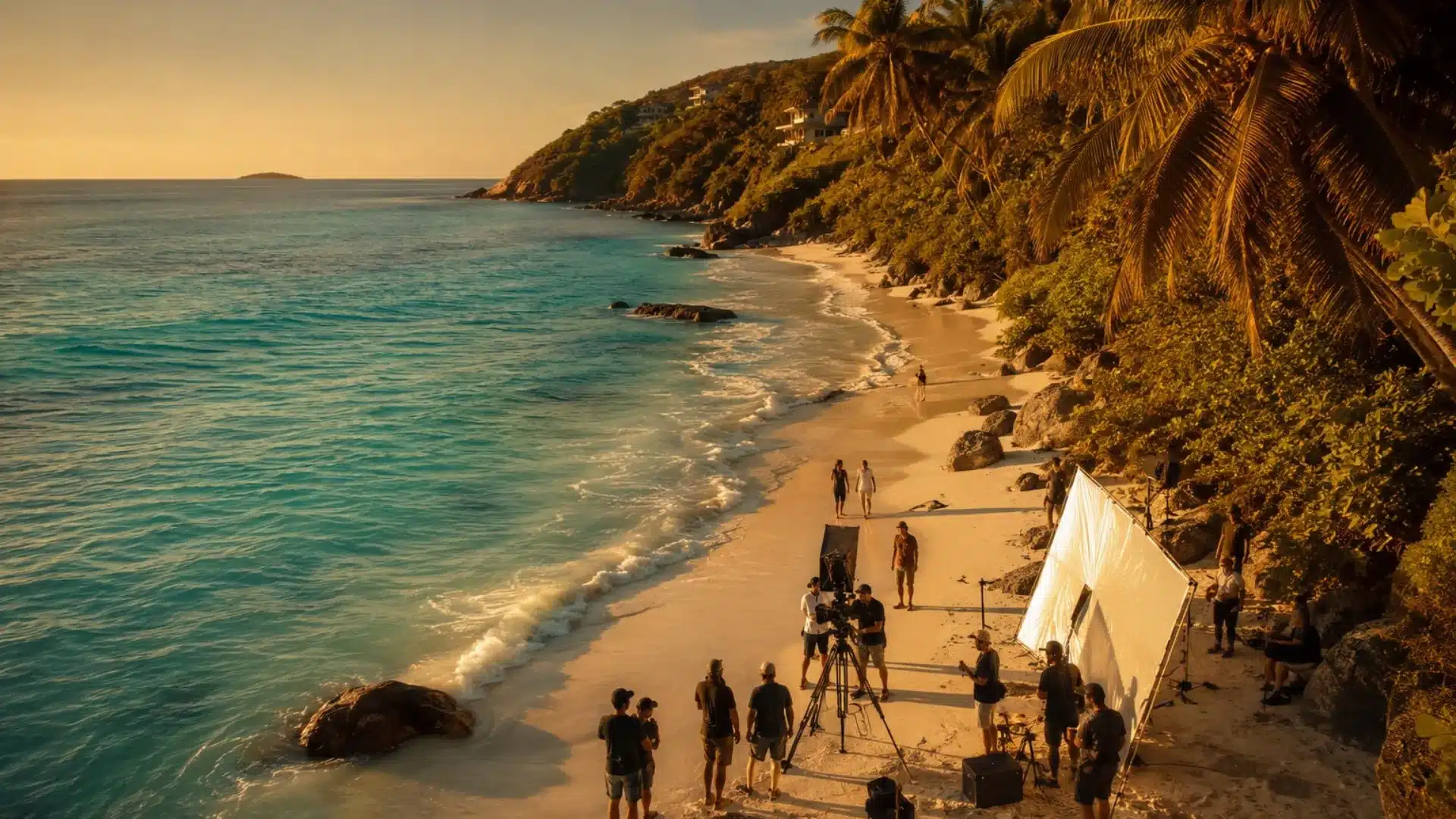
Hero / Intro
Hoodlum offers expert film fixer services in Curaçao, supporting international productions across one of the most distinctive and accessible filming destinations in the Dutch Caribbean. Curaçao is a constituent country of the Kingdom of the Netherlands — a 444 square kilometre island sitting 65 kilometres north of Venezuela in the southern Caribbean Sea, outside the hurricane belt and blessed with consistent sunshine, warm temperatures and one of the most visually distinctive capital cities in the region. Willemstad, the UNESCO World Heritage-listed capital, is defined by its extraordinary Handelskade waterfront of Dutch colonial buildings painted in vivid pastel colours — an instantly recognisable visual signature that has made Curaçao one of the most photographed and filmed urban environments in the Caribbean.
Beyond Willemstad, the island offers a surprising range of filming environments within a compact geography — rugged limestone coastline and hidden cove beaches on the west coast, the turquoise waters of Grote Knip and Playa Lagun, the industrial character of the eastern refineries, the rural Banda Abou hinterland with its traditional cunucu houses and cactus-dotted landscape, and the Christoffelpark national park environment in the northwest. The combination of the Dutch Caribbean administrative framework, ATA Carnet membership, a Film Commission with a streamlined permit process, and a production-friendly environment with year-round filming conditions makes Curaçao one of the most practically efficient Caribbean filming destinations for international productions.
Curaçao Film Production Guide for International Crews
Curaçao is a Dutch Caribbean filming destination that works for a wide range of production types across a visually diverse and logistically well-managed island geography. The island is served by Curaçao International Airport (Hato International Airport) near Willemstad, with regular connections to North America, Europe and the wider Caribbean. The compact size of the island — most major filming locations are within thirty minutes of the capital — gives productions an unusually efficient location day logistics profile.
The main production areas include Willemstad and its multiple distinct filming zones — the Handelskade waterfront of Punda, the Otrobanda district across the Queen Emma Pontoon Bridge, the Pietermaai boutique hotel quarter, the Scharloo neighbourhood of restored heritage mansions, and the Brionplein and Riffort historic sites. Outside Willemstad, key production environments include the west coast beaches of Grote Knip, Playa Lagun, Cas Abao and Knip, the Christoffelpark national park and Shete Boka coastline, the traditional cunucu landscape of the Banda Abou interior, and the eastern coastline environments around Caracasbaai and the Jan Thiel resort area.
A successful Curaçao production requires early preparation across the main parallel processes — Temporary Residence or Work Permit where applicable, Curaçao Film Commission permit and crew accreditation, drone registration and permit, ATA Carnet customs clearance and private location agreements. The Film Commission permit process is notably fast — one to three business days for standard applications — but the work permit process takes two to four weeks and should be initiated well in advance of crew travel.
Why Film Production Works Well in Curaçao
Curaçao works for productions that need a combination of Dutch Caribbean colonial architecture, diverse beach and coastal environments, a distinctive multi-cultural visual character, and a year-round filming climate outside the hurricane belt. The island’s unique blend of Dutch, African and Caribbean influences gives it a visual and cultural texture that is unlike any other Caribbean destination — not the British colonial aesthetic of Barbados, not the French Caribbean register of Martinique, and not the resort-development look of many other islands.
Strong production use cases include:
- Commercial and advertising campaigns
- Feature film and television drama
- Travel and lifestyle productions
- Documentary and cultural programming
- Music videos
- Reality and competition formats — Curaçao offers a specific reality TV rebate
- Luxury and lifestyle branded content
- Underwater and marine productions
- Architecture and heritage documentary work
- Wellness and resort-based content
- Still photography and fashion campaigns
Willemstad filming locations offer a visual signature — the Handelskade pastel waterfront, the Queen Emma Pontoon Bridge, the Floating Market — that is globally recognised from advertising campaigns, travel media and film productions and provides an instantly distinctive backdrop. The combination of that urban visual heritage and the natural beach and coastal environments of the west coast gives productions two completely distinct visual registers within thirty minutes of each other.
The Dutch Caribbean administrative framework means that productions with experience in other Dutch Caribbean islands — Sint Maarten, Saba, St. Eustatius, Bonaire — will find many familiar permit and visa process elements. English is widely spoken alongside Dutch and Papiamentu, which helps with government contacts, Film Commission communication, location negotiations and crew logistics.
Best Time of Year to Film
Curaçao sits outside the main Caribbean hurricane belt, which gives it a significantly more reliable year-round filming climate than most other Caribbean destinations. The island receives consistent sunshine and warm temperatures throughout the year, with the dry season from December to June offering the most consistently clear conditions.
The optimal filming window is December to June — clear skies, calm conditions and lower humidity. July to November brings slightly higher rainfall but remains generally filmable and far more weather-stable than hurricane-belt Caribbean destinations during this period.
Productions should plan for:
- Carnival season in February — one of Curaçao’s most vibrant cultural periods and an extraordinary visual opportunity, but with significant crowd volumes and specific logistics requirements
- Peak tourism periods affecting crowd management at major beach and Willemstad locations
- Summer slightly higher humidity for equipment management
- Marine and underwater visibility — generally excellent year-round but best December to June
- Consistent trade winds — useful for cooling but affecting audio on exposed coastal locations
The year-round filming viability outside the hurricane belt is one of Curaçao’s most significant production advantages over many Caribbean competitors. Productions that need Caribbean visual production values but cannot take weather risk during the traditionally challenging July to November window will find Curaçao a significantly more reliable option.
Visa and Entry Requirements for Crew
A Temporary Residence Permit or Work Permit is often required for international crews filming professionally in Curaçao, although some crews may only need approval from the Film Commission depending on the nature and duration of the production. Work authorisation requirements should be confirmed based on crew nationality, stay length, role and production activity.
Required documentation:
- Valid passport — six months validity minimum
- Visa application form
- Passport-sized photographs
- Health insurance documentation
- Proof of financial means
- Production documentation where required
Visa reference: https://cw.usconsulate.gov/visas
Processing time: Two to four weeks.
Estimated cost: USD 80–100.
Productions with large international crews should start the visa and work permit process early and confirm requirements for each crew member’s nationality individually. The Film Commission permit and crew accreditation process can run in parallel with the visa process to ensure all approvals align before crew travel.
International Crew Accreditation
The Curaçao Film Commission issues a Film Permit or Production Permit that allows foreign crews to film on the island. This accreditation confirms the production’s registration and approval with the Film Commission and is a required element for professional filming activity.
Required documentation:
- Crew details for all international crew members
- Production information and synopsis
- Equipment list
- Health insurance and liability insurance documentation
Processing time: Two to four weeks.
Estimated cost: USD 50–100 per crew member.
Crew accreditation should be initiated alongside the visa process rather than sequentially after it, to ensure both are confirmed before crew travel. Productions with large international crews should provide Hoodlum with complete crew lists — names, nationalities, roles and passport details — early in the pre-production process so that accreditation documentation can be prepared and submitted efficiently.
Film Permits and Production Approval
Film permits in Curaçao are issued by the Curaçao Film Commission. The permit process is notably fast by Caribbean standards — one to three business days for standard applications — which gives productions significant flexibility compared to destinations with multi-week permit processing windows.
Required documentation:
- Project proposal
- Script or production synopsis
- Location plan
- Crew list
- Equipment details
- Insurance proof — liability coverage
Processing time: One to three business days.
Estimated cost: USD 50–500 depending on production scale and location complexity.
The speed of the Film Commission permit process is one of Curaçao’s key production advantages. However, productions should note that this fast permit process does not replace the two-to-four-week crew accreditation and visa process — those must still be managed in advance. Specific locations — national parks, heritage sites, government properties, beaches within managed areas — may require additional approvals from the relevant managing authority alongside the Film Commission permit.
Private Locations, Beaches, Villas and Heritage Sites
Private properties across Curaçao — including private homes, boutique hotels, luxury villas, private beaches, restaurants and business premises — require written permission from owners and proof of insurance. Location fees vary considerably by property type and scale.
Typical location fee ranges:
- Residential properties: USD 500–2,000 per day
- Commercial properties: USD 1,000–5,000 per day
- Beaches: USD 200–1,000 per day
- Luxury villas: USD 2,000–10,000 per day
Key location environments and access considerations:
Handelskade Waterfront, Willemstad — the iconic pastel colonial waterfront of Punda, one of the most requested filming environments in the Caribbean. Public street filming requires Film Commission approval. Individual building and facade access requires coordination with building owners or management.
Queen Emma Pontoon Bridge — Willemstad’s famous floating pedestrian bridge connecting Punda and Otrobanda. A highly distinctive architectural and visual asset. Access for professional filming requires coordination with the bridge operating authority and the Film Commission.
Pietermaai District — Willemstad’s restored boutique hotel and nightlife quarter, a UNESCO conservation area of restored heritage buildings. Individual property access requires written agreements with each property.
Grote Knip Beach — Curaçao’s most visually spectacular beach on the northwest coast. Filming access requires coordination with the beach management authority and the Film Commission.
Christoffelpark — Curaçao’s national park in the northwest, encompassing the island’s highest point (Christoffelberg) and the Shete Boka coastal park. Filming requires national park authority permission in addition to the Film Commission permit.
Cunucu landscape, Banda Abou — the traditional rural interior landscape of cactus, traditional houses and dry tropical terrain. Private land access requires individual landowner agreements.
A strong location agreement should confirm:
- Approved filming areas within the property
- Shoot dates and hours
- Crew size and vehicle access
- Equipment restrictions
- Heritage conservation restrictions where applicable
- Drone use approval, if relevant
- Fees and payment terms
- Site restoration responsibilities
Drone Filming Requirements
Drones over 250 grams must be registered in Curaçao before operations begin. The drone permit process is managed through the relevant aviation authority and is relatively fast compared to many Caribbean destinations.
Key drone requirements:
- Registration of all drones over 250 grams
- Permit application with standard documentation
- Insurance coverage for drone operations
Processing time: One to three working days.
Estimated cost: USD 100–200.
Productions planning drone work near Hato International Airport, above populated Willemstad areas, over Christoffelpark or in other restricted airspace should confirm specific restrictions before committing drone days to the schedule. Drone operations in heritage areas of Willemstad — particularly above the Handelskade waterfront and UNESCO conservation zones — should be confirmed with both the Film Commission and the relevant heritage authority.
Hoodlum helps productions integrate drone planning into the overall permit timeline so aerial days are protected and airspace restrictions are confirmed before the shoot schedule is locked.
Equipment Customs Clearance
Curaçao is an ATA Carnet country. Professional filming equipment can be imported under the standard ATA Carnet system, which is the most straightforward importation route for most international productions arriving in Curaçao.
Required documentation:
- Valid passport
- Visa or work permit documentation
- ATA Carnet covering all filming equipment
- Commercial invoice for equipment, where required
Processing time: One to three working days.
Estimated cost: USD 50–100.
The combination of ATA Carnet membership and a fast one-to-three-day customs clearance process makes Curaçao one of the most equipment-importation-friendly destinations in the Caribbean. Productions should ensure the Carnet documentation matches exactly what arrives — discrepancies can result in duty being assessed. All items — cameras, lenses, drones, batteries, lighting, grip, sound equipment and specialist gear — should be listed with serial numbers and values before departure.
Safety and Security for Productions
Curaçao is considered a safe destination for film crews with a stable political environment and a well-developed tourism infrastructure. Standard production security precautions are appropriate rather than the heightened security requirements of more complex destinations.
Key safety and security considerations include:
- Work with local fixers or production companies throughout the shoot — local knowledge significantly improves logistics and problem-solving
- Maintain a low profile and avoid displaying valuable equipment in public areas
- Store equipment in secure facilities, hotel storage or locked vehicles between shoot days
- Local security options include armed and unarmed guards, CCTV monitoring, GPS tracking and alarm systems for larger productions
- Be aware of busy tourism areas and manage crowd exposure at major Willemstad and beach locations
- Plan for Carnival period crowd volumes and logistics if filming in February
- Ensure production insurance covers all activities and locations in Curaçao
Film Incentives — Curaçao Film Rebate and Reality TV Programme
Curaçao currently offers a specific 10% rebate for reality TV productions, along with fast-track customs clearance and simplified permits and licences for qualifying reality TV projects. This makes Curaçao a specifically competitive destination for reality television formats in the Caribbean.
For non-reality productions, Curaçao’s broader film rebate system is still in the process of being fully implemented. Productions should confirm current rebate availability directly with the Curaçao Film Commission before budgeting any incentive. The neighbouring islands of Bonaire and Aruba offer incentive programmes that may apply to productions flying to those islands as part of a wider Caribbean shoot.
Before budgeting any rebate, confirm:
- Whether the project qualifies as a reality TV production under current programme definitions
- Current rebate percentage and qualifying expenditure categories
- Minimum spend thresholds, if applicable
- Fast-track customs and permit eligibility for qualifying productions
- Whether the Bonaire or Aruba incentive programmes apply to the production’s multi-island itinerary
- Which authority administers rebate claims and payment timelines
Administering authority: Curaçao Film Commission.
Productions planning reality TV formats should engage Hoodlum and the Film Commission early to confirm rebate eligibility and ensure the production structure qualifies before the budget is finalised.
How the Main Approvals Fit Together
Work permit or Temporary Residence Permit, Film Commission crew accreditation, film permit, drone registration and permit, ATA Carnet customs clearance and private location agreements are all separate processes in Curaçao. The film permit is notably fast — one to three business days — but the visa and accreditation processes take two to four weeks and must be initiated well in advance.
A complete production plan connects:
- Crew visas and work permits — two to four weeks, initiated first
- Film Commission crew accreditation — two to four weeks, running in parallel with visas
- Film Commission film permit — one to three business days, can be confirmed closer to the shoot
- Drone registration and permit — one to three working days
- Heritage site and national park permissions where applicable
- ATA Carnet customs clearance — one to three working days
- Private location agreements for all private property shoot days
- Reality TV rebate registration for qualifying productions — before spend begins
- Liability insurance across all locations and activities
Hoodlum coordinates all of these processes as one integrated pre-production workflow.
When Curaçao Is the Right Choice
Curaçao is the right choice when a production needs a Dutch Caribbean destination with a globally recognisable colonial waterfront, diverse beach environments, a year-round filming climate outside the hurricane belt, a fast Film Commission permit process and the specific reality TV rebate structure that makes it competitive for that format.
It is especially suitable for:
- Commercial and advertising campaigns featuring Willemstad’s architecture
- Reality and competition formats — Curaçao’s 10% reality TV rebate is a direct financial incentive
- Travel and lifestyle productions
- Music videos
- Feature film and television drama with Caribbean settings
- Documentary and cultural programming
- Underwater and marine productions
- Luxury and wellness branded content
- Fashion and still photography
It may be less suitable for productions that need very large studio infrastructure, very large crew logistics, or require complete crowd exclusion at heavily visited tourist locations. Those productions may still be possible but require more detailed planning.
Film production services in Curaçao are most effective when the concept fits the island’s genuine strengths: Willemstad filming locations and their unique pastel colonial character, diverse west coast beaches, the Christoffelpark landscape, year-round filming viability and the specific reality TV rebate structure.
Common Mistakes to Avoid
Most production problems in Curaçao come from treating the fast Film Commission permit as the only time-sensitive process, leaving visa and accreditation too late, or not confirming rebate eligibility before building it into the budget.
Avoid:
- Treating the one-to-three-day film permit timeline as the only planning constraint — visa and accreditation take two to four weeks
- Leaving crew visa and work permit applications until the week before travel
- Assuming the Film Commission permit covers national park, heritage site or government property access without additional approvals
- Planning drone work above the Handelskade waterfront or near the airport without confirming specific restrictions
- Arriving with Carnet documentation that does not match the actual equipment
- Budgeting the film rebate without written confirmation from the Film Commission of current availability and eligibility
- Ignoring Carnival logistics if filming in February
- Working without a local fixer who knows the Film Commission, location owner and authority relationships
How Hoodlum Supports Local Production
Hoodlum provides end-to-end production support for international crews filming across Curaçao, from early research through on-the-ground execution.
Support may include:
- Local fixer coordination across all Curaçao locations
- Film Commission accreditation and permit coordination
- Visa and work permit support
- Willemstad filming location access and RECCE coordination
- Grote Knip and west coast beach location management
- Christoffelpark and national park permit coordination
- Heritage site access and UNESCO zone management
- Drone registration and permit coordination
- ATA Carnet customs clearance preparation
- Reality TV rebate registration and qualifying spend guidance
- Local crew and talent sourcing
- Transportation and vehicle hire
- Accommodation sourcing across Curaçao
- Safety and security planning
- Carnival period logistics support
- On-the-ground production management
FAQ Section
Do international crews need a visa to film in Curaçao? A Temporary Residence Permit or Work Permit is often required for paid professional filming, although some crews may only need Film Commission approval. Requirements depend on nationality, stay length and production activity. Processing takes two to four weeks. Estimated cost: USD 80–100. Reference: https://cw.usconsulate.gov/visas.
How long should productions allow for filming approvals? The Film Commission film permit takes one to three business days — one of the fastest permit processes in the Caribbean. However, crew accreditation and visa processing take two to four weeks and must be initiated well in advance. Allow a minimum of four to six weeks before the shoot start date for all processes to run in parallel.
Does Curaçao offer a film rebate? Curaçao currently offers a 10% rebate specifically for reality TV productions, along with fast-track customs clearance and simplified permits for qualifying projects. The broader film rebate system is still being developed. Confirm current availability and eligibility directly with the Curaçao Film Commission before budgeting any incentive. Bonaire and Aruba also offer incentive programmes for productions extending to those islands.
Can productions use drones in Curaçao? Yes. Drones over 250 grams must be registered and a permit is required. Processing takes one to three working days. Estimated cost: USD 100–200. Restrictions apply near Hato International Airport, populated Willemstad areas and heritage conservation zones. Confirm specific airspace restrictions before travel.
Is Curaçao a Carnet country? Yes — Curaçao is an ATA Carnet country. Equipment can be imported under the standard Carnet system. Processing takes one to three working days. Estimated cost: USD 50–100. The Carnet documentation must match the actual equipment arriving.
What are the best filming locations in Curaçao? Key production environments include the Handelskade pastel waterfront in Willemstad (UNESCO World Heritage), the Queen Emma Pontoon Bridge, the Pietermaai heritage district, Grote Knip beach, Cas Abao beach, Playa Lagun, Christoffelpark and the Shete Boka coastline, and the traditional cunucu landscape of the Banda Abou interior.
What documents are typically needed? Visa or work permit, Film Commission crew accreditation, film permit including project proposal, script, location plan, crew list, equipment list and insurance, drone registration and permit where applicable, and ATA Carnet for all filming equipment.
Authority Links
- Curaçao Film Commission
- Curaçao Visa Reference
- Curaçao Tourism Board
- Christoffelpark
- Hoodlum Film Fixers — Contact
Everything You Need to Know About Filming in Curaçao
Filming in Curaçao combines one of the most visually distinctive urban filming environments in the Caribbean with one of the most streamlined film permit processes in the region — and understanding both the opportunity and the specific approval requirements is what allows productions to make full use of what the island offers. The Curaçao Film Commission permit takes one to three business days, which is genuinely exceptional by Caribbean standards. The visa and crew accreditation process takes two to four weeks, which means it needs to be initiated well in advance regardless of the permit’s speed.
The reality TV rebate is specific and real. The ATA Carnet status makes equipment importation straightforward. And the island’s position outside the hurricane belt gives it a year-round filming viability that most Caribbean competitors cannot match. This section consolidates the practical information for international productions planning a Curaçao shoot.
The Curaçao Film Commission and the permit process
The Curaçao Film Commission is the central production approval and support authority for international productions filming on the island. It issues both the crew accreditation — the Film Permit or Production Permit that allows foreign crews to work professionally — and the general filming permit. The Film Commission permit process is one of the fastest in the Caribbean, with standard applications processed in one to three business days.
The Curaçao film permit requires a project proposal, script or synopsis, location plan, crew list, equipment details and proof of insurance. Complete documentation submitted in the first application means the permit can be confirmed within days rather than weeks. However, the permit speed does not reduce the two-to-four-week timeline for crew accreditation and visa processing — those must be managed in advance and in parallel. Productions that treat the fast permit as the only planning constraint and leave accreditation and visa work until the final week will arrive without the correct crew documentation in place.
Specific filming environments — Christoffelpark national park, UNESCO heritage zones within Willemstad, government properties and managed beach areas — require additional permissions from the relevant managing authority in addition to the Film Commission permit. All such locations should be flagged in the permit application so the complete approval picture is clear from the outset.
Willemstad filming locations — the Handelskade waterfront and beyond
Willemstad filming locations are the most requested and most globally recognised production environments in Curaçao, and with good reason. The Handelskade waterfront — the row of Dutch colonial buildings in vivid pastel colours reflected in the Sint Annabaai harbour — is one of the most photographed and filmed urban environments in the entire Caribbean and has appeared in major advertising campaigns, travel productions and international feature films. The Queen Emma Pontoon Bridge connecting Punda and Otrobanda, the Floating Market, the Pietermaai heritage district and the Scharloo neighbourhood of restored mansions each provide distinct and visually compelling filming environments within a walkable geography.
Each Willemstad filming location environment has its own access considerations beyond the general Film Commission permit. The Handelskade itself involves individual building owners and management alongside the Film Commission approval. The Queen Emma Bridge requires coordination with the bridge operating authority. The Pietermaai District involves individual written agreements with the boutique hotel and heritage property owners whose facades are the location. The Otrobanda side of the harbour, the Riffort historic site and the Brionplein public square each have their own access and crowd management dynamics.
Curaçao location scouting across the full range of Willemstad environments is most effectively managed by Hoodlum before the schedule is locked, to confirm which locations require which specific approvals, how crowd management works at different times of day and season, and what the realistic logistics are for multi-location shoot days within the Willemstad geography.
Grote Knip filming location and the west coast beach environments
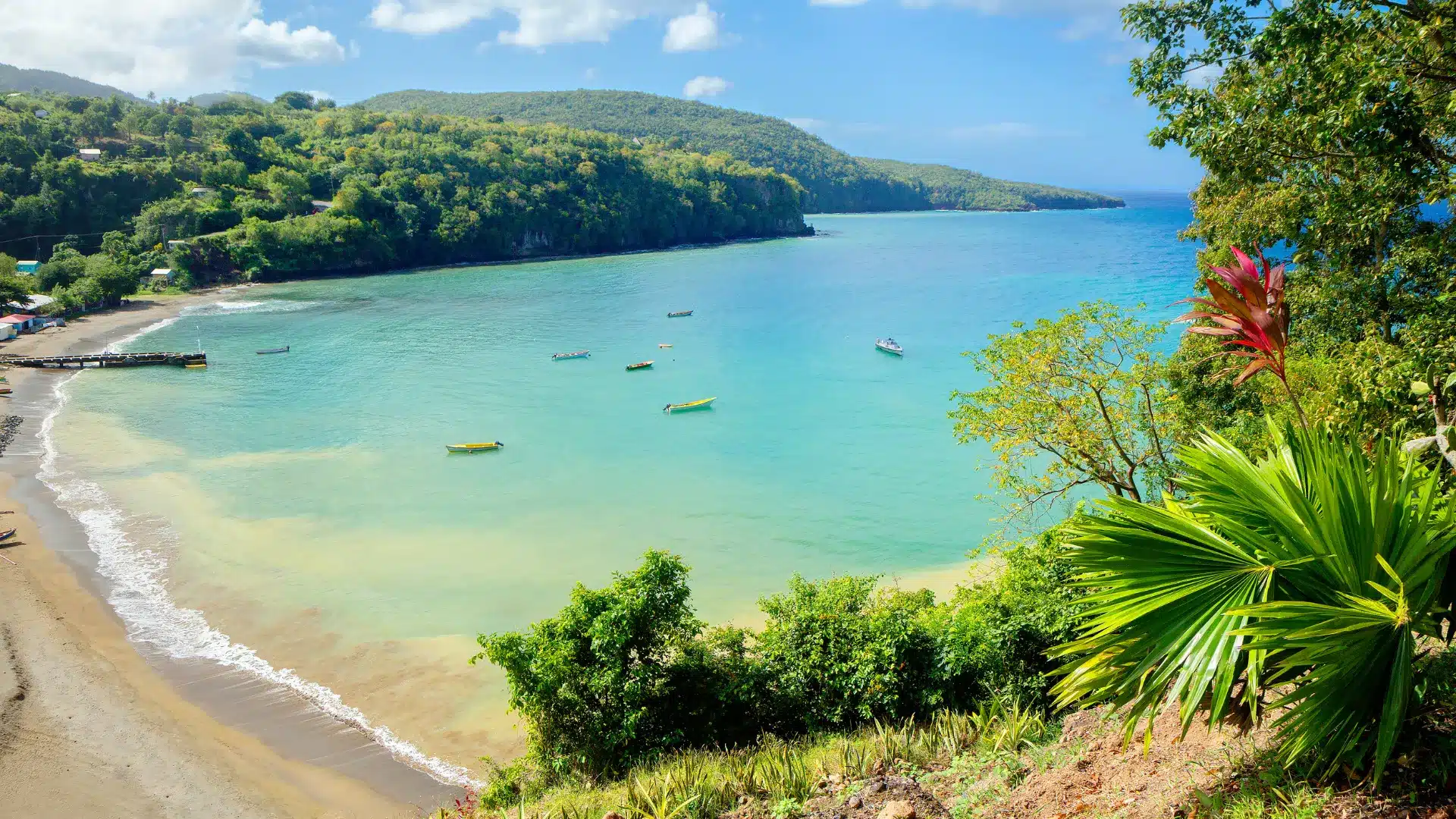
Beyond Willemstad, the Grote Knip filming location and the west coast beach corridor represent Curaçao’s most distinctive natural production environments. Grote Knip — also known as Knip or Playa Grandi — is a northwest coast beach of outstanding visual quality, with a turquoise bay enclosed by limestone cliffs and backed by dry tropical hillside. It is Curaçao’s most visually spectacular beach location and one of the most requested natural environments on the island for commercial, travel and lifestyle productions.
The west coast beach corridor — Cas Abao, Playa Lagun, Playa Jeremi and the smaller cove beaches approaching Westpunt — offers a sequence of beach environments with different characters and different levels of accessibility and tourist traffic. Playa Lagun’s small inlet with typically resident sea turtles, Cas Abao’s longer beach with resort facilities, and the more remote westernmost beaches each serve different production briefs.
Access to managed beach environments requires coordination with beach management authorities and Film Commission approval. The distinction between public beach areas and privately managed beach concessions affects the access route and fee structure for each location. Hoodlum’s Curaçao location scouting process identifies the correct access route for each beach environment before location day logistics are planned.
Curaçao film rebate and reality TV incentive
The Curaçao film rebate structure currently offers a specific 10% rebate for reality TV productions, along with fast-track customs clearance and simplified permits and licences for qualifying reality TV projects. This Curaçao reality TV rebate is a direct and confirmed financial incentive that makes the island specifically competitive for reality format productions in the Caribbean — and it should be factored into destination comparison for any production considering reality TV formats in the region.
The broader Curaçao film rebate for non-reality productions is still in the process of being fully implemented. Productions should confirm current availability and eligibility directly with the Curaçao Film Commission before budgeting any rebate. No incentive should be built into a production budget based on historic information or assumption — written confirmation of current availability, qualifying expenditure categories, minimum thresholds and payment timelines is required.
For productions planning multi-island shoots that include Bonaire or Aruba alongside Curaçao, both neighbouring islands offer their own incentive programmes. The combination of Curaçao’s reality TV rebate and the ABC islands’ (Aruba, Bonaire, Curaçao) collective incentive landscape makes this part of the Dutch Caribbean one of the more financially incentivised production zones in the region. Hoodlum can advise on how to structure a multi-island production to maximise the available incentive picture across all three islands.
Dutch Caribbean film production — Curaçao in the ABC island context
Dutch Caribbean film production across Aruba, Bonaire and Curaçao — the ABC islands — represents one of the most consistently filmable and logistically manageable production zones in the Caribbean. Curaçao’s ATA Carnet status for customs clearance, its Film Commission permit speed, its year-round filming viability outside the hurricane belt, and its specific reality TV rebate all make it a strong production base within that zone.
Productions that have filmed in other Dutch Caribbean islands — Sint Maarten, Saba, St. Eustatius or Bonaire — will find many familiar elements in the Curaçao filming visa process, the Dutch Caribbean administrative framework and the customs clearance approach. The distinction is that Curaçao offers a more developed Film Commission infrastructure, a larger production support network and a more diverse range of filming environments than the smaller Dutch Caribbean islands.
For productions building a Caribbean film production guide that includes the Dutch Caribbean alongside French Caribbean, British Caribbean and independent island nations, Curaçao fits a specific and important position — the largest and most production-capable of the ABC islands, with a visual signature in Willemstad filming locations that is globally distinctive and a beach and natural environment portfolio that extends the creative range well beyond the capital.
Filming visa Curaçao and work permit — the two-to-four-week reality
The filming visa Curaçao and work permit process is the planning constraint that most often catches productions off guard in Curaçao, precisely because the Film Commission permit is so fast. The mental model of a fast permit — one to three business days — can create a false sense that the entire approval process is similarly rapid. It is not. The Temporary Residence Permit or Work Permit takes two to four weeks, and crew accreditation through the Film Commission also takes two to four weeks. Both of these processes need to be initiated four to six weeks before the first filming day at minimum.
Productions should provide Hoodlum with complete crew information — names, nationalities, passport details and roles — as early as possible so that visa and accreditation documentation can be prepared and submitted simultaneously. Work authorisation requirements should be confirmed for each crew member’s nationality individually — the requirements for a UK-passport DOP differ from those of a US-passport producer or an EU-passport camera operator, and each should be checked separately.
Curaçao customs clearance ATA Carnet — what the Carnet status means in practice
Curaçao customs clearance benefits from Curaçao’s ATA Carnet membership. Professional filming equipment can be imported under the standard ATA Carnet system — the most straightforward importation route available, eliminating the cash deposit or bond requirements that apply in non-Carnet Caribbean destinations. Customs clearance for well-prepared documentation takes one to three working days and costs approximately USD 50–100.
The Carnet documentation must match exactly what physically arrives at Curaçao customs. Every item — cameras, lenses, drones, batteries, lighting, grip, sound equipment, monitors, cables and specialist gear — should be listed clearly with serial numbers and values before the Carnet is issued. Changes to the equipment list after the Carnet documentation is complete can create clearance complications, so the list should be finalised before freight is packed.
Hoodlum coordinates Curaçao customs clearance as part of the pre-production package, ensuring that equipment documentation is correct before departure and that clearance on arrival is a confirmation process rather than a discovery one.
What a Curaçao film fixer actually does
A Curaçao film fixer manages the Film Commission permit and crew accreditation simultaneously, coordinates visa and work permit applications for all international crew, handles Willemstad filming location access and individual property agreements across the Handelskade and Pietermaai environments, manages Grote Knip and west coast beach location permissions, coordinates Christoffelpark and national park authority approvals, registers the production for the reality TV rebate where applicable, prepares ATA Carnet documentation for Curaçao customs clearance, plans drone registration and permit applications, and manages Carnival logistics for February productions.
For productions that engage Hoodlum four to six weeks before the shoot — giving the visa and accreditation process its full two-to-four-week window — all of those processes run in parallel and the crew arrives in Curaçao with everything confirmed.
Film production Curaçao works most efficiently when the fixer is engaged at the research and budgeting stage. The Film Commission permit is fast enough that it does not drive the pre-production calendar — the visa and accreditation processes do. Productions that start with the fixer early, get crew information to Hoodlum immediately, and use the fast permit process as a final confirmation rather than the primary pre-production task will find Curaçao one of the most efficiently managed Caribbean production destinations available.
Hoodlum provides full production support for international crews across all Curaçao filming locations — from early research and Curaçao location scouting through Film Commission coordination, Willemstad location access, beach and national park permits, drone planning, Curaçao customs clearance and on-the-ground production management. For enquiries, visit hoodlum.tv/contact-us.