














Filming in Egypt
Egypt is one of the world’s most iconic and instantly recognisable filming destinations, offering ancient monuments, Nile River landscapes, desert roads, Red Sea coastlines, dense city streets and controlled studio environments within a single country. From the Pyramids of Giza and the Great Sphinx to the temples of Luxor, the Nile and Nubian villages of Aswan, the Mediterranean character of Alexandria and the resorts of the Red Sea coast, Egypt delivers extraordinary visual range and immediate visual recognition, backed by experienced local crews and studio infrastructure, provided productions plan for the country’s careful approval and security process.
For international crews, Egypt offers a rare combination of ancient heritage, modern city environments, desert landscapes and coastal infrastructure, competitive local crew rates and facilitated access to major government-owned sites, balanced against a highly regulated environment requiring script review, location vetting, security clearance, equipment checks and official filming approval. It is one of the few places where a production can shoot the Pyramids, Nile coverage, ancient temples, Red Sea visuals and desert landscapes within one route, provided the permits, security clearance, customs and logistics are handled with genuine local expertise and realistic lead times.
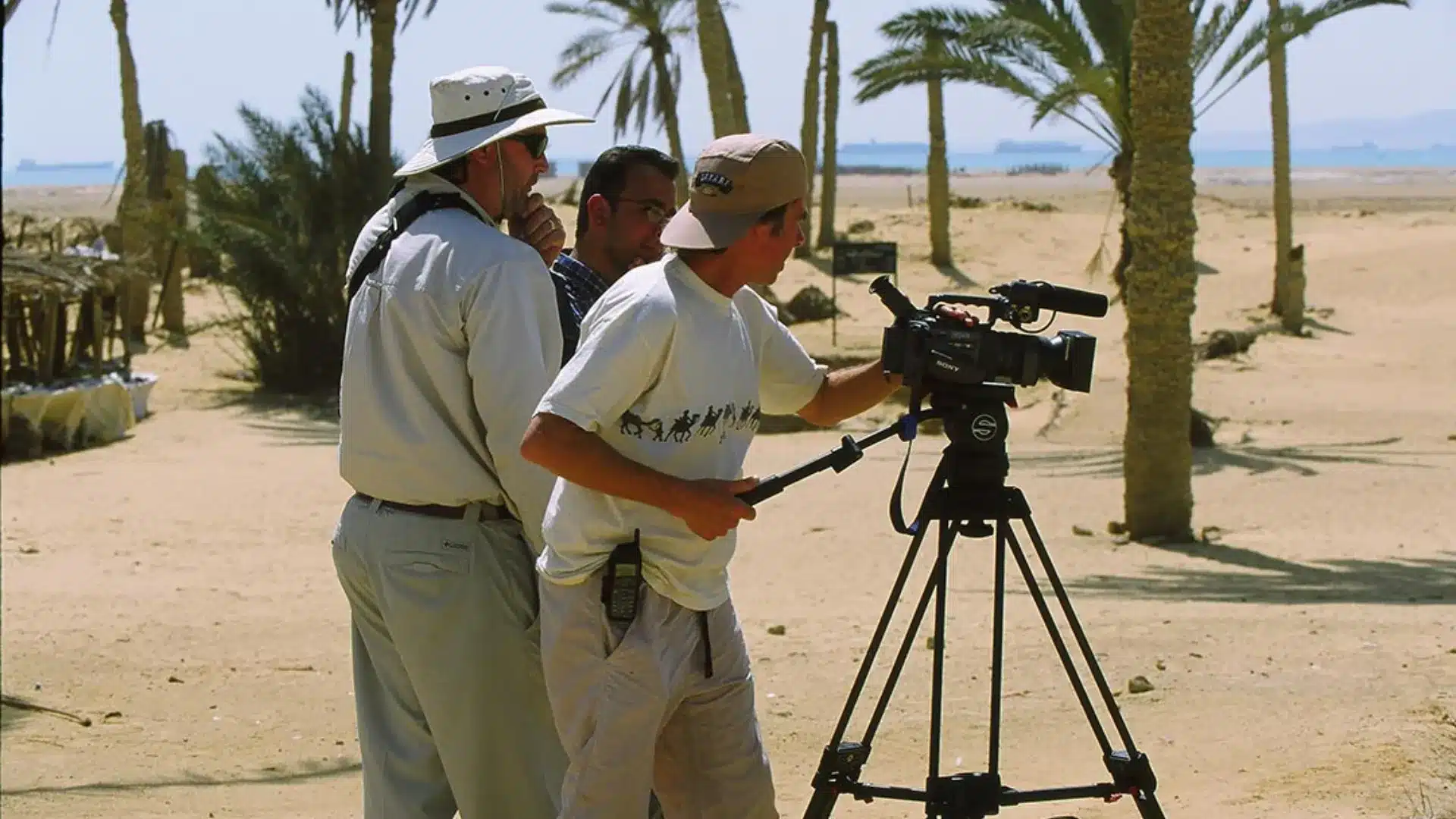
Hoodlum provides Film Production Services in Egypt for commercials, documentaries, factual entertainment, branded content, travel shows, historical programming, fashion, automotive, music videos and feature projects. Our local team supports productions across Cairo, Giza, Luxor, Aswan, Alexandria and the Red Sea coast, managing permits, security clearance, location access, customs documentation, crew logistics, transport, accommodation, safety planning and on-ground production coordination. You can see the full scope of what we do and the people behind it on our who we are page.
The country rewards productions that arrive with their paperwork in order. It is a spectacular but highly regulated production environment, and it is not a country for last-minute or informal filming, with public locations, heritage sites, government areas, religious spaces, equipment imports and aerial filming all requiring careful coordination. The right entry route, the right permits, the right security clearance and the right customs plan all need to be settled before the crew arrives, and the most efficient way to handle that is through an experienced local production partner.
Why Egypt Works for Heritage, Scale and Recognition
The country’s biggest production strength is the combination of world-famous heritage, genuine visual range and immediate recognition, all within one route. In a single, well-planned schedule a production can capture Cairo street scenes, the Pyramids of Giza, Nile coverage in Aswan, temple filming in Luxor, Red Sea resort visuals and desert landscapes, giving producers access to multiple visual worlds in one country. The creative opportunity is enormous, but it depends entirely on choosing locations that are realistic to permit, access and manage.
Cairo and Giza are the operational hubs, but the value sits in the heritage and the range. A documentary might build around the Pyramids and the temples of Luxor. A commercial might pair Cairo streets with desert and the Red Sea. A travel show might combine the Nile, the monuments and the coast. The country is strong because it offers unmatched ancient heritage, modern-city energy, desert and coast, and facilitated access to iconic government-owned sites, for productions prepared to plan thoroughly with local expertise.
The country is especially well suited to:
- Commercials and branded content
- Documentary and factual entertainment
- Travel and historical programming
- Fashion and automotive shoots
- Music videos and resort content
- Feature films and scripted projects
- Heritage and cultural productions
Hoodlum’s production support team helps crews choose locations that are not only visually strong, but also realistic to permit, access and manage.
Cairo and Urban Egypt
Cairo is the country’s strongest urban production base, giving crews dense urban energy, traffic, rooftops, markets, bridges, apartment blocks, Nile views, old cinemas, mosques, churches, business districts and layered street life. It is where most productions arrive, where crews, equipment and coordination are concentrated, and where permitting and customs begin.
Useful areas include Downtown Cairo, Emad El-Din Street, Talaat Harb Square, Zamalek, Garden City, Maadi, Heliopolis, Islamic Cairo, Coptic Cairo, Khan El Khalili and the Nile Corniche, suiting commercials, documentaries, fashion, travel content, street movement, rooftop scenes and cultural programming. The main planning issues are traffic, crowds, parking, loading, sound control and public-filming permissions. Hoodlum uses Cairo as the practical hub for Film Production Services in Egypt, arranging the permits, movement planning and logistics that keep a demanding city shoot on track.
Giza and the Pyramids
Giza is one of the most valuable filming regions in the country, home to the Pyramids of Giza, the Great Sphinx, dramatic desert approaches and nearby studio infrastructure at Egyptian Media Production City. It is unmatched for immediate, world-famous visual recognition.
The area suits travel campaigns, cultural documentaries, luxury commercials, establishing shots, fashion campaigns, feature sequences and tourism content. Filming around the Pyramids requires formal approval, security clearance and early scheduling, and productions should understand the practical requirements before building the creative around restricted access. Hoodlum coordinates the Pyramids and Giza approvals, security and timing so this iconic access becomes a workable, well-planned filming day rather than a late-stage risk.
Luxor, Aswan and the Nile
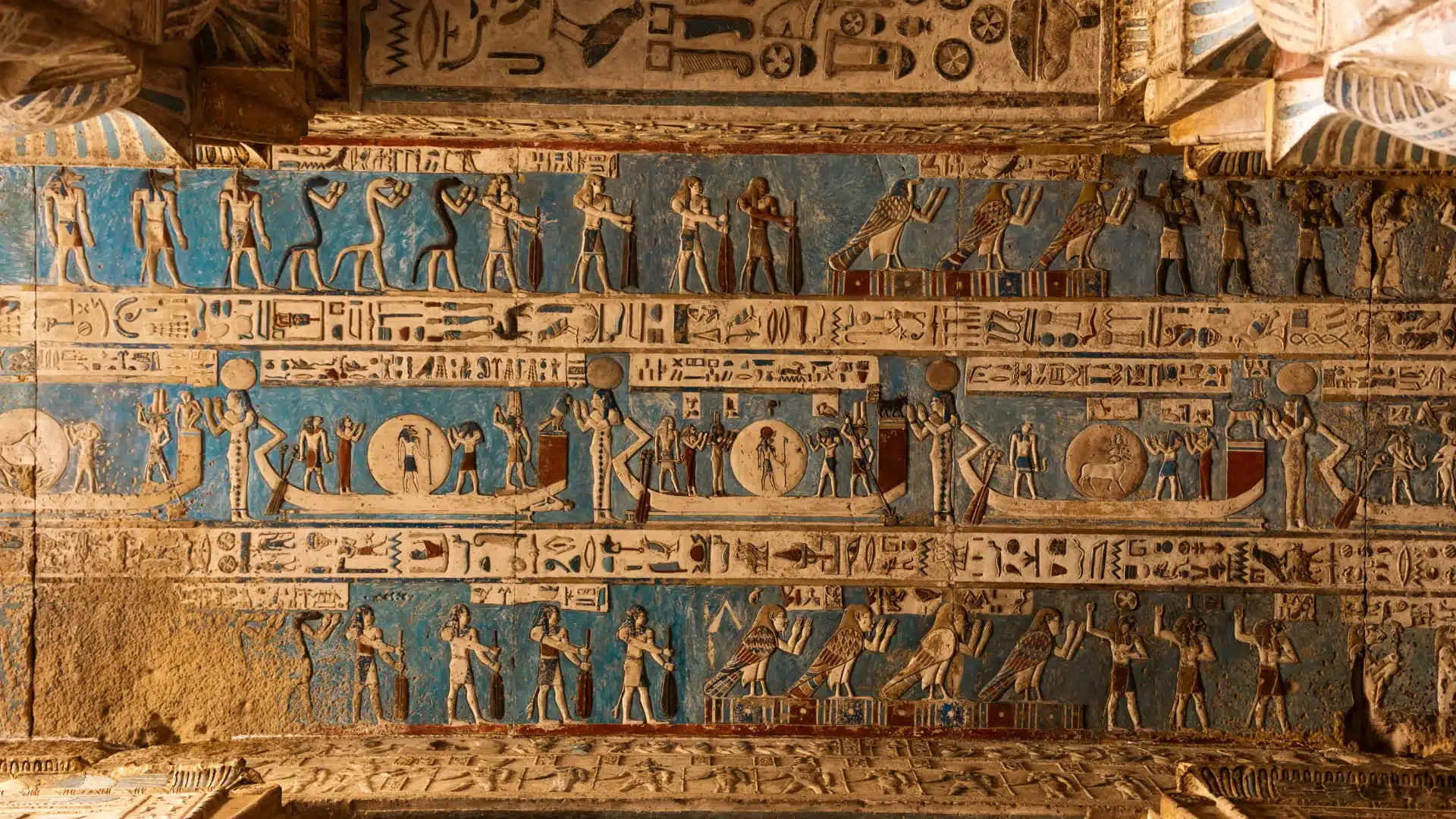
Luxor and Aswan offer the country’s strongest ancient-world and Nile production value. Luxor provides temple scale, tombs, desert-edge landscapes and heritage sites, while Aswan brings river movement, islands, Nubian villages, traditional boats and softer Nile-side imagery. Together they anchor the ancient Egypt that productions travel for.
Key locations include Karnak Temple, Luxor Temple, the Valley of the Kings, the Valley of the Queens, Philae Temple, Abu Simbel, Elephantine Island, Nubian villages and the Nile riverbanks, suiting historical documentaries, travel shows, cultural programming, premium commercials and scripted projects. Heat, visitor movement, site rules and travel logistics all need to be built into the schedule. Hoodlum handles the heritage-site approvals, site supervision, timing and Nile logistics so these extraordinary locations become workable filming days.
Alexandria, the Red Sea and the Desert
Beyond the Nile corridor, Alexandria brings a Mediterranean city look, while the Red Sea coast offers beaches, resorts, marinas and marine visuals at Hurghada, El Gouna, Sharm El Sheikh, Dahab and Marsa Alam, and the Western Desert and Fayoum provide dramatic desert landscapes. This adds coastal, marine and desert dimensions to the country’s range.
These locations suit tourism campaigns, luxury commercials, resort and lifestyle content, marine and adventure programming, and desert sequences. Red Sea filming requires planning around resort permissions, guest privacy, marine safety, dive operators, weather and sea conditions, while desert work needs remote logistics, heat management and permissions. Hoodlum supports resort access, marine coordination, desert logistics, local suppliers and transport so these coastal and desert environments become workable filming days.
Egyptian Media Production City and Studios
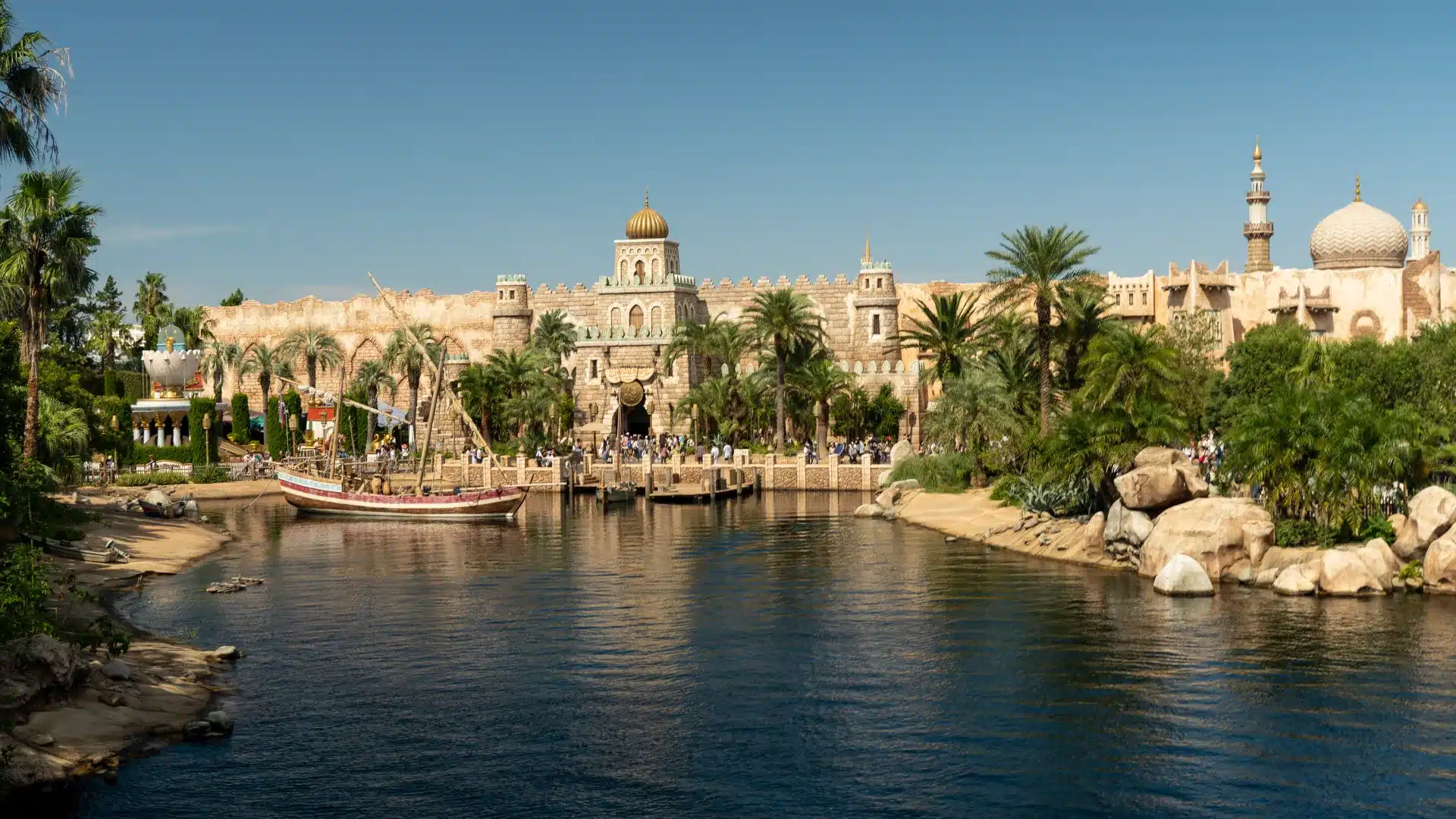
Egyptian Media Production City, known as EMPC and located in Giza, is one of the country’s most useful controlled production options, offering studios, backlot environments and controlled sets for productions needing privacy, technical control or reduced public-location complexity. It is a genuine strategic alternative to difficult public locations.
EMPC can support Pharaonic-style sets, Islamic-style streets, historic environments, urban backlots, controlled interiors, large studio setups and weather-protected filming, making it valuable for productions that want the look without the full complexity of restricted heritage or public sites. For some projects, a studio build protects both the creative and the schedule. Hoodlum helps crews compare real locations with studio alternatives so the production can choose the smarter route for each scene.
EMPC is also where Egypt’s incentive lives — a rebate of up to 30% on qualifying spend applies to productions using its premises, facilities and equipment, which is why the studio-versus-location decision is a budget decision as much as a creative one.
Entry, Visas and Crew Documentation
International crew should not rely on tourist entry for professional filming in the country, and should travel on the correct business or media-related entry route, supported by production documentation, so early planning matters.
Visa support usually includes a valid passport, a photo, an invitation letter from the local production partner, accommodation confirmation, a travel itinerary, project details and crew-role confirmation, with processing commonly taking around five to ten working days depending on nationality and route. Critically, a visa allows entry but does not approve filming, so film permits, security clearance, location access and customs clearance remain separate requirements that must be planned alongside it. Confirming each crew member’s route early is essential.
Because entry, permits, clearance and customs are separate but interlinked workflows, working with a local partner who manages them together is essential. Hoodlum helps productions match each crew member to the correct entry route, assemble the documentation and invitation, and align everything with the wider approval process.
Permits, Security Clearance and Location Access
Filming in Egypt requires early coordination with approved local production partners and the relevant authorities, which depending on the project may involve the media authority, the film commission, security and intelligence services, the interior and defence ministries, the tourism and antiquities ministry and site-specific bodies. Film permits and security clearance usually require a minimum of around four to six weeks, and more for the Pyramids, major temples, government buildings, religious sites, public streets, large crews, sensitive subjects or aerial filming.
Applications typically require a full script or treatment, synopsis, shooting schedule, location list, crew details, passport copies, production-company information and a complete equipment list, with insurance, a letter of intent or sample footage sometimes requested. Each location type carries different requirements: public streets, archaeological sites, religious spaces, hotels, private properties, desert areas, Nile locations and Red Sea resorts may all need different permissions, and heritage sites in particular require early planning, visitor management, site supervision and special timing. Hoodlum prepares clear, accurate submissions so authorities can review efficiently, and keeps the approvals aligned.
Private location agreements should confirm dates, approved filming areas, crew size, equipment and vehicle access, parking, loading, fees, security requirements, guest-privacy rules and restoration responsibilities, with resort and commercial sites often adding brand-visibility and access-hour restrictions. A Hoodlum location scout can propose suitable options, after which we negotiate access, terms and permissions, working alongside the film permit and security clearance rather than replacing them.
Drone Filming and Aerial Rules
Independent drone use is not permitted in the country, and international crews should not bring drones in or attempt private drone operation, as this is a firm restriction with serious consequences. This must be understood and planned around from the very start.
Aerial filming must be arranged through approved providers only, and drone footage may be subject to review before release, so productions should plan aerial requirements early and decide whether the treatment genuinely depends on drone footage or whether cranes, helicopters, licensed local options or stock aerials are more practical. Building a schedule around shots that cannot be approved is a serious risk. Hoodlum helps productions assess aerial options realistically before the creative depends on them, and arranges approved providers where aerial work is feasible.
Equipment Customs Clearance and the ATA Carnet
Film equipment entering Egypt should be prepared carefully before travel. Note that Egypt does not accept the ATA Carnet, so productions cannot rely on it for temporary duty-free import of gear. Instead, equipment typically enters under Egypt’s standard temporary admission procedures, which usually require a refundable customs deposit (or bank guarantee) against the declared value of the equipment, cleared through a local customs broker or production fixer, with the deposit refunded on re-export once the inventory is reconciled.
Customs paperwork should include a detailed equipment list with serial numbers and declared values, passport copies, a film permit or production support letter, and freight or airway-bill details where applicable, with camera, lighting, grip, audio and specialist kit all documented clearly before arrival. With correct documentation and deposit arrangements in place, clearance may be possible the same day or within a day, while incomplete paperwork or an unarranged deposit makes delays likely, so accuracy matters. The equipment is brought in temporarily and must be re-exported, so an accurate inventory is essential to reclaim the deposit.
Hoodlum helps productions prepare the correct temporary-import paperwork and deposit arrangements, coordinate customs support, and time everything so cameras, lighting, grip and sound gear move through with minimal delay.
Costs, Incentives and Production Support
Egypt does not operate a national percentage-based cash rebate of the kind found in Morocco or Jordan, but it is not without an incentive. Egyptian Media Production City offers a rebate of up to 30% on qualifying spend for productions that shoot within EMPC premises and use its stages, facilities and equipment, with additional relief available on certain connected off-site expenses and exemptions from import duties on production equipment.
The strategic implication is that budget structure drives incentive value: productions routing studio work, backlot builds and facility rental through EMPC recover real money, while location-only shoots monetise Egypt differently, through a cost base well below European equivalents and through facilitated access to government-owned heritage sites arranged via the official film bodies. Full regional comparison is on our film incentives hub.
The genuine strengths are the iconic locations, the value for money, the experienced local crews and the facilitation provided by official bodies, rather than a cash incentive. Because the approval environment is specialist, productions rely heavily on experienced local partners to unlock access efficiently and keep costs controlled. Hoodlum helps productions build a realistic budget around these genuine advantages, secure the official facilitation and access, and avoid the delays that erode a schedule.
Safety, Security and On-Ground Logistics
Egypt is generally workable for international productions when filming is properly approved and coordinated, with security planning treated as part of the production plan from the start rather than an afterthought. Security personnel may be assigned for public shoots, heritage locations, sensitive areas, large crews, government-adjacent filming or complex subject matter, and this is a normal, expected part of operating in the country.
Safety planning should include approved locations, professional drivers, secure equipment transport, crowd management, heat planning, medical support for remote locations, water safety for Nile and Red Sea filming, and clear communication between crew, fixers and security personnel. The main cities and heritage regions are well set up for production, while desert and remote areas require additional planning, and respect for cultural and religious sensitivities is essential throughout.
The climate is a major practical variable, with intense heat in Luxor, Aswan and the desert, so productions schedule around the cooler months and the best light and build heat management and contingency into the plan. Hoodlum helps productions operate within the approved security plan while keeping the shoot practical and efficient, and builds heat, movement and contingency thinking into the schedule.
When Egypt Is the Right Production Choice
Egypt is the right choice when a production needs world-famous heritage, the Pyramids and ancient temples, Nile and desert landscapes, a modern city and Red Sea coast, combined with competitive crew rates, facilitated access to iconic sites and studio options, and is prepared to plan around script review, security clearance and realistic lead times. It is especially strong for commercials, documentary and factual, travel and historical programming, fashion, automotive, music videos and feature projects.
It may be less suitable for productions needing a headline cash rebate, the ability to fly their own drones, last-minute scheduling, or filming without significant approval and security lead time. The country is highly workable when the entry route, film permits, security clearance, customs, aerial planning and location agreements are all settled early and managed together.
Common Production Mistakes to Avoid
The most frequent mistakes include:
- Leaving permit and security-clearance planning too late
- Assuming tourist entry covers professional filming
- Submitting vague location details that slow approval
- Changing the script or crew after approval and security review
- Bringing drones into the country or assuming private drone approval
- Arriving with incomplete equipment lists or missing serial numbers
- Treating heritage sites like ordinary public locations
- Underestimating heat in Luxor, Aswan and the desert, and traffic in Cairo
Most delays are preventable with early planning, accurate paperwork, aligned approvals and experienced local production support, arranged well before the crew travels.
How Hoodlum Supports Productions in Egypt
Hoodlum provides Film Production Services in Egypt for international crews that need reliable local support from early planning through to wrap. Our work covers permit coordination, security-clearance support, local fixer services, location research, private location agreements, heritage and public-location planning, crew and supplier coordination, visa support documentation, customs preparation, transport, accommodation, aerial filming guidance, studio coordination and on-set logistics.
From coordinating approvals for Cairo, Giza, Luxor and Aswan to managing customs clearance, location access and security planning across the Red Sea and desert regions, we help international crews navigate Egypt with confidence, bringing deep local knowledge and full-service support to one of the world’s most iconic filming destinations. Planning a shoot? Contact us to talk through permits, security clearance, local fixers, location scouting, customs support, aerial guidance and full on-ground production management.
Frequently Asked Questions
Do international crews need a visa to film in Egypt?
Yes, and crews should not rely on tourist entry for professional filming. They should travel on the correct business or media-related route, supported by a passport, invitation letter from the local partner, accommodation, itinerary and project details, with processing around five to ten working days. Importantly, a visa allows entry but does not approve filming, which needs separate permits and clearance.
Who issues filming permits?
The Egypt Film Commission (EFC) is the single official authority for foreign production permits and approvals in Egypt. A subsidiary of Egyptian Media Production City, it coordinates with the State Ministry of Information, the Ministry of Defence, the Ministry of Interior, the Ministry of Tourism and Antiquities, and the Customs Authority, so productions submit through one route rather than approaching each body separately. Allow a minimum of four to six weeks, and longer for the Pyramids, major temples, government or religious sites, large crews or aerial work.
Can productions fly drones in Egypt?
No. Independent drone use is not permitted, and crews should not bring drones into the country or attempt private operation. Aerial filming must be arranged through approved providers only, and footage may be reviewed before release, so aerial requirements should be assessed early, with cranes, helicopters or licensed local options often more practical.
Is Egypt an ATA Carnet country?
Not in practice. Egypt is a signatory to the ATA Convention but does not currently operate a National Guaranteeing Association, so ATA Carnets cannot be used for temporary equipment import. Equipment enters under Egypt’s standard temporary admission process instead, which requires a refundable customs bank guarantee or cash deposit against declared equipment value, cleared through a locally licensed customs broker. Allow two to four weeks before travel to arrange the broker and the deposit, and keep a detailed serial-number inventory so the deposit can be reclaimed on re-export.
Does Egypt offer a film rebate?
There is no national cash rebate, but Egyptian Media Production City offers up to 30% back on qualifying spend for productions shooting within its premises and using its facilities and equipment, plus relief on certain off-site costs and duty exemptions on imported equipment. Beyond EMPC, Egypt’s financial advantages come from competitive crew rates, a low cost base and facilitated access to government-owned heritage sites through the official film bodies.
What are the best filming locations?
Iconic options include the Pyramids of Giza and the Great Sphinx, Karnak and Luxor Temples, the Valley of the Kings, Abu Simbel and Philae, the Nile and Nubian villages of Aswan, Islamic and Coptic Cairo, Alexandria’s Mediterranean coast, the Red Sea resorts and the Western Desert, plus Egyptian Media Production City for studio work. Our full location-by-location breakdown covers access, permitting and best shooting season for each.
Useful Authority Links
- Egypt eVisa Portal
- Egyptian Media Production City (EMPC)
- Egypt Ministry of Tourism and Antiquities
- Egyptian Customs Authority
- Egypt State Information Service
- Experience Egypt – Tourism
Ready to bring your production to Egypt? Hoodlum handles the permits, security clearance, visa support, location scouting, customs preparation, aerial guidance, studio coordination, transport, security and full on-ground production management, so you can focus on the work in front of the lens. Get in touch with our team to start planning, and tell us your locations, dates and creative brief.
For more information, view our Hoodlum Film Fixers Egypt Google Business Profile.