















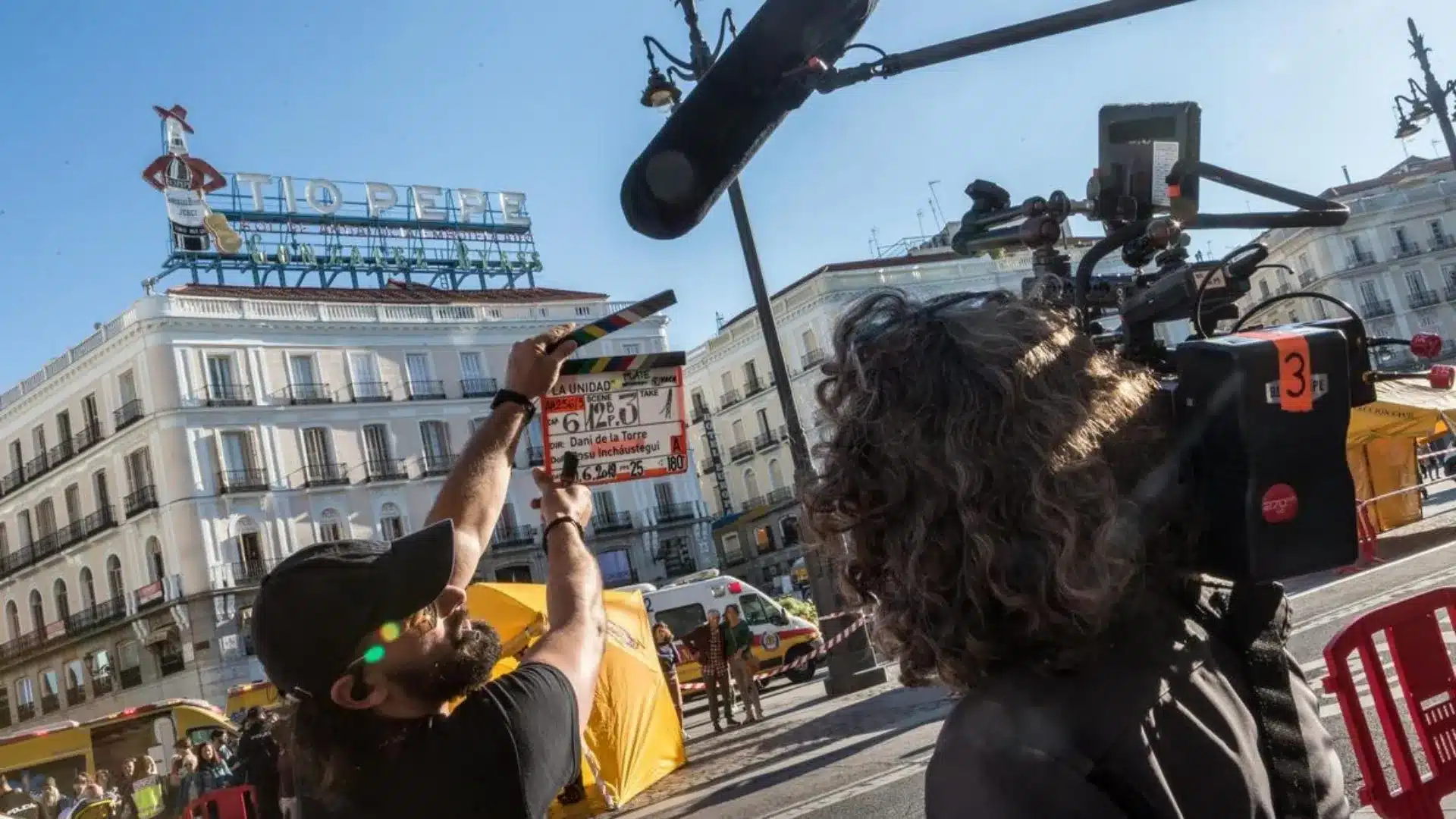
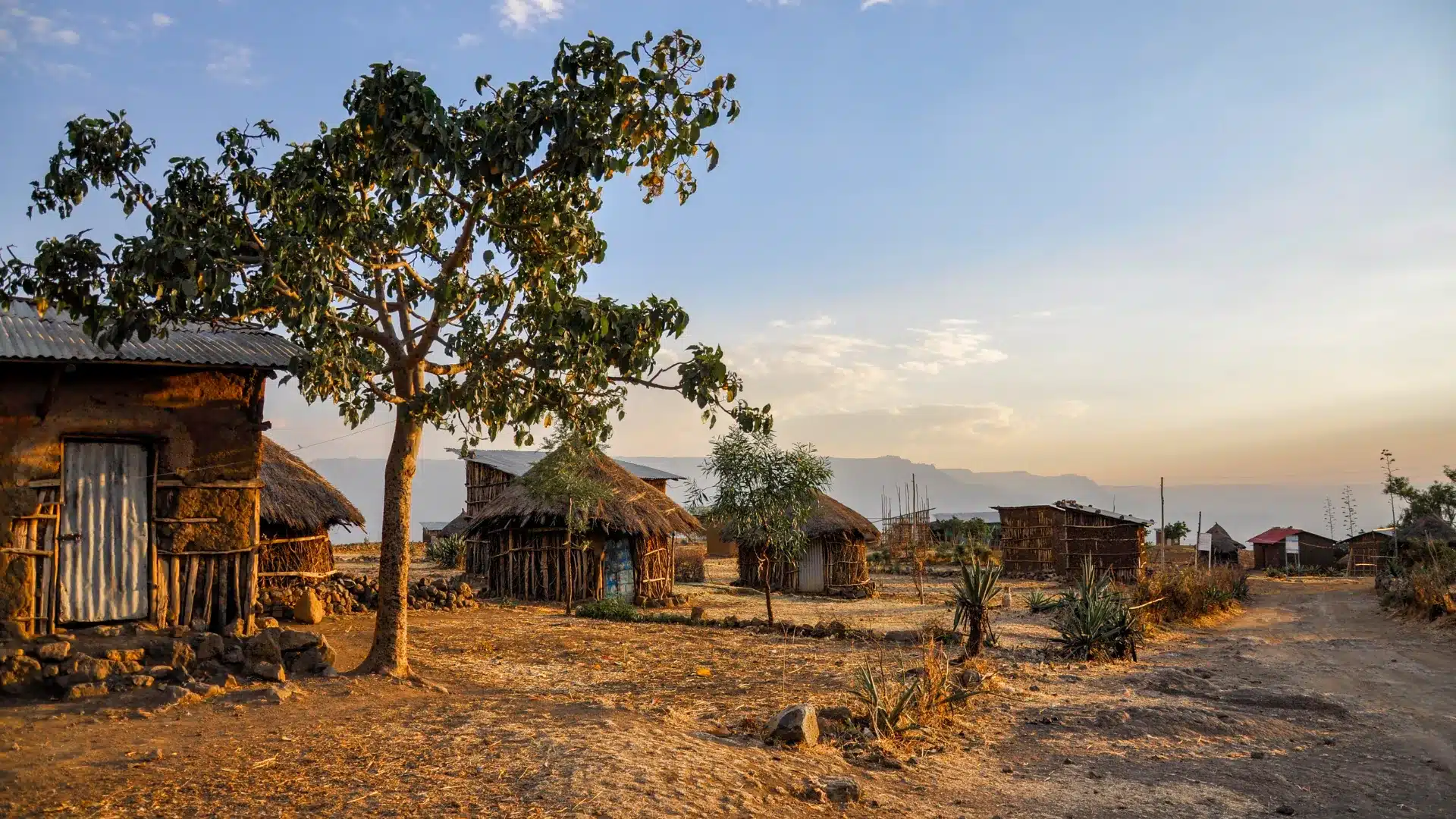
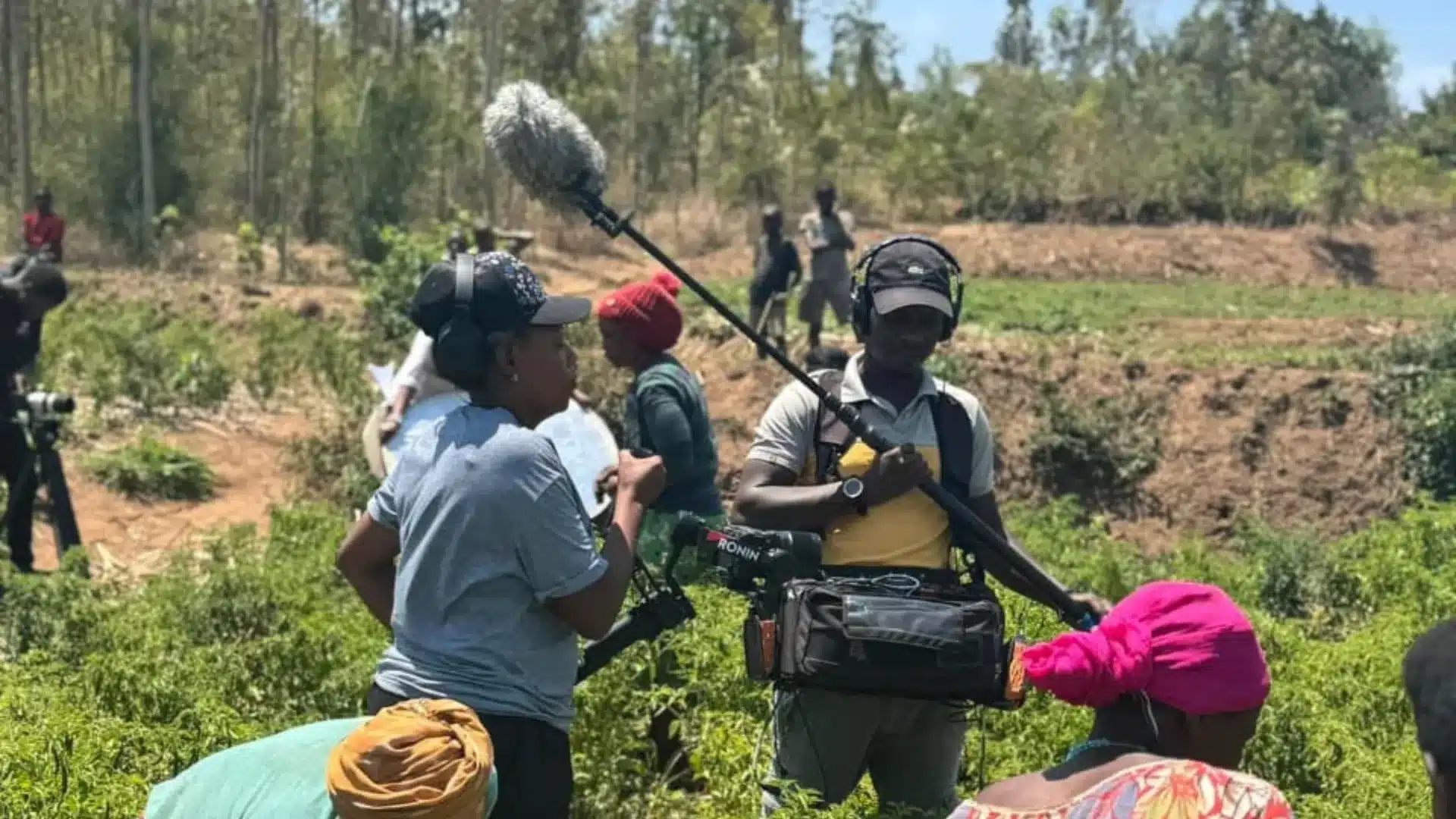
Ethiopia offers material that genuinely doesn’t exist elsewhere. Rock-hewn churches carved down into the ground at Lalibela, still in active use eight centuries later. A volcanic depression 100 metres below sea level with sulphur fields and lava lakes. Highland escarpments in the Simien Mountains with endemic wildlife. Castles at Gondar. Obelisks at Aksum. The Omo Valley’s cultural landscape. And a capital at 2,350 metres that has never been colonised, with a coffee culture that invented the thing.
Hoodlum provides Film Production Services in Ethiopia for documentaries, commercials, travel campaigns, cultural films, factual television and specialist location-based productions across Addis Ababa, Lalibela, Gondar, Aksum, Bahir Dar and Lake Tana, the Simien Mountains, the Danakil Depression, the Omo Valley and the Great Rift Valley. Our team handles Government Communication Service accreditation, filming permits, regional authority coordination, heritage and religious site access, local fixers, location scouting, temporary import customs planning, ECAA drone approvals, translator coordination, security planning and full on-ground production management. You can see the wider scope of what we do and the team behind it on our who we are page.
Ethiopia is visually extraordinary and administratively demanding, and the second part is what determines whether a shoot works. Foreign media and documentary crews need accreditation before filming. Regional authorities have their own requirements on top of the national permit. Religious sites are governed by the church, not the state. Equipment cannot arrive on a carnet. And crew cannot get a visa at the airport. None of it is insurmountable, but almost none of it can be solved after the crew has landed.
Why Ethiopia Works for Heritage, Landscape and Documentary
Ethiopia’s core strength is subject matter that carries a film on its own. Lalibela, the Danakil, the Simiens and the Omo Valley are not backdrops — they’re reasons a commissioner greenlights a project. For documentary, factual, travel and cultural programming, that’s the whole proposition.
The second strength is range within a single country: highland cities, medieval religious architecture, alpine escarpment, volcanic desert, Rift Valley lakes, and agricultural and pastoral landscapes. The third is that Ethiopia has a long-standing tradition of hosting international documentary crews, so the fixer and translator networks are experienced and the authorities understand what a production is asking for.
Ethiopia is especially well suited to:
- Documentary and factual television
- Travel and cultural programming
- NGO, impact and development films
- Religious and heritage stories
- Landscape, wildlife and natural history
- Commercials with a heritage or landscape brief
- Contributor-led and interview-based work
- Expedition and adventure formats
Filming in Addis Ababa
Addis Ababa is the production base. It’s where crews arrive, where accreditation and permits are processed, where customs clearance happens and where fixers, translators, vehicles and what local equipment exists are all concentrated.
As a location it offers city streets and traffic, the vast Merkato market, hotels and controlled interiors, the National Museum and cultural institutions, business districts, residential neighbourhoods, university and civic settings, coffee culture, and the Entoto hills above the city. It’s practical for documentary, commercials, corporate content, interviews, branded work and factual television.
The planning issues are permissions, traffic, public filming access, sound, security and location control. Altitude is a real factor — at 2,350 metres, crews arriving from sea level should expect reduced output in the first day or two, and physically demanding setups belong later in the block.
Filming in Lalibela, Gondar and Aksum
Lalibela is Ethiopia’s most significant filming location and one of the most extraordinary religious sites anywhere — eleven churches carved downward out of solid rock in the twelfth and thirteenth centuries, connected by tunnels and trenches, and still functioning as active places of worship. Gondar’s Fasil Ghebbi is a walled royal compound of castles and palaces. Aksum holds the obelisks and the claimed resting place of the Ark of the Covenant. Lake Tana’s island monasteries hold illuminated manuscripts and are reached by boat. Harar Jugol, in the east, is a walled Islamic city of over eighty mosques.
All of these carry heritage designation, and most are governed by the Ethiopian Orthodox Tewahedo Church as well as by heritage authorities. Filming requires GCS approval, regional authority approval, site-specific permission, and religious authority coordination — and the religious layer is the one productions underestimate. Access is negotiated with clergy, restrictions apply on crew size, equipment, footwear and areas, women’s access is restricted at certain monasteries, and timing must work around ceremonies and worship rather than the other way round.
Ethiopian religious festivals — Timkat in January, Meskel in September, Genna at Ethiopian Christmas — are extraordinary to film and require substantially more lead time and negotiation than ordinary access.
Filming in the Simien Mountains, Danakil and the Omo Valley
The Simien Mountains give highland escarpment, dramatic drops, gelada baboon troops, walia ibex, mountain roads and UNESCO-recognised scenery. The Danakil Depression offers volcanic terrain, the Erta Ale lava lake, the sulphur fields at Dallol, salt flats and salt caravans, and some of the highest sustained temperatures recorded anywhere on earth. The Omo Valley offers a cultural landscape of exceptional documentary value that requires careful liaison and genuine ethical planning.
These are the locations that need the most preparation. Regional travel permits, local authority approvals, security assessments, specialist vehicles, guides and translators, heat and altitude planning, medical support, satellite communication, and water and fuel planning all apply.
The Danakil in particular is not a standard location. Temperatures, remoteness, terrain and the logistics of moving a crew and equipment safely all mean the schedule is dictated by conditions rather than by the shot list. Simien work involves altitude and mountain weather. Omo Valley filming requires proper contributor consent, cultural sensitivity and local guidance — and a production approaching it as a photo opportunity rather than as a relationship will not get what it came for, and shouldn’t.
Crew Visas and Entry Requirements for Ethiopia
Almost every international crew member needs an e-visa arranged before travel. This is where productions most often get caught out, because Ethiopia’s entry rules changed and a great deal of older guidance still describes visa on arrival as a routine option. It isn’t.
Visa-free entry now applies only to citizens of Kenya and Djibouti. Visa on arrival has been narrowed to a very limited category processed at Bole. For a crew arriving from Europe, North America, Australia or most of Africa and Asia, there is no fallback at the airport — an airline will refuse boarding without an approved e-visa.
Applications go through the official portal at evisa.gov.et, which covers 191 nationalities. Apply there and nowhere else: a number of lookalike sites charge a markup for the identical application, and several rank well in search results. A single-entry tourist e-visa runs roughly USD 52 to 62 depending on validity, and productions should check whether the project requires a business or media category rather than tourist. Processing is usually around three working days, though three to five is the safer assumption and peak season adds delay.
One routing constraint that catches multi-country shoots: e-visa holders must enter Ethiopia through Addis Ababa Bole International Airport. Entering through any other port of entry is prohibited. A production planning to cross overland from Kenya or Djibouti, or to fly into a regional airport, needs to solve that at the consular stage rather than at the border.
Passports must be valid at least six months beyond arrival with at least one blank page, and officers may ask for proof of onward or return travel. Yellow fever vaccination proof is required from travellers aged nine months or older arriving from a country with yellow fever transmission risk, and from anyone who has transited more than 12 hours through an airport in such a country — the vaccine must be administered at least ten days before entry. Malaria prophylaxis is recommended depending on the filming region.
Hoodlum confirms the correct visa category per crew member, prepares the supporting production documentation and makes sure the arrival routing actually works with the visas the crew are holding.
Government Communication Service Accreditation
Foreign media and documentary crews must obtain accreditation before filming, handled through the Government Communication Service. This is the single most important step for productions working on documentaries, factual television, media projects, cultural stories or contributor-led shoots — and it gates most of what follows.
Accreditation documentation typically includes a project synopsis and editorial purpose, crew passports, crew CVs, a letter from the production company or employer, an equipment list, the shooting schedule, proposed locations and local partner details. Processing takes a minimum of two to three weeks, at approximately USD 300 to 500 depending on scope, and longer where the project involves sensitive subjects, government institutions, regional locations or contributor access.
The most common failure here is starting late. Accreditation is not a formality that can be run in parallel with everything else in the final fortnight — regional permits, location permissions and drone approvals all sit downstream of it.
Hoodlum prepares accreditation documents so crew information, project purpose, locations and equipment lists are complete and consistent before submission, which is the difference between two weeks and six.
Film Permits and Production Approval in Ethiopia
General filming approval is handled through the Ethiopian Government Communication Service, with regional authority approvals required depending on location. Some locations need additional permissions from local administrations, religious authorities, cultural site managers or security bodies.
Ethiopia’s federal structure matters here more than in most territories. The regional states — Amhara, Tigray, Oromia, Afar, SNNPR and the others — have their own requirements, and some regions require travel permits in addition to filming approval. A national permit does not automatically open a region.
Applications generally require a project synopsis, crew passports, a production company letter, shooting schedule, exact location list, equipment list, regional filming details, local partner information and drone details where applicable. Processing generally takes two to four weeks minimum for the general permit, with regional, heritage and religious approvals running alongside on their own timelines.
Important restrictions apply. Filming government buildings, military sites, airports, infrastructure, border areas and sensitive public locations requires special permission and is not always granted.
Hoodlum identifies which approvals a schedule actually needs, prepares the submissions and coordinates with national, regional, religious and local authorities before the crew moves — because discovering a missing regional permit on the road to Mek’ele costs a shoot day at minimum.
Drone Filming and Aviation Rules in Ethiopia
Drone use in Ethiopia is strictly regulated, and both import and operation require prior approval from the Ethiopian Civil Aviation Authority. Unauthorised use may result in confiscation, penalties or disruption to the whole production.
Restricted zones include urban centres, government sites, borders, airports, military locations, sensitive infrastructure and crowded public areas. Processing takes a minimum of two to three weeks at approximately USD 300 to 600, and longer for urban Addis Ababa, heritage sites, border regions and controlled airspace.
Local drone availability is limited, so importing equipment is generally necessary where aerial filming is essential — but importation must not happen without approval already in place. A drone arriving unapproved is a confiscation risk at the airport before the shoot has begun.
Documentation typically covers the equipment kit list with serial numbers and values, flight plan, purpose of use, operator details, proposed locations, production schedule and the film permit or accreditation details.
Aviation clearance is also not the whole picture. Heritage site management governs flights over protected sites, religious authorities govern flights over churches and monasteries, and protected-area authorities govern flights over the national parks. Each can refuse where the ECAA position would otherwise allow. Hoodlum aligns drone planning with the filming permit, location access and customs process, and builds a non-drone alternative into the shot plan where approval is uncertain.
Equipment Customs Clearance in Ethiopia
Ethiopia does not accept ATA Carnets. A carnet will not clear equipment on arrival, and productions arriving with one and nothing else have a problem at the airport.
Professional filming equipment enters on a temporary import permit through the Ethiopian Customs Commission. Customs procedures can be complex and advance coordination is essential — a local fixer or production service partner is strongly recommended rather than optional.
Documentation typically includes the equipment kit list with make, model and serial numbers, purchase or replacement values per item and in total, crew details, a production support letter, permit or accreditation information and the temporary import documentation itself. Radio, satellite and drone equipment should be flagged early rather than discovered during inspection.
Processing is usually one to three days, though timelines vary with shipment size, equipment type, documentation quality and arrival conditions. A contingency of approximately USD 500 to 1,500 is a reasonable planning figure, though costs depend on the import arrangement and declared value.
On departure, the temporary import list must be reconciled to demonstrate that every imported item has been re-exported. Hoodlum prepares equipment lists in the format customs expects, coordinates clearance against crew arrival and the first filming day, and advises on what is worth importing against what can be sourced in Addis Ababa.
Film Incentives in Ethiopia
Ethiopia does not currently operate a formal national film rebate, tax credit or cash incentive programme for international productions. Productions should not build budgets around incentive recovery.
Cost planning instead focuses on permits, GCS accreditation, regional approvals, customs clearance, local fixers, transport, translation, security, location access and remote logistics. Before budgeting, confirm visa costs, accreditation fees, film permit and regional approval costs, private location rates, drone permit costs, customs clearance, security, translator and fixer rates, vehicle and driver costs, and remote logistics and accommodation.
Remote logistics is usually the largest single line. A Danakil or Omo Valley block costs a multiple of an equivalent number of days in Addis Ababa, and that ratio is where budgets go wrong rather than in the permit fees.
For productions weighing Ethiopia against territories that do operate incentive programmes, our film incentives hub compares rates, minimum spends and caps across markets. Ethiopia is selected for subject matter and production value rather than for a rebate calculation, and the budget should reflect that from the start.
Safety, Security and Practical Logistics in Ethiopia
Ethiopia is workable for filming in major areas, but conditions vary significantly by region and this belongs in planning rather than in a disclaimer. Location scouting and formal risk assessment are essential for remote regions, border areas, sensitive subjects and areas affected by instability.
As a concrete reference point, the US State Department renewed a Level 3 “Reconsider Travel” advisory for Ethiopia in April 2026. That does not make a shoot impossible — productions work in Ethiopia regularly and successfully — but it does mean insurance, crew consent, regional routing and client risk sign-off need handling explicitly rather than assumed. Advisories from other governments differ, and the position moves, so check current guidance for the specific regions in the schedule.
Beyond security, the practical constraints are distance and environment. Medical access planning matters outside Addis Ababa, and evacuation times from Danakil, Simien and Omo are significant. Heat planning is essential for Danakil and lowland work; altitude awareness applies across the highlands. Satellite or backup communications are sensible for remote routes. Vetted drivers and fixers, travel permits for certain regions, and equipment security throughout.
Hoodlum assesses regional risk, coordinates security support where required and keeps crew movement aligned with current local guidance.
When Ethiopia Is the Right Production Choice
Ethiopia is the right choice when a production needs ancient heritage that exists nowhere else, extreme landscape, cultural depth, religious architecture in active use, highland and desert environments and genuine documentary access.
It is especially strong for documentary and factual television, travel and cultural programming, NGO and impact films, religious heritage stories, landscape and natural history, expedition formats and contributor-led work.
Ethiopia may be less suitable for productions needing simple customs procedures, fast drone approvals, easy regional movement, filming in sensitive areas at short notice, or an incentive to close a budget gap. Those shoots can still work, but they need advance planning, realistic timelines and experienced local support.
Common Production Mistakes to Avoid in Ethiopia
- Planning to get a visa on arrival at Bole — for almost all nationalities that is no longer available
- Booking crew to enter via a regional airport or overland, when e-visa holders must enter through Bole
- Applying for a visa through a third-party site at a markup instead of evisa.gov.et
- Leaving GCS accreditation too late — it gates most other approvals
- Forgetting crew CVs, which accreditation requires
- Submitting vague location descriptions
- Assuming a national permit covers regional filming
- Treating religious sites as heritage sites, when the church governs access
- Scheduling around a festival without the additional lead time it requires
- Bringing a drone without ECAA approval already in place
- Assuming an ATA Carnet will clear equipment — Ethiopia is not a carnet country
- Arriving without a detailed serialised equipment kit list
- Underestimating customs complexity and clearance time
- Ignoring rainy season road conditions between June and September
- Planning remote shoots without security assessment or medical evacuation planning
- Working without translators or local fixers outside Addis Ababa
How the Main Approvals Fit Together
One approval does not unlock the whole production.
A visa may allow a crew member to enter Ethiopia, but it does not approve filming. GCS accreditation may recognise foreign media or documentary activity, but it does not automatically approve every region, private location, religious site or drone flight. A general film permit may support the production, but it does not replace regional authority approvals. A private location agreement may secure access, but it does not override cultural or religious permissions. A temporary import permit may allow equipment into the country, but it does not confirm where that equipment can be used. ECAA drone approval must be handled separately again.
A complete production plan connects:
- Visa and entry requirements, including the Bole port-of-entry constraint
- GCS accreditation
- Film permit approval
- Regional authority permissions and travel permits
- Religious and cultural site permissions
- Private location agreements
- Drone approval through ECAA
- Customs clearance through the Ethiopian Customs Commission
- Security planning and regional risk assessment
- Transport, translator and communications support
Hoodlum keeps these moving parts aligned so the crew can focus on filming rather than chasing approvals between Addis and Lalibela.
How Hoodlum Supports Productions in Ethiopia
Hoodlum provides Film Production Services in Ethiopia for international crews needing experienced local coordination from early planning through wrap. Our support covers visa guidance and entry routing, Government Communication Service accreditation, film permit coordination, regional authority liaison, cultural and religious site access, local fixers, location research and scouting, private location negotiations, crew and supplier sourcing, translator support, ECAA drone permit planning, temporary import and customs clearance support, transport logistics, security and regional risk planning, and full on-ground production management.
From Addis Ababa’s highland capital to Lalibela’s rock-hewn churches, Gondar’s castles, the Simien escarpment, the Danakil’s volcanic extremes and the Omo Valley, we help productions reach the strongest locations in Ethiopia with accreditation, permits, customs planning and logistics already in place. Planning a shoot? Contact us to talk through accreditation, permits, visas, local fixers, location scouting, customs coordination, drone planning and on-ground production management.
Frequently Asked Questions
Do international film crews need a visa for Ethiopia?
Yes, and almost all crew need an e-visa obtained before travel through evisa.gov.et. Visa-free entry applies only to Kenyan and Djiboutian citizens, and visa on arrival has been narrowed to a very limited category — do not plan on getting one at Bole. E-visa holders must also enter specifically via Addis Ababa Bole International Airport; other ports of entry are prohibited.
How long does an Ethiopian e-visa take and what does it cost?
Usually around three working days, though three to five is the safer planning window and peak season adds delay. A single-entry tourist e-visa costs approximately USD 52 to 62 depending on validity. Apply only through the official portal — lookalike sites charge a markup for the same application.
Is media accreditation required to film in Ethiopia?
Yes. Foreign media and documentary crews must obtain accreditation through the Government Communication Service before filming. It applies to documentaries, factual television, media projects, cultural stories, NGO films and contributor-led shoots, and it gates most other approvals.
How long does Ethiopian media accreditation take?
A minimum of two to three weeks, at approximately USD 300 to 500 depending on project scope. Longer for sensitive subjects, government institutions, regional locations or contributor access. Starting late is the most common cause of a delayed shoot here.
Who issues film permits in Ethiopia?
The Ethiopian Government Communication Service is the main national authority, with regional state authorities also involved depending on location — and some regions require travel permits as well. Heritage sites, religious authorities, protected-area authorities and security bodies may each require separate approvals.
Can productions film at Lalibela and Ethiopia’s religious sites?
Yes, and they are among the country’s strongest locations, but access is governed by the Ethiopian Orthodox Tewahedo Church as well as by heritage and state authorities. Restrictions apply on crew size, equipment, footwear and areas, some monasteries restrict women’s access, and timing must work around worship and ceremonies. Festivals such as Timkat and Meskel need substantially more lead time.
Can foreign productions fly drones in Ethiopia?
Yes, but drone use is strictly regulated and both import and operation require prior approval from the Ethiopian Civil Aviation Authority. Allow two to three weeks minimum at approximately USD 300 to 600. Importing a drone without approval risks confiscation on arrival, and ECAA clearance does not cover heritage, religious or protected-area flights, which are governed separately.
Is Ethiopia an ATA Carnet country?
No. Ethiopia does not accept ATA Carnets. Professional filming equipment enters on a temporary import permit through the Ethiopian Customs Commission, with a serialised kit list and declared values. Clearance is usually one to three days, and a local fixer or production service partner is strongly recommended to manage it.
Does Ethiopia offer film rebates or tax incentives?
No. Ethiopia does not currently operate a national film rebate or tax incentive programme. Budget around permits, accreditation, customs, fixers, transport, translation, security and regional logistics — remote logistics is usually the largest single cost. Compare territories that do offer incentives on our film incentives hub.
Is Ethiopia safe for film crews?
Conditions vary significantly by region. Major urban areas are generally workable, but the US State Department renewed a Level 3 “Reconsider Travel” advisory in April 2026, some regions require travel permits, and formal risk assessment is essential for remote, border and politically sensitive areas. Productions work in Ethiopia regularly, but insurance, crew consent and client sign-off need handling explicitly.
When is the best time to film in Ethiopia?
The dry season is more practical for regional movement, mountain filming, heritage locations and desert shoots. The main rains run roughly June to September and affect road access, exterior schedules and remote movement. The rainy season can still work for controlled city shoots, but build schedule flexibility in.
Useful Authority Links
- Ethiopia eVisa portal
- Government Communication Service
- Ethiopian Civil Aviation Authority
- Ethiopian Customs Commission
- Ethiopian Tourism Organization
Ready to bring your production to Ethiopia? Hoodlum handles the accreditation, permits, visa guidance, heritage and religious site access, location scouting, temporary import customs coordination, drone planning, local crew, translators, security planning and full on-ground production management. Get in touch with our team to start planning.
For more information, view our Hoodlum Film Fixers Ethiopia Google Business Profile.