Depending on the production, recommended measures include local security personnel, police liaison, experienced drivers, translator/interpreter, equipment security, and marine safety support for island filming.
Bissau
Bafatá, Gabu, Canchungo, Farim, Cacheu
Pular is the most widely spoken (35%), followed by Maninka (25%) and Susu (18%)
West African CFA franc, XOF
Hot & Humid
Official eVisa Portal: https://www.evisa.gov.gw
International productions should work with a local production partner to coordinate filming approvals with the relevant government authorities.
Filming permissions may involve the Ministry responsible for Culture and Tourism, local municipal authorities, Police Authorities, Port Authorities, Airport Authorities, Protected Area Management Authorities and private property owners.
Private filming locations are negotiated directly with property owners. Hoodlum coordinates location scouting, negotiations, contracts, permissions and local logistics.
Quoted individually according to the location, duration, crew size and exclusivity requirements.
Commercial drone operations should receive approval before arrival, potentially requiring sign-off from the Civil Aviation Authority, local authorities, property owners and security authorities. Additional approvals apply near airports, ports, government buildings and military installations.
Requires drone registration, pilot licence (where applicable), insurance, flight plan, GPS coordinates, risk assessment and production schedule.
Civil Aviation Authority (AACGB).
Allow 10–15 working days.
Quoted according to the complexity of the operation.
Guinea-Bissau is not currently an ATA Carnet country. Temporary importation procedures should be arranged through Customs before equipment arrives.
Guinea-Bissau Customs Administration.
Guinea-Bissau offers unique West African filming opportunities, including colonial architecture, coastal villages, mangroves and the Bijagós Archipelago. Productions should plan carefully due to limited infrastructure outside Bissau, seasonal road conditions, limited equipment rental, and limited medical facilities outside major centres.
Depending on the production, recommended measures include local security personnel, police liaison, experienced drivers, translator/interpreter, equipment security, and marine safety support for island filming.
Guinea-Bissau does not currently offer a formal film rebate or production incentive programme. Government authorities may assist with filming permissions and location access on a project-by-project basis.

Fill in our client brief and we’ll get back to you with everything you need to start filming in this region.
















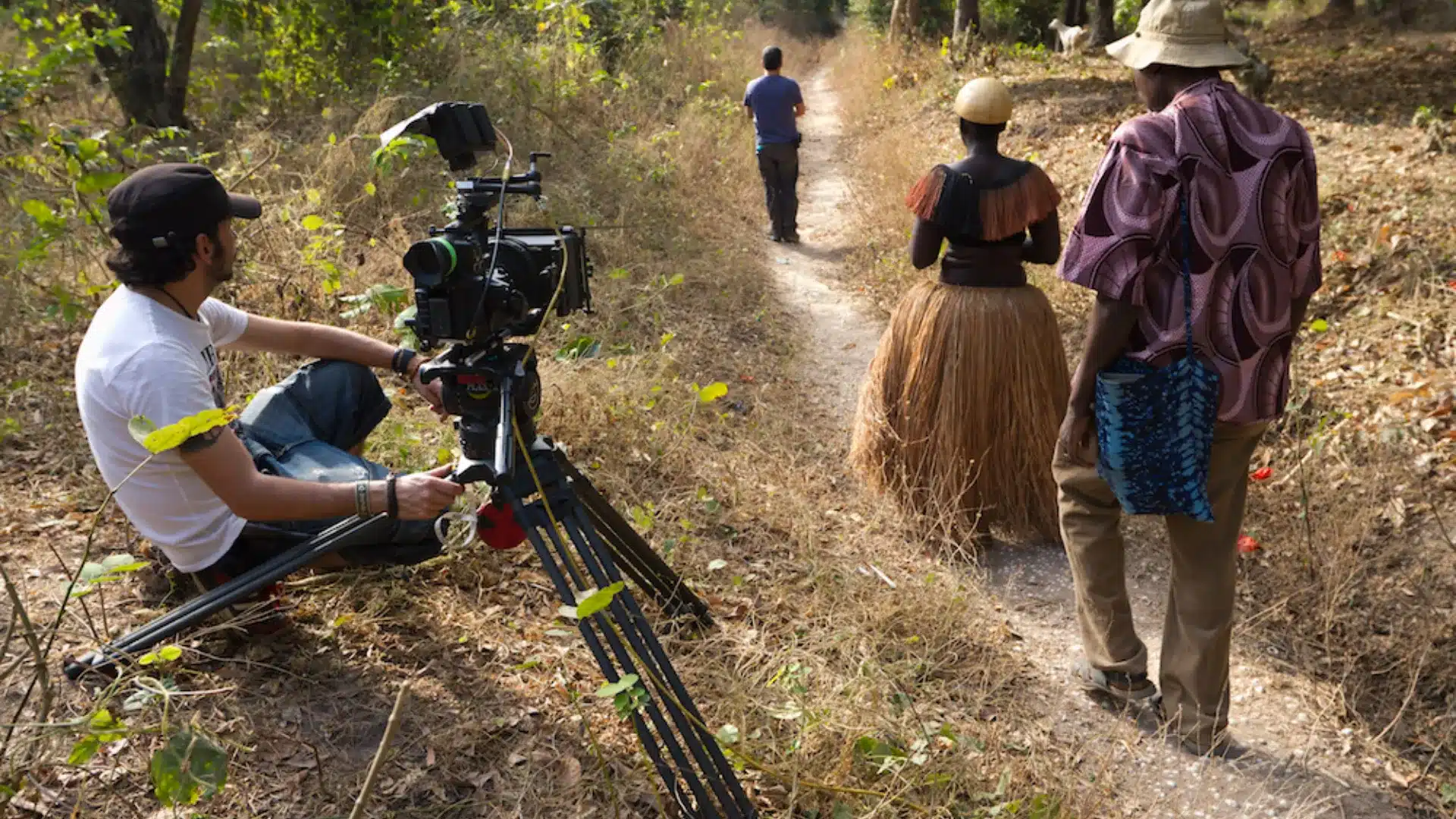
Guinea-Bissau sits along the Atlantic edge of West Africa, defined by coastal wetlands,…
Hoodlum provides practical, fixer-led Film Production Services in Guinea-Bissau for international productions that need permits, local crew, location access, customs, drones, transport, security and full production support. Guinea-Bissau is a specialist West African filming environment where productions should plan carefully around visas, work authorisation, filming permits, equipment customs clearance, drone restrictions, island access, road conditions, rainy-season logistics, medical planning and local authority coordination.
Guinea-Bissau can support documentary, factual television, NGO, development, humanitarian, cultural, environmental, conservation, maritime, current affairs, commercial and field-based productions. The country offers production environments around Bissau, Osvaldo Vieira International Airport, private properties, public spaces, ports, coastal communities, river routes, rural interiors, protected areas and the Bijagós Islands. However, official public information can be limited, so productions should confirm all costs, processing times and permit routes locally before quoting final budgets or locking travel dates.
International film and television crews travelling to Guinea-Bissau for professional filming should obtain the correct entry visa before travel. Business or professional filming travel should not be treated as tourism. Depending on nationality, the visa process may be handled through an embassy, consulate, e-visa route or pre-authorisation system. A local production partner or fixer is strongly recommended for invitation letters, permit coordination, customs planning and local access.
Hoodlum supports productions in Guinea-Bissau with visa guidance, work authorisation planning, filming permit coordination, fixer services, local crew sourcing, private location access, drone permission checks, customs pre-clearance, equipment documentation, transport, accommodation, security liaison, medical planning, island logistics and complete on-the-ground production management. Guinea-Bissau can work well for international crews when the production is locally supported and all approvals are confirmed before arrival.
Guinea-Bissau works for productions that need West African access, Portuguese-speaking context, coastal environments, river routes, island communities, conservation settings, NGO and humanitarian stories, development projects, cultural filming, maritime access or controlled field production. The country can offer strong location value for productions that need authentic access and a smaller production footprint.
Bissau is the main production base. It is the practical starting point for crew arrivals, visa and immigration coordination, local fixer meetings, accommodation, transport allocation, customs handling, permit follow-up and controlled filming. From Bissau, productions may move to coastal areas, ports, rural locations, river routes or the Bijagós Islands depending on approvals, weather, access and logistics.
Guinea-Bissau requires local knowledge because official procedures may not always be centrally published or easy to confirm online. Visa eligibility, work authorisation, film permit costs, drone permissions, customs deposits and local access requirements should be checked through the local fixer and relevant authorities before production commitments are made.
The country is most practical for productions that can allow time for permit confirmation, customs pre-clearance, local location checks and route planning. Hoodlum helps producers build a realistic plan around entry requirements, work permissions, filming permits, customs, drones, security, medical considerations and daily logistics.
Bissau is the central base for most international crews filming in Guinea-Bissau. It provides the strongest access to local fixers, accommodation, transport, local authorities, customs support, production contacts, crew coordination and equipment handling. Most productions will begin in Bissau even if the main filming locations are outside the capital.
The city can support interviews, institutional filming, private locations, public spaces, commercial environments, hotel-based production activity, contributor meetings, port-related access, local partner coordination and permit follow-up. It is also the most practical base for preparing onward movement to rural, coastal or island locations.
Filming in Bissau should still be properly approved. Public spaces, government buildings, ports, airports, political locations, markets, sensitive community environments and high-profile locations may require specific permissions or local liaison. The local fixer should confirm which authority or owner needs to approve each filming location.
Hoodlum supports Bissau-based production with fixer services, filming permit coordination, local crew sourcing, private location negotiation, transport, accommodation, security liaison, customs planning and daily production management. A well-managed Bissau base helps crews work efficiently and prepare for more challenging regional movement.
Guinea-Bissau can be especially relevant for productions that need coastal communities, maritime access, river movement, conservation stories, fishing environments, protected areas or island-based filming. The Bijagós Islands and other coastal environments may offer strong production value, but they also require careful logistical planning.
Island and river filming may involve boat transfers, weather windows, tides, local permissions, community liaison, fuel planning, equipment protection, accommodation checks, medical considerations and additional time for movement. Crews should avoid assuming that island access can be arranged at the last minute.
Protected areas, culturally sensitive locations and community environments may require additional approvals beyond a general filming permit. Local authorities, community representatives, environmental bodies or property owners may need to be involved depending on the location.
Hoodlum supports coastal and island production with local fixer coordination, route planning, boat logistics, location permissions, community liaison, accommodation checks, equipment protection and safety planning. Guinea-Bissau’s island and river locations can be highly effective when the schedule allows for local realities.
Rural filming in Guinea-Bissau requires careful planning around roads, weather, communications, accommodation, medical access, security and local authority permissions. Road conditions can be challenging, and rainy season from June to October can make movement more difficult.
Field productions may need to plan for 4×4 vehicles, experienced drivers, local guides, additional travel time, fuel, food, water, charging, data backup and weather protection. Productions should not build schedules that rely on rapid movement between remote locations without local confirmation.
Community filming should be handled through the local fixer. Introductions, permissions and expectations should be clearly managed, especially for NGO, humanitarian, development, cultural or sensitive stories. Local liaison may also be recommended for markets, public filming, ports, political locations, remote areas or high-profile shoots.
Hoodlum supports rural production by assessing route feasibility, arranging vehicles and drivers, coordinating local authorities, managing permissions and building realistic field schedules. In Guinea-Bissau, local relationships and practical timing are central to successful production.
All international film and television crew travelling to Guinea-Bissau for professional filming should obtain the correct entry visa before travel. Most foreign nationals require a visa to enter Guinea-Bissau. Business or professional filming travel should not be treated as tourism.
The visa process may be handled through an embassy, consulate, e-visa route or pre-authorisation system depending on nationality. Guinea-Bissau has an online biometric visa system for arrivals through Osvaldo Vieira International Airport, but eligibility and fees should be checked before travel.
A letter of invitation from the local production partner is recommended. Passports should be valid for at least six months. Typical visa documents include a passport scan, passport-style photograph, letter of invitation, accommodation confirmation, travel itinerary and proof of purpose of travel or production letter.
Visa processing is estimated at approximately 3 to 7 business days, depending on application route and nationality. Estimated cost is approximately USD 80 to USD 150 per person, but this should be confirmed at the time of application.
Hoodlum supports productions by helping prepare invitation letters, production letters, passport documentation, accommodation details, travel itineraries and local partner confirmation. Entry planning should be aligned with work authorisation, filming permits and customs pre-clearance.
Foreign crew undertaking paid professional filming in Guinea-Bissau may require local work authorisation or a work-related permit. Work authorisation information is not centrally published, but current guidance indicates that employer or local sponsor involvement is normally required.
For each crew member, productions should prepare passport scans, passport-style photographs, home address and telephone number, CV, résumé, portfolio or IMDb link, role on the production, estimated arrival and departure dates, and a letter confirming engagement on the production.
Processing time is estimated at approximately 2 to 4 weeks. Costs should be confirmed locally, but productions should allow a provisional budget of USD 150 to USD 300 per crew member. These figures should be treated as estimates until confirmed through the local partner and relevant authority.
Hoodlum supports work authorisation planning by gathering crew documents, aligning crew roles with the production file, coordinating with the local sponsor and checking whether the permit is required for the project type, crew nationality and duration. Work permissions should be reviewed early so they do not delay travel or filming.
A filming permit is required for professional filming in Guinea-Bissau, particularly for public spaces, government buildings, protected areas, culturally sensitive locations and commercial filming. Productions should confirm the permit route locally because public official information can be limited.
The filming permit application typically requires the name and address of the production company, local production partner or fixer details, full crew list with roles, copies of all crew passports, exact filming dates, detailed filming locations, script, synopsis, treatment, storyboard or production outline, equipment list and a list of any equipment to be hired locally.
Processing time is estimated at approximately 1 to 3 weeks, depending on locations and ministry approvals. Estimated cost should be confirmed per project, with a provisional budget from USD 300 to USD 1,000 or more depending on production type, locations and complexity.
The permit should be prepared carefully because it may support customs pre-clearance, location permissions, public filming, sensitive access and local authority coordination. The filming locations listed in the application should be accurate and should match the schedule and customs documentation where relevant.
Hoodlum supports film permit applications by preparing the production company details, crew lists, passport copies, filming dates, location details, synopsis, treatment, equipment list and local partner information. In Guinea-Bissau, permit planning should begin before travel dates are finalised.
Private location filming in Guinea-Bissau is arranged through a local fixer or location scout. The fixer proposes suitable locations, negotiates directly with property owners or managers and arranges a location agreement before filming.
Private locations may include homes, hotels, offices, businesses, private land, coastal properties, community spaces, ports, compounds, commercial interiors or local facilities. Additional approvals may be required for hotels, businesses, ports, government premises, airports, border areas and culturally sensitive sites.
Costs are project-specific and may include location rental fees, location manager or liaison fees, security, community liaison, overtime, access charges or additional site-management costs. Fees should be agreed before the filming day and documented in the location agreement.
A location agreement should clarify dates, access hours, permitted areas, fees, owner restrictions, privacy, parking, power, security, property protection, overtime and wrap-out requirements. Hoodlum supports private location access by scouting options, negotiating terms, arranging agreements and coordinating any extra local authority approvals.
Public filming in Guinea-Bissau should be planned through the local fixer and relevant authorities. Public spaces, roads, markets, ports, political locations, government buildings, airports, borders, protected areas and culturally sensitive sites may require additional approvals.
Crews should carry filming permits, visa documents, passport copies, local partner details, equipment lists, customs documentation and location permissions while filming. This helps explain the production if questioned by authorities, property managers, community representatives or security personnel.
Sensitive locations should be identified early. These may include government premises, ports, airports, borders, political sites, protected areas, culturally sensitive communities or high-profile public environments. Additional approvals or security liaison may be needed.
Hoodlum supports public filming by identifying approval requirements, coordinating local authority contact, managing community liaison and briefing crews on what can and cannot be filmed. In Guinea-Bissau, public filming is most practical when permissions are specific and locally confirmed.
Drone regulations in Guinea-Bissau appear limited and not clearly centralised online. Current guidance indicates that operations are not comprehensively regulated, but permissions should still be checked with civil aviation and local authorities before filming.
Productions should use a locally approved drone operator where possible. Crews should not import or fly drones without local fixer confirmation. Drone filming should avoid airports, military sites, government buildings, ports, borders, crowds, political locations and other sensitive areas unless explicit approval has been obtained.
Local operator permissions are project-specific. Drone importation should allow at least 4 to 8 weeks minimum. Permit or aviation coordination costs are estimated at approximately USD 200 to USD 500 or more, excluding drone operator, rental, transport and production fees.
Because official drone procedures may be unclear, productions should treat drones as sensitive equipment. The drone plan should be reviewed early, and productions should prepare alternatives if drone approval is not viable.
Hoodlum supports drone planning by checking local requirements, advising whether a local operator is available, coordinating civil aviation or local authority guidance and ensuring drone use is integrated into the wider permit and security plan.
Drone importation into Guinea-Bissau should not be attempted without local confirmation. Productions should avoid travelling with drones unless permissions, customs handling and aviation coordination have been reviewed in advance.
Drone equipment should be listed clearly in the equipment documentation, including item descriptions, serial numbers and estimated values. The drone should also be included in customs pre-clearance materials and any filming permit or aviation coordination documents.
Importation can take at least 4 to 8 weeks to coordinate. Delays may occur if the equipment is considered sensitive, if the flight areas are near restricted locations, or if documentation is incomplete. Using a local operator may reduce the complexity of importation, but availability should be confirmed.
Hoodlum helps productions assess whether importing a drone is practical or whether local drone support should be explored. In Guinea-Bissau, drone planning should be handled cautiously and early.
Professional film equipment should be pre-cleared through customs before arrival in Guinea-Bissau. Customs planning is important because equipment lists, values, serial numbers and temporary import letters may be required before the crew lands.
Required documentation typically includes the approved filming permit where applicable, equipment list with item descriptions, serial numbers and estimated values, crew passport copies, flight arrival and departure details, and a letter confirming temporary import for filming.
Guinea-Bissau customs sits under the national customs authority and Ministry of Finance structure. Pre-clearance should begin at least 1 to 2 weeks before arrival. Customs handling or clearing agent costs are estimated at approximately USD 300 to USD 750 or more.
A bond or deposit may be required depending on equipment value. Productions should confirm whether duties, refundable deposits or temporary import guarantees apply before travel. The equipment list should match the filming permit, customs documentation and any drone application materials.
Hoodlum supports customs clearance by preparing equipment lists, serial numbers, values, temporary import letters, crew passport copies, arrival and departure details and local clearing coordination. In Guinea-Bissau, equipment should be documented before travel, not negotiated after landing.
Local fixer support is essential for filming in Guinea-Bissau. A fixer helps manage visas, invitation letters, work authorisation, filming permits, location access, customs pre-clearance, local authorities, community liaison, drones, transport, accommodation, security and daily production logistics.
A Guinea-Bissau fixer may support local production partner confirmation, permit applications, private location scouting, property owner negotiation, port or airport liaison, customs clearance, equipment import letters, road planning, island logistics and medical or security contacts.
Local crew and equipment availability may be limited compared with larger production hubs. Productions should confirm what can be sourced locally and what needs to be imported. A detailed equipment plan helps prevent delays and makes the customs process easier.
Hoodlum helps build the right local support structure for each Guinea-Bissau shoot. A documentary, NGO project, conservation film, island shoot, commercial production or drone-supported project will each need a different combination of fixer support, local crew, transport and permissions.
Transport in Guinea-Bissau should be planned around road conditions, weather, crew size, equipment volume, security, communications and location distance. Road travel at night should be avoided where possible. During the rainy season, especially from June to October, roads can become difficult and travel times may increase.
Productions may need suitable vehicles, experienced drivers, local guides, boat transport, fuel planning, backup time, equipment protection and route checks. Island and river filming may require additional logistics around tides, boats, loading, weather and safe storage.
Accommodation should be selected around safety, vehicle access, equipment storage, power, communications and proximity to filming locations. Bissau is the most practical base, while field shoots may require additional planning around local accommodation standards.
Hoodlum supports transport, accommodation and field logistics by coordinating vehicles, drivers, accommodation, boats, local crew, route planning, security liaison and daily movement plans. Guinea-Bissau shoots work best when the schedule allows for local movement conditions.
Guinea-Bissau can be a logistically challenging filming environment. Productions should plan carefully around road conditions, local permissions, political developments, security, medical support and communications.
Security or local liaison may be recommended for public filming, remote areas, markets, ports, political locations or high-profile shoots. Productions should avoid road travel at night where possible and monitor local developments before and during filming.
Security planning should include route assessment, public filming control, equipment protection, local authority awareness, communications, accommodation review and contingency options. A smaller crew and practical equipment footprint may be more efficient for sensitive or remote locations.
Hoodlum supports security planning by coordinating local liaison, advising on movement, identifying sensitive locations, arranging local contacts and integrating safety into the filming schedule. In Guinea-Bissau, security planning should be proportionate, local and flexible.
Medical planning is important for Guinea-Bissau productions. A yellow fever vaccination certificate may be required. Malaria precautions are strongly recommended. Recommended vaccinations may include Hepatitis A, Typhoid, Tetanus or TDap, Hepatitis B and Rabies depending on activities and locations.
Crews should seek professional travel health advice before departure and carry appropriate medical documentation. Productions should also plan for heat, hydration, food and water precautions, insect protection, first-aid kits and travel medical insurance.
Remote, rural, coastal or island filming may involve limited medical access. Productions should understand where medical support is available, how the crew will communicate in an emergency and how transport would be handled if medical care is required.
Hoodlum helps productions integrate health planning into travel, accommodation, transport, security and field logistics. Medical readiness is part of keeping a Guinea-Bissau shoot safe and operational.
Rainy season can affect filming in Guinea-Bissau, especially from June to October. Heavy rain may affect roads, rural access, island logistics, boat travel, sound recording, exterior continuity, drone operations and equipment protection.
Productions filming during the rainy season should allow additional travel time and build in contingency days. Equipment should be protected with waterproof cases, rain covers, dry storage, lens cleaning supplies and reliable data backup procedures.
Dryer periods may be easier for road travel and exterior filming, but productions should still confirm local conditions before locking schedules. Coastal and island filming can be affected by weather, tides and access conditions.
Hoodlum supports weather-aware scheduling by reviewing routes, locations, transport, boat access and equipment protection requirements. In Guinea-Bissau, realistic scheduling reduces avoidable disruption.
No formal national film rebate has been identified for Guinea-Bissau. Productions should not budget around a local rebate or tax incentive unless a current programme is confirmed through official channels.
Tax incentives, waivers or import arrangements should be confirmed locally on a case-by-case basis. In some cases, temporary import arrangements, customs deposits or duties may be relevant to the production budget.
Budgeting for Guinea-Bissau should focus on operational costs: visas, work authorisation, filming permits, private location fees, drone coordination, customs handling, clearing agent fees, bonds or deposits, fixer support, transport, accommodation, security liaison, medical planning and contingency time.
Hoodlum helps productions budget realistically by confirming costs locally before final quotes are issued. In Guinea-Bissau, estimates should always be checked with the relevant authority, fixer and local partner.
Guinea-Bissau is the right production choice when a project needs West African coastal access, Portuguese-speaking context, island communities, conservation environments, NGO or humanitarian stories, development projects, rural field access, port context or river-based filming.
The country is best suited to productions that can work with an experienced local fixer, prepare documents early, keep crew size practical and allow time for permit confirmation. Entry visas may take 3 to 7 business days, work authorisation may take 2 to 4 weeks, filming permits may take 1 to 3 weeks, customs pre-clearance should begin 1 to 2 weeks before arrival, and drone importation may require 4 to 8 weeks.
Guinea-Bissau is less suitable for productions that need last-minute travel, informal drone importation, uncertain locations, unplanned island access or large unsupported equipment packages. Local confirmation is essential.
Hoodlum helps producers decide whether Guinea-Bissau fits the creative, schedule, budget and logistical requirements of the project. When it is viable, we provide the fixer-led support needed to keep the production compliant and ready to film.
A common mistake is treating professional filming travel as tourism. International film and television crews should obtain the correct entry visa and prepare production support documentation before travel.
Another mistake is leaving work authorisation too late. Foreign crew undertaking paid professional filming may require local work authorisation or a work-related permit, and processing can take 2 to 4 weeks.
Productions also sometimes underestimate customs. Professional equipment should be pre-cleared before arrival, and a bond or deposit may be required depending on equipment value.
Drone planning is another frequent issue. Drone regulations may not be clearly centralised online, but permissions should still be checked with civil aviation and local authorities. Drone importation may require 4 to 8 weeks.
Productions also sometimes fail to confirm sensitive-location approvals. Ports, airports, borders, government premises, protected areas and culturally sensitive locations may need additional approvals beyond private owner permission.
Finally, crews may underestimate rainy-season logistics. From June to October, road and island access can be more difficult, and schedules should include contingency time.
Hoodlum supports productions in Guinea-Bissau with practical, fixer-led production services for international crews. We help coordinate the approvals, local relationships and logistics needed to film efficiently and responsibly.
Our support includes visa guidance, invitation letters, local partner coordination, work authorisation planning, filming permit preparation, private location scouting, owner negotiation, community liaison, drone permission checks, customs pre-clearance, clearing agent coordination, equipment list preparation, local crew sourcing, transport, accommodation, island logistics, security liaison, medical planning and daily production management.
We help productions prepare passport copies, recent ID photos, home addresses, phone numbers, production company details, local partner information, crew lists, filming dates, proposed locations, scripts, treatments, synopses, storyboards, equipment descriptions, values, serial numbers, local hire lists, CVs, portfolios, accommodation confirmations, travel itineraries and drone requirements.
Guinea-Bissau can be a strong production environment when access, permits, equipment and logistics are confirmed early. Hoodlum provides the on-ground support needed to keep international crews documented, mobile and ready to film.
Yes. Most foreign nationals require a visa to enter Guinea-Bissau, and professional filming travel should not be treated as tourism.
Visa processing is estimated at approximately 3 to 7 business days, depending on application route and nationality.
Estimated visa cost is approximately USD 80 to USD 150 per person, but fees should be confirmed at the time of application.
Guinea-Bissau has an online biometric visa system for arrivals through Osvaldo Vieira International Airport, but fees and eligibility should be checked before travel.
Foreign crew undertaking paid professional filming may require local work authorisation or a work-related permit.
Work authorisation is estimated at approximately 2 to 4 weeks.
Yes. A filming permit is required for professional filming, particularly for public spaces, government buildings, protected areas, culturally sensitive locations and commercial filming.
A filming permit is estimated to take approximately 1 to 3 weeks depending on locations and ministry approvals.
Documents typically include production company details, local fixer information, crew list, passport copies, filming dates, locations, synopsis or treatment, equipment list and local hire list.
Private locations are proposed by a local fixer or location scout, negotiated with owners or managers and confirmed through a signed location agreement.
Drone permissions should be checked with civil aviation and local authorities before filming. Productions should not import or fly drones without local fixer confirmation.
Drone importation should allow at least 4 to 8 weeks minimum.
Permit or aviation coordination is estimated at approximately USD 200 to USD 500 or more, excluding operator, rental, transport and production fees.
Professional film equipment should be pre-cleared before arrival using equipment lists, serial numbers, values, crew passport copies, flight details and temporary import letters.
Guinea-Bissau customs sits under the national customs authority and Ministry of Finance structure. A clearing agent or local fixer is recommended.
Pre-clearance should begin at least 1 to 2 weeks before arrival.
No formal national film rebate has been identified. Tax incentives, waivers or import arrangements should be confirmed locally case by case.
Security or local liaison may be recommended for public filming, remote areas, markets, ports, political locations or high-profile shoots.
A yellow fever vaccination certificate may be required, malaria precautions are strongly recommended, and travel health advice should be obtained before filming.
Contact Hoodlum today for expert Film Production Services in Guinea-Bissau, including fixer support, film permits, crew sourcing, drone permissions, customs clearance, location access and complete on-the-ground production management. For more information, visit the Hoodlum Film Fixers Guinea-Bissau Google Business Profile.