High security is recommended. The Quds Force is available for security services, though it can be costly.
Tehran
Mashhad, Isfahan, Shiraz, Tabriz, Karaj
Persian (Farsi, official), Azeri, Kurdish, Arabic, others
Iranian Rial (IRR)
Predominantly arid and semi-arid
Letter of invitation, Filming permit, Hotel reservation details, Copy of passport, Vaccination card.
Visa is free of charge for the following 28 countries: Saudi Arabia, Qatar, UAE, Bahrain, Kuwait, Uzbekistan, Kyrgyzstan, Tunisia, Tanzania, Mauritania, Zimbabwe, Mauritius, Seychelles, Japan, Indonesia, Singapore, Vietnam, Cambodia, Brunei, Brazil, Mexico, Peru, Croatia, Serbia, Bosnia and Herzegovina, Belarus, and India (Air). Nationals from other countries should apply through the Iranian embassy in their respective countries.
The fixer will apply for the necessary accreditation on behalf of the client.
Proof of employment, Letter or contract with the production company, Passports for each crew member.
The permits are issued by the Police, the Ministry of Culture and Islamic Guidance, the Municipality, and the Cultural Heritage and Tourism Organization.
These locations are privately owned. The fixer will reach out to the owners on behalf of the client and negotiate the terms and rates.
The fixer will negotiate the cost with the private owner on behalf of the client.
Drones are only permitted in very limited and specific areas. An application is required for each location.
Drone importation is not allowed.
The Ministry of Culture and Islamic Guidance and Sepah Pasdaran are responsible for issuing permits.
Varies depending on the specific scenario.
Approximately $500 per day.
No, Iran is not a Carnet country.
An equipment list indicating the value of the equipment and the equipment serial numbers.
The customs service department under the Iran Revenue Authority.
Iran faces challenges with an unstable economy and infrastructure that has been heavily affected by past conflicts. Despite the volatile security situation, Iran is generally considered safe for travellers. However, it is advisable to avoid the border regions with Iraq and Pakistan.
High security is recommended. The Quds Force is available for security services, though it can be costly.
No film rebate / film incentive
Iran
Iran
Fill in our client brief and we’ll get back to you with everything you need to start filming in this region.
















Production Support Iran plays a unique and highly specialised role in the global…
Iran is one of the Middle East’s most visually compelling yet operationally complex…
Iran is one of the world’s most visually extraordinary and culturally rich filming destinations, holding some of the most magnificent architecture, ancient history and dramatic landscapes on earth within a single vast country. From the turquoise domes and grand squares of Isfahan and the ruins of Persepolis to the wind-towers of Yazd, the gardens of Shiraz, the Alborz mountains, the Caspian forests and the surreal deserts of the Dasht-e Kavir and Lut, the country offers a depth of heritage and scenery few destinations can rival, for productions equipped to navigate a complex and specialist operating environment.
For international crews, Iran offers genuinely unrepeatable locations and a deeply hospitable culture, balanced against the reality that this is a high-complexity destination requiring expert local fixers, careful regulatory navigation, script approval and a serious, security-led approach to planning. It is one of the few places where a production can film 2,500-year-old Persian ruins, breathtaking Islamic architecture and vast deserts, provided the visas, permits, customs and security are handled with genuine local expertise and realistic timelines.
Hoodlum provides Film Production Services in Iran for documentaries, factual entertainment, cultural and history programming, news, photography and specialist location shoots. Our team supports visa and invitation guidance, permit coordination across the relevant authorities, location agreements, drone coordination where feasible, customs and temporary-import clearance, local crew and fixer sourcing, transport, security planning and full on-ground production management. You can see the full scope of what we do and the people behind it on our who we are page.
Iran rewards productions that arrive with their paperwork in order and their planning thorough, more than almost anywhere. It is a country of extraordinary heritage and hospitality, but it is not a destination for informal or under-prepared shooting by foreign crews, and visas, permits, script approval, customs and security all demand expert local coordination. The right entry route, the right permits, the right customs plan and a thorough security assessment all need to be settled before the cameras roll, and the only sensible way to handle that is through an experienced local production partner.
The country’s biggest production strength is access to heritage, architecture and landscape of a scale and beauty found almost nowhere else, from the world’s finest Islamic architecture to ancient Persian capitals and vast, otherworldly deserts. In a single, well-planned schedule a production can capture imagery of genuine global significance, with a visual and cultural depth that rewards the considerable effort involved in filming there.
Tehran is the usual entry and coordination point, but the value sits in the locations and the heritage. A documentary might centre on Persepolis and the story of ancient Persia. A culture or architecture production might explore Isfahan, Shiraz and Yazd. A landscape piece might venture into the deserts or the mountains. The country is strong because it offers world-class, rarely filmed heritage and scenery, for productions prepared to plan thoroughly with local expertise and to work within the country’s regulatory framework.
The country is especially well suited to:
Hoodlum’s production support team turns the creative brief into a practical, locally-led and security-conscious plan that accounts for permits, script approval, transport, regional movement and realistic timing.
Tehran, the capital, is the practical anchor for most international productions working in the country. It is where crews usually arrive, where production partners, fixers and crew are coordinated, where permits and accreditation are arranged across the relevant authorities, and where customs clearance and security planning begin.
The sprawling capital sits beneath the snow-capped Alborz mountains and offers grand palaces, museums, bazaars, modern districts and the contrasts of a vast Middle Eastern metropolis, while serving as the gateway to the rest of the country. Crew coordination, vehicles, fixers, customs and security planning are all established here before a shoot moves out to the heritage cities and landscapes. Hoodlum uses Tehran as the practical base for Film Production Services in Iran, building permits, logistics and security planning into the plan before the crew travels onward.
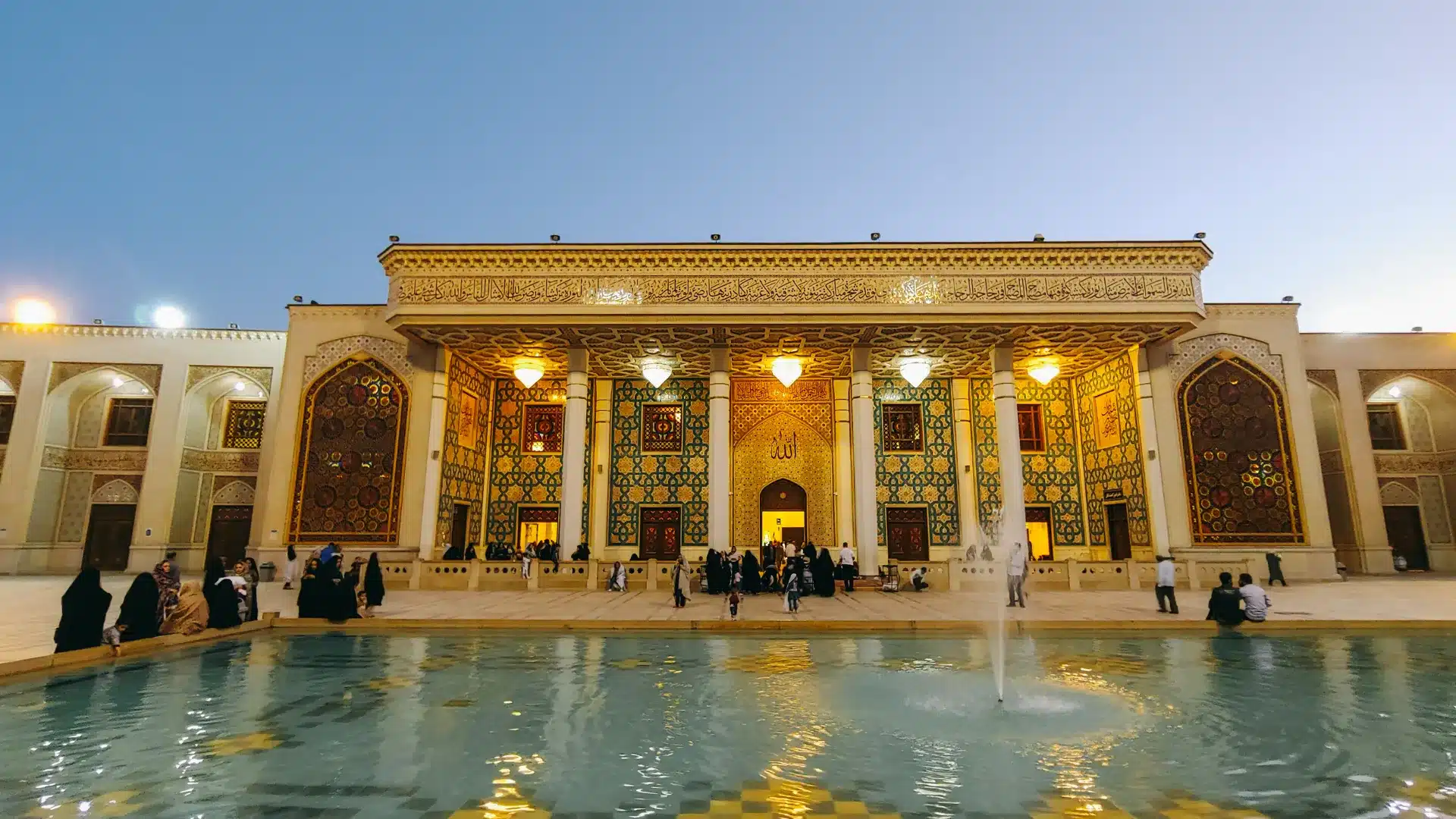
The historic cities are the heart of the country’s filming appeal. Isfahan, with its vast Naqsh-e Jahan Square, the Shah and Sheikh Lotfollah mosques, palaces and bridges, is one of the most beautiful cities in the world, while Shiraz offers gardens, poetry, the pink-hued Nasir al-Mulk mosque and proximity to Persepolis, and Yazd presents an ancient desert city of wind-towers, mud-brick lanes and Zoroastrian heritage.
These locations suit history, culture, architecture and travel programming of the highest order. Filming at these UNESCO-listed and heritage sites requires authorisation from the cultural heritage authorities, careful conservation-minded coordination and, often, specific timing to manage visitors. Hoodlum handles the heritage permissions and site coordination so these extraordinary backdrops become workable, respectful filming days.
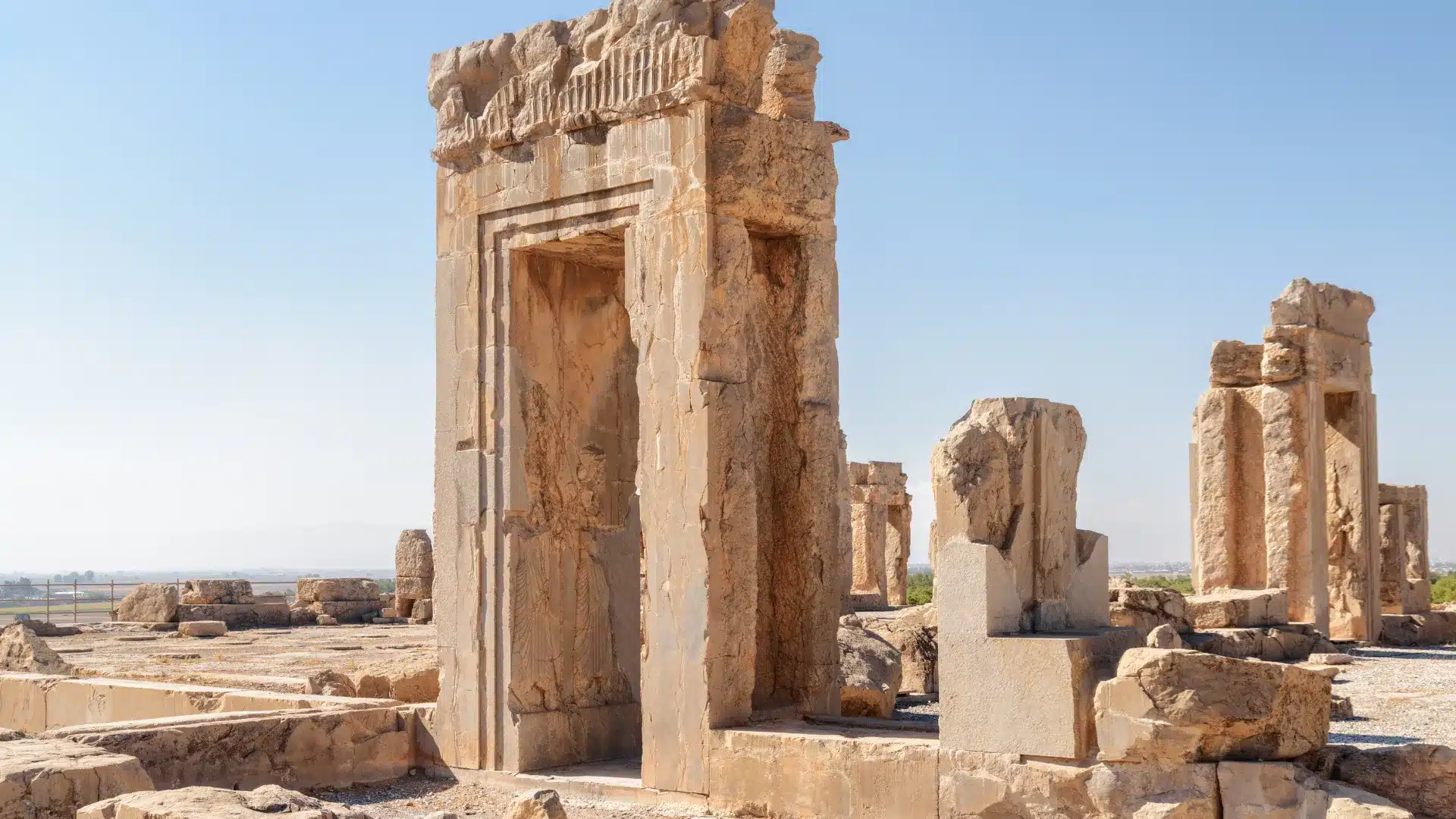
Beyond the cities, the country offers some of the world’s great historical and natural locations. Persepolis, the ceremonial capital of the ancient Persian Empire, is among the most significant archaeological sites on earth, while the central deserts of the Dasht-e Kavir and the Lut, with their kaluts, dunes and salt plains, are surreal and cinematic, and the Alborz and Zagros mountains and the Caspian forests add dramatic range.
These locations suit history, natural-history, adventure and landscape work. Filming at major archaeological sites and in protected desert and natural areas requires permissions, local guides, remote logistics and careful planning around heat, distance and access. Hoodlum builds the site permissions, guides, transport and remote-location logistics into the schedule before a shoot moves to Persepolis, the deserts or the mountains.
Iran requires careful visa planning for foreign film crews, and the process is built around an official invitation, so it must be arranged through a local partner well in advance.
A letter of invitation is provided by the local fixer and underpins the application, which is generally made online or on the crew’s behalf, supported by the filming permit, hotel reservations, passport copies and a vaccination card, with processing typically taking one to two weeks. A number of nationalities benefit from visa-free or simplified entry, while others must apply through an Iranian embassy in their home country, so confirming each crew member’s route early is essential. Separately, crew accreditation is applied for by the fixer, supported by proof of employment, a contract with the production company and passports.
Because the visa and accreditation process depends on an official invitation and local sponsorship, working with an experienced local partner is not optional but essential. Hoodlum helps productions match each crew member to the correct route, provide the invitation and accreditation, and avoid immigration becoming a serious problem.
Film permits in Iran involve several authorities, typically including the police, the Ministry of Culture and Islamic Guidance, the relevant municipality and the Cultural Heritage and Tourism Organization, and navigating this multi-agency process is a central part of planning. Approvals generally take from a few working days up to around a week, depending on the project.
A defining feature is that the scenario and script are reviewed as part of the permit process under the Ministry of Culture and Islamic Guidance, so content approval is integral, and applications also require cast and crew names and designations, the production budget, the locations and shooting period, and full production-company details. Because content is assessed, early and transparent preparation of the scenario is essential, and a local partner is the key to managing the agencies and keeping timing realistic.
Private locations are arranged directly with owners or managers through a local fixer, who handles contact, scouting and negotiation. A Hoodlum location scout can propose suitable options, after which we negotiate access, dates, crew size, fees and conditions, and secure a location agreement. Private permission does not replace the multi-agency permit or any heritage approvals a location also requires, and fees are negotiated case by case.
Drone filming is very tightly restricted, permitted only in limited and specific areas, with a separate application required for every location, and approvals issued through the Ministry of Culture and Islamic Guidance and the security authorities. This makes aerial work a specialist undertaking that must never be assumed.
Critically, importing a drone is not permitted, which sharply limits options, and any drone work that is approved is arranged locally through the proper channels, requiring the production permit, scenario and script, with timing dependent on the project and day rates applying. Given these tight controls, drone plans must be confirmed early and handled entirely through expert local coordination, and in many cases aerial work may not be feasible. Hoodlum advises honestly on what is possible, coordinates any approved drone work through the correct authorities, and builds realistic expectations into the plan.
Iran is not an ATA Carnet country, which is a critical planning point, so equipment is brought in through a temporary-importation procedure rather than a carnet, and a clearing agent is required to process the temporary-import permit and documentation. This makes experienced local support essential for moving gear.
Clearance is handled by the customs service under the national revenue authority, supported by an equipment list indicating the value of the equipment and its serial numbers, and typically takes around four working days. A charge of around 5% of the equipment’s value applies, which should be budgeted for, and the equipment is brought in temporarily and must be accounted for, so an accurate, fully valued inventory is essential.
Hoodlum prepares the detailed, valued equipment list and temporary-import documentation, coordinates the clearing agent and the customs process, and times everything so cameras, lighting, grip and sound gear move through as smoothly as the environment allows.
Iran does not offer film rebates or tax incentives, which is a clear planning point, so productions should not expect any financial incentive and should focus the budget on permits, transport, customs, security and experienced local support. The country’s draw is its heritage and landscapes, not financial incentives.
Practical considerations also extend to banking and payments, which are complex for international productions and must be planned carefully with local partners, since standard international payment channels are often unavailable. The local production base is experienced in heritage and documentary work, and productions typically bring key crew and rely heavily on trusted local fixers for access, coordination, payments and logistics. Hoodlum helps productions build a realistic budget and operating plan around the genuine practical drivers of an Iran shoot, and assess honestly whether and how the brief can be delivered.
Iran presents a complex and sensitive security picture, and a serious, security-led approach is essential for any production. While many travellers find the country safe and welcoming day to day, the wider situation can be volatile, certain regions carry heightened risk, and the border areas with Iraq and Pakistan in particular are strongly advised against, so professional risk assessment and planning are fundamental.
A serious production approach requires partnering with experienced local fixers, conducting thorough pre-production risk assessments for every location and movement, securing comprehensive insurance, establishing reliable communications and developing detailed contingency plans, with professional security arranged where appropriate, though this can be costly and must be coordinated locally. Equipment and personnel security, secure transport and careful management of movements and content are all essential, and crews must remain mindful of cultural and legal sensitivities, particularly around filming, content and certain locations, at all times.
Health, vaccination and medical planning should be arranged well ahead, and schedules should allow flexibility for changing conditions and approvals. Hoodlum helps productions build a rigorous, location-specific security and risk-management framework, draws on trusted local expertise, and advises honestly on whether and how a brief can be achieved safely across the country.
Iran is the right choice when a production specifically needs its unrepeatable heritage and landscapes, the architecture of Isfahan, the ruins of Persepolis, the desert cities and the mountains and deserts, and is prepared to commit to thorough planning, expert local partners, script approval and a security-led approach. It is best suited to documentary, history, culture and architecture productions with experienced crews and realistic, flexible timelines.
It may be less suitable for productions that need a low-complexity environment, a cash rebate, carnet-based equipment entry, the ability to fly their own drones, straightforward international payments, or guaranteed access without significant permitting, content-approval and security lead time. It is workable only when the entry route, permits, script approval, customs plan and a thorough security assessment are all settled early with expert local support.
The most frequent mistakes include:
Most of these problems are avoidable, and a shoot only becomes viable, when the crew list, visas and invitation, multi-agency permits, script approval, temporary import and a thorough security plan are aligned well before the crew travels.
Hoodlum provides Film Production Services in Iran for international crews that need experienced, security-led local coordination from early planning through to wrap. Our support covers visa and invitation guidance, multi-agency permit and script-approval coordination, heritage-site approvals, private location agreements, drone coordination where feasible, temporary-import and customs clearance, local crew and fixer sourcing, transport, comprehensive security planning and risk assessment, accommodation and on-ground production management.
From Tehran and the Alborz mountains to the architecture of Isfahan, the gardens of Shiraz, the wind-towers of Yazd, the ruins of Persepolis and the deserts beyond, we help productions access the most extraordinary filming environments in Iran with the right permits, fixers, customs planning and security in place. Planning a shoot? Contact us to talk through permits, visa and invitation support, local fixers, location scouting, customs coordination, security planning and full on-ground production management.
Most do. The process is built around an official letter of invitation provided by the local fixer, supported by the filming permit, hotel reservations, passport copies and a vaccination card, with processing typically one to two weeks. Some nationalities have visa-free or simplified entry; others apply through an Iranian embassy.
Permits involve several authorities, typically the police, the Ministry of Culture and Islamic Guidance, the municipality and the Cultural Heritage and Tourism Organization. Approvals take from a few working days to about a week, and the script and scenario are reviewed as part of the process, so content approval is integral.
Drone filming is very tightly restricted, permitted only in limited areas with a separate application per location, approved through the Ministry of Culture and Islamic Guidance and the security authorities. Importing a drone is not permitted, so any approved aerial work is arranged locally, and in many cases may not be feasible.
No. Equipment is brought in through a temporary-importation procedure handled by a clearing agent, with a valued equipment list and serial numbers, cleared by the customs service under the national revenue authority in around four working days. A charge of about 5% of equipment value applies.
No. Iran does not offer film rebates or tax incentives. Its draw is its heritage and landscapes rather than financial incentives, so budgets focus on permits, transport, customs, security and experienced local fixers. International payments are also complex and must be planned with local partners.
Standout locations include the architecture of Isfahan, the ruins of Persepolis, the gardens and mosques of Shiraz, the desert city of Yazd, the deserts of the Dasht-e Kavir and Lut, and the Alborz mountains around Tehran.
Ready to explore a production in Iran? Hoodlum handles the permits, visa and invitation guidance, location scouting, customs and temporary-import coordination, drone coordination where feasible, local crew and fixers, comprehensive security planning and full on-ground production management, so you can focus on the work in front of the lens. Get in touch with our team to start planning, and tell us your locations, dates and creative brief.
For more information, view our Hoodlum Film Fixers Iran Google Business Profile.