
















Film Production Services in Kuwait
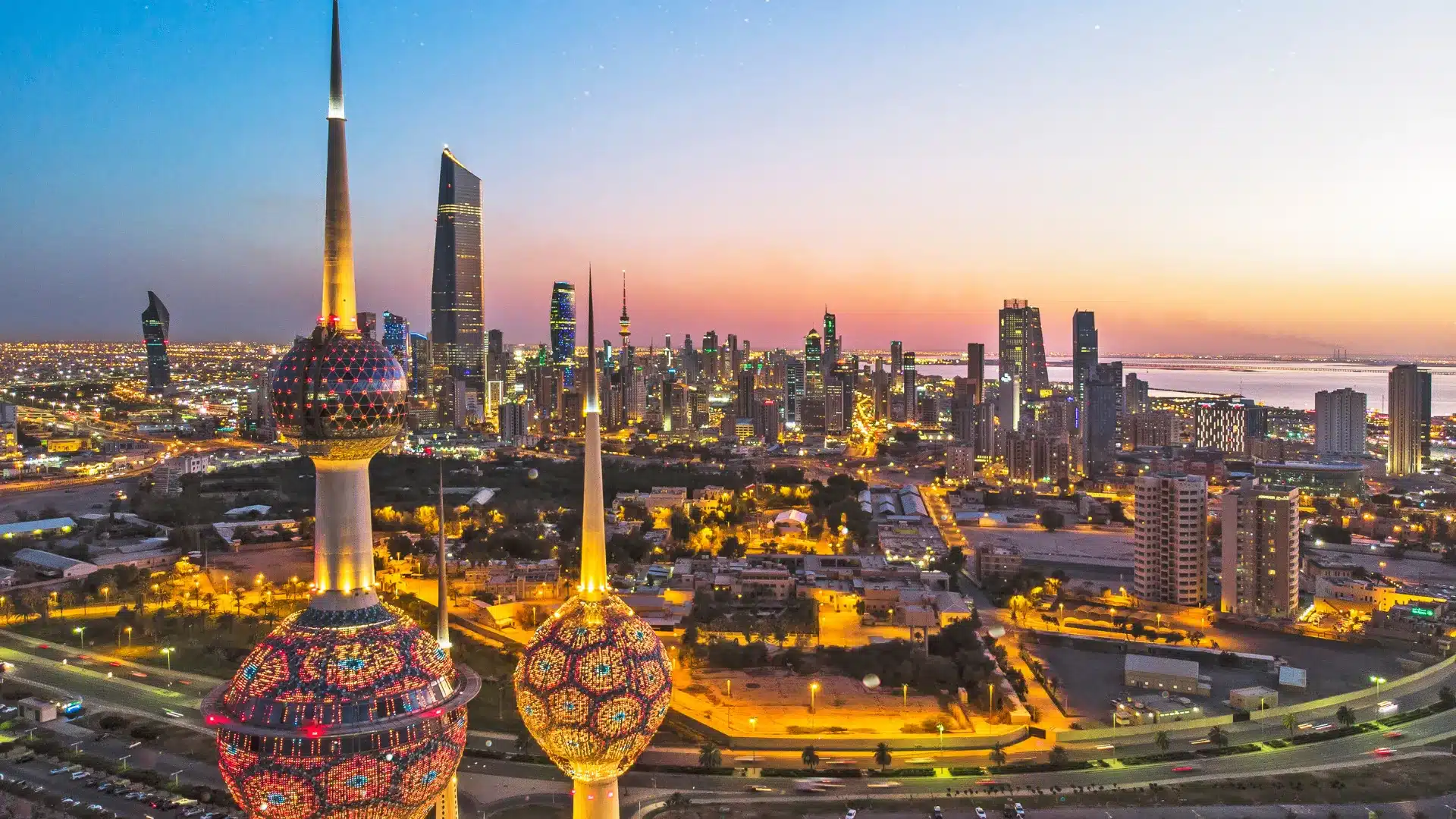
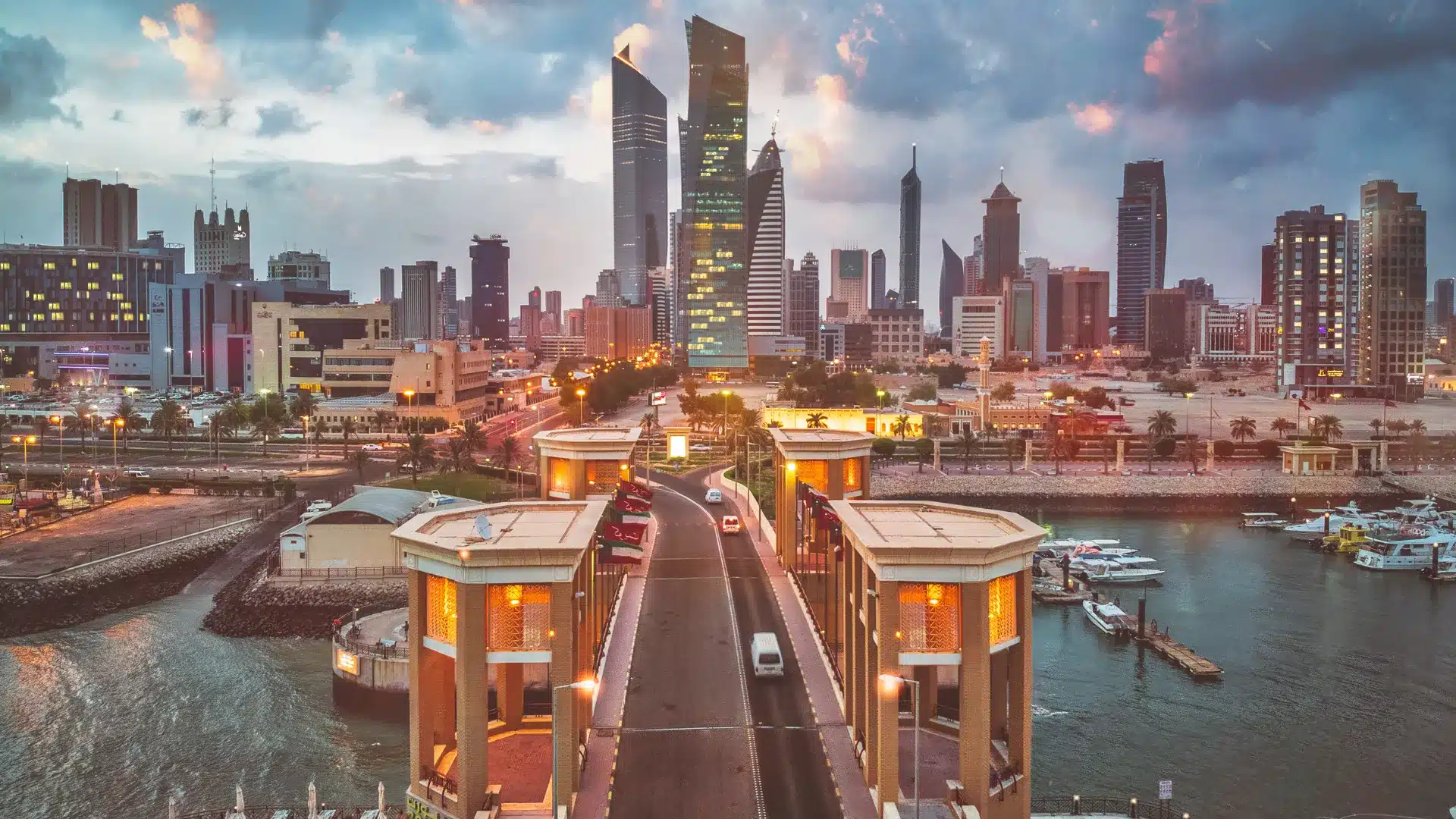
Kuwait is a compact, modern and strategically positioned Gulf filming destination, offering a striking contrast of gleaming contemporary architecture, desert landscapes, Gulf coastline, oil-industry infrastructure and a cosmopolitan, expat-driven capital. From the iconic Kuwait Towers and the modern skyline of Kuwait City to the souks, the waterfront Corniche, the flat open desert and the uninhabited offshore islands, the country offers a distinctive, accessible canvas where most locations sit within an hour’s drive of the capital, supported by a well-organised, if carefully regulated, permitting system.
For international crews, Kuwait offers a rare blend of modern Gulf cityscapes, desert and coastal locations, exceptional safety, widely spoken English and the efficiency of a small, easily navigated country, balanced against a permitting and customs framework that rewards careful preparation. It is one of the few places where a production can shoot contemporary Middle Eastern architecture, desert, coastline and oil-industry settings within a tight, manageable schedule, supported by experienced local fixers who know how to navigate the country’s authorities.
Hoodlum provides Film Production Services in Kuwait for commercials, documentaries, factual programming, corporate and branded content, news, photography and television productions. Our team supports visa guidance, Ministry of Information and Ministry of Interior permits, location agreements, drone coordination, customs and temporary-import clearance, local crew sourcing, transport, accommodation, security and medical planning, and full on-ground production management. You can see the full scope of what we do and the people behind it on our who we are page.
The country rewards productions that arrive with their paperwork in order. It is safe and efficient, but it is not a destination for informal shooting without approvals, and filming, customs and drones all run through specific government authorities, with strict rules around sensitive sites. The right entry route, the right permits, the right customs plan and the right local coordination all need to be settled before the cameras roll, and the most efficient way to handle that is through an experienced local production partner.
Why Kuwait Works for Modern Gulf Locations and Efficiency
The country’s biggest production strength is the combination of modern Gulf locations, compact convenience and strong safety, in a place where almost everything is within easy reach of the capital. In a single schedule a production can capture a contemporary skyline, desert, Gulf coastline and distinctive oil-industry settings, with minimal travel time, supported by experienced fixers and widely spoken English. For commercial, corporate, documentary and news work in particular, that efficiency and accessibility is the core value.
The capital is the operational hub, and the value sits in the convenience and the mix of looks. A commercial might pair the iconic towers with the Corniche and the desert. A corporate or documentary piece might explore the financial district, the oil industry or expat life. A news production might base itself centrally with quick access to locations. The country is strong because it delivers modern Middle Eastern locations, total safety and a small, efficient footprint, with knowledgeable local support to manage the permitting.
The country is especially well suited to:
- Commercials and branded content
- Corporate and brand films
- Documentary and factual programming
- News and current-affairs coverage
- Architecture and travel content
- Automotive and desert shoots
- Photography campaigns
Hoodlum’s production support team helps crews decide which locations are practical, what permissions each one needs and how to plan an efficient schedule across the compact country.
Kuwait City and the Modern Skyline
The capital is the natural anchor for most international productions working in the country. It is where crews arrive through the international airport, where production companies, crews, equipment and accommodation are concentrated, and where Ministry of Information and Ministry of Interior permitting and customs coordination begins.
The capital offers the landmark Kuwait Towers, a modern skyline of business towers, the waterfront Corniche, mosques, malls, traditional souks and the contrasts of a cosmopolitan Gulf city where around two-thirds of the population are expatriates. This blend of contemporary architecture and Gulf-Arab culture gives productions a clean, modern Middle Eastern backdrop. Hoodlum uses the capital as the practical hub for Film Production Services in Kuwait, particularly when a shoot combines the city with the desert and the coast.
The Desert, the Coast and the Islands
Beyond the city, the country is a flat, low-lying landscape of open desert, Gulf beaches and uninhabited offshore islands such as Failaka, which holds ancient archaeological sites, while the vast oil fields, including one of the largest in the world, define much of the interior. These offer distinctive desert, coastal and industrial imagery.
These locations suit automotive, desert, travel and documentary work, along with corporate and industrial content. Desert and coastal filming calls for planning around heat, access and permissions, while the islands involve boat logistics and their own approvals. Crucially, oil infrastructure, government buildings and military sites are highly sensitive, and unauthorised filming of them is illegal, so any such work requires specific clearance. Hoodlum builds the permissions, transport, heat management and sensitive-site clearances into the schedule before a shoot moves out of the city.
Entry, Visas and Crew Documentation
The country requires a visa for most visitors, applied for in advance through the online system, and the process is generally efficient, though the right route depends on each crew member’s nationality.
Most applications are made online, with the requirements depending on the country of origin, and processing typically within around five working days. The visa fee is capped at around one hundred dollars, with reduced fees for residents of the Gulf Cooperation Council states. Crew accreditation is generally not required as a separate step, but filming permits are essential, and productions should carry full crew documentation. Confirming each crew member’s route and timing early is important so the entry process aligns with the permit and customs timelines.
Because the permit and customs processes are central, working with a local partner who manages them is valuable from the outset. Hoodlum helps productions match each crew member to the correct entry route, assemble the documentation, and avoid immigration or permitting becoming a late-stage problem.
Film Permits and Location Permissions
Filming permits run through a registered local production company and two key authorities: the permit is processed via the Ministry of Information, with the General Directorate of Photography Permits Management, and issued by the Ministry of Interior. This structure means a local production partner is essential, as permits cannot be obtained independently.
The general filming permit costs around fifteen hundred dollars and must be presented at any shoot location alongside the specific location fee, which starts from around four hundred dollars, with the core permit typically processed within around three to four working days based on a letter submitted from the local production company. Sensitive locations, government and oil-related sites and any restricted areas require additional clearance and lead time, and street closures can be difficult to arrange, so the location plan should be confirmed early.
Private locations are arranged directly with owners through a local fixer, who negotiates terms on presentation of the shoot synopsis. A Hoodlum location scout can propose suitable options, after which we negotiate access, dates, crew size, fees and conditions, and secure a location agreement. Private permission does not replace the government filming permit or any sensitive-site approvals a location also requires, and fees are quoted once the locations are confirmed.
Drone Filming and Aviation Rules
Drone filming is tightly controlled, with approvals involving the Directorate General of Civil Aviation, and certain areas and locations are strictly forbidden for drone operation under civil aviation and defence rules. This makes aerial work a carefully managed undertaking that must be planned in advance.
Importantly, bringing in and operating a foreign drone is not straightforward, as the drone must be registered with the Ministry of Interior and the operator must be certified and registered with local identification and hold a local drone licence, which effectively means using a licensed local drone operator. A drone permit carries a fee, and forbidden zones must be respected absolutely. Given these controls, drone plans must be confirmed early through the proper channels. Hoodlum arranges licensed local drone operators, coordinates the civil aviation and registration requirements, and builds the restrictions and lead time into the plan.
Equipment Customs Clearance and Temporary Import
Kuwait is not an ATA Carnet country, which is a critical planning point, so equipment is brought in through a temporary-import and clearance procedure rather than a carnet, with the equipment list first sent to the Ministry of Commerce and Industry for approval before going to the airport administration. This makes experienced local support essential.
Clearance is issued by the Ministry of Commerce and Industry, supported by a detailed equipment list with the cost, make and serial number of each item, crew passport scans, flight details and accommodation details, and typically takes around ten to fourteen working days, so it must be planned well ahead and aligned with the shoot dates. A clearance charge applies, and the equipment is brought in temporarily and must be accounted for, so an accurate, fully valued inventory is essential.
Hoodlum prepares the detailed equipment list and temporary-import documentation, coordinates the Ministry of Commerce approval and airport clearance, and times everything so cameras, lighting, grip and sound gear move through with minimal delay.
Costs, Incentives and Production Support
Kuwait does not offer a film rebate or tax incentive for foreign productions, which is a clear planning point, so productions should not expect any financial incentive and should budget around permits, crews, customs, transport and security. The country’s value lies in its convenience, safety and distinctive modern Gulf locations rather than a financial incentive.
It is also worth noting that the local crew base is small, with a limited pool of experienced heads of department available locally, so most productions bring key crew and specialist equipment, with nearby Dubai a common source of additional crew and gear. The compact size, strong safety and efficient access remain genuine advantages for the right projects. Hoodlum helps productions build a realistic budget around the genuine cost drivers of a shoot here and source the right balance of local and incoming crew and equipment.
Safety, Security and Practical Logistics
Kuwait is a safe and stable country with a strong expatriate community, a modern economy and a generally low risk to visiting crews, and crime against foreigners is rare, which makes it a reassuring place to work. Sensible precautions apply, with extra care advised in a few specific areas such as Jahra and Jleeb Al-Shuyoukh, where opportunistic crime can occur.
It is the production company’s responsibility to provide a private security guard on set to maintain crew safety and protect equipment, and a medic on set is also advised in case any crew or cast require medical assistance, both of which Hoodlum arranges as standard. Standard precautions around securing equipment, reliable transport and clear unit management remain sensible, and the compact, well-developed nature of the country means logistics, accommodation and medical infrastructure are easily accessible.
The desert climate is the main practical variable. Intense summer heat and sun affect outdoor filming, so productions often schedule around the cooler months and the best light, with heat management and equipment protection planned in, while cultural awareness and respect for local customs are part of working successfully in the country. Hoodlum helps productions plan efficient, culturally aware schedules with the required security and medical support, and builds heat, timing and contingency thinking into the plan from the start.
Climate and the Best Time to Film
The desert climate is the defining scheduling factor, with two clear seasons shaping when productions should plan to shoot. Summers, from around May to September, are extremely hot, with temperatures regularly soaring well above 40 degrees, intense sun and occasional dust and sandstorms, which makes demanding outdoor work difficult and hard on both crew and equipment.
The cooler months, from around November to March, are far more comfortable for outdoor filming, with pleasant temperatures and good light, and are the preferred window for most productions. Even within the hotter months, scheduling around the early morning and late afternoon helps manage heat, protects gear from sun and dust, and keeps the crew safe and productive. Hoodlum builds the season, the daily heat curve and equipment protection into every schedule so shooting days are realistic and comfortable.
When Kuwait Is the Right Production Choice
Kuwait is the right choice when a production needs modern Gulf architecture, desert, coastline and oil-industry settings, combined with exceptional safety, a compact and efficient footprint and widely spoken English. It is especially strong for commercials, corporate and branded films, documentary and news, architecture, automotive and any project that values convenience, safety and modern Middle Eastern locations over large-scale spectacle or a financial incentive.
It may be less suitable for productions that need a cash rebate, dramatic or varied natural landscapes, a deep local crew base for large shoots, carnet-based equipment entry, or the ability to fly their own drones freely. The country is highly workable when the entry route, government permits, drone arrangements, temporary import and location agreements are settled early.
Common Production Mistakes to Avoid
The most frequent mistakes include:
- Expecting a cash rebate, which the country does not offer
- Trying to obtain permits without a registered local production company
- Filming oil, government or military sites without clearance, which is illegal
- Assuming you can freely import and fly your own drone
- Underestimating the ten-to-fourteen-day customs clearance timeline
- Leaving the Ministry of Commerce equipment approval too late
- Assuming a deep local crew base, when key crew often come from abroad
- Scheduling demanding outdoor shoots in peak summer heat
Most of these problems are avoidable by aligning the crew list, visas, government permits, drone plan, temporary import and location agreements well before the crew travels.
How Hoodlum Supports Productions in Kuwait
Hoodlum provides Film Production Services in Kuwait for international crews that need experienced local coordination from early planning through to wrap. Our support covers visa and documentation guidance, Ministry of Information and Ministry of Interior permits, sensitive-site clearances, private location agreements, licensed drone operator coordination, temporary-import and customs clearance, local crew sourcing, transport, security and medical planning, accommodation and on-ground production management.
From the capital and its iconic towers to the Corniche, the open desert, the Gulf coast and the offshore islands, we help productions access the strongest filming environments here with the right permits, fixers, customs planning and logistics in place. Planning a shoot? Contact us to talk through permits, visa support, local fixers, location scouting, customs coordination, drone planning, security and medical planning and full on-ground production management.
Frequently Asked Questions
Do international crews need a visa to film in Kuwait?
Yes, most visitors need a visa, applied for in advance online, with requirements depending on nationality and processing typically within around five working days. The fee is capped at around one hundred dollars, with reduced fees for GCC residents. Separate crew accreditation is generally not required, but filming permits are essential.
Who issues filming permits?
Filming permits run through a registered local production company, are processed via the Ministry of Information’s photography permits directorate, and are issued by the Ministry of Interior. The general permit costs around fifteen hundred dollars plus location fees from around four hundred dollars, typically processed within three to four working days.
Who regulates drones?
Drones are regulated by the Directorate General of Civil Aviation, with certain areas strictly forbidden under civil aviation and defence rules. Foreign drones must be registered with the Ministry of Interior and operated by a locally licensed, registered operator, so using a licensed local drone operator is the practical route.
Is Kuwait an ATA Carnet country?
No. Equipment is brought in through a temporary-import procedure, with the equipment list first approved by the Ministry of Commerce and Industry before airport clearance. It requires a detailed list with costs, makes and serial numbers, crew passports and travel details, and takes around ten to fourteen working days.
Does Kuwait offer a film rebate?
No. Kuwait does not offer a film rebate or tax incentive for foreign productions. Its value lies in its convenience, safety and distinctive modern Gulf locations, so budgets should focus on permits, crews, customs, transport and security rather than an incentive.
What are the best filming locations?
Popular options include the iconic towers and the modern skyline, the waterfront Corniche, the traditional souks, the open desert, the Gulf coast, and the offshore islands such as Failaka with its archaeological sites.
Useful Authority Links
- Kuwait Ministry of Information
- Kuwait Ministry of Interior – eVisa
- Kuwait Directorate General of Civil Aviation
- Kuwait Ministry of Commerce & Industry
- Kuwait Government Online Portal
- Visit Kuwait – Tourism
Ready to bring your production to Kuwait? Hoodlum handles the permits, visa guidance, location scouting, customs and temporary-import coordination, licensed drone operators, local crew, security and medical planning and full on-ground production management, so you can focus on the work in front of the lens. Get in touch with our team to start planning, and tell us your locations, dates and creative brief.
For more information, view our Hoodlum Film Fixers Kuwait Google Business Profile.