Film Production Services in Lebanon
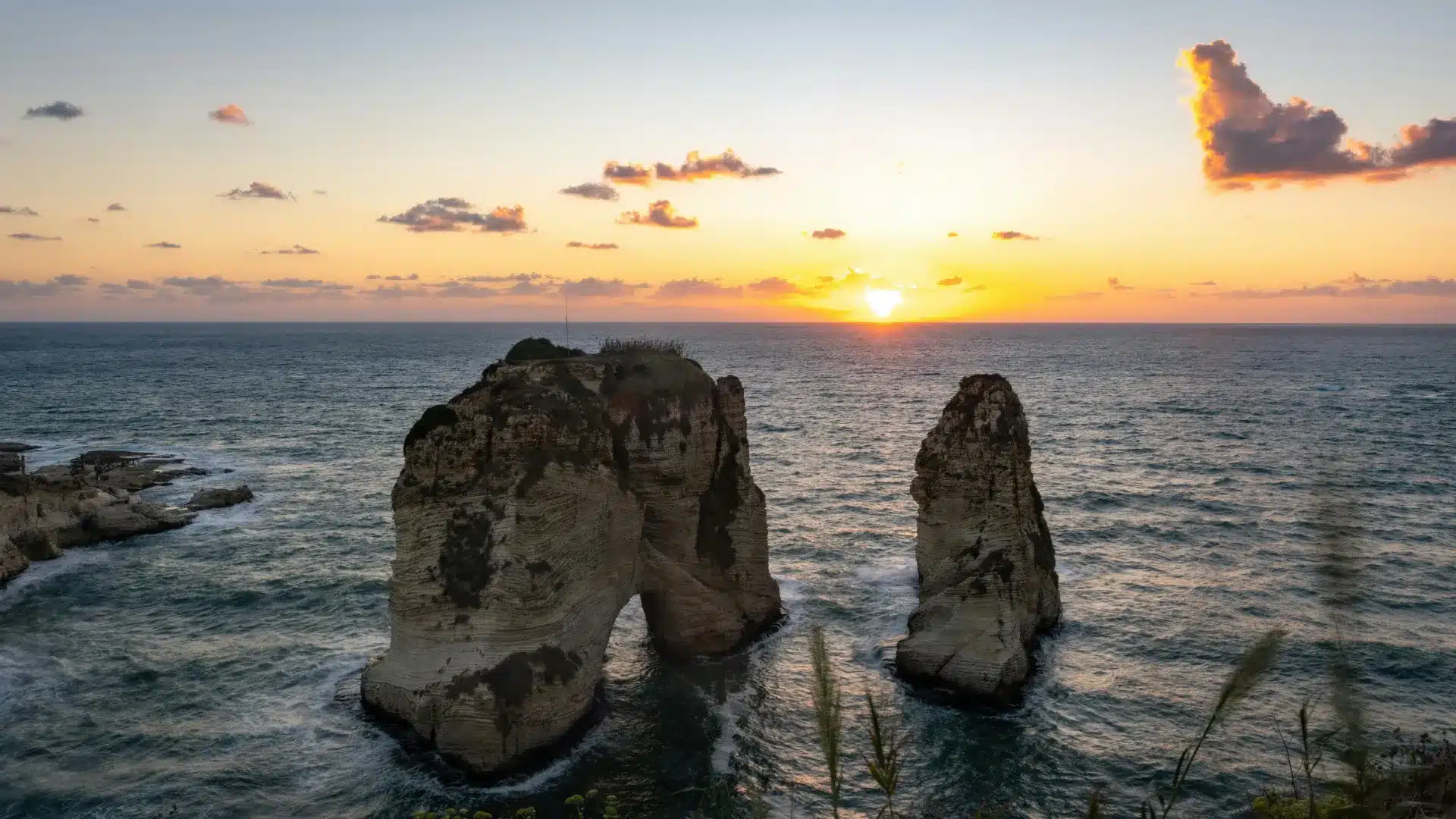
Lebanon is one of the Mediterranean’s most cinematically rich and layered filming destinations, a small country that packs ancient Roman temples, Crusader castles, a vibrant capital, cedar-covered mountains, coastal cities and dramatic valleys into remarkably short distances. From the skyline and seaside Corniche of Beirut to the monumental temples of Baalbek, the UNESCO ruins and souks of Tyre, the old port of Byblos, the Jeita Grotto and the Cedars of God in the Qadisha Valley, the country offers thousands of years of history, Mediterranean light and a more liberal, varied character than much of the region, supported by an experienced and resourceful production community.
For international crews, Lebanon offers a rare blend of historical and Mediterranean locations, skilled English- and French-speaking crews, established facilities and short travel times, balanced against the critical reality that this is a security-sensitive region where conditions can be highly volatile and must be verified carefully and currently before any production is committed. It is one of the few places where a production can shoot ancient temples, a Mediterranean city and mountain landscapes within a single compact schedule, provided the security situation allows and the planning is handled with genuine local expertise.
Hoodlum provides Film Production Services in Lebanon for commercials, documentaries, factual and reality television, branded content, news, feature films and television productions. Our team supports visa and accreditation guidance, Film Commission permits, location agreements, drone coordination, carnet and customs clearance, local crew sourcing, transport, accommodation, security and risk planning, incentive guidance and full on-ground production management. You can see the full scope of what we do and the people behind it on our who we are page.
Lebanon rewards productions that arrive with their paperwork in order and their planning grounded in current conditions. It is a country of extraordinary heritage and a capable production base, but it is a region where security must be assessed honestly and close to the shoot, and where permits, customs and drones run through specific authorities. The right entry route, the right permits, the right customs plan and a thorough, up-to-date security assessment all need to be settled before the cameras roll, and the only sensible way to handle that is through an experienced local production partner.
Why Lebanon Works for Heritage, Variety and Crews
Lebanon’s biggest production strength is the combination of remarkable historical and geographical variety packed into a tiny footprint, served by an experienced production community. In a single schedule a production can capture Roman temples, a Mediterranean metropolis, mountains and ancient ports, often within an hour or two of Beirut, supported by skilled multilingual crews and established facilities. The culture is more liberal and the geography more varied than much of the region, which opens up looks and scenes that can be harder to achieve elsewhere.
Beirut is the operational hub, but the value sits in the heritage and the crews. A commercial might pair the Beirut Corniche with the mountains. A documentary might explore Baalbek, Tyre and the country’s layered history. A feature might use the old ports and Crusader castles. Lebanon is strong because it offers world-class heritage, Mediterranean variety and a deep, resourceful crew base within short reach, for productions able to work with the security realities.
The country is especially well suited to:
- Documentary and factual television
- Commercials and branded content
- History, heritage and culture programming
- News and current-affairs coverage
- Travel and lifestyle content
- Feature films and television drama
- Music videos and fashion campaigns
Hoodlum’s production support team turns the creative brief into a practical, locally-led and security-conscious plan that accounts for permits, customs, movement and realistic, current timing.
Beirut and the Coast
Beirut, the capital, is the natural anchor for most international productions working in Lebanon. It is where crews arrive, where the production community, crews, equipment, studios and accommodation are concentrated, and where Film Commission permitting, customs and security planning begin.
The city is a vibrant, layered location, offering a modern skyline, the seaside Corniche, French-Mandate and Ottoman architecture, heritage quarters, markets and Mediterranean views, capable of supporting commercials, fashion, contemporary drama and documentary. Beirut also has established studios, broadcast facilities and rental houses, a legacy of its long role as a pan-Arab production centre. Hoodlum uses Beirut as the practical hub for Film Production Services in Lebanon, particularly when a shoot combines the city with the country’s heritage sites and mountains.
Baalbek, Tyre, Byblos and Ancient Heritage
The heart of the country’s filming appeal is its extraordinary ancient heritage. Baalbek holds some of the largest and best-preserved Roman temple ruins in the world, while Tyre offers UNESCO-listed ruins, souks and beaches, Byblos presents one of the oldest continuously inhabited cities with its Crusader castle and old port, and the second city of Tripoli adds Mamluk heritage and a historic souk.
These locations suit history, heritage, culture, travel and documentary work, along with features needing epic or ancient backdrops. Filming at these heritage and archaeological sites requires authorisation from the antiquities and tourism authorities, careful conservation-minded coordination and lead time. Hoodlum handles the heritage permissions and site coordination so these remarkable backdrops become workable, respectful filming days.
The Mountains, the Cedars and the Valleys
Beyond the coast and the ruins, the country rises quickly into dramatic mountains, offering the cedar forests and ancient monasteries of the Qadisha Valley, the famous Cedars of God, the limestone caverns of the Jeita Grotto, green valleys and, in winter, snow and skiing within easy reach of the coast. This vertical variety is a rare asset.
These locations suit natural-history, travel, adventure and brand work, along with documentary and outdoor campaigns. Mountain and valley filming calls for planning around altitude, weather, seasonal access and transport, with the contrast between coast and mountains achievable in a single day. Hoodlum builds the permissions, transport, local guides and seasonal planning into the schedule before a shoot moves into the mountains.
Entry, Visas and Crew Accreditation
Lebanon’s entry requirements vary by nationality, and filming adds specific documentation, so the process must be planned with a local partner.
Many nationalities can enter relatively easily, while others require a visa in advance, with film-crew applications supported by a passport, a letter of intent from the production company, the script and storyboard, a shooting schedule and location list, a crew list, an equipment list, insurance and the Film Commission permission, with processing commonly around fifteen days and applications advised well ahead. Separately, journalists and camera crews should obtain media accreditation through the Ministry of Information, which provides a letter that helps navigate military checkpoints, though it does not guarantee access to restricted areas. This accreditation is especially important for news and photojournalism.
Because entry, accreditation and permitting are interlinked and the context needs current awareness, a local partner is essential. Hoodlum helps productions match each crew member to the correct route, arrange media accreditation, and align documentation with the schedule.
Film Permits and Location Permissions
Filming permits are issued by the Lebanese Ministry of Tourism’s Film Commission, with productions registering through the commission’s system, and this is the central process to plan around, typically taking around three to five working days. Applications require a completed form, passport copies of key crew, proof of film insurance, the script and storyboard, a shooting schedule and location list, a crew list and an equipment list, with features and series also needing a synopsis, treatment, budget and casting list.
Permit fees vary by project, and beyond the central permit, location filming involves the relevant municipality, while b-roll around Beirut can require army and government permissions, and larger or traffic-affecting setups need police coordination and more time. Sensitive areas and certain districts carry their own requirements, including, in some southern areas, permissions and escorts from local authorities, and censors may require script changes for controversial subjects. A local partner is essential to navigate this.
Private locations are arranged directly with owners through a local fixer, with municipality applications and a location agreement, and fees varying by property type. A Hoodlum location scout can propose suitable options, after which we negotiate access, dates, crew size, fees and conditions, and secure a location agreement. Private permission does not replace the Film Commission permit or any municipal, army or heritage approvals a location also requires.
Drone Filming and Aviation Rules
Drone filming requires approval from the Lebanese Civil Aviation Authority, along with drone registration and insurance, with operations restricted to limited altitude and distance, and prohibitions on flying over populated areas, at night or in poor weather. Restricted zones include Beirut Airport, military areas, government buildings and sensitive infrastructure, and drone permits require at least a couple of weeks to arrange.
Importing a drone is more involved, requiring an import licence from the Ministry of Economy and Trade, approval from the Ministry of Defence and registration with civil aviation, along with customs duties, while military-grade and advanced-surveillance drones are restricted or prohibited. Given the security environment, drone work is sensitive and must be planned early through the proper channels, and in some areas may not be feasible. Hoodlum coordinates the civil aviation, defence and registration requirements or arranges licensed local operators, and builds the restrictions and lead time into the plan.
Equipment Customs Clearance and the ATA Carnet
Lebanon is an ATA Carnet country, which makes temporary equipment importation relatively structured for productions that prepare properly. An ATA Carnet acts as a single international customs document allowing professional filming gear to be temporarily imported duty-free and tax-free, on the guarantee that it will be re-exported within the validity period, typically up to one year, with a security deposit refunded on successful re-export.
Customs clearance is handled by the Lebanese Customs Administration, supported by the carnet, a commercial invoice, a packing list, an equipment list, the location and film permits and a certificate of origin, with clearance often within around a day or two when documentation is complete. A local customs agent is strongly recommended, and in the current environment productions should note that regional logistics, air-cargo routing and insurance can be more complex and should build in buffer time. The equipment is brought in temporarily and must be re-exported, so an accurate inventory is essential.
Hoodlum helps productions prepare the carnet and equipment list, coordinates a customs agent and the clearance, and times the process so cameras, lighting, grip and sound gear move through as smoothly as conditions allow.
Costs, Incentives and Production Support
Lebanon introduced a Film Rebate Program through the Ministry of Tourism in 2019, offering international productions, including reality formats, a rebate of around 15 to 20% on qualified expenses, with a minimum spend of around two hundred thousand dollars and a maximum rebate of around five hundred thousand dollars. To qualify, productions must shoot for at least three days, promote Lebanese culture or tourism, and apply to the Ministry of Tourism for approval before filming, with disbursement after completion and a final report.
Given the country’s economic situation and the broader environment, productions should confirm the current status, functioning and disbursement timelines of the incentive directly before relying on it, as conditions have changed since the programme launched. Beyond any rebate, the genuine strengths are the value for money, the quality and resourcefulness of local crews, the established facilities and the concentration of locations, though productions should also be aware that insurance for high-profile talent can be difficult to secure given perceived security risk. Hoodlum helps productions assess the incentive position realistically and build a sound budget around the genuine drivers of a Lebanon shoot.
Safety, Security and Risk Management
Lebanon’s security situation requires the most careful, current and honest assessment, and it is by far the most important planning consideration, taking precedence over every creative and logistical factor. The country sits in a volatile region where conditions can change rapidly and significantly, and where periods of serious instability and conflict can render production unviable, so professional, up-to-date risk assessment and official travel advice are absolutely fundamental, and productions must confirm whether a shoot is viable at all before committing.
When conditions permit production, a serious approach means working with experienced local fixers who monitor the situation continuously, conducting thorough risk assessments for every location and movement, securing comprehensive and current insurance, maintaining low profiles and reliable communications, and developing detailed contingency and emergency-response plans. Security escorts and secure transport are commonly engaged, sensitive areas and certain districts require specific permissions and local coordination, and medical facilities are adequate in Beirut but more limited elsewhere, so medical and evacuation planning matters.
Cultural and political sensitivity, careful management of content and movements, and respect for local customs are all essential. Hoodlum helps productions build a rigorous, current and location-specific security framework, draws on continuous local monitoring and trusted expertise, and will advise honestly and without commercial pressure on whether and when a brief can be achieved safely.
When Lebanon Is the Right Production Choice
Lebanon is the right choice when conditions are stable enough to support production and a project specifically needs its ancient temples, Mediterranean cities, mountains and cedar forests, combined with skilled multilingual crews, established facilities and short travel times. It is especially suited to documentary, history and heritage, commercials, news, travel and drama, for productions working with experienced local partners and realistic, flexible and security-led timelines.
It may be less suitable for productions that cannot accommodate a volatile and rapidly changeable security context, that need to secure insurance for high-profile talent, or that require guaranteed access and fixed schedules without contingency. It is workable only when the security position is confirmed as viable and the entry route, permits, carnet, drone arrangements and a thorough, current risk assessment are all settled early with expert local support.
Common Production Mistakes to Avoid
The most frequent mistakes include:
- Committing to a shoot without confirming current security viability
- Failing to check current, official travel advice close to the shoot
- Underestimating insurance challenges, especially for high-profile talent
- Assuming the rebate functions as launched without confirming current status
- Overlooking army, government and municipal permissions for Beirut filming
- Leaving drone, defence and civil-aviation approvals too late
- Disregarding censorship sensitivities around content and scripts
- Underestimating regional logistics, cargo routing and buffer time
Most of these problems are avoidable, and a shoot only becomes viable, when security is confirmed and the crew list, visas, accreditation, Film Commission permits, carnet, drone approvals and a current risk plan are aligned well before the crew travels.
How Hoodlum Supports Productions in Lebanon
Hoodlum provides Film Production Services in Lebanon for international crews that need experienced, security-led local coordination from early planning through to wrap. Our support covers visa and media-accreditation guidance, Film Commission permits, heritage and municipal approvals, private location agreements, drone and civil-aviation coordination, carnet and customs clearance, local crew sourcing, transport, comprehensive security and risk planning, accommodation, incentive guidance and on-ground production management.
From Beirut and its Corniche to the temples of Baalbek, the ruins of Tyre, the old port of Byblos, the Jeita Grotto and the Cedars of the Qadisha Valley, we help productions access the most extraordinary filming environments in Lebanon with the right permits, fixers, customs planning and security in place, whenever conditions allow. Planning a shoot? Contact us to talk through current viability, permits, visa and accreditation support, local fixers, location scouting, carnet coordination, security planning and full on-ground production management.
Frequently Asked Questions
Do international crews need a visa to film in Lebanon?
It depends on nationality. Many enter relatively easily, while others need a visa in advance, with film-crew applications supported by a letter of intent, script, schedule, crew and equipment lists, insurance and Film Commission permission, processing commonly around fifteen days. Journalists and camera crews should also obtain media accreditation through the Ministry of Information.
Who issues filming permits?
Permits are issued by the Lebanese Ministry of Tourism’s Film Commission, with registration through its system, typically within three to five working days. Beyond the central permit, municipalities, and for some Beirut filming the army and government, are involved, with police coordination for larger setups and additional requirements in sensitive areas.
Who regulates drones?
Drones are regulated by the Lebanese Civil Aviation Authority, with registration, insurance and strict altitude, distance and zone restrictions, and permits taking at least a couple of weeks. Importing a drone also requires Ministry of Economy and Trade and Ministry of Defence approvals. Given the environment, aerial work is sensitive and may not always be feasible.
Is Lebanon an ATA Carnet country?
Yes. Equipment is brought in under the ATA Carnet, cleared by the Lebanese Customs Administration with the carnet, invoice, packing list and permits, often within a day or two. A local customs agent is recommended, and in the current environment productions should build in buffer time for regional logistics.
Does Lebanon offer a film rebate?
A Film Rebate Program launched in 2019 offers around 15 to 20% on qualified expenses, with a minimum spend of around $200,000 and a maximum rebate of around $500,000, requiring a minimum three-day shoot and promotion of Lebanese culture or tourism, applied for before filming. Given the economic situation, confirm the current status and disbursement timelines directly.
What are the best filming locations?
Standout locations include Beirut and its Corniche, the Roman temples of Baalbek, the UNESCO ruins of Tyre, the old port and castle of Byblos, Tripoli’s Mamluk heritage, the Jeita Grotto, and the Cedars of God and monasteries of the Qadisha Valley.
Useful Authority Links
Ready to explore a production in Lebanon? Hoodlum handles current viability assessment, permits, visa and accreditation guidance, location scouting, carnet and customs coordination, drone planning, local crew, comprehensive security planning and full on-ground production management, so you can focus on the work in front of the lens. Get in touch with our team to start planning, and tell us your locations, dates and creative brief.
For more information, view our Hoodlum Film Fixers Lebanon Google Business Profile.