















Film Production Services in Lithuania
Lithuania is a practical Baltic production destination for international crews that need historic streets, forests, coastlines, period locations, controlled city filming, experienced local crew and cost-effective European production support. The country works well for commercials, documentaries, branded content, feature films, factual television, travel campaigns, photography, reality television and international shoots that need strong location variety without difficult internal logistics.
Hoodlum provides Film Production Services in Lithuania for productions filming across Vilnius, Kaunas, Klaipėda, Trakai, the Curonian Spit, Baltic coastal areas, forests, medieval towns, industrial sites, private interiors, rural landscapes and regional locations. Our team supports Schengen visa planning, local film permits, crew accreditation, Lithuanian Film Centre liaison, Vilnius Film Office coordination, private location agreements, drone approvals, ATA Carnet customs clearance, local fixers, crew sourcing, transport, accommodation, safety planning and on-ground production management.
The country is production-friendly, but international crews still need to prepare the correct approvals. Depending on the project, filming may involve Schengen visa applications, municipal permits, location manager permissions, crew accreditation, Civil Aviation Administration drone authorisations, ATA Carnet paperwork, customs clearance through Lithuanian Customs, public liability insurance, private property agreements and security planning for high-value equipment or public filming.
Hoodlum helps productions understand which permissions apply, what documents are needed and how to build a realistic production schedule around visas, permits, locations, drone work, customs, transport, crew movement and safety.
Why Lithuania Works for International Productions
Lithuania works because it offers strong European location value with manageable logistics. Vilnius can provide old town streets, courtyards, churches, modern offices, residential neighbourhoods, heritage buildings and controlled urban filming. Kaunas offers interwar architecture, industrial spaces, modern city scenes and cultural locations. Klaipėda and the coast can provide maritime visuals, beaches, ports and access to the Curonian Spit.
The country is especially useful for:
- Commercials and branded content
- Documentaries and factual entertainment
- Feature films and television drama
- Reality television
- Travel and tourism campaigns
- Photography projects
- Period-inspired filming
- Baltic city visuals
- Forest and rural landscapes
- Coastal filming
- Industrial and post-Soviet locations
- Drone-led landscape sequences
A major advantage is the combination of location variety, experienced crew and a relatively efficient permitting environment. Productions can move between city streets, private interiors, forests, rural roads and coastal settings without the cost and travel pressure of a larger production territory.
The main production challenge is making sure permits, private agreements and drone approvals are handled correctly. Public filming can be straightforward when planned early, but larger crews, traffic impact, restricted areas, drones, heritage sites, private properties and public-facing shoots all need proper preparation.
Vilnius as the Main Production Base
Vilnius is the main production hub and the most common starting point for international crews. The city offers airport access, hotels, local crew, suppliers, restaurants, historic streets, churches, courtyards, modern offices, residential areas, government buildings, cultural venues and production-friendly city locations.
Vilnius can support:
- Commercials
- Documentary interviews
- Branded content
- Feature film scenes
- Television drama
- Corporate films
- Fashion and photography shoots
- Old town sequences
- Period-style filming
- Travel campaigns
- Small and medium-size international productions
Filming in Vilnius may require coordination with municipal authorities, the Vilnius Film Office, property owners or location managers depending on the site and production footprint. A small documentary crew may have a simple approval route, while a larger commercial or drama shoot using public space, lighting, vehicles, drones, crowd control, road impact or reserved parking will need more formal planning.
Vilnius filming may require:
- Completed application form
- Script or storyboard
- Location plans
- Shooting schedule
- Proof of insurance
- Letter of intent or production agreement
- Crew and equipment list
- Vehicle and parking plan
- Traffic or pedestrian management plan, if required
- Drone details, if applicable
- Security or access plan, where needed
Hoodlum helps productions identify the correct approval route, prepare permit documents, arrange local fixer support, secure private interiors and coordinate practical logistics for the shoot day.
Kaunas, Klaipėda and Regional Filming
Kaunas and Klaipėda give productions useful alternatives to Vilnius. Kaunas can provide interwar modernist architecture, streets, bridges, industrial sites, residential areas, cultural venues and a different urban look. Klaipėda offers port visuals, Baltic maritime locations, coastal access, old town streets, beaches and routes toward the Curonian Spit.
Regional filming can support:
- Documentary stories
- Travel campaigns
- Coastal sequences
- Industrial scenes
- Urban B-roll
- Period-inspired filming
- Corporate interviews
- Road sequences
- Lifestyle commercials
- Photography campaigns
Permit requirements vary by municipality, location type and production impact. Public filming may involve local authority approval, proof of insurance, location plans and a clear schedule. Ports, private buildings, heritage sites, roads, transport locations and protected areas may require separate permission.
Regional shoots are often manageable, but accommodation, transport, equipment movement, local crew availability and weather should still be confirmed before locking the route.
Hoodlum helps productions choose between Vilnius, Kaunas, Klaipėda and regional bases depending on the creative brief, access, permits, crew support and schedule.
Trakai, Curonian Spit and High-Value Locations
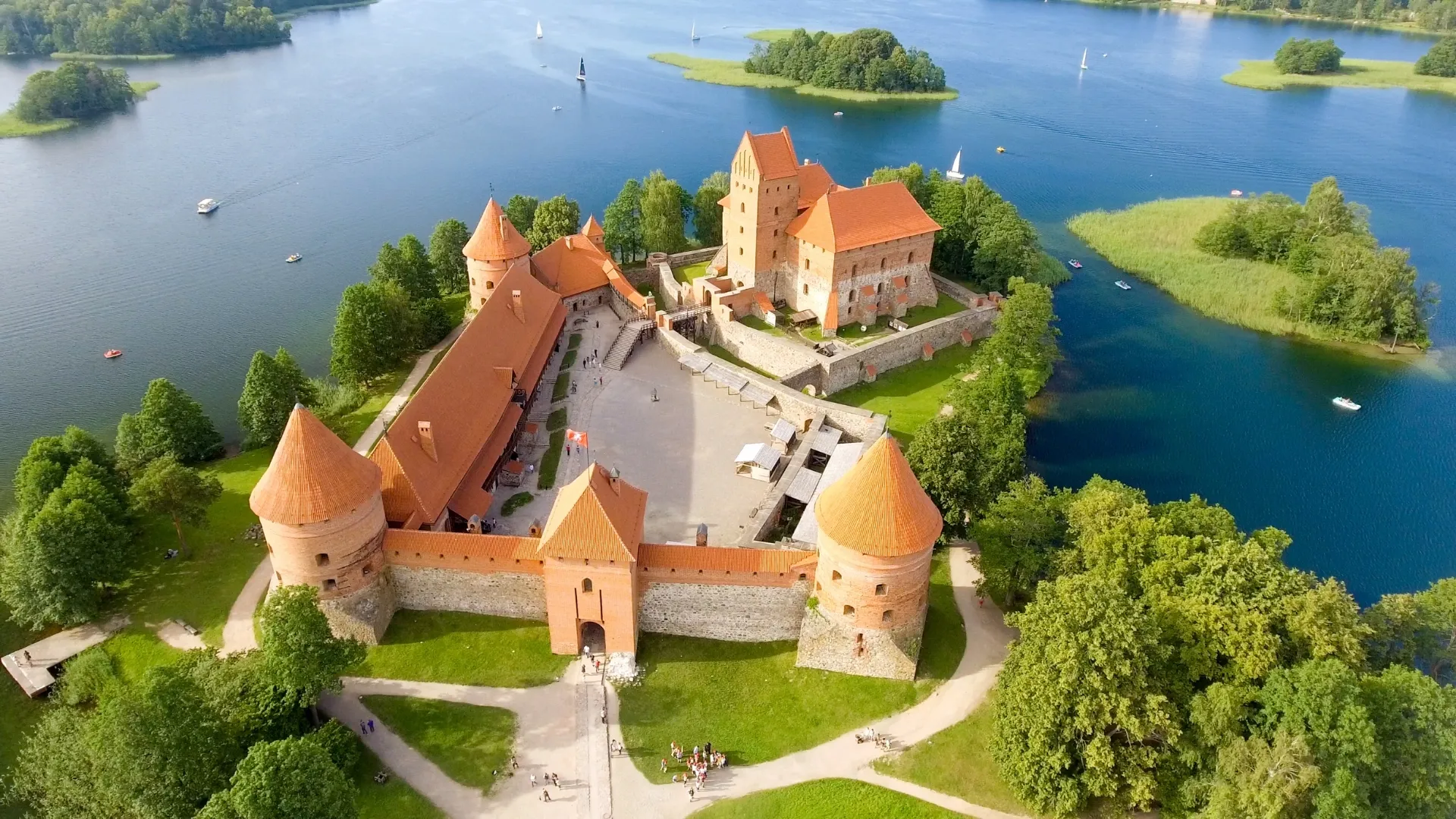
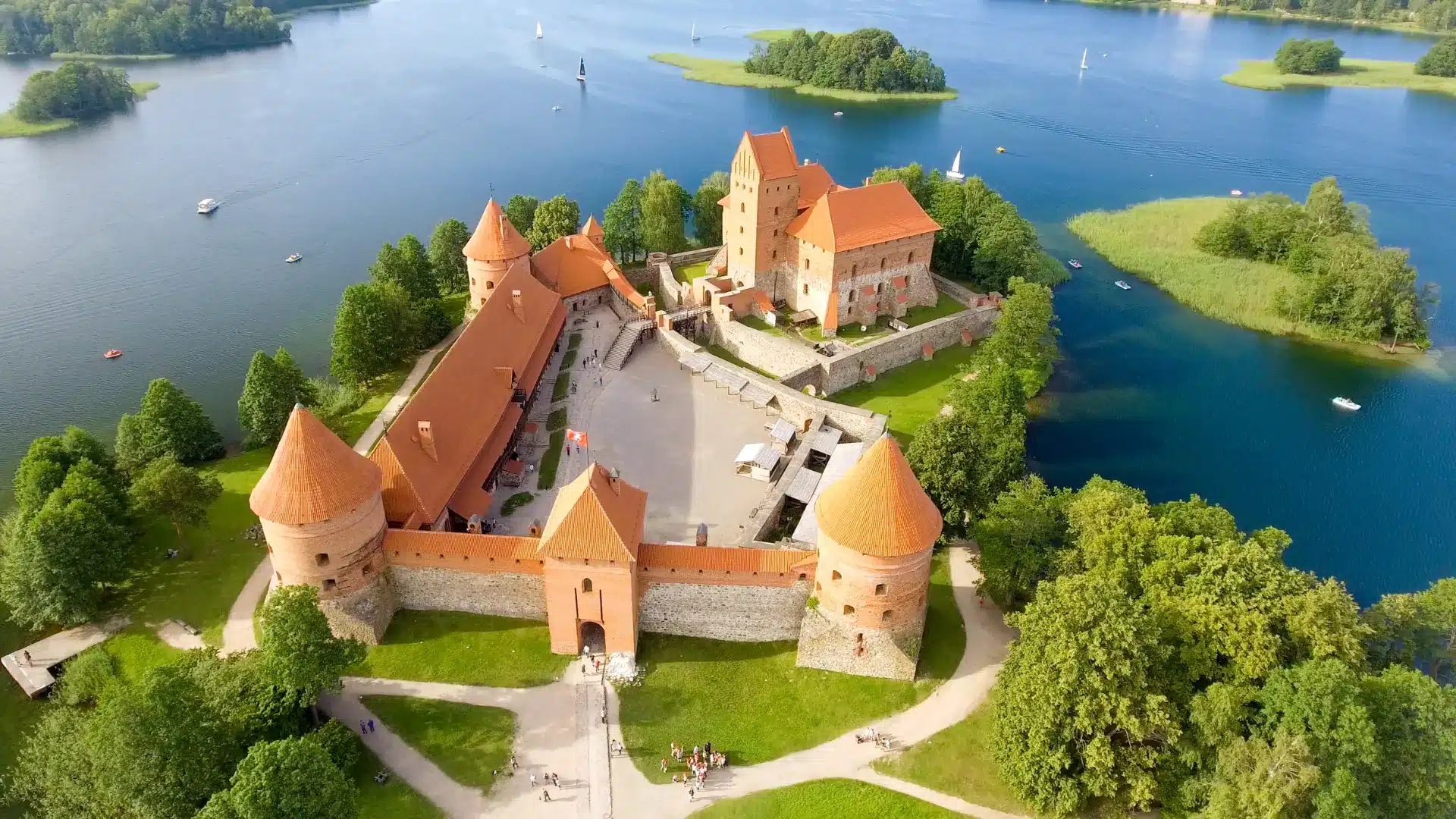
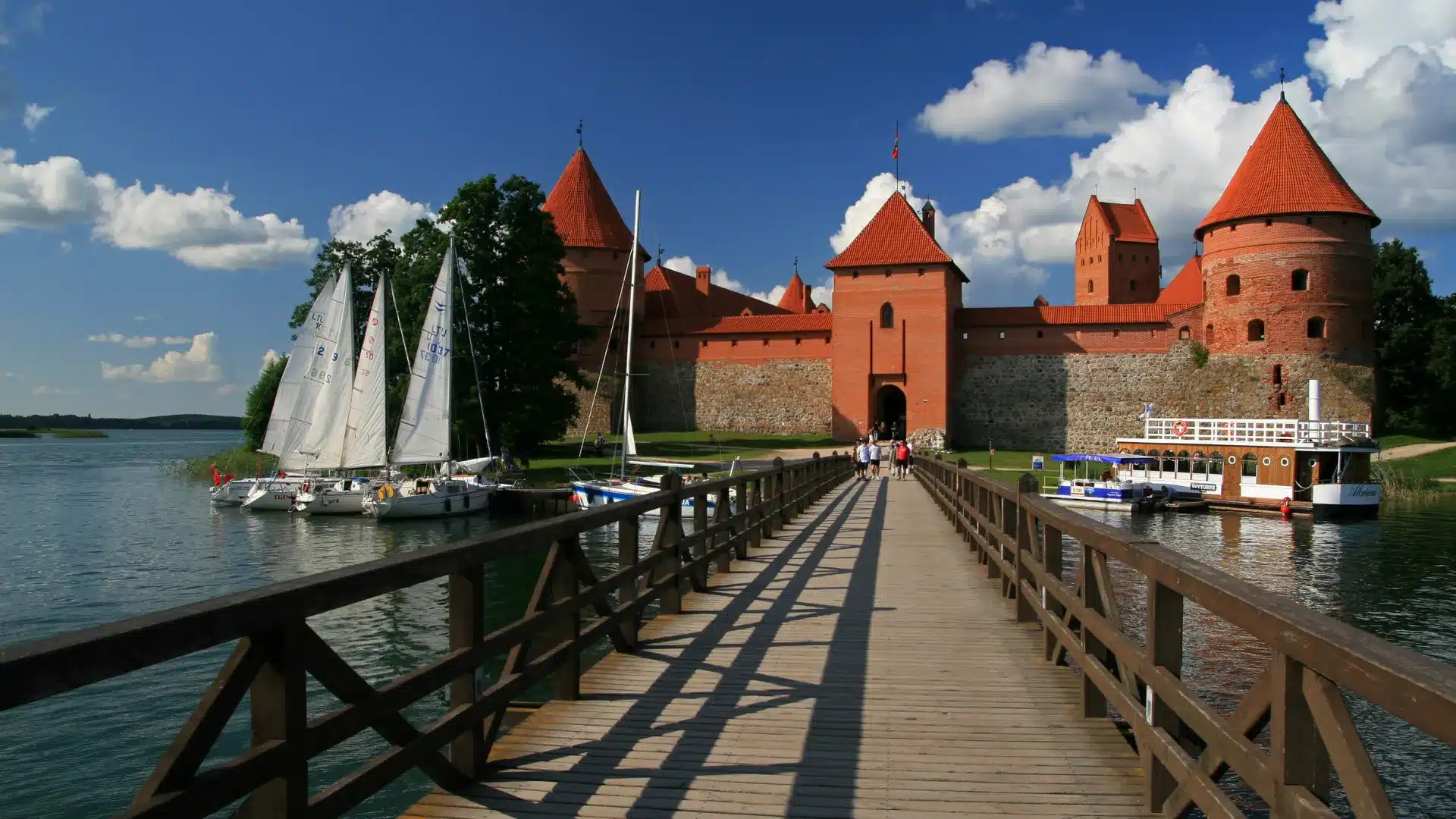
Trakai, the Curonian Spit and other high-value locations can deliver strong production visuals, but they require more careful planning. Trakai is useful for castle, lake, heritage and tourism visuals. The Curonian Spit can provide dunes, beaches, forests, coastal roads and distinctive Baltic landscapes. These locations can work well for commercials, travel campaigns, feature films, documentaries and photography.
High-value locations may require:
- Municipal approval
- Site manager permission
- Heritage authority coordination
- National park or protected area approval
- Private landowner agreements
- Public liability insurance
- Drone restrictions
- Crew and equipment limitations
- Environmental protection measures
- Public access management
- Safety planning
These locations should be checked early because public visitor traffic, environmental sensitivity, heritage rules and drone restrictions can affect the production footprint. A crew may need to reduce equipment, limit vehicle access, adjust filming times or use local supervision.
Hoodlum helps productions assess whether a well-known location is suitable for the brief, or whether a more practical alternative can deliver a similar visual result with fewer restrictions.
Forests, Rural Roads and Private Interiors
Lithuania offers forests, rural roads, fields, villages, manor houses, private homes, industrial interiors, warehouses, farms and controlled private properties. These locations are useful for documentaries, commercials, drama, branded content, photography and factual productions that need more control than busy public sites.
Rural and private filming can support:
- Forest scenes
- Road sequences
- Private house interiors
- Farm and countryside visuals
- Manor house filming
- Industrial sites
- Documentary interviews
- Outdoor campaigns
- Period-inspired work
- Small crew factual filming
Even where locations appear quiet or easy to access, productions should confirm ownership, permission, vehicle access, insurance, drone rules and any local authority requirements. Private interiors and rural properties can be efficient, but only when access, fees, schedule and restoration responsibilities are clear.
Hoodlum supports rural and private location filming by scouting options, confirming ownership, negotiating terms and managing local logistics.
Visa Requirements and Crew Entry
Film crew members from non-EU countries typically require a Schengen visa, Type C, for stays of up to 90 days. EU citizens do not need a visa, although they may need to register with local authorities depending on the length and purpose of stay. The correct entry route depends on nationality, length of stay, production activity and whether crew are working across multiple Schengen countries.
Film crew visa documents may include:
- Valid passport
- Completed and signed visa application form, if required
- Proof of health insurance
- Proof of financial means
- Letter of invitation or confirmation from the local film production company
- Travel itinerary
- Accommodation details
- Crew list
- Role descriptions
- Production schedule
- Production company letter
- Proof of employment or contract, if requested
Schengen visa processing typically takes around 15 calendar days, but it can take up to 30 or 60 days in some cases. Productions should apply at least 3 to 4 weeks before the planned arrival date, with more lead time for larger crews, incomplete documentation or consular review.
Visa costs are typically around EUR 60 for adults, with additional service fees of around EUR 30 to EUR 60 depending on the application centre.
Visa information is available through Schengen visa resources:
https://www.schengenvisainfo.com/lithuania/visa
Hoodlum helps productions prepare visa support documents, including local invitation letters, crew lists, schedules, role descriptions, accommodation details and production company letters.
International Crew Accreditation
Crew accreditation may be required depending on the production, location, authority, permit route or event-related access. Film crew members typically need to provide identification, proof of employment or affiliation with the production company and a completed accreditation form. Some authorities may also request a photo, passport details and a brief description of the crew member’s role.
Accreditation documents may include:
- Valid passport
- ID card
- Proof of employment
- Production contract
- Completed accreditation application form
- Recent photo
- Crew list
- Role descriptions
- Production company letter
- Contact information
- Additional location-specific documents, where required
Crew accreditation can take around 1 to 3 working days to process, but productions should apply at least 5 to 7 working days in advance to avoid delays. Larger crews, restricted locations or multi-authority shoots may require more time.
Accreditation is often free of charge or subject to a small administrative fee. Costs may vary by location or authority, but are usually around EUR 10 to EUR 20.
Hoodlum helps productions organise accreditation documents so crew information is consistent across visa files, permit applications, private location agreements and local authority requests.
General Film Permits and Local Approvals
Film permits may be issued by the Lithuanian Film Centre, municipal authorities or specific location managers depending on the location and type of production. The correct approval route depends on whether filming takes place in public spaces, private property, roads, heritage sites, parks, protected areas, transport locations or controlled buildings.
A film permit application may require:
- Completed application form
- Script or storyboard
- Location plans
- Shooting schedule
- Proof of insurance
- Letter of intent or production agreement
- Crew list
- Equipment list
- Vehicle and parking plan
- Drone details, if applicable
- Risk assessment, where needed
- Security plan, where required
Processing time can range from 1 to 30 working days depending on the complexity of the project, location and authorities involved. Productions should apply at least 14 to 21 days in advance, with longer lead times for large public shoots, road impact, heritage sites, drones, protected areas or multiple municipalities.
Permit costs vary depending on location and type of production. Typical costs range from EUR 20 to EUR 500, with additional fees possible for police assistance, location management, supervision, parking, road control or municipal services.
Hoodlum helps productions identify the right authority, prepare permit documentation, manage local communication and reduce delays caused by incomplete schedules, missing insurance or unclear location plans.
Private Locations and Location Agreements
Private filming locations are arranged directly with owners, managers, agents, businesses, hotels, restaurants, private homes, manor houses, farms, industrial sites, warehouses or commercial property representatives. The film commissioner or local fixer may help facilitate communication between producers and location owners, provide information on fees and assist with negotiations or permit applications.
The private location process usually includes:
- Location scouting
- Ownership research
- Initial approach to the owner or manager
- Explanation of the production
- Review of the schedule and script
- Fee negotiation
- Crew and equipment approval
- Insurance review
- Access planning
- Written location agreement
A private location agreement should cover:
- Approved filming areas
- Access times
- Crew size
- Equipment access
- Parking
- Overtime
- Cleaning and restoration
- Security
- Drone restrictions
- Cancellation terms
- Public liability insurance
- Content restrictions, if any
- Payment terms
Private location costs are determined case by case. Owners or managers usually need to review the production schedule, script, crew size, equipment, access requirements and intended use before providing a quote. A documentary interview in a private office will have a different cost profile from a multi-day commercial in a manor house, hotel, factory, residential property or coastal location.
Hoodlum helps productions scout, approach, negotiate and manage private locations so the crew has confirmed access and clear shoot-day terms.
Drone Filming and Civil Aviation Permissions
Drone operations are regulated by the Civil Aviation Administration under the Ministry of Transport and Communications. Operators must comply with EU drone regulations and follow rules around flight altitude, distance, privacy, registration, pilot competency and airspace restrictions.
Drone planning should account for:
- Civil Aviation Administration requirements
- EU drone regulations
- Drone registration
- Pilot licence or certificate
- Liability insurance
- Drone technical specifications
- Detailed flight plan
- Coordinates
- Altitude information
- Risk assessment
- Airspace restrictions
- Airports and heliports
- Populated areas
- Private property permission
- Privacy and consent
- Weather and wind
A drone permit application may require:
- Completed application form
- Drone technical specifications
- Proof of liability insurance
- Pilot licence or certificate
- Detailed flight plan
- Coordinates and altitude information
- Risk assessment
- Location permission
- Production schedule
- Description of filming activity
Processing can take anywhere from 5 to 30 working days depending on the complexity of the application and the specific requirements of the flight operation. Productions should allow longer lead times for urban areas, sensitive locations, controlled airspace, night flights, higher-risk operations or complex drone routes.
Permit costs can range from EUR 20 to EUR 200 depending on the type of permit, flight complexity and duration of the operation.
For many international crews, hiring a local drone operator can make the process more efficient. Hoodlum helps productions decide whether to bring a drone team or use a local operator already familiar with national and EU aviation requirements.
Drone Importation
Drone importation is regulated under EU customs rules and may require declaration, payment of applicable duties and taxes, and proof of compliance with EU safety and technical standards. There is generally no separate permit for temporary drone importation for film or commercial purposes, but flight permission may still be required before operation.
Drone import documents may include:
- Commercial invoice
- Customs declaration
- Certificate of origin
- Proof of compliance with EU technical standards
- Safety regulation documents
- Drone technical specifications
- Packing list
- Proof of ownership
- ATA Carnet, if applicable
- Insurance documents
- Civil Aviation Administration permit, if required
- Battery transport information
Importing a drone does not automatically allow it to be flown. The production may still need drone registration, pilot certification, liability insurance, flight approval, coordinates, risk assessment and local location permission.
Hoodlum helps productions separate customs importation from aviation approval so drone work is not delayed by missing documents or assumptions.
Equipment Customs Clearance and ATA Carnets
Lithuania accepts ATA Carnets, which makes temporary importation practical for professional filming equipment. A Carnet allows eligible camera, lighting, sound, grip, drone and production equipment to enter temporarily when the paperwork is prepared correctly and the goods are re-exported within the required timeframe.
The general ATA Carnet process is:
- Obtain the ATA Carnet from a national guaranteeing association before travel
- List all goods to be temporarily imported
- Include values and serial numbers where relevant
- Pay the guarantee fee or security deposit
- Present the Carnet to customs officials on entry
- Use the equipment for the production
- Present the Carnet again on exit
- Re-export the equipment within the approved timeframe
- Return the Carnet to the issuing association
Customs clearance documents may include:
- Valid passport
- Visa, if required
- ATA Carnet
- Equipment list
- Commercial invoice
- Letter explaining the purpose of visit and imported goods
- Packing list
- Serial numbers
- Equipment values
- Drone documents, if relevant
- Freight documents, if applicable
Customs clearance is handled by Lithuanian Customs, which operates under the Ministry of Finance. Straightforward equipment clearance can take around 30 minutes to 2 hours when documents are complete. Timing can increase if additional documents are required, the shipment is selected for inspection or equipment arrives as freight.
Customs clearance costs typically range from EUR 50 to EUR 200 depending on shipment complexity, declared value and customs broker services.
Hoodlum helps productions prepare Carnet paperwork, equipment lists, values, serial numbers, customs documents and arrival plans so camera, lighting, sound, grip and drone equipment can move efficiently.
Film Rebates and Tax Incentives
Lithuania offers a production incentive that can provide up to 30% rebate on eligible production costs incurred in the country, with a minimum spend requirement of approximately EUR 43,000. This can make the country attractive for qualifying international film, television, documentary and commercial productions with meaningful local spend.
Rebate planning should begin early because eligibility depends on production type, qualifying costs, application timing, local production structure, expenditure thresholds and current programme rules.
Incentive planning may affect:
- Local production partner selection
- Budget structure
- Qualifying expenditure
- Payroll and contractor treatment
- Local supplier use
- Accommodation and transport spend
- Accounting records
- Audit documentation
- Application timing
- Delivery requirements
Productions should not assume automatic approval. Hoodlum helps teams understand whether the incentive route is worth exploring and when to involve local producers, accountants, tax advisers or rebate specialists.
Safety, Security and Local Risk
Lithuania is generally considered safe for international productions. Standard precautions are usually enough for most shoots, but crews should still plan properly for equipment security, public filming, busy tourist areas, private locations, night shoots and high-value camera packages.
Security planning may include:
- Local security personnel
- Secure equipment storage
- Controlled access to locations
- Overnight gear storage
- Vehicle security
- Public filming management
- Crowd awareness
- Pickpocketing awareness in tourist areas
- First aid planning
- Risk assessment
- Insurance confirmation
- Local authority communication
A small documentary crew may only need basic equipment management, while a larger commercial, celebrity shoot, public square setup, night shoot or high-value equipment package may require guards or additional access control.
Hoodlum helps productions match the security plan to the actual production risk, rather than applying unnecessary measures to low-impact shoots or underplanning for high-value public setups.
Weather, Transport and Practical Logistics
Lithuania is compact and practical for production travel. Vilnius can operate as the main base for many projects, while Kaunas, Klaipėda, Trakai, forests and coastal locations can be scheduled as day trips or short overnight moves depending on the shoot.
Practical logistics should account for:
- Airport arrival and equipment movement
- Hotel base selection
- Crew transport
- Parking and unit base planning
- Weather cover
- Seasonal daylight
- Winter road conditions
- Coastal travel time
- Secure equipment storage
- Local supplier availability
- Regional accommodation
Winter shoots should consider cold, snow, shorter daylight and road conditions. Summer shoots may involve more public activity in tourist areas, heritage sites and coastal locations. Hoodlum helps productions structure the route so travel time does not reduce the useful shoot day.
When Lithuania Is the Right Production Choice
Lithuania is the right choice when a production needs old town streets, Baltic coastlines, forests, rural roads, period architecture, controlled city filming, private interiors, experienced local crew, manageable logistics and a strong production incentive for qualifying projects.
It works especially well for commercials, documentaries, feature films, television drama, factual programming, branded content, travel campaigns, photography, reality television, period-inspired work and drone-led location sequences.
The country may be less suitable for productions that need instant approvals, unrestricted drone access, major public disruption without lead time or highly remote wilderness conditions. It is highly workable when visas, accreditation, permits, private locations, drones, customs, security and rebate planning are handled early.
Common Production Mistakes
Common mistakes include leaving Schengen visa applications too late, assuming all public filming is permit-free, failing to confirm municipal approvals, not preparing proof of insurance, using private locations without written agreements, treating drone importation and flight permission as the same thing, arriving with incomplete ATA Carnet documents and not checking whether the production meets incentive rules before budgeting a rebate.
Another common mistake is choosing a well-known heritage or old town location without checking whether a more controllable street, courtyard, private property or regional town can deliver the same visual result with fewer restrictions.
Hoodlum helps productions compare creative value against access, permits, cost, timing, drone restrictions, safety and logistical reality.
How Hoodlum Supports Productions in Lithuania
Hoodlum provides Film Production Services in Lithuania for international productions that need reliable support from planning through wrap. Our services include Schengen visa guidance, visa document support, crew accreditation coordination, Lithuanian Film Centre liaison, Vilnius Film Office coordination, local film permit support, municipal communication, location scouting, private location agreements, local fixers, crew sourcing, drone planning, Civil Aviation Administration coordination, ATA Carnet and Lithuanian Customs preparation, transport, accommodation, security planning, rebate guidance and on-ground production management.
From Vilnius, Kaunas, Klaipėda and Trakai to the Curonian Spit, Baltic coastlines, forests, old town streets, industrial sites, manor houses, private interiors and regional roads, Hoodlum helps productions access the country with the right paperwork, permissions, crew and logistics in place.
FAQ
Do international film crews need a visa to enter Lithuania?
Film crew members from non-EU countries may need a Schengen visa for stays of up to 90 days. EU citizens do not need a visa, although local registration may apply depending on stay length.
What documents are usually needed for a visa?
Common documents include a valid passport, completed and signed visa application form, proof of health insurance, proof of financial means and a letter of invitation or confirmation from the local film production company.
How long does visa processing take?
Processing typically takes around 15 calendar days, but it can take up to 30 or 60 days in some cases. Productions should apply at least 3 to 4 weeks before arrival.
How much does a Schengen visa cost?
The visa cost is typically around EUR 60 for adults, with an additional service fee of around EUR 30 to EUR 60 depending on the application centre.
Is crew accreditation required?
Crew accreditation may be required depending on the production, authority, location or permit route. It usually involves ID, proof of employment, a completed form and role details.
How long does crew accreditation take?
Crew accreditation typically takes around 1 to 3 working days, but productions should apply at least 5 to 7 working days in advance.
How much does crew accreditation cost?
Accreditation is often free or subject to a small administrative fee, usually around EUR 10 to EUR 20.
Who issues film permits?
Film permits may be issued by the Lithuanian Film Centre, municipal authorities or specific location managers depending on the location and production type.
How long do film permits take?
Processing can take 1 to 30 working days depending on project complexity, location and authorities involved. Productions should apply at least 14 to 21 days in advance.
How much do film permits cost?
Permit costs typically range from EUR 20 to EUR 500, with additional fees possible for police assistance, location management or special services.
Can productions film on private locations?
Yes. Private locations require agreement with the owner or manager. Costs are determined case by case after reviewing the schedule, script and location requirements.
Are drones allowed for filming?
Yes, but drone operations must comply with Civil Aviation Administration and EU drone rules. Operators may need permits, insurance, pilot certification, technical specifications and a detailed flight plan.
How long do drone permits take?
Drone permit processing can take 5 to 30 working days depending on the complexity of the application and operation.
Is Lithuania an ATA Carnet country?
Yes. ATA Carnets can be used for temporary importation of eligible professional filming equipment.
Who handles customs clearance?
Customs clearance is handled by Lithuanian Customs under the Ministry of Finance.
Does Lithuania offer a film rebate?
Yes. The country offers up to 30% rebate on eligible production costs, with a minimum spend requirement of approximately EUR 43,000.
Is Lithuania safe for filming?
Yes. It is generally safe, but productions should use standard precautions, secure equipment storage and local security where required for high-value or public shoots.
External Authority Links
Planning a shoot in Lithuania? Contact Hoodlum for Lithuanian Film Centre coordination, filming permits, local fixers, UNESCO and heritage-site permissions, national park approvals, ATA Carnet customs planning, drone coordination, period-location scouting, winter filming logistics, crew sourcing and full on-ground production management. You can also view the Hoodlum Film Fixers Lithuania Google Business Profile for local production details.