















Malta Filming Locations
Film Production Services in Malta
Malta is one of the Mediterranean’s most practical and visually flexible filming territories, offering compact movement, strong marine access, historic architecture, controlled coastal locations, experienced production support and a film commission structure designed to service international productions. For crews that need sea, stone, forts, harbours, old towns, modern roads, clear light, water tanks, period streets, limestone interiors, island views and EU access within a small production footprint, Malta can deliver a high level of production value without the distances usually associated with multi-location schedules.
Hoodlum provides Film Production Services in this country for commercials, documentaries, factual entertainment, reality television, branded content, photography campaigns, music videos, television drama and feature films. Our support covers film fixers, permit planning, location scouting, private location negotiations, crew entry guidance, work permit coordination where required, drone planning, customs and ATA Carnet support, local crew sourcing, accommodation, transport, security, location management and full on-ground production support. Productions can explore the wider scope of what we do and learn more about the team behind Hoodlum on our who we are page.
Malta is small, but it should not be treated casually. A compact island can make a schedule efficient, but it also means that public-space filming, road access, parking, heritage locations, residential streets, beaches, harbours, drone operations and private properties need careful coordination. Valletta, Mdina, Vittoriosa, Sliema, St Julian’s, Marsaxlokk, Gozo, Comino, the Blue Lagoon, fortified coastal sites and limestone villages all have different access issues. Malta is film-friendly when paperwork, permissions, insurance and local communication are handled properly before cameras roll.
Why Malta Works for International Productions
Malta works because it gives international producers several production advantages at once: strong screen history, compact geography, experienced local crew, reliable suppliers, coastal access, English-language working environments, EU systems, Schengen entry routes, historic locations and a recognised film-incentive structure. A production can base in one part of Malta and reach many key locations within a short drive, which can reduce unit movement and protect shooting time.
The island is especially useful for projects that need Mediterranean, Middle Eastern, North African, ancient, medieval, maritime or period looks. Malta’s limestone architecture, fortifications, old streets, dry landscapes, harbours and sea edges can double for multiple regions depending on dressing and framing. Its coastline can support marine sequences, luxury campaigns, travel content, action scenes, boat work and coastal documentary. Its streets and historic interiors can serve drama, fashion, commercials and stills.
Malta has also developed a strong association with international productions because of its historic settings and specialist water filming infrastructure. The island has hosted major films and television productions over the years, and the Visit Malta film pages reference productions such as Gladiator, Munich, Captain Phillips and Game of Thrones as part of the country’s screen history. For producers, that track record matters because it shows that this country is used to the needs of visiting crews, large units, international equipment, high-profile locations and complex production days.
Another reason this country works is its manageable scale. Unlike larger territories, where a company move can cost a day, Malta allows productions to combine city, coast, harbour, village, interior and island looks inside a tighter schedule. Gozo and Comino add further visual options, but even those require more careful planning because ferry movement, marine access, tourist pressure and environmental restrictions can affect the day.
Hoodlum helps productions use this country’s compact size intelligently. The goal is not to overload each day with too many locations simply because the distances look short. The goal is to build a realistic schedule that takes account of permits, parking, public movement, sun path, wind, ferry timings, location holds and technical setup.
Valletta and the Grand Harbour
Valletta is one of Malta’s strongest filming environments. The capital offers fortified walls, steep streets, limestone façades, harbour views, government buildings, churches, museums, balconies, courtyards, tunnels, stairways and a high-density old-city layout that gives productions immediate atmosphere. For drama, commercials, fashion, documentary, travel content and photography, Valletta can provide a historic city look with strong production value in a compact area.
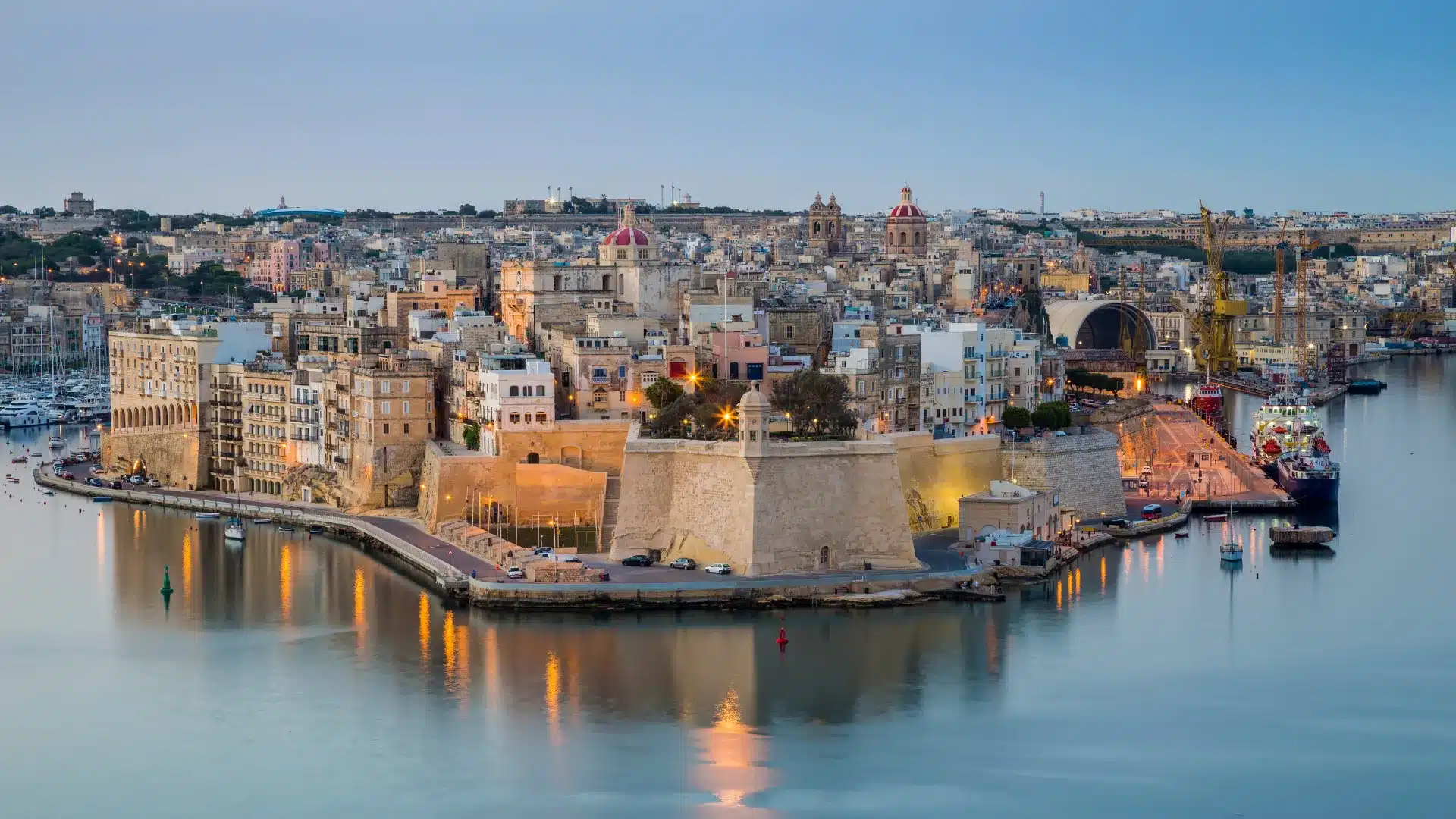
The Grand Harbour adds another layer. Fort St Angelo, the Three Cities, Kalkara, Vittoriosa, Senglea and Cospicua provide stone waterfronts, working harbour edges, marinas, old streets, fortifications and views across one of the Mediterranean’s most recognisable port environments. This part of Malta is strong for maritime stories, period sequences, action setups, military history, luxury campaigns and documentary work.
Valletta and the harbour area need careful permissions. Streets can be narrow, parking is limited, public footfall can be high, and many areas have heritage sensitivity. Filming may involve Screen Malta, local councils, site managers, private owners, police, road authorities, harbour authorities or heritage bodies depending on the footprint. If a production needs technical vehicles, lighting, crowd control, drone work, night filming, road holds, harbour access or filming near sensitive buildings, the plan should be prepared early.
Hoodlum supports Valletta and harbour filming by checking the practical details that decide whether a location is workable: where vehicles can load, where crew can hold, whether cables can cross public areas, how residents and businesses should be notified, whether parking can be approved, what insurance is required and how the unit can move without disrupting the area unnecessarily.
Mdina, Historic Streets and Period Looks
Mdina is one of Malta’s most valuable period filming locations. The old city offers narrow lanes, stone walls, gates, palaces, courtyards, churches, balconies and controlled heritage texture that can support historical drama, fantasy, luxury commercials, fashion, music videos and photography. Nearby Rabat adds further streets, religious sites, catacomb access, residential areas and local character.
This country’s historic street environments are a major draw, but they are also some of the locations that require the most careful planning. Heritage settings may have restrictions on vehicle access, set dressing, lighting, drilling, rigging, smoke, crowd control, footwear, floor protection, noise, night work and public closure. If a production wants to dress a street, move animals, use extras, bring period vehicles, place large lighting units, use cranes or shoot action, the approval process becomes more detailed.
Private and heritage locations in Malta often need owner approval, management approval and sometimes additional public permissions. A palace interior, church courtyard, historic house, museum, fortified wall or old-town street may involve several decision-makers. Location fees vary according to the production type, crew size, duration, access needs and sensitivity of the site.
Hoodlum’s approach is to treat Malta’s historic locations as controlled environments. That means scouting for access as well as appearance, confirming technical restrictions, securing the right agreements, protecting surfaces, planning equipment movement and keeping communication clear with owners, authorities and local residents.
Gozo, Comino and Island Movement
Gozo gives Malta a different production register. It is quieter, more rural and more open than the main island, with coastal cliffs, villages, churches, farm roads, harbours, stone houses, valleys, beaches and sea views. Gozo can work for commercials, lifestyle content, documentaries, travel programming, rural drama, photography, food and cultural stories. It is especially useful when a production needs this country’s visual language but wants a less urban environment.
Comino is much smaller and is best known for the Blue Lagoon and clear-water coastal access. It can be valuable for marine sequences, travel content, tourism, fashion, beauty, swimwear, adventure and boat-based filming. However, Comino is sensitive because of visitor numbers, environmental pressure, boat access and seasonal congestion. Productions should not assume that a visually simple beach or water shot will be easy to secure.
Island movement requires planning. Gozo usually involves ferry logistics, vehicle movement, accommodation decisions, early calls and weather considerations. Comino often involves boat access, marine coordination, environmental restrictions, tide and wind planning, safety and crowd control. A crew that tries to treat Gozo or Comino as an ordinary quick move from mainland Malta can lose time.
Hoodlum helps productions decide whether Gozo or Comino should be built into the schedule as a separate production day, a split unit, a boat-based shoot or a carefully timed location move. Malta is compact, but island logistics still need respect.
Water Filming, Coastline and Marine Work
Malta is particularly strong for water-based filming. Its coastline, harbours, coves, marinas, limestone cliffs, clear water and marine facilities make it useful for commercials, drama, action, fashion, travel content, documentaries, yachts, boats, underwater work and survival or expedition-style sequences. This country Film Studios in Kalkara has long been associated with specialist water filming, which is one of the reasons the country has attracted major international productions.
Coastal filming in this country must account for wind, sea state, public access, marine traffic, swimming areas, protected zones, boat permits, diver safety, lifeguards, drone restrictions and weather changes. The Mediterranean light can be strong and consistent, but the sea is still a production variable. Boat work needs clear communication between director, camera, marine coordinator, skipper, safety team and production management.
Harbour filming can require additional approvals from harbour authorities, marina operators, private owners, police or local councils. Beach filming may require environmental checks, waste plans, public access management and crowd control, especially in summer. Clifftop filming requires fall protection, controlled access and safety planning.
Hoodlum supports marine and coastal shoots in Malta by coordinating local skippers, divers, safety boats, marine permits, weather checks, location access, transport, equipment protection and contingency plans. Water gives Malta enormous screen value, but it must be handled as a technical environment.
Crew Entry, Visas and Work Authorisation
Malta is part of the Schengen Area, so many short-stay international crew routes fall within Schengen visa rules. A Schengen short-stay visa allows eligible visa-required travellers to stay in the Schengen Area for up to 90 days in any 180-day period. EU, EEA and Swiss nationals have simpler movement and work rights, while non-EU crew must check their visa and work-authorisation position according to nationality, role, employment structure and length of stay.
For film crew travelling to this country, visa documentation may include a valid passport, completed and signed Schengen visa application form, recent passport photo, passport data page, travel medical insurance with minimum required coverage, accommodation proof, financial means, travel itinerary, production company letter, proof of employment or engagement, role description, film title, locations, shooting dates and an invitation letter from a Maltese partner where applicable.
Some non-EU crew may require additional work authorisation or employment licensing depending on the role and duration. This should be checked early, especially for longer shoots, repeat travel, paid technical work or crew members staying beyond a short visit. Malta’s Central Visa Unit, under Identità, is the government body responsible for national visa policy and Schengen visa matters, with visa issuance shared with Malta’s diplomatic missions abroad.
Hoodlum helps productions map the crew list against Malta’s entry and work requirements. The practical questions are: who is travelling, what passport do they hold, how long will they stay, what work will they perform, who is engaging them, whether they need a Schengen visa, whether they need work authorisation, and what supporting letters must be prepared. Malta is easier when this is handled during pre-production, not at the airport.
International Crew Accreditation and Production Registration
International crew accreditation in Malta is usually connected to the permit process, customs needs, tax compliance, production structure and the specific locations being filmed. Crew members may need to appear on the production’s crew list, carry valid identification, provide proof of role, submit passport details, confirm insurance coverage and be included in permit or location documents.
For larger productions, crew documentation may include contracts or proof of employment, professional identification, production company letters, insurance, work permit documentation for non-EU crew where required, and details of the filming schedule. Some productions may also need to coordinate with the Malta Customs Department for equipment import and export, and with the Maltese tax authorities or local advisors for tax and rebate compliance.
Accreditation should not be treated as a separate administrative afterthought. It connects to the film permit, the customs plan, the rebate plan, the crew-entry route and on-ground access. If crew names, roles or travel dates change late, it can affect several parts of the production process.
Hoodlum supports accreditation by preparing accurate crew lists, matching the crew documentation to the permit package, coordinating local production letters and helping ensure that the crew’s paperwork reflects the real schedule and production structure.
Film Permits and Screen Malta
Film permits in Malta are primarily coordinated through the Malta Film Commission, now operating under the Screen Malta identity. The permit process usually requires details of the production, locations, crew, equipment, schedule, insurance, risk management and any special activity such as drones, stunts, road control, weapons, animals, marine work, night filming or filming in protected areas.
A general film permit application for Malta may require a completed film permit form, script or treatment, storyboard where relevant, shooting schedule, location list, crew list, contact details, equipment list, proof of liability insurance, proof of permit payment, production company letter, budget information where required, synopsis, casting details, location reports, safety plan, risk assessment, emergency response plan and security plan if needed.
Environmental documentation may be required for protected areas, coastal sites, sensitive habitats, heritage zones or locations with public impact. Productions may need waste management plans, environmental impact information or additional approvals when filming in protected coastal environments, on beaches, in heritage zones or in high-traffic public areas.
Permit timelines vary according to complexity. A simple, low-impact shoot can usually move faster than a production involving traffic, drones, marine coordination, public crowds, large technical vehicles, stunts, action, heritage locations or multiple councils. Hoodlum helps productions prepare clear permit applications that reflect the real footprint. In Malta, under-describing the production can create problems later when the crew arrives with more equipment, vehicles or public impact than the authority expected.
Private Locations in Malta
Private locations are a major part of filming in Malta. Villas, hotels, apartments, historic buildings, commercial spaces, restaurants, rooftops, private harbours, farmhouses, estates, palaces, churches, offices, marinas and luxury properties can all support different kinds of production. The process normally begins with scouting, contacting the owner or manager, arranging a visit or technical inspection, agreeing terms and securing a location agreement.
Private location fees in Malta vary widely. Residential properties may sit at one level, while luxury villas, estates, historic buildings, hotels and high-end commercial spaces can command significantly higher fees. The final quote depends on production type, duration, crew size, equipment, dressing, exclusivity, impact, public visibility, brand sensitivity and reinstatement requirements.
A strong private location agreement should cover access times, areas included, fees, overtime, deposits, insurance, damage, reinstatement, art department changes, floor protection, power, catering, toilet access, parking, security, confidentiality, public access, owner approvals and what happens if weather or permit delays affect the schedule.
Private permission does not always replace public permission. If lighting, vehicles, cables, crew holding, generators, cast movement or crowd control affect public streets, pavements, neighbours or traffic, local authority approval may still be required. Hoodlum helps productions secure private locations in Malta while also checking what public permissions are needed around the property.
Drone Filming in Malta
Drone filming in Malta is regulated under EU UAS rules and Maltese civil aviation requirements. The Civil Aviation Directorate within Transport Malta is the relevant authority for drone operations. Productions should check drone registration, pilot competency, operating category, geographical zones, insurance, flight planning and whether the operation requires authorisation.
Drone work in Malta can be valuable because of the island’s coastline, fortifications, harbours, old towns, cliffs, marinas and compact geography. It can also be sensitive because much of the island is close to populated areas, roads, heritage sites, ports, airports, heliports, public beaches and restricted zones. A drone flight that looks simple creatively may fall into a category that needs additional planning or authorisation.
For a local drone application, productions may need drone registration documents, operator certificate, EU UAS competency documentation, proof of liability insurance, drone specifications, maintenance records where relevant, flight plan, coordinates, map of the operating area and risk assessment. For higher-risk operations or specific category work, additional supporting documentation may be required.
Importing drones into Malta can also involve customs documentation. Productions should prepare commercial invoices, customs declarations, ATA Carnet or temporary import documentation where relevant, air waybills or bills of lading, packing lists and proof of insurance. For many international shoots, hiring a properly licensed local drone operator is the most efficient route because the operator already understands Maltese airspace, local restrictions, EU requirements and practical flight windows.
Hoodlum supports drone filming in Malta by coordinating the aviation plan with the location plan. Drone approvals, ground safety, public access, weather, marine movement and heritage restrictions should all be aligned before the shoot day.
Equipment Customs Clearance and ATA Carnet
Malta is an ATA Carnet country, which makes temporary importation of professional film equipment more practical for international crews arriving from outside the European Union. An ATA Carnet allows qualifying professional equipment to be temporarily imported without normal duties and taxes, provided the items are re-exported and the carnet is properly processed by customs.
Equipment clearance in Malta is handled through the Malta Customs Department. Crews should prepare a detailed equipment list with serial numbers, descriptions, values, ownership information, commercial invoices where required, packing lists, insurance certificates, air waybills or bills of lading, customs declarations and the ATA Carnet or temporary import paperwork. Drones, radio equipment, batteries, vehicles, camera systems, lighting packages and specialist marine equipment should be listed clearly.
For crews travelling from within the EU, the customs process may be simpler, but the production should still confirm ownership, movement route and any special equipment restrictions. For crews arriving from outside the EU, a clean carnet and accurate documentation reduce the risk of delays at the airport or port.
Malta’s compact size does not remove customs risk. If the camera package, drone, lighting kit or sound gear is delayed, replacement options may be limited or expensive. Hoodlum helps productions prepare equipment documentation, coordinate customs timing, work with clearing agents where needed and align equipment arrival with prep and shoot dates.
Local Crew, Fixers and Production Suppliers
Malta has an experienced film-service environment relative to its size. Local producers, fixers, location managers, production managers, assistant directors, camera crew, lighting crew, grip, sound, art department, wardrobe, makeup, drivers, security, marine coordinators, drone operators, caterers and suppliers are available, although availability depends on production season and scale.
A local fixer in Malta is especially useful because the island’s production systems are compact but relationship-driven. The fixer helps identify the correct authority, communicate with councils, secure private locations, coordinate with Screen Malta, source local crew, manage transport, organise accommodation, arrange releases, assist with customs, book boats and keep the shoot moving on the day.
Malta can support lean documentary crews as well as larger commercials and scripted productions, but the production structure should match the brief. A small factual shoot may need a fixer, permits, vehicle, sound recordist and a few location agreements. A commercial may need full local production management, casting, art department, technical crew, location control, drones, marine support, security, catering and accommodation. A drama may need deeper support around scheduling, extras, road control, set dressing, studio work and longer location holds.
Hoodlum builds Malta production support around the scale of the work. The aim is to avoid overloading a small shoot with unnecessary infrastructure while making sure larger shoots have the production management, permits and local crew depth they need.
Transport, Accommodation and Production Movement
Transport in Malta is usually efficient because distances are short, but short distances can be misleading. Traffic, parking, narrow streets, tourist areas, ferry timings, harbour access, road closures and old-town restrictions can affect a filming day. Valletta, Mdina, Sliema, St Julian’s and popular coastal areas require careful planning around vehicle access and technical parking.
Production vehicles may need approved parking, permits, loading windows or alternative holding areas. In old towns and heritage streets, large trucks may not be able to reach the location. Equipment may need to be moved by smaller vehicles or by hand. For Gozo, ferry schedules and queue times should be considered, especially when moving vehicles, equipment and crew.
Accommodation in Malta ranges from hotels and serviced apartments to villas and smaller guesthouses. Availability can tighten during summer, festivals, major events and peak tourism periods. Productions should plan accommodation around call times, unit movement, parking, catering and ferry requirements rather than simply choosing the most central option.
Hoodlum supports transport and accommodation in Malta by building the route around the production day. The plan should include crew pickup, technical vehicle movement, parking, unit base, ferry timing, boat access, meal breaks, turnaround and contingency.
Safety, Security and Practical Risk
Malta is generally a safe filming destination with reliable infrastructure, good roads, accommodation options, medical services and a film-friendly production environment. Most productions require standard security measures rather than extraordinary risk controls. However, security planning should still reflect the location, equipment value, crowd exposure, public profile and technical risk.
Equipment security is important in public areas, busy streets, beaches, harbours and tourist zones. Camera packages, drones, lenses, sound gear and data should be secured when not in use. Vehicles should be locked, valuable equipment should not be left visible and overnight storage should be properly controlled.
Location security varies by production scale. A small interview in a private interior may need little more than controlled access and basic equipment care. A commercial in a public square may need marshals, barriers, local authority coordination and a crowd-control plan. A shoot involving action, stunts, water, cliffs, drones, large lighting, public roads or night work may require more formal safety and security planning.
Malta’s specific production risks are often environmental and logistical: heat, sun exposure, sea conditions, slippery stone, narrow streets, crowd pressure, traffic, cliff edges, boat transfers and weather shifts. Hoodlum helps productions create practical risk plans that match the work without adding unnecessary complexity.
Film Rebates and Tax Incentives in Malta
Malta offers one of the more attractive production incentive frameworks in the region. Screen Malta promotes a cash rebate route for qualifying productions, and the current public-facing incentive pages present a 40% cash rebate. Productions should confirm the current guidelines, eligible categories, expenditure rules, cultural criteria, caps, audit requirements, application timing and approval process directly with Screen Malta before budgeting.
Malta has historically supported a range of production types, including feature films, television, documentaries, reality television and other audiovisual work. Eligibility depends on the project, the applicant structure, local spend, qualifying costs and compliance with current rules. Productions should not treat the rebate as automatic. It needs to be planned into the production structure and supported by proper accounting, supplier documentation and audit trails.
For reality television, factual entertainment, documentaries, scripted work and commercials with substantial Malta spend, the incentive conversation should happen early. Location choices, local crew, accommodation, transport, suppliers, post-production, marine services, set construction and local production management may all affect the spend profile.
Hoodlum helps productions connect the creative plan to the rebate conversation by identifying what will be spent in Malta, which local suppliers may be needed, what documentation should be retained and which incentive advisors or production partners should be involved before the budget is locked.
When Malta Is the Right Production Choice
Malta is the right production choice when a project needs Mediterranean light, historic streets, limestone architecture, harbours, forts, coastline, marine access, compact movement, English-speaking production support, experienced local crew and incentive potential. It is especially strong for commercials, fashion, music videos, travel content, documentaries, reality formats, feature films, television drama, marine sequences and period looks.
Malta is also useful when a production needs several looks close together. A schedule can include Valletta, Mdina, the Grand Harbour, a private villa, a coastal road, a beach, a boat, Gozo and a studio or water-tank environment without the long transfers required in larger countries.
Malta may be less suitable for productions that need large wilderness areas, extensive road networks, dense forest, snow, large-scale studio cities or anonymous urban sprawl. It is also not a place to leave permits late. Because the island is compact, filming activity is visible, and authorities need to know how public space, traffic and heritage areas will be affected.
The best Malta productions are those that use the island’s compactness strategically while still respecting permits, location access and local conditions.
Common Malta Production Mistakes
One common mistake is assuming that Malta’s small size means permits are simple. Malta is compact, but public filming, road access, heritage locations, drone work, harbour filming, beaches, Gozo movement and private locations still need proper approvals.
Another mistake is underestimating parking and access. Valletta, Mdina and other old-town areas can be difficult for large vehicles. Technical parking, loading routes and unit bases must be planned early.
Productions also underestimate drone restrictions. Malta’s airspace, populated areas, airport proximity, heritage zones, harbours and tourist sites can all affect drone permissions. A local drone operator is often the most efficient solution.
Customs planning is another area where mistakes happen. Malta is an ATA Carnet country, but the carnet must be accurate and properly stamped. Drones, batteries, camera systems and specialist equipment should be documented clearly.
Private location assumptions can create problems. A villa, hotel, historic building or commercial property may require a fee, contract, insurance, reinstatement terms and additional public permissions if the shoot affects surrounding streets or neighbours.
Finally, productions sometimes over-schedule because Malta looks small on a map. Short distances do not eliminate setup time, traffic, public access, ferry movement, heat, location restrictions or technical preparation.
How Hoodlum Supports Productions in Malta
Hoodlum provides Film Production Services in Malta for international crews that need reliable local coordination from early planning through wrap. Our support covers film fixers, local producers, Screen Malta permit coordination, location scouting, private location agreements, crew entry guidance, work permit support where required, drone planning, customs and ATA Carnet coordination, local crew sourcing, transport, accommodation, security and full on-ground production management.
For Valletta and the Grand Harbour, Hoodlum supports public-space planning, heritage access, road coordination, harbour logistics and private location negotiations. For Mdina and historic environments, we help manage controlled access, owner approvals, protection measures and filming restrictions. For Gozo, Comino and coastal locations, we support ferry planning, boat access, marine coordination, safety and environmental considerations.
Malta is highly workable when the production is structured properly. Hoodlum’s role is to make the island practical for the crew: clear permits, realistic schedules, useful local contacts, accurate paperwork and on-ground support that keeps filming moving.
Frequently Asked Questions
Do international crews need visas to film in Malta?
Crew-entry requirements for Malta depend on nationality, role, length of stay and employment structure. Malta is part of the Schengen Area, so visa-required short-stay crew may need a Schengen visa for stays of up to 90 days in a 180-day period. Non-EU crew may also need work authorisation depending on the nature and duration of the work.
Who issues film permits in Malta?
Film permits in Malta are generally coordinated through Screen Malta and the Malta Film Commission, with additional approvals from local councils, private owners, police, harbour authorities, heritage bodies, aviation authorities or environmental authorities depending on the location and production footprint.
Is Malta good for drone filming?
Yes, Malta can be very strong for drone filming, especially for coastlines, harbours, old towns and fortified locations. However, drone operations must comply with EU UAS rules and Transport Malta’s Civil Aviation Directorate requirements. Registration, pilot competency, insurance, flight planning and location authorisation may be required.
Is Malta an ATA Carnet country?
Yes. Malta accepts ATA Carnets for temporary importation of qualifying professional film equipment. Crews should prepare detailed equipment lists, serial numbers, values, commercial invoices where required, packing lists, insurance documentation and customs declarations.
Does Malta offer film incentives?
Yes. Malta offers a cash rebate route for qualifying productions through Screen Malta. The current public-facing Screen Malta incentive material presents a 40% cash rebate, but productions should confirm current guidelines, eligibility, caps and application requirements before budgeting.
What are the best filming locations in Malta?
Strong filming locations in Malta include Valletta, Mdina, the Grand Harbour, the Three Cities, Fort St Angelo, Kalkara, Sliema, St Julian’s, Marsaxlokk, Gozo, Comino, the Blue Lagoon, coastal roads, limestone villages, private villas, historic buildings and marine locations.
Can Malta double for other countries?
Yes. Malta is often used for Mediterranean, Middle Eastern, North African, ancient, medieval, maritime and period looks. Its limestone architecture, harbours, forts and coastal settings can be dressed and framed for multiple story worlds.
Why use a fixer in Malta?
A fixer in Malta helps international productions secure permits, source locations, negotiate private access, coordinate with Screen Malta, arrange local crew, manage transport, support customs, plan drones and keep the shoot practical on the ground.
External Authority Links
- Screen Malta
- Screen Malta Cash Rebates
- Identità Central Visa Unit
- Transport Malta Civil Aviation Directorate – Drones
- Malta Customs
- Visit Malta – Filmed in Malta
- Malta Tourism Authority
- Heritage Malta
- Environment and Resources Authority Malta
Malta offers strong production value when the planning is handled early. The right permits, crew-entry route, location agreements, drone approvals, customs documentation, transport plan, accommodation, security and incentive structure should be in place before the crew arrives.
Planning a shoot in Malta? Contact Hoodlum for film permits, Heritage Malta site authorisations, local fixers, location scouting, customs and ATA Carnet planning, drone coordination, cash-rebate guidance, water-tank access, underwater units and full on-ground production management. You can also view the Hoodlum Film Fixers Malta Google Business Profile for local production details.