















Film Production Services in Miami
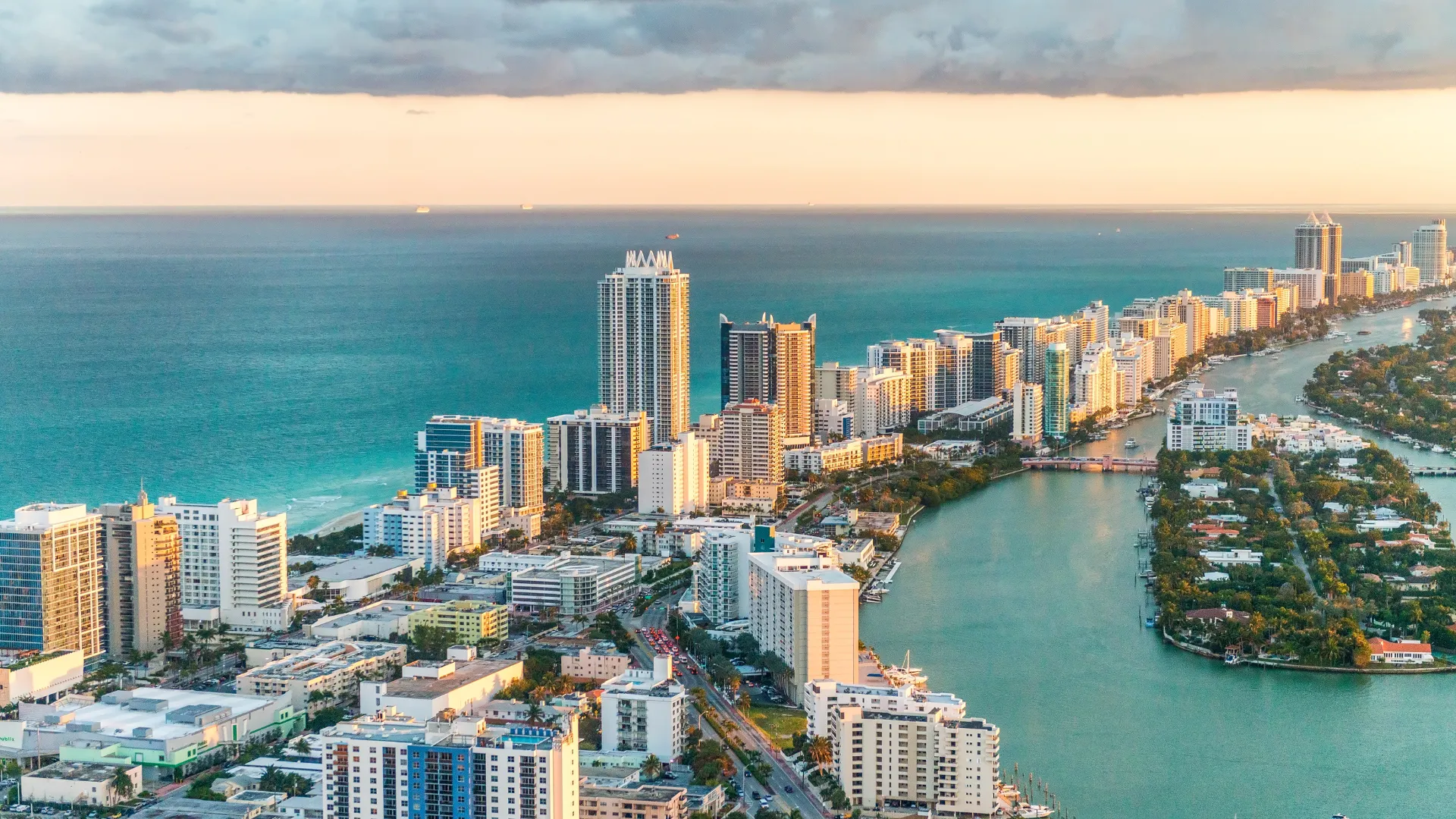
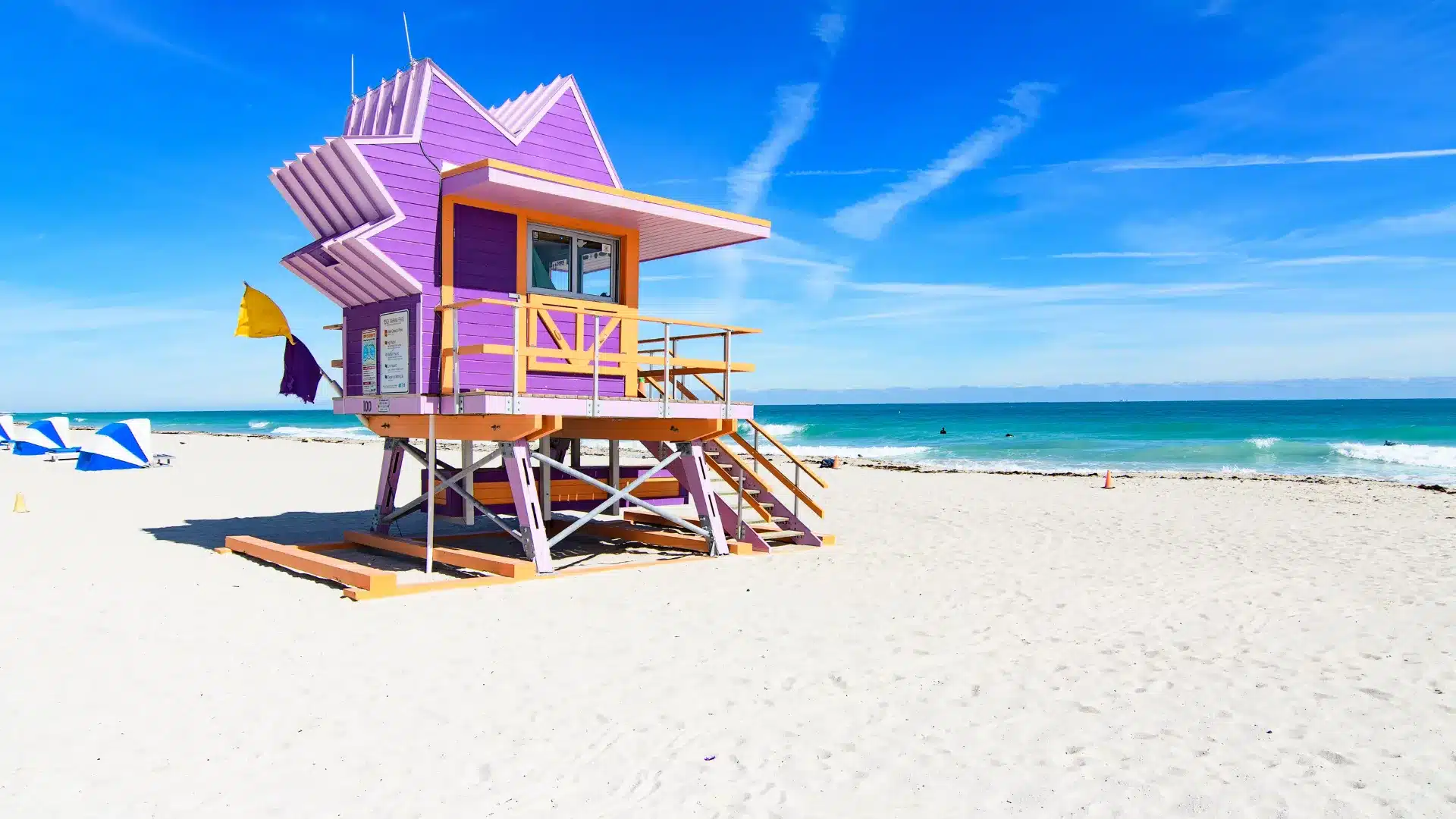
Miami is one of the most recognisable and versatile filming destinations in the United States, combining art deco architecture, neon-lit beaches, turquoise water, a glittering downtown skyline, Latin American culture, luxury lifestyle settings and a subtropical climate into a vibrant, year-round production hub. From the pastel facades of South Beach and the murals of Wynwood to the high-rises of Brickell, the Everglades on the doorstep and the marinas and mansions of the bay, the city offers a distinctive, sun-soaked visual identity backed by deep production infrastructure and a skilled local workforce.
For international crews, Miami offers a rare blend of iconic locations, a mature film industry, the practical advantages of US infrastructure and a Spanish- and English-speaking talent pool that makes it a natural bridge between North and Latin America. It is one of the few places where a production can shoot art deco beachfront, a modern financial district, subtropical wilderness and luxury marine lifestyle within a single tight schedule, supported by experienced crews, rental houses and a genuine local cash incentive.
Hoodlum provides Film Production Services in Miami for commercials, documentaries, factual entertainment, branded content, music videos, fashion and lifestyle campaigns, reality television, feature films and television productions. Our team supports visa guidance, film permits, location agreements, drone coordination, carnet and customs clearance, local crew sourcing, transport, accommodation, security planning, incentive support and full on-ground production management. You can see the full scope of what we do and the people behind it on our who we are page.
The city rewards productions that arrive with their paperwork in order. It is a film-friendly, well-organised city, but it is not a destination for informal shooting on public property. The right entry route, the right permits, the right customs plan and the right incentive registration all need to be settled before the cameras roll, and the most efficient way to handle that is through an experienced local production partner.
Why Miami Works for Beaches, Skylines and Latin Energy
The city’s biggest production strength is the combination of instantly recognisable locations, year-round sun, deep infrastructure and a competitive local incentive, all within a compact footprint. In a single schedule a production can capture art deco beachfront, a neon nightlife strip, a modern skyline, a subtropical wetland and a luxury waterfront, often within a short drive of each other. The bilingual crew base and the city’s role as a gateway to Latin America give it a distinctive edge for brands and broadcasters.
Downtown and the beaches are the operational core, but the value sits in the variety and the rebate. A commercial might pair South Beach with a Brickell rooftop and a marina. A music video might use Wynwood’s murals and a waterfront mansion. A documentary might explore the Everglades, the Cuban culture of Little Havana and the Art Deco District. The city is strong because it delivers a globally recognised look, a skilled workforce and a real cash incentive in one sun-soaked, well-connected package.
The city is especially well suited to:
- Commercials and branded content
- Fashion, beauty and lifestyle campaigns
- Music videos
- Reality and factual television
- Marine, yachting and luxury content
- Automotive shoots
- Documentary and travel programming
- Feature films and television drama
- Latin American crossover productions
Hoodlum’s production support team helps crews decide which neighbourhoods and locations are practical, what permissions each one needs and how to sequence movement between the beaches, downtown, Wynwood and the wider county.
South Beach, Downtown and the Neighbourhoods
The beaches and downtown are the practical anchors for most international productions working in the city. Crews arrive through Miami International Airport, one of the busiest gateways in the Americas, with suppliers, rental houses, studios, post facilities and accommodation all close at hand, and permit and customs coordination beginning here.
South Beach offers the world-famous Art Deco District, pastel facades, Ocean Drive, sand and turquoise water, while Brickell and downtown provide a modern high-rise skyline, financial-district backdrops and rooftops. Wynwood brings world-class street art and a creative-district energy, Little Havana offers vibrant Cuban culture, and Coral Gables, Coconut Grove and the bayfront mansions add Mediterranean architecture, marinas and luxury lifestyle settings. Hoodlum uses these districts as the practical base for Film Production Services in Miami, particularly when a shoot needs to combine beach, skyline and culture in a tight schedule.
Beaches, Marinas and Marine Filming
The coastline and waterways are central to the city’s identity, offering beaches, marinas, yachts, sandbars, causeways, the bay and the ocean, all of which make it a magnet for marine, yachting, fashion and luxury-lifestyle content. Boat-based filming, jet skis, sandbar shoots and waterfront mansions are all part of the local production vocabulary.
These locations suit fashion and lifestyle campaigns, marine and yachting content, music videos, commercials and any project needing classic sun-and-water imagery. Marine and beach filming calls for planning around tides, weather, boat permits, marine safety, coast guard rules and beach-access permissions, which vary by municipality. Hoodlum helps productions plan the coastline and marine work as their own production environment, with the right boat support, permits, timing and safety in place.
The Everglades and Subtropical Nature
Just beyond the urban core, the Everglades and surrounding wetlands offer a completely different look: sawgrass marshes, mangroves, airboats, alligators and subtropical wilderness found nowhere else in the country. This proximity to genuine wilderness is a rare asset for a major city.
These environments suit natural-history, adventure and travel content, commercials and any project needing dramatic wetland or wildlife backdrops. Everglades filming involves national and state park permissions, which require significant advance notice, along with environmental rules, wildlife protocols, guides and airboat operators. Hoodlum builds the park permits, local guides and logistics into the plan before a shoot moves into the wetlands.
Entry, Visas and Crew Documentation
Entry to the United States is more involved than many destinations, and the right route depends on each crew member’s nationality and role, so early planning matters.
Crew typically work under a non-immigrant visa, commonly the B-1 for certain business activities or the O-1 for individuals with extraordinary ability, with the correct category depending on the nature of the work and whether crew are paid from US sources. Visa-waiver and ESTA entry has strict limits on professional production activity, so productions should confirm the right route rather than assume, with processing ranging from days to months depending on nationality and visa type. Applicants generally provide a passport, application, fee payment, an invitation or intent letter from the production company, proof of financial support and a detailed itinerary or shooting schedule.
Because the immigration framework is complex and consequential, productions should take advice early and align crew visas with the schedule. Hoodlum helps productions match each crew member to the correct entry route, assemble the documentation, and avoid immigration becoming a costly late-stage problem.
Film Permits and Location Permissions
Filming on public property requires a permit, and there is no single citywide permit covering everything, since the metropolitan area spans Miami-Dade County and dozens of municipalities, each with its own rules. The county film office, Film Miami, operates a one-stop permitting system through an online portal that covers the county and many municipalities, but individual cities such as Miami Beach, Coral Gables and others may issue their own permits and have their own fees and conditions.
A permit application generally requires a completed form, proof of general liability insurance, a location list, a filming schedule, a crew list, an equipment list and a description of the production. Standard permits often take around three to ten business days, with street closures, beaches, the airport and other high-impact locations needing more time and additional approvals. Insurance minimums typically start at one million dollars in general liability, and permits on private property are sometimes still required where a shoot affects the surrounding public area.
Private locations such as homes, hotels, restaurants, studios, rooftops and mansions are negotiated directly with owners or managers. A Hoodlum location scout can propose suitable options, after which we negotiate access, dates, crew size, fees and conditions, and secure a location agreement. Private permission does not replace the municipal or county permits a shoot also requires, and fees are quoted once the locations are confirmed.
Drone Filming and Aviation Rules
Drone operation is governed by Federal Aviation Administration rules nationwide, which require a certified remote pilot, drone registration, airspace authorisation and adherence to operating limits, alongside local permissions from the county or city for filming on public property. Proximity to Miami International Airport and other airfields creates significant controlled airspace, so authorisation is essential and some areas are heavily restricted.
For commercial film work, operators need the FAA Part 107 certification, liability insurance, a flight plan and any required airspace waivers, with the drone declared and registered as needed. For many incoming productions, working with a locally licensed drone operator who already holds the certifications and knows the airspace restrictions is the most practical route. Hoodlum helps productions decide between a local operator and bringing their own, coordinates the FAA and local authorisations, and builds the required lead time into the plan.
Equipment Customs Clearance and the ATA Carnet
The United States is an ATA Carnet country, which makes temporary equipment importation relatively straightforward for productions arriving from abroad. An ATA Carnet acts as a single international customs document allowing professional filming gear to be temporarily imported duty-free and tax-free, on the guarantee that it will be re-exported within the validity period, typically up to one year.
Customs clearance is handled by US Customs and Border Protection, and a clean carnet supported by a detailed equipment list with serial numbers and values, a commercial invoice and a packing list keeps the process moving, often within anything from a few minutes to a few hours depending on the shipment and the entry point. Crews can also use a temporary import process with the relevant CBP documentation, though a carnet is usually the cleaner route for international gear. A detailed inventory is essential, since the equipment is brought in temporarily and must be re-exported.
Hoodlum helps productions prepare the carnet and equipment list, coordinates with US Customs and Border Protection and a local broker where needed, and times the process so cameras, lighting, grip and sound gear move through with minimal delay.
The Miami Film Incentive
The headline financial draw is the Miami-Dade County High Impact Film Fund Program, a performance-based cash rebate of up to 20% on qualifying local spend, backed by a dedicated fifty-million-dollar commitment over five years, making it the largest local film fund in Florida. It is aimed at major feature films and television series, with a minimum local spend of around five million dollars, and applications must be submitted before principal photography begins, with no retroactive claims.
For productions that do not reach that threshold, a separate two-tier grant program offers support based on local spend, with one tier for projects spending between roughly five hundred thousand and one million dollars and a higher tier above one million, each tied to hiring local cast and crew. Both programs require a substantial share of vendors and crew to be registered or resident in the county, an independent CPA audit of qualified spend, and approval through the county. Importantly, there is no longer a statewide Florida film tax credit, since that program lapsed, so these local programs are the primary incentives.
A valuable additional benefit applies on top: Florida’s statewide sales-tax exemption removes the state sales tax on qualifying production equipment purchases and rentals, which stacks with the local rebates and is often overlooked. The exact rates, thresholds, caps and rules change periodically, so productions should confirm current figures and structure the application early through a local entity. Hoodlum can help productions register, structure qualifying spend, coordinate the audit and assemble the documentation so the incentive is captured rather than missed.
Safety, Security and Practical Logistics
The city is a well-developed, film-friendly destination with excellent infrastructure, experienced crews and strong production support, and most shoots proceed with standard precautions rather than extraordinary security. As in any major city, conditions vary by neighbourhood and time of day, so sensible planning matters.
For many shoots, hiring off-duty police officers or licensed security is standard practice, particularly for high-value equipment, visible public setups, celebrity talent or filming in busier areas, alongside secure equipment storage, secure transport and constant communication with the unit. Thorough location scouting, clear unit management and sensible equipment control are the practical foundations of a smooth shoot, and medical and emergency infrastructure is excellent.
The subtropical climate is the other defining variable. Heat, humidity, intense sun and the summer hurricane and storm season all affect outdoor filming, so productions should plan around weather windows, build in contingency during storm season and protect crew and equipment from heat. Hoodlum helps productions balance sensible security with efficient movement, draws on trusted local contacts, and builds weather, heat and contingency thinking into the schedule from the start.
When Miami Is the Right Production Choice
Miami is the right choice when a production needs iconic beaches, art deco architecture, a modern skyline, luxury and marine lifestyle, Latin American culture and subtropical nature, combined with deep US infrastructure, a bilingual crew base and a genuine local cash incentive. It is especially strong for commercials, fashion and lifestyle, music videos, reality and factual television, marine and yachting content, and any project that wants beach, skyline and culture in a single efficient, sun-soaked schedule.
It may be less suitable for productions that cannot meet the rebate’s minimum spend and need a guaranteed incentive, or that need to avoid hurricane-season weather risk without contingency. The city is highly workable when the entry route, permits, drone arrangements, carnet, incentive registration and location agreements are settled early.
Common Production Mistakes to Avoid
The most frequent mistakes include:
- Assuming a single permit covers the whole metropolitan area, when each municipality has its own
- Filming on public property without the correct permit and insurance
- Underestimating US visa requirements and relying on visa-waiver entry for paid work
- Registering for the incentive too late or missing the minimum-spend and local-vendor rules
- Underestimating controlled airspace and drone restrictions near the airport
- Treating the Everglades and parks as ordinary locations
- Failing to plan around hurricane season and extreme heat
- Overlooking the statewide sales-tax exemption that stacks with the rebate
Most of these problems are avoidable by aligning the crew list, visas, permits, drone plan, carnet, incentive registration and location agreements well before the crew travels.
How Hoodlum Supports Productions in Miami
Hoodlum provides Film Production Services in Miami for international crews that need experienced local coordination from early planning through to wrap. Our support covers visa and documentation guidance, county and municipal film permits, private location agreements, Film Miami and city-office coordination, drone planning, carnet and customs clearance, local crew sourcing, transport, marine and boat support, security planning, accommodation, incentive registration and on-ground production management.
From South Beach and the Art Deco District to Brickell, Wynwood, Little Havana, the marinas of the bay and the Everglades beyond, we help productions access the strongest filming environments in Miami with the right permits, fixers, customs planning and logistics in place. Planning a shoot? Contact us to talk through permits, visa support, local fixers, location scouting, carnet coordination, drone planning, incentive support and full on-ground production management.
Frequently Asked Questions
Do international crews need a visa to film in Miami?
Yes, in most cases. Crew typically work under a non-immigrant visa such as the B-1 or O-1, depending on the nature of the work and how crew are paid. Visa-waiver and ESTA entry has strict limits on professional production activity, so confirm the right route early, as processing can take from days to months.
Who issues filming permits?
Filming on public property requires a permit. The county office, Film Miami, runs a one-stop portal covering the county and many municipalities, but cities such as Miami Beach and Coral Gables may issue their own. Standard permits often take three to ten business days, with high-impact locations needing more.
Who regulates drones?
Drones are governed by FAA rules, requiring a certified remote pilot, registration and airspace authorisation, plus local permissions. Controlled airspace around the airport is extensive, so a locally licensed operator who knows the restrictions is usually the most practical route.
Is the US an ATA Carnet country?
Yes. Equipment is brought in cleanly through the ATA Carnet system, with clearance handled by US Customs and Border Protection, supported by a detailed equipment list with serial numbers and values.
Does Miami offer a film incentive?
Yes. The Miami-Dade High Impact Film Fund Program offers a cash rebate of up to 20% on qualifying local spend, with a minimum spend of around five million dollars, plus a smaller two-tier grant program for lower budgets. Florida’s statewide sales-tax exemption on production equipment stacks on top. Apply before principal photography, as there is no statewide credit.
What are the best filming locations?
Popular options include South Beach and the Art Deco District, the Brickell and downtown skyline, the street art of Wynwood, the Cuban culture of Little Havana, Coral Gables and Coconut Grove, the marinas and bayfront mansions, and the Everglades.
Useful Authority Links
- Film Miami – Miami-Dade Office of Film & Entertainment
- Miami-Dade High Impact Film Fund Program
- US Department of State – Visas
- Federal Aviation Administration – Drones
- US Customs and Border Protection
- Florida Department of Revenue – Sales Tax
Ready to bring your production to Miami? Hoodlum handles the permits, visa guidance, location scouting, carnet and customs coordination, drone planning, local crew, marine support, security planning, incentive registration and full on-ground production management, so you can focus on the work in front of the lens. Get in touch with our team to start planning, and tell us your locations, dates and creative brief.
For more information, view our Hoodlum Film Fixers Miami Google Business Profile.