





Film Production Services in the Netherlands
The Netherlands is one of Europe’s most efficient and visually adaptable filming territories, offering historic canals, modern architecture, ports, polders, wind farms, beaches, contemporary business districts, museums, industrial sites, rural roads, controlled city streets, water infrastructure and a deep base of English-speaking production talent. For international producers, the Netherlands works especially well when a project needs strong organisation, practical movement, skilled local crew, distinctive urban textures and a production environment that can handle both lean documentary crews and more complex commercial or scripted shoots.
Hoodlum provides Film Production Services in the Netherlands for commercials, documentaries, factual entertainment, feature films, television drama, branded content, reality formats, music videos, photography campaigns, fashion shoots and corporate films. Our support covers film fixers, local producers, permit planning, location scouting, private location negotiations, visa and crew-entry guidance, drone planning, customs and ATA Carnet coordination, local crew sourcing, transport, accommodation, security, water-based logistics and full on-ground production management. Productions can learn more about what we do and the team behind the work on our who we are page.
The Netherlands is film-friendly, but it is not a country where every public location can be filmed casually. Amsterdam canals, Rotterdam port zones, Schiphol-adjacent locations, railway stations, bridges, public roads, beaches, museums, private interiors, government areas, military sites, embassies, airports, nature reserves and drone zones all require the right permissions. The country is highly workable when the paperwork is clear, the location footprint is realistic and the production works with local people who understand municipal systems.
Why the Netherlands Works for International Productions
The Netherlands works for international productions because it combines compact geography with strong infrastructure. A crew can base in Amsterdam, Rotterdam, The Hague, Utrecht, Haarlem, Eindhoven or another production hub and reach several different looks within a short travel window. That efficiency is useful for commercials, documentaries, interviews, branded content, corporate films, fashion campaigns and scripted projects that need multiple locations without losing full days to company moves.
Amsterdam is the most recognisable location, with canals, bridges, narrow streets, tall houses, museums, creative districts, business interiors and a strong international profile. Rotterdam gives the Netherlands a completely different tone: modern architecture, port scale, contemporary skylines, bridges, shipping infrastructure and industrial access. The Hague adds government, international courts, embassies, coastal access and elegant streets. Utrecht offers canals, old streets, railway connections and a central base. Eindhoven and the Brabant region are useful for technology, design, industrial environments and modern Dutch business culture.
The Netherlands is also unusually strong for water-related filming. Canals, rivers, polders, dykes, locks, ferries, ports, shipyards, marinas, beaches and offshore infrastructure all create production opportunities. Maritime, climate, engineering, logistics, environmental and urban-planning stories work particularly well here. The country can also support fashion, design, architecture, technology, cycling culture, food, agriculture, museums, art, sport and European business stories.
For producers, the main attraction is reliability. Local crew are experienced, English is widely spoken, transport is efficient, accommodation is varied and suppliers are professional. The challenge is that the Netherlands is carefully managed. Public space is dense, cycle lanes matter, water safety matters, traffic restrictions are real, and municipalities want accurate information before approving a shoot. Hoodlum helps productions turn that structured environment into an advantage.
Amsterdam as a Production Hub
Amsterdam is the most requested production base in the Netherlands, and for good reason. The city offers canal houses, bridges, museums, galleries, creative studios, cafés, offices, hotels, parks, waterways, nightlife, contemporary architecture, residential streets, cycling routes and internationally recognised exteriors. It can support documentaries, commercials, fashion shoots, music videos, travel content, corporate films, factual programming and drama.
The city’s production strength is also its main complication. Amsterdam is dense, busy, highly photographed and sensitive to disruption. Canal-side filming, bridge shots, drone requests, street work, traffic impact, parking, technical vehicles, public crowd control, night filming, filming near museums, filming with picture vehicles and filming on boats all require careful planning. Even small crews should pay attention to where equipment is placed, how cycle lanes are kept clear, whether residents or businesses need to be notified and whether a permit is required.
Amsterdam’s canals are an obvious filming asset, but they need specific logistics. Boat access, canal traffic, mooring points, safety, camera platforms, sound issues, weather, reflections, public visibility and water permits can all affect the day. A crew filming from the street beside a canal may need a different approval from a crew filming on the water, from a bridge, from a private canal house or with a drone.
Hoodlum supports Amsterdam shoots by keeping the plan realistic. That means confirming which district is involved, what the location footprint is, whether parking is possible, how equipment moves, whether the canal or road is affected, what insurance is required and how the crew can work without creating avoidable pressure in a busy city.
Rotterdam, Ports and Modern Architecture
Rotterdam gives the Netherlands a bold modern production look. It is known for contemporary architecture, bridges, port infrastructure, industrial areas, high-rise buildings, water, logistics, design and a more open urban layout than Amsterdam. For commercials, corporate films, documentaries, shipping stories, technology content, industrial sequences and contemporary drama, Rotterdam can be one of the strongest locations in the country.
The Port of Rotterdam is one of Europe’s most important logistics environments, and it can deliver real industrial scale: cranes, containers, terminals, ships, warehouses, refineries, transport infrastructure, bridges, docks and working waterfronts. These locations are powerful on camera but require serious access planning. Port zones are operational environments with security, safety rules, private operators, customs implications, traffic controls and restricted areas. A production must be clear about whether it needs public-facing waterfront, controlled terminal access, ship access, aerial views, interviews, industrial filming or a fully managed unit inside a working site.
Rotterdam’s architecture is also useful for high-end commercial work. The city can provide clean modern lines, glass, bridges, business districts, rooftops, interiors, tunnels, metro settings, public squares and waterfront views. Compared with Amsterdam, Rotterdam can sometimes be easier for larger technical setups, but permits, traffic, police, private owners and site managers still need to be coordinated.
Hoodlum helps productions in Rotterdam by matching the creative ambition to the correct authority and site owner. Port filming, architectural filming, public-space filming and private interiors each follow a different route. The earlier the project defines the exact footprint, the easier it is to secure the right access.
The Hague, Utrecht and Regional City Looks
The Hague brings a more diplomatic and institutional character to the Netherlands. It is useful for political documentaries, legal stories, international organisations, embassy settings, civic architecture, coastal access, elegant streets and controlled interview environments. The city also provides access to Scheveningen, which can support beach, promenade, pier and coastal sequences without leaving the urban base.
Filming in The Hague may involve municipal authorities, police, private owners, international institutions, embassies or security-sensitive locations. Productions should treat government, legal and diplomatic environments carefully. Even exterior filming near certain sites can require extra review, and any filming involving public figures, protests, security barriers, traffic or sensitive institutions should be planned early.
Utrecht offers a more central Dutch city feel, with canals, old streets, university environments, railway access and a practical location in the middle of the country. Its canals have a different character from Amsterdam, with wharf-level spaces and smaller-scale streets that can work well for drama, interviews, fashion, travel and branded content. Utrecht is also a useful base for crews moving across the Netherlands because of its central rail and road connections.
Haarlem, Leiden, Delft, Groningen, Maastricht, Amersfoort, Breda, Arnhem and other cities can give the Netherlands a wider visual range. A production that does not need Amsterdam’s immediate recognition may find more workable streets, lower pressure and more local flexibility in a regional city. Hoodlum helps producers decide whether a location should be selected for brand recognition, visual texture, cost, permit practicality or schedule efficiency.
Countryside, Polders, Coast and Water Infrastructure
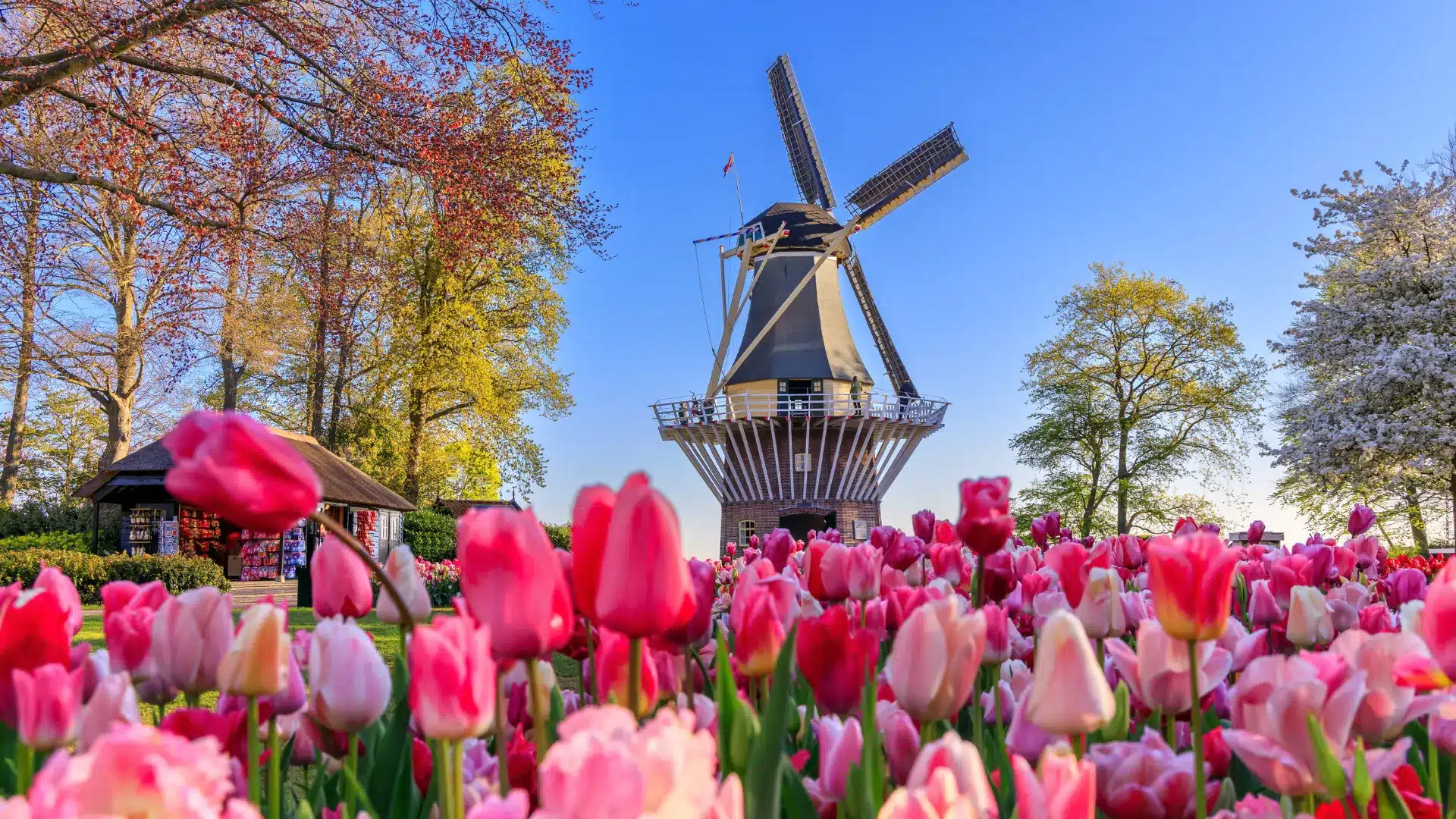
The Netherlands is not only a city location. The rural and coastal environments are central to its production value. Polders, dykes, windmills, wetlands, tulip fields, agricultural roads, glasshouses, drainage canals, modern wind farms, beaches, dunes, forests and island routes give productions strong options for documentary, commercial, environmental, agricultural, climate, automotive, lifestyle and travel content.
The Dutch relationship with water creates specific filming opportunities. Delta works, storm barriers, canals, locks, pumping stations, harbours, ferry routes, dykes and reclaimed land can support stories about engineering, climate adaptation, logistics, energy and coastal resilience. These locations can be visually strong but often involve infrastructure managers, water authorities, local municipalities, safety restrictions and sometimes restricted access.
Beach filming in the Netherlands is practical in many areas, but it is still subject to local permissions, public access, weather, wind, dunes, environmental protection and seasonal visitor pressure. Scheveningen, Zandvoort, Noordwijk, Texel, Zeeland and the Wadden area all offer different coastal looks. The Wadden Islands and protected coastal environments may require more careful planning around conservation, ferries, tides, weather and accommodation.
Agricultural and rural filming also needs local agreements. Private farms, greenhouses, tulip fields, dairies, wind farms and food-production sites require owner permission, biosecurity checks where relevant, safety rules, insurance and clear terms. Hoodlum helps productions secure rural and coastal locations by checking not only the image but also the access, weather, permissions and local impact.
Crew Entry, Visas and Work Authorisation
Crew entry into the Netherlands depends on nationality, length of stay, role and employment structure. The Netherlands is part of the Schengen Area, so visa-required short-stay crew may need a Schengen visa for stays of up to 90 days in any 180-day period. Visa-exempt crew may still need to meet entry conditions, including passport validity, proof of purpose, accommodation, funds and return or onward travel.
For South African applicants and other visa-required nationals applying through the Netherlands route, the official NetherlandsWorldwide process involves checking whether a visa is needed, gathering documents, completing the Schengen visa application form, making an appointment through the relevant application centre, attending the appointment in person, submitting documents and passport, providing biometrics where required, paying fees and tracking the application.
Film-related supporting documents may include a production company letter, invitation letter, letter of intent, proof of professional role, shooting schedule, film project details, proof of accommodation, proof of funds, travel health insurance and onward travel evidence. For longer stays or more formal employment activity, additional work authorisation or residence-related rules may apply and should be checked with official channels or local immigration advisors.
The standard short-stay process is often around 15 calendar days, but productions should not rely on the minimum timeline. Appointment availability, nationality, consular workload, missing documents, peak travel periods and project complexity can all affect the process. Hoodlum helps productions map the crew list against the entry requirements so that visa letters, schedules and role descriptions are prepared clearly before applications are submitted.
International Crew Accreditation and Production Documentation
International crew accreditation in the Netherlands is usually linked to the production’s permit package, visa support, location access, insurance and professional credentials. The Netherlands Film Commission, the Netherlands Film Fund, municipalities, embassies, consulates, private owners or location managers may all need to understand who is working on the production and what their role is.
Crew documentation can include valid passports, proof of professional credentials, crew list, production company details, film project summary, shooting schedule, proof of liability insurance and letters of engagement. In some cases, location owners or public authorities may ask for individual identification, public liability cover, risk assessments or proof that the production has professional status.
The Netherlands is an organised production environment, and a clean crew list helps everything move faster. The crew list should match permit applications, visa letters, insurance, location agreements and call sheets. If the production changes crew names, adds drone operators, brings additional technical staff or extends shoot dates, those updates should be communicated where necessary.
Hoodlum supports accreditation by building one consistent document set across permits, visas, locations and insurance. This avoids the common problem of different authorities receiving different versions of the same production plan.
Film Permits and Municipal Approvals
Film permits in the Netherlands are usually handled at the municipal level, supported by local film offices or the Netherlands Film Commission depending on the production and location. There is no single permit that automatically covers every city, road, canal, station, park, beach, port, museum or private property across the Netherlands. The correct authority depends on the location, scale and impact of the filming.
A general permit application may require a completed application form, proof of liability insurance, script or treatment, storyboard where relevant, location list, filming schedule, crew list, equipment list, vehicle plan, parking needs, risk assessment and details of any drones, stunts, traffic control, public crowd management, special effects, night filming or water-based activity.
Small, low-impact filming may be processed relatively quickly, sometimes within several working days depending on the municipality. More complex or large-scale productions can take several weeks, especially if road closures, police, traffic measures, drones, public disruption, bridge access, water activity or sensitive locations are involved. Productions should allow additional time in Amsterdam, around ports, near airports, near embassies or in areas with heavy public use.
Permit costs vary by municipality and production footprint. Fees may depend on location, crew size, public-space occupation, parking, road measures, police involvement, traffic control, location management and special equipment. Hoodlum helps productions prepare permit applications that describe the real footprint clearly, avoiding both overcomplication and under-reporting.
Private Locations in the Netherlands
Private locations in the Netherlands include canal houses, apartments, offices, warehouses, factories, farms, greenhouses, hotels, restaurants, studios, galleries, museums, rooftops, boats, private estates, retail spaces, modern homes and industrial sites. A fixer or location manager is often central to the process, using local knowledge to identify suitable properties, contact owners, arrange recces, negotiate fees and coordinate practical access.
Private location costs cannot be determined properly until the owner has reviewed the production synopsis, schedule, crew size, equipment, intended use, dressing requirements and level of disruption. A one-hour documentary interview in an office is not the same as a fashion shoot in a canal house, a commercial in a modern villa, a drama sequence in a museum, or a night shoot in an industrial warehouse.
A proper private location agreement should cover dates, hours, access areas, preparation and strike, fees, overtime, deposits, insurance, damage, reinstatement, art department changes, floor protection, power, catering, toilets, parking, security, confidentiality and owner approvals. If the production affects the street, pavement, canal, neighbouring property, public parking or exterior lighting, municipal permission may still be required.
Hoodlum supports private location work in the Netherlands by checking both visual suitability and production practicality. In Dutch cities, narrow staircases, canal-side access, bike traffic, parking restrictions and neighbour sensitivity can all affect whether a location is workable.
Drone Filming in the Netherlands
Drone filming in the Netherlands is regulated under EU drone rules and Dutch aviation requirements. Operators must comply with registration, pilot competency, operational category, insurance, privacy and airspace rules. The Dutch Civil Aviation Authority functions through the Inspectie Leefomgeving en Transport, known as ILT, while European drone regulation is shaped by EASA rules.
Drone operations in the Netherlands can be complicated by controlled airspace, airports, heliports, ports, military areas, embassies, prisons, nature reserves, dense cities, privacy rules and public-safety concerns. Flights around Schiphol, Rotterdam The Hague Airport, military zones, government buildings, ports or populated urban areas need careful review. Drone work near embassies, military bases or sensitive infrastructure can be substantially more expensive and time-consuming than a simple rural or open-area flight.
A local drone application may require a flight plan, proof of drone registration, pilot certification, liability insurance, declaration of compliance with Dutch and EU drone regulations, maps, coordinates, risk assessment and location permissions. Where the flight falls into a more complex category or restricted zone, additional authorisation and longer lead times may apply.
Importing drones into the Netherlands should be planned alongside customs and compliance. Productions may need commercial invoices, air waybills or bills of lading, certificate of origin, declaration of conformity, CE documentation, insurance and customs paperwork. For many international productions, hiring a properly licensed local drone operator is more efficient than importing an operator and drone system, especially around controlled airspace or urban locations.
Hoodlum supports drone filming in the Netherlands by checking whether the shot is legally and practically achievable, coordinating local drone operators, aligning drone permissions with film permits and ensuring that ground safety, privacy and public access are addressed.
Equipment Customs Clearance and ATA Carnet
The Netherlands is an ATA Carnet country, which makes temporary importation of professional filming equipment more practical for crews arriving from outside the European Union. An ATA Carnet acts as an international customs document for temporary admission, allowing eligible professional equipment to enter and leave without normal customs duties and taxes if the goods are re-exported and the carnet is processed correctly.
Customs clearance in the Netherlands is handled by Dutch Customs, known as Douane. Crews should prepare a detailed equipment list with descriptions, serial numbers, values, ownership information, commercial invoices where required, packing lists, customs declaration forms, proof of insurance, identification and the ATA Carnet. Drones, radio equipment, camera systems, batteries, lighting, grip, vehicles and specialist marine gear should be documented clearly.
The Netherlands is a major logistics hub, with Amsterdam Schiphol Airport, Rotterdam port and other entry points handling high volumes of goods. Clearance can be quick when documentation is accurate, but complex shipments, missing serial numbers, inaccurate values, unclear drone paperwork or mismatched cases can cause delays. Freight arriving separately from the crew should be coordinated with a customs broker or clearing agent.
For crews travelling within the EU, equipment movement may be simpler, but productions should still confirm ownership, routing and any special equipment restrictions. Hoodlum helps productions prepare carnet documents, coordinate with clearing agents, advise on customs timing and align equipment arrival with prep and shoot dates.
Local Crew, Fixers and Production Suppliers
The Netherlands has a skilled, professional and often English-speaking crew base. Amsterdam, Rotterdam, Utrecht, The Hague, Hilversum and other centres provide access to producers, fixers, location managers, production managers, camera crew, lighting, grip, sound, art department, wardrobe, hair and makeup, casting, drone operators, editors, translators, drivers, security and post-production suppliers.
Hilversum is particularly relevant for television and broadcast infrastructure, while Amsterdam and Rotterdam provide strong commercial, documentary, branded and scripted crew networks. The country also has suppliers for camera, lighting, grip, studio work, live production, water filming, corporate content, fashion and high-end agency work.
A fixer in the Netherlands is valuable because the country is organised but decentralised. Each municipality, private owner, port authority, transport operator, museum, water authority or aviation zone may have its own process. A local fixer helps identify the correct approval route, communicate in Dutch where needed, source locations, negotiate fees, arrange releases, coordinate vehicles, manage permits and keep the shoot efficient on the day.
Hoodlum scales production support according to the brief. A small documentary may need a fixer, vehicle, permits, releases and local sound. A commercial may need location scouts, production management, casting, art department, technical crew, security, traffic coordination, drone support and agency support. A scripted shoot may need deeper work around scheduling, extras, location control, police, parking and longer crew bookings.
Transport, Accommodation and Production Movement
Transport in the Netherlands is generally efficient, but production movement needs local planning. The road network is strong, rail connections are excellent and major cities are close together. However, city access, parking, bike lanes, canals, bridges, low-emission zones, public events and pedestrian areas can complicate filming logistics.
Amsterdam is especially sensitive for vehicles. Technical parking, load-in points, canal-side access, bridge restrictions and cycle-lane protection must be handled carefully. Rotterdam can be more flexible for some vehicle movement, but port zones and industrial sites introduce their own access and security rules. The Hague, Utrecht and smaller cities each have local requirements around public-space use, parking and traffic.
Accommodation should be secured early during major events, trade fairs, festivals, high tourism periods and conference weeks. Amsterdam hotels can be expensive and limited during busy periods, while smaller cities may offer more practical pricing and easier access depending on the route. Productions should choose accommodation based on call times, equipment storage, vehicle parking, crew movement and turnaround, not only on location appearance.
Hoodlum builds transport and accommodation plans around the actual filming day: call times, technical parking, crew pickup, unit bases, bike-lane safety, water access, ferry movement, meal breaks and wrap routes. In the Netherlands, efficient movement is one of the main ways to protect the schedule.
Safety, Security and Practical Risk
The Netherlands is generally a safe and stable filming destination, but security planning should still match the scale and visibility of the production. Small shoots often need standard equipment awareness and basic location control. Larger commercials, film shoots, celebrity work, high-value equipment packages, public crowd scenes, night filming, road work, water activity and sensitive locations may require professional security personnel.
Equipment security matters in busy public areas, tourist zones, transport hubs, city streets and nightlife areas. Camera packages, lenses, drones, data drives and laptops should be secured, vehicles should be locked and unattended equipment should be avoided. In crowded locations, productions should consider marshals or security support to protect both the crew and the public.
Water and traffic are two practical safety issues in the Netherlands. Canal-side filming, boat work, bridge shots, harbour environments and wet surfaces require controlled movement and appropriate safety planning. Cycle lanes are also important. A crew that blocks a bike lane without approval can create immediate safety and public-relations problems.
For larger movie shoots and bigger commercials, dedicated film security may be useful for cast, crew, equipment, set control, parking, overnight storage and public management. Hoodlum helps productions assess the right level of security, from basic equipment control to full set-security planning.
Film Rebates and Tax Incentives in the Netherlands
The Netherlands offers production incentive support through the Netherlands Film Fund. The Netherlands Film Production Incentive has supported qualifying productions with a cash rebate on eligible Dutch production costs, with public material historically referring to a rebate of up to 35% for qualifying spend. Productions should confirm the current rules directly with the Netherlands Film Fund before budgeting, as incentive terms, application rounds, categories, caps and eligibility can change.
The incentive has generally been aimed at feature films, documentaries, animated films, high-end series and certain audiovisual works, with requirements around minimum budget, Dutch spend, qualifying parties, production structure and cultural or theatrical criteria. Reality television is not always clearly covered, so productions working in factual entertainment or reality formats should confirm eligibility before assuming support.
Incentive planning should happen early. The production needs to understand which costs may qualify, whether the applicant structure is correct, what Dutch suppliers or taxable parties are involved, what documentation must be retained and how cashflow will be managed. If the production requires a theatrical release, Dutch partner, minimum budget or specific category eligibility, that must be clear before the schedule and finance plan are locked.
Hoodlum helps productions connect the creative plan to the incentive conversation by identifying likely Dutch spend, local suppliers, crew, locations, accommodation, transport and post-production needs, and by flagging when specialist incentive advice or a local production partner should be brought into the process.
When the Netherlands Is the Right Production Choice
The Netherlands is the right production choice when a project needs efficient European logistics, English-speaking crew, canals, modern architecture, historic streets, ports, water infrastructure, corporate settings, design culture, cycling environments, beaches, polders, wind farms and strong public systems. It is especially suitable for commercials, documentaries, corporate films, fashion, branded content, technology stories, environmental programming, maritime films, travel content, television drama, feature films and photography campaigns.
The Netherlands is also useful when a production needs multiple looks close together. Amsterdam, Rotterdam, The Hague, Utrecht, Haarlem, Delft, Leiden, the coast, the polders, the ports and industrial zones can all be combined in a relatively efficient schedule if permits and movement are planned properly.
The Netherlands may be less suitable for productions that want to avoid paperwork, fly drones casually, move large vehicles through historic streets without permits, film in highly controlled public areas at short notice or rely on private location access without written agreements. The country is practical, but it expects clarity.
Common Netherlands Production Mistakes
One common mistake is assuming that a permit in one Dutch city applies elsewhere. Filming approvals are local, and Amsterdam, Rotterdam, The Hague, Utrecht and other municipalities each have their own requirements.
Another mistake is underestimating Amsterdam’s access challenges. Narrow streets, canals, bridges, bike lanes, parking restrictions and public footfall can make a simple-looking location difficult without proper planning.
Productions also underestimate drone restrictions. Controlled airspace, airports, embassies, military areas, ports, privacy rules and populated urban zones can all affect drone permissions. A licensed local drone operator is often the safest and most efficient option.
Customs errors can also create delays. The Netherlands is an ATA Carnet country, but the carnet must be accurate, stamped correctly and supported by detailed equipment lists, serial numbers and values.
Private location assumptions are another issue. A signed private location agreement may not cover public parking, exterior lighting, pavement use, canal activity, neighbour impact or drone operations.
Finally, productions sometimes underestimate bike-lane and traffic management. In the Netherlands, pedestrian, cycle and public-transport flows are part of the location plan and should be respected from the start.
How Hoodlum Supports Productions in the Netherlands
Hoodlum provides Film Production Services in the Netherlands for international crews that need practical local coordination. Our work covers film fixers, local producers, municipal permit coordination, location scouting, private location agreements, visa guidance, accreditation support, drone planning, customs and ATA Carnet coordination, local crew sourcing, transport, accommodation, water-based logistics, security and full on-ground production management.
For Amsterdam, Hoodlum supports canal filming, public-space permits, technical parking, private interiors, city movement, bike-lane planning and controlled street work. For Rotterdam, we help with port access, modern architecture, industrial environments and waterfront logistics. For The Hague and Utrecht, we support institutional filming, interviews, government-facing locations, old streets and regional movement. For rural, coastal and water-infrastructure shoots, we coordinate local authorities, private owners, safety planning and route management.
The Netherlands rewards organised production planning. Hoodlum’s role is to keep that planning clear, realistic and production-focused, so international crews arrive with the right permissions, the right people, the right logistics and the right schedule.
Frequently Asked Questions
Do international crews need visas to film in the Netherlands?
Crew-entry requirements for the Netherlands depend on nationality, duration, role and employment structure. The Netherlands is part of the Schengen Area, so visa-required short-stay crew may need a Schengen visa for stays of up to 90 days in any 180-day period. Longer stays or certain work structures may require additional authorisation.
Who issues film permits in the Netherlands?
Film permits in the Netherlands are usually issued by local municipalities or relevant location authorities. The Netherlands Film Commission and local film offices can guide productions, but permissions depend on the specific location and impact of the shoot.
Is Amsterdam easy to film in?
Amsterdam is highly filmable, but it requires planning. Canal-side filming, technical parking, street occupation, bike lanes, bridges, public crowds, boat work and drone shots all need careful coordination. Small crews may be easier to manage than large units, but permits should still be checked.
Can productions use drones in the Netherlands?
Yes, but drone filming in the Netherlands must comply with EU and Dutch aviation rules. Operators may need registration, pilot certification, insurance, flight planning and approval for controlled or restricted airspace. Urban areas, airports, embassies, ports and military zones require particular care.
Is the Netherlands an ATA Carnet country?
Yes. The Netherlands accepts ATA Carnets for temporary importation of qualifying professional filming equipment. Crews should prepare detailed equipment lists, values, serial numbers, insurance and customs documentation.
Does the Netherlands offer film incentives?
Yes. The Netherlands Film Fund offers production incentive support for qualifying projects, with historical public material referring to a cash rebate of up to 35% on eligible Dutch production costs. Productions should confirm current eligibility, categories, caps and rules before budgeting.
What are the best filming locations in the Netherlands?
Strong filming locations in the Netherlands include Amsterdam, Rotterdam, The Hague, Utrecht, Haarlem, Delft, Leiden, Hilversum, the Port of Rotterdam, Schiphol-adjacent business areas, Dutch beaches, polders, wind farms, canals, museums, modern architecture and rural agricultural locations.
Why use a fixer in the Netherlands?
A fixer in the Netherlands helps international productions secure permits, source locations, negotiate private access, coordinate with municipalities, manage drone requirements, arrange local crew, support customs, plan transport and keep the shoot practical on the ground.
External Authority Links
- NetherlandsWorldwide – Schengen Visa Application
- Netherlands Film Commission
- Netherlands Film Fund
- Netherlands Film Production Incentive
- Dutch Customs – Douane
- ILT – Human Environment and Transport Inspectorate
- Government of the Netherlands
- Amsterdam Film Office
- Rotterdam Partners
- Visit Netherlands
The Netherlands offers efficient production logistics, strong crew, practical city access, distinctive water environments and a wide range of urban, industrial, coastal and rural looks. The strongest shoots are built on clear permits, accurate crew-entry planning, private location agreements, drone approvals, customs documentation, local crew, transport, security and realistic movement.
Planning a shoot in the Netherlands? Contact Hoodlum for Netherlands Film Fund and municipal film office coordination, filming permits, local fixers, Amsterdam and Rotterdam location access, canal and location agreements, ATA Carnet customs planning, ILT drone coordination, boat-unit logistics, crew sourcing and full on-ground production management. You can also view the Hoodlum Film Fixers Netherlands Google Business Profile for local production details.