Oman is a very safe country for both locals and international visitors.

Muscat
Salalah, Sohar, Nizwa, Sur
Arabic (official), English widely spoken
Omani Rial (OMR)
Desert
A passport valid for at least six months, along with a recent photograph. The crew must be from countries specified by the Oman government.
You can apply for the visa online through the official portal: https://evisa.rop.gov.om
There are no specific accreditations required for international crews.
Only passport copies with photographs are needed during the film permit application process.
The Ministry of Information is responsible for issuing film permits.
Private location permits must be obtained in addition to the general filming permit.
The cost for private location permits ranges from 300 to 1500 Omani Rials.
Drones are not allowed to be brought into the country.
Importing drones is not permitted.
The Civil Aviation Authority is responsible for issuing drone permits.
Drone permits typically take 3 to 5 weeks to process.
Is it a Carnet Country?
No.
General Process for Non-Carnet Country
Airport clearance is required.
A gear list with serial numbers of major items (such as cameras, lenses, etc.), including their value, HS codes for each item, and photographs of major equipment.
The Ministry of Information is responsible for issuing customs clearance.
Oman is a very safe country for both locals and international visitors.
Oman is a very safe country for both locals and international visitors.
No film rebate / film incentive
Oman

Oman
Oman
Fill in our client brief and we’ll get back to you with everything you need to start filming in this region.
















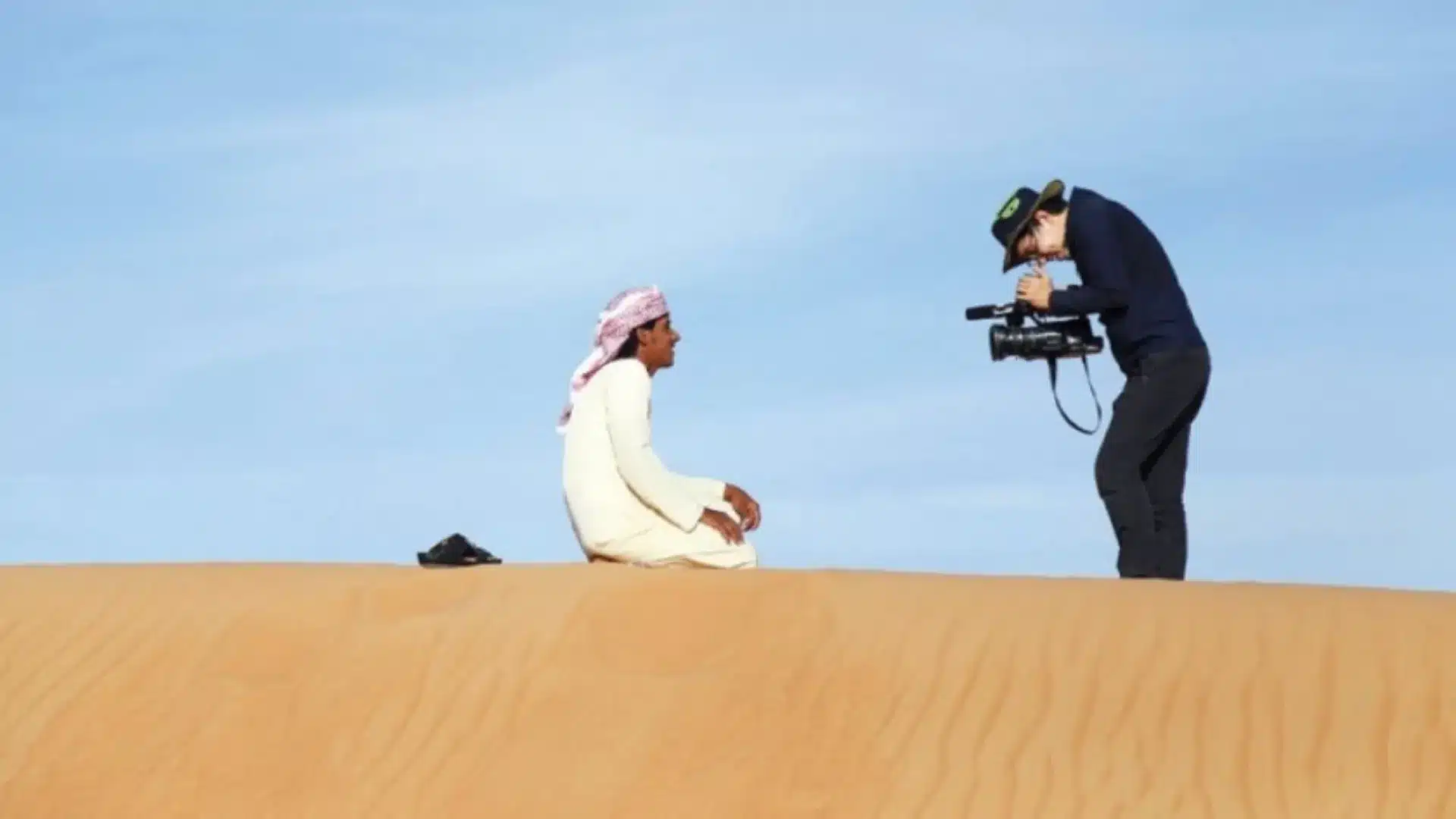
Oman occupies a distinctive position within the Middle Eastern production landscape. While neighboring…
Oman is one of the Middle East’s most spectacular and unspoiled filming destinations, a sultanate of breathtaking natural variety where dramatic mountains, vast deserts, turquoise wadis, rugged fjords, ancient forts and a long Indian Ocean coastline sit within a safe, welcoming and authentically Arabian setting. From the grand mosque and old souqs of Muscat to the towering canyons of Jebel Shams, the rolling dunes of the Wahiba Sands and the Empty Quarter, the fjords of Musandam, the green monsoon-fed hills of Salalah and the UNESCO forts and oases of the interior, the country offers a genuinely cinematic and largely untouched canvas, with exceptional safety and a strong commitment to welcoming international productions.
For international crews, Oman offers a rare blend of unrepeatable natural landscapes, authentic Arabian heritage, outstanding safety and a centralised, supportive permitting system, balanced against a framework that rewards early, careful preparation. It is one of the few places where a production can shoot epic desert, dramatic mountains, dramatic coastline and ancient heritage within a single, well-supported schedule, supported by experienced local fixers and a government actively pitching the country to the world through its Make Your Film initiative.
Hoodlum provides Film Production Services in Oman for commercials, documentaries, factual and reality television, branded content, travel and adventure programming, feature films and television productions. Our team supports visa guidance, Ministry of Information permits, location agreements, drone coordination, customs and temporary-import clearance, local crew sourcing, transport, accommodation, security planning and full on-ground production management. You can see the full scope of what we do and the people behind it on our who we are page.
The sultanate rewards productions that arrive with their paperwork in order. It is safe, welcoming and efficient, but it is not a destination for informal shooting without approvals, and filming, customs and drones all run through specific government authorities, with permit timelines that need to be respected. The right entry route, the right permits, the right customs plan and the right local coordination all need to be settled before the cameras roll, and the most efficient way to handle that is through an experienced local production partner.
The country’s biggest production strength is the combination of extraordinary, varied and largely unspoiled landscapes, genuine Arabian authenticity and exceptional safety, all within a single accessible sultanate. In one schedule a production can capture epic dunes, dramatic mountains and canyons, turquoise wadis, dramatic fjords and an unspoiled coastline, much of it free of the heavy development found elsewhere in the region, supported by experienced fixers and a welcoming government. For travel, adventure, automotive, documentary and commercial work, that combination of authentic beauty and total safety is rare and valuable.
Muscat is the operational hub, but the value sits in the landscapes and the authenticity. A commercial might pair the Wahiba Sands with a mountain wadi. A documentary might explore the forts, the frankincense heritage and the monsoon green of Salalah. A travel piece might combine Musandam’s fjords, the desert and the coast. The country is strong because it offers genuinely cinematic, untouched landscapes, authentic heritage and outstanding safety, in one welcoming and well-supported package.
The country is especially well suited to:
Hoodlum’s production support team helps crews decide which landscapes and locations are practical, what permissions each one needs and how to sequence an efficient schedule across the sultanate.
Muscat, the capital, is the natural anchor for most international productions working in the sultanate. It is where crews arrive through the international airport, where production partners, crews, equipment and accommodation are concentrated, and where Ministry of Information permitting and customs coordination begins.
The capital is a striking and distinctive location, set between mountains and the sea, offering the magnificent Sultan Qaboos Grand Mosque, the Royal Opera House, the old Mutrah souq and Corniche, forts, white low-rise architecture that reflects the country’s character, and a long coastline of beaches and clear water. Its blend of authentic Arabian identity and elegant modernity gives productions a distinctive, uncluttered backdrop. Hoodlum uses Muscat as the practical hub for Film Production Services in Oman, particularly when a shoot combines the city with the deserts, mountains and coast.
Beyond the capital, the country opens into some of the most dramatic landscapes in Arabia. The Wahiba Sands offer classic rolling dunes, while the vast Empty Quarter delivers epic, otherworldly desert, the Hajar Mountains rise into the canyons of Jebel Shams and the terraced heights of Jebel Akhdar, and hidden wadis such as Wadi Shab and Wadi Bani Khalid provide turquoise pools framed by rock.
These locations are unmatched for travel, adventure, automotive, natural-history and commercial work, and for any project needing desert, mountain or dramatic natural imagery. Desert and mountain filming calls for planning around heat, remote logistics, 4×4 access, sand and dust protection for equipment and permissions, with the most dramatic locations some distance from the capital. Hoodlum builds the permissions, transport, guides, heat management and equipment protection into the schedule before a shoot reaches the deserts and mountains.
The country’s regions add yet more variety. The Musandam peninsula in the north offers spectacular fjords, often called the Norway of Arabia, with dramatic cliffs dropping into the sea, while the southern Dhofar region around Salalah is transformed by the khareef monsoon into lush green hills and waterfalls, and holds the frankincense heritage and beaches of the south. The interior adds UNESCO-listed forts, oases and the historic city of Nizwa.
These locations suit travel, natural-history, culture and documentary work, along with commercials needing distinctive seasonal or heritage imagery. Filming in these regions involves planning around distance, season, access and the relevant permissions, with the Salalah khareef season in particular offering a unique green window. Hoodlum builds the regional permissions, transport, seasonal timing and logistics into the schedule so these remarkable areas become workable filming days.
The sultanate is straightforward to enter for many nationalities, with an efficient online visa system, which keeps crew planning simple.
International crew generally need only apply for a tourist e-visa, with a passport valid for at least six months and photographs, provided the crew’s nationality falls under the eligible countries, and processing is typically quick, often within around 48 to 72 hours. There are no specified separate accreditation requirements, with only passport copies and photographs needed during the film-permit application, and a fast-track option is available for crew where speed is essential. Confirming each crew member’s eligibility and route early keeps the entry process aligned with the permit and customs timelines.
Because the permit and customs processes carry longer timelines, working with a local partner who manages them is valuable from the outset. Hoodlum helps productions match each crew member to the correct entry route, assemble the documentation, and align everything with the shoot schedule.
Filming permits are issued by the Ministry of Information, the central authority for production approvals, and this is the most important process to plan around, with timelines typically running around three to five weeks, so early application is essential. A fast-track option is available at additional cost for productions on tighter schedules.
Applications require an authorisation letter appointing the local office to handle the project, details of the production including a script or storyboard, the genre and where it will be broadcast, a list of international crew with designations and passport bio pages, a packing list of gear with serial numbers, HS codes and depreciated values, and photographs of major equipment such as cameras and lenses. Based on the general permit, specific private-location permits are then obtained, with location fees varying by site. The three-to-five-week timeline is the single most important scheduling factor, so planning well ahead is essential.
Private locations are arranged on the basis of the general filming permit, with a local fixer handling access and terms. A Hoodlum location scout can propose suitable options, after which we negotiate access, dates, crew size, fees and conditions, and secure the private location permits. Private permission works alongside the Ministry of Information permit rather than replacing it, and fees are quoted once the locations are confirmed.
Drone filming is tightly controlled, and a defining rule is that drones cannot be brought into the country, so importing your own drone is not permitted and any aerial work must be done using a local drone and operator. This is a firm rule that productions must plan around from the outset.
Drone approvals are issued by the Civil Aviation Authority, requiring details of the local drone pilot, the drone model and the filming location with GPS coordinates where possible, with the permit taking around three to five weeks in line with the wider permitting timeline. Local drone and operator packages are available for different drone models, so aerial coverage is achievable, simply through the local route rather than imported equipment. Hoodlum arranges the local drone, operator and Civil Aviation Authority permit, and builds the lead time into the plan.
Oman is not an ATA Carnet country, which is a critical planning point, so equipment is brought in through a temporary-import and airport-clearance procedure rather than a carnet, handled in conjunction with the film permit. This makes experienced local support essential for moving gear smoothly.
Clearance is handled through the Ministry of Information alongside the airport process, supported by a gear list with serial numbers, values, HS codes and photographs of major items such as cameras and lenses, and runs on a similar three-to-five-week timeline to the permit, so it must be planned together with the shoot dates. A charge of around 5% of the equipment value applies, and a separate equipment-clearing fee, with fast-tracking available where speed is essential, and the equipment is brought in temporarily and must be accounted for, so an accurate, fully valued inventory is essential.
Hoodlum prepares the detailed equipment list and temporary-import documentation, coordinates the Ministry of Information and airport clearance, and times everything so cameras, lighting, grip and sound gear move through in line with the shoot.
Oman does not currently offer a formal film rebate or cash incentive of the kind found in some neighbouring countries, which is a clear planning point, so productions should not plan around a rebate and should confirm the current position directly. The country actively welcomes productions through its Make Your Film initiative and the Oman Film Society, but its core appeal is its landscapes, authenticity and safety rather than a financial incentive.
The genuine strengths are real and substantial: a wealth of unspoiled, varied and dramatic locations, exceptional safety and stability, an authentic Arabian character increasingly hard to find, and a government keen to support international shoots. Because the local production base is still developing, productions typically bring key crew and specialist equipment and use experienced local fixers for access, permits and logistics, with nearby Dubai a common source of additional crew and gear. Hoodlum helps productions build a realistic budget around the genuine cost drivers of a shoot here and make the most of the country’s natural advantages.
Oman is widely regarded as one of the safest and most stable countries in the Middle East and indeed the world, with very low crime, a peaceful and welcoming character and a reputation as a friend to all, which makes it a reassuring and easy place to work. For most productions, dedicated security is not a concern, and shoots proceed smoothly with standard professional practice and the support of a local fixer.
Standard precautions around securing equipment, using reliable transport and clear unit management remain sensible, and the country’s good infrastructure, road network and accommodation make logistics straightforward, though remote desert and mountain locations require careful planning around distance, access and self-sufficiency. Cultural awareness and respect for Omani customs and the country’s conservative traditions are part of working successfully and respectfully in the sultanate.
The desert climate is the main practical variable. Intense summer heat affects outdoor filming across much of the country, so productions often schedule around the cooler months, while the southern Salalah region offers its unique green khareef season from around June to September when the rest of the country is hottest. Hoodlum helps productions plan efficient, culturally aware and season-appropriate schedules, and builds heat, distance and contingency thinking into the plan from the start.
Oman is the right choice when a production needs epic deserts, dramatic mountains and canyons, turquoise wadis, fjords and unspoiled coastline, combined with authentic Arabian heritage, exceptional safety and a welcoming, supportive environment. It is especially strong for travel and adventure, commercials, documentary, automotive, natural history and any project that wants genuinely cinematic, untouched landscapes in a safe and authentic setting.
It may be less suitable for productions that need a cash rebate, a deep local crew base for very large shoots, carnet-based equipment entry, the ability to fly their own drones, or very short permit lead times. The sultanate is highly workable when the entry route, Ministry of Information permits, drone arrangements, temporary import and location agreements are settled early, with the permit timeline planned well ahead.
The most frequent mistakes include:
Most of these problems are avoidable by aligning the crew list, visas, Ministry of Information permits, drone plan, temporary import and location agreements well before the crew travels, with the long lead time built in.
Hoodlum provides Film Production Services in Oman for international crews that need experienced local coordination from early planning through to wrap. Our support covers visa and documentation guidance, Ministry of Information permits, private location permits, licensed local drone coordination, temporary-import and customs clearance, local crew sourcing, transport, security planning, accommodation and on-ground production management.
From Muscat and its grand mosque to the dunes of the Wahiba Sands and Empty Quarter, the canyons of Jebel Shams, the fjords of Musandam, the green khareef of Salalah and the forts of Nizwa, we help productions access the most spectacular filming environments in Oman with the right permits, fixers, customs planning and logistics in place. Planning a shoot? Contact us to talk through permits, visa support, local fixers, location scouting, customs coordination, drone planning, security planning and full on-ground production management.
For many nationalities, crew need only apply for a tourist e-visa, with a passport valid at least six months and photographs, processing typically within around 48 to 72 hours. There are no specified separate accreditation requirements, with only passport copies and photographs needed for the film permit, and a fast-track option is available.
Filming permits are issued by the Ministry of Information, the central authority, with timelines typically around three to five weeks, so early application is essential. Applications need an authorisation letter, project details, a crew list, and a gear list with serial numbers, HS codes and values. A fast-track option is available at extra cost.
The Civil Aviation Authority issues drone approvals, but importing a drone is not permitted, so aerial work must use a local drone and operator. Approvals require the local pilot’s details, the drone model and the location with GPS coordinates, taking around three to five weeks, with local drone-and-operator packages available.
No. Equipment is brought in through a temporary-import and airport-clearance procedure handled with the film permit through the Ministry of Information, with a gear list of serial numbers, values, HS codes and photographs. A charge of around 5% of equipment value applies, on a three-to-five-week timeline.
No. Oman does not currently offer a formal film rebate or cash incentive, though it actively welcomes productions through its Make Your Film initiative and the Oman Film Society. Its appeal lies in its unspoiled landscapes, authenticity and exceptional safety, so confirm any incentive position directly.
Standout locations include Muscat and its grand mosque, the Wahiba Sands and Empty Quarter, the canyons of Jebel Shams and heights of Jebel Akhdar, the wadis such as Wadi Shab, the fjords of Musandam, the green khareef of Salalah, and the forts of Nizwa.
Ready to bring your production to Oman? Hoodlum handles the permits, visa guidance, location scouting, customs and temporary-import coordination, local drone operators, local crew, security planning and full on-ground production management, so you can focus on the work in front of the lens. Get in touch with our team to start planning, and tell us your locations, dates and creative brief.
For more information, view our Hoodlum Film Fixers Oman Google Business Profile.