















Film Production Services in Qatar
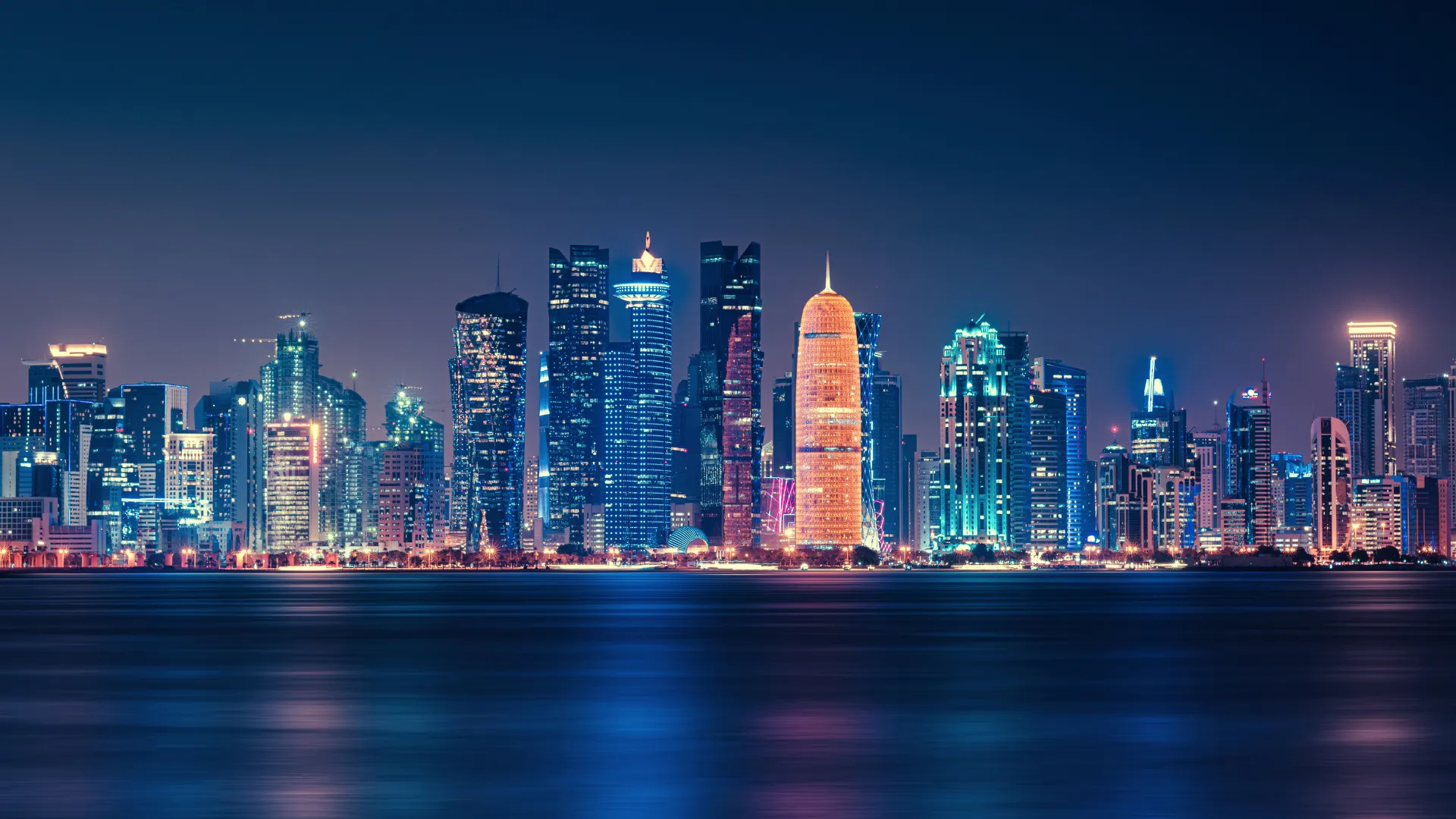
Qatar is one of the Gulf’s most dynamic and rapidly rising filming destinations, a peninsula nation where a futuristic skyline, striking modern architecture, golden desert, coastline and traditional Arabian heritage combine with world-class infrastructure and a bold new commitment to the screen industry. From the soaring towers of Doha’s West Bay and the sail-like Museum of Islamic Art to the inland sea of Khor Al Adaid, the dunes of the interior, the restored heritage of Souq Waqif and the stadiums and boulevards built for a global sporting stage, the country offers a clean, modern and distinctly cinematic canvas, now backed by one of the most generous cash rebates on the planet.
For international crews, Qatar offers a rare blend of futuristic and desert locations, exceptional safety, world-class infrastructure, a growing production ecosystem anchored by Media City and the Doha Film Institute, and a headline incentive of up to 50%. It is one of the few places where a production can shoot cutting-edge architecture, epic desert and a modern Arabian city within a compact, well-supported schedule, supported by experienced local fixers and a government investing heavily in becoming a regional screen hub.
Hoodlum provides Film Production Services in Qatar for commercials, documentaries, factual and reality television, branded content, sports and events, feature films and television productions. Our team supports visa guidance, Ministry of Interior and film-committee permits, location agreements, drone coordination, carnet and customs clearance, local crew sourcing, transport, accommodation, security planning, rebate support and full on-ground production management. You can see the full scope of what we do and the people behind it on our who we are page.
The country rewards productions that arrive with their paperwork in order. It is a safe, film-friendly and superbly organised nation, but it is not a destination for informal shooting without approvals, and permits, customs and drones all run through specific authorities, with a local production partner required. The right entry route, the right permits, the right customs plan and the right rebate registration all need to be settled before the cameras roll, and the most efficient way to handle that is through an experienced local production partner.
Why Qatar Works for Modern Icons, Desert and Rebates
The country’s biggest production strength is the combination of striking modern architecture, dramatic desert, total safety and a newly launched, market-leading cash rebate, all within a compact and hyper-efficient footprint. In a single schedule a production can capture a futuristic skyline, world-class cultural landmarks, epic dunes and coastline, supported by professional infrastructure, new studios and a government actively courting international productions. The incentive, reaching up to 50% of qualifying spend, makes that combination financially compelling as well as creatively rich.
Doha is the operational hub, and the value sits in the icons, the desert and the rebate. A commercial might pair the West Bay skyline with the inland sea and the souq. A documentary might explore the country’s rapid transformation, sport or heritage. A feature might use the striking architecture and the dunes. The country is strong because it offers gleaming modern locations, dramatic desert, outstanding safety and a headline rebate, in one ambitious and well-supported package.
The country is especially well suited to:
- Commercials and branded content
- Sports, events and broadcast content
- Documentary and factual television
- Feature films and television drama
- Reality and lifestyle programming
- Architecture, luxury and automotive content
- Post-production and studio-based work
- Productions seeking a high cash rebate
Hoodlum’s production support team helps crews decide which locations are practical, what permissions each one needs and how to sequence an efficient schedule across the country.
Doha and the Modern Skyline
Doha, the capital, is the natural anchor for most international productions working in the country. It is where crews arrive through one of the world’s most connected international airports, where production companies, crews, equipment, studios and accommodation are concentrated, and where permitting and customs coordination begins.
The capital offers a spectacular modern skyline along the West Bay and the Corniche, the landmark Museum of Islamic Art, the National Museum, the cultural district of Katara, the Pearl-Qatar and the striking new districts of Lusail, alongside contemporary architecture of global ambition. This concentration of bold, clean, futuristic design gives productions an aspirational, cutting-edge backdrop. Hoodlum uses Doha as the practical production hub, particularly when a shoot combines modern icons with the desert and heritage.
The Desert, the Inland Sea and the Coast
Beyond the city, the country offers dramatic desert landscapes within easy reach, most spectacularly the inland sea of Khor Al Adaid, a UNESCO-recognised natural wonder where the sea meets towering dunes, alongside open desert, camel country, the coastline and offshore islands. These give the country striking natural and adventure imagery.
These locations suit automotive, adventure, travel, natural-history and commercial work, and any project needing desert spectacle or coastal imagery. Desert filming calls for planning around heat, remote logistics, 4×4 access, sand protection for equipment and permissions, with the inland sea in particular a stunning but remote location requiring careful coordination. Hoodlum builds the desert permissions, transport, guides, heat management and equipment protection into the schedule before a shoot moves out of the city.
Souq Waqif, Heritage and Sport
For traditional character, the country offers the restored heritage of Souq Waqif with its markets, alleys and Arabian atmosphere, historic forts, and the falconry and camel heritage of the Gulf, while its investment in global sport has left world-class stadiums, arenas and sporting infrastructure that are themselves distinctive locations. Together these balance the modern skyline with authentic and event-driven imagery.
These locations suit heritage, culture, travel, sport and documentary work, along with commercials seeking traditional or event-related texture. Filming at heritage sites, souqs and sporting venues requires the appropriate permissions and coordination, with venues and cultural sites each having their own requirements. Hoodlum handles the heritage, souq and venue permissions so these backdrops become workable filming days alongside the modern icons.
Entry, Visas and Crew Documentation
The country is straightforward to enter for many nationalities, with an efficient online visa system, and the process is generally quick, though the right route depends on each crew member’s nationality.
Many travellers can enter visa-free or obtain a visa on arrival, while others apply in advance through the e-visa system, generally providing a passport valid at least six months with blank pages, photographs, proof of health insurance, proof of sufficient funds and a vaccination certificate, with processing typically within around seven to ten working days at modest cost. Crew accreditation is handled as part of the film-permit process, supported by crew passports, the filming permit, dates, locations and an equipment list with serial numbers, over a period of around two to four weeks. Confirming each crew member’s route early keeps entry aligned with the permit and customs timelines.
Because the permit and customs processes are central and a local partner is required, working with an experienced local company is essential. Hoodlum helps productions match each crew member to the correct entry route, coordinate accreditation, and avoid immigration or permitting becoming a late-stage problem.
Film Permits and Location Permissions
Filming permits are issued through the relevant government authorities, including the Ministry of Interior and the Qatar News Agency, to a registered local production company, which means a local partner is essential, as permits are issued to local companies rather than to foreign crews directly. The permit process typically takes around two to four weeks, so early planning matters.
Applications generally require an addressed letter to the local authorities requesting authorisation, a list of filming equipment, the filming locations and the production duration, with the general permit carrying a set fee that does not include location rental. Sensitive locations, government sites, cultural venues and sporting arenas require additional coordination and lead time, so the location plan should be confirmed early with the local partner.
Private locations are arranged directly with owners through a local fixer, who negotiates access and terms. A Hoodlum location scout can propose suitable options, after which we negotiate access, dates, crew size, fees and conditions, and secure a location agreement. Private permission does not replace the government filming permit or any venue, heritage or government approvals a location also requires, and fees are quoted once the locations are confirmed.
Drone Filming and Aviation Rules
Drone filming is tightly controlled, and a defining rule is that drone operation is restricted and generally handled through licensed local operators, with importation and operation requiring the approval of the civil aviation authority, so productions cannot simply bring and fly their own drones. Drones must be registered with the authorities and operated under the proper permissions.
Aerial work is arranged through a registered company in Doha, requiring an addressed letter to the designated authority, and the permit can take up to around a month to arrange, with the cost typically including a licensed operator. Given these controls, drone plans must be confirmed early through the proper local channel, and the licensed local operator is the standard route. Hoodlum arranges the licensed local drone operator and civil aviation approvals, and builds the required lead time into the plan.
Equipment Customs Clearance and the ATA Carnet
Qatar is an ATA Carnet country, which makes temporary equipment importation relatively straightforward for productions that prepare properly. The carnet is arranged by the production in the country of origin before travel, and acts as a single international customs document allowing professional filming gear to be temporarily imported duty-free and tax-free, on the guarantee that it will be re-exported within the validity period, typically up to one year.
Customs clearance is handled by the national customs authority, supported by the carnet or, alternatively, a detailed letter on company letterhead addressed to customs with the full equipment list, serial numbers and values, along with the operator’s flight details, and typically takes anywhere from around two weeks to a month, so it must be planned well ahead. A clearance fee applies along with the cost of a clearing agent, and the equipment is brought in temporarily and must be re-exported, so an accurate inventory is essential.
Hoodlum helps productions prepare the carnet and equipment list, coordinates a clearing agent and the customs process, and times everything so cameras, lighting, grip and sound gear move through with minimal delay.
The Qatar Screen Production Incentive
Qatar’s headline financial draw is the Qatar Screen Production Incentive, launched in late 2025 and one of the most generous and competitive incentives in the world, offering up to 50% cash rebate on qualifying spend. It is administered by the Film Committee at Media City Qatar and replaced the previous rebate administered by the Doha Film Institute, marking the country’s first major national incentive scheme.
The structure combines a 40% base cash rebate on qualifying expenditure with an additional uplift of up to 10% for productions that contribute to the local industry, such as hiring Qatari talent, investing in local crew training or promoting Qatari culture, reaching the full 50%. It applies to a broad range of formats, including feature films, television, commercials and post-production and VFX work, with qualifying expenditure covering goods, services and labour. A genuinely distinctive feature is that up to a quarter of a project’s total qualifying expenditure incurred in selected neighbouring Arab countries can also be rebated under the Qatari programme, making it uniquely powerful for regional shoots. Only Qatari-registered companies can apply, so a local partner is essential, and the programme opened for applications in 2026. The exact rates, criteria and rules are set out in the Film Committee’s guidelines, so productions should confirm current details and apply early. Hoodlum can help productions register through a local entity, structure qualifying spend and capture the rebate at the highest rate they qualify for.
Safety, Security and Practical Logistics
The country is one of the safest countries in the world for international productions, with very low crime, a stable and welcoming environment and a strong track record of safely hosting major global events, which means dedicated security is generally not required. Most shoots proceed smoothly with standard professional practice and the support of a local fixer.
Standard precautions around securing equipment, using reliable transport and clear unit management remain sensible, and the country’s outstanding infrastructure, roads, accommodation and medical facilities make logistics exceptionally straightforward. Cultural awareness and respect for local customs, traditions and content sensitivities are part of working successfully in the country, and a local partner helps navigate this naturally so productions stay compliant.
The desert climate is the main practical variable. Intense summer heat and humidity affect outdoor filming, so productions often schedule around the cooler months from around October to April, which also align with the country’s event calendar, with heat management and equipment protection planned in. Hoodlum helps productions plan efficient, culturally aware schedules, and builds heat, timing and contingency thinking into the plan from the start.
When Qatar Is the Right Production Choice
Qatar is the right choice when a production needs futuristic architecture, world-class cultural and sporting venues, dramatic desert and coastline, combined with exceptional safety, world-class infrastructure and a market-leading cash rebate of up to 50%. It is especially strong for commercials, sports and events, documentary, features and drama, architecture, luxury and automotive content, and any project that wants modern icons and desert in one efficient, incentive-rich schedule.
It may be less suitable for productions that need lush green or varied natural landscapes, that cannot work through a local partner, or that need to fly their own drones or avoid the permit lead times. The country is highly workable when the entry route, government permits, drone arrangements, carnet, rebate registration and location agreements are settled early.
Common Production Mistakes to Avoid
The most frequent mistakes include:
- Believing Qatar has no incentive, when it now offers up to 50%
- Registering for the rebate too late or missing the uplift criteria
- Trying to obtain permits without a registered local production company
- Assuming you can freely import and fly your own drone
- Underestimating the two-to-four-week permit and customs timelines
- Overlooking the cross-border spend feature of the new rebate
- Treating heritage sites and sporting venues as ordinary locations
- Scheduling demanding outdoor shoots in peak summer heat
Most of these problems are avoidable by aligning the crew list, visas, government permits, drone plan, carnet, rebate registration and location agreements well before the crew travels.
How Hoodlum Supports Productions in Qatar
Hoodlum provides Film Production Services in Qatar for international crews that need experienced local coordination from early planning through to wrap. Our support covers visa and documentation guidance, government and film-committee permits, sensitive-site and venue clearances, private location agreements, licensed drone operator coordination, carnet and customs clearance, local crew sourcing, transport, security planning, accommodation, rebate registration and on-ground production management.
From Doha and its West Bay skyline to the Museum of Islamic Art, the cultural district of Katara, the heritage of Souq Waqif, the inland sea of Khor Al Adaid and the desert beyond, we help productions access the strongest filming environments here with the right permits, fixers, customs planning and logistics in place. Planning a shoot? Contact us to talk through permits, visa support, local fixers, location scouting, carnet coordination, drone planning, rebate support and full on-ground production management.
Frequently Asked Questions
Do international crews need a visa to film in Qatar?
Many nationalities enter visa-free or on arrival, while others apply through the e-visa system, generally providing a passport valid six months with blank pages, photographs, health insurance, proof of funds and a vaccination certificate, processed within around seven to ten working days. Accreditation is handled within the film-permit process over two to four weeks.
Who issues filming permits?
Permits are issued through government authorities including the Ministry of Interior and the Qatar News Agency to a registered local production company, so a local partner is essential. The process takes around two to four weeks and requires an authorisation letter, an equipment list, locations and the production duration.
Who regulates drones?
Drone operation is tightly controlled, requiring civil aviation approval and registration, and is generally handled through licensed local operators, so productions cannot freely bring and fly their own. Aerial work is arranged through a registered company in Doha, taking up to around a month, with the cost including a licensed operator.
Is Qatar an ATA Carnet country?
Yes. The carnet is arranged in the country of origin before travel, allowing duty-free temporary import, cleared by customs with the carnet or a detailed letter, equipment list, serial numbers and values. Clearance takes around two weeks to a month, so plan ahead, and a clearing agent is used.
Does Qatar offer a film rebate?
Yes, and it is now one of the most generous anywhere. The Qatar Screen Production Incentive offers up to 50% cash rebate, combining a 40% base with a 10% uplift for hiring Qatari talent, training or promoting culture. Uniquely, up to 25% of spend in neighbouring Arab countries can also be rebated. Only Qatari-registered companies can apply, so a local partner is required.
What are the best filming locations?
Popular options include the Doha West Bay skyline, the Museum of Islamic Art, the cultural district of Katara, the heritage of Souq Waqif, the inland sea of Khor Al Adaid, and the desert and coastline beyond.
Useful Authority Links
- Media City Qatar – Film Committee
- Doha Film Institute
- Qatar eVisa Portal
- Qatar Ministry of Interior
- Qatar Civil Aviation Authority
- Visit Qatar – Tourism
Ready to bring your production to Qatar? Hoodlum handles the permits, visa guidance, location scouting, carnet and customs coordination, licensed drone operators, local crew, security planning, rebate registration and full on-ground production management, so you can focus on the work in front of the lens. Get in touch with our team to start planning, and tell us your locations, dates and creative brief.
For more information, view our Hoodlum Film Fixers Qatar Google Business Profile.