


















Introduction
Hoodlum offers expert film fixer services in Sri Lanka, supporting international productions across one of the Indian Ocean’s most visually compact and diverse filming destinations.
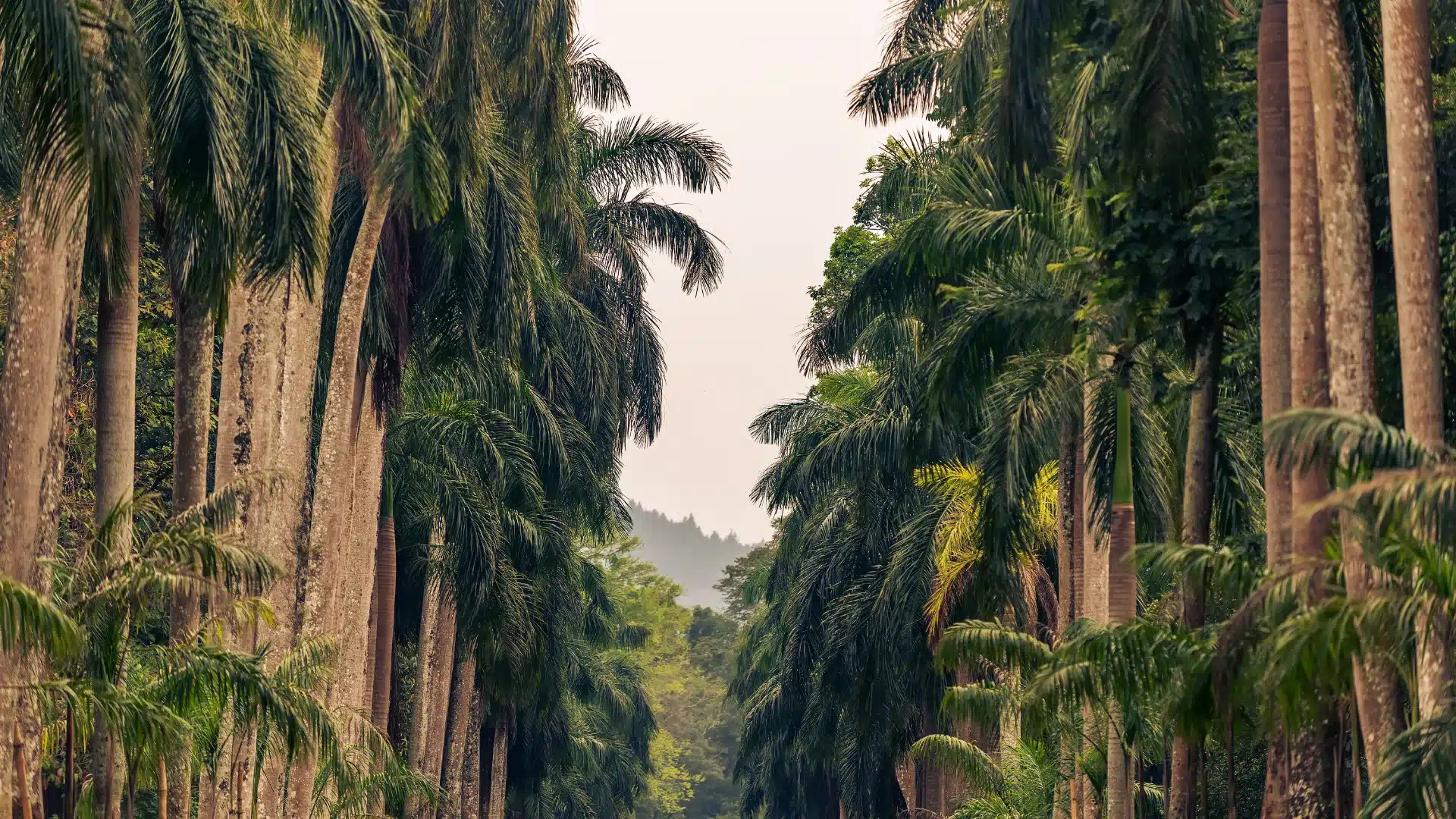
Sri Lanka packs an extraordinary range of environments into a single, manageable island geography — the rolling green tea plantations of the Hill Country around Nuwara Eliya, the colonial Dutch and Portuguese fort architecture of Galle, the golden beaches of the southern and eastern coasts, the ancient rock fortress of Sigiriya rising from the central plains, the sacred temple city of Kandy, the bustling colonial-meets-modern energy of Colombo, and the wildlife-rich national parks of Yala and Wilpattu. Few destinations anywhere in Asia offer this degree of visual variety within distances short enough to combine multiple environments in a single production schedule.
Sri Lanka is an ATA Carnet country. Film permits and crew accreditation are managed by the National Film Corporation (NFC). Drone operations are regulated by the Civil Aviation Authority of Sri Lanka (CAASL). The country does not currently offer a film rebate or tax incentive programme, but competitive production costs and a compact, English-capable production environment make it an efficient destination for a wide range of production types.
Sri Lanka Film Production Guide for International Crews
Sri Lanka is a South Asian island filming destination that works for a wide range of production types within a compact and logistically manageable geography. The country is served by Bandaranaike International Airport near Colombo, with domestic connections and well-maintained road networks connecting the island’s main production regions.
The main production environments include Colombo’s colonial and modern commercial character, Galle’s UNESCO World Heritage Dutch fort, the Hill Country tea plantation landscape around Nuwara Eliya and Ella, the ancient cities of Anuradhapura and Polonnaruwa, the rock fortress of Sigiriya, the sacred city of Kandy and the Temple of the Tooth, the southern and eastern coast beaches, and the wildlife national parks of Yala and Wilpattu.
A successful Sri Lanka production requires coordination through the National Film Corporation for both crew accreditation and the general film permit, alongside CAASL drone approval where aerial work is planned and ATA Carnet customs clearance for equipment.
Why Film Production Works Well in Sri Lanka
Sri Lanka works for productions that need a combination of tropical beaches, ancient heritage, tea plantation landscapes, colonial architecture, wildlife and a compact island geography that allows multiple environments to be combined within a single, manageable production schedule.
Strong production use cases include:
- Feature film and television drama
- Commercial and advertising campaigns
- Documentary and cultural programming
- Travel and lifestyle content
- Heritage and archaeological documentary — Sigiriya, Anuradhapura, Polonnaruwa
- Nature and wildlife productions — Yala and Wilpattu national parks
- Tea and agriculture documentary
- Music videos
- Still photography and fashion campaigns
- Reality and competition formats
- Wellness and Ayurveda content
Sri Lanka’s relatively small geographic footprint — the entire island can be crossed by road in a day — means productions can combine beach, mountain, heritage and urban environments within a single trip in a way that would require significantly more travel time in larger countries.
English is widely spoken alongside Sinhalese and Tamil, simplifying communication with permit authorities, location managers and production partners.
Best Time of Year to Film
December to April is the optimal filming window across most of Sri Lanka — the dry season, with the most reliable conditions for outdoor, beach and heritage site filming.
Seasonal detail:
- Spring (March to May) — warm with increasing humidity ahead of the monsoon.
- Summer (June to August) — hot and humid, temperatures up to 33°C.
- Autumn (September to November) — warm with occasional rain showers.
- Winter (December to February) — cooler, particularly in the Hill Country, where temperatures can drop to 10–20°C.
Sri Lanka has two monsoon systems affecting different parts of the island at different times — the southwest monsoon (May to September) affects the west and south coasts, while the northeast monsoon (October to January) affects the east coast and north. This means productions can often find dry conditions on one coast even when the other is experiencing rain, giving the island unusual scheduling flexibility for coastal productions if planned with local knowledge.
Visa and Entry Requirements for Crew
Film crews require a visa with film-specific supporting documentation in addition to standard entry requirements.
Required documentation (general):
- Valid passport — minimum six months validity
- Completed and signed visa application form
- Recent passport photographs — at least two
- Proof of visa fee payment
Required documentation (film-specific):
- Full copies of script and storyboard
- Detailed location shooting schedule
- Equipment inventory for customs clearance
- Crew list with names, nationalities and roles
Processing time: Two to four weeks.
Estimated cost: USD 30–100.
Visa application: Sri Lanka Visa portal.
Work authorisation for paid professional filming should be confirmed separately from standard tourist entry for each crew member’s nationality.
International Crew Accreditation
International crew accreditation is processed through the National Film Corporation (NFC) and confirms professional status for the production.
Required documentation:
- Passport — minimum six months validity
- Film or work visa as applicable
- Introduction letter from the production company
- Health and liability insurance
- Film documentation — synopsis, treatment, script and shooting schedule
Processing time: Seven to fourteen days via the NFC.
Estimated cost: USD 150–500 depending on project type.
Accreditation should run in parallel with the general film permit process, as both are managed through the same authority and often draw on overlapping documentation.
Film Permits and Production Approval
The general film permit in Sri Lanka is issued by the National Film Corporation (NFC) — the central authority for film production approval in the country.
Required documentation:
- Passport copies, visas and crew list
- Introduction letter and proof of insurance
- Film-specific documents — script, schedule, treatment, equipment list
- Permits for specific locations and customs clearance forms
Processing time: Two to four weeks.
Estimated cost: USD 150–500.
Productions filming at archaeological sites, national parks, or other protected locations should confirm whether additional location-specific permissions are required beyond the general NFC permit, particularly for heritage sites such as Sigiriya, Anuradhapura and Polonnaruwa, and national parks such as Yala and Wilpattu.
Key Filming Locations and What Access Requires
Colombo — Sri Lanka’s commercial capital, combining colonial Dutch and British architecture in the Fort and Cinnamon Gardens districts with a modern commercial skyline along Galle Road and the Marine Drive coastal corridor. Municipal coordination for public location filming.
Galle — a UNESCO World Heritage Site Dutch fort on the southern coast, with ramparts, colonial architecture, a lighthouse and a living town within the fortified walls. One of the most visually distinctive heritage filming environments in South Asia. Heritage authority coordination required alongside the NFC permit.
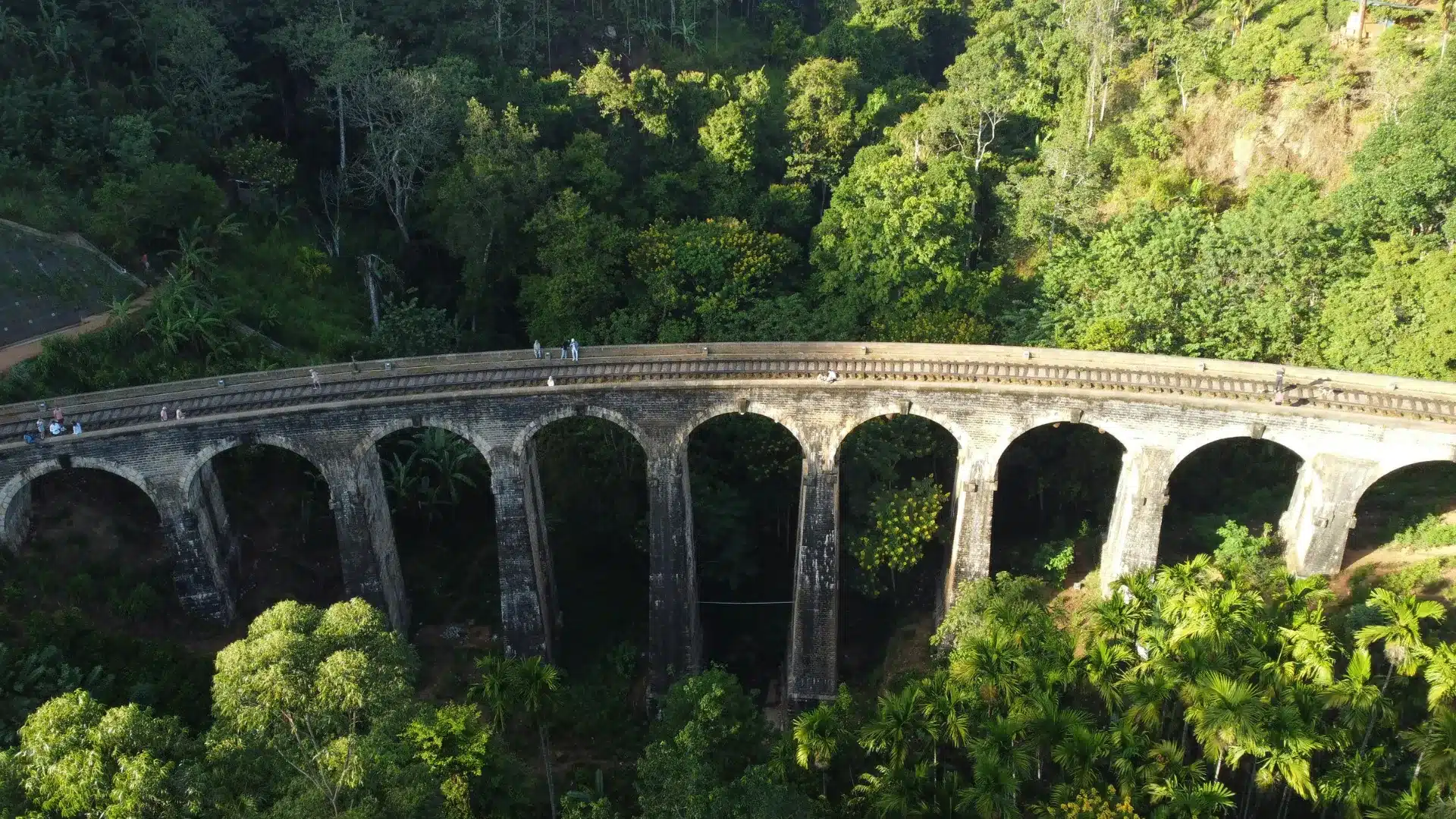
Hill Country — Nuwara Eliya and Ella — rolling tea plantation landscapes, colonial-era “Little England” architecture in Nuwara Eliya, and the dramatic mountain railway journey between Kandy and Ella, including the famous Nine Arch Bridge. Plantation estate agreements required for private tea garden access.
Sigiriya — an ancient rock fortress rising 200 metres from the central plains, with frescoes, water gardens and a UNESCO World Heritage designation. One of Sri Lanka’s most iconic single filming locations. Archaeological authority permission required in addition to the general permit.
Kandy — the last royal capital of Sri Lanka and home to the Temple of the Sacred Tooth Relic, one of Buddhism’s most important pilgrimage sites. Religious authority coordination and cultural protocols apply.
Anuradhapura and Polonnaruwa — ancient capital cities with extensive Buddhist temple ruins, dagobas and archaeological remains spanning over a thousand years of Sri Lankan history. UNESCO World Heritage Sites. Archaeological authority permission required.
Yala and Wilpattu National Parks — Sri Lanka’s premier wildlife reserves, with one of the highest leopard densities in the world at Yala, alongside elephants, sloth bears and extensive birdlife. National park authority permits required. Ranger accompaniment standard practice.
Southern and eastern coast beaches — Mirissa, Unawatuna, Bentota on the south coast and Trincomalee and Arugam Bay on the east coast offer beach, surf and whale-watching production environments. Local authority coordination for beach access.
Drone Filming Requirements
Drone operations in Sri Lanka are regulated by the Civil Aviation Authority of Sri Lanka (CAASL).
Required documentation:
- Drone registration and operator’s Remote Pilot Licence (RPL)
- Operational manual and insurance
- No-objection certificates from local police
Issuing authority: Civil Aviation Authority of Sri Lanka (CAASL).
Processing time: Two to four weeks.
Estimated cost: USD 110.
Drone import permits: Additional documentation is required for customs clearance specific to drone equipment — confirm requirements with Hoodlum before shipping.
Productions planning drone work at heritage sites including Sigiriya, religious sites such as the Temple of the Tooth in Kandy, or within national parks should confirm site-specific drone restrictions in addition to the standard CAASL permit, as these locations often carry their own aerial filming conditions.
Equipment Customs Clearance
Sri Lanka is an ATA Carnet country. Professional filming equipment can be imported under the standard Carnet system.
Required documentation:
- Commercial invoices and packing lists
- Equipment insurance
- Detailed shooting schedules
Issuing authority: Sri Lanka Customs Department.
Processing time: Twenty-four working days.
Estimated cost: USD 150–600.
The twenty-four-working-day customs timeline is notably longer than many comparable Asian filming destinations and should be factored into the production calendar as a binding constraint — equipment should be shipped well in advance of the intended first filming day to ensure clearance is complete in time.
Safety and Security for Productions
Sri Lanka is generally safe for film crews, with standard precautions advised as in any international production destination.
Key safety and security considerations:
- Political stability has improved significantly since 2019 — current conditions should still be confirmed before travel
- Health concerns include mosquito-borne illnesses such as dengue — confirm necessary vaccinations and health precautions before travel
- Natural disaster awareness — tsunami and flooding risk in certain coastal and low-lying areas, particularly during monsoon periods
- Hire local fixers or production assistants for all productions
- Partner with security providers for higher-risk areas
- Ensure equipment is properly insured and securely stored at all times
- Build monsoon contingency appropriate to the relevant coast and season
Film Incentives and Production Benefits
Sri Lanka does not currently offer tax rebates or cash incentives for filming projects. The primary financial advantage of filming in Sri Lanka is the combination of competitive production costs and a compact geography that reduces overall logistics expenditure compared to larger destinations requiring more extensive internal travel.
How the Main Approvals Fit Together
Visa with film-specific documentation, NFC crew accreditation, NFC general film permit, CAASL drone permit, ATA Carnet customs clearance and location-specific permissions (heritage, national park, religious sites) are the main approval streams.
A complete production plan connects:
- Visa with film-specific documentation — two to four weeks
- NFC crew accreditation — seven to fourteen days, in parallel with the general permit
- NFC general film permit — two to four weeks
- Heritage site permissions (Sigiriya, Anuradhapura, Polonnaruwa, Galle) where applicable
- National park permits (Yala, Wilpattu) where applicable
- Religious site coordination (Temple of the Tooth) where applicable
- CAASL drone permit — two to four weeks, in parallel
- ATA Carnet customs clearance — twenty-four working days, the longest single timeline and a binding constraint on equipment shipping
Hoodlum manages all of these as one coordinated workflow, with particular attention to the customs clearance timeline given its length relative to other approval processes.
When Sri Lanka Is the Right Choice
Sri Lanka is the right choice when a production needs a combination of beaches, tea plantation mountains, ancient heritage, wildlife and colonial architecture within a compact and logistically efficient island geography.
It is especially suitable for:
- Feature films and television drama requiring South Asian or tropical island settings
- Commercial campaigns needing beach, plantation or heritage environments
- Documentary and cultural programming
- Heritage and archaeological documentary — Sigiriya, Anuradhapura, Polonnaruwa
- Nature and wildlife productions — Yala, Wilpattu
- Tea and agriculture documentary
- Travel and lifestyle content
- Wellness and Ayurveda content
- Still photography and fashion campaigns
It may be less suitable for productions requiring very large-scale studio infrastructure or extremely rapid equipment customs turnaround given the twenty-four-working-day clearance timeline.
Common Mistakes to Avoid
Avoid:
- Underestimating the twenty-four-working-day customs clearance timeline — ship equipment well in advance
- Treating the general NFC permit as covering all heritage, national park and religious sites — confirm location-specific permissions separately
- Leaving CAASL drone applications late — two to four weeks, with additional documentation for drone importation
- Planning drone work at Sigiriya, the Temple of the Tooth or within national parks without confirming site-specific restrictions
- Assuming a single monsoon pattern applies island-wide — the southwest and northeast monsoons affect different coasts at different times
- Working in coastal or low-lying areas without monsoon and flooding contingency
- Visiting national parks without confirming ranger accompaniment requirements
- Working without a local fixer who understands the NFC process and location-specific permission requirements
How Hoodlum Supports Local Production
Support may include:
- Local fixer coordination across Colombo, Galle, Kandy, the Hill Country and all regional locations
- Visa application support with film-specific documentation
- NFC crew accreditation coordination
- NFC general film permit coordination
- Heritage site permission coordination — Sigiriya, Anuradhapura, Polonnaruwa, Galle
- National park permit coordination — Yala, Wilpattu
- Religious site coordination — Temple of the Tooth
- Location research and RECCE across Sri Lanka
- CAASL drone permit coordination
- ATA Carnet customs clearance preparation with appropriate lead time
- Local crew and talent sourcing
- Transportation and vehicle hire
- Accommodation sourcing across all regions
- Safety and health precaution planning
- Monsoon contingency planning by coast
- On-the-ground production management
FAQ Section
Do international film crews need a visa to film in Sri Lanka?
Yes. A visa with film-specific documentation — script, storyboard, location schedule, equipment list and crew list — is required. Processing takes two to four weeks. Cost: USD 30–100. Apply via the Sri Lanka Visa portal.
How does crew accreditation work in Sri Lanka?
Accreditation is processed through the National Film Corporation (NFC), taking seven to fourteen days. Cost: USD 150–500 depending on project type. Run in parallel with the general film permit application, which is also processed through the NFC.
Can productions film at Sigiriya?
Yes, but Sigiriya is a UNESCO World Heritage Site requiring archaeological authority permission in addition to the general NFC permit. These run as separate approval streams that should be confirmed early.
Can productions use drones in Sri Lanka?
Yes. CAASL approval requires drone registration, a Remote Pilot Licence, operational manual, insurance and police no-objection certificates. Processing takes two to four weeks. Cost: USD 110. Additional documentation is required for drone importation and customs clearance.
Is Sri Lanka a Carnet country?
Yes — Sri Lanka is an ATA Carnet country. However, customs clearance takes twenty-four working days — notably longer than many other Asian filming destinations. Ship equipment well in advance. Cost: USD 150–600.
What is the best time of year to film in Sri Lanka?
December to April — the dry season. Note that Sri Lanka has two monsoon systems affecting different coasts at different times (southwest monsoon May to September affecting the west and south; northeast monsoon October to January affecting the east and north), which can offer scheduling flexibility for coastal productions with local knowledge.
Does Sri Lanka offer film incentives?
No. Sri Lanka does not currently offer tax rebates or cash incentives for filming projects. The primary financial advantage is competitive production costs combined with a compact, efficient island geography.
Authority Links
- National Film Corporation of Sri Lanka — NFC
- Civil Aviation Authority of Sri Lanka — CAASL
- Sri Lanka Customs Department
- Hoodlum Film Fixers — Contact

Everything You Need to Know About Filming in Sri Lanka
Filming in Sri Lanka rewards productions that plan around one defining logistical fact: the twenty-four-working-day customs clearance timeline is the longest single process in the entire production framework, and it should shape the equipment shipping schedule from the very start of pre-production.
Visa processing takes two to four weeks. NFC crew accreditation takes seven to fourteen days. The general film permit takes two to four weeks. CAASL drone approval takes two to four weeks. All of these run in a broadly similar window — but customs clearance, at twenty-four working days, extends well beyond them and is the true binding constraint for any production bringing in international equipment.
Productions that ship equipment early, relative to the rest of the pre-production timeline, will find Sri Lanka one of the most visually rewarding and logistically manageable destinations in South Asia — a compact island where tea plantations, ancient cities, beaches and wildlife sit within a single, efficient production radius.
The Sri Lanka film permit — National Film Corporation process
The Sri Lanka film permit is issued by the National Film Corporation (NFC), the central authority for both crew accreditation and the general film permit. Processing for the general permit takes two to four weeks. Cost: USD 150–500.
Required documentation includes passport copies, visas and crew list, an introduction letter and proof of insurance, full film-specific documents — script, schedule, treatment and equipment list — plus permits for specific locations and customs clearance forms.
The general NFC permit covers standard filming activity. It does not automatically extend to Sri Lanka’s UNESCO World Heritage archaeological sites, national parks or religious sites — each of these requires additional location-specific permission confirmed separately, in parallel with the general NFC process.
Filming visa Sri Lanka — film-specific documentation requirements
The filming visa Sri Lanka process differs from a standard tourist visa in the amount of film-specific documentation required upfront. Beyond the standard passport, application form, photographs and fee receipt, productions must submit full copies of the script and storyboard, a detailed location shooting schedule, an equipment inventory for customs clearance, and a complete crew list with names, nationalities and roles.
Processing takes two to four weeks. Cost: USD 30–100. Applications go through the Sri Lanka Visa portal.
Because the equipment inventory submitted for the visa application overlaps significantly with what is later required for ATA Carnet customs clearance, productions benefit from preparing a single, accurate, complete equipment list early — rather than treating the visa and customs documentation as separate exercises.
National Film Corporation Sri Lanka filming — accreditation and permit together
National Film Corporation Sri Lanka filming approval covers two parallel processes through the same authority: crew accreditation and the general film permit. Accreditation takes seven to fourteen days and costs USD 150–500 depending on project type. The general permit takes two to four weeks at the same cost range.
Required documentation for accreditation includes passport, film or work visa, an introduction letter from the production company, health and liability insurance, and film documentation covering synopsis, treatment, script and shooting schedule — much of which is shared with the general permit application.
Running both processes in parallel, with shared documentation prepared once and submitted across both applications, is the most efficient way to manage the National Film Corporation Sri Lanka filming approval framework.
Sigiriya filming location — the rock fortress and what access requires
The Sigiriya filming location is Sri Lanka’s most iconic single production asset — an ancient rock fortress rising 200 metres from the central plains, with surviving frescoes, elaborate water gardens and a UNESCO World Heritage designation reflecting its significance as a fifth-century royal citadel.
Filming at Sigiriya requires archaeological authority permission in addition to the general NFC permit — these are separate approval streams that should be confirmed early in pre-production, not assumed to be covered by the standard permit alone.
Drone work at Sigiriya requires specific confirmation beyond the standard CAASL permit, given the site’s heritage sensitivity. Productions planning aerial sequences at the rock fortress should treat this as its own approval conversation with Hoodlum before committing the shot to the schedule.
Galle filming location and the southern coast heritage corridor
The Galle filming location centres on a UNESCO World Heritage Dutch fort on Sri Lanka’s southern coast — ramparts overlooking the Indian Ocean, colonial Dutch and Portuguese architecture, a working lighthouse and a living town within the fortified walls that gives productions a heritage environment unlike anywhere else in South Asia.
Heritage authority coordination is required alongside the general NFC permit for professional filming within the fort. Beyond Galle itself, the southern coast extends into beach towns including Mirissa and Unawatuna, giving productions the option to combine heritage and beach environments within a short drive — a logistics advantage that reflects Sri Lanka’s broader compact-geography appeal.
Sri Lanka tea plantation filming — the Hill Country
Sri Lanka tea plantation filming centres on the Hill Country around Nuwara Eliya and Ella — rolling green plantation landscapes, colonial-era “Little England” architecture reflecting the region’s history as a British hill station, and the dramatic mountain railway journey between Kandy and Ella, including the widely photographed Nine Arch Bridge.
Private tea plantation estates require individual agreements for filming access — there is no standardised single authority covering all estates, and productions should expect to negotiate directly with estate management through Hoodlum’s local fixer relationships.
The Hill Country’s cooler climate (10–20°C in winter) and misty conditions give productions a visual register distinct from the rest of tropical Sri Lanka — useful for productions wanting climate and landscape variety within a single shoot.
Kandy filming location and the Temple of the Tooth
Kandy is Sri Lanka’s last royal capital and home to the Temple of the Sacred Tooth Relic — one of Buddhism’s most significant pilgrimage sites and a location requiring genuine cultural sensitivity from any production seeking access.
Religious authority coordination and strict cultural protocols apply for filming at the Temple of the Tooth, separate from the general NFC permit. Productions should approach this location with the same care given to any active and globally significant religious site — confirmed permission, defined access windows and respectful crew conduct throughout.
Kandy’s setting — surrounded by hills and centred on the scenic Kandy Lake — gives productions a heritage urban environment distinct from both Colombo’s commercial character and Galle’s colonial coastal fort.
CAASL drone permit Sri Lanka — registration and site-specific restrictions
The CAASL drone permit Sri Lanka process, managed by the Civil Aviation Authority of Sri Lanka, requires drone registration, an operator’s Remote Pilot Licence, an operational manual, insurance and no-objection certificates from local police. Processing takes two to four weeks. Cost: USD 110.
Drone importation requires additional documentation beyond the standard permit — confirm specific requirements with Hoodlum before shipping any drone equipment into the country.
The detail most likely to catch productions off guard is site-specific restriction. General CAASL approval does not automatically authorise aerial filming at heritage sites like Sigiriya, religious sites like the Temple of the Tooth, or within national parks like Yala and Wilpattu — each of these locations carries its own aerial filming conditions that must be confirmed independently.
Sri Lanka customs clearance ATA Carnet — the 24 working day reality
Sri Lanka customs clearance ATA Carnet processing is the single longest approval timeline in the entire Sri Lanka production framework — twenty-four working days, compared to two-to-four-week timelines for most other approvals.
Required documentation includes commercial invoices and packing lists, equipment insurance and detailed shooting schedules, processed through the Sri Lanka Customs Department. Cost: USD 150–600.
This timeline should be the anchor point for the entire pre-production equipment schedule. Productions that ship equipment based on the visa or permit timelines — typically two to four weeks — will find customs clearance is not yet complete by the time crew and equipment are expected on location. Equipment should be shipped as early as possible, with the twenty-four-working-day clearance period built into the production calendar as a hard constraint rather than a flexible estimate.
What a Sri Lanka film fixer actually does
A Sri Lanka film fixer prepares the combined documentation package for the visa, NFC accreditation and general film permit applications, runs NFC accreditation and the general permit in parallel given their shared authority, confirms archaeological, religious and national park permissions as separate streams for Sigiriya, the Temple of the Tooth, Anuradhapura, Polonnaruwa, Galle, Yala and Wilpattu, manages CAASL drone applications with site-specific restriction confirmation, prepares ATA Carnet documentation with sufficient lead time for the twenty-four-working-day clearance period, negotiates Hill Country tea plantation estate access, plans monsoon-aware coastal scheduling across the southwest and northeast monsoon systems, and coordinates Sri Lanka location scouting across the island’s compact but visually diverse geography.
Film production Sri Lanka works most efficiently when Hoodlum is engaged with enough lead time to ship equipment well ahead of the rest of the production timeline — the customs clearance period, not the permit or visa process, is the constraint that should set the overall pre-production schedule.
Hoodlum provides full production support for international crews across all Sri Lanka filming locations — from early research and Sri Lanka location scouting through National Film Corporation Sri Lanka filming coordination, Sigiriya and heritage site access, CAASL drone permit Sri Lanka planning, Sri Lanka customs clearance ATA Carnet preparation and on-the-ground production management across Colombo, Galle, Kandy, the Hill Country and all regional environments. For enquiries, visit hoodlum.tv/contact-us.
Sri Lanka in a South Asia film production guide context
For productions building a South Asia film production guide — comparing Sri Lanka with India, Nepal, Bhutan, Bangladesh and Pakistan — Sri Lanka occupies a distinctive position defined by compactness and variety rather than scale.
It is the only South Asian destination in this guide where beaches, tea plantation mountains, ancient UNESCO heritage cities, colonial fort architecture and wildlife national parks can all realistically be combined within a single, manageable production schedule on one island, connected by a road network that allows the country to be crossed in a day. The absence of a film rebate is offset by competitive production costs and the logistics efficiency of that compact geography.
The practical groundwork is always the same: ship equipment immediately given the twenty-four-working-day customs clearance timeline, run NFC accreditation and the general permit in parallel, confirm heritage, religious and national park permissions as separate streams from the general permit, check site-specific drone restrictions before scheduling aerial work at Sigiriya or the Temple of the Tooth, plan coastal scheduling around whichever monsoon system is not currently affecting the intended coast, and engage Hoodlum’s Sri Lanka fixer team early enough that the customs timeline — not the permit timeline — sets the production calendar.