















Film Production Services in Switzerland
Switzerland is one of Europe’s most controlled, efficient and visually distinctive filming territories, offering Alpine roads, mountain passes, lakes, financial districts, luxury hotels, old towns, rail infrastructure, precision architecture, vineyards, tunnels, glaciers, ski resorts, international organisations and highly reliable production systems. For international producers, Switzerland can support commercials, documentaries, feature films, television drama, branded content, factual entertainment, automotive shoots, fashion campaigns, corporate films, music videos, photography and high-end interview-based work.
Hoodlum provides Film Production Services in Switzerland for international crews that need practical, locally grounded support before travel and throughout the shoot. Our work covers film fixers, permit coordination, location scouting, private location agreements, visa and crew-entry guidance, work authorisation support where required, drone planning, customs and ATA Carnet coordination, local crew sourcing, transport, accommodation, security, Alpine logistics and full on-ground production management. Productions can explore the wider scope of what we do and learn more about Hoodlum on our who we are page.
Switzerland is film-friendly, but it is also highly regulated and locally administered. Public filming, private locations, roads, railways, airports, mountain areas, protected landscapes, drone flights, financial districts, luxury properties, international organisation sites, ski resorts and border-adjacent locations all require careful planning. The country works best when the production is precise: clear schedule, accurate crew list, proper insurance, realistic location access, strong safety planning and early contact with the relevant canton, municipality, property owner or federal authority.
Why Switzerland Works for International Productions
Switzerland works for international productions because it offers high production value with logistical discipline. The country can deliver Alpine scale, controlled cities, luxury environments, mountain roads, lakeside locations, international institutions, banking districts, rail networks and modern infrastructure in a compact but complex territory. A production can move from Zurich business interiors to Lake Geneva, from a mountain pass to a ski resort, from a Geneva international organisation setting to a rural village, or from a luxury hotel to a glacier environment if the route is planned properly.
Zurich is useful for finance, architecture, corporate content, contemporary city streets, high-end hotels, design, museums, lakefronts and interviews. Geneva offers international organisations, diplomatic settings, lakeside views, finance, humanitarian stories and access to French-speaking Switzerland. Bern provides political and heritage settings, old streets, federal institutions and central access. Basel offers museums, pharmaceutical and science environments, Rhine settings and industrial edges. Lausanne, Lucerne, Lugano, Interlaken, St Moritz, Zermatt, Davos, Verbier and the Swiss Alps provide very different production opportunities.
Switzerland is especially strong for commercials, automotive, luxury brands, financial services, sport, watchmaking, technology, medical, pharmaceutical, travel, climate, mountain, documentary, corporate and lifestyle content. The country’s infrastructure is strong, but the production plan still needs to be realistic. Mountain weather, road permissions, rail rules, drone restrictions, public safety, privacy, private property, expensive accommodation and local authority requirements can all affect the schedule.
The practical advantage of Switzerland is reliability. Crews, suppliers, hotels, transport, infrastructure and public services are generally professional and punctual. The challenge is cost and precision. Switzerland is not usually a low-cost production destination, and small mistakes can become expensive. Hoodlum helps productions use Switzerland’s reliability without being caught by local complexity.
Zurich as a Production Hub
Zurich is one of the strongest production bases in Switzerland. It offers experienced crew, production suppliers, hotels, transport links, lakefront settings, finance districts, modern offices, historic streets, residential areas, luxury retail, museums, restaurants, rooftops, studios and corporate environments. For commercials, documentaries, financial services content, branded films, interviews, fashion, music videos and corporate campaigns, Zurich is often the most practical starting point.
Zurich can look polished, modern, historic, institutional or residential depending on the neighbourhood. The old town provides narrow streets, façades and controlled urban texture. The lakefront gives water, mountains in the distance, public promenades and luxury settings. The business districts can provide finance, technology and corporate environments. Industrial and converted areas can support more contemporary or creative looks.
Filming in Zurich may involve city authorities, private owners, transport operators, police, road authorities, lake or harbour authorities, public transport bodies and site managers. Public-space filming, technical parking, traffic control, drones, night work, filming near financial institutions, crowd management and large lighting setups need proper coordination. Zurich is efficient when the paperwork is complete, but productions should not assume that a small footprint avoids all permissions.
Hoodlum supports Zurich shoots by confirming the right authority, preparing permit documentation, securing private locations, coordinating technical parking, managing public-space impact and aligning crew movement with the schedule. Zurich can be a very effective base when the production values precision and efficiency.
Geneva, Lausanne and French-Speaking Switzerland
Geneva is one of Switzerland’s most valuable filming locations for international, diplomatic, financial and humanitarian stories. It offers lakeside settings, international organisations, embassies, NGOs, banks, hotels, old streets, modern offices, public institutions and access to French-speaking Switzerland. For documentary, corporate, political, humanitarian, medical, climate, finance and international affairs content, Geneva can be a strong production base.
Geneva filming often requires sensitivity. International organisations, embassies, diplomatic areas, security zones, financial institutions and government-facing locations may require additional approvals or controlled access. Even exterior filming near sensitive sites should be planned carefully. Interviews inside organisations usually need formal permission, security clearance, contributor coordination and sometimes strict equipment rules.
Lausanne and the Lake Geneva region add further production value. Lausanne offers hillside streets, lake views, Olympic and sports-related institutions, cultural settings, hotels and access to vineyards. Montreux, Vevey and the Lavaux vineyards provide lake, wine, tourism, music, luxury and heritage environments. Lavaux, as a protected vineyard landscape, requires careful handling around location access, roads, drones, private owners and public impact.
Hoodlum supports Geneva and French-speaking Switzerland shoots by managing authority contact, security-sensitive access, private agreements, crew movement, location scouting, transport, translation where needed and insurance documentation. Switzerland’s French-speaking region can be highly filmable, but it often requires formal communication and local coordination.
Bern, Basel and Central Switzerland
Bern gives Switzerland a political and heritage production look. The old town, federal buildings, bridges, river settings, arcades, residential streets and historic architecture make Bern useful for documentaries, civic content, drama, interviews, travel, cultural work and political stories. Filming near federal institutions, public buildings or sensitive locations should be planned with care, and municipal or federal permissions may be required depending on the footprint.
Basel offers another distinct environment. It is useful for museums, pharmaceutical and life-science settings, Rhine river locations, modern architecture, corporate content, industrial areas, art, design, logistics and cross-border stories. Basel’s position near France and Germany can be useful for productions covering European business, trade, science or border-region themes.
Central Switzerland, including Lucerne, Zug, Schwyz and surrounding lake and mountain areas, offers old towns, lakes, mountain railways, tourism infrastructure, corporate environments, luxury hotels, rural roads and Alpine access. Lucerne is particularly strong for lake, bridge, old-town and mountain imagery. Zug can be relevant for finance, corporate and business stories.
These areas may appear easier than Zurich or Geneva, but permit requirements still depend on the municipality, location and production impact. Public squares, lakeside filming, drones, railways, roads, private hotels, churches, museums and protected landscapes all need the correct permissions. Hoodlum helps productions in central Switzerland identify the right local authority and build a route that works across cities, lakes and mountains.
The Swiss Alps, Mountain Passes and Ski Resorts
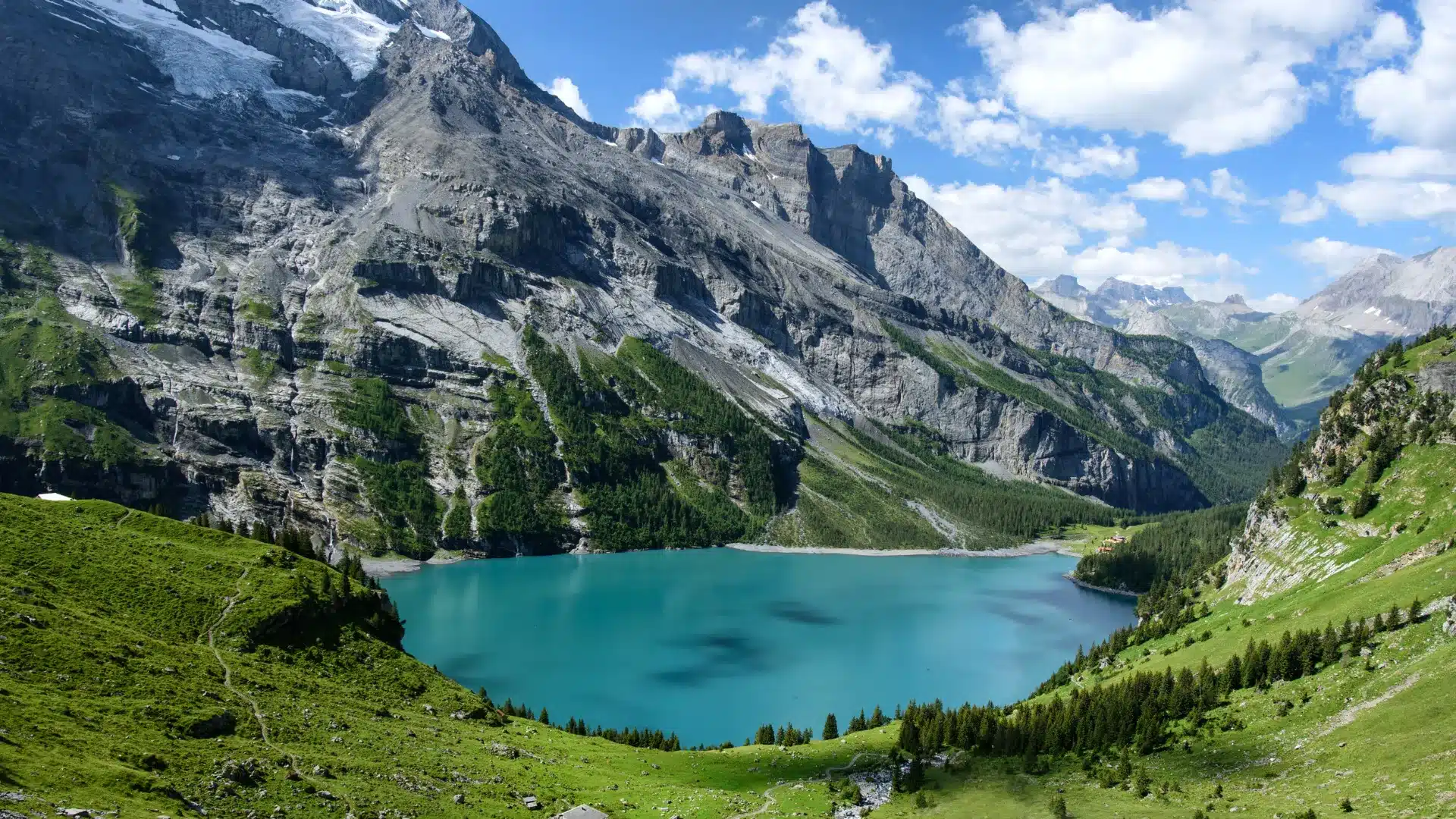
The Swiss Alps are one of Switzerland’s strongest production assets. They offer glaciers, ski resorts, mountain passes, cable cars, tunnels, alpine roads, snowfields, forests, villages, luxury hotels, chalets, mountain railways, lakes and high-altitude environments. For automotive work, sports content, luxury campaigns, fashion, outdoor brands, documentaries, travel, natural history and feature films, the Alps can deliver exceptional production value.
Alpine filming in Switzerland requires serious planning. Weather can change quickly, roads may close, snow conditions vary, avalanche risk can affect access, cable cars and lifts have operating schedules, parking may be limited and emergency response needs to be considered. Winter shoots require cold-weather crew planning, battery management, appropriate vehicles, mountain guides, safety support and realistic working hours. Summer mountain shoots still require weather cover, route planning, environmental respect and altitude awareness.
Zermatt, St Moritz, Davos, Verbier, Grindelwald, Interlaken, Andermatt, Engelberg, Saas-Fee, Gstaad and the Jungfrau region each have different production possibilities and rules. Some resort environments are highly polished and luxury-driven. Others are more sport, road, mountain or village-oriented. Filming around ski lifts, mountain railways, slopes, glacier areas or protected landscapes may involve resort operators, municipalities, cantonal authorities, mountain guides, railway companies, safety teams and private owners.
Hoodlum supports Alpine production in Switzerland by planning routes, permissions, safety, transport, accommodation, specialist vehicles, mountain guides, weather contingencies, drone restrictions and equipment movement. A mountain shoot in Switzerland can be very efficient when the plan is built around the terrain rather than against it.
Ticino, Lugano and Italian-Speaking Switzerland
Ticino gives Switzerland a southern and Italian-speaking production register. Lugano, Locarno, Ascona, Bellinzona and the surrounding valleys offer lakes, palm-lined promenades, old towns, castles, mountain roads, Mediterranean-influenced architecture, villas, bridges, tunnels and access to both Swiss and Italian visual languages. Ticino can be useful for commercials, travel, fashion, lifestyle, automotive, drama, documentaries and music videos.
Lugano provides a polished lakeside city look with hotels, business interiors, boats, mountain backdrops and luxury settings. Locarno and Ascona offer cultural and tourism value, including festival associations, old streets, lakefronts and villa environments. Bellinzona’s castles and fortified settings can support heritage, historical and travel content. The valleys of Ticino can provide roads, villages, waterfalls, forests and mountain settings with a different character from the German-speaking Alps.
Filming in Ticino may involve municipal authorities, private owners, lake authorities, road offices, heritage bodies and cantonal institutions. Cross-border logistics with Italy may also be relevant for some productions, especially if crew or equipment moves between northern Italy and Switzerland. Customs and travel documentation should be checked if the route crosses borders.
Hoodlum supports Ticino shoots by coordinating Italian-speaking local support, private locations, transport, border-sensitive movement, drone planning, municipal permits and accommodation. Ticino is useful when a production wants Switzerland’s efficiency with a warmer, southern visual character.
Crew Entry, Visas and Work Authorisation
Crew entry into Switzerland depends on nationality, duration of stay, role and whether the activity involves gainful employment. Switzerland participates in the Schengen system for short stays. A Type C Schengen visa is used for entry and stays of up to 90 days within a 180-day period where required. A Type D national visa is used for stays of more than 90 days and is subject to authorisation by the competent cantonal migration authority.
Film crew members may need a short-stay Schengen visa, a national visa or work authorisation depending on their nationality, length of stay and production structure. The Swiss Federal Department of Foreign Affairs notes that where a stay involves gainful employment, a work permit is also required. This makes early crew-entry planning important for non-EU and non-EFTA crew, especially on longer shoots or paid assignments.
Visa applications commonly require a valid passport, completed application form, recent passport photographs, proof of payment, invitation letter, proof of professional qualifications or role, health insurance, proof of sufficient funds, accommodation information and supporting production documents. Production documents may include a letter of introduction, crew list, shooting schedule, equipment list, location details and confirmation of the Swiss production contact.
Processing times vary by nationality, embassy, season and visa type. A 15-day processing period may be possible for some Schengen applications, but productions should allow more time where appointments, work permits, cantonal review or additional documents are involved. Hoodlum supports Switzerland crew-entry planning by mapping the crew list against visa, work permit and production documentation needs before travel.
International Crew Accreditation and Production Documentation
International crew accreditation in Switzerland is usually connected to visa support, work authorisation, location access, insurance, permits and production documentation. There is no single national crew badge that automatically covers every canton, city, mountain resort, railway, road, international organisation or private location. Instead, productions need accurate crew lists, role descriptions and supporting letters for the specific approvals they require.
Crew accreditation documentation can include passports, completed forms, photographs, proof of payment, letter of introduction, crew list, proof of professional qualifications, production schedule, equipment list, insurance documents and local production contact details. For sensitive locations, financial institutions, airports, international organisations, railways, mountain infrastructure or private luxury properties, additional pre-clearance may be required.
Switzerland rewards consistency. The same crew names, dates, roles, equipment and locations should appear across visa letters, permit applications, insurance certificates, location contracts, drone plans and customs paperwork. If those documents conflict, authorities or owners may ask questions and delay approval.
Hoodlum supports crew accreditation by preparing clean production documentation and ensuring that every request reflects the real shoot. This helps authorities, owners and service providers understand the production clearly.
Film Permits and Cantonal Approvals
Film permits in Switzerland are generally location-specific and may involve cantonal authorities, municipalities, private owners, police, road authorities, rail operators, mountain resort operators, heritage bodies, airport authorities, international organisations or other site managers. The Swiss Film Commission can help guide productions, but practical permissions depend on where the filming takes place and how the location is affected.
A permit application may require an application form, project description, production schedule, location plan, filming itinerary, crew list, equipment list, insurance certificate, vehicle plan, safety plan and details of any drones, traffic control, public-space occupation, night filming, stunts, rail filming, road closures or special activity. Public areas, roads, bridges, tunnels, rail infrastructure, ski slopes, protected areas and sensitive buildings may require additional review.
Timelines can vary from around one to three weeks for many location approvals, but more complex shoots should allow longer. Road closures, rail access, drone flights, mountain locations, large crews, public disruption, sensitive institutions, police involvement or multiple cantons can all extend the process. Costs can also vary according to location, authority, services required and production impact.
Switzerland is highly organised, but approvals are not automatic. The application should describe the footprint accurately. A production that says it is bringing a small crew and arrives with larger equipment, drones, vehicles or public impact may create problems on the day. Hoodlum helps productions identify the correct authority and prepare applications that are practical, clear and properly scoped.
Private Locations in Switzerland
Private locations in Switzerland include luxury hotels, chalets, villas, apartments, offices, banks, resorts, farms, vineyards, boats, private roads, industrial sites, restaurants, clinics, warehouses, studios, estates and mountain properties. Securing these locations usually involves scouting, owner permission, negotiation and a written location contract.
Private location fees are negotiated case by case. Owners usually need a production synopsis, intended use, shooting schedule, crew size, equipment list, access requirements, insurance, security needs and any dressing or reinstatement details before quoting. A documentary interview in a private office is different from a luxury campaign in a hotel, an automotive shoot on a private road, a fashion shoot in a chalet or a drama sequence in a bank interior.
A proper location agreement should cover access dates, shoot hours, preparation, strike, location fee, overtime, deposits, insurance, damage, reinstatement, art department changes, floor protection, power, catering, toilets, parking, security, confidentiality, owner approvals and cancellation terms. Switzerland’s private owners and institutional property managers often expect professional documentation and clear risk controls.
Private permission does not always cover public impact. If filming affects surrounding streets, pavements, lakefronts, parking, neighbours, roads, drones or public access, additional municipal or cantonal permission may still be needed. Hoodlum supports private location work in Switzerland by securing owner agreements and checking the surrounding approvals required to make the shoot practical.
Drone Filming in Switzerland
Drone filming in Switzerland is regulated through Swiss aviation rules and the Federal Office of Civil Aviation, FOCA. Switzerland has aligned much of its drone framework with European rules, but productions should always check the current Swiss requirements before flying. Drone operations may involve registration, pilot competency, insurance, operational category, airspace restrictions, privacy rules, no-fly zones and specific authorisation depending on the location and type of flight.
Switzerland offers excellent drone filming opportunities: Alpine passes, lakes, glaciers, old towns, mountain railways, vineyards, cities, ski resorts, tunnels, roads, luxury hotels and valleys. Many of these locations are also sensitive. Airports, heliports, military areas, prisons, crowds, national parks, nature reserves, protected landscapes, mountain rescue areas, urban zones and private properties can restrict or prevent drone flights. Flights over people, in controlled airspace or in higher-risk conditions may require additional approvals.
A drone application or flight plan may require an application form, drone details, pilot information, proof of insurance, operating category details, coordinates, maps, risk assessment, location permission and evidence of pilot training or certification where relevant. Imported drones should be properly documented for customs and may require registration with FOCA depending on the operation.
Drone work in Switzerland should also consider privacy and data protection. The country has strong expectations around personal privacy, private property and sensitive institutions. A visually simple aerial shot near a hotel, bank, private home, government site or resort may raise privacy concerns even where aviation rules are satisfied.
Hoodlum supports drone filming in Switzerland by coordinating local drone operators, checking FOCA requirements, reviewing location restrictions, securing owner permissions and integrating the flight plan into the wider production safety plan.
Equipment Customs Clearance and ATA Carnet
Switzerland is an ATA Carnet country, which makes temporary importation of professional filming equipment more practical for international crews. An ATA Carnet allows qualifying professional equipment to be brought into Switzerland temporarily without normal import duties and taxes, provided the goods are re-exported and the carnet is processed correctly by customs.
Customs clearance is handled by the Swiss customs authority, now operating as the Federal Office for Customs and Border Security. Crews should prepare commercial invoices where required, packing lists, certificates of origin, film permits or location agreements where relevant, detailed equipment lists, serial numbers, values, insurance documents and the ATA Carnet. Cameras, lenses, lighting, grip, sound equipment, drones, batteries, radio gear, vehicles and specialist mountain equipment should all be listed clearly.
Switzerland is not part of the European Union customs territory, so productions moving between EU countries and Switzerland should plan border formalities carefully. A production moving from France, Germany, Italy or Austria into Switzerland with equipment should not assume that EU movement rules apply. Customs stamps, carnet entries and re-export procedures matter.
Clearance can be efficient when documentation is complete, but delays can occur if serial numbers are missing, values are inconsistent, freight arrives separately, drones are not documented or the carnet does not match the cases. Hoodlum supports Switzerland customs planning by preparing equipment documentation, coordinating with clearing agents, advising on carnet handling and aligning equipment arrival with the shoot schedule.
Local Crew, Fixers and Production Suppliers
Switzerland has a professional production-service environment, with experienced crew available in Zurich, Geneva, Basel, Bern, Lausanne, Lucerne, Lugano and other production centres. Local producers, fixers, production managers, location managers, camera crew, lighting, grip, sound, art department, wardrobe, makeup, drivers, security, drone operators, translators, mountain guides and technical suppliers are available, though costs can be higher than in neighbouring countries.
A fixer in Switzerland is valuable because the country is efficient but decentralised. Each canton, municipality, private owner, road authority, rail company, resort, park or institution may have its own process. A fixer helps identify the correct authority, translate requirements, secure private locations, prepare permit documents, source local crew, arrange transport, coordinate customs, manage releases and solve production issues on the ground.
Switzerland’s multilingual environment also matters. German, French, Italian and Romansh-speaking regions may require different local communication. A Zurich shoot is not the same as Geneva, Ticino, Valais, Graubünden or the Bernese Oberland. Local support helps productions navigate those regional differences.
Hoodlum scales Switzerland production support according to the brief. A small documentary may need a fixer, vehicle, permits and releases. A commercial may need location scouts, production management, casting, technical crew, security, transport, drones and agency support. A mountain or automotive shoot may need road permissions, safety planning, specialist vehicles, weather cover and local guides.
Transport, Accommodation and Production Movement
Switzerland’s transport infrastructure is one of its biggest production strengths. Roads, railways, tunnels, airports, cable cars and public transport are generally reliable and well maintained. Zurich, Geneva, Basel and other airports provide strong international access, while rail can move producers, directors, agency teams and smaller crews efficiently between cities.
Production movement still needs planning. Mountain roads, winter conditions, road closures, tunnels, parking restrictions, public transport zones, ski resort access, cable-car schedules, city traffic and border crossings can all affect a shoot. Technical vehicles may need permits or approved parking. Rail filming requires specific coordination with operators. Moving equipment into mountain areas may involve smaller vehicles, snow equipment, cable cars, sleds or local transport solutions.
Accommodation in Switzerland is high quality but can be expensive, especially in Zurich, Geneva, St Moritz, Zermatt, Davos, Verbier, Lucerne, Interlaken and resort regions during peak season. Major conferences, ski season, summer mountain tourism, festivals, financial events and international organisation schedules can affect availability and rates.
Hoodlum plans transport and accommodation around the production day: call times, vehicle access, technical parking, equipment storage, crew turnaround, mountain weather, train schedules, border movement and security. Switzerland’s precision is useful, but only when the schedule is built realistically.
Safety, Security and Practical Risk
Switzerland is generally a safe and stable filming destination with strong infrastructure, reliable emergency services and a professional operating environment. However, productions should still plan security according to equipment value, location, public visibility, talent profile and technical risk.
Equipment insurance is important. High-value cameras, lenses, drones, data systems, lighting packages and specialist mountain gear should be covered against damage, loss or theft. Equipment security is usually straightforward in controlled environments, but productions should still use secure storage, vehicle checks and location control.
On-set security personnel may be required for public shoots, high-value locations, celebrity talent, financial institutions, luxury properties, hotels, public crowd scenes, road filming or overnight equipment storage. Location scouting should include a practical risk review, especially in mountains, near water, on roads, in tunnels, at railways or in winter weather.
The main production risks in Switzerland are often environmental and logistical rather than crime-related. Snow, ice, altitude, cold, mountain roads, avalanches, fog, storms, lake conditions, cable-car movement and remote access can all affect safety. Alpine shoots should include guides, weather monitoring, rescue planning and realistic working hours.
Hoodlum supports safety and security planning in Switzerland by matching the level of support to the production. A city interview shoot may need basic coordination, while a high-value Alpine commercial, road shoot, luxury campaign or drone-heavy mountain sequence may need more formal security and safety planning.
Film Rebates and Tax Incentives in Switzerland
Switzerland offers film support, but its incentive environment is more selective and culturally focused than the automatic rebate structures found in some larger service-production territories. Support is generally stronger for fiction, documentary and animation projects that meet Swiss funding, co-production or cultural requirements. Reality television and purely service-based formats may not always be eligible.
International productions should not assume that a standard rebate is automatically available. Funding, regional support or production facilitation may depend on the project structure, Swiss partner, eligible spend, cultural value, co-production position, language region, canton and current programme rules. Productions with documentary, fiction, animation or co-production elements should review opportunities with Swiss film bodies, regional funds or local production partners before budgeting.
For commercials, branded content, corporate films and factual service production, Switzerland’s value is often location quality, infrastructure, security, reliability and specialist access rather than a broad cash rebate. That value can be significant, but it should be budgeted honestly.
Hoodlum helps productions connect the creative plan to the funding conversation where relevant. If a project may qualify for Swiss film support, local production partners and specialist advisors should be involved early so the structure is correct before spend is committed.
When Switzerland Is the Right Production Choice
Switzerland is the right production choice when a project needs Alpine roads, mountains, lakes, financial districts, international institutions, luxury settings, controlled infrastructure, modern transport, ski resorts, glaciers, old towns, vineyards, precision architecture or highly reliable production conditions. It is especially strong for commercials, automotive shoots, luxury campaigns, finance and corporate films, documentaries, feature films, television drama, sport, travel, music videos and photography.
Switzerland is also useful when a production needs multilingual Europe in one country. German-speaking, French-speaking, Italian-speaking and Romansh regions all offer different visual and cultural registers. Zurich, Geneva, Ticino, the Alps, Lake Geneva, Bern, Basel and central Switzerland can each serve a different creative purpose.
Switzerland may be less suitable for productions that want low costs, informal public filming, last-minute mountain access, casual drone flights, unplanned road work or flexible private property access without contracts. The country is highly workable, but it expects clear planning.
Common Switzerland Production Mistakes
One common mistake is assuming that Switzerland has one simple national film permit. In practice, permits are location-specific and may involve cantons, municipalities, private owners, police, road authorities, rail operators, resorts, parks or federal bodies.
Another mistake is underestimating work authorisation. A Schengen visa or visa-free entry may not automatically cover gainful employment. Crew roles, nationality and duration should be checked early.
Productions also underestimate drone restrictions. Switzerland has airports, heliports, military areas, prisons, protected landscapes, national parks, crowds, private properties and privacy rules that can restrict drone flights.
Customs assumptions can create delays. Switzerland is an ATA Carnet country, but it is outside the EU customs territory, so equipment movement from neighbouring EU countries still requires proper border planning.
Mountain schedules are another common issue. Weather, road closures, cable-car times, snow conditions and safety requirements can change the production day quickly.
Finally, productions sometimes underestimate cost. Switzerland is efficient and high quality, but accommodation, transport, private locations, security, specialist crew and mountain logistics should be budgeted realistically.
How Hoodlum Supports Productions in Switzerland
Hoodlum provides Film Production Services in Switzerland for international crews that need practical local support across Zurich, Geneva, Bern, Basel, Lausanne, Lucerne, Ticino, the Swiss Alps and the wider country. Our support covers film fixers, local producers, permit coordination, private location access, crew entry guidance, work authorisation support where required, drone planning, customs and ATA Carnet coordination, local crew sourcing, transport, accommodation, security, mountain logistics and full on-ground production management.
For Zurich, Hoodlum supports finance, corporate, luxury, city and lakefront filming. For Geneva and Lausanne, we support international organisation access, diplomatic settings, interviews, lake locations and French-speaking production coordination. For the Alps, we coordinate mountain roads, resorts, cable cars, ski areas, safety, weather and specialist transport. For Ticino, we support Italian-speaking locations, lake work, southern Swiss visuals and cross-border logistics.
Switzerland gives productions exceptional control and production value when the groundwork is handled properly. Hoodlum’s role is to keep that groundwork clear, local, realistic and production-focused so the crew arrives with the right permissions, the right people and the right plan.
Frequently Asked Questions
Do international crews need visas to film in Switzerland?
Crew-entry requirements for Switzerland depend on nationality, duration, role and whether the work involves gainful employment. Visa-required crew may need a Schengen Type C visa for stays up to 90 days, while longer stays may require a Type D national visa. Work permits may also be required for gainful employment.
Who issues film permits in Switzerland?
Film permits in Switzerland depend on the location. Cantonal authorities, municipalities, private owners, police, road authorities, railway operators, resort operators, park authorities, airports and other site managers may all be involved. The Swiss Film Commission can guide productions, but practical permission is location-specific.
Is Switzerland good for automotive filming?
Yes. Switzerland is strong for automotive filming because of its mountain passes, tunnels, lakeside roads, Alpine scenery, controlled infrastructure and premium visual identity. Road permissions, safety, weather, traffic control and drone restrictions must be planned carefully.
Can productions film in the Swiss Alps?
Yes, productions can film in the Swiss Alps, but mountain work requires permits, weather planning, transport coordination, safety support, resort or lift permissions and realistic schedules. Snow, altitude, avalanche risk and cable-car access may affect the shoot.
Is Switzerland good for drone filming?
Yes, Switzerland can be excellent for drone filming, especially around mountains, lakes, resorts and old towns. Drone operations must comply with FOCA rules, airspace restrictions, privacy requirements, insurance and location-specific permissions.
Is Switzerland an ATA Carnet country?
Yes. Switzerland accepts ATA Carnets for temporary importation of qualifying professional filming equipment. Crews should prepare accurate equipment lists, serial numbers, values, insurance documentation and carnet paperwork.
Does Switzerland offer film incentives?
Switzerland offers film support, but it is generally more selective and culturally focused than automatic rebate systems. Fiction, documentary and animation projects may have clearer routes than reality television or purely service-based productions. Eligibility should be confirmed before budgeting.
What are the best filming locations in Switzerland?
Strong filming locations in Switzerland include Zurich, Geneva, Bern, Basel, Lausanne, Lucerne, Lugano, Lake Geneva, Lake Zurich, Zermatt, St Moritz, Davos, Verbier, Interlaken, Grindelwald, Ticino, the Bernese Oberland and the Swiss Alps.
Why use a fixer in Switzerland?
A fixer in Switzerland helps international productions secure permits, source locations, coordinate with cantons and municipalities, arrange local crew, manage customs, plan drones, handle transport, support mountain logistics and keep the shoot practical on the ground.
External Authority Links
- Swiss Film Commission
- Swiss FDFA – Visa Requirements
- Swiss Visa Application Portal
- Embassy of Switzerland in South Africa
- Consulate General of Switzerland in Cape Town
- FOCA – Federal Office of Civil Aviation
- FOCA Drone Information
- Federal Office for Customs and Border Security
- Federal Office of Culture – Film
- Switzerland Tourism
Switzerland gives international productions access to Zurich, Geneva, Bern, Basel, Ticino, the Swiss Alps, lakes, mountain roads, ski resorts, luxury hotels, financial districts, old towns and highly reliable infrastructure. The strongest shoots are built on the right permits, crew-entry planning, work authorisation checks, private location agreements, drone approvals, customs paperwork, local fixers, transport, accommodation, security and realistic mountain logistics.
Planning a shoot in Switzerland? Contact Hoodlum for Swiss Film Commission and cantonal permit coordination, local fixers, mountain railway and cable-car permissions, protected-area approvals, ATA Carnet customs planning, FOCA drone coordination, helicopter and alpine logistics, luxury and high-altitude location access, crew sourcing and full on-ground production management. You can also view the Hoodlum Film Fixers Switzerland Google Business Profile for local production details.