
















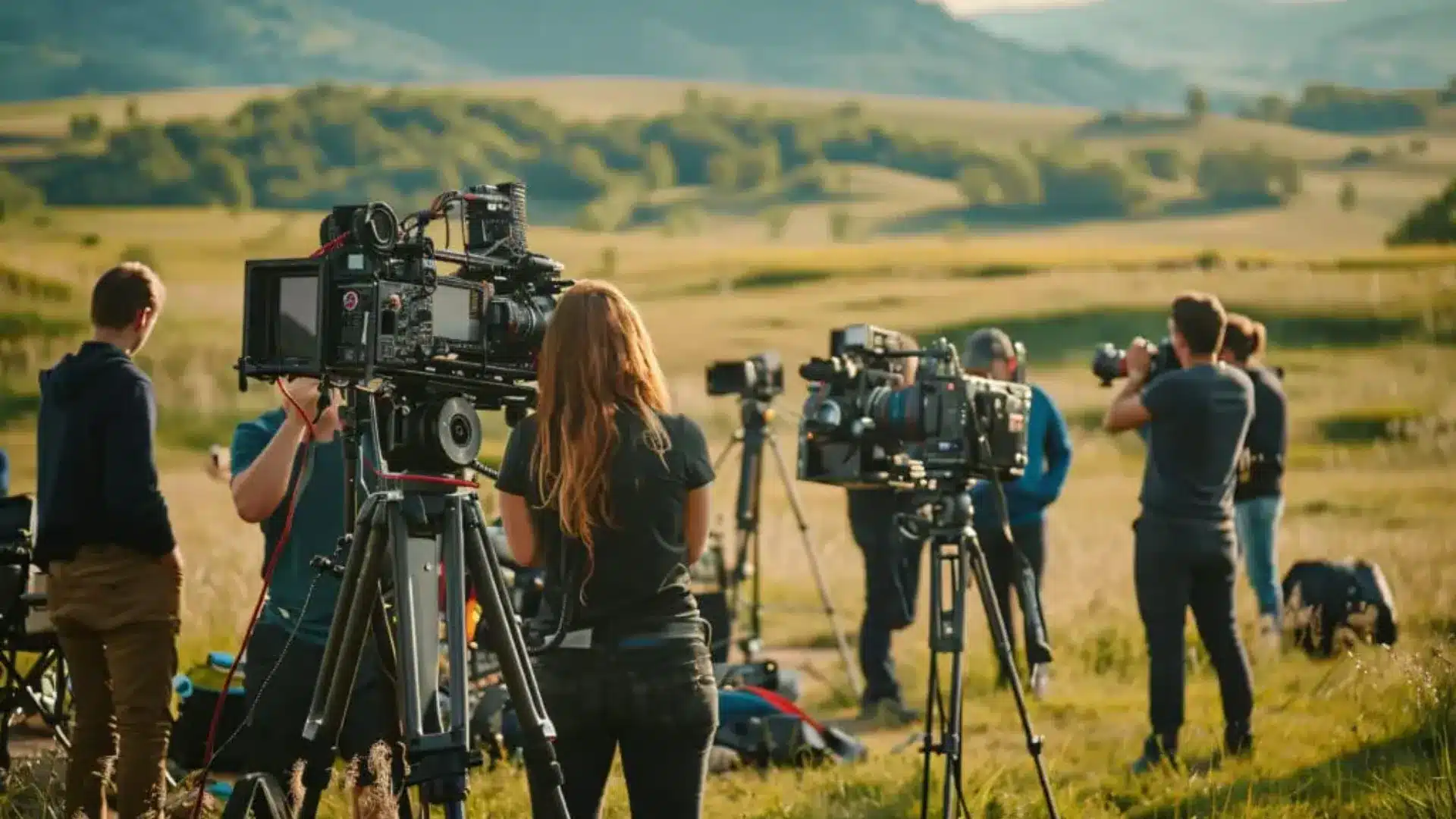

Film Production Services in Ukraine
Hoodlum provides practical, fixer-led Film Production Services in Ukraine for international productions that need permits, local crew, accreditation, location access, customs, transport, security planning and full production support. Ukraine is a complex filming environment where productions must plan around martial law, regional security conditions, official accreditation, local permits, drone restrictions, ATA Carnet customs procedures, curfews, air raid alerts, insurance and close coordination with Ukraine-registered production partners.
Ukraine can support documentary, current affairs, humanitarian, reconstruction, cultural, factual, NGO, development, commercial and controlled-location productions. The country offers production environments across Kyiv, western regions, urban centres, private locations, cultural sites, reconstruction areas, controlled public spaces, road corridors and selected regional locations. However, every production must be assessed against current security conditions, regional access, civil authority instructions and military restrictions before any filming plan is confirmed.
Ukraine allows visa-free entry for citizens of many countries, typically for up to 90 days within a 180-day period. However, professional filming and paid work require local authorisation and coordination with a Ukraine-registered production partner. Foreign media and documentary crews must obtain official accreditation, issued by the Ministry of Defence of Ukraine for conflict-related or frontline reporting and/or the Ministry of Foreign Affairs. Film permits are coordinated through a combination of the State Film Agency of Ukraine, local municipal authorities, military administrations and police departments depending on the region, subject matter and location.
Hoodlum supports productions in Ukraine with visa guidance, local production partner coordination, Ministry of Defence and Ministry of Foreign Affairs accreditation support, film permit coordination, fixer services, local crew sourcing, private location access, customs documentation, ATA Carnet support, secure transport, accommodation, risk assessment, security planning, war-risk insurance guidance and daily production management. Ukraine can only be approached responsibly when creative access, safety, legal permissions and logistics are planned together from the start.
Why Ukraine Works for International Productions
Ukraine works for productions that require direct access to Ukrainian locations, people, institutions, humanitarian operations, reconstruction work, cultural stories, current affairs, civic life, infrastructure, history or controlled documentary environments. It is especially relevant for productions where the Ukrainian context is central and cannot be recreated elsewhere.
The country offers significant production value, but it also requires serious preparation. Ukraine remains under martial law, and security conditions vary significantly by region. Curfews may apply, air raid alerts are frequent, and instructions from military and civil authorities must be followed. Productions should be built around local guidance, flexible movement and clear contingency planning.
Kyiv is often the main coordination base for international productions because it provides access to production partners, fixers, crew, accommodation, transport, authorities, customs planning and editorial support. Western Ukraine may be more practical for some projects depending on security conditions, while eastern, southern, frontline or conflict-adjacent areas require much more intensive assessment and may be restricted.
Ukraine is not a destination for informal filming or unsupported travel. Productions should use experienced local fixers, Ukraine-registered production partners and security advisers. The safest and most effective approach is to keep crew size practical, minimise unnecessary movement, obtain accreditation before filming, carry correct documents and build the schedule around current conditions.
Kyiv as a Production Coordination Base
Kyiv is one of the main production coordination bases for international crews filming in Ukraine. It provides access to local production companies, fixers, translators, drivers, crew, accommodation, authorities, municipal coordination, customs planning, equipment handling and security briefings.
Kyiv can support interviews, controlled interiors, institutional access, cultural filming, public spaces, reconstruction-related filming, NGO coordination, contributor management and private locations where permissions and security allow. Even where filming appears straightforward, crews should coordinate with local authorities and fixers before beginning work.
Productions in Kyiv must account for martial law conditions, possible curfews, air raid alerts, regional advisories, building access rules and security protocols. The filming day may need to pause, move or adapt quickly depending on alerts or instructions from local authorities.
Hoodlum supports Kyiv-based production with fixer services, accreditation preparation, local crew sourcing, municipal coordination, private location access, transport, accommodation, equipment customs planning, risk assessment and daily logistics. A well-managed Kyiv base helps productions remain flexible and compliant.
Regional and Controlled-Location Filming in Ukraine
Regional filming in Ukraine requires project-specific assessment. Access can vary significantly depending on the location, security status, military administration, civil authority restrictions, road conditions and subject matter. Active conflict zones and frontline areas are restricted and require specific authorisation.
Productions may film in western regions, central cities, reconstruction areas, community settings, private locations, roads or public spaces if approvals and security conditions allow. Each location should be checked before travel, and the production should be ready to adjust plans if local conditions change.
Military administrations may be involved in certain regions. Police departments may be required for public spaces, road access, crowd control or security-sensitive filming. Local municipal authorities may issue permissions for city or public property filming.
Hoodlum supports regional filming by coordinating local fixers, checking security and access, preparing permit files, liaising with municipal authorities, arranging secure transport, confirming accommodation and briefing the crew. Ukraine regional filming should always be documented, locally supported and flexible.
Crew Entry and Visa Requirements for Ukraine
Ukraine allows visa-free entry for citizens of many countries, typically for up to 90 days within a 180-day period. Visa-free entry is immediate for eligible nationalities. Other nationalities may need a visa before travel.
Professional filming and paid work require local authorisation and coordination with a Ukraine-registered production partner. Longer stays or paid employment may require a temporary residence permit. Productions should check the correct immigration and work route for every crew member before travel.
Where documentation is required, crews should prepare a valid passport with at least six months’ validity, proof of visa-free eligibility or visa where required, and a production company letter detailing the film project, objectives, locations, shooting schedule, crew list and equipment. An invitation letter from a Ukraine-registered production partner is also recommended or required for many professional productions.
Additional documentation may include proof of health insurance valid in Ukraine, accommodation confirmation and equipment customs documentation where applicable. Work-related authorisations and permits can take approximately 7 to 20 working days, subject to regional security conditions.
Hoodlum supports crew entry planning by coordinating with Ukraine-registered production partners, preparing invitation letters, production letters, crew details, insurance documents, accommodation confirmations and customs materials. Entry planning should be aligned with accreditation, permits, security and insurance.
International Crew Accreditation in Ukraine
All foreign media and documentary crews must obtain official accreditation in Ukraine. Accreditation may be issued by the Ministry of Defence of Ukraine for conflict-related or frontline reporting and/or by the Ministry of Foreign Affairs depending on the production type, subject matter and locations.
Accreditation is essential for foreign news, documentary, current affairs and sensitive filming. Crews should not assume that visa-free entry gives permission to film professionally or to access restricted areas.
Required documentation typically includes a valid passport, completed accreditation application, a letter from the production company detailing the project overview, shooting schedule, locations and crew list, an editorial assignment letter for news or documentary crews, proof of health insurance and an equipment list. The equipment list should include cameras, drones, transmitters and any specialist equipment.
Processing usually takes 10 to 30 working days, with longer timelines for frontline, conflict-related or sensitive filming. Costs can range from USD 0 to USD 150 depending on accreditation type.
Hoodlum supports accreditation by preparing crew documents, production letters, assignment letters, equipment lists, insurance materials and local partner details. In Ukraine, accreditation should be handled early and should match the filming locations, schedule and security plan.
Film Permits in Ukraine
Ukraine does not have a single centralised national film office. Film permits are coordinated through the State Film Agency of Ukraine, local municipal authorities, military administrations in certain regions and police departments for public spaces.
The permitting route depends on the production type, location, subject matter and region. A commercial shoot in a city, a documentary in a public space, a humanitarian project, a road shoot and a conflict-related production may all follow different approval routes.
Typical documentation includes a film permit application, script or detailed treatment, one-to-two-page synopsis, production schedule and shooting timeline, crew list and roles, equipment list, proof of insurance for crew, equipment and public liability, location list and maps, and a security and risk assessment. Security and risk assessments are often required and should be taken seriously.
Processing usually takes 10 to 25 working days, highly dependent on region and security status. Permit fees generally range from USD 50 to USD 500 depending on municipality and scope.
Hoodlum supports film permit applications by preparing scripts, treatments, synopses, schedules, crew lists, equipment lists, maps, insurance documents, risk assessments and local authority submissions. Ukraine permit planning should be detailed, location-specific and security-aware.
Private Locations and Owner Agreements
Private location filming in Ukraine begins with location research and feasibility assessment. Once a potential location is identified, the fixer or local production partner verifies security and access, arranges site visits where permitted, negotiates with property owners or authorities and prepares a written location agreement.
Private locations may include homes, offices, hotels, warehouses, cultural sites, businesses, farms, industrial spaces, community locations or controlled interiors. Availability can depend on safety, ownership, access, insurance, building condition and regional restrictions.
Location fees typically range from USD 50 to USD 300, subject to availability and security. Fees may vary depending on crew size, equipment, duration, exclusivity, disruption, privacy, access limitations and owner requirements.
A written agreement should clarify filming dates, access hours, permitted areas, fees, insurance, property protection, confidentiality, equipment storage, security conditions and cancellation terms. Hoodlum supports private location access by scouting options, verifying feasibility, negotiating terms and coordinating shoot-day logistics.
Public Filming, Municipal Permits and Police Coordination
Public filming in Ukraine requires careful local coordination. Streets, squares, parks, roads, public buildings, transport hubs, government areas, reconstruction sites and public infrastructure may require permission from municipal authorities, police departments or military administrations.
Police departments may be involved for public spaces, crowd control, road access, traffic management or security-sensitive filming. In some regions, military administrations may need to approve filming activity.
Crews should carry accreditation, film permits, passports, proof of legal stay, insurance documents, equipment lists, location permissions and local fixer contact details while filming. This is especially important in a martial law environment where authorities may need to verify the crew’s purpose and permissions.
Hoodlum supports public filming by coordinating municipal applications, police liaison, military administration permissions where required and crew documentation. In Ukraine, public filming should be controlled, authorised and responsive to current conditions.
Drone Filming in Ukraine
Drone filming in Ukraine is severely restricted due to ongoing security conditions. Civilian drone use is largely prohibited, and any drone operation requires explicit military authorisation. Unauthorised drone use may result in detention or equipment confiscation.
Drone authorisation may involve the Ministry of Defence of Ukraine and military administrations. Productions should not include drone filming in the creative plan unless approval is realistic, necessary and confirmed in writing.
Drone importation and use require advance written authorisation, detailed equipment lists with serial numbers, drone technical specifications, proof of ownership, insurance certificate, film permits and location permits. Processing can take more than 30 working days, and approval is not guaranteed.
Because drones are highly sensitive in Ukraine, productions should prepare non-drone alternatives. Aerial footage may not be possible, especially near conflict zones, infrastructure, government buildings, military areas, public gatherings or sensitive locations.
Hoodlum supports drone feasibility assessment by checking current restrictions, coordinating with local authorities and advising whether drone filming is appropriate. In most cases, Ukraine productions should avoid relying on drones unless permission is specifically secured.
Drone Importation into Ukraine
Drone importation into Ukraine should not be attempted without explicit authorisation. Drone equipment may be treated as sensitive, and unauthorised importation can create serious problems for the production.
Required documentation may include advance written authorisation, detailed equipment list with serial numbers, drone technical specifications, proof of ownership, insurance certificate, film permits and location permits. The drone must match the customs file, accreditation file and any operational authorisation.
Processing can take more than 30 working days. Approval is not guaranteed, and restrictions may change based on security conditions.
Hoodlum helps productions assess whether drone importation is viable and whether local alternatives exist. In Ukraine, drone planning must be handled as a security-sensitive approval process, not as standard camera equipment.
Equipment Customs Clearance in Ukraine
Ukraine is an ATA Carnet country, and an ATA Carnet is strongly recommended for professional film equipment. ATA Carnet documentation can simplify temporary importation of cameras, lenses, sound gear, lighting, grip, data equipment and other professional filming equipment.
Required documentation includes an ATA Carnet or, where no Carnet is used, a detailed equipment list with declared values, commercial invoice where applicable, crew passports, proof of legal stay, proof of insurance and a letter of introduction outlining production details.
Customs clearance is handled by the State Customs Service of Ukraine. Processing usually takes approximately 2 to 8 hours, subject to inspection and security checks. With an ATA Carnet, no import duties normally apply. Without a Carnet, temporary import VAT of 20% and customs fees may apply.
Equipment lists should be accurate and should include serial numbers, declared values and clear descriptions. Sensitive equipment such as drones, transmitters and communications gear should be reviewed carefully before travel.
Hoodlum supports customs clearance by preparing ATA Carnet materials, equipment lists, value declarations, insurance documents, letters of introduction, crew documentation and local customs coordination. In Ukraine, customs planning should also consider security checks and sensitive equipment restrictions.
Local Crew, Fixers and Production Support
Experienced local fixer support is essential for filming in Ukraine. A fixer helps coordinate accreditation, permits, local authorities, security, translation, locations, transport, customs, accommodation, contributors and daily production logistics.
A Ukraine-registered production partner is important for professional filming and paid work. Local partners help with permits, authorisations, insurance, contracts, crew sourcing, municipal coordination, security planning and compliance with local requirements.
Ukraine has skilled production crew, producers, fixers, translators, drivers, camera teams, sound operators and field producers, but availability and movement may depend on security conditions and location. Productions should plan carefully around regional access and crew safety.
Hoodlum helps build the right local production structure for each Ukraine shoot. A current affairs project, humanitarian film, reconstruction documentary, cultural shoot or commercial production will each need a different combination of accreditation, security, local crew and permissions.
Transport, Accommodation and Controlled Logistics
Transport in Ukraine should be planned around security, road conditions, curfews, fuel, checkpoints, air raid alerts, crew size and equipment volume. Secure and locally informed transport is essential.
Accommodation should be selected around safety, access control, shelter options, power, communications, parking, equipment storage and proximity to approved filming locations. Crews should understand curfew rules and air raid procedures before arrival.
Daily logistics should include security briefings, route planning, check-in systems, emergency contacts, insurance details, medical planning, equipment protection, backup movement options and schedule flexibility. Production plans may need to change quickly in response to security developments.
Hoodlum supports transport and accommodation by coordinating trusted drivers, secure vehicles, safe lodging, local contacts, movement plans, check-ins and daily production support. In Ukraine, logistics must be designed around safety and adaptability.
Safety and Security in Ukraine
Ukraine remains under martial law. Security conditions vary significantly by region. Active conflict zones and frontline areas are restricted, curfews may apply, air raid alerts are frequent and compliance with military and civil authority instructions is mandatory.
Security briefings and local fixers are essential. War-risk insurance is strongly recommended. Productions should not travel or film without a current risk assessment, local authority guidance, secure movement planning and contingency procedures.
Security planning should include region-specific access checks, route planning, accommodation review, curfew compliance, air raid protocols, emergency communication, medical contacts, evacuation options, insurance review and daily crew briefings.
Hoodlum supports security planning by coordinating experienced local fixers, production partners and security advisers. Ukraine filming must be built around safety from the start, with the creative plan shaped by current conditions and duty-of-care requirements.
Health, Insurance and Duty of Care
Health and insurance planning is central to any Ukraine production. Crews should carry health insurance valid in Ukraine, and war-risk insurance is strongly recommended where relevant. Standard travel insurance may not cover filming in a conflict-affected country, so policies should be reviewed carefully.
Productions should also consider medical access, emergency evacuation, first aid, air raid procedures, curfew rules, communications, rest periods, winter conditions, stress management and crew welfare. The production should have clear protocols for pausing or relocating filming if conditions change.
Public liability, equipment insurance and crew insurance may be required for permits, locations, accreditation and customs. Insurance documents should be consistent with permit and accreditation files.
Hoodlum helps productions integrate insurance, security, transport, medical planning and daily logistics. Duty of care is a core part of any Ukraine filming plan.
Film Rebates and Tax Incentives
Ukraine’s film incentive programmes are currently suspended due to national emergency conditions. No active cash rebate system is currently available.
Productions should not budget around a Ukraine cash rebate unless a current scheme is officially reinstated and confirmed. Any financial planning should focus on operational costs, security requirements, local crew, permits, accreditation, customs, insurance, transport, accommodation and contingency planning.
The film rebate is separate from visas, accreditation, permits, customs clearance, drone approvals and security authorisations. Even if incentives are reinstated in the future, productions will still need to manage all operational approvals separately.
Hoodlum helps productions budget realistically by identifying accreditation fees, permit costs, customs requirements, security needs, transport, accommodation, insurance and contingency requirements before filming begins.
When Ukraine Is the Right Production Choice
Ukraine is the right production choice when the project genuinely requires Ukrainian locations, contributors, institutions, current affairs access, humanitarian context, reconstruction stories, cultural material or controlled local filming. The country should be selected because the story requires it, not because it is convenient.
Ukraine is best suited to productions that can allow 10 to 30 working days for accreditation, 10 to 25 working days for film permits, 7 to 20 working days for work-related authorisations where needed and additional time for security planning. Drone approvals can take more than 30 working days and are not guaranteed.
Ukraine is less suitable for productions that need last-minute access, unapproved drones, informal public filming, rigid schedules, low-security travel or unsupported regional movement. Conditions can change quickly, and the production must be ready to adapt.
Hoodlum helps producers assess whether Ukraine is viable for the creative, security, budget, timing and duty-of-care requirements of the project. When it is viable, we provide the fixer-led support needed to keep the production documented, protected and operational.
Common Ukraine Production Mistakes
A common mistake is assuming visa-free entry is enough for professional filming. Many crew can enter visa-free, but paid work and professional productions require local authorisation and coordination with a Ukraine-registered production partner.
Another mistake is leaving accreditation too late. Foreign media and documentary crews must obtain official accreditation, and sensitive or frontline filming can take longer to approve.
Productions also sometimes underestimate local permit complexity. Ukraine does not have one centralised national film office, so permits may involve the State Film Agency, municipal authorities, military administrations and police departments.
Drone planning is a major risk. Civilian drone use is largely prohibited, and unauthorised drone use may result in detention or equipment confiscation.
Customs should also be handled carefully. Ukraine accepts ATA Carnets, but equipment can still be subject to inspection and security checks, especially if transmitters, drones or other sensitive gear are included.
Finally, productions may underestimate security. Ukraine remains under martial law, and every filming plan should include risk assessment, local fixers, security briefings, curfew planning, air raid protocols and insurance review.
How Hoodlum Supports Productions in Ukraine
Hoodlum supports productions in Ukraine with practical, fixer-led production services for international crews. We help coordinate the approvals, local relationships, safety planning and logistics required to film responsibly.
Our support includes visa guidance, Ukraine-registered production partner coordination, Ministry of Defence accreditation support, Ministry of Foreign Affairs accreditation support, State Film Agency coordination, municipal permits, military administration liaison, police coordination, private location scouting, owner negotiation, customs clearance support, ATA Carnet planning, local crew sourcing, secure transport, accommodation, war-risk insurance guidance, risk assessment support and daily production management.
We help productions prepare passports, production letters, project overviews, shooting schedules, crew lists, editorial assignment letters, health insurance proof, equipment lists, drone and transmitter details, scripts, treatments, synopses, location maps, risk assessments, ATA Carnet documents, customs letters and local authority submissions.
Ukraine requires careful preparation, strong local coordination and safety-led decision-making. Hoodlum provides the on-ground support needed to keep international crews documented, briefed, protected and ready to film.
FAQ
Do film crews need a visa for Ukraine?
Ukraine allows visa-free entry for citizens of many countries for up to 90 days within a 180-day period. Other nationalities may need a visa.
Does visa-free entry allow professional filming?
Professional filming and paid work require local authorisation and coordination with a Ukraine-registered production partner.
Where can Ukraine visa information be checked?
Visa information is available through the Ministry of Foreign Affairs of Ukraine and the official visa portal.
Is accreditation required for foreign media and documentary crews?
Yes. All foreign media and documentary crews must obtain official accreditation.
Who issues accreditation in Ukraine?
Accreditation may be issued by the Ministry of Defence of Ukraine for conflict-related or frontline reporting and/or the Ministry of Foreign Affairs.
How long does accreditation take?
Accreditation usually takes 10 to 30 working days, with longer timelines for frontline or sensitive filming.
Does Ukraine have a central film office?
Ukraine does not have a single centralised national film office. Permits may involve the State Film Agency of Ukraine, municipal authorities, military administrations and police departments.
How long do film permits take?
Film permits usually take 10 to 25 working days, depending on region and security status.
How much do film permits cost?
Permit fees generally range from USD 50 to USD 500 depending on municipality and scope.
Can film crews use drones in Ukraine?
Drone filming is severely restricted. Civilian drone use is largely prohibited, and any drone operation requires explicit military authorisation.
Can drones be imported into Ukraine?
Drone importation requires advance written authorisation and is not guaranteed.
Is Ukraine an ATA Carnet country?
Yes. Ukraine is an ATA Carnet country, and an ATA Carnet is strongly recommended for professional film equipment.
How long does customs clearance take?
Customs clearance usually takes 2 to 8 hours, subject to inspection and security checks.
Does Ukraine currently offer a film rebate?
No active cash rebate system is currently available. Incentive programmes are suspended due to national emergency conditions.
Is Ukraine safe for filming?
Ukraine remains under martial law, and security conditions vary by region. Productions require local fixers, security briefings, risk assessment, insurance review and strict compliance with authority instructions.
Is war-risk insurance recommended?
Yes. War-risk insurance is strongly recommended for productions filming in Ukraine.
External Authority Links
- Ministry of Foreign Affairs of Ukraine
- Official Ukraine Visa Information
- Ministry of Defence of Ukraine
Contact Hoodlum today for expert Film Production Services in Ukraine, including fixer support, film permits, crew sourcing, accreditation, customs clearance, location access and complete on-the-ground production management. For more information, visit the Hoodlum Film Fixers Ukraine Google Business Profile.