
















Filming in Nepal
Introduction
Hoodlum offers expert film fixer services in Nepal, supporting international productions across one of the world’s most visually extraordinary and culturally rich filming destinations.
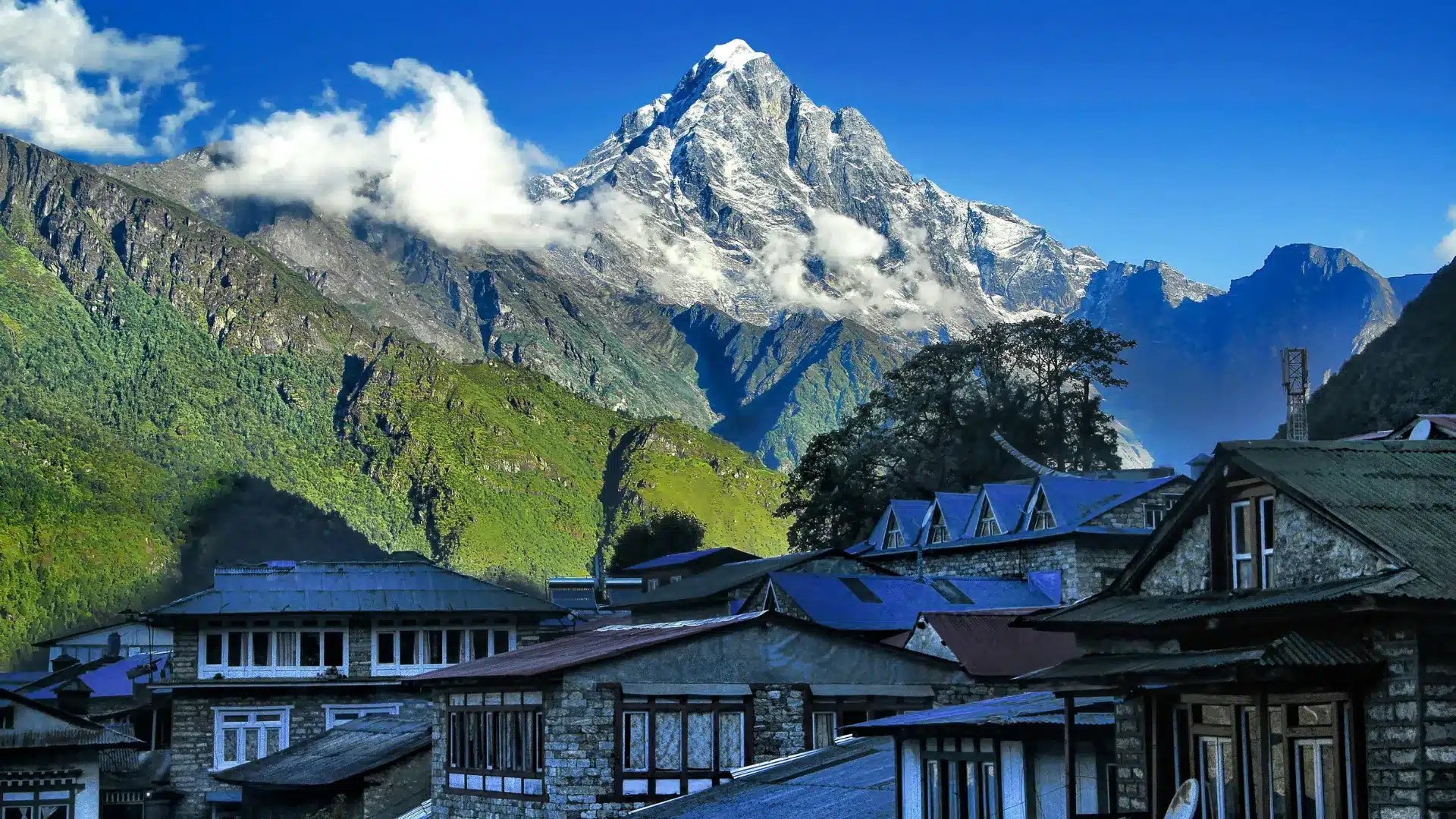
Nepal is a country of incomparable geographic range — eight of the world’s fourteen highest mountains, including Everest, rise from its northern border with Tibet. The Kathmandu Valley contains the highest concentration of UNESCO World Heritage Sites in the smallest area of any country on earth. The subtropical jungles of Chitwan and Bardia national parks in the southern Terai lowlands shelter tigers, one-horned rhinoceroses and elephants.
The ancient city of Bhaktapur preserves medieval Newari architecture of extraordinary quality. The lakeside city of Pokhara reflects the Annapurna massif in the still waters of Phewa Lake. And the trekking corridors of the Khumbu, Annapurna and Langtang regions provide access to high-altitude Himalayan environments that have appeared in some of the most significant adventure and documentary productions ever made.
For productions that need the Himalayas, ancient heritage, wildlife, cultural depth and English-speaking logistics in a compact and accessible geography, Nepal delivers a combination that no other country can replicate.
Nepal is an ATA Carnet country. Film permits are issued by the Ministry of Information and Communications. Drone operations are regulated by the Civil Aviation Authority of Nepal (CAAN). Spring (March to May) and autumn (September to November) are the optimal filming windows.
Nepal Film Production Guide for International Crews
Nepal is a South Asian filming destination that works for an unusually wide range of production types — from high-altitude Himalayan expedition documentary and adventure content to commercial campaigns in Kathmandu’s UNESCO heritage squares, wildlife productions in Chitwan’s tiger habitat, cultural and religious documentary in the ancient cities of the Kathmandu Valley, and travel programming across one of the world’s most cinematically varied geographies.
The country is served by Tribhuvan International Airport in Kathmandu, with domestic connections to Lukla (Everest region), Pokhara, Bharatpur (Chitwan), Jomsom (Mustang) and other regional airstrips. The domestic aviation network is the primary logistics system for reaching high-altitude and remote locations — road access exists but journey times in mountainous terrain are significant.
The main production environments include Kathmandu and the Kathmandu Valley heritage cities of Bhaktapur and Patan, Pokhara and the Annapurna viewpoint environments, the Khumbu region and Everest Base Camp approaches, Chitwan and Bardia national parks, the Mustang plateau (Upper Mustang requires a restricted area permit), the Langtang valley, and the Terai lowland plain along the Indian border.
A successful Nepal production requires early preparation. Journalist/Film Visa or Tourist Visa with special permission, Ministry of Information and Communications film permit, crew accreditation, CAAN drone approvals, ATA Carnet customs clearance, national park permits and any restricted area permits should all be confirmed before crew travel.
Why Film Production Works Well in Nepal
Nepal works for productions that need a combination of Himalayan landscape grandeur, ancient South Asian heritage architecture, Buddhist and Hindu religious culture, subtropical wildlife, trekking and expedition environments, and a cost-effective English-capable production support network.
Strong production use cases include:
- Himalayan expedition and adventure documentary
- Feature film and television drama requiring South Asian or Himalayan settings
- Commercial and advertising campaigns
- Nature and wildlife productions — Chitwan, Bardia, snow leopard, red panda habitats
- Heritage and archaeological documentary — Kathmandu Valley UNESCO sites
- Travel and exploration programming
- Spiritual and cultural documentary — Buddhist monasteries, Hindu temples, Kumari tradition
- Documentary on mountaineering history — Everest, Annapurna, the Khumbu
- Conservation and environmental storytelling
- Still photography and branded content
- Reality and adventure competition formats
Nepal’s production costs — crew rates, location fees, accommodation, catering and trekking logistics — are among the most competitive of any Himalayan or high-altitude filming destination globally.
English is widely spoken in professional, tourism and government contexts across Kathmandu and major cities, which simplifies communication with permit authorities, location managers and production partners considerably.
Best Time of Year to Film
Nepal has four distinct seasons and significant climate variation by altitude. The two optimal filming windows are spring and autumn.
Spring (March to May) — rhododendron forests in bloom, clear mountain views, comfortable temperatures at trekking altitudes, vibrant festival season. One of the two busiest trekking seasons — popular trails and Everest Base Camp will have significant visitor traffic.
Autumn (September to November) — post-monsoon clarity gives the cleanest air and most consistent mountain visibility of the year. Excellent conditions for Himalayan aerial and landscape work. The most popular season for Everest Base Camp trekking.
Summer monsoon (June to September) — heavy rainfall makes many outdoor shoots challenging. Roads in mountain areas can be blocked by landslides. However, the monsoon green and dramatic cloud environments can be extraordinarily beautiful for the right production brief.
Winter (December to February) — cold in the mountains and high-altitude areas, with some passes closed by snow. Suitable for Kathmandu Valley cultural shoots, Terai wildlife productions and lower-altitude work. Clear skies and very few tourists at most sites.
Productions should plan for:
- High-altitude acclimatisation for any locations above 3,500 metres
- Domestic flight weather delays — Lukla airport is weather-dependent and delays are common
- Monsoon road and trail access limitations June to September
- Festival calendar planning — Dashain, Tihar and Indra Jatra are extraordinary visual opportunities with specific logistics
- Peak trekking season crowd management at Everest Base Camp and Annapurna Circuit viewpoints
Visa and Entry Requirements for Crew
Filmmakers require either a Journalist/Film Visa or a Tourist Visa with special permission to film professionally in Nepal.
Required documentation:
- Valid passport
- Visa application form
- Passport-sized photographs
- Project proposal
- Equipment list
- Invitation letter from local contact or production company
Processing time: Seven to fourteen working days.
Estimated cost: Approximately USD 120.
Work authorisation for paid professional filming should be confirmed separately from standard tourist entry for each crew member’s nationality. Hoodlum coordinates the invitation letters and local contact documentation required as part of the application.
International Crew Accreditation
International crews must obtain official accreditation to work professionally in Nepal. This confirms professional status and is a required component of the production approval framework.
Required documentation:
- Valid passport
- Letter of introduction from the production company
- Project proposal
- Shooting schedule
- Equipment list
- Proof of insurance
Processing time: Ten to fourteen working days.
Estimated cost: USD 400–1,600 depending on crew size and production type.
Accreditation should run in parallel with the film permit process — not sequentially after it. Hoodlum coordinates both simultaneously.
Film Permits and Production Approval
A General Film Permit is required from the Ministry of Information and Communications to film across Nepal.
Required documentation:
- Valid passport
- Visa
- Project synopsis
- Shooting schedule
- Insurance documentation
- Proof of payment
Processing time: Two to five working days.
Estimated cost: USD 150.
The general film permit covers standard filming activity. Productions filming within national parks and wildlife reserves require additional permits from the Department of National Parks and Wildlife Conservation. Productions filming in restricted areas — including Upper Mustang, Upper Humla and other designated restricted zones — require specific restricted area permits from the Ministry of Home Affairs in addition to the general film permit.
Filming at UNESCO World Heritage Sites in the Kathmandu Valley — Pashupatinath, Boudhanath, Swayambhunath, Changu Narayan, Patan Durbar Square, Bhaktapur Durbar Square, Kathmandu Durbar Square — requires specific permissions from the relevant heritage site management authority or the Department of Archaeology.
Hoodlum identifies the full permission picture for each production’s specific location list and manages all parallel approval streams.
Key Filming Locations and What Access Requires
Kathmandu filming locations — the Kathmandu Valley contains seven UNESCO World Heritage zones within a compact geography. The Pashupatinath temple complex on the banks of the Bagmati River (active Hindu cremation site — strict filming protocols apply), Boudhanath Stupa (the largest Buddhist stupa in South Asia), Swayambhunath (the Monkey Temple on its hilltop above the valley), Patan Durbar Square (the finest Newari architecture in Nepal), Bhaktapur Durbar Square (the most intact medieval city in Nepal) and Kathmandu Durbar Square. Each requires its own heritage authority permission for professional filming.
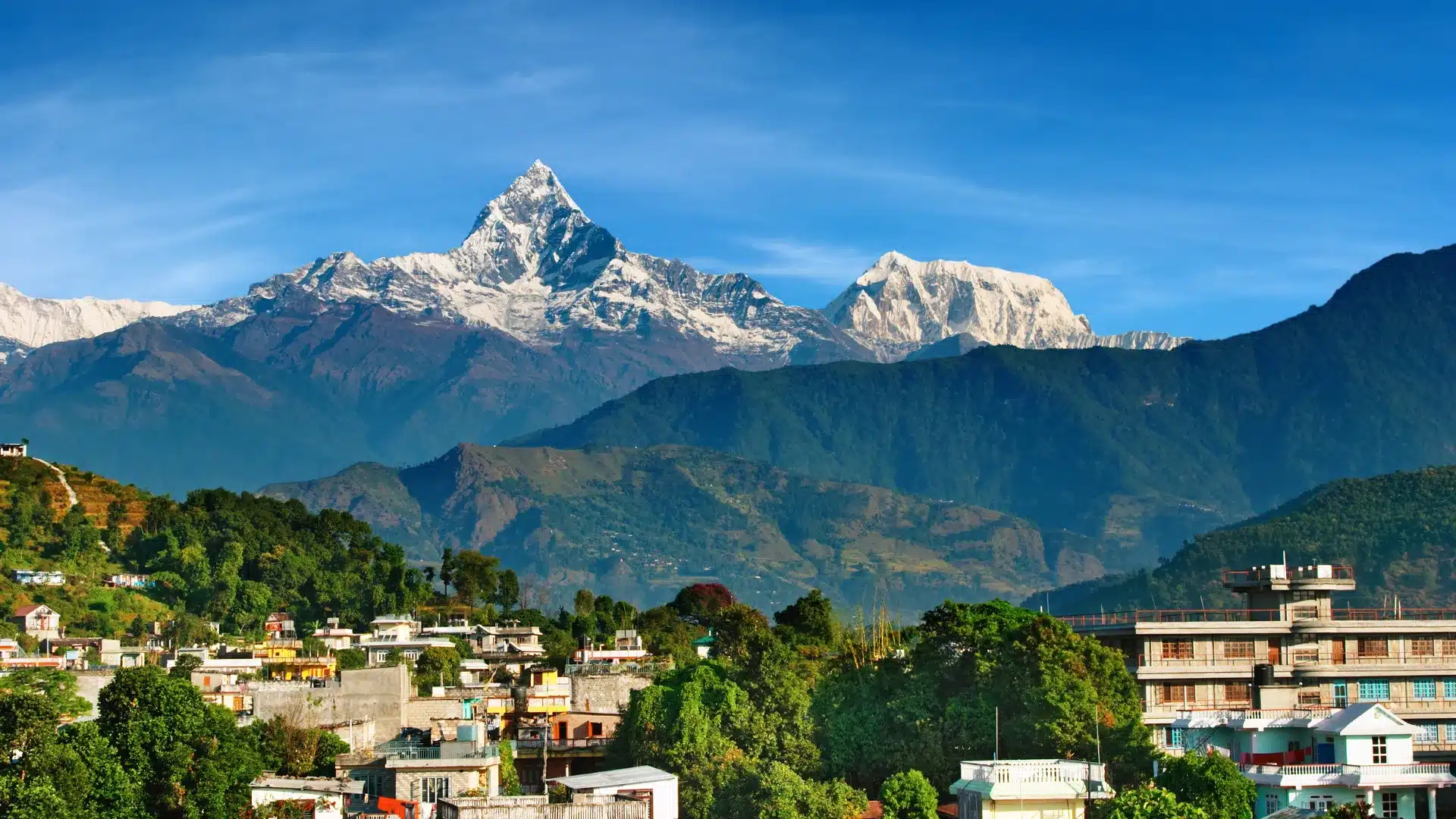
Pokhara filming location — Nepal’s second city at the base of the Annapurna massif, with Phewa Lake in the foreground and the Fishtail Mountain (Machhapuchchhre) viewpoint above. The Lakeside area, the paragliding launch points of Sarangkot, and the Peace Pagoda viewpoint give productions a combination of adventure, landscape and leisure environments. CAAN drone permit required for aerial work in the Pokhara valley.
Himalayas filming location — Everest and Khumbu region — Everest Base Camp approaches from Lukla involve a multi-day trek through the Khumbu valley. Sagarmatha National Park permit required. High-altitude productions require genuine acclimatisation planning — altitude sickness is a serious risk above 3,500 metres. The Tengboche Monastery viewpoint above Namche Bazaar is one of the most visually powerful filming positions in the Himalayas.
Himalayas filming location — Annapurna region — the Annapurna Conservation Area permit (ACAP) and TIMS card are required for trekking routes. The Poon Hill viewpoint is the most accessible Himalayan panorama viewpoint in Nepal. Thorong La Pass and the Mustang plateau require additional restricted area permits.
Chitwan National Park filming — UNESCO World Heritage wildlife reserve in the subtropical Terai lowlands. Home to Bengal tigers, one-horned rhinoceroses, gharial crocodiles and over 500 bird species. National park permit required. Filming within the park requires advance coordination with park authority. Elephant grass, river oxbow lakes and sal forest give productions a jungle wildlife environment unlike anything in the Himalayan or Kathmandu Valley zones.
Bardia National Park — a larger and less visited wildlife reserve in the western Terai with significant tiger and elephant populations. Remote but exceptional for nature documentary.
Mustang (Upper Mustang) — a restricted desert plateau region bordering Tibet, with a Tibetan cultural character unique in Nepal. Restricted area permit from the Ministry of Home Affairs required. Additional trekking and filming permits apply. One of the most visually distinctive and least-filmed environments in South Asia.
Drone Filming Requirements
Drone operations in Nepal are regulated by the Civil Aviation Authority of Nepal (CAAN). Prior approval is required before any drone operation begins.
Required documentation:
- Completed application form
- Script
- Shooting schedule
- Drone specifications and serial number
Drone importation:
- Customs declaration
- Refundable bond
- Confirmation of re-export within thirty days
Issuing authority: Civil Aviation Authority of Nepal (CAAN).
Processing time: Three to five working days.
Productions planning drone work within Sagarmatha National Park (Everest region), Chitwan, Bardia or other national parks and protected areas require national park authority approval in addition to the standard CAAN permit. Drone operations near Kathmandu’s Tribhuvan International Airport, Pokhara Airport and other domestic airports require specific airspace confirmation.
Hoodlum integrates drone planning into the overall permit process so aerial days are protected within the schedule.
Equipment Customs Clearance
Nepal is an ATA Carnet country. Professional filming equipment can be imported under the standard ATA Carnet system.
Required documentation:
- ATA Carnet covering all filming equipment
- Commercial invoice
- Packing list
- Customs declaration form
Estimated cost: USD 50–200 plus a deposit which may be required.
All equipment should be listed with serial numbers and values. Productions bringing drone equipment should note the thirty-day re-export requirement and the refundable bond requirement for drone importation.
Productions routing equipment through multiple entry points — Kathmandu by air, and potentially through overland Indian border crossings — should ensure documentation reflects the actual arrival route for each item.
Safety and Security for Productions
Nepal is generally safe for film productions. The main production risks are environmental and logistical — altitude, weather, terrain, remote access and equipment management — rather than conventional security concerns.
Key safety and risk considerations:
- Altitude acclimatisation is non-negotiable for any location above 3,500 metres — plan acclimatisation days into the schedule and have medical support planning in place
- Domestic flight weather dependency — Lukla and other mountain airstrips are weather-dependent; build substantial contingency for flight delays into schedules
- Mountain weather changes rapidly — outdoor and highland shoot days need contingency
- Monsoon season road and trail access limitations June to September
- Remote area medical access — evacuation planning essential for Khumbu, Mustang, Bardia and remote trekking routes
- Protect equipment from altitude cold, humidity and the physical demands of trekking logistics
- Hire local guides with current trail and weather knowledge for all mountain location days
- Ensure insurance covers high-altitude, remote location and evacuation scenarios
Hoodlum coordinates schedules and protocols with local authorities and arranges security personnel where needed for challenging locations.
Film Incentives and Production Benefits
Nepal does not currently offer a national film rebate or tax incentive programme for international productions. The primary financial advantage is highly competitive production costs — crew rates, trekking logistics, accommodation and location fees are among the most affordable of any high-altitude or Himalayan filming destination globally.
Confirm any available facilitation with the Ministry of Information and Communications and Hoodlum before budgeting.
How the Main Approvals Fit Together
Journalist/Film Visa, Ministry of Information and Communications film permit, crew accreditation, national park permits, restricted area permits, CAAN drone approval, ATA Carnet customs clearance and UNESCO heritage site permissions are all separate processes. None covers the others.
A complete production plan connects:
- Journalist/Film Visa or Tourist Visa with special permission — seven to fourteen working days
- Ministry of Information and Communications general film permit — two to five working days
- Crew accreditation — ten to fourteen working days, running in parallel
- National park permits for Chitwan, Bardia, Sagarmatha, Annapurna Conservation Area
- Restricted area permits for Upper Mustang, Upper Humla or other designated zones
- UNESCO heritage site permissions for Kathmandu Valley sites
- CAAN drone permit — three to five working days, in parallel
- ATA Carnet customs clearance
- Altitude and medical planning for all locations above 3,500 metres
Hoodlum manages all of these as one coordinated pre-production workflow.
When Nepal Is the Right Choice
Nepal is the right choice when a production needs Himalayan mountain environments, ancient South Asian heritage architecture, Buddhist and Hindu religious culture, subtropical wildlife, expedition and adventure settings, and a production base that combines all of those within a compact and cost-effective geography.
It is especially suitable for:
- Himalayan expedition and adventure documentary
- Everest and high-altitude mountaineering productions
- Heritage and cultural documentary — Kathmandu Valley UNESCO sites
- Wildlife and nature productions — Chitwan, snow leopard, red panda
- Travel and exploration programming
- Feature film with South Asian or Himalayan settings
- Commercial campaigns needing mountain, heritage or cultural environments
- Spiritual and wellness content
- Conservation and environmental storytelling
- Reality and competition formats with mountain or cultural challenges
It may be less suitable for productions requiring very large studio infrastructure, heavy urban commercial facility needs or locations requiring complete crowd exclusion at busy UNESCO heritage sites during peak tourist season.
Common Mistakes to Avoid
Avoid:
- Underestimating altitude effects — acclimatisation is genuinely required, not optional
- Leaving restricted area permit applications (Upper Mustang) too late — allow additional lead time
- Assuming Sagarmatha National Park drone work is covered by the general CAAN permit — national park authority approval is required additionally
- Planning Lukla-accessed shoots without substantial domestic flight delay contingency
- Filming at Pashupatinath without understanding specific cremation site filming protocols
- Treating UNESCO heritage site filming as covered by the general Ministry permit
- Arriving with incomplete ATA Carnet documentation
- Ignoring monsoon road and trail access limitations for June to September shoots
- Working in high-altitude remote areas without evacuation planning confirmed
How Hoodlum Supports Local Production
Support may include:
- Local fixer coordination across Kathmandu, Pokhara, Khumbu, Chitwan and all regional locations
- Journalist/Film Visa invitation letters and documentation
- Ministry of Information and Communications film permit coordination
- Crew accreditation management
- UNESCO Kathmandu Valley heritage site permissions
- Sagarmatha National Park and Annapurna Conservation Area permits
- Chitwan and Bardia national park permits
- Restricted area permit coordination for Upper Mustang and other zones
- Location research and RECCE across all Nepal filming environments
- CAAN drone permit coordination
- ATA Carnet customs clearance preparation
- Trekking logistics, porter and guide coordination for mountain locations
- Domestic flight and helicopter logistics
- Accommodation sourcing across Nepal
- Altitude and medical planning and evacuation coordination
- Safety and risk management for remote and high-altitude locations
- On-the-ground production management
FAQ Section
Do international film crews need a visa to film in Nepal? Yes. A Journalist/Film Visa or Tourist Visa with special permission is required. Required documents include passport, visa application, photos, project proposal, equipment list and invitation letter. Processing: seven to fourteen working days. Estimated cost: approximately USD 120.
How long should productions allow for film permits? The general Ministry permit takes two to five working days. Crew accreditation takes ten to fourteen working days and should run in parallel. National park permits, restricted area permits and UNESCO heritage site permissions run as additional parallel streams. Allow three to four weeks minimum before the first filming day for all processes.
Can productions film at Everest Base Camp? Yes, but productions must trek to base camp from Lukla — a multi-day trek through Sagarmatha National Park. A Sagarmatha National Park permit is required. Drone operations within the park require national park authority approval in addition to the CAAN permit. Altitude acclimatisation days must be built into the schedule — altitude sickness above 3,500 metres is a genuine risk requiring medical planning.
Can productions film at Chitwan National Park? Yes. Chitwan is a UNESCO World Heritage Site wildlife reserve in the Terai lowlands. A national park entry and filming permit is required in addition to the general Ministry permit. Filming within the park requires advance coordination with park authority. Wildlife — tigers, one-horned rhinoceroses, gharial crocodiles — cannot be guaranteed for specific schedule days.
Can productions film in Upper Mustang? Yes, but Upper Mustang is a restricted area requiring a specific permit from the Ministry of Home Affairs in addition to the general film permit. The permit costs significantly more than standard permits and has specific conditions. Additional trekking and filming fees apply. Allow additional lead time for restricted area permits.
Can productions use drones in Nepal? Yes. CAAN approval is required before any operation. Processing: three to five working days. Drone importation requires a refundable bond and thirty-day re-export confirmation. National park operations require additional park authority approval beyond the CAAN permit.
Is Nepal a Carnet country? Yes — Nepal is an ATA Carnet country. Customs clearance cost: USD 50–200 plus possible deposit. Drone importation requires a refundable bond and thirty-day re-export requirement additionally.
Authority Links
- Nepal Ministry of Information and Communications
- Civil Aviation Authority of Nepal — CAAN
- Department of National Parks and Wildlife Conservation
- Nepal Tourism Board
- Hoodlum Film Fixers — Contact
Everything You Need to Know About Filming in Nepal
Filming in Nepal rewards productions that understand the layered, multi-authority nature of the permit system and plan all approval streams simultaneously from the outset.
The Ministry of Information and Communications general film permit takes two to five working days — one of the faster permit processes in South Asia. But the permit only covers general filming activity. National parks, UNESCO heritage sites, restricted areas and CAAN drone operations each run as separate independent approval streams with their own authorities and timelines.
A production that receives the Ministry permit and considers all approvals complete has missed the most distinctive and most requested filming environments in Nepal — the Sagarmatha National Park approaches to Everest, the Kathmandu Valley UNESCO sites, Chitwan’s wildlife environments and the Mustang plateau.
Understanding that structure from the outset, and running all parallel processes simultaneously, is what allows Nepal to deliver its extraordinary visual range within a manageable pre-production calendar.
The Nepal film permit — Ministry of Information and Communications process
The Nepal Ministry of Information and Communications filming permit is the foundational production approval. It covers general filming activity across Nepal and is required as a base document for the broader approval framework.
Processing takes two to five working days. Cost: USD 150. Required documentation includes passport, visa, project synopsis, shooting schedule, insurance and proof of payment.
The permit does not cover national parks, UNESCO heritage sites or restricted areas. Those run as additional parallel streams — Sagarmatha National Park, Chitwan, Annapurna Conservation Area, Bhaktapur Durbar Square, Boudhanath and Upper Mustang each have their own managing authority, their own documentation requirements and their own processing timelines.
Hoodlum maps the complete permission picture against the production’s specific location list before any applications are submitted, so the full approval package is planned from the outset.
Filming visa Nepal — Journalist/Film Visa and Tourist Visa with special permission
The filming visa Nepal process offers two routes. The Journalist/Film Visa is the direct route for professional film and television productions. The Tourist Visa with special permission is available for certain production types and shorter stays.
Required documentation for both routes includes passport, visa application, passport-sized photographs, project proposal, equipment list and invitation letter. Processing takes seven to fourteen working days. Estimated cost: approximately USD 120. Hoodlum provides the invitation letter required as part of the application.
Work authorisation for paid professional filming should be confirmed separately from standard tourist entry for each crew member’s nationality. Productions with multiple nationalities should confirm requirements individually rather than assuming uniform treatment.
Kathmandu filming locations — the UNESCO Valley and what access requires
Kathmandu filming locations give productions access to one of the world’s most extraordinary concentrations of heritage architecture — seven UNESCO World Heritage zones within a single valley.
Each UNESCO site requires individual heritage authority or Department of Archaeology permission in addition to the general Ministry film permit. These are completely separate approval processes.
Pashupatinath — the sacred Hindu cremation complex on the Bagmati River — is one of the most requested and most culturally sensitive filming locations in Nepal. Cremation ceremonies take place continuously on the riverside ghats. Filming protocols are strict: certain areas of the complex are restricted to Hindus only, cremation filming requires specific permission and cultural sensitivity throughout, and no production should approach Pashupatinath without confirmed authority permission and a local cultural guide present throughout.
Boudhanath Stupa — the largest Buddhist stupa in South Asia, surrounded by monastery buildings and the daily circumambulation of pilgrims — requires specific stupa management authority permission. Bhaktapur Durbar Square preserves the most intact medieval Newari city in Nepal and requires Department of Archaeology coordination. Patan Durbar Square, Swayambhunath and Changu Narayan each have their own access conditions.
Nepal location scouting across the Kathmandu Valley should always include cultural liaison alongside standard location assessment — getting the visual right and getting the cultural access right are inseparable in this environment.
Himalayas filming location — Everest, Sagarmatha and altitude planning
The Himalayas filming location in the Khumbu region — Everest Base Camp, the Tengboche Monastery viewpoint, the Namche Bazaar market, the Khumbu Icefall approaches — is the most iconic and most logistically demanding production environment in Nepal.
Reaching Everest Base Camp from Lukla is a minimum nine-to-twelve-day round trip trek, depending on acclimatisation. Sagarmatha National Park permit is required. The trekking corridor from Lukla to Base Camp passes through some of the most visually extraordinary environments in the Himalayas — and through altitudes that require genuine physiological adjustment.
Altitude sickness — Acute Mountain Sickness (AMS) — is a serious medical condition that affects crew regardless of fitness level. Acclimatisation days must be built into the schedule as a non-negotiable safety requirement, not as flexible contingency. Productions should have a Wilderness First Responder or equivalent medical support, a clear evacuation plan and helicopter evacuation insurance before any crew travels above 3,500 metres.
Domestic flights into Lukla operate from Kathmandu or Manthali airports. Lukla is one of the world’s most weather-dependent airstrips — flight delays of one to three days are common, and productions should build a minimum of two to three contingency days into the Khumbu schedule.
CAAN drone permit Nepal operations within Sagarmatha National Park require national park authority approval in addition to the general CAAN permit. Do not commit aerial sequences in the Khumbu to the schedule without both confirmations.
Pokhara filming location and the Annapurna region
The Pokhara filming location gives productions access to Nepal’s most scenically accessible Himalayan viewpoint environment. Phewa Lake with the Fishtail Mountain (Machhapuchchhre) reflection, the Sarangkot paragliding and sunrise viewpoint, the Peace Pagoda hillside and the Lakeside tourist district give productions a combination of mountain grandeur and accessible logistics unmatched anywhere in Nepal.
The Annapurna Conservation Area — encompassing the Annapurna Circuit, Poon Hill sunrise viewpoint, the Mustang plateau approaches and the Thorong La Pass — requires the Annapurna Conservation Area Permit (ACAP) and TIMS card for trekking routes. Upper Mustang within the Conservation Area requires a specific restricted area permit from the Ministry of Home Affairs.
CAAN drone permit Nepal applications for Pokhara valley and Annapurna region work should confirm airspace restrictions around Pokhara Regional International Airport.
Chitwan National Park filming — UNESCO wildlife reserve logistics
Chitwan National Park filming gives productions access to UNESCO World Heritage wildlife environments in the subtropical Terai lowlands — Bengal tigers, one-horned rhinoceroses, gharial crocodiles, sloth bears and over 500 bird species within a sal forest and elephant grass landscape.
National park entry and specific filming permits are required from the Department of National Parks and Wildlife Conservation in addition to the general Ministry film permit. Filming within the park requires advance coordination with park authority.
Wildlife cannot be guaranteed for specific schedule days — productions must build flexible schedules that allow for wildlife encounter timing rather than fixed daily shooting targets. This is not a controllable studio environment. It is a functioning UNESCO wildlife reserve where animal behaviour determines access conditions.
Hoodlum coordinates Chitwan National Park filming permits and logistics, including lodge accommodation, elephant grass and jungle access, and guide coordination throughout wildlife filming days.
CAAN drone permit Nepal — national park and altitude considerations
The CAAN drone permit Nepal process requires approval from the Civil Aviation Authority of Nepal. Processing takes three to five working days. Drone importation requires a refundable bond and confirmation of re-export within thirty days.
The CAAN drone permit Nepal covers general operations within Nepal’s regulatory framework. Specific additional approvals are required for operations within national parks — Sagarmatha, Chitwan, Bardia — and near domestic airports including Tribhuvan International Airport in Kathmandu and Pokhara Regional International Airport.
High-altitude drone operations in the Khumbu and Himalayan regions present technical challenges beyond the regulatory requirements. Battery performance degrades significantly at altitude. Wind conditions above 4,000 metres are unpredictable. Productions planning aerial work at Everest Base Camp and in the Khumbu should discuss equipment performance at altitude with Hoodlum’s team before committing aerial sequences to the schedule.
Nepal customs clearance ATA Carnet — what to prepare
Nepal customs clearance benefits from Nepal’s ATA Carnet membership. Standard filming equipment can be imported under the Carnet system. Clearance costs USD 50–200 plus a possible deposit.
Drone importation has specific additional requirements beyond the standard Carnet — a refundable bond must be lodged and re-export within thirty days must be confirmed. Productions that plan to leave drone equipment in Nepal beyond thirty days need specific arrangements made before arrival.
Complete equipment lists with serial numbers and values are required. Productions routing equipment through Indian border crossings as an alternative to Kathmandu air freight should ensure documentation reflects the actual entry route for each item.
Nepal location scouting — planning across altitude and geography
Nepal location scouting requires a fixer with genuine knowledge across multiple geographic zones — the Kathmandu Valley heritage environments, the Pokhara lakeside and Annapurna approaches, the Khumbu high-altitude Everest corridor, the Terai lowland wildlife reserves and the remote restricted area environments of Mustang and Humla.
Each zone has different permit routes, different logistics infrastructure, different altitude and weather considerations and different cultural protocols. Nepal location scouting that covers only Kathmandu and misses the regional diversity fails to serve the production’s actual creative range. Hoodlum’s Nepal location scouting covers the full national geography with genuine regional depth.
What a Nepal film fixer actually does
A Nepal film fixer provides invitation letters for filming visa Nepal applications, coordinates the Ministry of Information and Communications permit, runs crew accreditation in parallel, manages UNESCO Kathmandu Valley heritage site permissions as separate streams for each specific site, coordinates Sagarmatha and Chitwan national park permits, manages restricted area permit applications for Upper Mustang where applicable, runs CAAN drone permit Nepal applications simultaneously.
Prepares ATA Carnet documentation with drone refundable bond arrangements, plans trekking logistics, porter and guide coordination for Khumbu and mountain locations, coordinates domestic flight and helicopter bookings, manages altitude acclimatisation scheduling as a genuine safety requirement, confirms medical evacuation arrangements before any high-altitude travel, and conducts Nepal location scouting across the full national geography.
Film production Nepal works most efficiently when Hoodlum is engaged three to four weeks before the first filming day. That window allows the Ministry permit, crew accreditation, national park permits, heritage site permissions and CAAN drone applications to run in parallel rather than sequentially.
Hoodlum provides full production support for international crews across all Nepal filming locations — from early research and Nepal location scouting through Ministry permit coordination, UNESCO heritage access, Himalayas filming location logistics, Chitwan National Park filming, drone planning, customs clearance and on-the-ground production management across Kathmandu, Pokhara, the Khumbu and all regional environments. For enquiries, visit hoodlum.tv/contact-us.
Nepal in a South Asia film production guide context
For productions building a South Asia film production guide — comparing Nepal with India, Bhutan, Sri Lanka and Bangladesh — Nepal occupies a position of extraordinary visual specificity.
It is the only South Asian country that gives productions simultaneous access to Everest and the world’s highest mountain landscapes, seven UNESCO World Heritage zones within a single valley, UNESCO World Heritage wildlife reserves with tigers and rhinoceroses in the Terai lowlands, and ancient Buddhist and Hindu religious culture of global significance — all within a geography compact enough to move between those environments within a single production schedule.
The Himalayas filming location, Kathmandu filming locations, Pokhara filming location, Chitwan National Park filming, Ayeyarwady River filming equivalent in the Khumbu valley, and the Ngapali Beach filming equivalent in Nepal’s Terai and lakeside environments together give film production Nepal a range that is genuinely comparable to countries three times its size.
The practical groundwork is always the same: run the Ministry permit, crew accreditation, national park permits, UNESCO heritage site permissions and CAAN drone permit Nepal applications simultaneously from the point of engagement, plan genuine altitude acclimatisation for the Himalayas filming location, build domestic flight contingency into all mountain location schedules, confirm medical evacuation before any high-altitude travel, treat Nepal location scouting as a multi-zone exercise covering the full geographic range, and engage Hoodlum’s Nepal film fixer team at the research stage rather than the departure week.