












USA – New York

Hoodlum delivers full physical line producing, location scouting and crew coordination across New York, from the skyline of Manhattan to Brooklyn brownstones and the studios of Queens. Our local fixers structure access to the New York State Film Tax Credit of up to an effective 40%, secure MOME permits through the one-stop film office, navigate the O-1/O-2 work visas that paid crew require, clear professional gear under the ATA Carnet, and coordinate the layered NYPD and FAA drone approvals the city mandates — all managed from our regional operational hub.

Ultimate Filming Guide for USA – New York

Capital

Albany

Main Cities

New York City, Buffalo, Rochester, Yonkers, Syracuse, Albany

Local Languages

English (Spanish widely spoken; over 200 languages spoken across New York City)

Currency

United States Dollar (USD)

Climate

Humid continental with four distinct seasons

General Visa Requirements:

Paid commercial film work in the United States requires a work visa. There is no exemption under the Visa Waiver Program (ESTA) or a B-1/B-2 visitor visa, and no "short shoot" concession. The standard routes are the O-1B for key creatives with demonstrated extraordinary ability in the arts or motion picture and television industry, and the O-2 for essential support crew travelling with and assisting a specific O-1 holder. P-2 and P-3 visas apply to artists under reciprocal exchange or culturally unique programmes. Foreign media crews working on news, documentary or informational content funded from outside the United States may use the I (representative of foreign media) visa, which cannot be used for commercial, advertising or entertainment work. All O and P petitions must be filed by a US petitioner — a US production company, employer or agent — as self-petitioning is not permitted. ESTA or B-1 entry remains appropriate for unpaid recces, location scouting, casting sessions, production meetings and contract negotiation only, where no productive work is performed and no US-source payment is received.

Required Documents:

Valid passport; DS-160 confirmation page and photograph meeting US specification; Form I-797 approval notice for the O or P petition; copy of the filed Form I-129 petition and supporting evidence; written consultation or advisory letter from the relevant US union or guild (IATSE, SAG-AFTRA, DGA or AFM depending on the role); signed contracts, deal memos or a detailed itinerary covering the full period of the engagement; evidence of extraordinary ability for O-1B applicants (credits, awards, published material, letters from industry figures, evidence of high remuneration); for O-2, evidence of a long-standing working relationship with the O-1 holder and of critical skills that cannot be readily replaced. For the I visa: a letter on the employer's letterhead confirming the applicant's name, role, purpose and length of stay, plus press credentials and evidence of the media organisation's foreign ownership and audience.

Visa Application Process:

The US petitioner files Form I-129 with USCIS, accompanied by the union or guild advisory letter, itinerary, contracts and evidence package, with the Asylum Program Fee and optional Form I-907 premium processing request. USCIS issues a Form I-797 approval notice. The beneficiary then completes the DS-160 online, pays the visa application fee, and books a visa interview at a US embassy or consulate. Biometrics and the interview are completed at post, after which the visa is printed and returned. Admission is granted by US Customs and Border Protection at the port of entry, which determines the actual period of stay. I visa applicants apply directly at post without a USCIS petition. Appointment availability varies significantly by post, so the interview slot should be secured as soon as the petition is filed.

Processing Time:

Standard USCIS adjudication of an O or P petition typically runs two to five months depending on the service centre and case complexity. Premium processing requires USCIS to take action within 15 business days, which in practice is closer to three calendar weeks. Consular interview waiting times vary widely by country, from a few days to several months, with a further one to two weeks for visa printing and return. Requests for Evidence add four to twelve weeks. Productions should allow three to six months from engaging counsel to the crew member holding the visa, and should not schedule travel until the visa is physically issued.

Cost:

Form I-129 petition fee: $1,055, reduced to $530 for small employers of 25 or fewer full-time staff and non-profits. Asylum Program Fee: $600 for employers with 26 or more full-time employees, $300 for small employers and nil for non-profits. Optional premium processing: $2,965, effective 1 March 2026. DS-160 visa application fee: $205 per applicant, plus a $250 visa integrity fee payable at issuance. Reciprocity and courier fees vary by nationality. Union or guild consultation letters carry administrative fees. Immigration counsel typically ranges from $5,000 to $15,000 per petition depending on complexity. All figures should be confirmed against the USCIS fee schedule and the relevant embassy at the time of filing.

Accreditation Requirements:

There is no national accreditation scheme for commercial film crews in the United States; the correct work visa and the relevant filming permits are the operative permissions. Accreditation applies to news and documentary crews. Three routes are relevant in New York. The City of New York Press Card is issued by the Press Credentials Office of the Mayor's Office of Media and Entertainment — responsibility for press credentials transferred from the NYPD to MOME under Local Law 46 of 2021 — and provides access behind police and fire lines and to City press events. The US Department of State operates a Foreign Press Center in New York issuing media credentials to foreign correspondents. Filming at United Nations Headquarters requires separate UN Media Accreditation. Single Event Press Cards are issued for specific events such as the Times Square New Year's Eve celebration, for which MOME-issued credentials are now the only accepted press access.

Required Documents:

City of New York Press Card: online application through the MOME PCO portal, with six or more articles, commentaries, books, photographs, videos, films or audio pieces published or broadcast in the preceding 24 months, sufficient to show the applicant covered six or more events in person on separate days, plus proof of employment by or affiliation with a media platform or membership of a journalism association, government-issued photo identification and a passport photograph. Foreign Press Center credential: application submitted by email with passport and visa copies, a short professional biography, and for freelancers a dated letter on the letterhead of a media organisation confirming regular placement of work, with evidence that the majority of material is placed with media whose primary audience is outside the United States. UN accreditation: assignment letter from the news organisation, passport and photograph

Processing Time:

City of New York Press Cards are generally issued within a few weeks of a complete application, with published cut-off dates for single-event credentials. Foreign Press Center credentials are typically processed within five to ten business days by email; walk-in applications are not accepted. UN accreditation should be lodged several weeks ahead. Apply four to six weeks before the shoot.

Cost:

No application fee applies to the City of New York Press Card, the Department of State Foreign Press Center credential, or UN Media Accreditation. Costs are limited to document preparation and courier where physical collection is not possible.

Issuing Organization:

Within the five boroughs, permits are issued by the Mayor's Office of Media and Entertainment (MOME), Office of Film, Theatre & Broadcasting, operating as a genuine one-stop office covering Manhattan, Brooklyn, Queens, the Bronx and Staten Island. Applications are made online through the MOME permit portal. The permit provides free access to most exterior locations, free NYPD assistance and free parking privileges. Elsewhere in New York State, permitting runs through county and municipal film offices, with the Governor's Office of Motion Picture & Television Development providing statewide coordination, and the Office of Parks, Recreation and Historic Preservation handling State Park locations. Separate authorities govern NYC Parks, MTA property, DCAS city buildings, Port Authority sites and National Park Service locations.

Required Documents:

An online project account and a separate permit application for each shooting day, submitted under the same project; a Certificate of Insurance evidencing at least $1,000,000 general liability naming the City of New York as additional insured, with some locations requiring higher limits; New York State workers' compensation and disability cover for all cast and crew; a detailed scene description with equipment, vehicles, generators, crew size and shooting times; each location entered separately in shooting order, with shooting times between locations not overlapping by more than two hours; a US-based production entity or local production services partner to hold the permit; community notification flyers for street work; and any site-specific approvals for parks, MTA, DCAS, Port Authority or landmarked property.

Processing Time:

Permits must be submitted at least two business days before the shoot date. The Film Office generally reviews and processes requests 48 to 72 hours before the shoot day, and Times Square requests must be lodged seven business days in advance. Complex permits involving street closures or NYPD coordination require roughly 10 to 15 business days, and MTA or subway filming requires two to four weeks with separate MTA approval. Two to three weeks is the practical working lead time, allowing for insurance certificates and any conditions attached to the permit

Cost:

The permit itself carries no charge, as do NYPD assistance, parking privileges and most exterior locations. A project application fee of $500 applies for each period of 14 consecutive calendar days of permitted activity, in force since 1 January 2024. Additional costs arise from location fees at city-owned buildings, NYC Parks and MTA property, a $250 non-refundable filing fee for Port Authority property with at least 30 days' notice, paid NYPD or FDNY details, insurance premiums, and negotiated private location fees. Student productions are exempt from the application fee.

Location Scouting / Location Permits Information:

Scouting and recces on public streets do not require a permit where activity is limited to handheld stills or video with no equipment set-up, no exclusive use of city property and no vehicles. A permit — or in low-impact cases a free letter in lieu of permit — becomes necessary as soon as tripods, lighting, generators, dollies, prop weapons, stunts, effects, production vehicles or exclusive use of sidewalk, street or parking are involved. Private property requires a signed location release agreement from the owner alongside the MOME permit, with the owner named as additional insured. Beyond the core permit, distinct processes apply to NYC Parks (film shoot request through the Parks Department), independently governed waterfront parks such as Brooklyn Bridge Park and Hudson River Park, MTA subway stations and rolling stock, DCAS-managed city buildings including borough halls and courts, NYCHA housing developments, Port Authority sites including the airports and bus terminal, landmarked properties, New York State Parks through OPRHP, and National Park Service sites such as the Statue of Liberty, Ellis Island and Federal Hall. Each carries its own application, lead time and fee schedule, and none is covered by the MOME permit alone.

Location Scouting / Permitting Cost & Processing Time

Here's the full 22-field fact sheet for New York, researched against MOME, ESD, NYPD, FAA and USCIS sources as at July 2026.

Two things worth flagging before the copy: your live page states an $800M annual cap on the main film credit — ESD's own page (updated 15 May 2026) says the film production tax credit is funded at $700 million a year through 2036, with the $100M independent film credit sitting separately. The $800M figure looks like the two programmes added together. Second, the main credit specifically excludes documentaries, news/current affairs, talk and interview programmes, reality programming, commercials and music videos — worth knowing given the production types the page lists, though the separate commercial credit covers ads. ny


TAB 1 — CREW VISA REQUIREMENTS

General Visa Requirements:
Paid commercial film work in the United States requires a work visa. There is no exemption under the Visa Waiver Program (ESTA) or a B-1/B-2 visitor visa, and no "short shoot" concession. The standard routes are the O-1B for key creatives with demonstrated extraordinary ability in the arts or motion picture and television industry, and the O-2 for essential support crew travelling with and assisting a specific O-1 holder. P-2 and P-3 visas apply to artists under reciprocal exchange or culturally unique programmes. Foreign media crews working on news, documentary or informational content funded from outside the United States may use the I (representative of foreign media) visa, which cannot be used for commercial, advertising or entertainment work. All O and P petitions must be filed by a US petitioner — a US production company, employer or agent — as self-petitioning is not permitted. ESTA or B-1 entry remains appropriate for unpaid recces, location scouting, casting sessions, production meetings and contract negotiation only, where no productive work is performed and no US-source payment is received.

Required Documents:
Valid passport; DS-160 confirmation page and photograph meeting US specification; Form I-797 approval notice for the O or P petition; copy of the filed Form I-129 petition and supporting evidence; written consultation or advisory letter from the relevant US union or guild (IATSE, SAG-AFTRA, DGA or AFM depending on the role); signed contracts, deal memos or a detailed itinerary covering the full period of the engagement; evidence of extraordinary ability for O-1B applicants (credits, awards, published material, letters from industry figures, evidence of high remuneration); for O-2, evidence of a long-standing working relationship with the O-1 holder and of critical skills that cannot be readily replaced. For the I visa: a letter on the employer's letterhead confirming the applicant's name, role, purpose and length of stay, plus press credentials and evidence of the media organisation's foreign ownership and audience.

Visa Application Process:
The US petitioner files Form I-129 with USCIS, accompanied by the union or guild advisory letter, itinerary, contracts and evidence package, with the Asylum Program Fee and optional Form I-907 premium processing request. USCIS issues a Form I-797 approval notice. The beneficiary then completes the DS-160 online, pays the visa application fee, and books a visa interview at a US embassy or consulate. Biometrics and the interview are completed at post, after which the visa is printed and returned. Admission is granted by US Customs and Border Protection at the port of entry, which determines the actual period of stay. I visa applicants apply directly at post without a USCIS petition. Appointment availability varies significantly by post, so the interview slot should be secured as soon as the petition is filed.

Processing Time:
Standard USCIS adjudication of an O or P petition typically runs two to five months depending on the service centre and case complexity. Premium processing requires USCIS to take action within 15 business days, which in practice is closer to three calendar weeks. Consular interview waiting times vary widely by country, from a few days to several months, with a further one to two weeks for visa printing and return. Requests for Evidence add four to twelve weeks. Productions should allow three to six months from engaging counsel to the crew member holding the visa, and should not schedule travel until the visa is physically issued. Beyondborderglobal

Cost:
Form I-129 petition fee: $1,055, reduced to $530 for small employers of 25 or fewer full-time staff and non-profits. Asylum Program Fee: $600 for employers with 26 or more full-time employees, $300 for small employers and nil for non-profits. Optional premium processing: $2,965, effective 1 March 2026. DS-160 visa application fee: $205 per applicant, plus a $250 visa integrity fee payable at issuance. Reciprocity and courier fees vary by nationality. Union or guild consultation letters carry administrative fees. Immigration counsel typically ranges from $5,000 to $15,000 per petition depending on complexity. All figures should be confirmed against the USCIS fee schedule and the relevant embassy at the time of filing. Immi-USA + 3


TAB 2 — INTERNATIONAL CREW ACCREDITATION

Accreditation Requirements:
There is no national accreditation scheme for commercial film crews in the United States; the correct work visa and the relevant filming permits are the operative permissions. Accreditation applies to news and documentary crews. Three routes are relevant in New York. The City of New York Press Card is issued by the Press Credentials Office of the Mayor's Office of Media and Entertainment — responsibility for press credentials transferred from the NYPD to MOME under Local Law 46 of 2021 — and provides access behind police and fire lines and to City press events. The US Department of State operates a Foreign Press Center in New York issuing media credentials to foreign correspondents. Filming at United Nations Headquarters requires separate UN Media Accreditation. Single Event Press Cards are issued for specific events such as the Times Square New Year's Eve celebration, for which MOME-issued credentials are now the only accepted press access. City of New York

Required Documents:
City of New York Press Card: online application through the MOME PCO portal, with six or more articles, commentaries, books, photographs, videos, films or audio pieces published or broadcast in the preceding 24 months, sufficient to show the applicant covered six or more events in person on separate days, plus proof of employment by or affiliation with a media platform or membership of a journalism association, government-issued photo identification and a passport photograph. Foreign Press Center credential: application submitted by email with passport and visa copies, a short professional biography, and for freelancers a dated letter on the letterhead of a media organisation confirming regular placement of work, with evidence that the majority of material is placed with media whose primary audience is outside the United States. UN accreditation: assignment letter from the news organisation, passport and photograph. nycU.S. Department of State

Processing Time:
City of New York Press Cards are generally issued within a few weeks of a complete application, with published cut-off dates for single-event credentials. Foreign Press Center credentials are typically processed within five to ten business days by email; walk-in applications are not accepted. UN accreditation should be lodged several weeks ahead. Apply four to six weeks before the shoot.

Cost:
No application fee applies to the City of New York Press Card, the Department of State Foreign Press Center credential, or UN Media Accreditation. Costs are limited to document preparation and courier where physical collection is not possible.


TAB 3 — FILMING PERMITS

Issuing Organization:
Within the five boroughs, permits are issued by the Mayor's Office of Media and Entertainment (MOME), Office of Film, Theatre & Broadcasting, operating as a genuine one-stop office covering Manhattan, Brooklyn, Queens, the Bronx and Staten Island. Applications are made online through the MOME permit portal. The permit provides free access to most exterior locations, free NYPD assistance and free parking privileges. Elsewhere in New York State, permitting runs through county and municipal film offices, with the Governor's Office of Motion Picture & Television Development providing statewide coordination, and the Office of Parks, Recreation and Historic Preservation handling State Park locations. Separate authorities govern NYC Parks, MTA property, DCAS city buildings, Port Authority sites and National Park Service locations.

Required Documents:
An online project account and a separate permit application for each shooting day, submitted under the same project; a Certificate of Insurance evidencing at least $1,000,000 general liability naming the City of New York as additional insured, with some locations requiring higher limits; New York State workers' compensation and disability cover for all cast and crew; a detailed scene description with equipment, vehicles, generators, crew size and shooting times; each location entered separately in shooting order, with shooting times between locations not overlapping by more than two hours; a US-based production entity or local production services partner to hold the permit; community notification flyers for street work; and any site-specific approvals for parks, MTA, DCAS, Port Authority or landmarked property.

Processing Time:
Permits must be submitted at least two business days before the shoot date. The Film Office generally reviews and processes requests 48 to 72 hours before the shoot day, and Times Square requests must be lodged seven business days in advance. Complex permits involving street closures or NYPD coordination require roughly 10 to 15 business days, and MTA or subway filming requires two to four weeks with separate MTA approval. Two to three weeks is the practical working lead time, allowing for insurance certificates and any conditions attached to the permit. nyc37th Degree

Cost:
The permit itself carries no charge, as do NYPD assistance, parking privileges and most exterior locations. A project application fee of $500 applies for each period of 14 consecutive calendar days of permitted activity, in force since 1 January 2024. Additional costs arise from location fees at city-owned buildings, NYC Parks and MTA property, a $250 non-refundable filing fee for Port Authority property with at least 30 days' notice, paid NYPD or FDNY details, insurance premiums, and negotiated private location fees. Student productions are exempt from the application fee. Giggster


TAB 4 — LOCATION PERMITS / SCOUTING

Location Scouting / Location Permits Information:
Scouting and recces on public streets do not require a permit where activity is limited to handheld stills or video with no equipment set-up, no exclusive use of city property and no vehicles. A permit — or in low-impact cases a free letter in lieu of permit — becomes necessary as soon as tripods, lighting, generators, dollies, prop weapons, stunts, effects, production vehicles or exclusive use of sidewalk, street or parking are involved. Private property requires a signed location release agreement from the owner alongside the MOME permit, with the owner named as additional insured. Beyond the core permit, distinct processes apply to NYC Parks (film shoot request through the Parks Department), independently governed waterfront parks such as Brooklyn Bridge Park and Hudson River Park, MTA subway stations and rolling stock, DCAS-managed city buildings including borough halls and courts, NYCHA housing developments, Port Authority sites including the airports and bus terminal, landmarked properties, New York State Parks through OPRHP, and National Park Service sites such as the Statue of Liberty, Ellis Island and Federal Hall. Each carries its own application, lead time and fee schedule, and none is covered by the MOME permit alone.

Location Scouting / Permitting Cost & Processing Time:
MOME: $500 project application fee per 14-day period, permit free, two business days standard and seven business days for Times Square. NYC Parks: fees scale with park, crew size, equipment and duration, commonly from a few hundred dollars per day for small units and rising substantially for major parks or large footprints, with roughly one to two weeks' lead time. DCAS buildings such as the Manhattan and Brooklyn Municipal Buildings, borough halls and courts attract location fees in the region of $3,200 per day on top of the application fee. MTA filming is separately quoted and needs two to four weeks. Port Authority property requires application at least 30 days ahead with a $250 filing fee, plus location and personnel charges. National Park Service sites require applications roughly 30 days ahead with cost-recovery and location fees. Private location fees in New York City are negotiated and commonly run into several thousand dollars per day for desirable interiors. All fees are confirmed once locations, dates and crew size are locked.

Drone Regulations:

Commercial drone operation is governed federally by FAA Part 107. The remote pilot in command must hold an FAA-issued Remote Pilot Certificate with small UAS rating; the FAA does not recognise foreign remote pilot certificates or their equivalents, though a non-US citizen may operate under the direct supervision of a certificated US remote pilot who can take immediate control. Aircraft over 250 grams must be registered and Remote ID compliant. Effectively all of New York City sits within Class B airspace serving JFK, LaGuardia and Newark, so FAA airspace authorisation is required in addition to any local permission, and large parts of Manhattan and the areas around the airports are not workable in practice. Under NYC Administrative Code § 10-126(c) it is unlawful to take off or land an aircraft, including a drone, anywhere in the five boroughs except at designated locations, and since July 2023 a formal NYPD permitting system operates under 38 RCNY Chapter 24. Launching or landing from any NYC park is separately prohibited under 1 RCNY § 1-05(g), and a violation of § 10-126(b) is a misdemeanour carrying a fine of up to $1,000 and possible imprisonment of up to one year. New York State Parks require a written OPRHP permit, and over one million acres of Adirondack and Catskill wilderness are entirely closed to drones.

Drone Importation Regulations:

Drones travel as production equipment and should be listed on the ATA Carnet or Temporary Importation Bond with make, model and serial number; lithium batteries must move as carry-on under IATA and TSA rules. Where the drone is registered in the operator's home country, a foreign aircraft permit from the US Department of Transportation under 14 CFR Part 375 is required for commercial operation, applied for at least 15 days before the proposed start date and in practice often taking around 30 days, together with a Notice of Identification filed through FAADroneZone. Where the drone is not registered outside the United States, the operator registers through FAADroneZone and receives a document recognising ownership rather than a US certificate of registration. A significant recent change affects hardware choice: in December 2025 the FCC added all uncrewed aircraft systems and UAS critical components produced in a foreign country to its Covered List, barring such equipment from obtaining new FCC equipment authorisations. Models already authorised before that date are unaffected for import, sale and use, and existing aircraft remain legal to fly. The position remains under challenge and exemptions have been issued, so current status should be confirmed before shipping. In most cases the efficient route is to engage a licensed local operator with compliant, FCC-authorised equipment.

Permit Issuance:

NYPD Unmanned Aircraft take-off and landing permits are issued by the NYPD in partnership with the NYC Department of Transportation through the NYPD Online Services portal at nyc.gov/dronepermits. FAA airspace authorisation is obtained through LAANC or FAA DroneZone. The Department of Transportation issues the Part 375 foreign aircraft permit on OST Form 4509. NYC Parks and OPRHP issue their own permissions for park land. The MOME film permit must separately cover the shoot, and drone activity must be declared on it.

Timing:

NYPD applications must be submitted 30 days in advance of the earliest proposed take-off or landing, except in limited circumstances. The Part 375 foreign aircraft permit requires a minimum of 15 days and commonly takes around 30. FAA airspace authorisation ranges from near-instant through LAANC in eligible grids to up to 90 days where further coordination is needed. Part 107 certification requires scheduling and passing the knowledge test at an approved US testing centre. Allow 45 to 60 days end to end for a first-time international operation, and expect the NYPD application rather than the fee to be the bottleneck.

Cost:

NYPD drone permit: $150 non-refundable application fee. FAA Part 107 knowledge test: approximately $175 at a PSI testing centre; FAA drone registration or recognition of ownership: $5. Commercial general liability insurance naming the City of New York as additional insured, at limits materially higher than most jurisdictions require. Part 375 application carries no substantial filing fee but usually requires counsel. Licensed local operator day rates vary with aircraft, crew and location complexity.

Carnet Status:

The United States is a full ATA Carnet country, and the carnet is the recommended method for international productions bringing professional filming equipment into New York. The carnet operates as a single international customs document permitting temporary duty-free and tax-free importation, valid for up to twelve months with unlimited entries and exits during that period, and serves as the official record of the goods on re-entry to the country of origin. Productions travelling from countries outside the ATA system instead use a Temporary Importation under Bond entry prepared by a licensed US customs broker. Equipment may also be entered as a permanent import with duty and tax paid, though this is rarely economic for a shoot.

Required Documents:

The ATA Carnet with a complete General List showing make, model, serial number, country of origin and value for every item; the carnet must be presented and stamped by US Customs and Border Protection on both entry and exit, and by customs on departure from and return to the country of origin. Supporting documents include passports and the visa or ESTA of the person carrying the goods, a letter of authorisation where a freight agent or crew member other than the carnet holder presents it, a packing list matching the carnet exactly, and the air waybill. Items cannot be added once the carnet is issued. For a TIB entry: commercial invoice, detailed equipment list, customs bond and the broker's power of attorney. Radio-transmitting equipment and drones carry the additional considerations noted above.

Issuing Organization:

Carnets are issued in the country of departure by the national guaranteeing association, normally the national chamber of commerce or its authorised issuers. In the United States the guaranteeing association is the United States Council for International Business, working through authorised issuers. Clearance in New York is handled by US Customs and Border Protection at the port of entry — principally JFK, Newark Liberty and the Port of New York/Newark for sea freight. TIB entries are lodged by a licensed US customs broker on the production's behalf.

Timing:

Carnet issuance typically takes one to five business days in most countries, with same-day expedited service available at a premium. Clearance at JFK or Newark usually takes one to three hours where the paperwork is complete, CBP staffing is available and the goods match the list exactly, though inspection of high-value or unusual items can extend this. TIB preparation takes three to ten business days. Arrival should be scheduled within CBP business hours where possible, with the broker or fixer pre-notified and on hand.

Cost:

Carnet fees are set by the issuing association in the country of departure and generally comprise a processing fee scaled to the declared value of the goods, plus security in the form of a cash deposit, bond or carnet insurance, commonly around 40% of the total value. No US duty or tax is payable where the carnet is properly discharged and the goods are re-exported within the validity period; failure to re-export triggers duty, tax and penalties. TIB entries carry broker fees and bond premiums. Freight, handling, storage and any inspection charges are additional.

General Overview:

Productions must comply with US federal workplace safety standards under OSHA together with New York State and New York City requirements, and the production company carries responsibility for on-set safety. A written risk assessment circulated to and acknowledged by all crew, a designated safety supervisor, a documented safety meeting before principal photography and a clear medical and emergency plan are expected as standard. A first aid kit on set is required, and an on-set medic is strongly recommended for stunts, water, heights, night exteriors, large crowds or extreme weather. The Industry Safety Bulletins published by Contract Services are the accepted reference standard on union productions and will be expected by IATSE and SAG-AFTRA crews. Workers' compensation is mandatory under New York State law for all cast and crew, alongside state disability and paid family leave contributions, and the resulting payroll burden is among the highest in the United States and a material budget line. Medical infrastructure is world-class, the emergency number is 911, and no vaccinations are required for entry — but US healthcare is extremely expensive and comprehensive production medical and travel insurance is essential for every visiting crew member. Weather planning matters: summers are hot and humid with heat-illness risk on exteriors, winters cold and snowy with cold-weather protocols and shorter daylight, and the Atlantic hurricane season runs June to November.

Security Requirements:

New York City is among the safest large cities in the United States and standard urban precautions are sufficient for most productions. The NYPD Movie and Television Unit coordinates police assistance, which is provided free of charge for traffic control, crowd management, intermittent traffic control and street closures arranged through the film permit, with paid details required for certain locations and activities. Prop weapons, blank-firing weapons and any firearm use require NYPD permits, a licensed armourer, precinct notification and explicit declaration on the film permit; unannounced weapon use on a New York street will draw an armed response. Pyrotechnics, open flame and special effects require FDNY permits, a Certificate of Fitness holder and a fire safety officer on site. Stunts, cranes, rigging, aerial work and drone operations require additional NYPD and DOT coordination. Community notification flyers must be distributed to residents and businesses ahead of street work. Overnight security for equipment and secure parking for production and camera vehicles is recommended, and high-value gear should never be left unattended in vehicles.

Rebates/Incentives:

The headline programme is the New York State Film Tax Credit (Production), administered by Empire State Development, offering a fully refundable credit of 30% of qualified production expenses, funded at $700 million per year through 2036, of which up to $45 million may be directed to post-production. Minimum budget is $1 million where the majority of principal photography days fall in the five boroughs or Westchester, Rockland, Nassau or Suffolk counties, and $250,000 elsewhere in the state. Stackable uplifts take the effective rate materially higher: an additional 10% on qualified labour expenses for productions with a budget above $500,000 shooting in more than 50 designated upstate counties, an additional 10% on music scoring costs where a minimum of five musicians are paid, and Production Plus of 5 to 10% for companies submitting multiple applications — 10% for film production companies reaching $100 million in qualified costs across at least two applications, and 5% for independent companies reaching $20 million, rising to 10% at the $100 million threshold. Relocated television series may claim qualified relocation costs up to $6 million in their first New York season. Qualified production facility rules apply: productions with budgets above $15 million or majority-owned by a publicly traded company must shoot at least 10% of principal photography days at a Level 2 QPF in New York City or any QPF outside the city, while smaller productions must shoot at least one day at any QPF. The 2025–26 state budget removed the tiered payout so that applicants receive 100% of the credit in the same tax year, and removed the $500,000 per-person cap on above-the-line compensation, though above-the-line salaries remain limited to 40% of all other qualified costs.

Eligibility is restricted to feature films, television series, relocated series, pilots and films for television. Documentaries, news and current affairs, interview and talk programmes, instructional and industrial films, game shows, award ceremonies, daytime drama, commercials, music videos, reality programming and variety formats are expressly excluded.

Separate programmes cover the excluded categories and other activity. The Empire State Independent Film Production Credit adds $100 million annually at 30% for qualified independent film production companies, operating on defined application windows rather than continuously. The Post-Production Credit offers 30% on qualified post costs, rising to 35% for post-production incurred upstate outside the Metropolitan Commuter Transportation District, for productions shooting substantially outside New York. The Empire State Commercial Production Tax Credit allocates up to $7 million a year, split into a $4 million downstate component at 20% and a $3 million upstate component at 30%, with applications due by 1 April and pro-rata allocation across applicants. The NYC Musical and Theatrical Production Credit and the Digital Gaming Media Production Credit sit alongside these.

Applications for the film credit must be submitted before the start of principal and ongoing photography, and ESD strongly recommends filing at least 10 business days beforehand. A diversity plan has been mandatory for all applicants since 1 January 2023, and final applications may optionally be reviewed by pre-qualified CPA firms to expedite approval. Productions should confirm current fund availability before committing, as allocations can be reached during the year. New York City itself offers no cash rebate, but free permits, free police assistance, free parking privileges and the "Made in NY" marketing credit represent meaningful value.

Meet our Local Team

New York

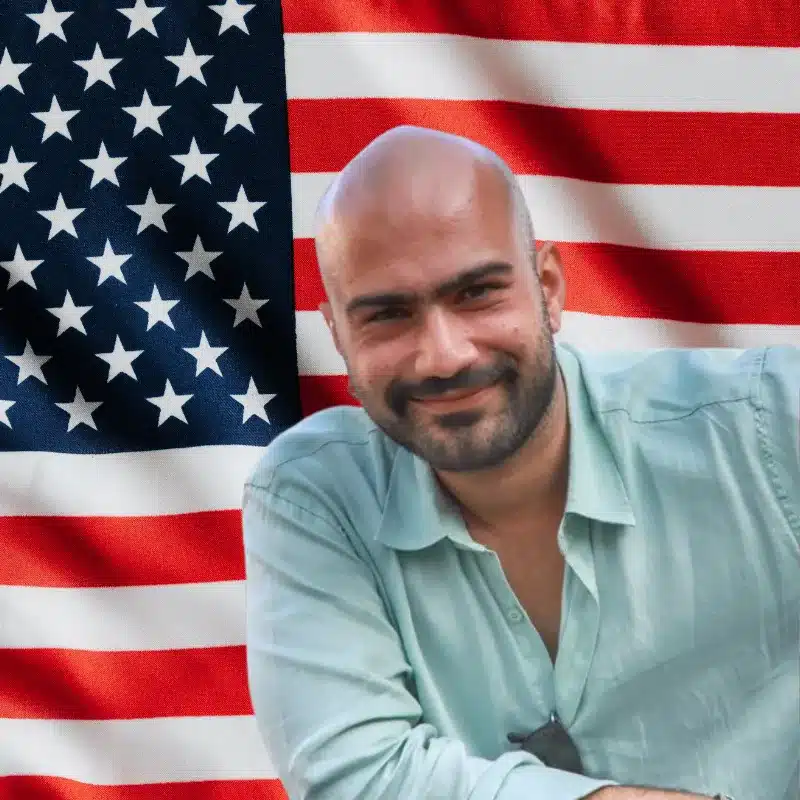
Mattia

Mattia is an experienced Italian production professional working across film, television and commercial projects. Skilled in production coordination, logistics and art department support, he brings practical expertise, strong local knowledge and a reliable network to international shoots.

Mattia

Mattia is an experienced Italian production professional working across film, television and commercial projects. Skilled in production coordination, logistics and art department support, he brings practical expertise, strong local knowledge and a reliable network to international shoots.

Client Brief

Fill in our client brief and we’ll get back to you with everything you need to start filming in this region.

Services We Provide in USA – New York

Accommodation

Airport Protocol & On-Ground Support

Casting & Talent

Catering

Crew Sourcing

Customs Clearance

Drone & Aerial Permits

Drone & Drone Operator

Equipment Rentals

Film Permits

Line Producers & Production Management

Local Film Fixers

Locations / RECCE’s

Logistics

Rebates & Incentives

Research

Risk Management

Security

Set Dressing / Production Design

Transport & Vehicles

Visas & Work Permits

Film Production Services in New York

New York is one of the world’s greatest and most iconic filming destinations, a city and state whose skylines, streets, landmarks and landscapes are woven into the fabric of global cinema and television. From the skyscrapers of Manhattan, the brownstones of Brooklyn and the bridges, subways and yellow cabs that define the city on screen, to the studios of Queens, the countryside and mountains upstate and the waterfronts of all five boroughs, New York offers instantly recognisable locations, the deepest crew and studio base on the East Coast, and one of the most competitive film incentives in the United States.

It is a place where almost any story can be told, backed by world-class infrastructure and a fully refundable tax credit of up to 40%.

For international crews, New York offers a rare combination of globally iconic locations, an unmatched union crew base, extensive soundstages, a genuine one-stop permit office and a generous, recently enhanced tax credit, balanced against a permitting, visa and customs framework that rewards careful, early preparation. It is one of the few places where a production can shoot world-famous streetscapes, interiors, studios and upstate landscapes within a single well-supported schedule, provided the work visas, permits, customs and insurance are handled correctly and in good time.

Hoodlum provides Film Production Services in New York for commercials, documentaries, factual and reality television, branded content, music videos, fashion and lifestyle campaigns, feature films and television productions. Our team supports work-visa guidance, MOME filming permits, location agreements, drone coordination, carnet and customs clearance, local crew sourcing, studio coordination, transport, accommodation, safety and insurance planning, tax-credit support and full on-ground production management. You can see the full scope of what we do and the people behind it on our who we are page.

The state rewards productions that arrive with their paperwork in order. It is a superbly organised, film-friendly city with a genuine one-stop permit office, but it is not a destination for informal commercial shooting without approvals, and work visas, permits, customs and drones all run through specific authorities with real lead times. The right visa route, the right permits, the right customs plan and the right tax-credit registration all need to be settled before the cameras roll, and the most efficient way to handle that is through an experienced local production partner.

Why New York Works for Iconic Locations, Crews and Incentives

The state’s biggest production strength is the combination of globally iconic locations, the deepest East Coast crew and studio base, a one-stop permitting office and a market-leading, fully refundable tax credit. In a single schedule a production can capture world-famous streetscapes, interiors, soundstages and upstate landscapes, supported by professional union crews, extensive studios and a permit office that provides police assistance, parking and most exterior locations at no charge. Add a 30% refundable credit that stacks to an effective 40%, and it becomes a remarkably powerful and well-supported place to work.

The city is the operational hub, but the value sits in the variety, the infrastructure and the incentive. A commercial might pair a Manhattan streetscape with a Brooklyn interior. A series might combine soundstages in Queens with location work across the boroughs. A feature might use the city and the countryside upstate. The state is strong because it delivers blockbuster-proven locations, an unrivalled crew base, deep studio capacity and a generous incentive, in one professional and iconic package.

The state is especially well suited to:

  • Feature films and television drama
  • Commercials and branded content
  • Streaming and episodic series
  • Documentary and factual television
  • Music videos and fashion campaigns
  • Reality and lifestyle programming
  • Post-production and VFX work
  • Productions seeking a strong refundable tax credit

Hoodlum’s production support team helps crews decide which locations are practical, what permissions each one needs and how to sequence an efficient schedule across the city and state.

Manhattan and the Iconic City

Manhattan is the most globally recognisable location on earth for filming, offering the skyscrapers of Midtown and the Financial District, Times Square, Central Park, the bridges, the yellow cabs, the subway and the streetscapes that have defined countless films and series. It is where much of the city’s production energy is concentrated and where the permit office coordinates access.

These locations suit features, drama, commercials, fashion and any project needing an instantly iconic urban backdrop. Filming in Manhattan runs through the one-stop permit office, with free access to most exteriors, though busy areas such as Times Square and Central Park require police coordination, crowd management and careful planning, and certain landmarks and parks have their own separate processes. Hoodlum uses Manhattan as a central base for Film Production Services in New York, arranging the permits, police coordination and logistics that keep an iconic city shoot moving.

Brooklyn, Queens and the Boroughs

Beyond Manhattan, the boroughs offer extraordinary depth and variety: Brooklyn’s brownstones, waterfronts and neighbourhoods, the industrial and residential range of Queens, and the character of the Bronx and Staten Island, alongside the major soundstages that make the city a studio powerhouse. This breadth lets productions find almost any look within the five boroughs.

These locations suit drama, series, commercials, music videos and any project needing authentic neighbourhoods or studio capacity. The boroughs are home to major facilities such as Steiner Studios, Kaufman Astoria and Broadway Stages, and location work runs through the same one-stop permit process, with private properties requiring release agreements and certain housing and city properties having their own procedures. Hoodlum coordinates the borough locations, studio bookings and permits so the full range of the city becomes workable across a production.

Upstate, the Waterfronts and Beyond

New York State extends far beyond the city, offering the Hudson Valley, the Catskills and Adirondack mountains, lakes, farmland, small towns and historic architecture upstate, along with the waterfronts and parks of the city itself. This range adds countryside, wilderness and period looks within reach of the production base, and upstate filming carries an additional labor-cost incentive.

These locations suit period drama, features, natural-history, travel and any project needing countryside, mountains or small-town America. Upstate and state-park filming involves the relevant state and local authorities and the New York State Parks film-shoot process, while city waterfronts such as Brooklyn Bridge Park and Hudson River Park have their own permit authorities alongside the main office. Hoodlum builds the upstate and waterfront permissions, transport and logistics into the schedule so the full geography of the state becomes workable.

Entry, Work Visas and Crew Documentation

The most important thing to understand about working here is that paid commercial film work requires a US work visa, with no tourist or visitor exemption for commercial crew, so visa planning is the single most important early step and needs several months’ lead time.

Key creatives with extraordinary achievement typically use the O-1B visa, essential supporting cast and crew the O-2 visa tied to the O-1 holder, and foreign media crews working on informational documentary or news content funded from outside the US may use the I media visa, which cannot be used for commercial or advertising work. Each route requires a petition filed by a US production company or agent, a union or guild advisory letter, and supporting evidence, with standard processing taking months and premium processing available in around fifteen business days for tighter schedules. Given the fees, petitions and lead times involved, the visa process should begin as early as possible.

Because the work-visa process is complex, consequential and slow, working with a local partner and immigration counsel is essential. Hoodlum helps productions identify the correct visa route for each crew member, coordinate the petition and guild letters, and build realistic lead times so immigration never derails a shoot.

Film Permits and Location Permissions

Filming permits in New York City are handled by the Mayor’s Office of Media and Entertainment, a genuine one-stop office covering all five boroughs, which provides permits, free police assistance, free parking privileges and access to most exterior locations at no charge. Standard permits are typically processed within a couple of business days, with complex shoots needing a week or more, so early application matters.

A permit is required for non-handheld equipment, exclusive use of city property, production parking, prop weapons or vehicles, stunts, effects or police coordination, while low-impact handheld shoots may need only a free letter in lieu of permit. Applications require an online account, a certificate of insurance with at least one million dollars in general liability naming the City as additional insured, a detailed scene description and the schedule. Beyond the core permit, separate approvals apply for parks, MTA property such as subways, city-owned buildings, Port Authority sites and federal or state locations, each with its own process and, in some cases, fees.

Private locations require a signed location release agreement from the owner and appropriate insurance, with certain city and housing properties having their own additional procedures and lead times. A Hoodlum location scout can propose suitable options, after which we negotiate access, dates, crew size, fees and conditions, and secure the agreements. Private permission works alongside the city permit and any site-specific approvals, and fees are confirmed once locations are set.

Drone Filming and Aviation Rules

Drone filming in New York City is among the most tightly regulated anywhere, requiring an NYPD drone permit for any take-off or landing within the five boroughs, alongside federal FAA authorisation, since the entire city sits within controlled Class B airspace around its major airports. This is a strict, multi-layered process that must be planned well ahead.

Commercial operators need an FAA Part 107 certificate, FAA authorisation for the airspace, the NYPD permit, the city film permit and, for parks, a parks permit, with drones registered and Remote ID compliant, and specific insurance naming the City as additional insured. Exact take-off and landing coordinates must be specified, first-time applicants should allow at least thirty days, and large parts of Manhattan and areas near the airports are effectively off-limits, with serious penalties for unpermitted flights. Given this complexity, a licensed local drone operator who knows the city process is the standard route. Hoodlum coordinates the NYPD, FAA and film-permit requirements, or arranges a licensed local operator, and builds the lead time into the plan.

Equipment Customs Clearance and the ATA Carnet

The United States is an ATA Carnet country, and the carnet is the most common and recommended method for international productions bringing equipment into New York. An ATA Carnet acts as a single international customs document allowing professional filming gear to be temporarily imported duty-free and tax-free, valid for up to a year with unlimited entries, and it serves as the official registration of the goods with customs on re-entry.

All equipment entering the New York area is processed by US Customs and Border Protection and is subject to inspection, so a complete, accurate inventory with serial numbers and values is essential and must match the carnet exactly. Productions from non-carnet countries instead use a Temporary Importation Entry prepared by a licensed US customs broker. Items cannot be added to a carnet once issued, and equipment must be re-exported within the validity period to avoid duties, so planning and accuracy are essential.

Hoodlum helps productions prepare the carnet or temporary-import documentation and equipment list, coordinates a customs broker where needed, and times clearance so cameras, lighting, grip and sound gear move through with minimal delay.

The New York Tax Credit and Incentives

New York’s headline financial draw is the New York State Film Tax Credit, significantly enhanced under the 2025 to 2026 state budget, offering a 30% fully refundable credit on qualified production expenses, now backed by an annual funding cap of eight hundred million dollars, the largest capped program in the country. The minimum spend is one million dollars in the New York City metro area or two hundred and fifty thousand dollars elsewhere in the state, and eligible productions include feature films, television series, pilots and films for television.

The credit stacks with valuable uplifts, including an additional 10% on qualified labor for filming in designated upstate counties, a Production Plus bonus of 5 to 10% for high-volume applicants, and a 10% music-scoring bonus, taking the effective rate as high as around 40%. Recent enhancements removed the per-person above-the-line cap and now pay 100% of the credit in the same tax year. Separately, a dedicated 100 million dollar independent film credit at 30%, a 20% commercial production credit and a post-production credit are available, and high-budget productions must use a qualified production facility.

Applications run through Empire State Development, and productions should confirm current fund availability and apply early, as caps can be reached mid-year. Hoodlum helps productions structure qualifying spend, meet the facility and application requirements, and capture the credit and uplifts at the highest rate they qualify for.

Safety, Insurance and Practical Logistics

New York productions must comply with US workplace safety standards under OSHA and applicable state and local regulations, with the production company responsible for on-set safety, so a safety supervisor, a written risk assessment read by all crew, and clear medical and emergency planning are essential parts of pre-production. A first-aid kit on set is required, with an on-set medic strongly recommended for large-scale or stunt work.

Insurance is central: at least one million dollars in general liability naming the City as additional insured is required for permits, workers’ compensation is mandatory for all cast and crew under state law, and automobile, equipment and errors-and-omissions cover are also needed, with the state’s payroll burden a significant budget factor. Productions affecting traffic, requiring closures or involving stunts coordinate with the NYPD film unit, while effects and pyrotechnics require FDNY notification and a fire safety officer. The city is exceptionally well resourced for medical care, transport and logistics.

The climate varies by season, from hot, humid summers to cold, snowy winters, so productions plan around the time of year and build weather contingency in, particularly for exteriors and upstate work. Hoodlum helps productions build a compliant safety, insurance and logistics framework, coordinate the required agencies, and plan efficient schedules that work with the season.

When New York Is the Right Production Choice

New York is the right choice when a production needs globally iconic city locations, an unmatched crew and studio base, upstate variety and a generous, fully refundable tax credit of up to an effective 40%. It is especially strong for features and drama, streaming series, commercials, music videos, documentary and any project that wants iconic locations, deep infrastructure and a market-leading incentive in one professional schedule.

It may be less suitable for productions on very tight timelines that cannot accommodate the work-visa lead times, that need the lowest-cost labor environment, or that require unrestricted drone freedom. The state is highly workable when the work visas, MOME permits, drone arrangements, carnet, tax-credit registration and location agreements are settled early.

Common Production Mistakes to Avoid

The most frequent mistakes include:

  • Assuming crew can work commercially on a tourist or visa-waiver entry, when work visas are required
  • Underestimating the multi-month work-visa lead time and starting too late
  • Registering for the tax credit late or missing the qualified-facility requirement
  • Overlooking the separate approvals for parks, MTA, and city or federal buildings
  • Assuming you can freely fly a drone, when NYPD and FAA approvals are required
  • Underestimating drone airspace restrictions across much of the city
  • Leaving the carnet or customs broker too late
  • Underestimating insurance, workers’ compensation and payroll-burden costs

Most of these problems are avoidable by aligning the crew work visas, MOME permits, drone plan, carnet, tax-credit registration and location agreements well before the crew travels.

How Hoodlum Supports Productions in New York

Hoodlum provides Film Production Services in New York for international crews that need experienced local coordination from early planning through to wrap. Our support covers work-visa and documentation guidance, MOME filming permits, parks, MTA and site-specific approvals, private location agreements, licensed drone operator coordination, carnet and customs clearance, local union crew sourcing, studio and facility coordination, transport, safety and insurance planning, accommodation, tax-credit registration and on-ground production management.

From the skyscrapers of Manhattan and the brownstones of Brooklyn to the studios of Queens, the waterfronts of the boroughs and the mountains and countryside upstate, we help productions access the strongest filming environments in New York with the right visas, permits, fixers, customs planning and logistics in place. Planning a shoot? Contact us to talk through work visas, permits, local fixers, location scouting, carnet coordination, drone planning, tax-credit support and full on-ground production management.

Frequently Asked Questions

Do international crews need a visa to film in New York?

Yes. Paid commercial film work requires a US work visa, with no tourist or visa-waiver exemption for commercial crew. Key creatives use the O-1B, essential support crew the O-2, and foreign media on non-commercial documentary or news may use the I visa. Petitions are filed by a US company or agent, and lead times run to several months, so start early.

Who issues filming permits?

The Mayor’s Office of Media and Entertainment is the one-stop office for all five boroughs, providing permits, free police assistance, parking and most exteriors at no charge, typically within a couple of business days. Separate approvals apply for parks, MTA property, city and federal buildings, and a certificate of insurance naming the City is required.

Who regulates drones?

Drones require an NYPD permit for any take-off or landing in the five boroughs, plus FAA Part 107 certification and FAA airspace authorisation, since the city is Class B airspace, along with the film permit and specific insurance. Coordinates must be specified, first-timers allow 30 days, and much of Manhattan and areas near airports are off-limits.

Is the US an ATA Carnet country?

Yes. The ATA Carnet is the recommended method, allowing duty-free temporary import for up to a year, processed by US Customs and Border Protection with a complete inventory of serial numbers and values that must match exactly. Non-carnet countries use a Temporary Importation Entry prepared by a licensed US customs broker.

Does New York offer a film rebate?

Yes, and it is one of the strongest in the country. The New York State Film Tax Credit is a 30% fully refundable credit with an $800 million annual cap, stacking to an effective 40% with upstate labor, Production Plus and music-scoring uplifts. A minimum spend of $1M applies in the NYC metro or $250K elsewhere, with separate independent, commercial and post-production credits.

What are the best filming locations?

Iconic options include Manhattan’s skyline, Times Square and Central Park, Brooklyn’s brownstones and waterfronts, the studios and neighbourhoods of Queens, the bridges and subway, and the Hudson Valley, Catskills and Adirondacks upstate.

Useful Authority Links

Ready to bring your production to New York? Hoodlum handles the work visas, permits, location scouting, carnet and customs coordination, licensed drone operators, union crew, studio coordination, safety and insurance planning, tax-credit registration and full on-ground production management, so you can focus on the work in front of the lens. Get in touch with our team to start planning, and tell us your locations, dates and creative brief.

For more information, view our Hoodlum Film Fixers New York Google Business Profile.